Rule out a jammed disposal, plug the other drain, work a cup plunger 20 to 30 times, then open the trap where most clogs sit. Why caustic drain cleaners are a poor and risky fix, and what never to do after pouring one in.
Wet washcloth or sink stopper to plug the second drain or overflow
Bucket or pan to catch water under the trap
Adjustable wrench
Rubber gloves
Disposal hex wrench (supplied with the unit) or a 1/4-inch Allen wrench, if you have a disposal
Flashlight and kitchen tongs or pliers
Dish soap and hot tap water for the final rinse
Step by step
01
Step 1 of 7
Check What Is Already in the Drain
Before you plunge, make sure nobody has poured a chemical drain cleaner into the sink. Plunging or opening the pipes can splash caustic water onto you, and adding a different product on top can release dangerous fumes. If a cleaner is in there, stop, ventilate and call a plumber. If not, bail standing water into a bucket if the sink is too full to work in.
02
Step 2 of 7
Free a Jammed Disposal First
If the sink has a garbage disposal that hums or will not run, switch it off. Insert the hex wrench, or a 1/4-inch Allen wrench, into the hole in the bottom center of the unit and work it back and forth like a crank until it turns freely in full circles. Press the small red reset button on the bottom if it has popped out; if it will not stay in, wait ten minutes and try again. Shine a flashlight into the chamber and pull out any object with tongs, never your hand.
03
Step 3 of 7
Plug the Second Drain or the Overflow
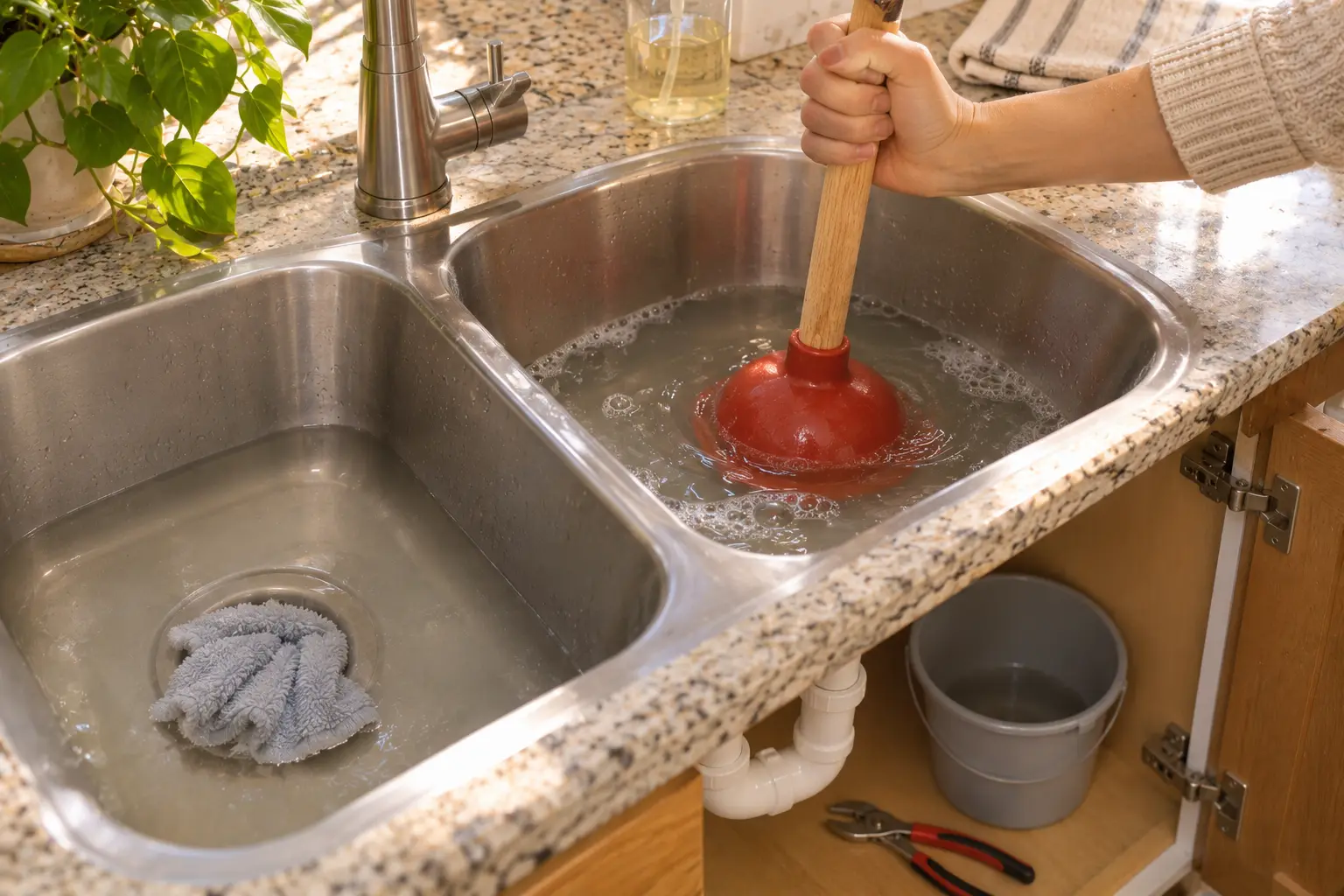
In a double-bowl sink, plug the other drain with a stopper or a wet cloth and hold it firmly in place. In a single-bowl sink, plug the overflow opening with a wet washcloth. Otherwise the pressure from the plunger escapes through the other opening instead of pushing on the clog.
04
Step 4 of 7
Plunge with a Cup Plunger
Set a cup plunger squarely over the blocked drain with water around the cup so it seals. Press the plunger down smoothly, then jerk it up sharply. Repeat 20 to 30 times, then lift it off and see whether the water starts to drain. If not, repeat the whole round.
05
Step 5 of 7
Flush with Hot Soapy Water
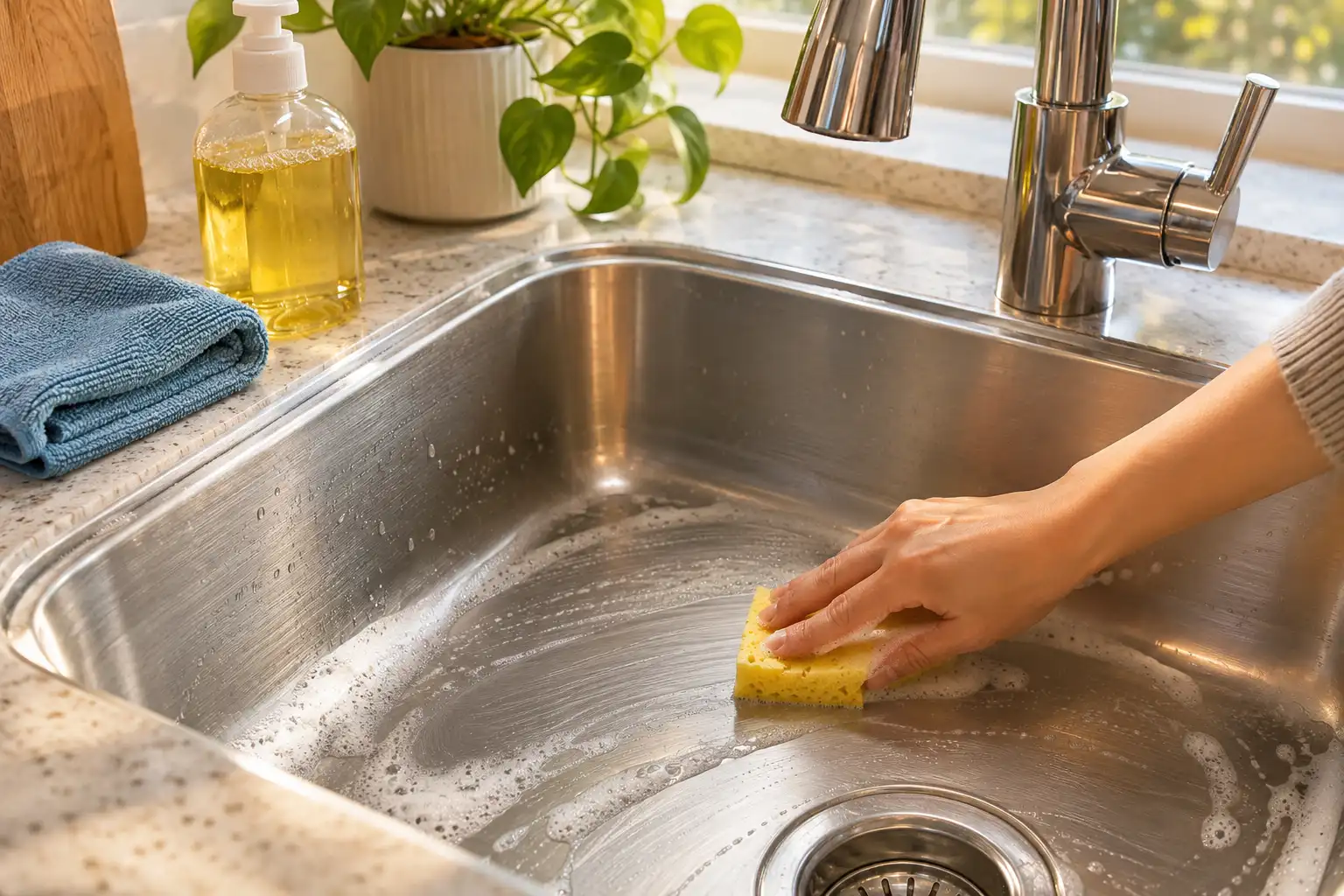
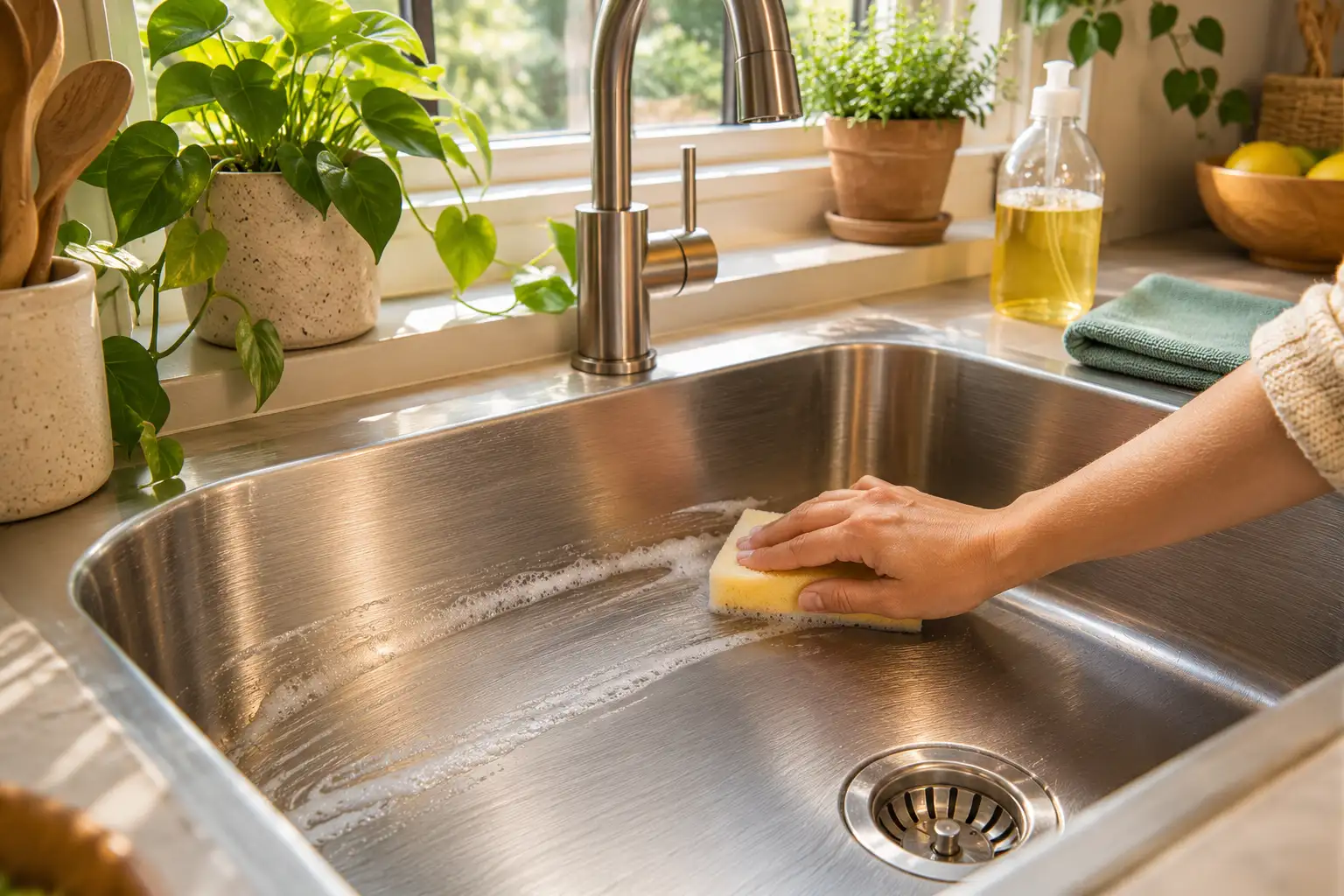
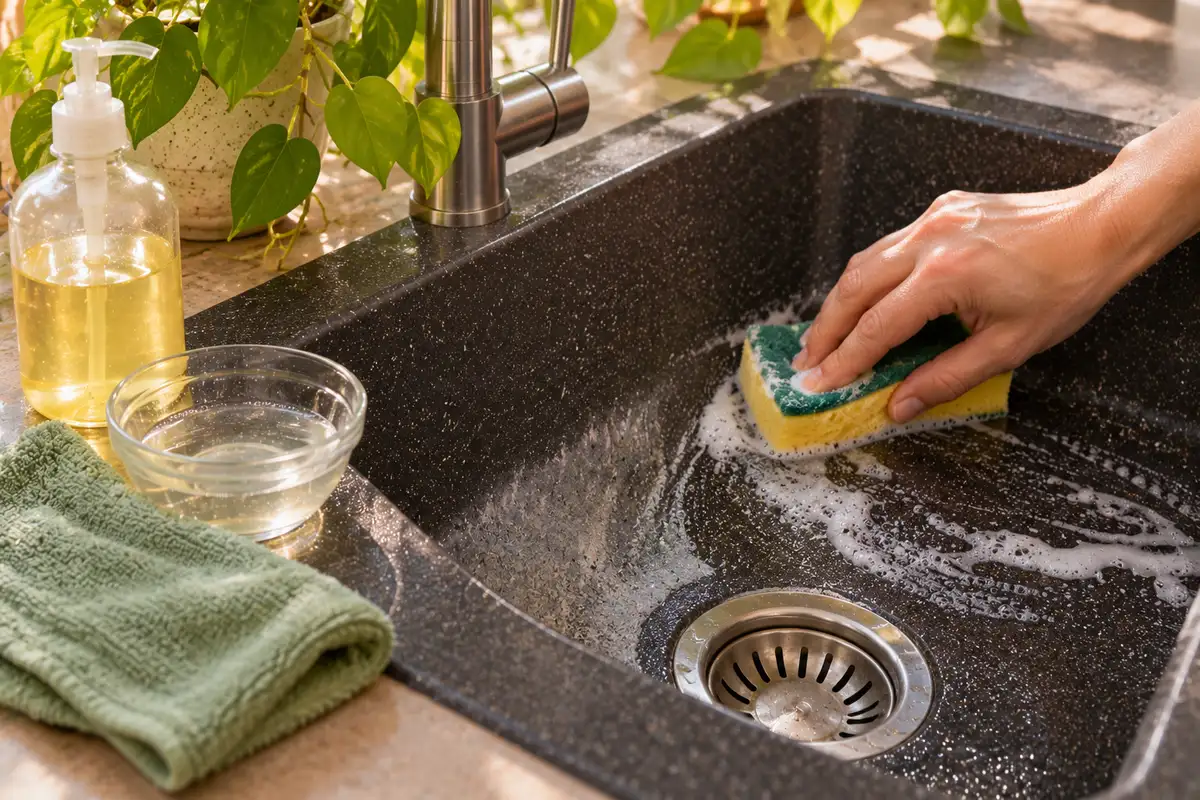
Once the water drains freely, rinse the drain with hot soapy water from the tap to carry loosened grease and food down the line. If you have a disposal, run cold water while grinding, as the manufacturer advises, and save the hot rinse for when the disposal is off.
06
Step 6 of 7
Open and Clear the Trap
If plunging does not work, look under the sink at the trap, the U-shaped section of pipe. Most clogs are there. If it has a cleanout plug at the bottom, put a bucket or pan underneath, unscrew the plug with an adjustable wrench, and clear the blockage with a gloved finger or a piece of wire. Screw the plug back in and run hot soapy water through the drain to check for leaks.
07
Step 7 of 7
Keep Grease and Food Scraps Out
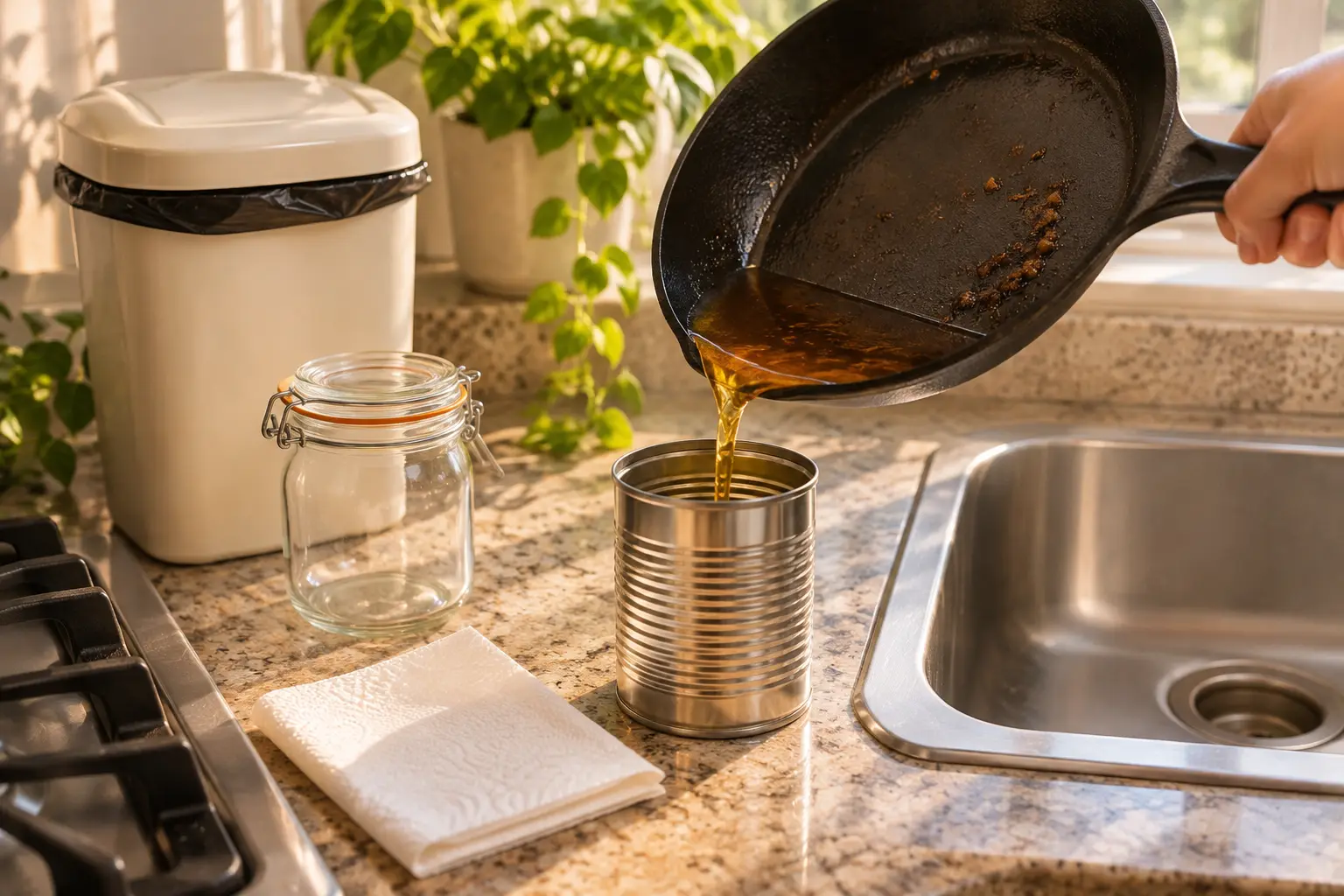
Never pour grease or fat down the drain or disposal; it hardens and clogs the pipe. Pour used grease into a can, let it cool, bag it and put it in the trash, then wash the pan with hot water and detergent. Keep a strainer in the sink drain and empty it after each use.
If that didn’t work
Stubborn or set-in? Try these next, in order.
AIf the trap is clear and the sink still backs up, the blockage is in the pipe beyond it. It needs a drain auger fed into the line or a plumber; the University of Florida Extension advises calling a plumber, or your landlord, once plunging and the trap have not cleared it.
BIf the disposal only hums after you have turned it with the wrench and pressed reset, check the circuit breaker or fuse, and contact the manufacturer if the motor still will not run.
CIf someone already poured a chemical drain cleaner in and the sink is still full, do not plunge or add anything else. Tell the plumber exactly which product is in the drain.
Common questions
Is it bad to use chemical drain cleaner in a kitchen sink?
It is risky. Non-enzymatic drain cleaners contain strong acids or alkalis that can burn skin and splash back out of the drain, and the University of Florida Extension notes they are caustic, can damage pipes and fixture finishes, and help only with sluggish drains. Moen warns never to put them into a garbage disposal. A plunger and a clean trap are safer first steps.
Does baking soda and vinegar unclog a kitchen sink?
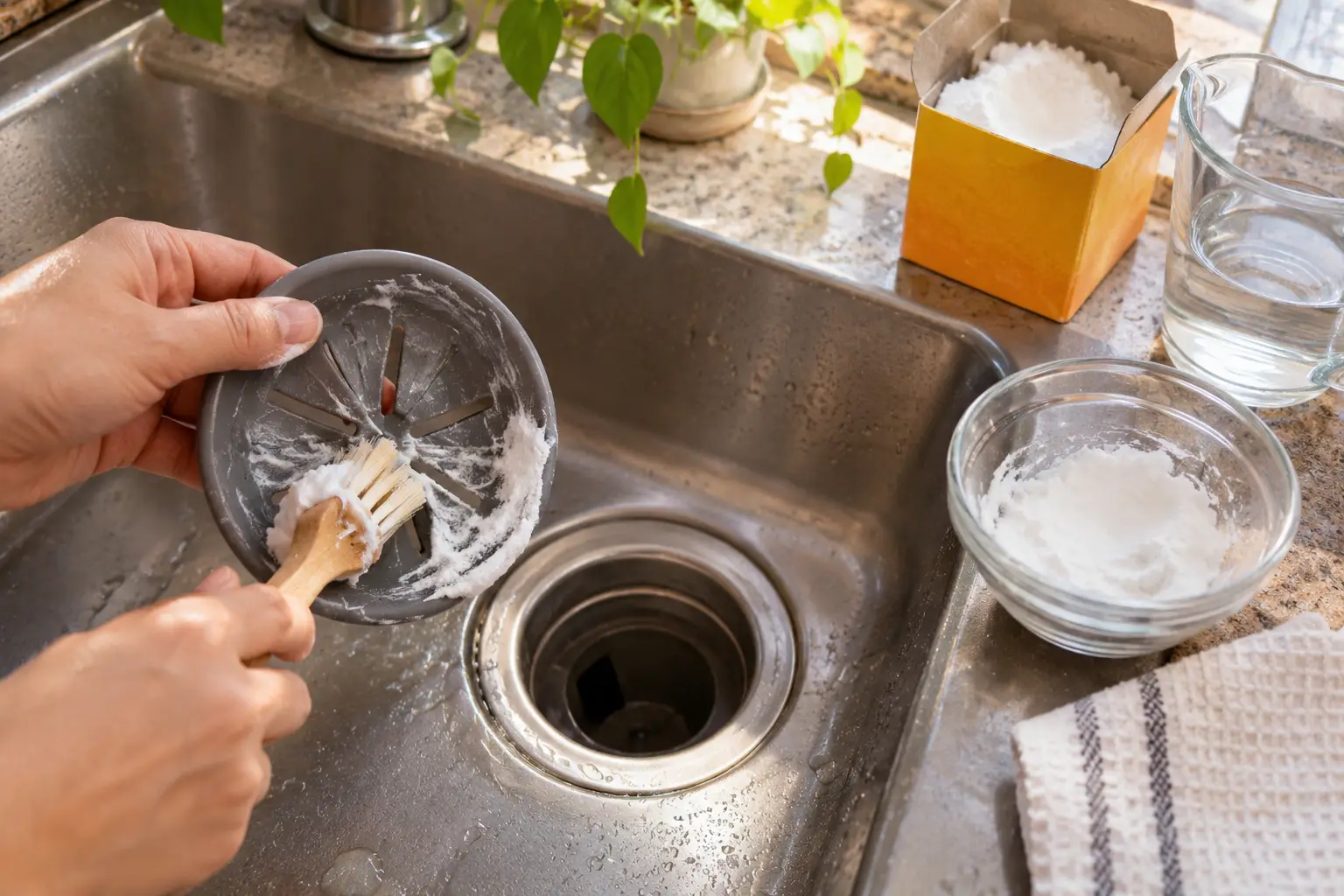
Not reliably. Poison Control explains that baking soda and vinegar react to make carbon dioxide gas that mostly escapes up through the drain opening, and the mix is unlikely to be strong enough to break up grease and oil clogs, which are the usual kitchen culprits. Use a plunger and clear the trap instead.
Can you plunge a kitchen sink with a garbage disposal?
Yes. Turn the disposal off first and keep your hands out of it, plug the other bowl, then plunge over the drain as usual. If the disposal itself is jammed, free it with the hex wrench and reset button before plunging.
Where is the reset button on a garbage disposal?
On InSinkErator units it is a small square red button on the bottom of the disposal. If it has popped out about a quarter inch, press it gently; if it will not stay in, wait about ten minutes and try again. Other brands vary, so check your owner's manual.
Why does my kitchen sink keep clogging?
The most common cause is grease, which hardens in the pipe and traps food scraps. Never pour grease or fat down the drain, put it in a sealed container in the trash, keep a strainer in the sink, and clean the strainer after each use.
Sources we relied on
1.Making Simple Repairs: Clogged Drains (FCS5234-05) — University of Florida IFAS Extension. Plug the overflow in a single bowl sink or the other drain in a double bowl sink, press the plunger down smoothly and jerk it up sharply 20 to 30 times, rinse with hot soapy water once clear; most clogs are in the U-shaped trap, cleared via its cleanout plug over a pan with an adjustable wrench, otherwise call a plumber; never pour grease down a drain; chemical drain cleaners are caustic, help only sluggish drains, and you should not plunge after using one or add a second brand, which may produce deadly fumes.
2.What's in Drain Cleaner? — Poison Control (National Capital Poison Center). Non-enzymatic drain cleaners contain acids such as sulfuric and hydrochloric acid or alkalis such as sodium and potassium hydroxide, can cause serious burns, and can splash back from the drain, especially when poured into a completely blocked drain; baking soda and vinegar are unlikely to clear grease and oil clogs; call 1-800-222-1222 after an exposure.
3.Can I Use Drain Cleaners with the Garbage Disposal — Moen. Never put lye or chemical drain cleaners into the garbage disposal, as they cause serious corrosion of metal parts, and resulting damage voids all warranties.
4.Fixing a Jammed Garbage Disposal — InSinkErator. With the switch off, turn the wrench or a 1/4-inch Allen wrench in the bottom center hole until it turns freely, press the small red overload button if it has popped out and wait ten minutes if it will not stay, remove objects with tongs or pliers and never your hand, test with cold water running, and check the breaker or fuse if the motor still will not run; never pour grease down the disposal or drain.