Sink makers say no: Kraus and Blanco tell owners not to clean stainless sinks with bleach, and Kohler links bleach overspray and fumes to rust. What to clean with instead, how to rinse if bleach gets in the sink, and how to disinfect safely.
Optional for mineral deposits: white vinegar, if your sink maker allows it
Optional: the stainless steel sink cleaner your sink maker sells or recommends
Step by step
01
Step 1 of 8
Rinse Away Any Bleach Immediately
If bleach or a bleach-based cleaner splashes into the sink or drips from the counter, run plenty of clean water over every surface it touched right away. Kraus says rinsing the sink immediately after contact with bleach or chlorine minimizes potential damage. Open a window or turn on the range hood while you do it.
02
Step 2 of 8
Wash With Mild Dish Soap and Water
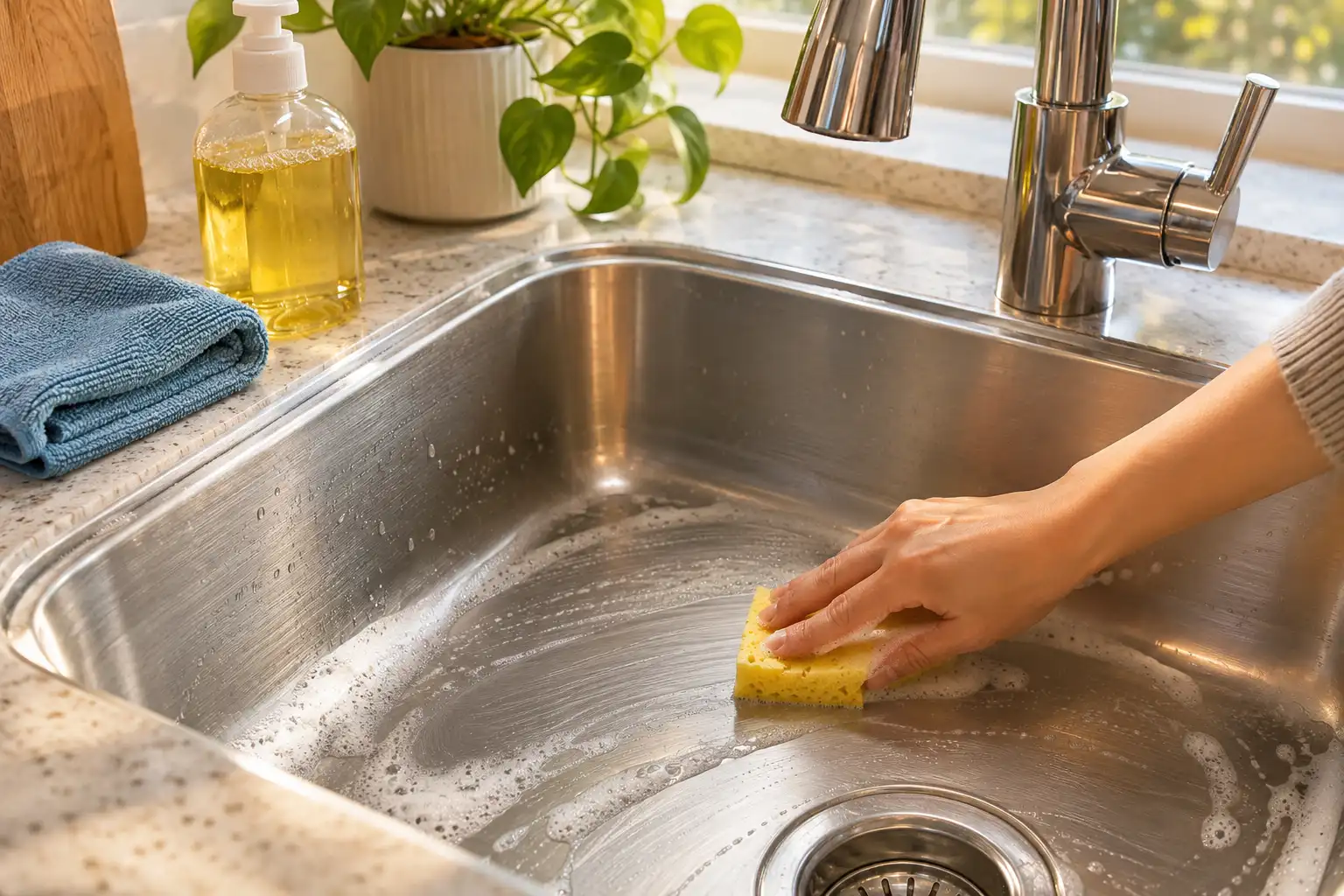
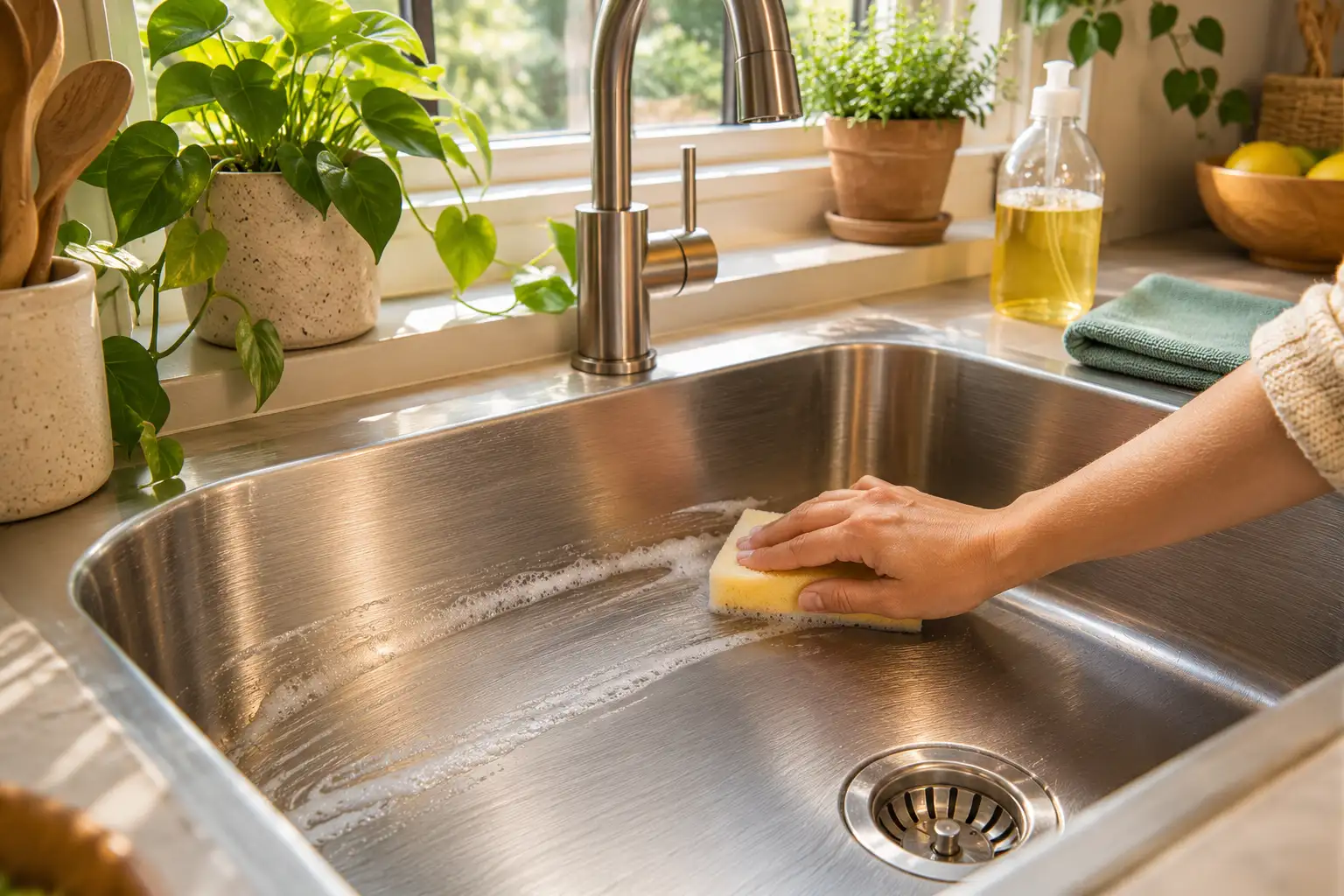
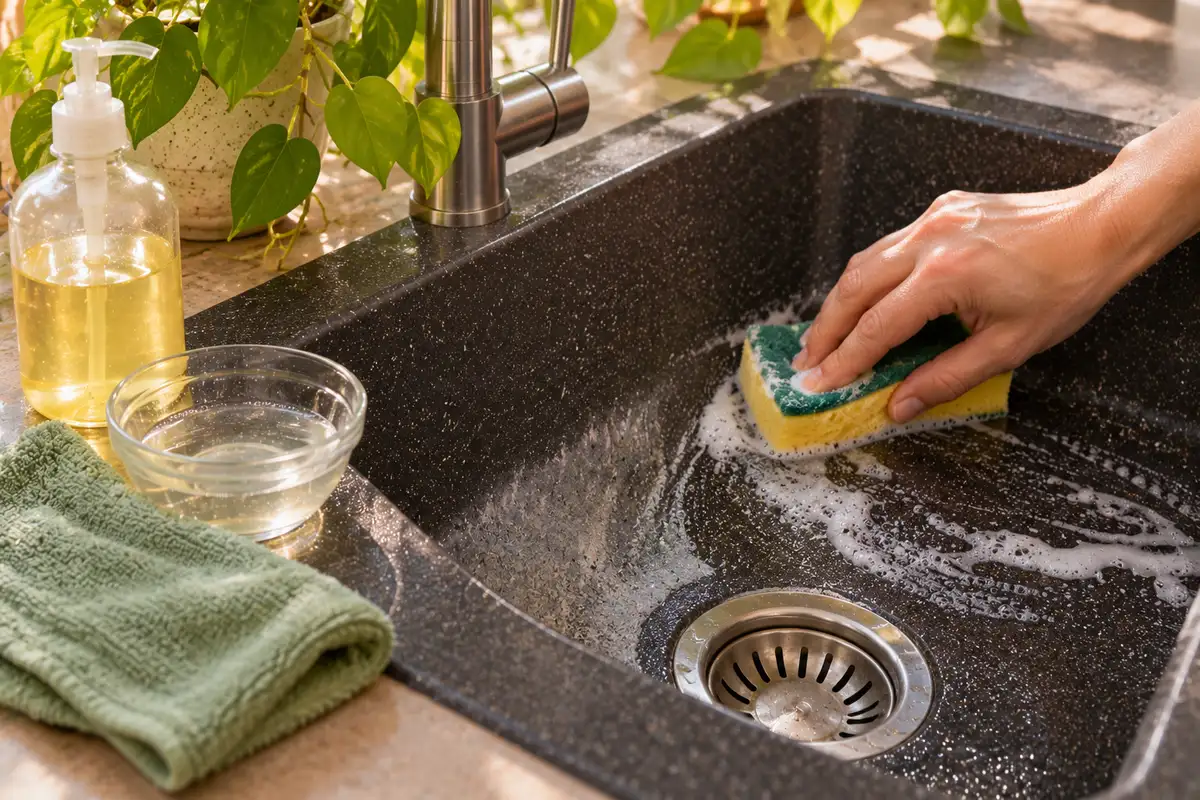
For routine cleaning, wet a soft sponge or non-scratch pad with water and a few drops of mild, ammonia-free liquid dish soap, which is what Kraus recommends for its stainless sinks. Wash the basin, walls, rim and drain area.
03
Step 3 of 8
Wipe in the Direction of the Grain
Look at the steel from an angle to see the fine brushed lines, and clean along them rather than in circles. Blanco says to clean stainless sinks in the direction of brushing and to avoid circular movements.
04
Step 4 of 8
Rinse Off Every Trace of Cleaner
Rinse the whole sink with lukewarm, clean water so no cleaning agent is left on the steel. Blanco says to rinse surfaces thoroughly so no traces of the cleaning agent remain.
05
Step 5 of 8
Dry With a Microfiber Cloth
Pat or rub the sink dry with a clean microfiber cloth. Both Kraus and Blanco finish their stainless sink cleaning routines with a microfiber dry, which also prevents water spots.
06
Step 6 of 8
Remove Mineral Deposits With Vinegar, Not Bleach
For white, chalky hard-water deposits, Kraus recommends vinegar to neutralize the minerals and remove the deposits, and Blanco recommends diluted vinegar essence for limescale. Wipe it on with a soft cloth, then rinse thoroughly and dry. Never use vinegar in a sink that still has bleach in it.
07
Step 7 of 8
Disinfect With a Product Labeled for Stainless Steel
When you need to disinfect, for example after raw meat, wash with soap and water first, then use a disinfectant whose label says it is safe for stainless steel and follow its directions for contact time and rinsing. Ventilate, check the label for gloves, and never mix it with another cleaner.
08
Step 8 of 8
Move Chemicals Out of the Sink Cabinet
Check the cabinet under the sink and close or remove open containers of bleach, acids, salt or lye. Kohler says fumes from household chemicals can rust a stainless steel sink from underneath.
If that didn’t work
Stubborn or set-in? Try these next, in order.
AIf rust-colored spots appear inside the sink, think about what was used in or around it. Kohler says rust inside a stainless sink is likely the result of chemicals used in or around the sink, and that surface rust can be removed with the right cleaners; check your sink maker's recommended cleaner.
BIf the underside of the sink is rusting, look for open chemical containers in the cabinet below and remove them, as Kohler advises.
CIf water spots or dull patches remain after cleaning, rinse again, dry immediately with a microfiber cloth, and use your sink maker's stainless steel cleaner or diluted vinegar for mineral film, rather than bleach or abrasive pads.
Common questions
Will bleach ruin a stainless steel sink?
It can damage it. Kraus tells owners not to use cleaners containing bleach or chlorine on its stainless sinks, Blanco says not to use bleach containing hypochlorite, and Kohler links bleach overspray and fumes to rust on stainless sinks. If it splashes in, rinse it away right away, as Kraus advises.
What happens if bleach sits in a stainless steel sink?
Sink makers warn that bleach and chlorine can damage the surface and lead to rust, which is why Kraus says to rinse the sink immediately after any contact. Do not let bleach solutions or bleach-soaked items sit in the basin.
How do I disinfect a stainless steel sink without bleach?
Wash it first with mild dish soap and water, rinse and dry. Then use a disinfectant whose label says it is safe for stainless steel and follow its directions. Sink makers such as Kraus and Blanco advise against bleach on stainless steel sinks.
Can I soak dishes in bleach water in a stainless steel sink?
It is better not to. Kraus says not to use bleach or chlorine on its stainless sinks and to rinse immediately if they come in contact with it. If bleach is ever used nearby, ventilate the room and never combine it with other cleaners, as the CDC warns.
Can you use vinegar on a stainless steel sink?
Yes, for mineral deposits. Kraus recommends vinegar to remove hard-water deposits, and Blanco recommends diluted vinegar essence for limescale. Rinse well afterwards and never use vinegar while bleach is still in the sink.
Sources we relied on
1.Care & Maintenance — Kraus USA. Do not use cleaners containing abrasive powders, bleach, ammonia, alcohol or chlorine on stainless steel sinks, rinse the sink immediately if they come in contact with it, clean with water and a mild ammonia-free liquid soap, rinse and pat dry with microfiber, use vinegar for mineral deposits, and use non-scratch pads only.
2.Problem with Rust on Stainless Steel Product — Kohler. Rust inside a stainless sink is likely caused by chemicals used in or around it; do not use bleach cleaners on adjacent countertops because overspray can rust the sink, thoroughly rinse the sink after using countertop cleaner, do not store open containers of bleach, acids, salt or lye under the sink, and do not use steel wool, wire brushes or abrasive pads.
3.Cleaning and Care of Stainless Steel Sinks — BLANCO. Do not use aggressive cleaning agents, abrasive cleaners or bleach containing hypochlorite; clean in the direction of brushing, rinse thoroughly so no cleaning agent remains, rub dry with a microfibre cloth, use diluted vinegar essence for limescale, and never use steel wool.
4.Cleaning and Disinfecting with Bleach — Centers for Disease Control and Prevention. Never mix household bleach or any disinfectant with other cleaners or disinfectants because it can release vapors that are dangerous to breathe; keep air flowing when using bleach indoors and check the label for gloves or eye protection.