Empty it, wash it with soap and water, disinfect only with a registered product used exactly as the label says, and dry it fully. Plus what stainless step-can makers say not to use on the outside.
EPA-registered disinfectant that lists your can's surface type (optional)
Baking soda (optional, for an odor soak of a removable inner bucket)
Step by step
01
Step 1 of 7
Empty the Can and Take It Apart
Remove the bag and any loose debris stuck to the bottom. If your can has a removable inner bucket or liner, lift it out so you can wash it separately. Put on gloves before you reach inside.
02
Step 2 of 7
Move It Somewhere Easy to Rinse
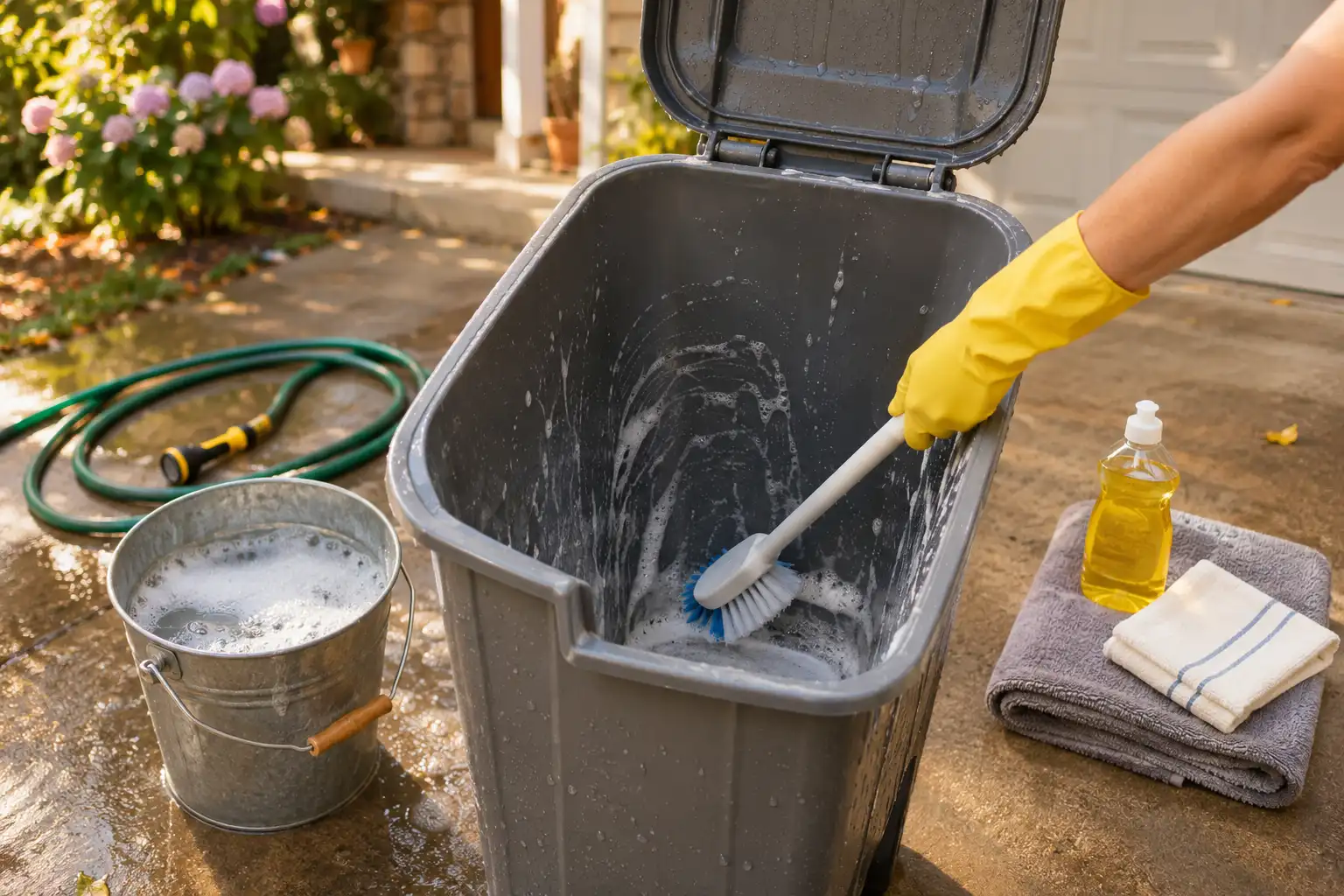
Take the can, or the inner bucket, to a spot where dirty water can drain away, such as outdoors with a hose or a utility tub. A large outdoor bin is far easier to scrub and rinse outside than in a kitchen sink.
03
Step 3 of 7
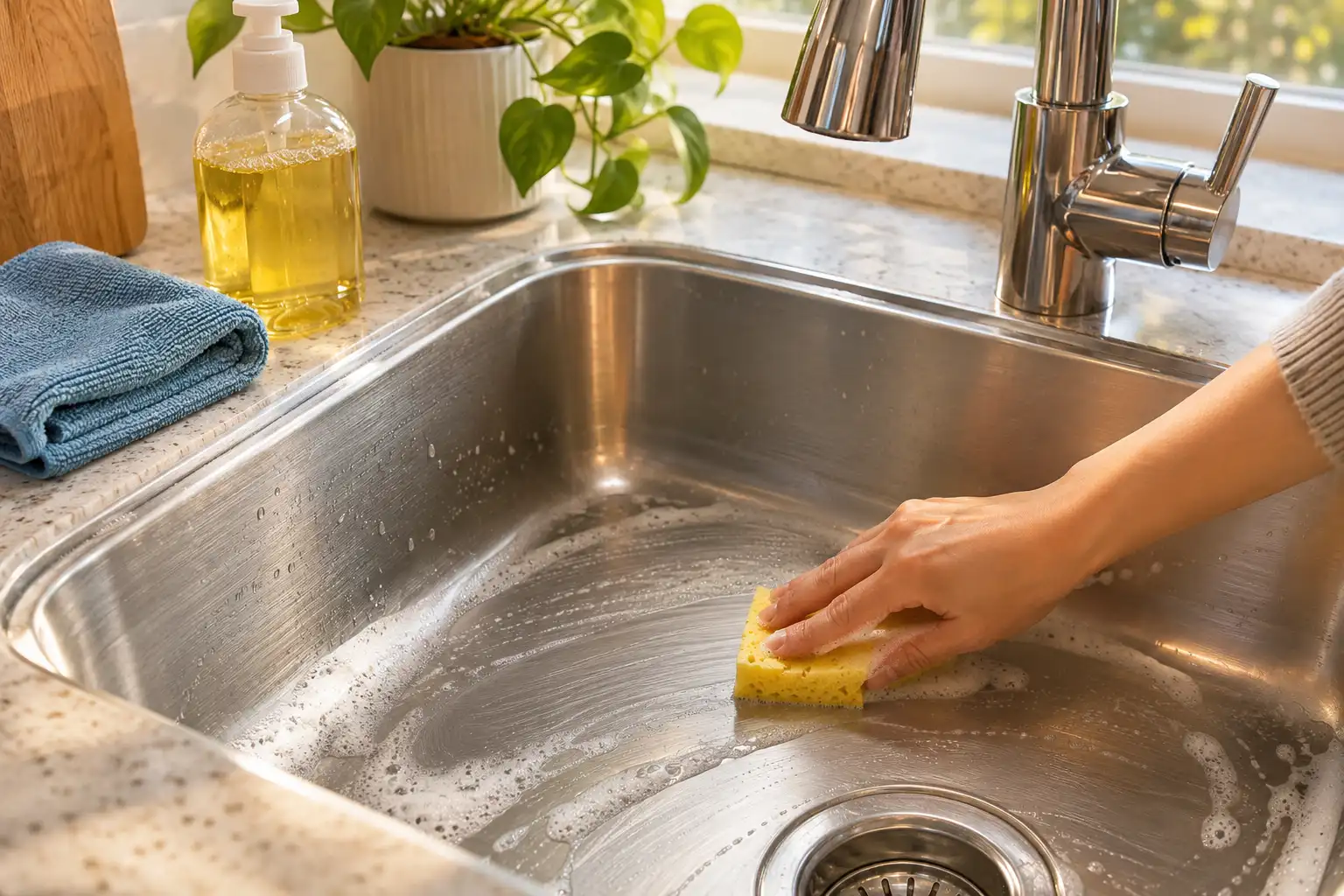
Scrub with Detergent and Warm Water
Wash the inside, the outside, the lid and the rim with warm water and a mild detergent, using a long-handled brush for the bottom of tall cans. This cleaning step removes most germs and grime, and it has to come first because dirt keeps disinfectants from reaching germs.
04
Step 4 of 7
Rinse Off All the Soap
Rinse every surface with clean water until no suds or residue remain. On a stainless steel can, rinse the cleaned area with water before drying, as simplehuman directs.
05
Step 5 of 7
Disinfect If You Need To, Following the Label
Use a disinfectant with an EPA registration number, and check that its label lists your can's material under use sites and surface types. Apply it as directed and keep the surface wet for the full contact time printed on the label. On a stainless steel can, check the maker's care page first: simplehuman warns against bleach, salts and acids on its stainless exteriors.
06
Step 6 of 7
Dry the Can Completely
Wipe the can dry with a soft cloth, or let it air-dry upside down in the open, before you fit a new bag. On stainless steel, dry with a soft cloth to avoid water marks.
07
Step 7 of 7
Keep Odors Down Between Washes
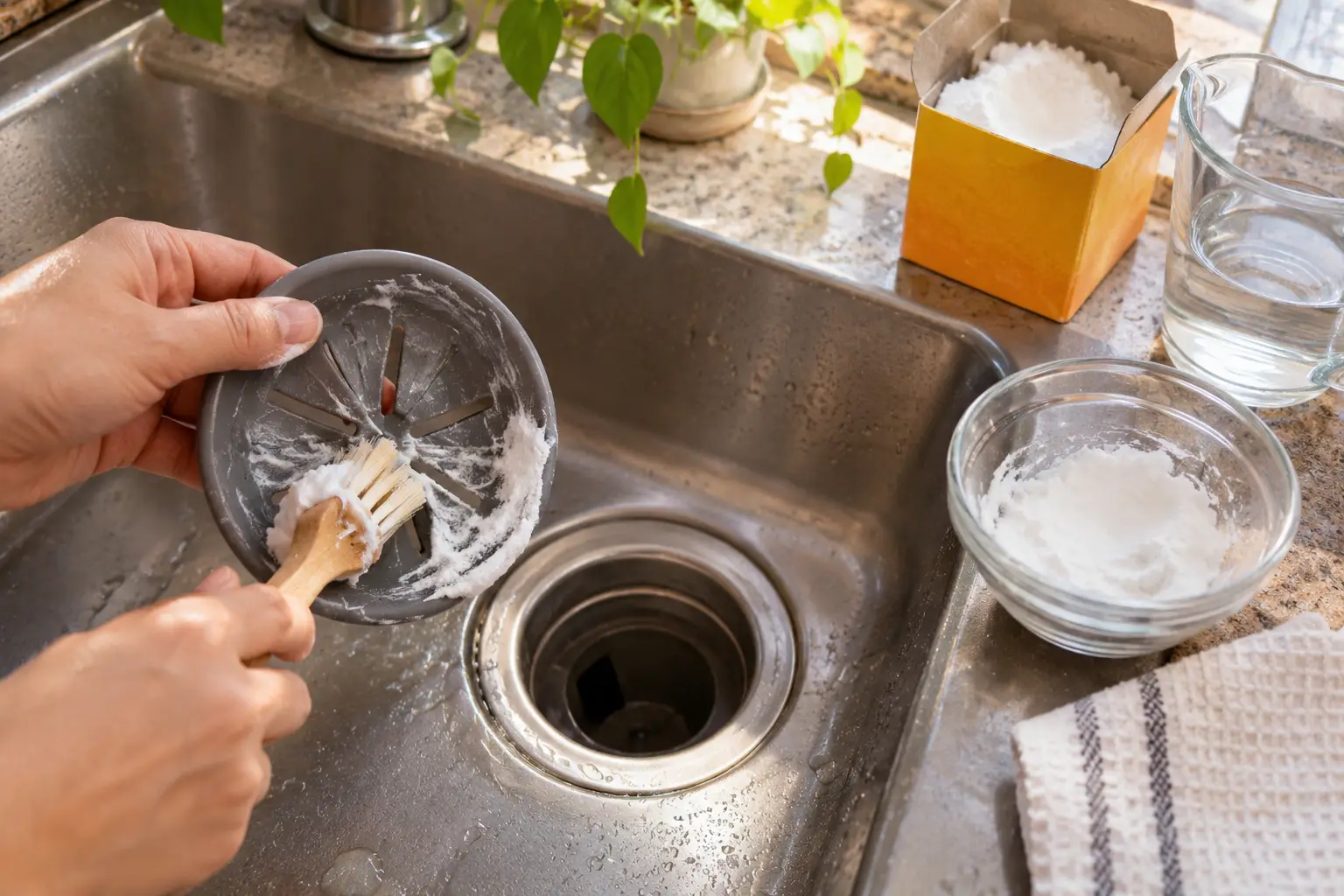
For a lingering smell in a removable plastic inner bucket, simplehuman suggests soaking the bucket in a diluted household bleach and water solution, or a baking soda solution. Wipe the stainless exterior weekly with a soft cloth, warm water and a mild detergent so grime does not build up.
If that didn’t work
Stubborn or set-in? Try these next, in order.
AIf the can still smells after washing, the odor is often trapped in a removable inner bucket. Soak it on its own in a diluted bleach solution or a baking soda solution, as simplehuman suggests, then rinse and dry it.
BIf grime is baked onto the bottom, let warm soapy water sit in the can for a while to soften it, then scrub again before you move on to disinfecting.
CIf a stainless exterior looks dull or marked after cleaning, check whether a bleach, polish or acid-based product touched it. Go back to mild detergent and water and contact the manufacturer about damage rather than scouring it.
Common questions
What is the best way to disinfect a trash can?
Clean it with soap and water first, then use an EPA-registered disinfectant whose label lists your can's surface type. Follow the directions and keep the surface wet for the full contact time on the label, then let it dry.
Can I use bleach to clean a trash can?
It depends on the material. simplehuman suggests a diluted household bleach soak for its plastic inner buckets, but warns against using bleach on the stainless steel exterior. Never mix bleach with ammonia or acids, and ventilate while you use it.
How do I get rid of the smell in my trash can?
Wash out the residue that causes it, rinse, and dry completely. For a removable inner bucket, simplehuman suggests a soak in diluted household bleach and water, or a baking soda solution.
How often should you clean a kitchen trash can?
simplehuman recommends wiping the stainless steel exterior of its cans weekly with a soft cloth, warm water and a mild detergent. Wash the inside whenever there is a leak, a spill or a smell.
Is cleaning the same as disinfecting?
No. According to the CDC, cleaning with soap, water and scrubbing removes most germs and dirt, while disinfecting uses EPA-registered products or bleach solutions to kill germs that remain. Cleaning first helps the disinfectant work.
Sources we relied on
1.simplehuman 30L Classic Rectangular Step Can Product Support — simplehuman. Clean stainless steel weekly with a soft cloth, warm water and a mild detergent; do not use steel wool, stainless steel polisher, bleach, salts or acids because they damage the product; for odor, remove the inner bucket and soak it in a diluted household bleach and water solution, or a baking soda solution.
2.6 Steps for Safe and Effective Disinfectant Use — U.S. Environmental Protection Agency. Check the product has an EPA registration number, read the directions including use sites and surface types, pre-clean visibly dirty surfaces with soap and water, keep the surface wet for the full contact time, wear gloves and wash hands, and keep lids closed and products out of reach of children.
3.When and How to Clean and Disinfect Your Home — Centers for Disease Control and Prevention. Cleaning with soap, water and scrubbing removes most germs and dirt and should come first; disinfecting with EPA-registered products kills remaining germs; follow the label, ventilate, wear recommended protection, never mix products, and keep surfaces wet for the contact time.