Mild soap and a soft sponge for everyday cleaning, diluted white vinegar or the maker's limescale product for chalky white marks, and the bleach, oven cleaners and drain cleaners that Blanco, Kraus and Moen tell you to keep out of the bowl.
Soft sponge (use the soft side) and microfiber cloths
Warm water
Mild, ammonia-free liquid dish soap
White vinegar, mixed 50/50 with water, if your sink maker allows it
Or the limescale remover your sink maker sells (for example BLANCO DailyClean+ for Silgranit)
Optional: a melamine sponge such as Mr. Clean Magic Eraser, which Moen and Kraus name for stubborn marks
Optional for gray metal scuffs on Silgranit: a little cooking oil
Rubber gloves
Step by step
01
Step 1 of 7
Check Your Sink Brand and Care Guide
Granite composite sinks are sold under names like Blanco Silgranit, Kraus granite and quartz composite, Elkay Quartz and Moen composite granite, and each maker has its own approved cleaners. Find the brand stamped near the drain or on the paperwork and keep its care guide handy, because the rules on vinegar, scouring pads and bleach differ from brand to brand.
02
Step 2 of 7
Rinse and Dry After Every Use
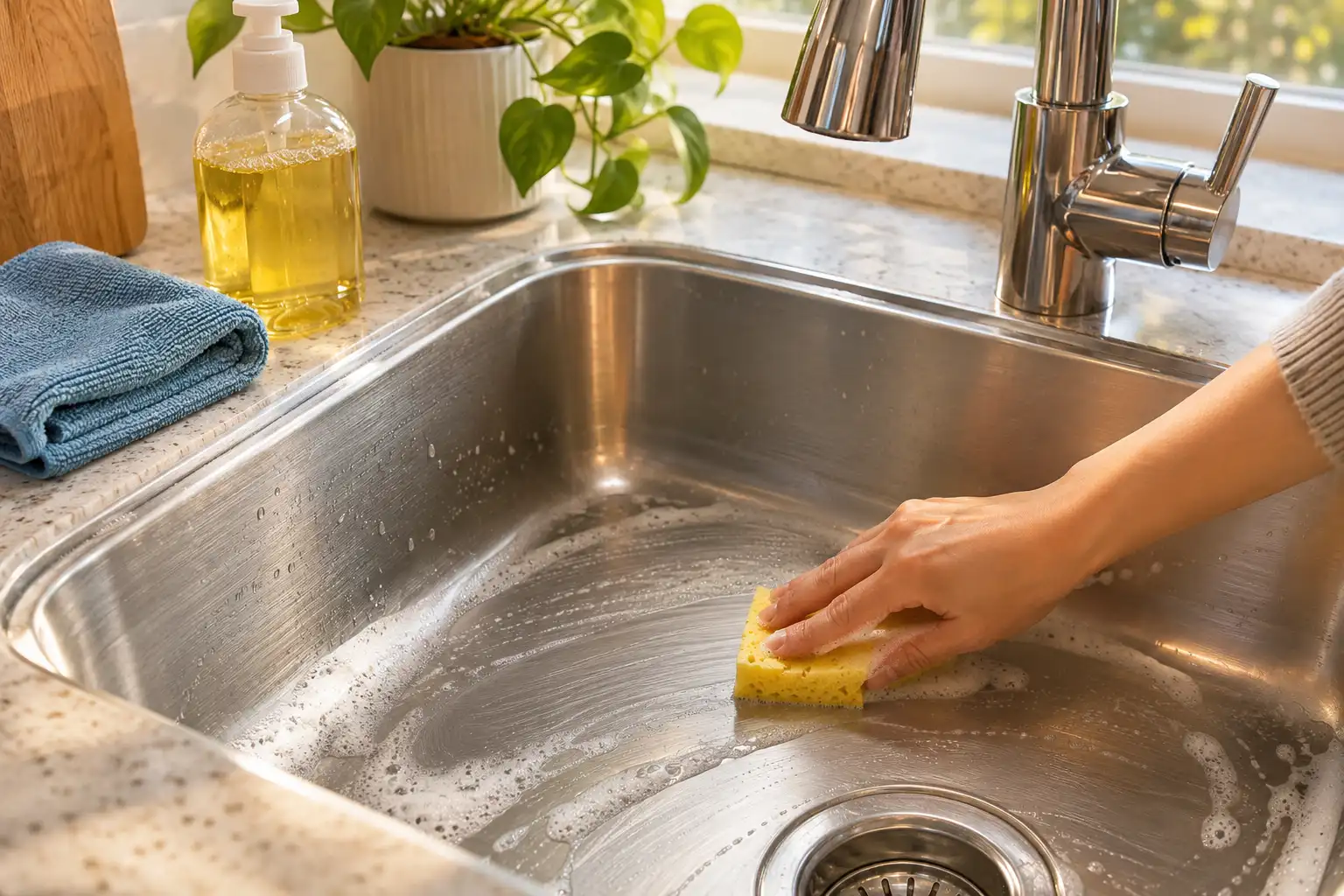
Rinse the bowl with water after you use it and wipe it with a microfiber cloth. Kraus says this daily habit prevents the water spots, clouding and mineral deposits that build up in hard water areas, and it keeps food from drying onto the surface.
03
Step 3 of 7
Wash with Mild Soap and a Soft Sponge
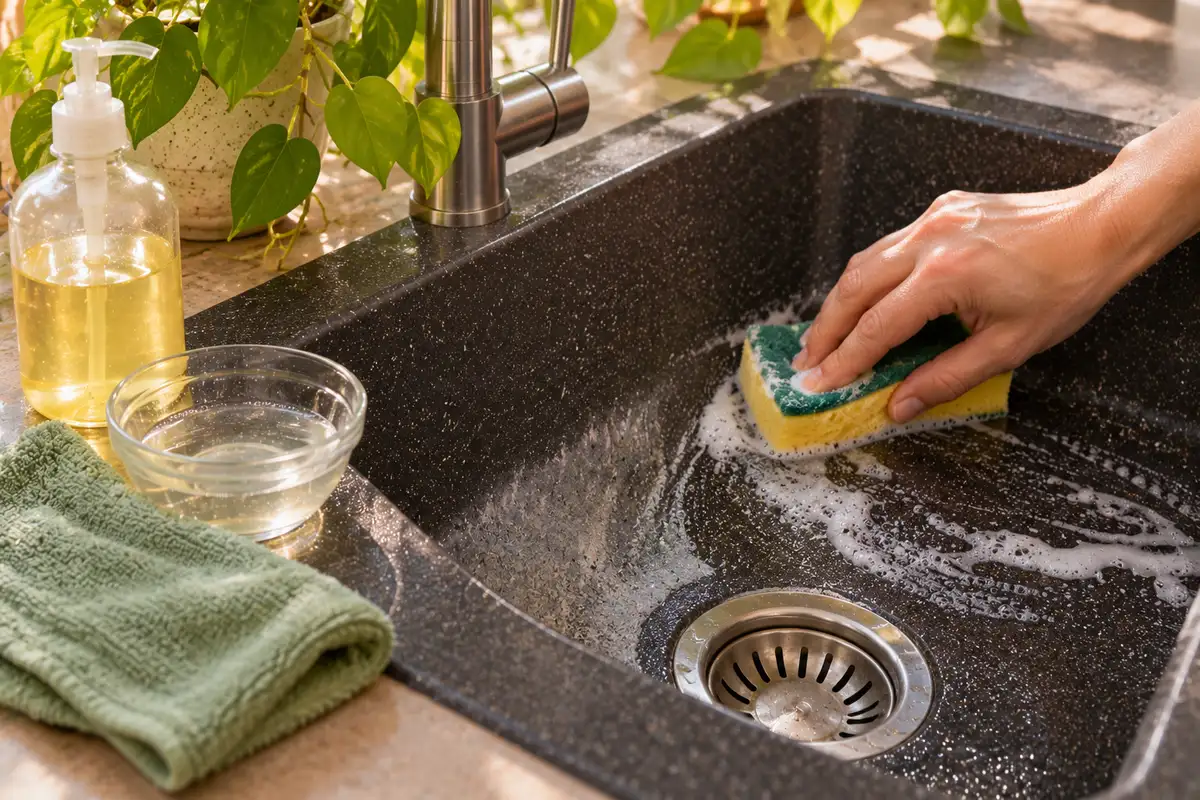
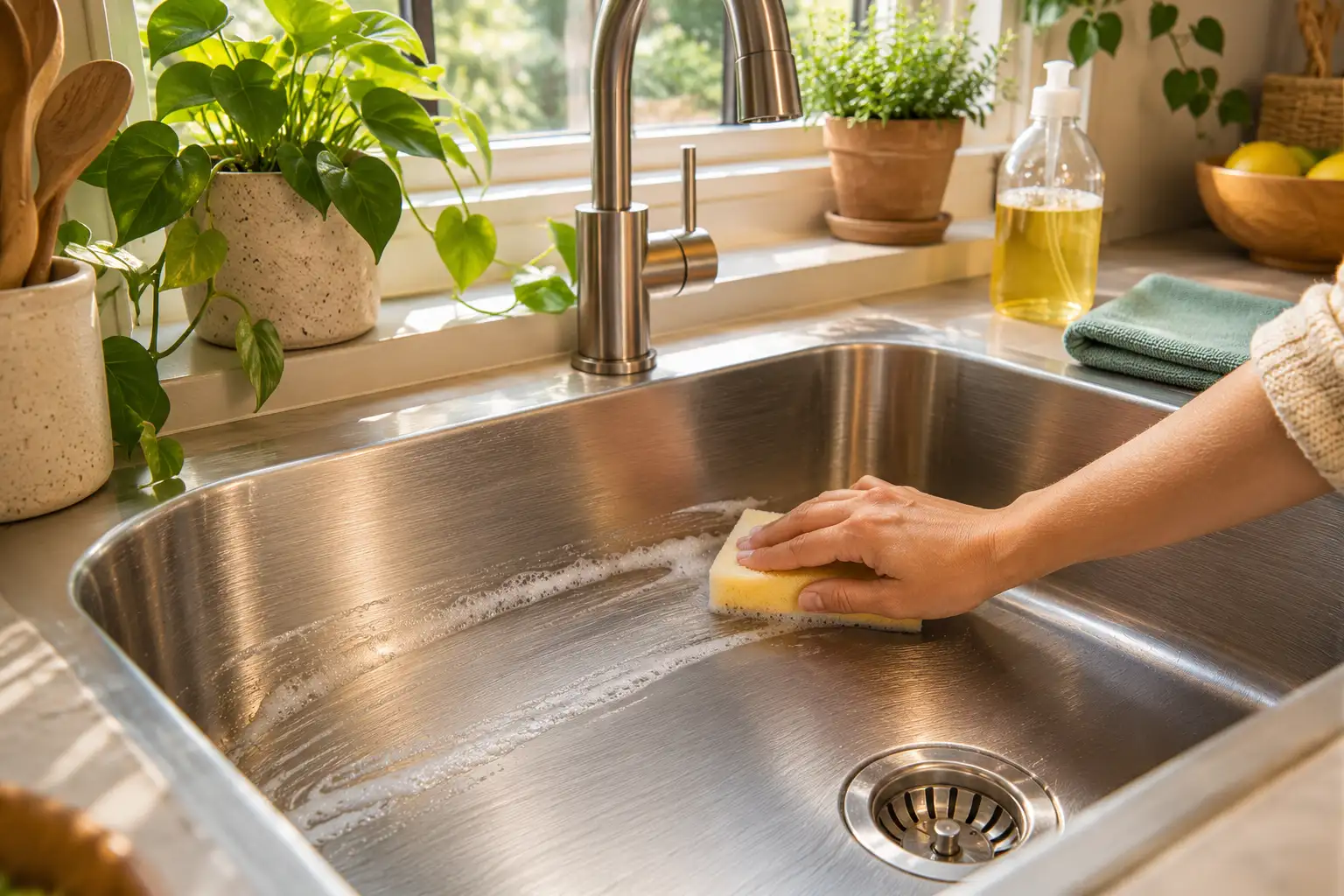
For regular cleaning, wet the sink and wash it with warm water, a few drops of mild ammonia-free dish soap and the soft side of a sponge. Rinse with lukewarm water and towel dry with a soft cotton or microfiber cloth.
04
Step 4 of 7
Lift White Haze and Limescale
A chalky white film or white spots are usually dried limescale, and Blanco says limescale causes most discoloration on its sinks. Use the limescale remover your maker sells, following its label, or, where your care guide allows vinegar, wipe the marks with a 50/50 mix of white vinegar and water as Moen recommends for water marks. Rinse well and dry.
05
Step 5 of 7
Treat Stubborn Stains Gently
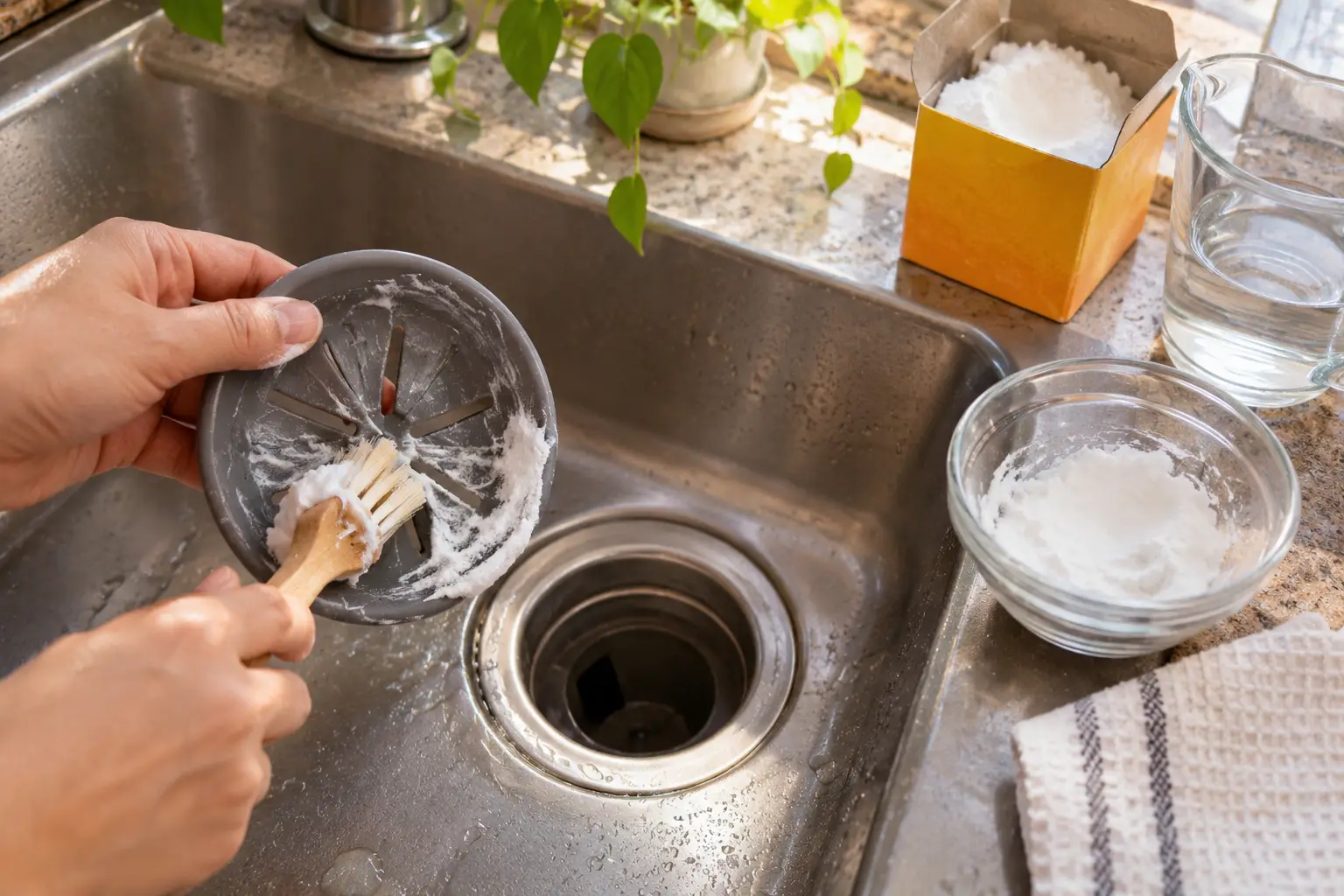
Blanco says coffee, tea, red wine and beetroot will not permanently stain Silgranit. For marks that soap does not shift, Moen and Kraus both suggest a melamine sponge such as a Magic Eraser dampened with water; Moen also allows the 50/50 vinegar solution. Work in a circular motion with even pressure, rinse thoroughly and dry.
06
Step 6 of 7
Remove Gray Metal Scuffs on Silgranit
Blanco's method for metal marks from pans and cutlery is to put a little cooking oil on the soft side of a wet sponge, clean the marks in circular movements, rinse with clear warm water until the oil is gone, and dry with a microfiber cloth. If you own a different brand, check its guide first.
07
Step 7 of 7
Protect the Surface Going Forward
Let hot pans cool on a heatproof mat or trivet before they go into the sink; Kraus suggests a trivet or rolling mat for very hot items. Moen says to run cold water when you pour boiling water into the sink. Do not drop heavy or pointed items such as knives into the bowl, and do not leave pots, utensils or standing water sitting in it.
If that didn’t work
Stubborn or set-in? Try these next, in order.
AIf white haze returns within days, your water is hard. Rinse and dry the sink after every use, and repeat the maker-approved limescale treatment as part of a regular deep clean.
BIf a stain survives soap, the limescale step and a melamine sponge, contact the sink maker before trying stronger products, since the makers warn that abrasive and caustic cleaners can damage the surface. Blanco sells a dedicated deep-clean kit for Silgranit.
CIf the surface looks dull, scratched or blotchy after a harsh cleaner or a hot pan, that is likely damage rather than dirt. Stop using the product and contact the manufacturer for advice.
Common questions
Can you use vinegar on a granite composite sink?
Moen recommends a 50/50 mix of white vinegar and water for stubborn stains and water marks on its composite granite sinks. Blanco points owners to its own limescale product instead. Use diluted vinegar only if your brand's care guide allows it, rinse it off thoroughly and dry the sink afterward.
Why does my granite composite sink have a white film?
A white film or white spots are usually dried limescale from hard water. Blanco says dried limescale causes most discoloration on its sinks, and Kraus says rinsing and wiping the sink with a microfiber cloth after each use prevents water spots and clouding.
Can I use bleach on a granite composite sink?
Blanco lists bleach, diluted bleach and bleach-based cleaners among products to avoid, and Kraus recommends avoiding chlorine and bleach. Moen warns against straight or undiluted bleach. Follow your own maker's guide, and when in doubt, skip bleach entirely.
Is Bar Keepers Friend safe on a granite composite sink?
The makers in this guide warn against abrasive cleaners, and Bar Keepers Friend is a mild abrasive powder. Check your sink's care guide before using it; mild soap, a melamine sponge and the maker's limescale remover are the safer first choices.
Can you pour drain cleaner into a granite composite sink?
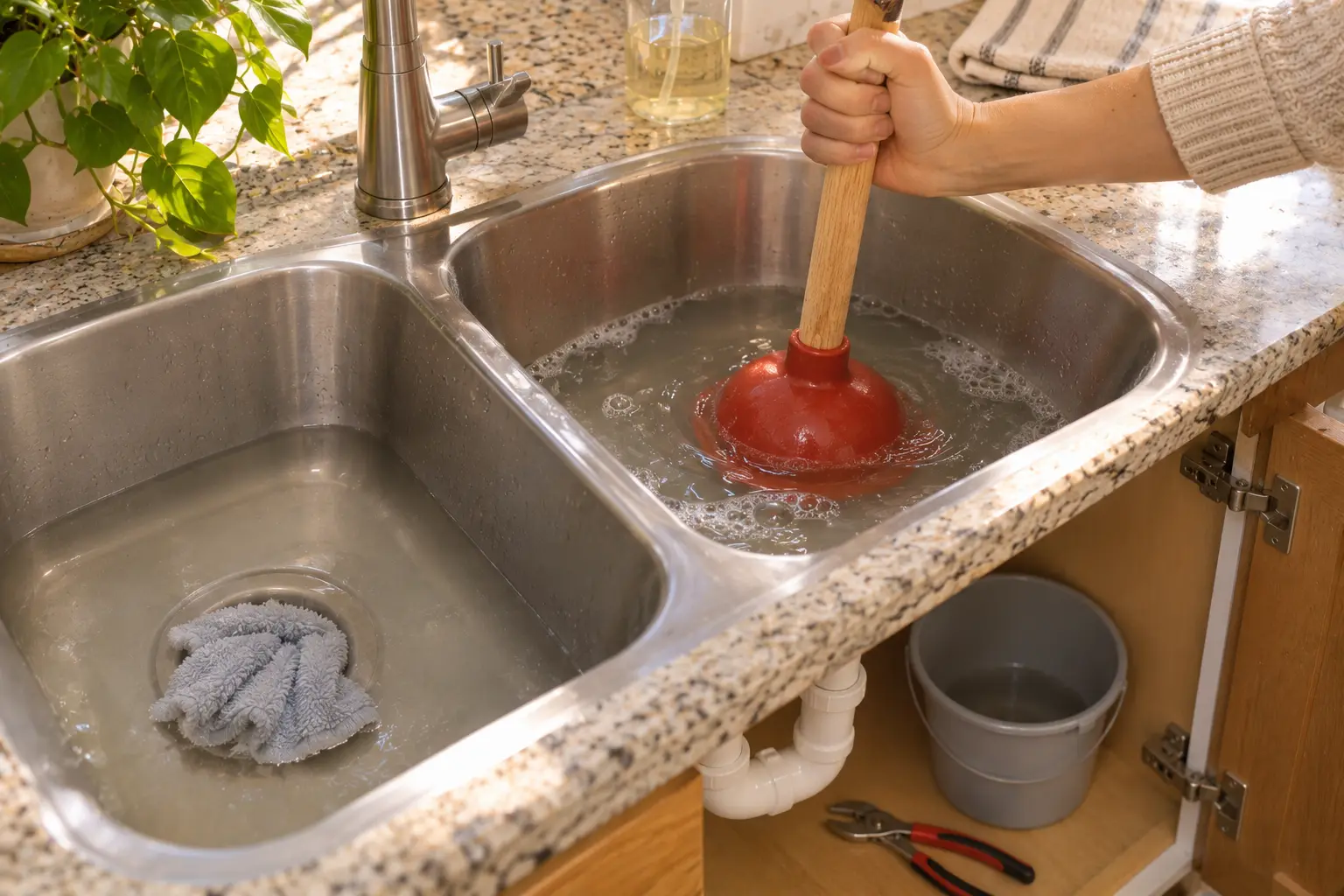
Blanco tells owners to avoid drain cleaners, and Moen warns against caustic solutions such as some drain cleaners. If a clog needs clearing, use a plunger or remove the trap, and if any harsh chemical touches the bowl, flush it with plenty of water right away.
Sources we relied on
1.Cleaning and care of SILGRANIT sinks — BLANCO. Dried limescale causes most discoloration and should be removed first with BLANCO DailyClean+; coffee, tea, red wine and beetroot will not permanently stain Silgranit; metal scuffs can be removed with cooking oil on the soft side of a wet sponge, rinsed off and dried; avoid bleach, bleach-based and chlorine cleaners, drain cleaners, lyes, solvents and abrasive cleaners; let hot pans cool before placing them in the sink.
2.Composite Granite Sink (Introduced in 2019): Care And Cleaning Guide — Moen. Clean everyday dirt with soapy water and a damp cloth or sponge and towel dry; wipe stubborn stains and water marks with a Magic Eraser and water or a 50/50 white vinegar and water solution; avoid oven cleaners, paint removers, straight bleach, abrasives, steel wool and caustic ammonia or alkali cleaners such as some drain cleaners, flushing with water if contact occurs; run cold water when pouring boiling water into the sink.
3.KRAUS KGU-55 Undermount Granite Single Bowl Kitchen Sink: Care and FAQ — KRAUS. Rinse and wipe the sink with a microfiber cloth after each use to prevent water spots, clouding and discoloration; deep clean with water, a mild ammonia-free liquid soap and a soft sponge, then pat dry; a Magic Eraser can be used for tough stains; avoid chlorine, bleach and ammonia; hot items placed straight from the stove or oven may discolor the surface, so use a trivet or mat.