Let it cool, pour it into a sealed can or jar, and put it in the trash, or take large amounts of fryer oil to a city recycling drop-off. Why hot water, dish soap and the garbage disposal do not make it safe to pour grease down the drain.
Empty soup can, coffee can, jar or the oil's original bottle with a lid
Funnel for large amounts of oil
Paper towels
Rubber spatula for scraping pans
Step by step
01
Step 1 of 6
Let the Grease Cool
Leave pan drippings or fryer oil to cool before handling them. Sacramento's utilities department lists sealing the container and waiting for it to cool as one of its four steps for holiday grease.
02
Step 2 of 6
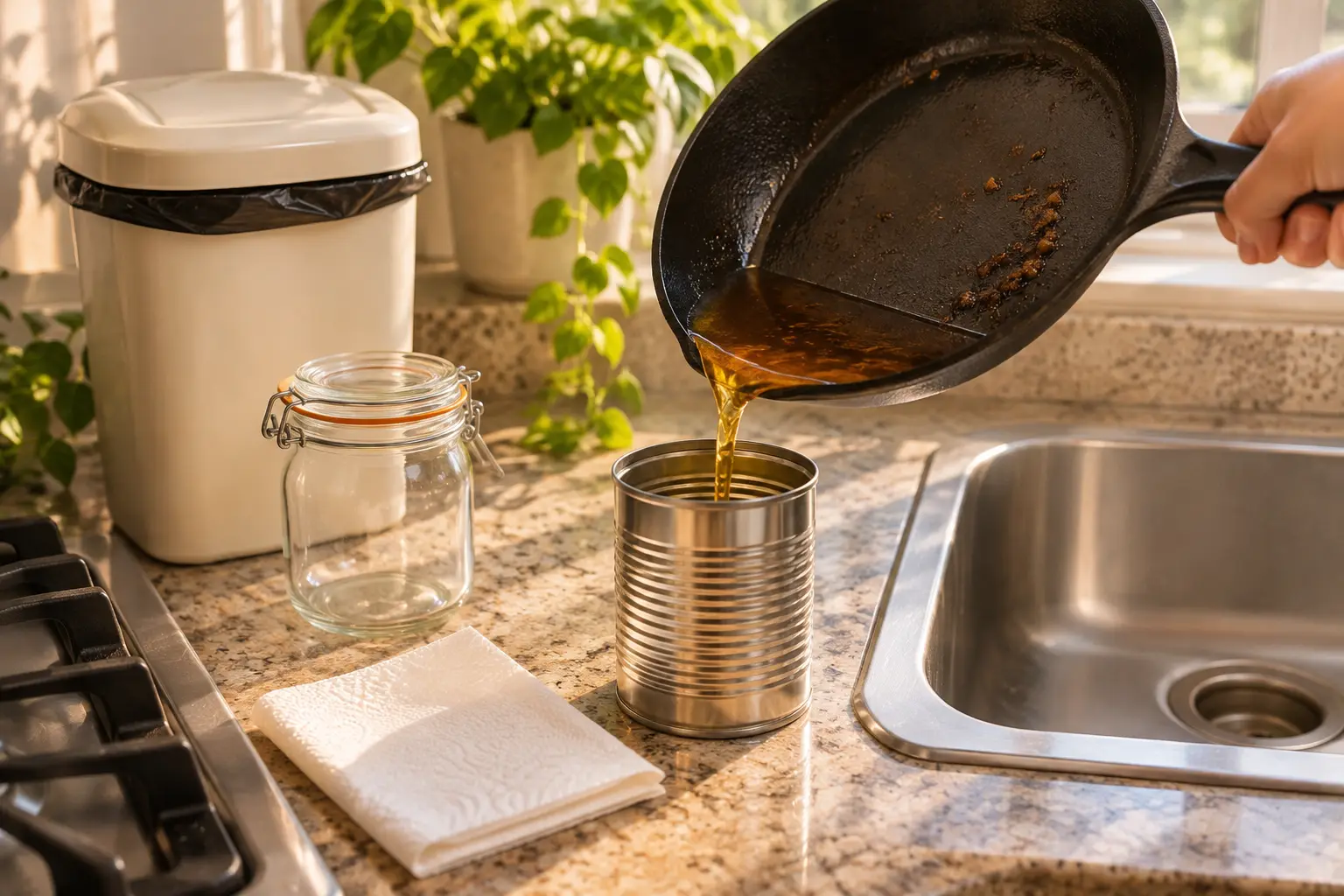
Pour It into a Lidded Container
Pour the grease into a disposable container such as a soup can, jar or the oil's original plastic bottle. Oklahoma City suggests a soup can or similar lidded container, and Arlington, Texas, suggests a rigid plastic container, preferably the original one. Use a funnel for a fryer.
03
Step 3 of 6
Scrape and Wipe the Pans
Scrape leftover residue from pots and pans into the container, then wipe greasy cookware with a paper towel before washing and throw the towel in the trash, as Oklahoma City and Washington State Ecology recommend.
04
Step 4 of 6
Seal It and Put It in the Trash
Close the lid tightly and put the container in your regular trash. Oklahoma City, Sacramento and Washington State Ecology all describe this method for household grease.
05
Step 5 of 6
Recycle Large Amounts of Fryer Oil
A turkey fryer holds several gallons; Smithfield, Virginia, says the average fryer uses 5 gallons. Many cities collect used cooking oil for recycling into fuel, such as Arlington, Texas, with seasonal drop-offs and Mesa, Arizona, with year-round barrels at some fire stations. Search your city or county utility site for a cooking oil drop-off. If there is none, Smithfield says to seal the cooled oil tightly and put it in the trash.
06
Step 6 of 6
Keep It Out of the Backyard Compost
Do not add grease to a home compost pile. The EPA lists fats, oils and grease as things not to compost at home because they attract animals and backyard piles do not get hot enough to break them down; a commercial facility may take them if it says so.
If that didn’t work
Stubborn or set-in? Try these next, in order.
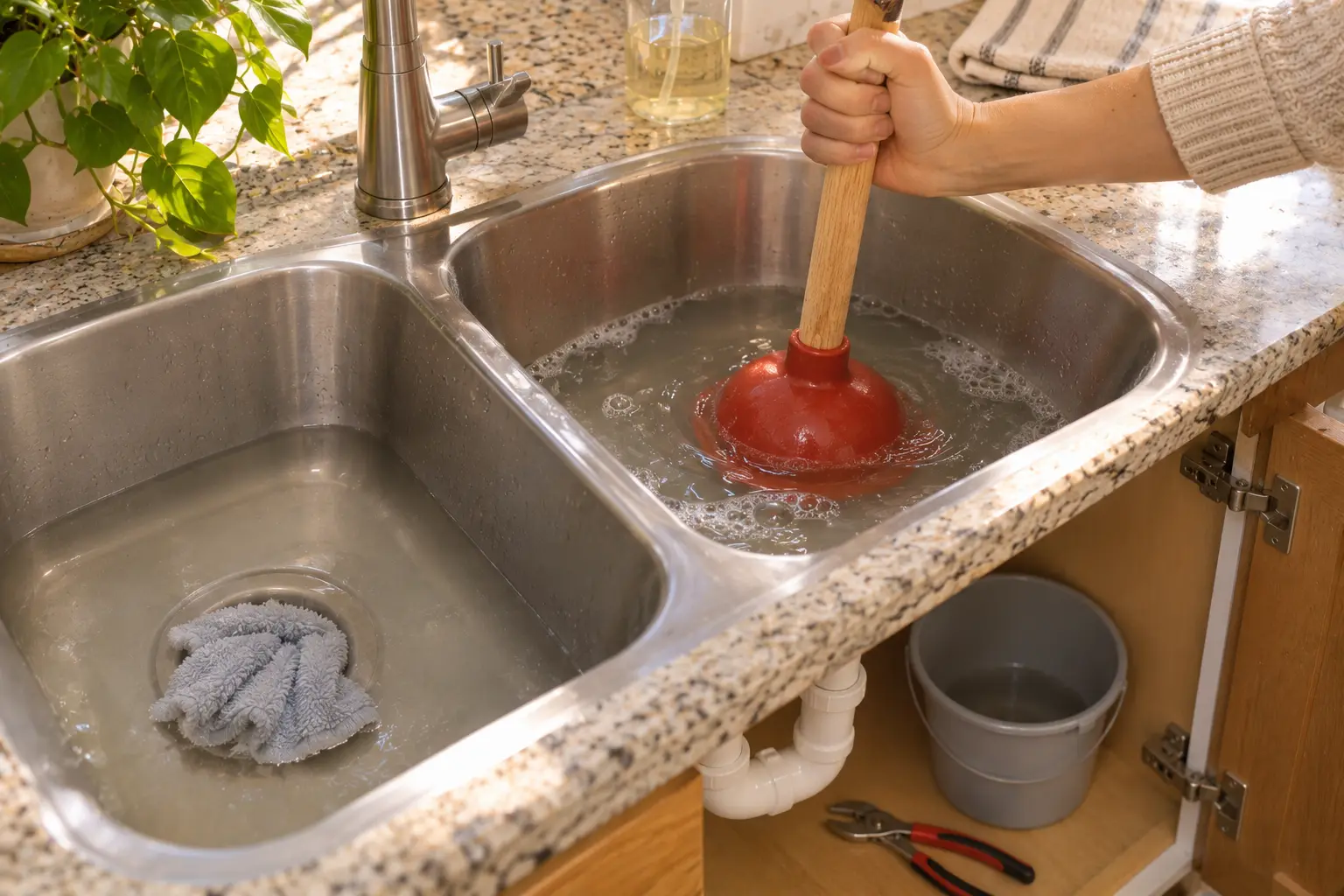
AIf grease already went down the kitchen drain and it is running slowly, stop pouring anything else down it and see our guide to unclogging a kitchen sink without chemicals.
BIf you have a septic system, be extra careful; the EPA says never to pour cooking oil or grease down the drain and to limit garbage disposal use.
CIf your trash service does not accept liquid oil, solidify it in the freezer first or ask your city about a household hazardous materials or recycling site, as Mesa, Arizona, offers.
Common questions
Can you pour grease down the drain with hot water?
No. Oklahoma City says hot water may melt grease temporarily but it re-solidifies as it cools, and Sacramento says running hot water only pushes the clog further down the drain.
Is it OK to put grease down the garbage disposal?
No. Oklahoma City says a disposal may break up solids but the fats, oils and grease still cling to the pipes. The EPA also advises limiting disposal use on septic systems.
Can you pour cooking oil in the toilet?
No. The EPA lists cooking grease or oil among things not to flush, and Washington State Ecology says never to flush fats, oils or grease.
How do you dispose of turkey fryer oil?
Let it cool completely, funnel it into a container and either take it to a cooking oil recycling drop-off if your city offers one, or seal it tightly and put it in the trash, as Smithfield, Virginia, advises. Never pour it into plumbing or a storm drain.
Can you compost cooking grease?
Not in a backyard pile. The EPA says fats, oils and grease attract animals and home piles generally do not get hot enough to break them down; some commercial composting facilities accept them.
Sources we relied on
1.Disposing of Fats, Oils and Grease — City of Oklahoma City Utilities. Grease builds up in home pipes and sewer mains and can back up wastewater into homes; garbage disposals break up solids but grease still clings to pipes; soap and degreasers pass grease down the line; hot water melts it only temporarily; pour it into a soup can or lidded container kept in the freezer and trash it when full; wipe cookware with a paper towel first.
2.Four steps to avoid a common Thanksgiving disaster — City of Sacramento. Pour grease into a disposable container, scrape pots and pans, seal the container and let it cool, then put it in the trash; running hot water only pushes the clog further down the drain.
3.Arlington's Holiday Grease Roundup Runs Through Jan. 31, 2027 — City of Arlington, Texas. Grease can harden in pipes and sewer lines and cause clogs; let used oil cool and pour it into a rigid plastic container, preferably the original; free drop-off sites accept cooking oil and grease only, no motor oil; recycled oil becomes a renewable fuel.
4.How to Care for Your Septic System — U.S. Environmental Protection Agency. Never pour cooking oil or grease down the drain; cooking grease or oil is on the list of things not to flush; eliminate or limit garbage disposal use.
5.Composting At Home — U.S. Environmental Protection Agency. Fats, oils and grease are on the do-not-compost list because they attract animals and backyard piles generally do not get hot enough to break them down; commercial facilities may accept them.
6.You've Fried the Turkey, Now What Do You Do with the Oil? — Town of Smithfield, Virginia. The average fryer uses 5 gallons; once the oil has completely cooled funnel it into a container, seal it tightly and put it in the trash if not reusing; never pour it into plumbing or a storm drain.
7.Safe Disposal of Fats, Oils, Grease and Personal Items — City of Mesa, Arizona. Do not use hot water and soap to wash grease down the drain; use a jar or coffee can for larger amounts and put it in the trash; used cooking oil can be recycled at the Household Hazardous Materials facility.
8.Put Your Pipes on a Fat-Free Diet — Washington State Department of Ecology. Never pour fats, oils or grease down the drain or flush them; pour grease into a heat-proof container such as a tin can, cool it and put it in the trash; wipe greasy pans with paper towels and throw them away.