Dish soap on a soft sponge, every stroke with the grain, a clean-water rinse and a microfiber dry. What sink makers Kraus, Blanco, Kohler and Franke say about water spots, Bar Keepers Friend, steel wool and the rubber mat sitting in your bowl.
White vinegar, for hard water deposits, if your sink maker allows it
Optional: Bar Keepers Friend or a stainless sink cleaner your sink maker recommends
Optional: a stainless steel bottom grid to protect the bowl
Step by step
01
Step 1 of 7
Clear the Sink and Find the Grain
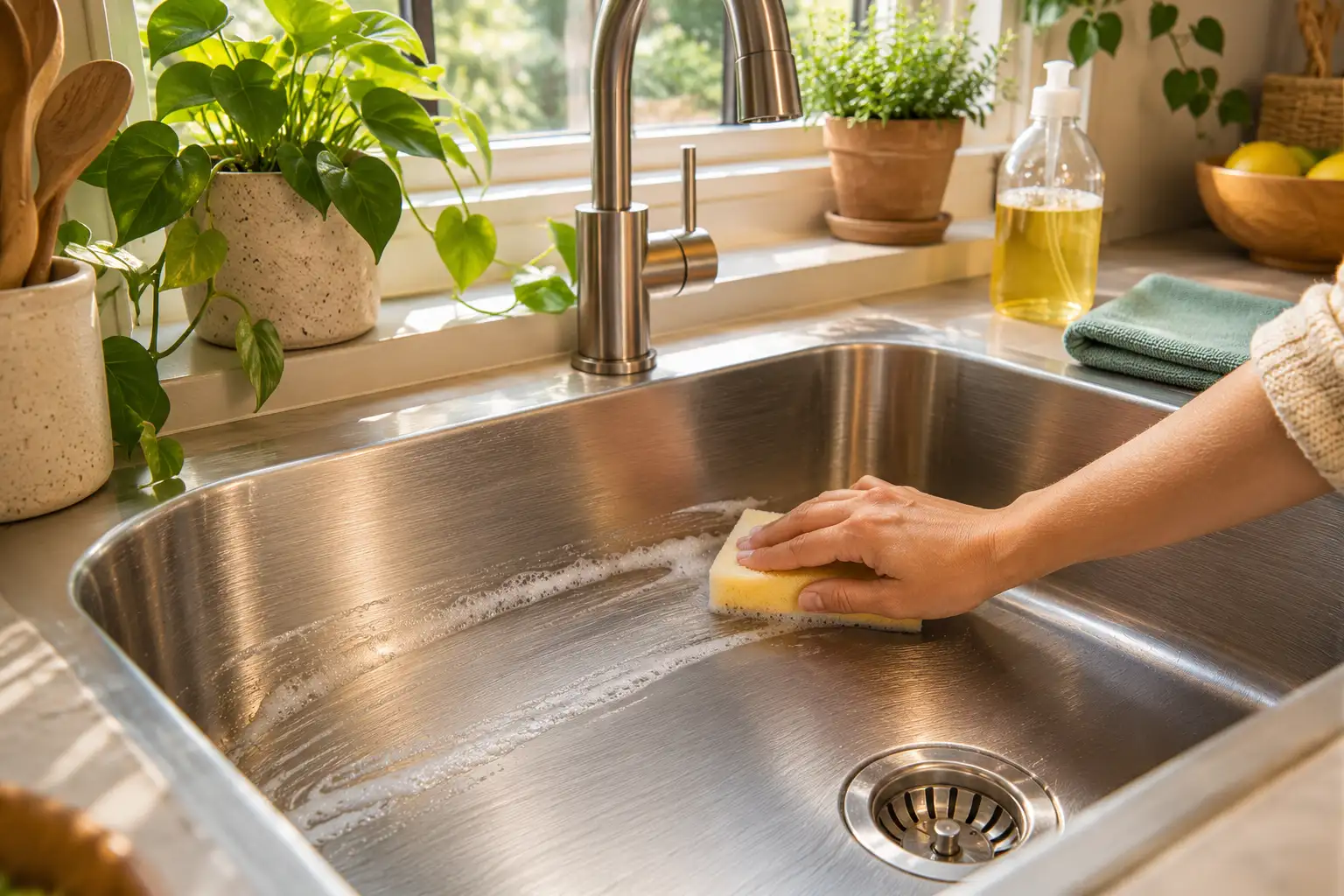
Take out dishes, mats, racks and any rags, and rinse away loose food. Look closely at the bowl for the fine brushed lines in the steel. Every wipe, scrub and dry stroke in this guide goes in that direction, not in circles.
02
Step 2 of 7
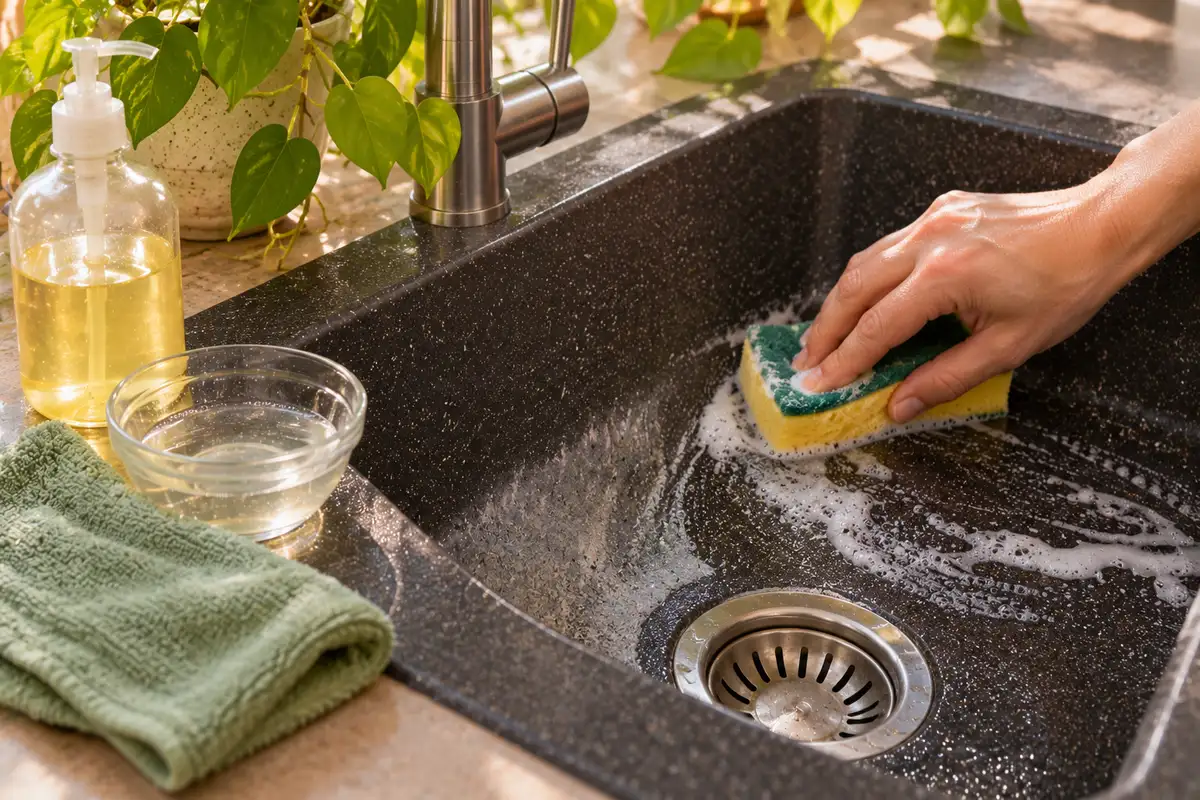
Wash with Dish Soap on a Soft Sponge
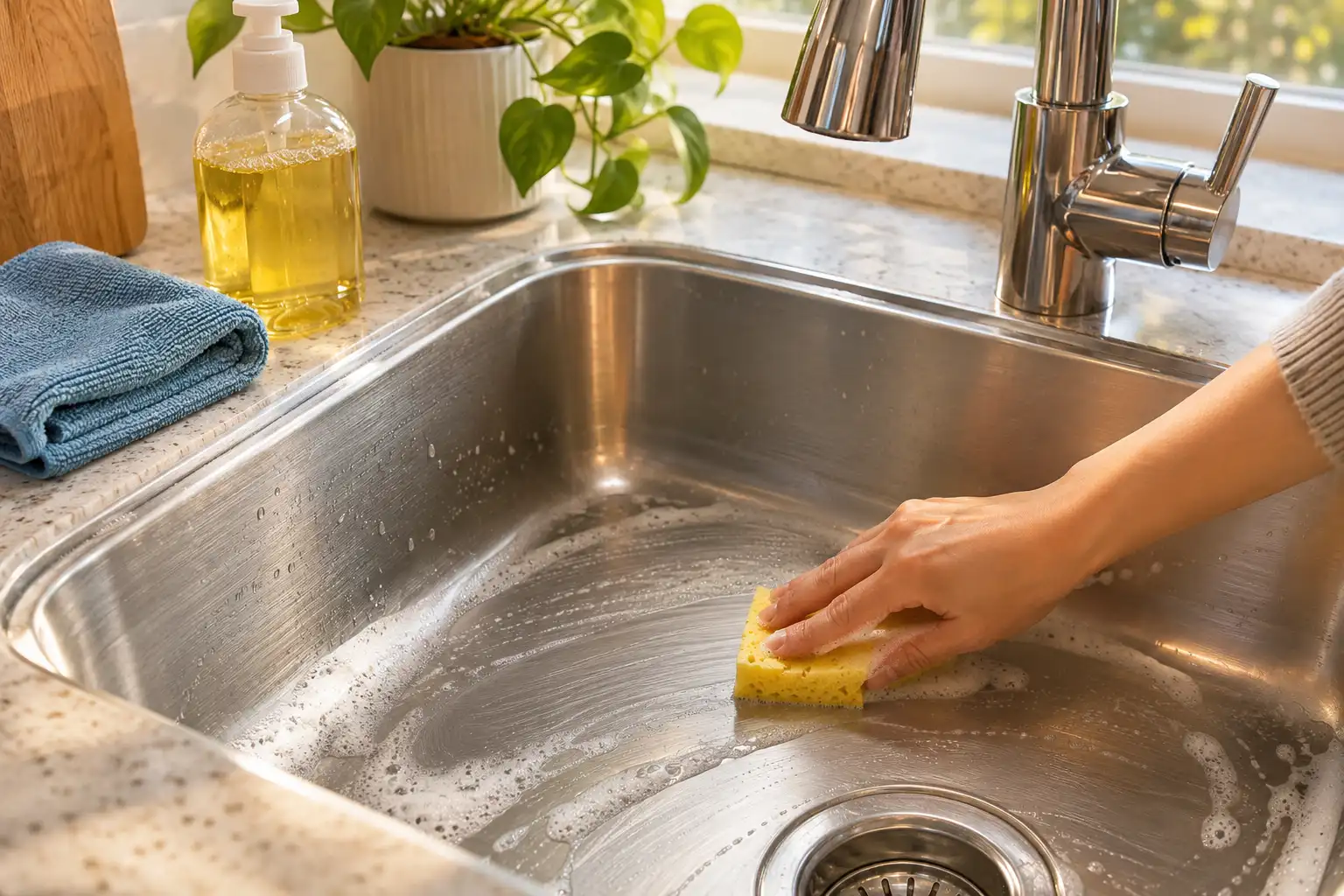
Wet a sponge and squeeze a little dish soap onto the soft side. Wipe the bowl, walls, rim and drain area in the direction of the brushed finish. Do not use the rough scrubber side, which Franke advises against on stainless sinks.
03
Step 3 of 7
Rinse with Clean Water
Rinse the whole sink thoroughly with clean, lukewarm water so no soap film is left in the grain.
04
Step 4 of 7
Dry Along the Grain with Microfiber
Dry the sink completely with a microfiber cloth, again in the direction of the brushed finish. Franke says drying the surface after each use prevents water deposits from forming, which is what causes most of the white spots and dull patches on stainless sinks.
05
Step 5 of 7
Remove Hard Water Spots
If white mineral deposits build up, Kraus recommends vinegar to neutralize the minerals: wipe it on with a soft cloth, then rinse well with water and dry. Some makers, including Franke, list acids among things that attack stainless if left on the surface, so check your own sink's care guide first and never let vinegar sit or soak.
06
Step 6 of 7
Use Bar Keepers Friend for Stains and Light Scratches
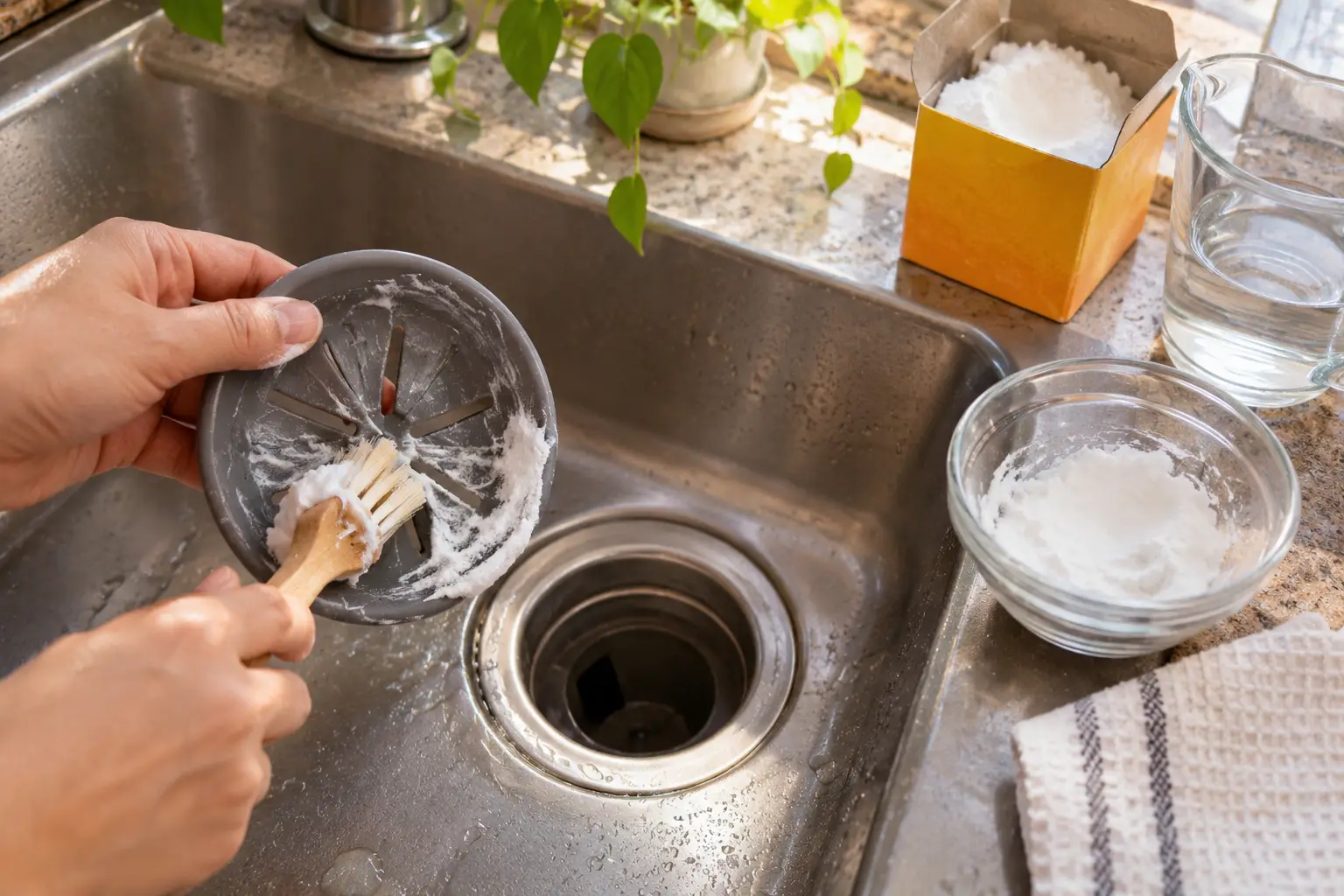
For marks and light scratches that soap will not lift, Kraus recommends a deep cleansing agent such as Bar Keepers Friend. Follow the product label, apply it with a soft wet sponge or cloth along the grain, rinse thoroughly and dry. Blanco and Franke sell their own sink cleaners; if your sink maker names one, use that.
07
Step 7 of 7
Keep the Bowl Free of Mats and Rags
Do not store a rubber mat, dish rag or plastic pad in the sink. Kohler says mats left in the sink let soap and hard water deposits form in the grain and advises not leaving dish rags in the basin, and Franke warns against leaving plastic pads in the sink for long periods. If you want to protect the bottom, use a stainless steel bottom grid instead.
If that didn’t work
Stubborn or set-in? Try these next, in order.
ASmall brown rust spots usually come from outside iron particles, not the sink itself: Franke points to particles from supply pipes, and Kohler to metallic particles oxidizing on the surface. Stop using any steel wool or abrasive pads, clean the spots with a non-scratch pad and a stainless cleaner your sink maker approves, then rinse and dry.
BIf white spots keep coming back, you are probably letting water air-dry in the bowl. Make drying with a microfiber cloth part of the routine after every use.
CIf rust keeps returning in one area, check what is stored under the sink. Kohler says fumes from chemicals stored there, and overspray from bleach-based counter cleaners, can rust stainless steel.
Common questions
What is the best way to clean a stainless steel sink?
Wash it with water and mild dish soap on a soft sponge, wiping in the direction of the grain, then rinse with clean water and dry with a microfiber cloth. Kraus recommends this at least once a week, and Blanco and Franke recommend a quick clean and dry after each use.
Can I use Bar Keepers Friend on my stainless steel sink?
Yes, according to Kraus, which names Bar Keepers Friend as a deep cleansing agent for stainless sinks. Follow the label, work along the grain with a soft sponge, and rinse and dry thoroughly. If your sink came with its own care guide or recommended cleaner, follow that first.
How do you get water spots off a stainless steel sink?
Kraus recommends vinegar to neutralize hard water minerals, followed by a thorough rinse and dry. Because Franke lists acids among substances that can attack stainless if left on the surface, do not let vinegar sit, and check your sink maker's guidance. Drying the sink after each use prevents most spots in the first place.
Why is my stainless steel sink rusting?
Usually it is not the steel itself. Kohler says rust on stainless products comes from metal particles that oxidize on the surface, and from chemical fumes or bleach overspray. Franke adds that iron particles from supply pipes can leave small brown spots. Kohler warns that steel wool and abrasive pads let rust get into the grain.
Should you leave a rubber mat in a stainless steel sink?
No. Kohler says rubber mats left in the sink allow soap and hard water deposits to form in the grain. Take mats out after use and let the sink dry, or use a stainless steel bottom grid, which Kraus makes for protecting the bowl finish.
Sources we relied on
1.Care & Maintenance — KRAUS. Clean stainless steel sinks once a week with water and a mild ammonia-free liquid soap on a soft sponge, rinse and pat dry with microfiber, use vinegar for hard water deposits, a deep cleansing agent such as Bar Keepers Friend for minor scratches, never use abrasive pads, steel wool or wire brushes, avoid bleach or chlorine and rinse immediately if they contact the sink; bottom grids protect the bowl.
2.How to Clean a Stainless Steel Sink — BLANCO. A stainless sink keeps its brilliance best if cleaned immediately after use: wipe with dish soap on the soft side of a sponge in the direction of the brushed finish, rinse with clean water and dry in the direction of the brushed finish with a microfiber cloth.
3.Problem with Rust on Stainless Steel Product — Kohler. Rust is caused by metallic particles oxidizing on the surface, and by chemical fumes under the sink or bleach-based counter cleaner overspray; do not use steel wool, wire brushes or abrasive pads, do not leave dish rags in the sink, and rubber mats left in the sink allow soap and hard water deposits to form in the grain.
4.How to Clean Stainless Steel Sinks — Franke. Wipe the sink after use with a damp soft cloth and detergent and rinse; drying the surface after each use prevents water deposits; do not use the rough side of sponges; household products containing bleaches and acids attack stainless steel; do not leave plastic pads in the sink for long periods.