Gear up with an N95, gloves and goggles, scrub the sill with detergent and water, dry it completely, replace wood that is no longer sound, and bring winter humidity down so condensation stops feeding the mold. Based on the EPA, the CDC, the Minnesota Department of Health and NDSU Extension.
Look at how far the mold has spread. The EPA says most people can handle a moldy area smaller than about 10 square feet themselves. If it covers more than that, or the wood looks badly damaged, check the EPA's larger cleanup guidance or hire a contractor with mold cleanup experience. If you have health concerns, the EPA says to talk to a health professional first.
02
Step 2 of 8
Put On Protective Gear and Ventilate
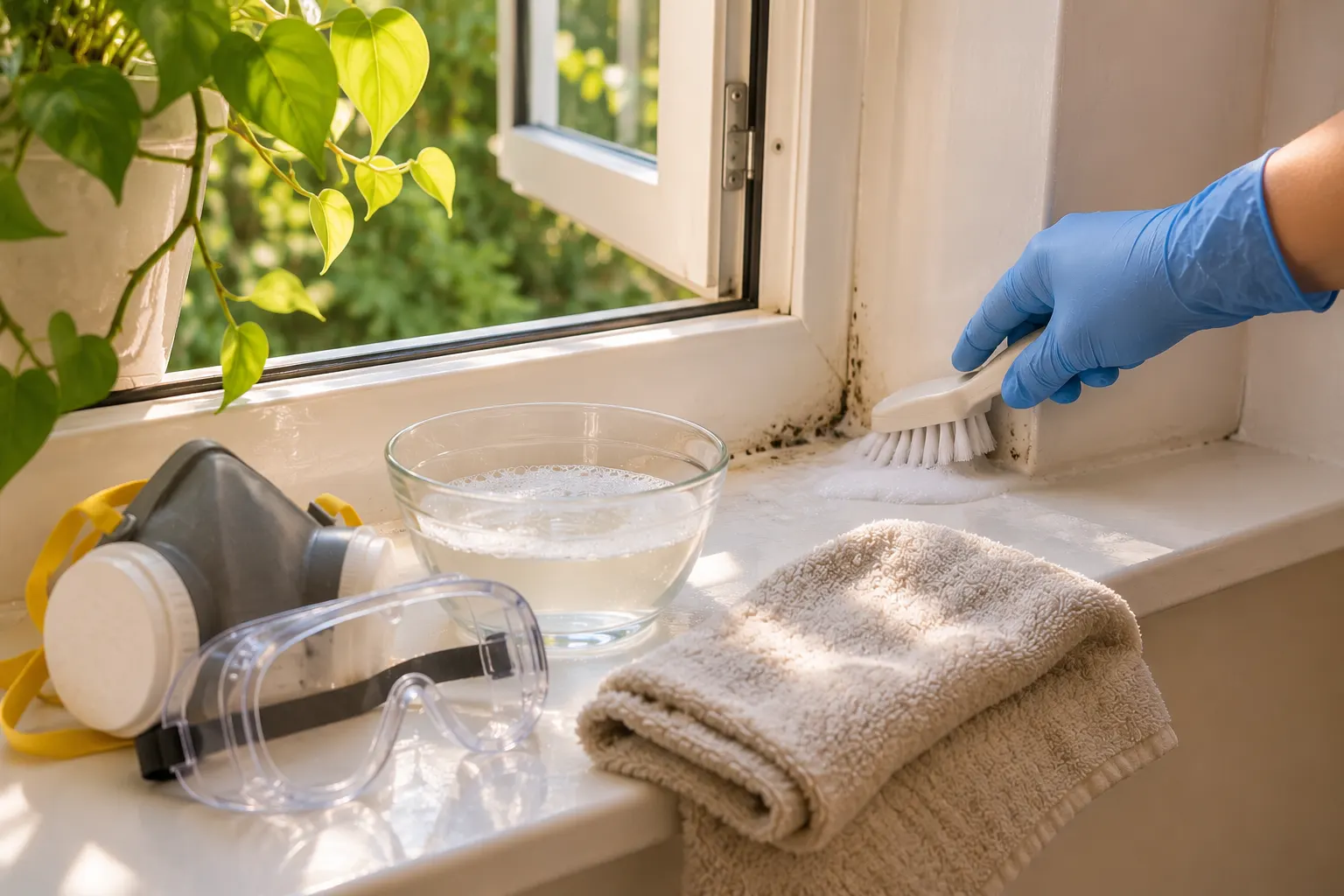
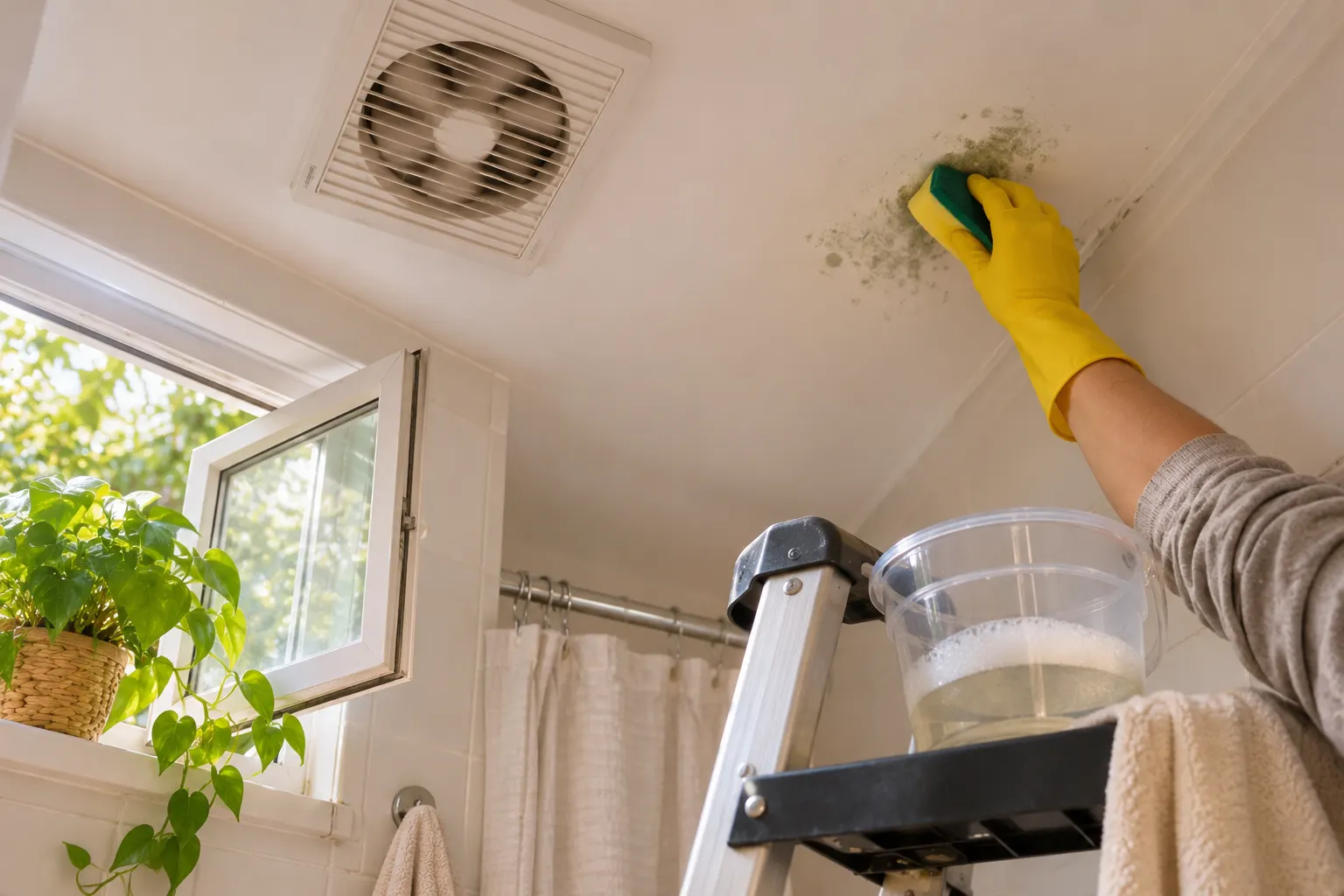
Wear rubber gloves, goggles and an N-95 respirator, as the EPA recommends, plus outer clothing, which the Minnesota Department of Health suggests. Open the window, if the weather allows, and nearby doors for fresh air, as the CDC advises.
03
Step 3 of 8
Scrub with Detergent and Water
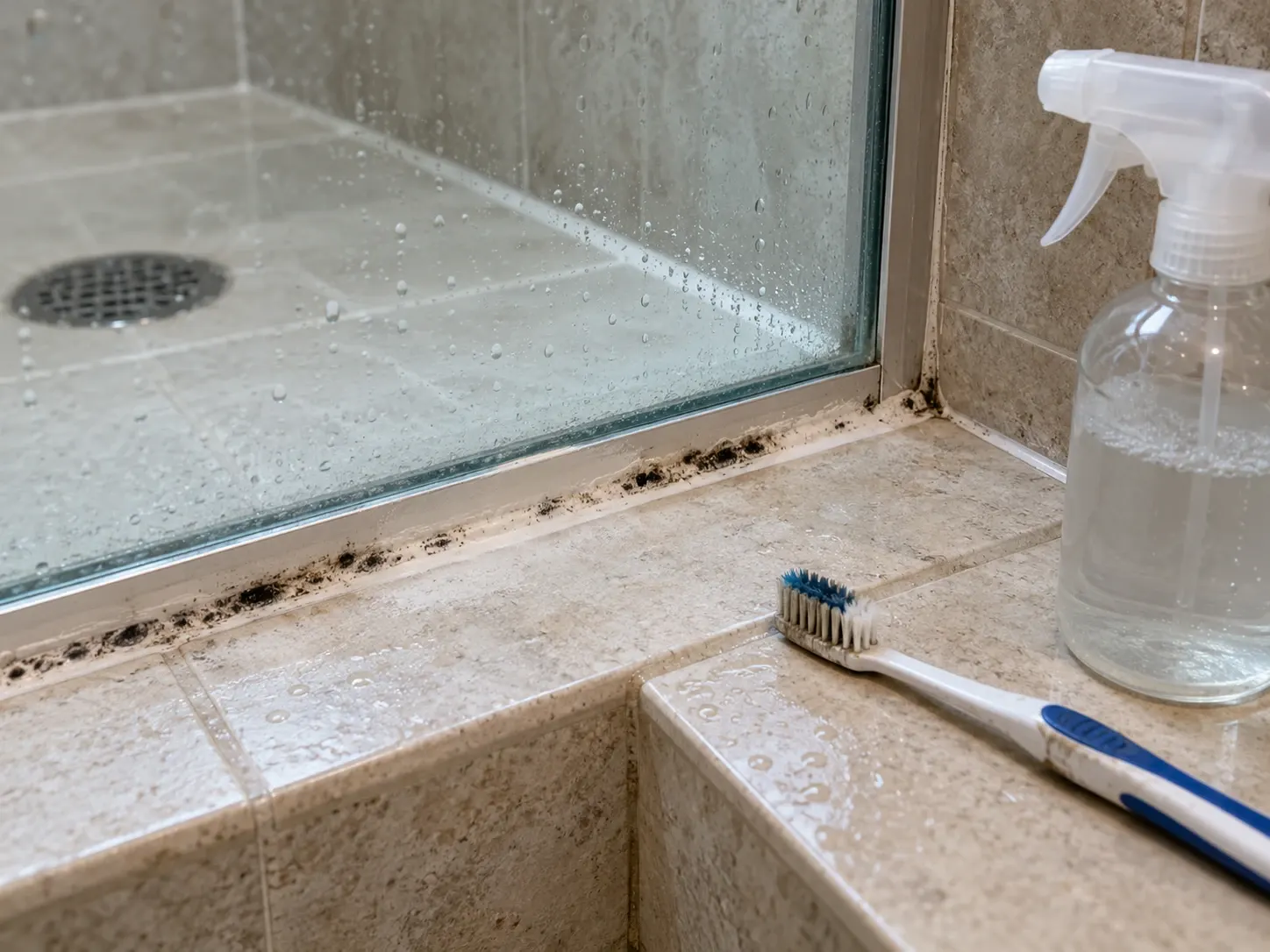
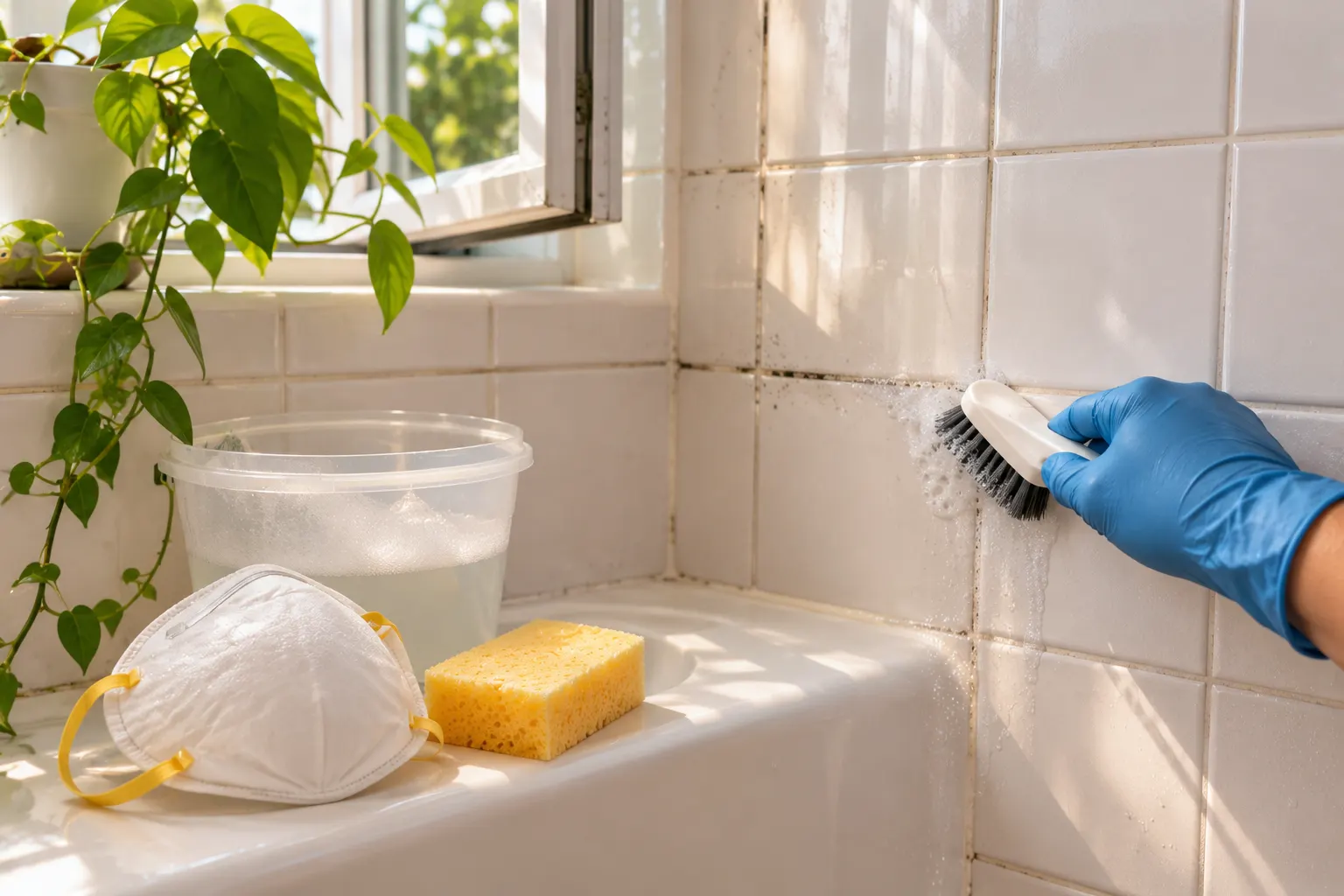
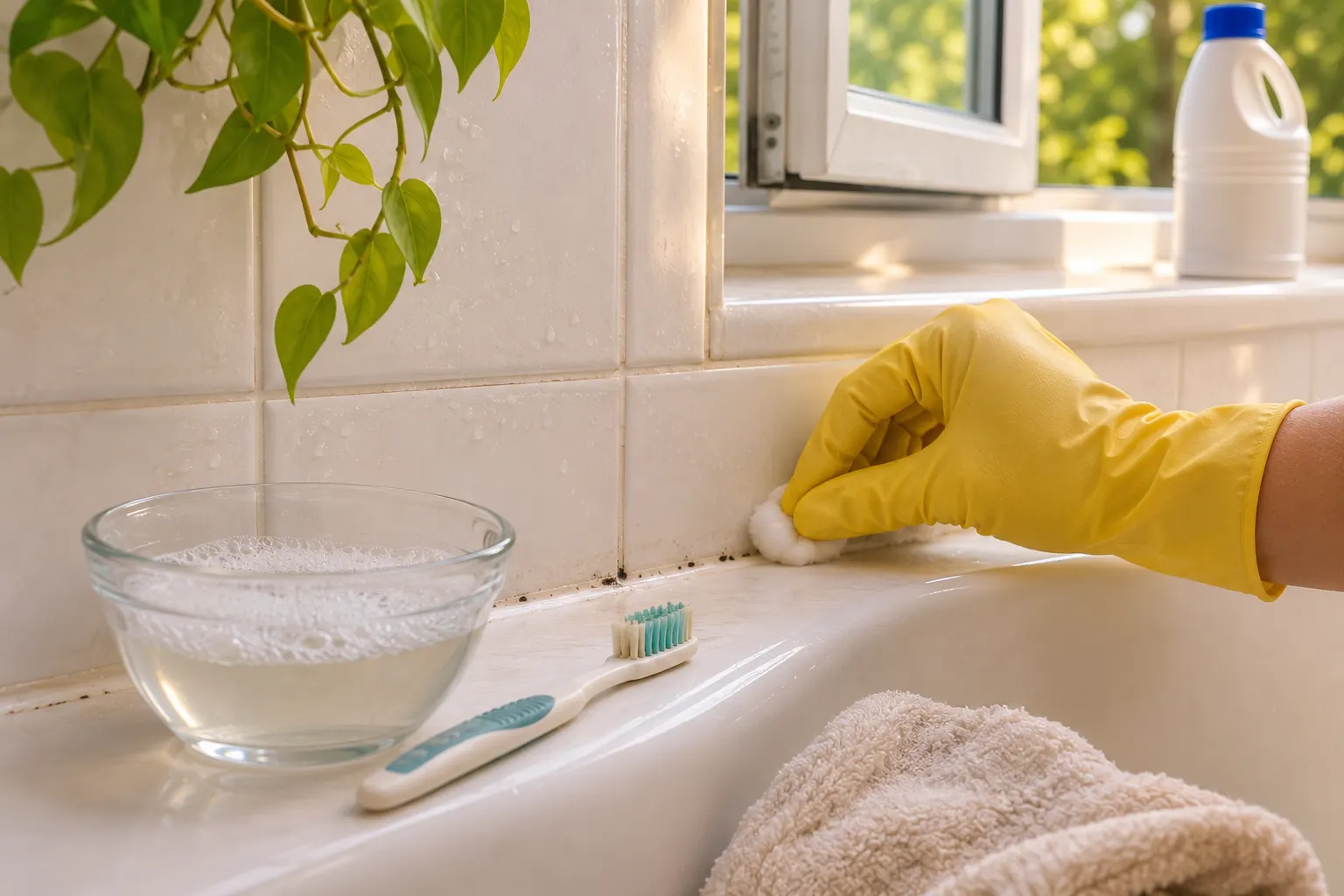
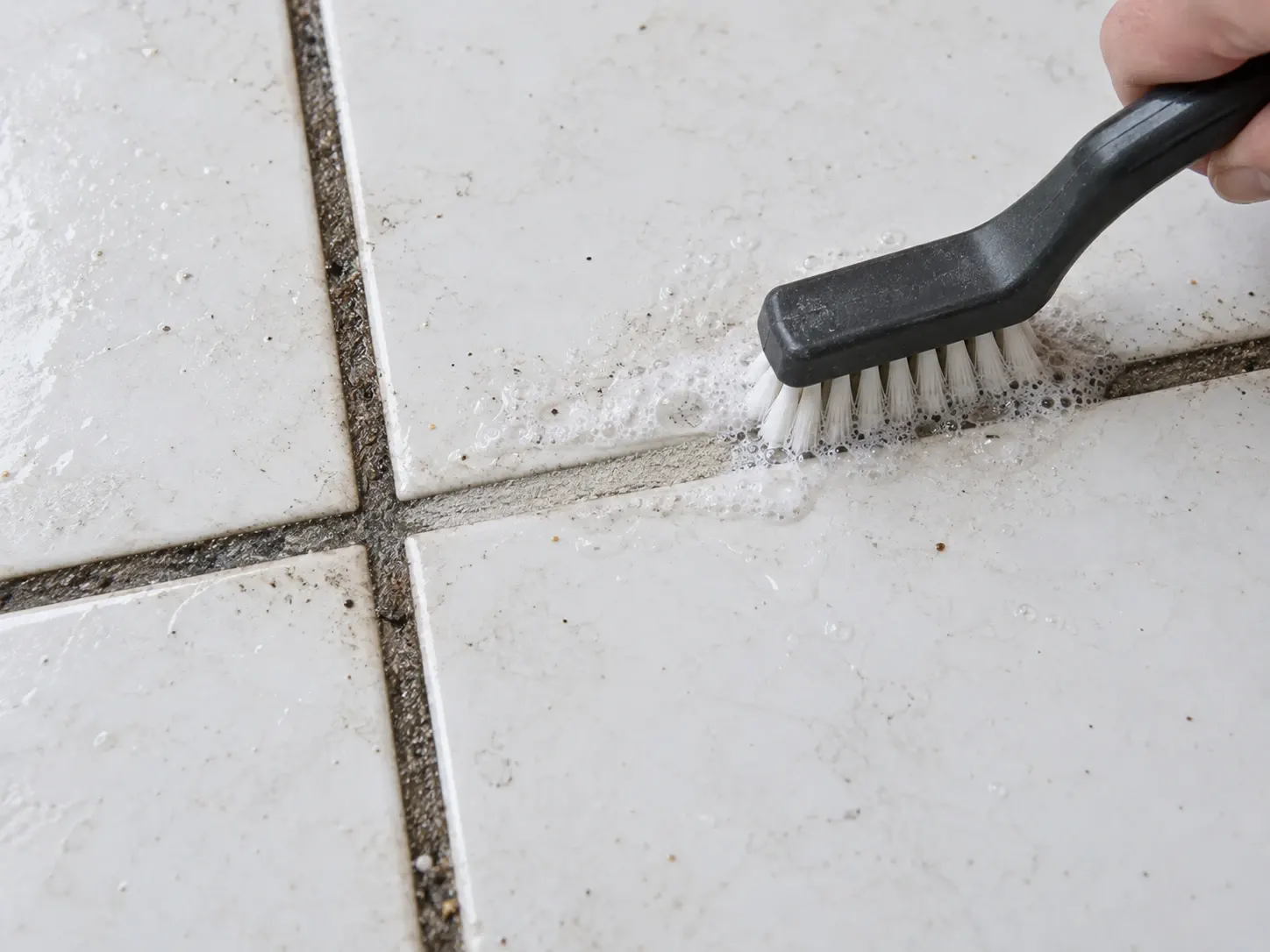
Scrub the mold off the sill, frame and the edges of the glass with detergent and water, which is the EPA's method for hard surfaces. The Minnesota Department of Health describes using a stiff brush, hot water and household detergent, then rinsing. Work into corners and along the bottom rail where condensation pools.
04
Step 4 of 8
Use Bleach Only If Needed, and Carefully
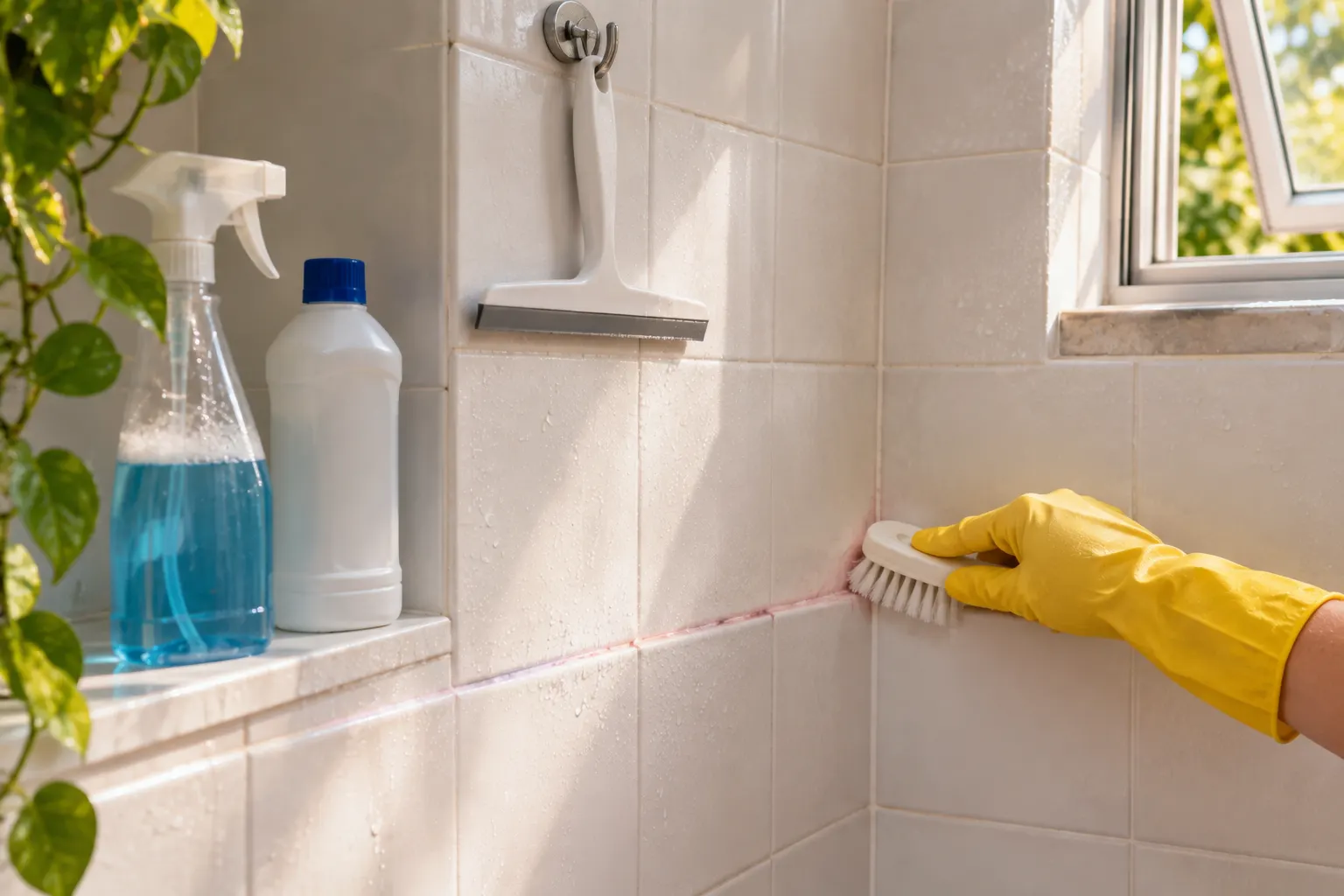
The CDC says a bleach solution of no more than 1 cup of household laundry bleach in 1 gallon of water can be used on hard surfaces. The Minnesota Department of Health treats bleach as optional, for mold that remains after scrubbing, and says to use it diluted and only in a well-ventilated area. Never combine bleach with ammonia or any other cleaner.
05
Step 5 of 8
Dry the Sill Completely
Wipe the sill and frame dry and let them dry fully, as the EPA directs after scrubbing. The EPA says water-damaged areas should be dried within 24 to 48 hours to prevent mold growth, and the Minnesota Department of Health gives the same window for drying wet materials.
06
Step 6 of 8
Check the Wood and Replace If It Is Not Sound
The Minnesota Department of Health says solid wood can be cleaned if it is structurally sound. If the sill or frame is soft, crumbling or rotted, cleaning alone will not fix it, and the EPA notes that porous materials may have to be thrown away if they become moldy. Have damaged wood repaired or replaced before refinishing.
07
Step 7 of 8
Refinish Only After It Is Clean and Dry
Do not paint or caulk over mold. The EPA says paint applied over moldy surfaces is likely to peel, so only repaint or recaulk a sill once the mold is gone and the surface is completely dry.
08
Step 8 of 8
Cut the Condensation So It Does Not Return
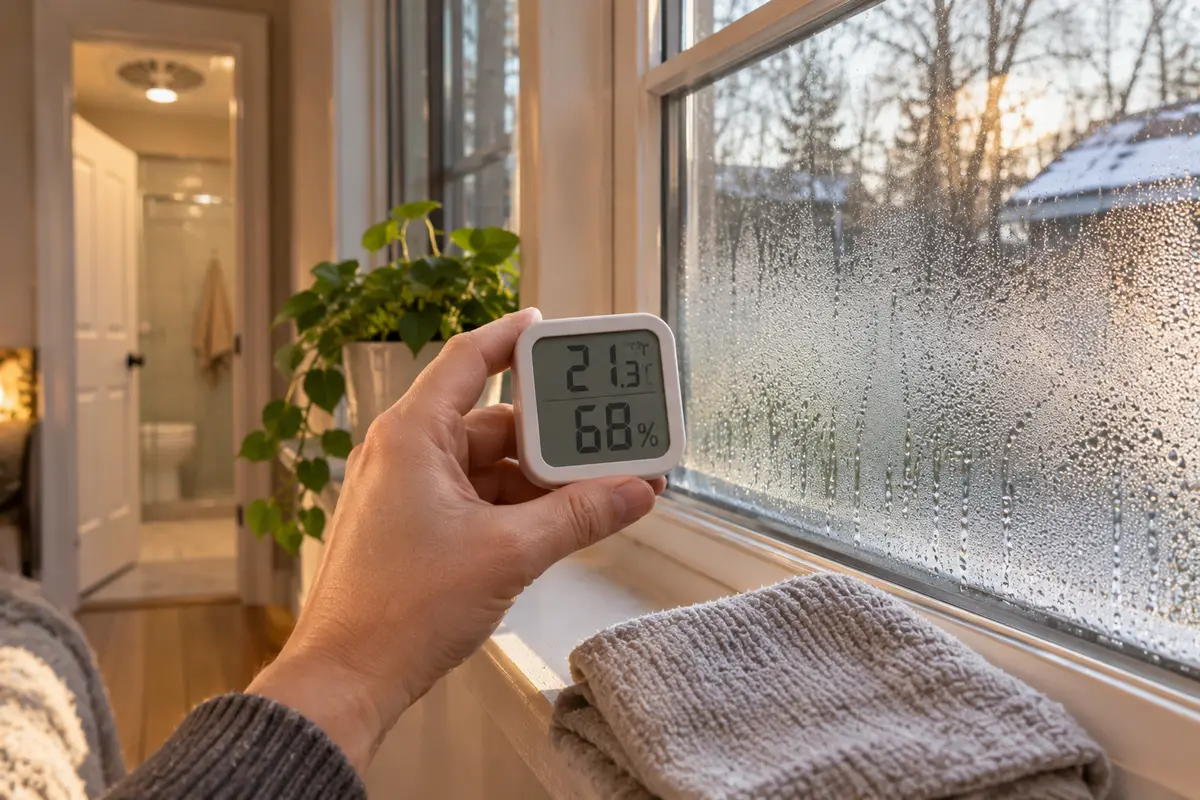
The EPA says to keep indoor humidity below 60 percent, ideally 30 to 50 percent, and to measure it with a humidity meter. In cold weather it should be lower: the EPA lists maximums from 35 percent at 20 degrees F outside down to 15 percent at minus 20 degrees F, and NDSU Extension advises under 40 percent in winter. Turn down or off humidifiers, run exhaust fans vented outside when cooking and bathing, and consider storm windows, caulking or plastic window film to keep the glass warmer, as the EPA and NDSU suggest.
If that didn’t work
Stubborn or set-in? Try these next, in order.
AIf mold comes back within weeks, the moisture is still there. The Minnesota Department of Health says mold will likely return if the moisture problem is not fixed, so check humidity with a meter and lower it, as the EPA advises.
BIf stains or growth remain in soft, damaged wood after scrubbing, the wood is likely no longer sound. The Minnesota Department of Health only clears structurally sound solid wood for cleaning, so have that section repaired or replaced.
CIf the mold covers more than about 10 square feet or keeps spreading into the wall, follow the EPA's larger cleanup guidance or hire a contractor with mold cleanup experience.
Common questions
What is the best way to clean mold off a window sill?
Scrub it with detergent and water and dry it completely, the method the EPA gives for hard surfaces. The Minnesota Department of Health describes using a stiff brush, hot water and household detergent, then rinsing and drying. Wear gloves, goggles and an N-95 respirator while you work.
Can I use bleach on a moldy window sill?
You can on hard surfaces, but it is optional. The CDC says to use no more than 1 cup of household laundry bleach per gallon of water and to open windows and doors, and the Minnesota Department of Health treats bleach as a follow-up for mold left after scrubbing. Never mix bleach with ammonia or other cleaners, since the CDC says it produces a poisonous gas.
Why does mold keep growing on my window sills in winter?
Moisture in warm indoor air condenses on cold window glass, the EPA explains, and NDSU Extension says that water on windows can promote mold growth on the window frame. Lowering indoor humidity, running exhaust fans vented outside and keeping the glass warmer with storm windows or plastic film all help.
Can I just paint over mold on a window sill?
No. The EPA says not to paint or caulk moldy surfaces, and that paint applied over mold is likely to peel. Clean the mold off, let the sill dry completely, and then refinish it.
When should a moldy window sill be replaced?
When the wood is no longer sound. The Minnesota Department of Health says solid wood can be cleaned if it is structurally sound, and the EPA notes porous materials may have to be thrown away if they become moldy. A sill that is soft, crumbling or rotted should be repaired or replaced.
What humidity level stops window condensation and mold?
The EPA recommends keeping indoor humidity below 60 percent, ideally 30 to 50 percent, and lists lower maximums in cold weather, from 35 percent at 20 degrees F outside to 15 percent at minus 20 degrees F. NDSU Extension advises under 40 percent in winter, and the Minnesota Department of Health suggests 20 to 40 percent in winter.
Sources we relied on
1.A Brief Guide to Mold, Moisture and Your Home — U.S. Environmental Protection Agency. Areas under about 10 square feet can usually be cleaned yourself; scrub mold off hard surfaces with detergent and water and dry completely; porous materials may have to be thrown away; do not paint or caulk moldy surfaces; wear gloves, goggles and an N-95 respirator; never mix chlorine bleach with ammonia cleaners because of toxic fumes; keep indoor humidity below 60 percent, ideally 30 to 50 percent, measured with a humidity meter; dry condensation on windows quickly and reduce its source; dry water-damaged areas within 24 to 48 hours; consult a health professional if you have health concerns.
2.Mold Cleanup in Your Home — U.S. Environmental Protection Agency. Moldy areas smaller than about 10 square feet can often be handled by the homeowner; scrub mold off hard surfaces with detergent and water and dry completely; absorbent or porous materials may have to be thrown away if moldy; do not paint or caulk moldy surfaces, as paint over mold is likely to peel; fix water problems as soon as possible; if hiring a contractor, make sure they have mold cleanup experience.
3.About Mold and Dampness — Centers for Disease Control and Prevention. Mold can be removed from hard surfaces with household products, soap and water, or a bleach solution of no more than 1 cup of household laundry bleach in 1 gallon of water; never mix bleach with ammonia or other cleaners because it produces a poisonous gas; follow product instructions; open windows and doors for fresh air; wear rubber boots, rubber gloves and goggles; keep home humidity no higher than 50 percent.
4.Mold and Moisture in Homes — Minnesota Department of Health. Non-porous items such as solid wood, metal and glass can be cleaned if structurally sound by scrubbing with a stiff brush, hot water and household detergent, then rinsing and drying; bleach is optional for remaining mold, diluted and only with good ventilation, never mixed with other chemicals; wear rubber gloves, safety goggles, an N95 or N100 respirator and outer clothing, and consider a professional if you cannot wear a respirator or are sensitive; condensation on windows is a common moisture source; keep humidity at 20 to 40 percent in winter; dry wet materials within 24 to 48 hours; mold will likely return if the moisture problem is not fixed.
5.What Are the Main Ways to Control Moisture in Your Home? — U.S. Environmental Protection Agency. Moisture condenses on window glass because the glass is cold; storm windows and caulking keep interior glass warmer and reduce condensation, and interior storm windows work better; lists maximum indoor humidity from 35 percent at 20 degrees F outside to 15 percent at minus 20 degrees F; the humidistat is set too high if moisture collects on windows; use exhaust fans vented outside, not into the attic; vent the dryer outside; use a humidity indicator.
6.Eliminate Condensation on Windows — North Dakota State University Extension. Water and ice buildup on the inside of windows can damage the house and promote mold growth on the window structure and frame; keep indoor humidity below 40 percent in winter and turn off humidifiers; covering windows with plastic warms the glass; use exhaust fans when cooking and bathing; humidity below 30 percent can dry skin and irritate nasal passages.