On hard, nonporous surfaces, yes, but killing mold is not the goal: removing it and fixing the moisture is. What the EPA and CDC actually recommend, when bleach makes sense, the 10 square foot rule, and the gear to wear.
Optional, hard nonporous surfaces only: household bleach labeled for mold, diluted per the label
Fan for drying
Step by step
01
Step 1 of 7
Measure the Moldy Area
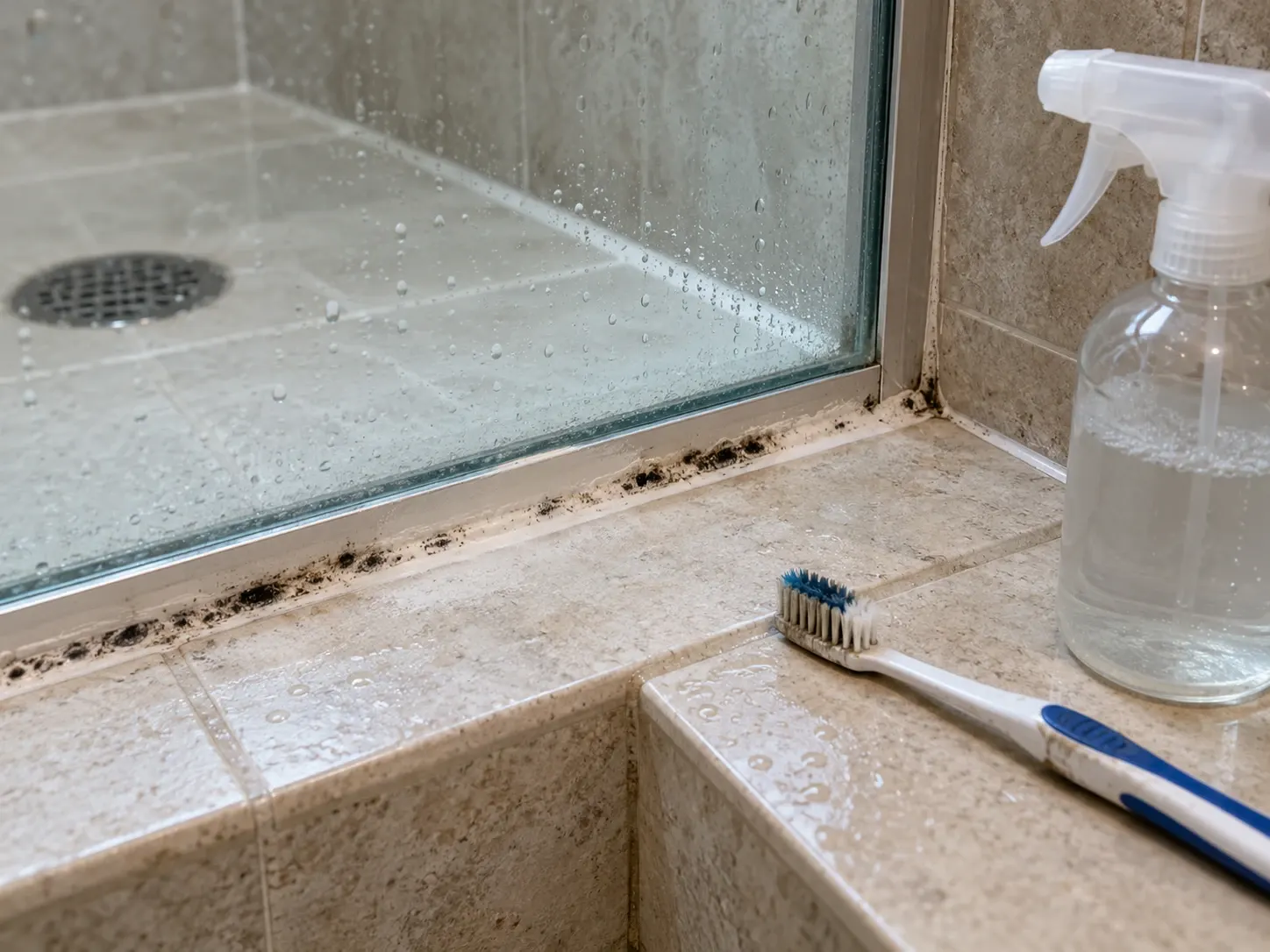
Estimate how big the growth is. The EPA says most people can clean up an area smaller than about 10 square feet, roughly a 3 by 3 foot patch, themselves. Larger growth, heavy water damage, sewage water or a possibly contaminated HVAC system calls for EPA's professional remediation guidance.
02
Step 2 of 7
Find and Fix the Moisture Source
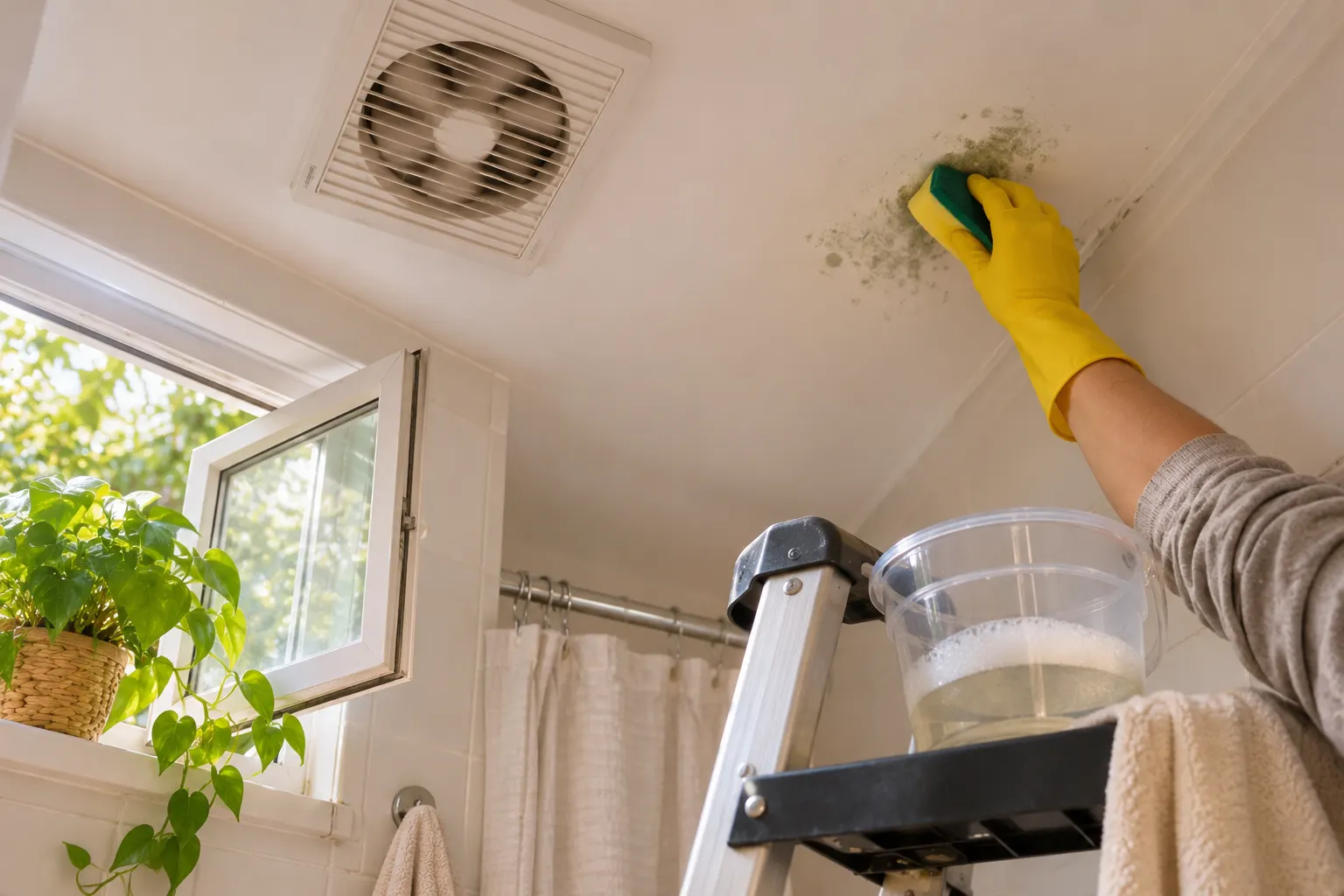
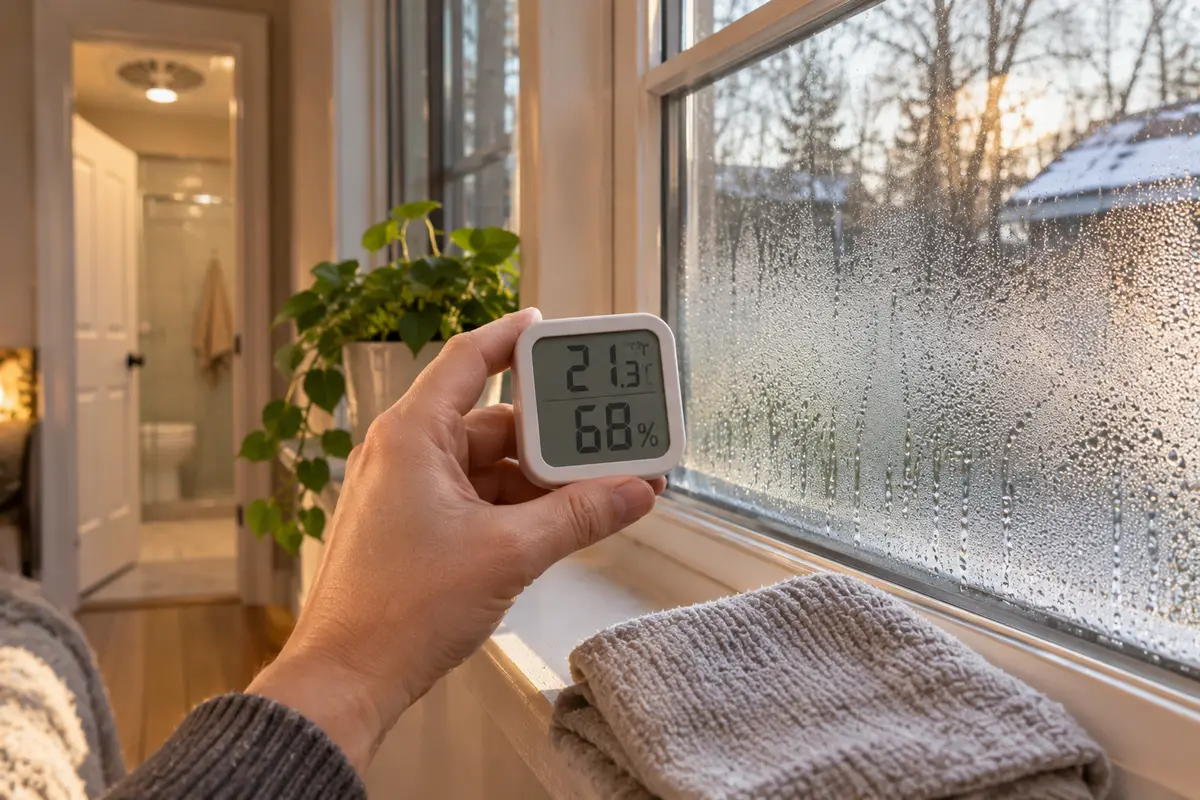
Mold comes back if the water does. Fix leaks and other water problems as soon as possible. The EPA notes it is important to dry water-damaged areas and items within 24 to 48 hours to prevent mold growth. In bathrooms, increase ventilation.
03
Step 3 of 7
Ventilate and Put On Protective Gear
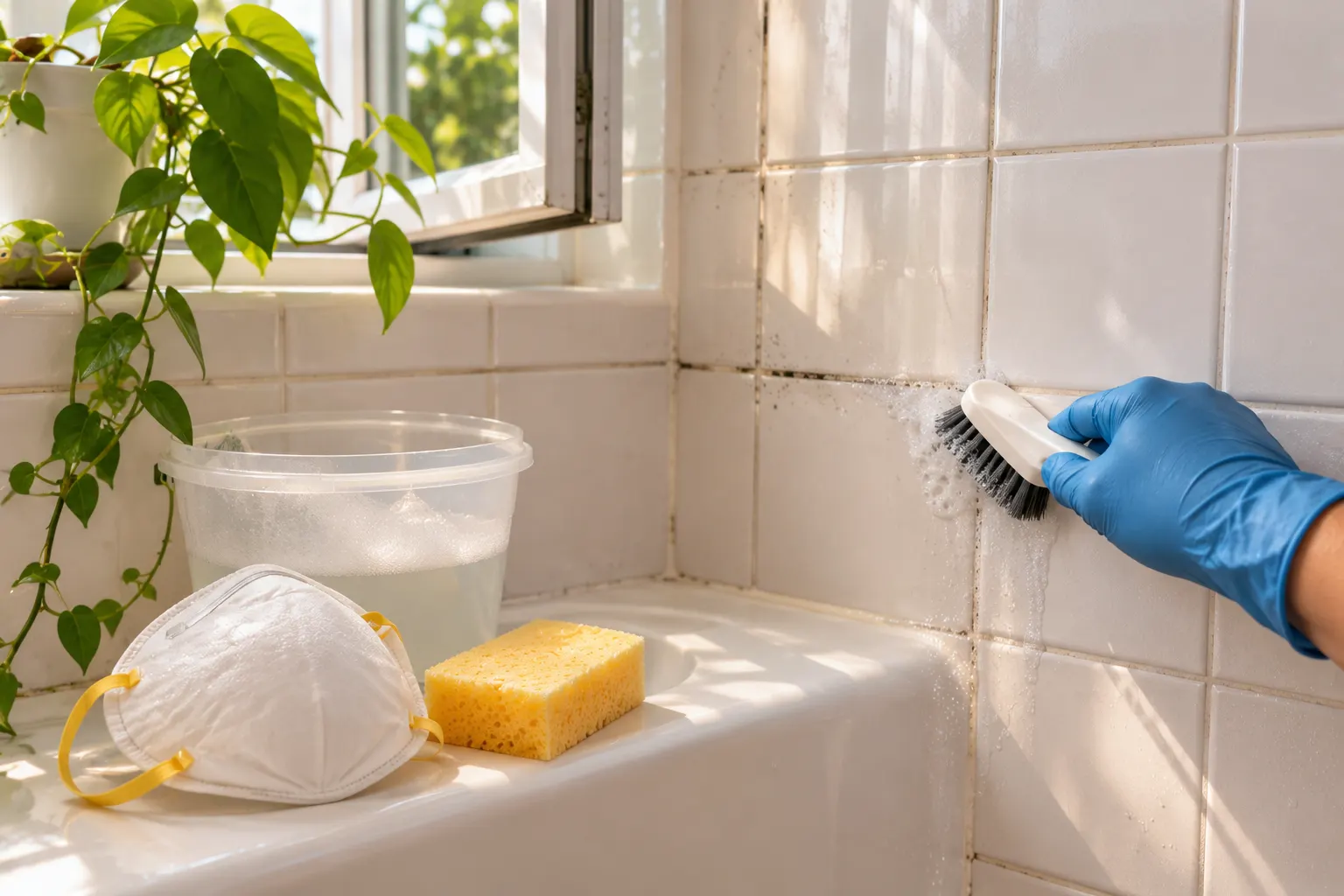
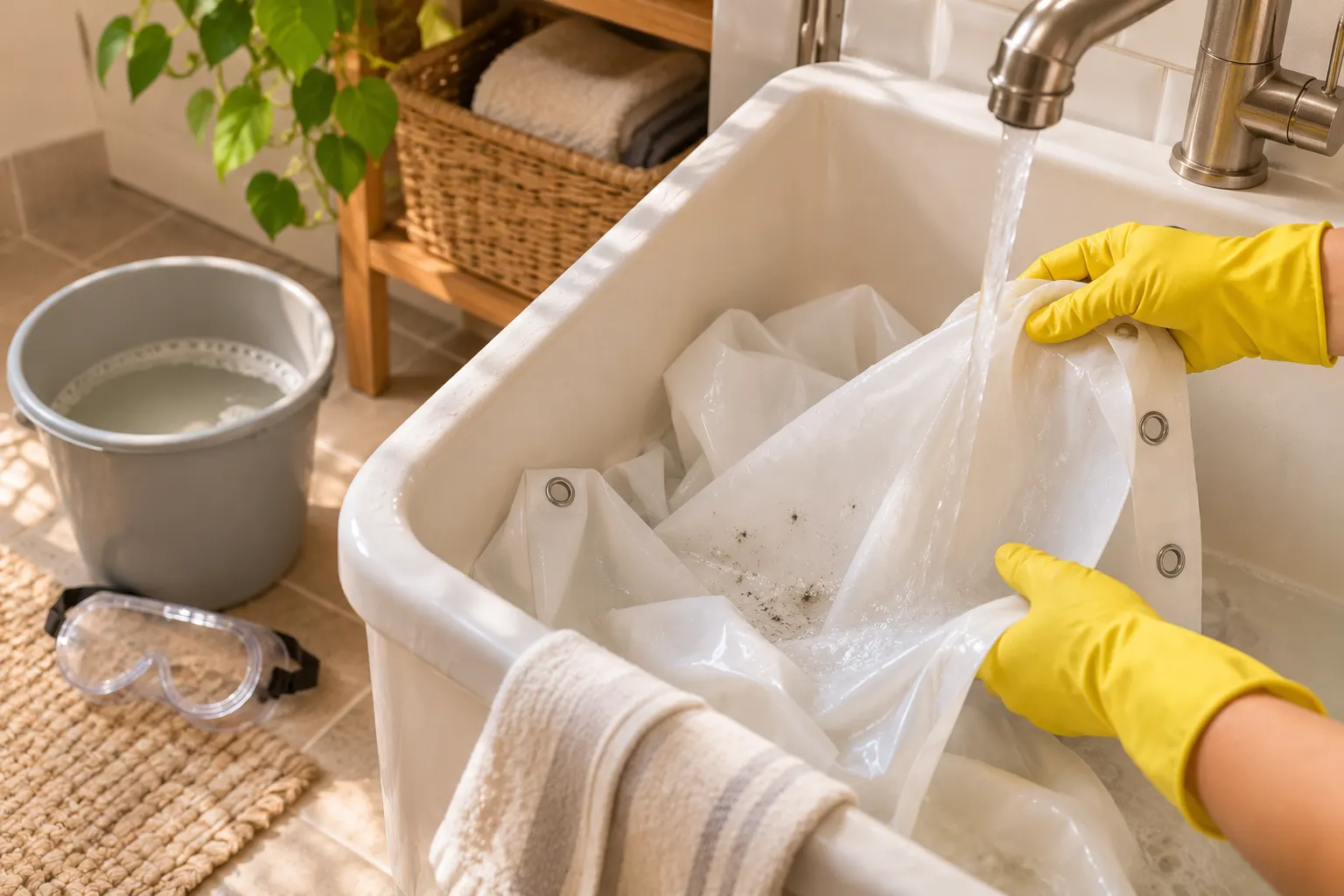
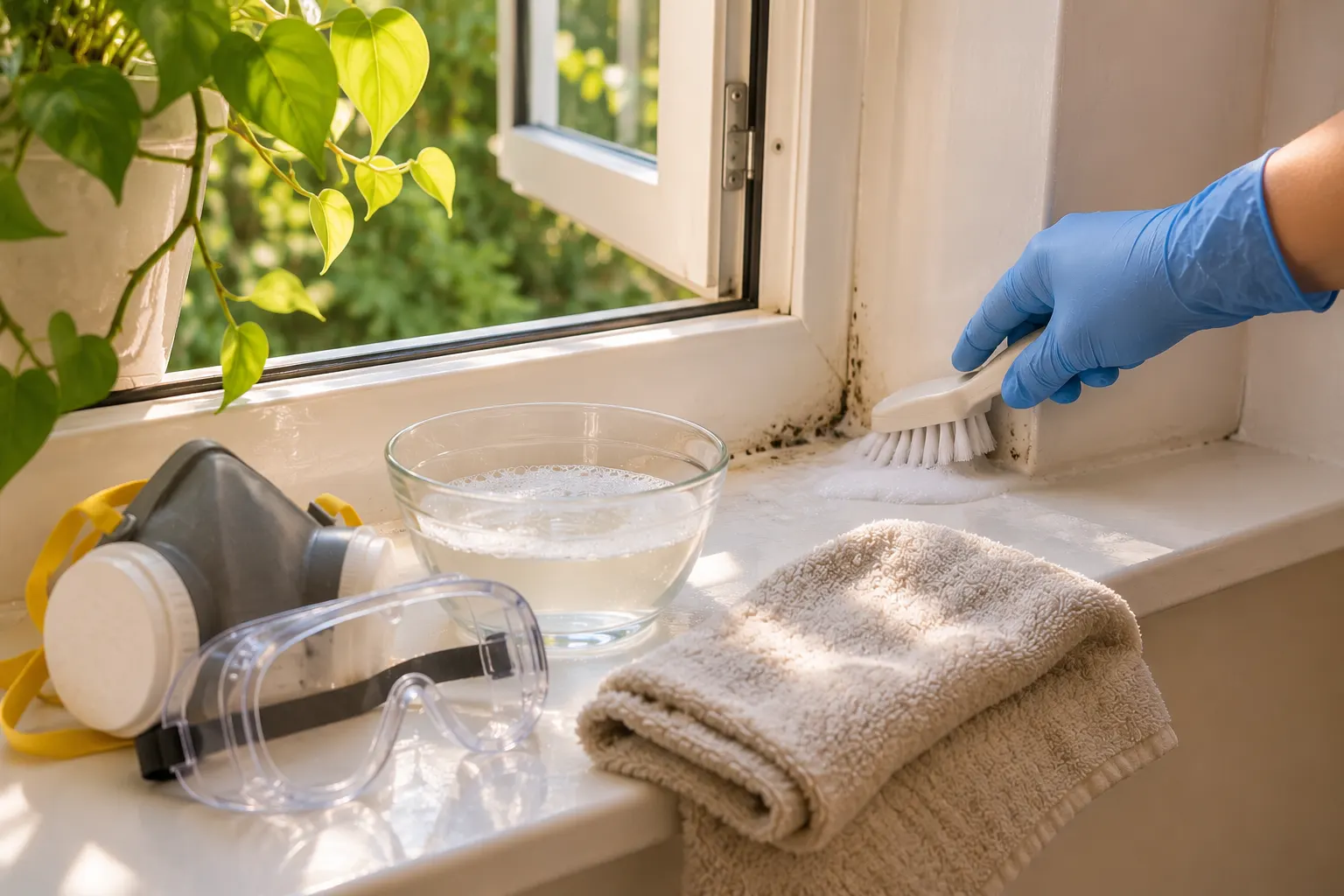
Open windows and doors for fresh air. Put on an N-95 respirator that fits properly, long gloves that reach the middle of the forearm, and goggles without ventilation holes so spores stay out of your eyes.
04
Step 4 of 7
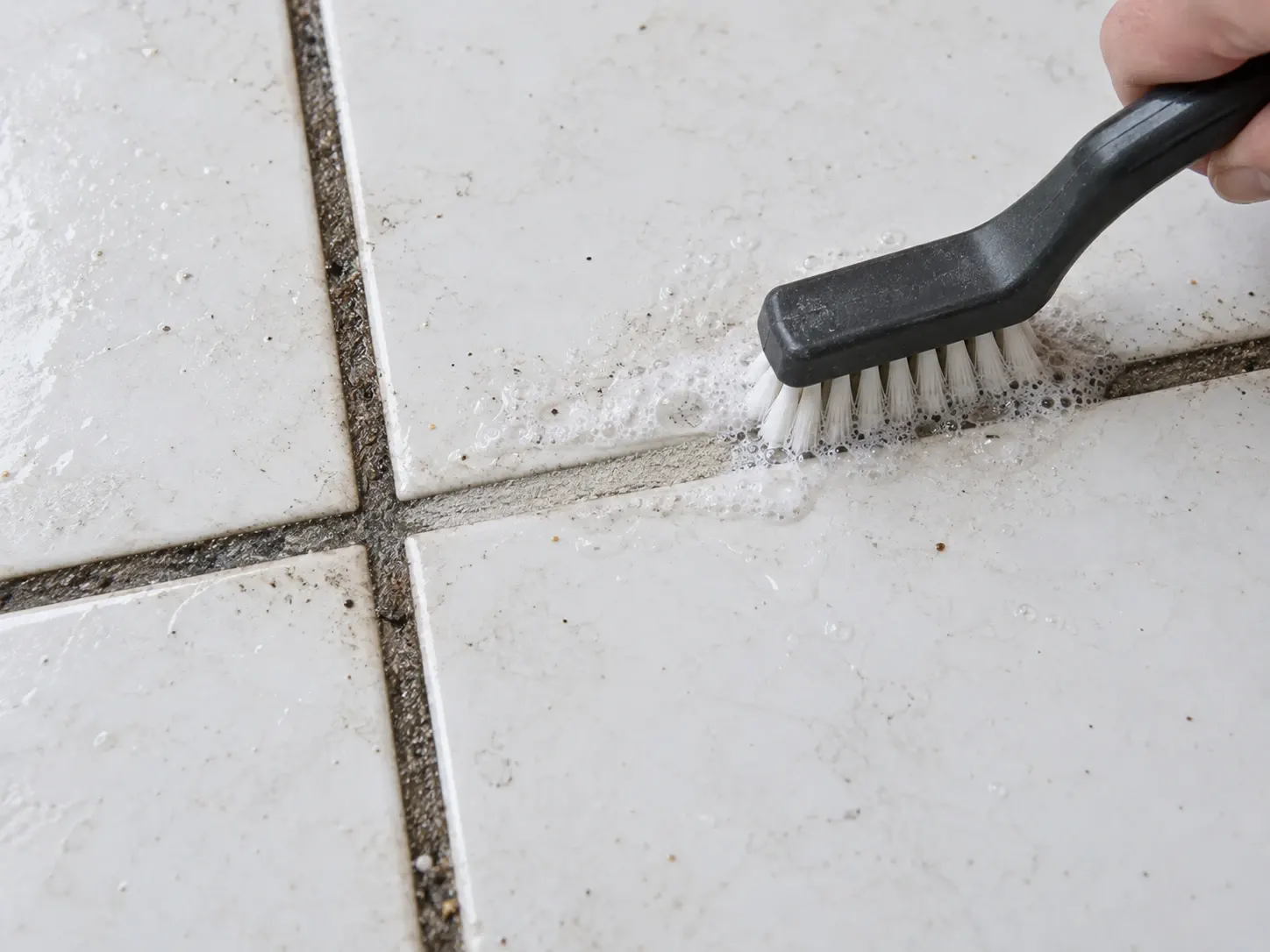
Scrub Hard Surfaces with Detergent and Water
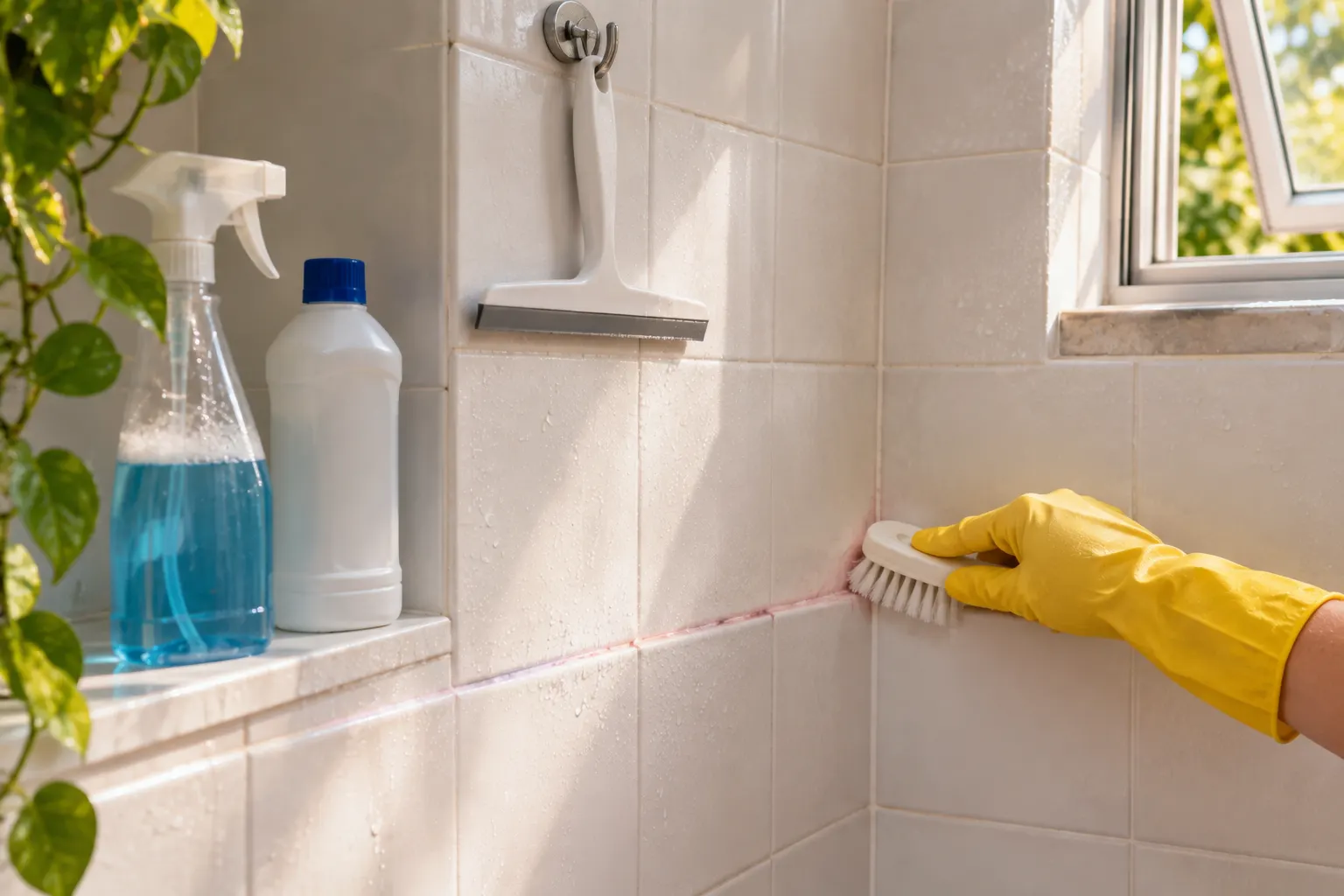
On tile, glass, sealed countertops and other hard surfaces, scrub the mold off with detergent and water. This is the EPA's standard method. The point is to physically remove the mold, because the EPA says dead mold may still cause allergic reactions.
05
Step 5 of 7
Use Bleach Only If You Choose To, and Only as Labeled
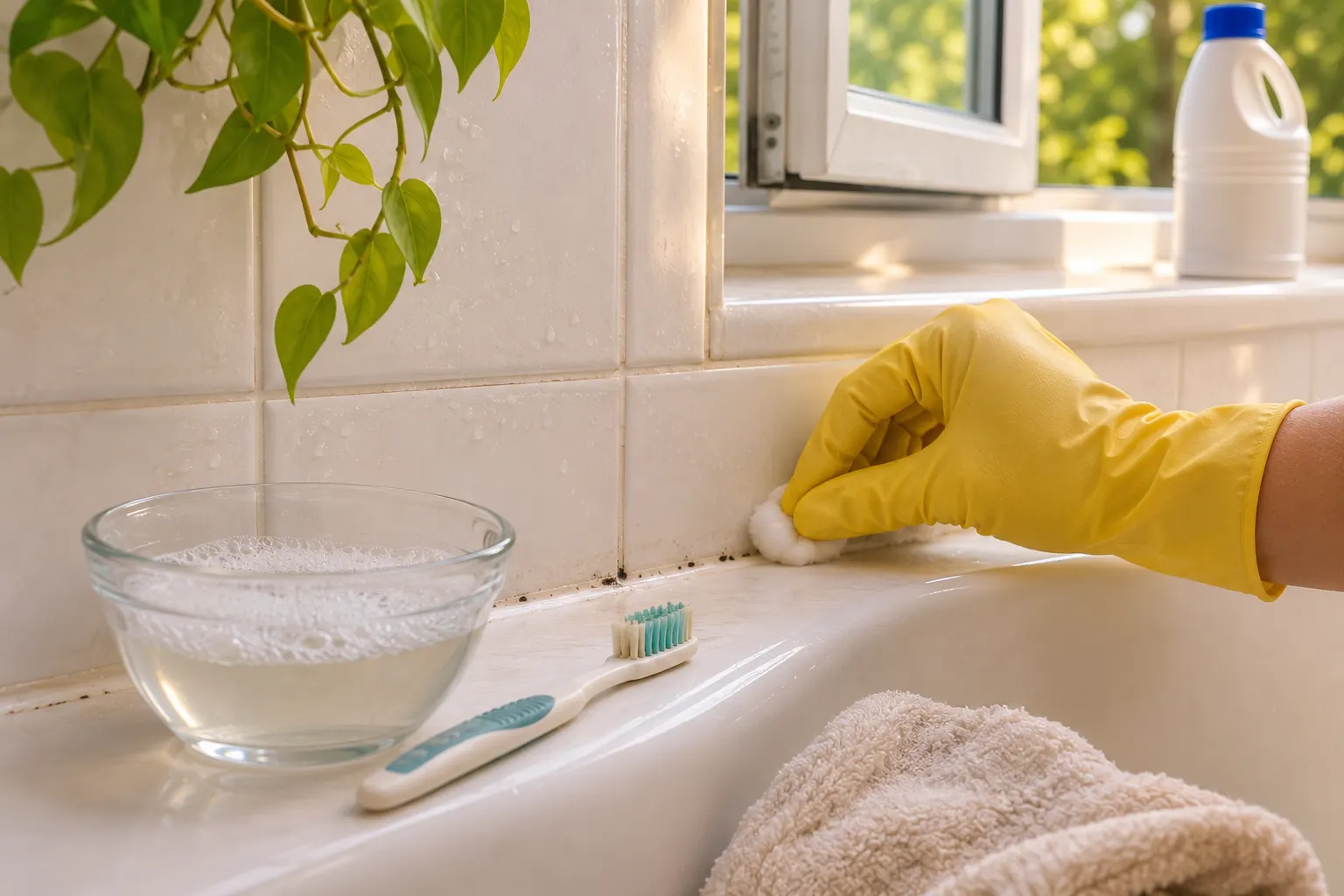
Bleach is optional, not required, and only for hard, nonporous surfaces. Rinse away any other cleaner first. Dilute exactly per the label, never stronger than the CDC's limit of 1 cup of household bleach per gallon of water. For Clorox Disinfecting Bleach, Clorox directs 1/3 cup per gallon, kept wet on the surface for 10 minutes. Then rinse with clean water.
06
Step 6 of 7
Dry Everything Completely
Dry the cleaned area completely; a fan speeds it up. Do not paint or caulk over moldy surfaces. The EPA says to clean and dry them first, because paint applied over mold is likely to peel.
07
Step 7 of 7
Replace Porous Materials That Stay Moldy
Absorbent materials such as ceiling tiles and carpet may have to be thrown away if they become moldy, because the EPA notes mold can be impossible to remove from them fully. Bleach is not recommended for mold on porous materials. For valuable or sentimental items, consult a specialist.
If that didn’t work
Stubborn or set-in? Try these next, in order.
AIf mold returns to the same spot within weeks, the moisture problem is not solved. Look for a hidden leak, poor ventilation or water trapped behind tile, and fix that before cleaning again.
BIf a stain remains after the mold is scrubbed off and the surface is dry, it may be permanent. The EPA notes mold can cause staining and cosmetic damage that cleaning cannot fully reverse.
CIf the growth is larger than about 10 square feet, keeps spreading, or you smell mold but cannot find it, follow EPA's mold remediation guidance or hire an experienced contractor and check their references.
Common questions
Does bleach kill mold or just change its color?
On hard, nonporous surfaces, Clorox says its bleach kills mold when used as directed. But the EPA points out that dead mold can still cause allergic reactions, so the mold must be scrubbed off, not just killed. Clorox itself says bleach is not recommended for mold on porous materials.
Why doesn't the EPA recommend bleach for mold?
The EPA says using a biocide such as chlorine bleach is not recommended as a routine practice during mold cleanup. In most cases it is not possible or desirable to sterilize an area; a background level of spores remains but will not grow once the moisture problem is fixed. Professionals may still use it in special cases, such as when immune-compromised people are present.
Is vinegar or bleach better for killing mold?
Neither is the EPA's first choice: its guidance is to scrub mold off hard surfaces with detergent and water and dry completely. Whatever you use, never combine them. Clorox warns that mixing bleach with vinegar, ammonia or any other cleaner can create dangerous fumes.
Can you use bleach on mold on drywall or wood?
Bleach is not recommended for mold on porous materials, according to Clorox. The EPA says absorbent materials that become moldy may have to be thrown away, because mold can be impossible to remove from them fully. Large or spreading growth on walls is a job for a professional.
What is the ratio of bleach to water for mold?
Follow your product label. The CDC says to use no more than 1 cup of household laundry bleach in 1 gallon of water. Clorox directs 1/3 cup of its Disinfecting Bleach per gallon for mold on hard, nonporous surfaces, with a 10 minute contact time before rinsing.
Sources we relied on
1.A Brief Guide to Mold, Moisture and Your Home — U.S. Environmental Protection Agency. Chlorine bleach or other biocides are not recommended as a routine practice during mold cleanup; dead mold may still cause allergic reactions, so it must be removed; ventilate and exhaust air outdoors if using biocides; never mix chlorine bleach with ammonia-containing cleaners; suggests an N-95 respirator, long gloves to mid-forearm and unvented goggles; dry water-damaged areas within 24 to 48 hours.
2.Mold Cleanup in Your Home — U.S. Environmental Protection Agency. Areas smaller than about 10 square feet (roughly 3 ft by 3 ft) can usually be cleaned by the homeowner; scrub mold off hard surfaces with detergent and water and dry completely; porous materials like ceiling tiles and carpet may have to be thrown away; do not paint or caulk moldy surfaces; call a professional for sewage-contaminated water.
3.About Mold and Your Health — Centers for Disease Control and Prevention. If using bleach, use no more than 1 cup of household laundry bleach in 1 gallon of water; never mix bleach with ammonia or other cleaners because it produces a poisonous gas; open windows and doors; wear rubber boots, rubber gloves and goggles; follow product directions.
4.Does Bleach Kill Mold? How to Remove Mold Walls to Ceiling — Clorox. Bleach kills mold on hard, nonporous surfaces when used as directed but is not recommended for mold on porous materials; use 1/3 cup Clorox Disinfecting Bleach per gallon of water, 10 minute contact time, rinse with clean water and air dry; work in a well-ventilated area, wear gloves, and never mix bleach with vinegar, ammonia or any other cleaner.