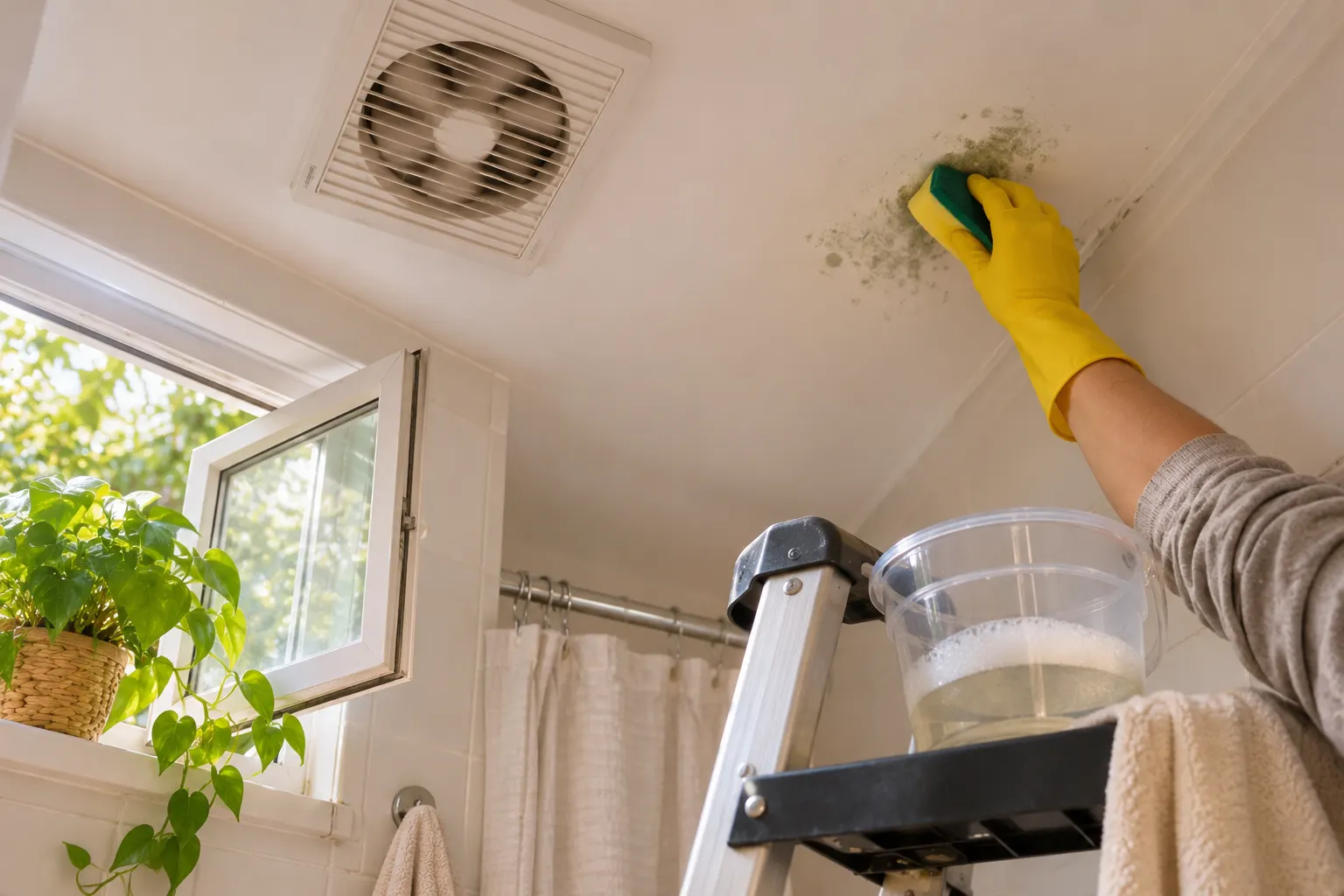
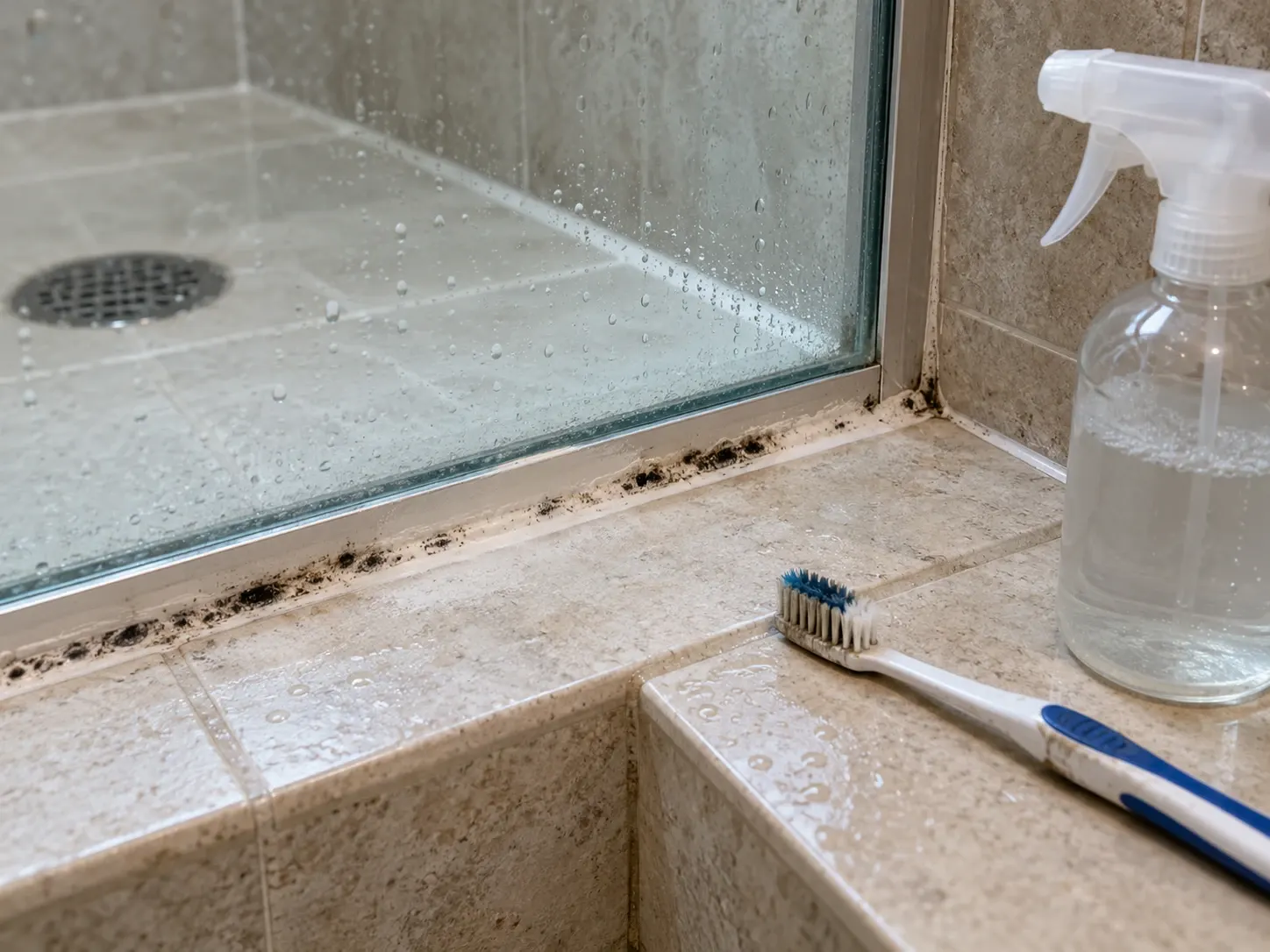
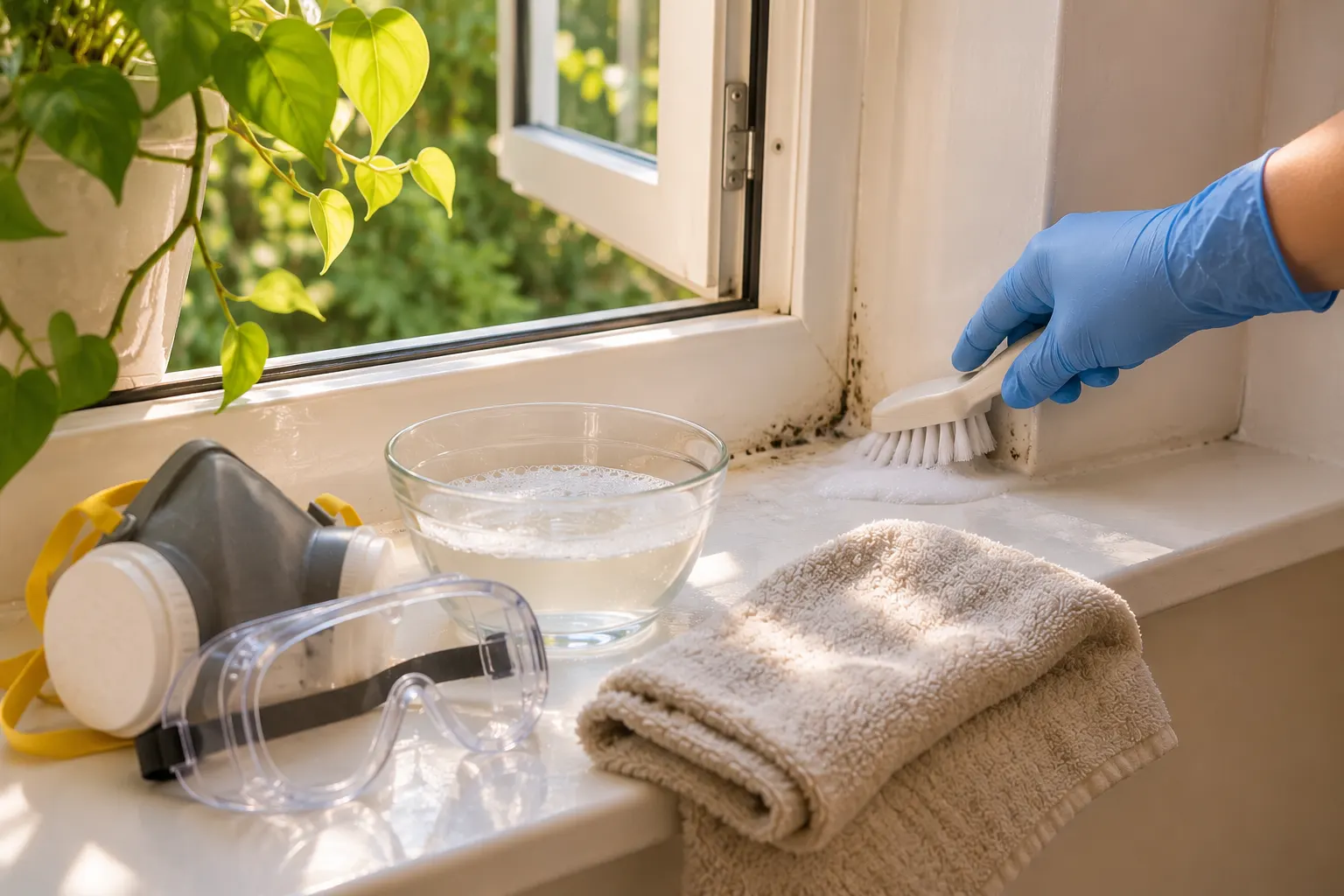
Goggles on, fan running, detergent and water on a sponge, then dry it completely. When a small patch is a DIY job, when it is not, and why paint only goes on after the mold is gone and the moisture is fixed.
Liquid detergent or a household cleaner labeled for mildew
Bucket of warm water
Soft sponge or soft-bristle brush
Clean cloths or towels for rinsing and drying
Drop cloth or old towel to protect the floor and tub
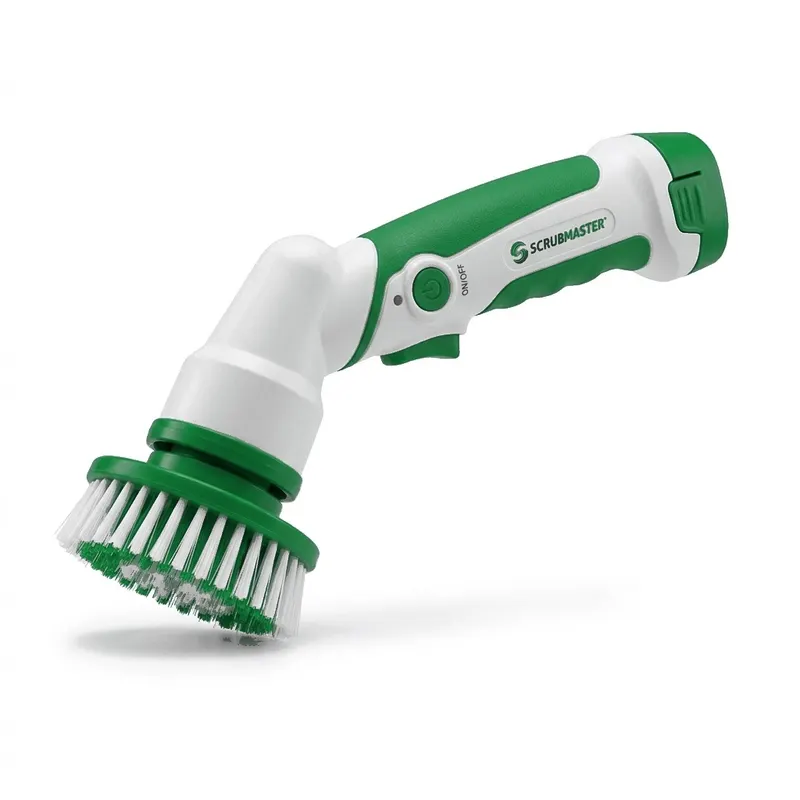
Optional for high ceilings: a scrubber on an extension pole, so you can work from the floor
Step by step
01
Step 1 of 7
Confirm It Is Mildew, Not Dirt
Benjamin Moore suggests dabbing a few drops of household bleach on one spot. Mildew lightens or disappears within a few minutes, while dirt stays the same. Do this test only with the room ventilated and with nothing else applied to the spot.
02
Step 2 of 7
Measure the Patch and Check the Drywall
If the moldy area is smaller than about 10 square feet, the EPA says you can usually handle it yourself. Press gently on the ceiling. If it is soft, sagging, stained by a leak, or the mold covers a larger area, stop and follow the EPA's remediation guidance or call a professional; porous materials that are moldy may have to be removed.
03
Step 3 of 7
Ventilate and Put On Your Gear
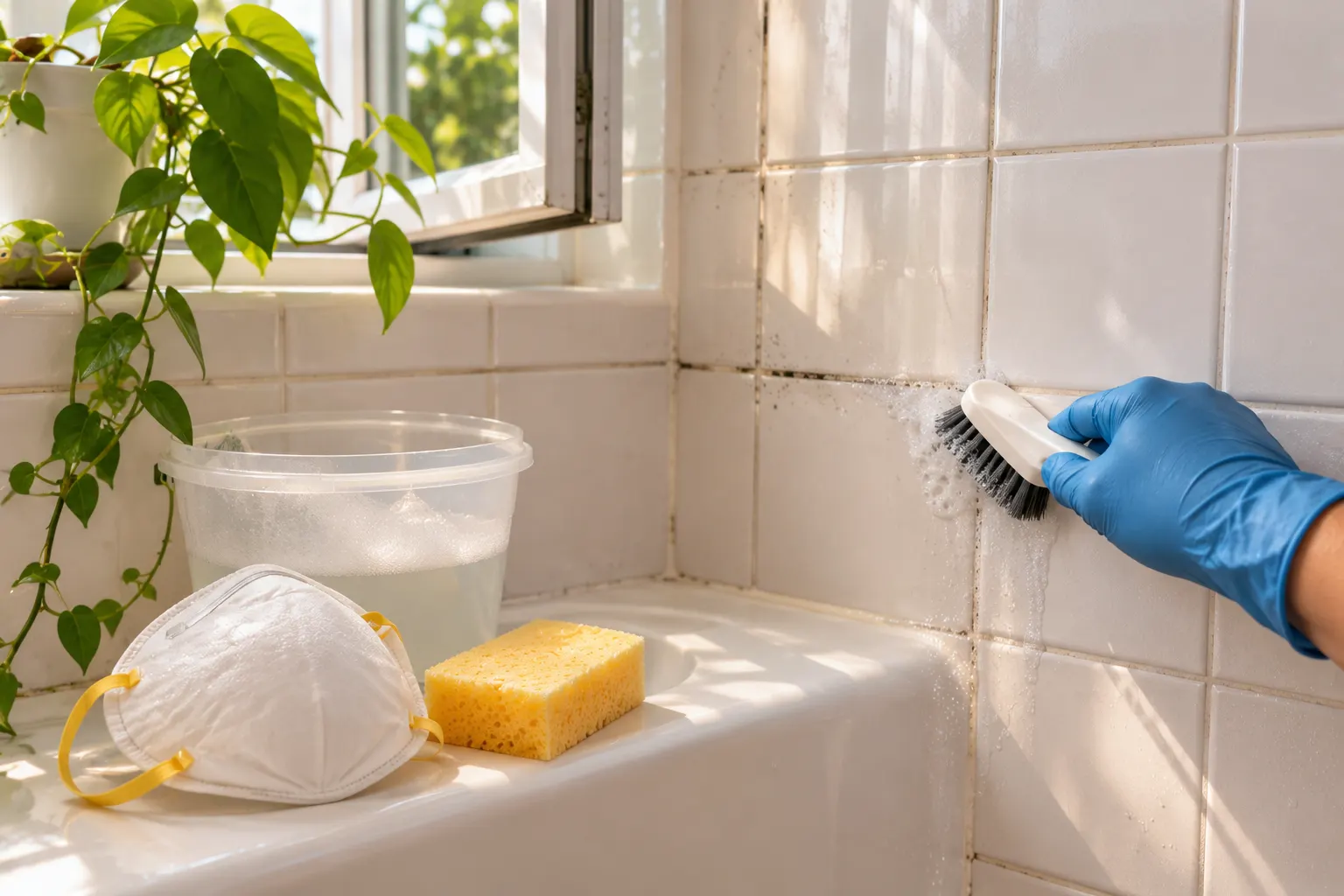
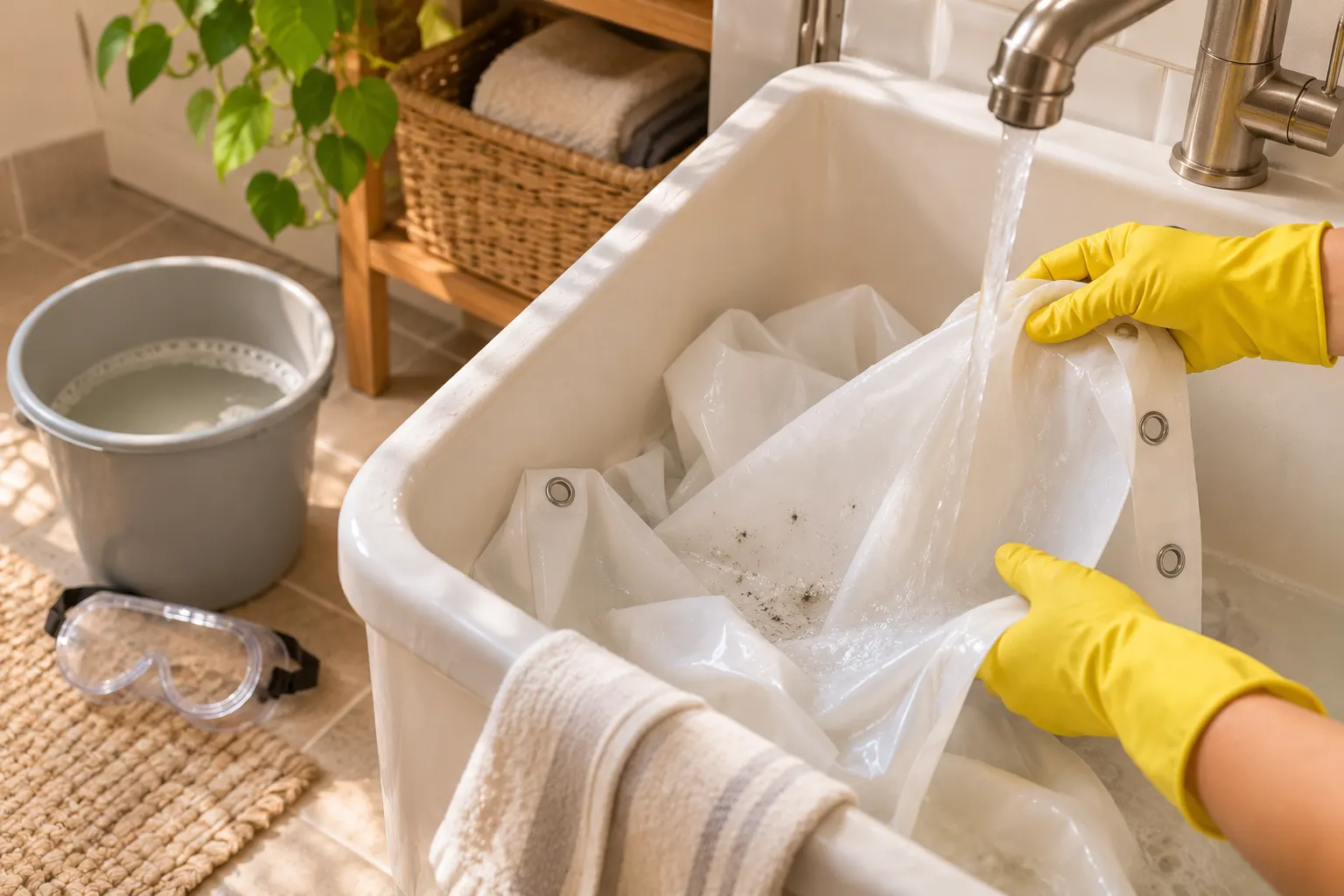
Open the window and door or turn on the exhaust fan. Cover the floor and tub with a drop cloth. Put on goggles without vent holes, gloves and an N-95 respirator before you climb up, since cleaning overhead sends drips and debris toward your face.
04
Step 4 of 7
Scrub with Detergent and Water
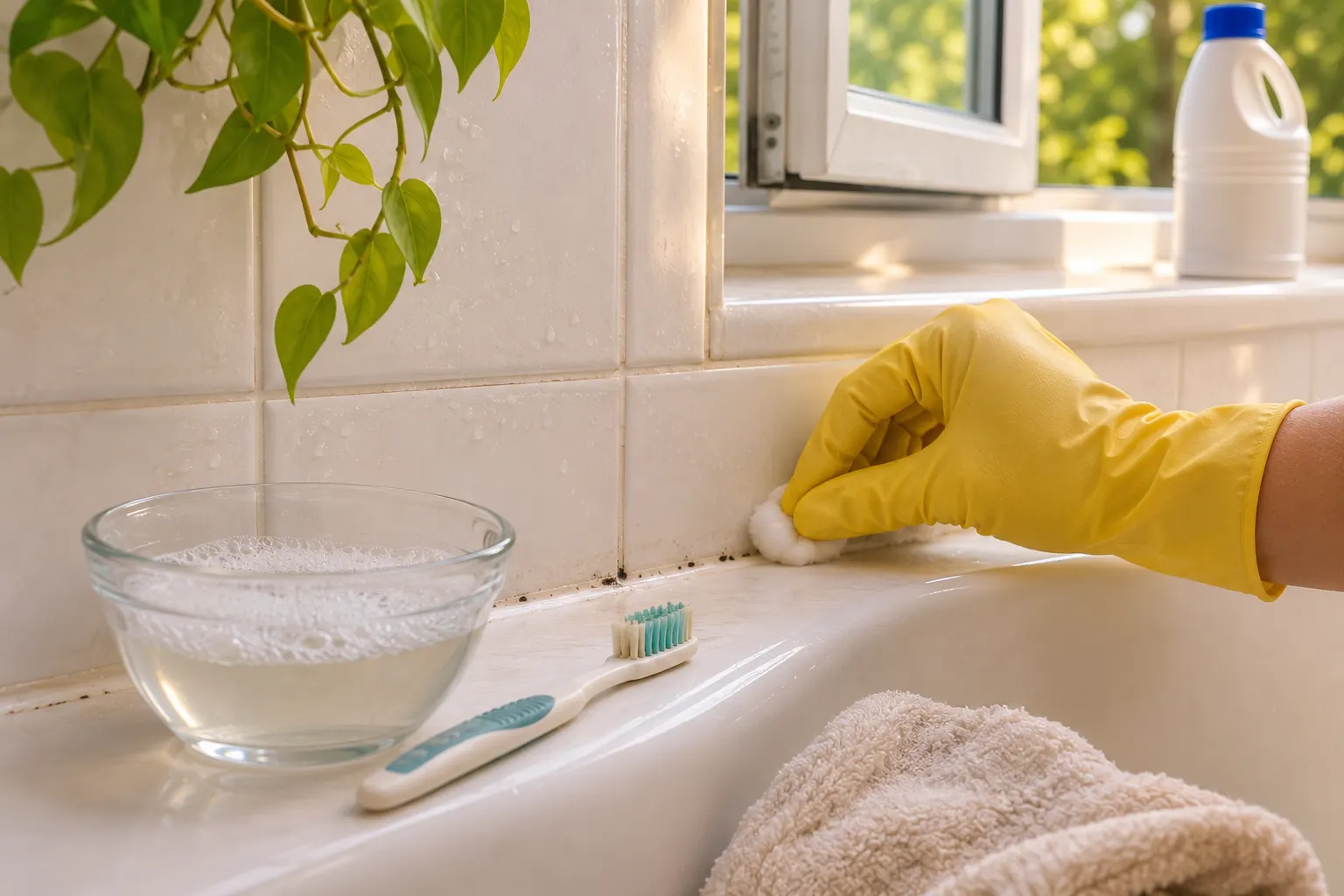
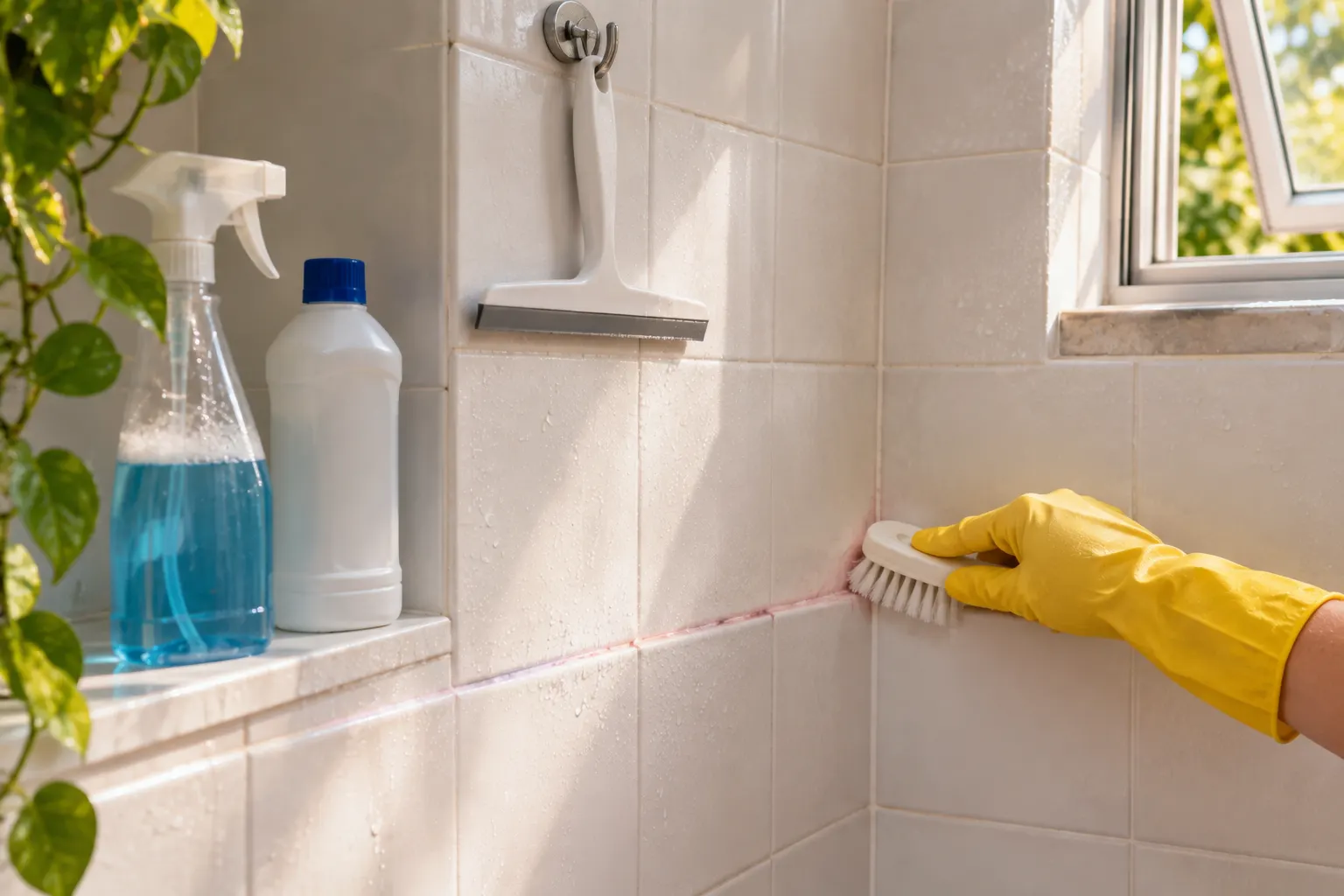
Mix detergent into warm water, wring a soft sponge or brush until damp rather than dripping, and scrub the spots with gentle pressure. The EPA's method for hard surfaces is detergent and water. If you use a cleaner made to kill mildew instead, follow its label exactly, including any dwell time.
05
Step 5 of 7
Wipe Clean and Dry Completely
Wipe the area with a cloth dampened in clean water to remove cleaner residue, then dry it with a towel and leave the fan running or the window open until the ceiling is fully dry. The EPA stresses drying completely after cleaning.
06
Step 6 of 7
Fix the Moisture That Caused It
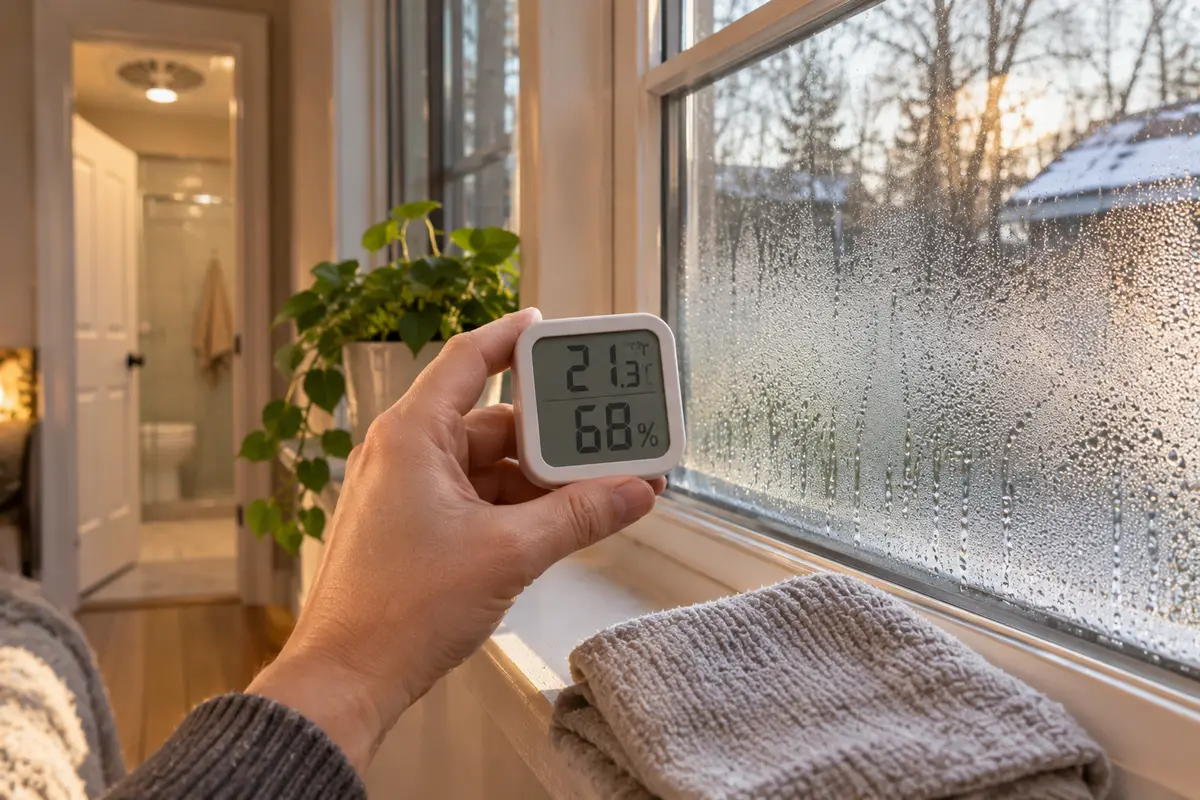
Bathroom ceiling mold usually comes from shower steam with nowhere to go. Use an exhaust fan that vents outdoors, run it or open a window while showering, and keep indoor humidity below 60 percent, ideally 30 to 50 percent, as the EPA recommends. If the fan is weak or noisy, clean or service it.
07
Step 7 of 7
Repaint Only After the Surface Is Clean and Dry
If the paint is stained or you want added protection, repaint only once the mold is gone and the ceiling is dry. Benjamin Moore recommends priming and using a high-quality mildew-resistant paint in bathrooms. Mildew-resistant paint helps prevent regrowth but does not fix a ventilation problem.
If that didn’t work
Stubborn or set-in? Try these next, in order.
AIf spots return within weeks, the moisture source is not fixed. Check that the exhaust fan actually vents outdoors and is strong enough, and run it during and after every shower.
BIf stains remain after cleaning but the spots no longer smear or spread, the paint may be discolored. Let the ceiling dry fully, then prime and repaint with a mildew-resistant paint.
CIf the mold keeps coming back through the paint, the drywall itself may be affected. Porous materials can hold mold in their crevices, so have the area assessed by a professional.
Tools that help
You can do this with cloths and a spray bottle. These make it faster:
As an Amazon Associate, HouseCareWiki earns from qualifying purchases. It costs you nothing extra. How we make money
Can I use bleach to clean mold off a bathroom ceiling?
You can, but it is not required. The EPA says detergent and water work on hard surfaces. If you use bleach, the CDC says to use no more than 1 cup per gallon of water, ventilate, and never mix it with ammonia or other cleaners. Benjamin Moore suggests a stronger 3 parts water to 1 part bleach wash before repainting; follow the label of whatever product you use.
Why does mold keep growing on my bathroom ceiling?
Warm, moist air from showers rises and condenses on the ceiling. Without a fan venting it outdoors, the ceiling stays damp long enough for mold to grow. The EPA says recurring bathroom mold can often be controlled by running a fan or opening a window and cleaning more often.
Can you just paint over mold on a bathroom ceiling?
No. The EPA says not to paint or caulk moldy surfaces because the paint is likely to peel, and Benjamin Moore notes that mildew will grow through new paint. Clean the mold off, let the ceiling dry completely, then prime and paint.
Is mildew-resistant paint worth it for a bathroom ceiling?
It helps. Benjamin Moore recommends a high-quality mildew-resistant paint for bathrooms. It reduces regrowth on the paint film, but it only works alongside good ventilation and a clean, dry surface before painting.
What is the best way to clean mildew off a bathroom ceiling?
Ventilate the room, protect your eyes, then scrub the spots with detergent and warm water on a damp sponge, wipe with clean water and dry the ceiling completely. The EPA recommends detergent and water for mold on hard surfaces. A household cleaner labeled for mildew also works if you follow its label.
How do I stop mold from coming back on my bathroom ceiling?
Vent the steam. Run an exhaust fan that vents outdoors during every shower and for a while after, or open a window. The EPA advises keeping indoor humidity below 60 percent, ideally between 30 and 50 percent. Wiping condensation off the ceiling and walls after showers also helps, and mildew-resistant paint slows regrowth once the ceiling is clean and dry.
Is mold on a bathroom ceiling dangerous?
A few small spots are common and usually a cleaning job, but mold can cause symptoms such as a stuffy nose, wheezing or itchy eyes and skin in people who are sensitive to it, according to the CDC. The CDC adds that people with asthma or mold allergies may have severe reactions, and the EPA advises anyone with health concerns to consult a health professional before starting cleanup. Large areas or mold after a leak call for professional help.
How do I reach mold on a high bathroom ceiling?
Use a sturdy step stool or ladder with someone nearby, or a scrubber on an extension pole so you can work from the floor. Keep the brush damp rather than wet, use light pressure on painted drywall, and still wear sealed goggles, because drips fall toward your face either way.
When should I call a professional for bathroom ceiling mold?
The EPA suggests professional help or its remediation guidance when the moldy area is larger than about 10 square feet, when there was significant water damage, or when you have health concerns. A soft or sagging ceiling also points to a leak that needs repair.
Sources we relied on
1.A Brief Guide to Mold, Moisture and Your Home — U.S. Environmental Protection Agency. Areas under about 10 square feet can usually be cleaned yourself; scrub mold off hard surfaces with detergent and water and dry completely; do not paint or caulk moldy surfaces; wear goggles without ventilation holes, gloves and an N-95 respirator; never mix bleach with ammonia; keep indoor humidity below 60 percent, ideally 30 to 50 percent; if you have health concerns, consult a health professional before starting cleanup.
2.Mold Cleanup in Your Home — U.S. Environmental Protection Agency. Porous materials such as ceiling tiles may have to be thrown away if moldy; recurring bathroom mold can often be controlled by running a fan or opening a window and cleaning more often; paint applied over moldy surfaces is likely to peel.
3.About Mold and Your Health — Centers for Disease Control and Prevention. Hard surfaces can be cleaned with household products, soap and water, or a bleach solution of no more than 1 cup of bleach per gallon of water; never mix bleach with ammonia or other cleaners; open windows and doors; use bathroom exhaust fans that vent outdoors; in people sensitive to mold, exposure can cause symptoms such as stuffy nose, wheezing, and red or itchy eyes or skin; people with asthma or mold allergies may have severe reactions.
4.How to Prevent and Remove Mildew — Benjamin Moore. A few drops of bleach lighten mildew within minutes but not dirt; wash with 3 parts water to 1 part bleach or a cleanser designed to kill mildew, scrub with a soft brush and rinse; mildew will grow through new paint; prime and use a high-quality mildew-resistant paint and exhaust fans in bathrooms.