The pink or orange slime in your shower is usually not mold at all but a bacterium, Serratia marcescens, that feeds on soap residue. It scrubs off easily; keeping it away comes down to removing residue and drying the shower.
Stiff scrub brush or old toothbrush for corners and drain rims
General-purpose household cleaner
Chlorine bleach or a bleach-based bathroom cleaner, used as labeled
Bucket and measuring cup (if mixing your own bleach solution)
Shower squeegee
Microfiber cloth or towel for drying
Step by step
01
Step 1 of 7
Confirm It Is Pink Slime, Not Mold
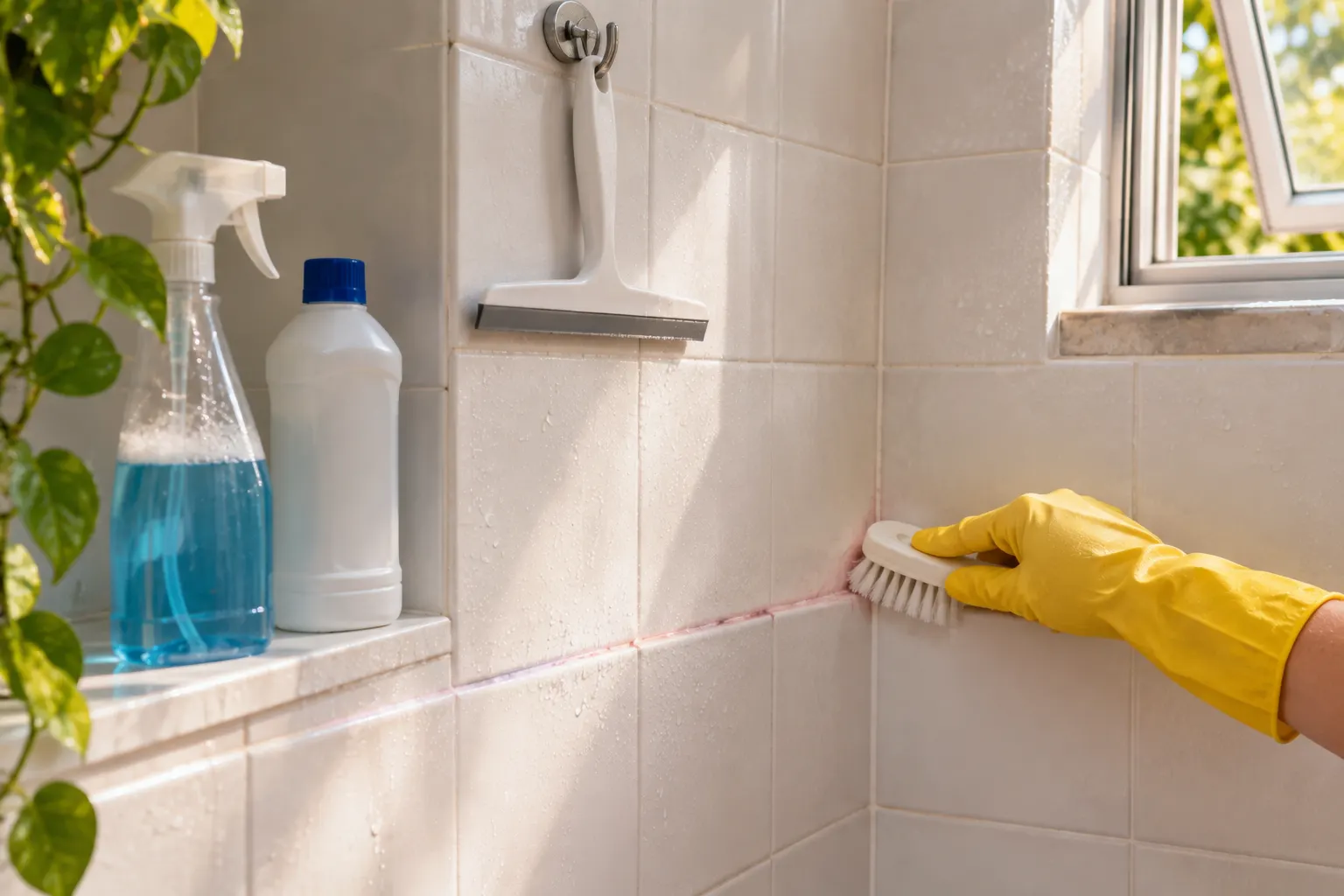
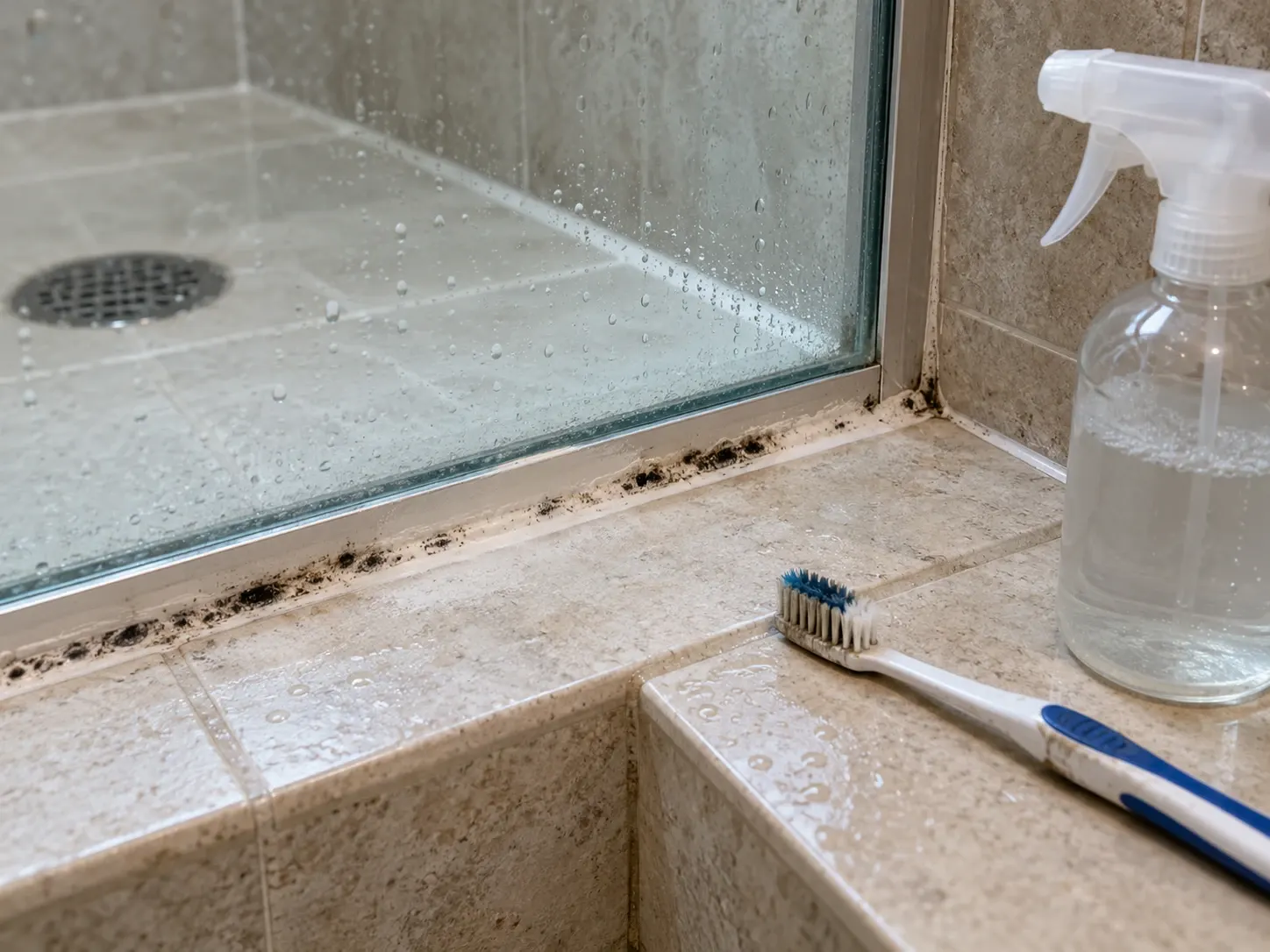
Look for a pink, orange or reddish film along the waterline, grout, caulk edges, corners of the tray and around the drain, wherever soap and shampoo residue collect and water sits. That color is a pigment made by the bacterium Serratia marcescens. Fuzzy black or green spots are a different problem and belong in a mold cleanup.
02
Step 2 of 7
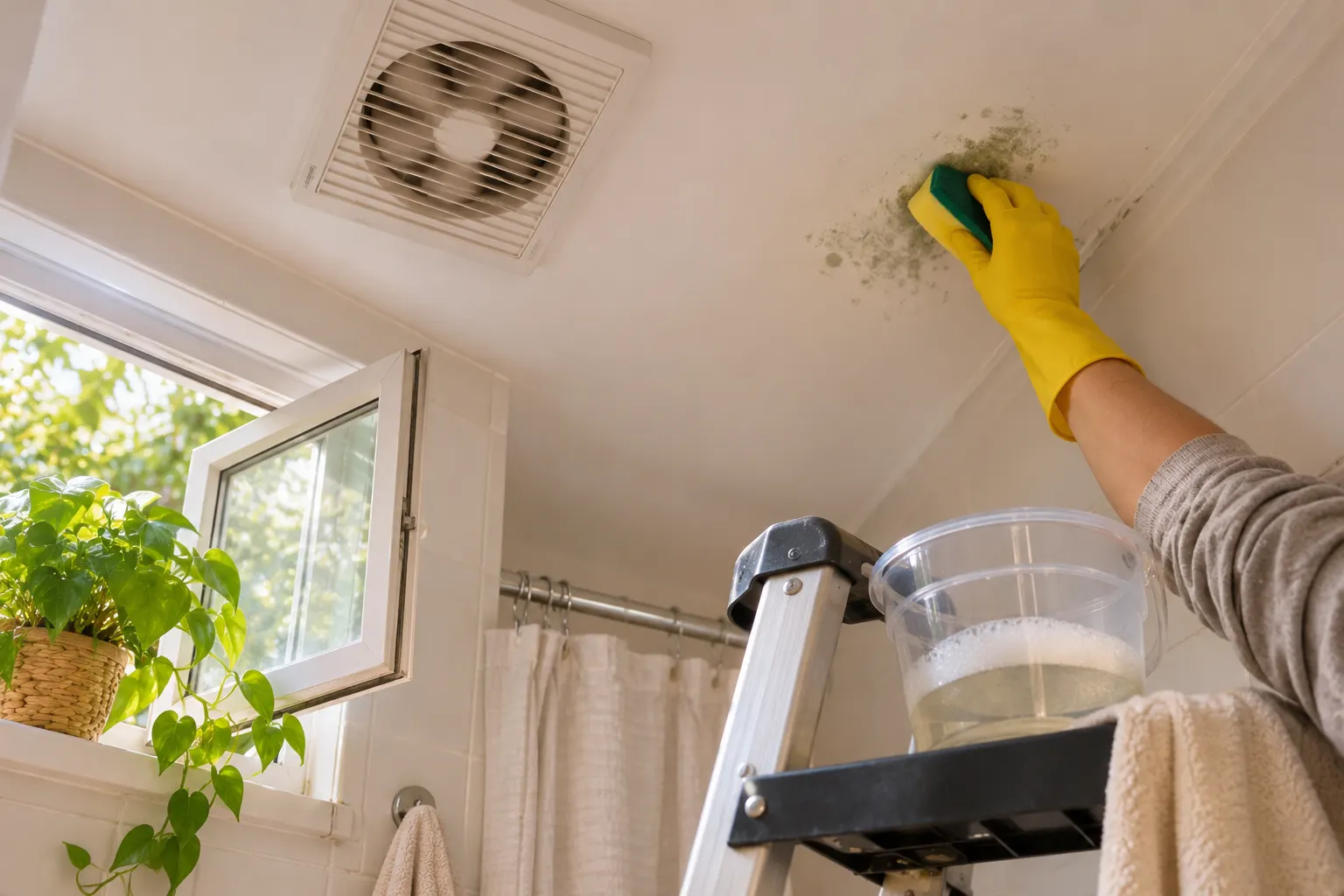
Ventilate and Clear the Shower
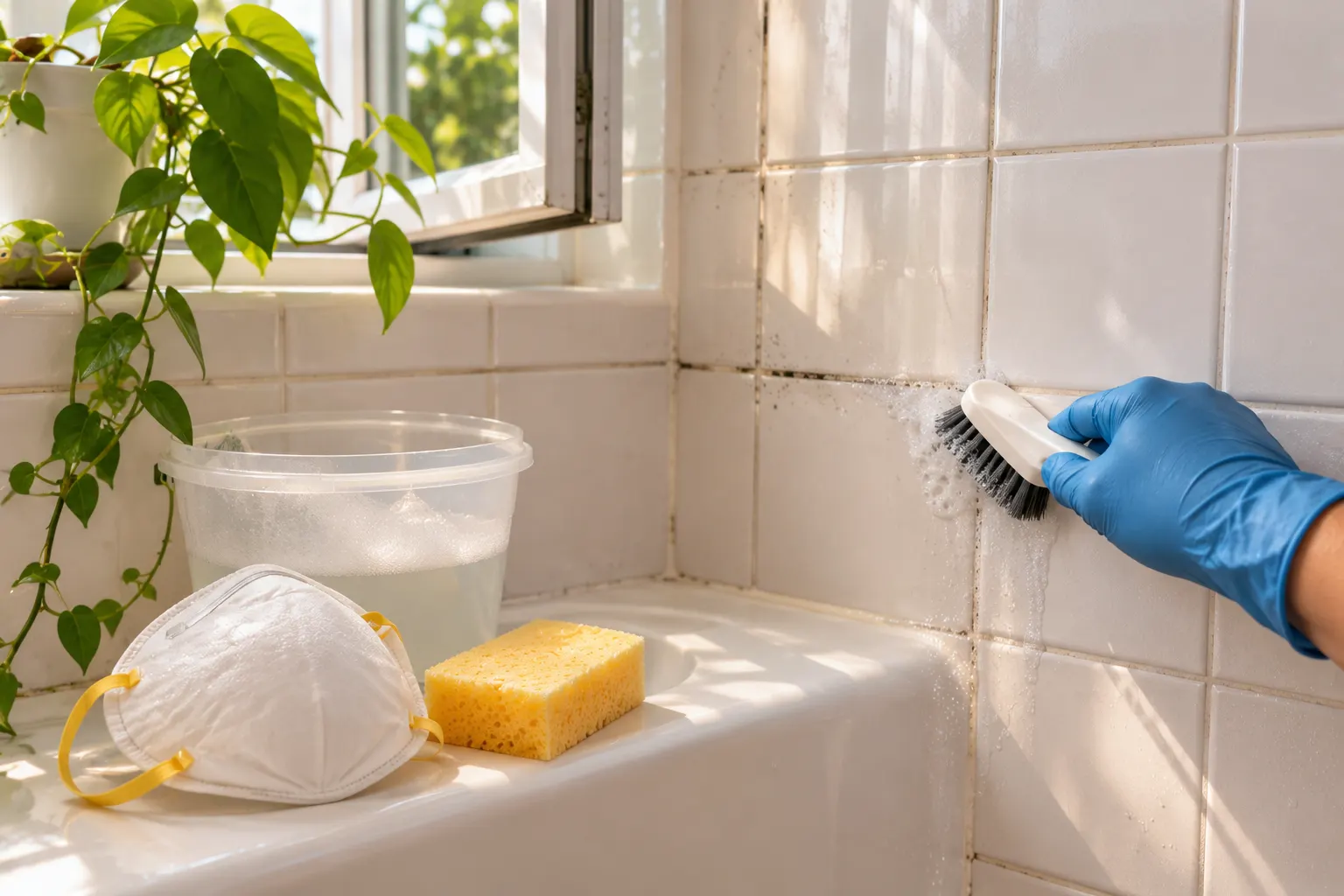
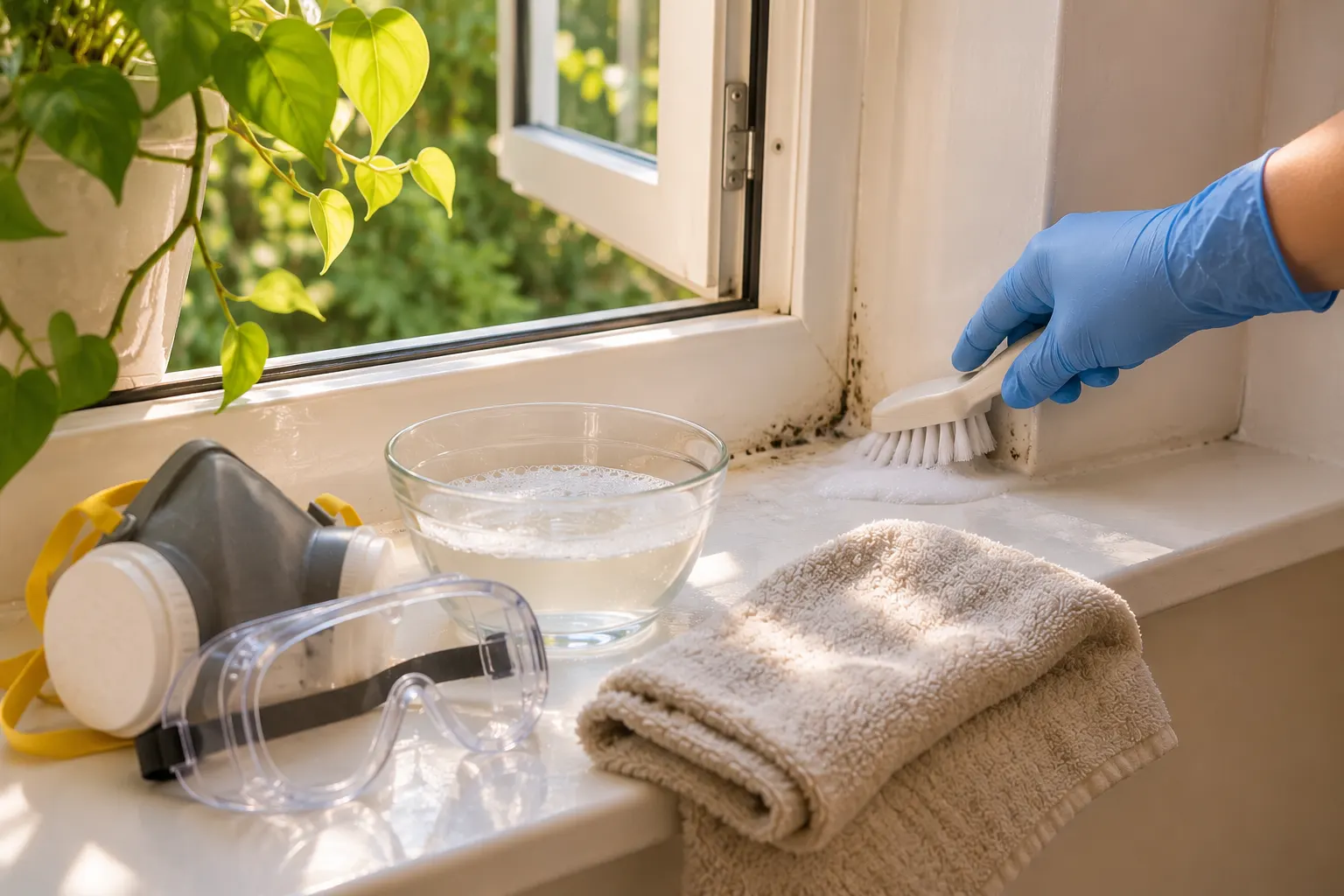
Open a window or turn on the exhaust fan and put on gloves. Take bottles, razors and loofahs out of the shower so you can reach every surface. Put away any cleaners you are not using so nothing gets mixed with bleach.
03
Step 3 of 7
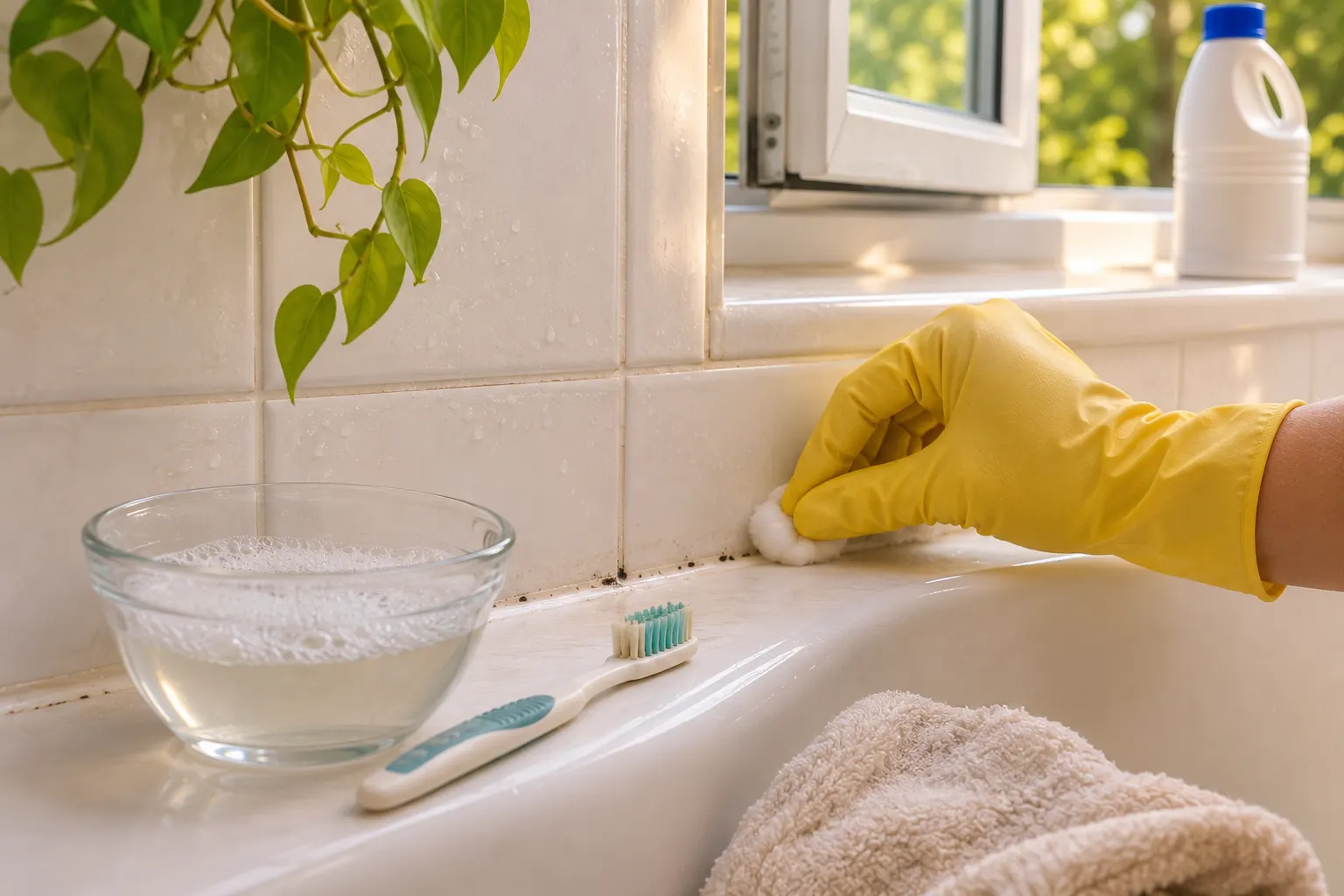
Scrub with a Brush and Household Cleaner
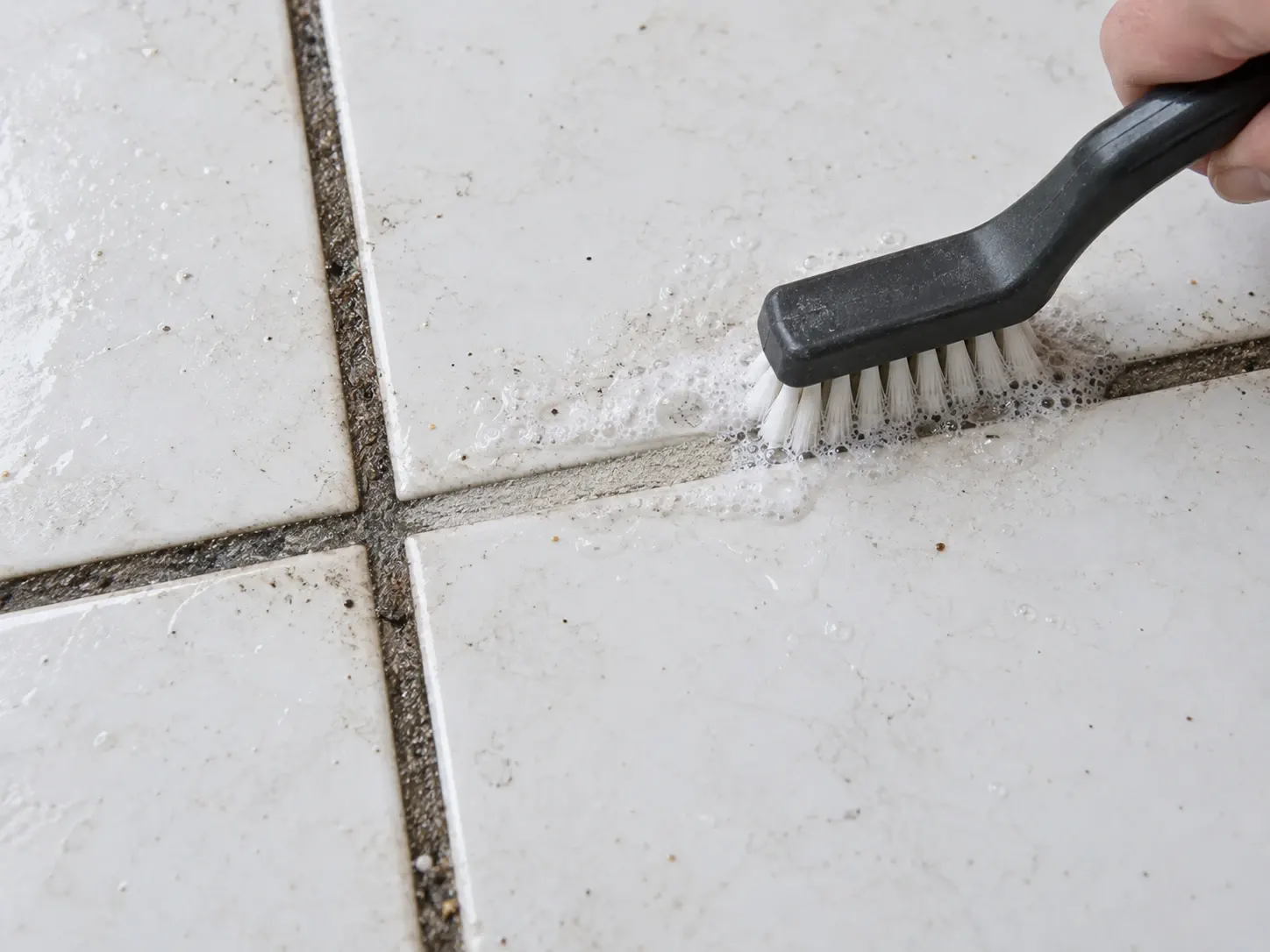
Scrub every pink spot with a brush and a general-purpose household cleaner. Pay attention to grout lines, the rim of the drain, the edges of the tub and the floor of the shower, where residue builds up. The film comes off easily; the scrubbing removes the soap residue it feeds on.
04
Step 4 of 7
Disinfect with Bleach as the Label Directs
Apply a chlorine bleach solution or a bleach-based bathroom cleaner and leave it on for the contact time on the label. NDSU Extension advises leaving a strong bleach solution on 10 to 20 minutes. For Clorox Disinfecting Bleach, the label method is one third cup per gallon of water, kept wet for 10 minutes.
05
Step 5 of 7
Rinse Well and Dry the Shower
Rinse every treated surface thoroughly with clean water, then wipe it dry with a microfiber cloth or towel. Leaving the shower dry takes away the moisture the bacteria need.
06
Step 6 of 7
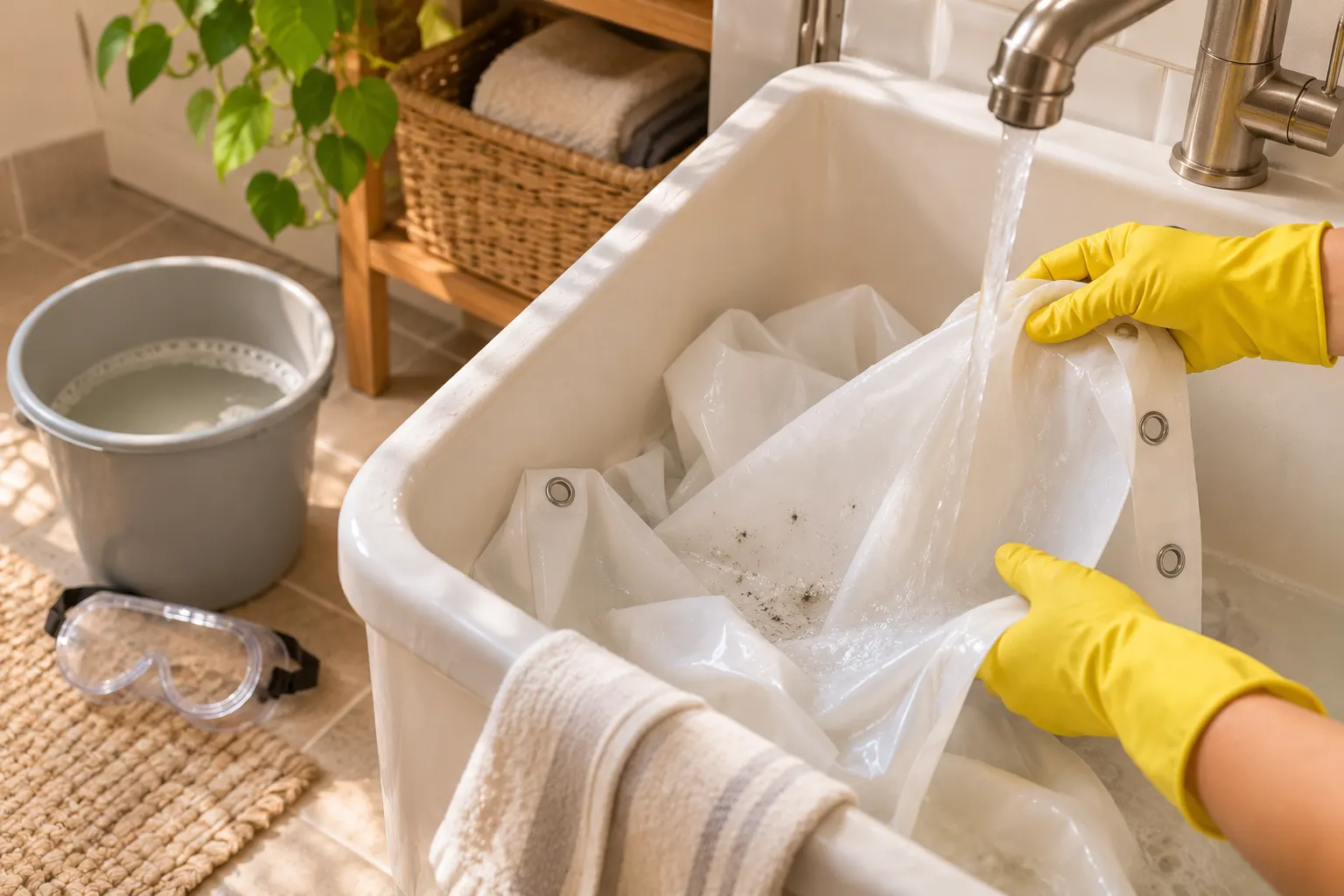
Clean the Shower Curtain and Toilet Too
Pink film on a fabric curtain or plastic liner should be washed according to its care label; our guide on removing mold from a shower curtain covers the washing method. If the toilet bowl has a pink ring, NDSU Extension suggests adding a quarter cup of bleach to the tank, waiting 15 to 20 minutes, then flushing several times, without leaving bleach in the tank.
07
Step 7 of 7
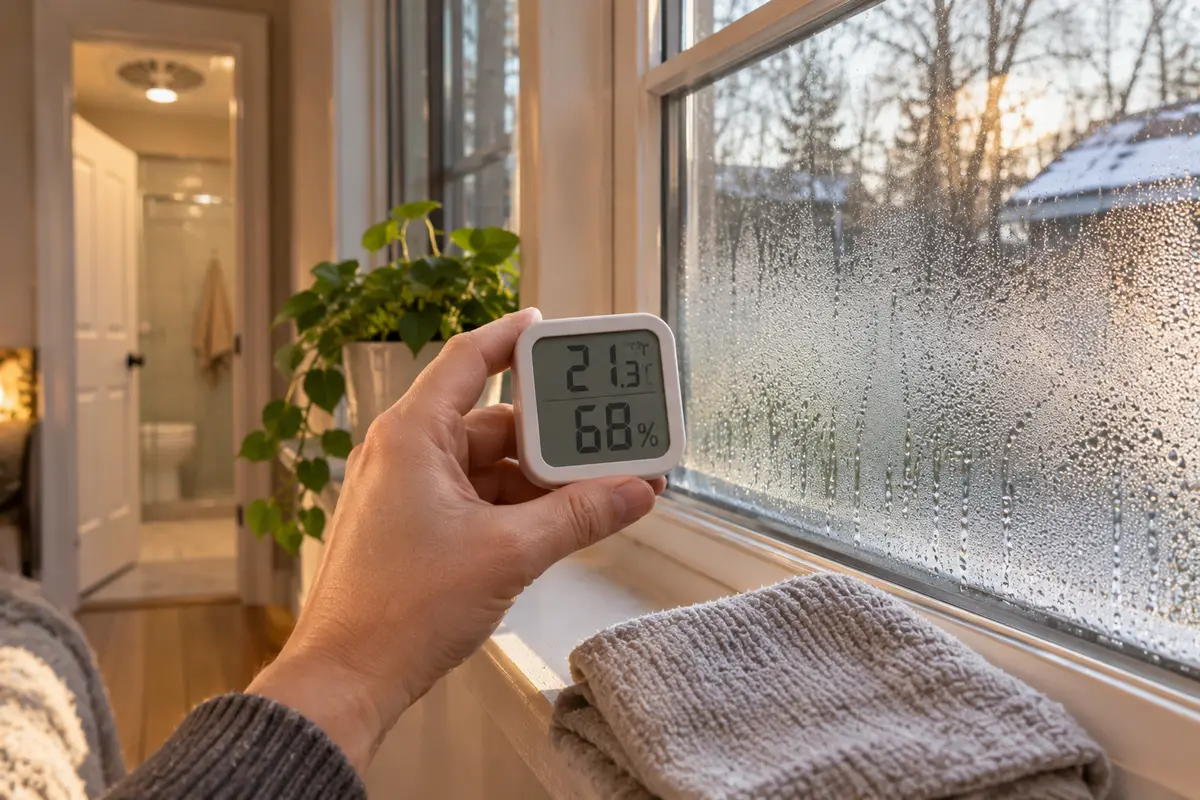
Squeegee, Ventilate and Repeat Regularly
After every shower, squeegee or wipe the walls and tub dry; the squeegee also removes the soap residue the bacteria feed on. Run the fan during and after showers, up to an hour if needed, and pull the curtain fully closed so it dries without folds. Clean with a bleach-based cleaner on a regular schedule.
If that didn’t work
Stubborn or set-in? Try these next, in order.
AIf the pink film returns within days, the shower is staying wet too long. Lengthen the fan run time and squeegee or wipe the shower dry after every use.
BIf it keeps coming back in one spot, such as under a caddy or along a drain rim, residue is collecting there. Scrub that spot each time you clean rather than just spraying it.
CIf pink slime appears mainly where water sits for days, such as a guest toilet or a pet bowl, NDSU Extension notes chlorine fades as water stands still. Flush or refresh that water more often.
Tools that help
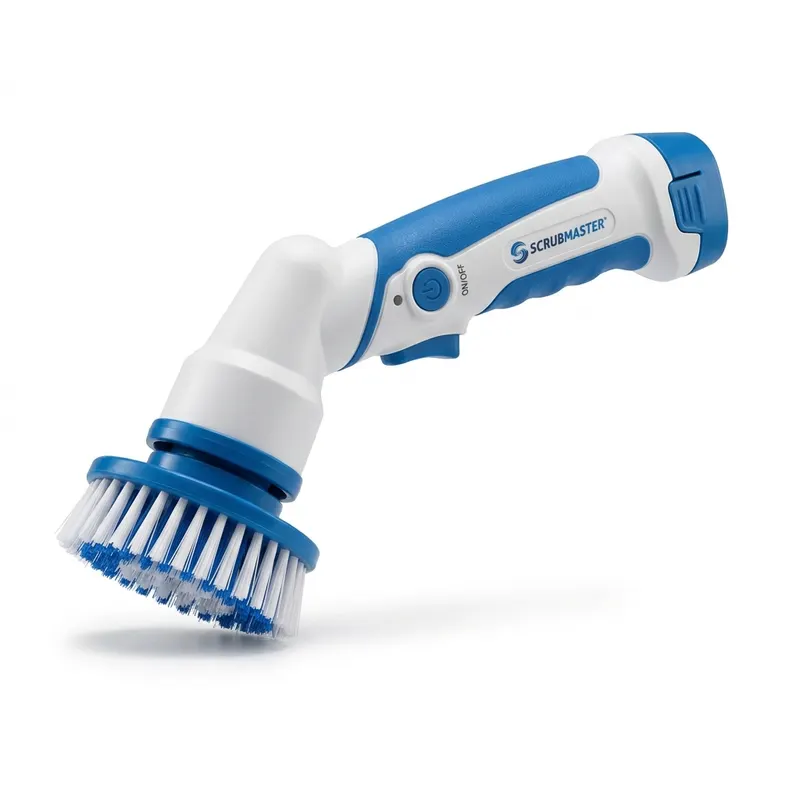
You can do this with cloths and a spray bottle. These make it faster:
As an Amazon Associate, HouseCareWiki earns from qualifying purchases. It costs you nothing extra. How we make money
Usually not. Extension experts identify the pink or orange film as Serratia marcescens, a common bacterium. Its color comes from a pigment the bacteria produce, and it grows where moisture and soap residue collect.
Is pink mold in the shower dangerous?
NDSU Extension says the Serratia genus is not known to be a water-borne disease, but it can be pathogenic to some people, causing pneumonia, wound and urinary tract infections in some hospital settings. Clean it off promptly, especially if someone in the home has a weakened immune system.
Why does pink mold keep coming back in my shower?
The bacteria feed on soap and shampoo residue and thrive in damp spots, and NDSU Extension notes they are hard to eliminate completely from a home. Drying the shower after each use, removing residue with a squeegee and regular bleach-based cleaning keep it under control.
Does vinegar kill pink mold?
An Ask Extension expert suggests a half water, half vinegar spray left for 10 minutes before scrubbing, as an option for people who react to bleach. NDSU Extension recommends a chlorine bleach cleaner. Use one or the other, never both together, and rinse well.
What kills pink mold in the shower?
Scrubbing removes it, and a chlorine bleach solution or bleach-based cleaner disinfects the surface. NDSU Extension advises leaving a strong bleach solution on for 10 to 20 minutes and rinsing well; always follow the product label for dilution and contact time.
Sources we relied on
1.Red Substance in Tub, Toilet Is Bacteria — North Dakota State University Extension. The pink or red film is the bacterium Serratia marcescens, which grows in moist areas such as shower stalls, tubs, sinks and toilets on phosphorus or fatty residue like soap; scrub with a brush and household cleaner, apply a strong chlorine bleach solution for 10 to 20 minutes and rinse well; add a quarter cup of bleach to a toilet tank for 15 to 20 minutes then flush, without leaving bleach in the tank; wipe sinks and tubs dry after use; it is hard to eliminate completely.
2.Pink discoloration in shower — Ask Extension. The pink or orange discoloration is not mold but most likely Serratia marcescens, whose color is a pigment it produces; a half water, half vinegar spray left 10 minutes then scrubbed, rinsed and dried is suggested; run the fan during and after showers for up to 60 minutes, use a squeegee to remove water and soap residue, and pull the curtain across so it dries.
3.How to Remove Mold Stains in the Shower and Bathroom Walls — Clorox. Mix one third cup of Clorox Disinfecting Bleach per gallon of water, keep surfaces wet for 10 minutes, rinse with warm water and wipe dry; ensure good ventilation; never mix bleach with vinegar, ammonia or any other cleaner; use an exhaust fan or open window while showering and wipe or squeegee walls afterward.