Sunscreen leaves two kinds of marks: an oily film and, with some formulas, an orange rust-colored stain. How to pretreat the grease, why chlorine bleach makes the orange worse, and when to reach for a rust remover.
Liquid laundry detergent (a heavy-duty or grease-cutting type)
Liquid hand dishwashing soap
White vinegar
Soft-bristled toothbrush
Bowl or sink for soaking
Commercial pre-wash stain remover
For orange or rust-colored stains: a commercial rust remover labeled for fabric, or table salt and a lemon
Rubber gloves
Step by step
01
Step 1 of 7
Remove the Excess and Rinse Cold
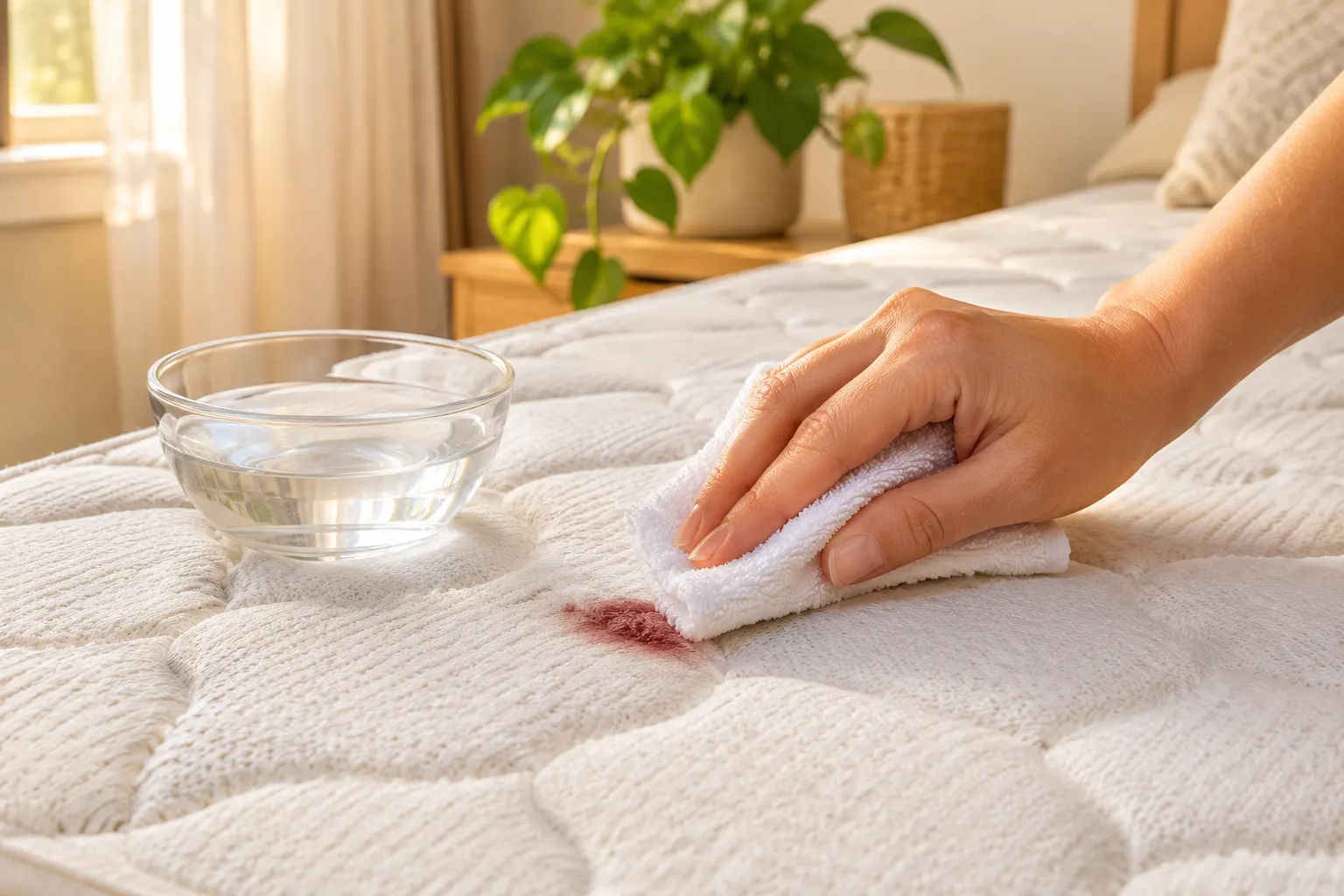
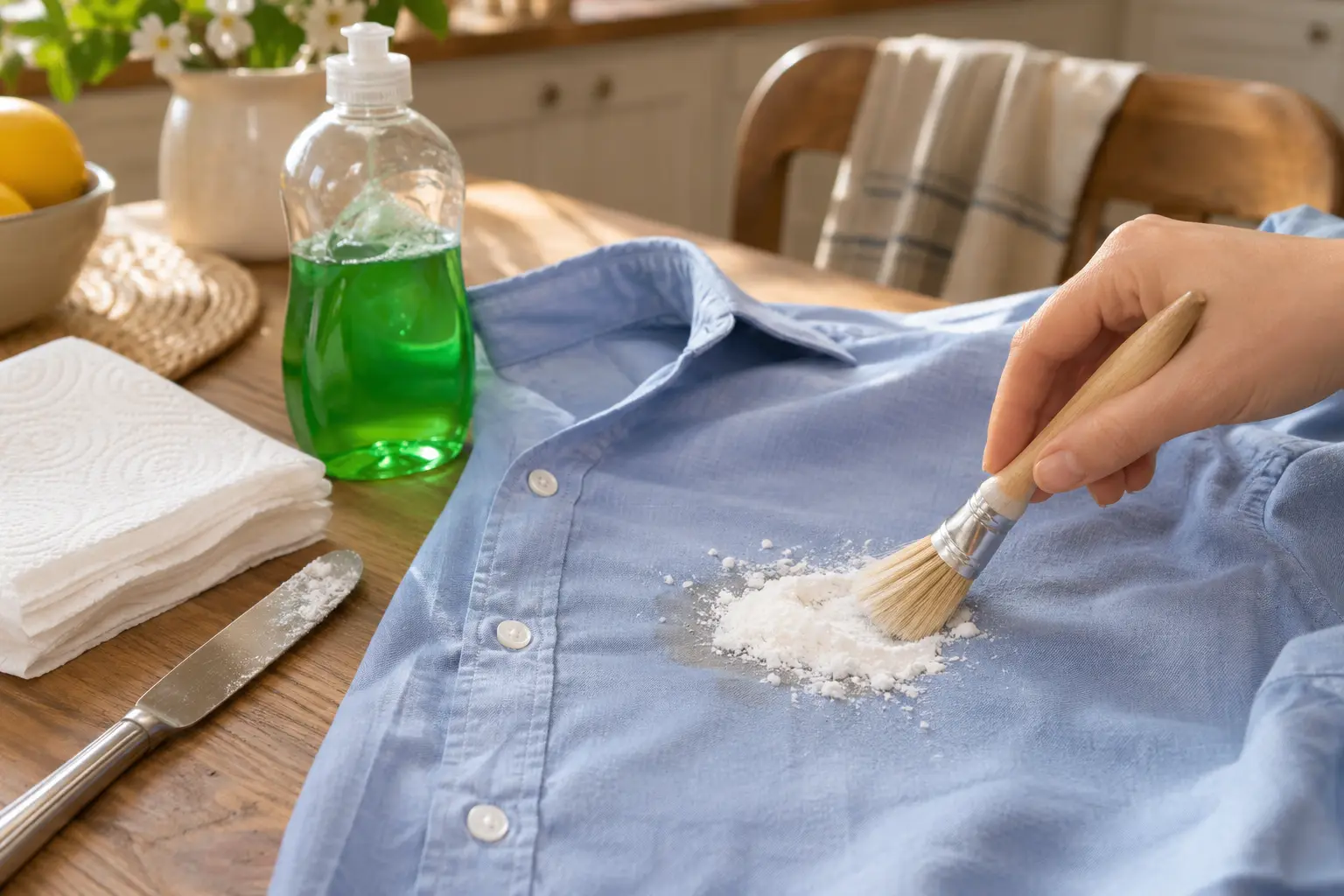
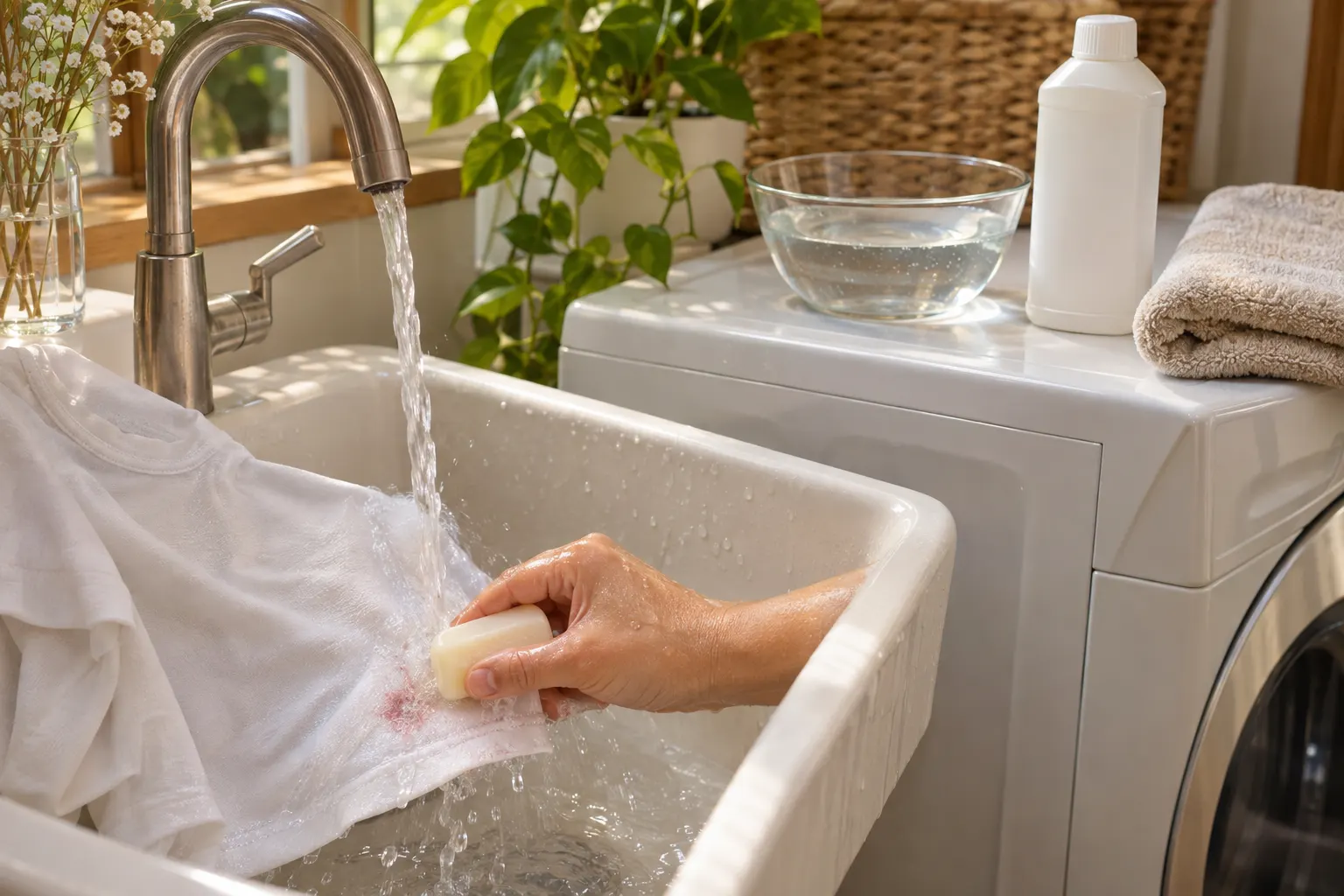
Brush or gently scrape off any sunscreen sitting on top of the fabric, then hold the stain under cold running water; Tide notes that stronger water pressure works better. Do this as soon as you can; the longer sunscreen dries into the fibers, the harder it is to lift.
02
Step 2 of 7
Identify the Type of Stain
A greasy, darker or yellowish patch is the oily part of the sunscreen. An orange or rust-colored mark is a different problem: Tide explains that avobenzone, an ingredient in some sunscreens, can react with iron in hard water to form rust-colored stains, and synthetic fabrics hold them more than cotton. Treat oily marks with steps 3 to 5 and rust-colored marks with step 6.
03
Step 3 of 7
Pretreat the Oily Residue with Detergent
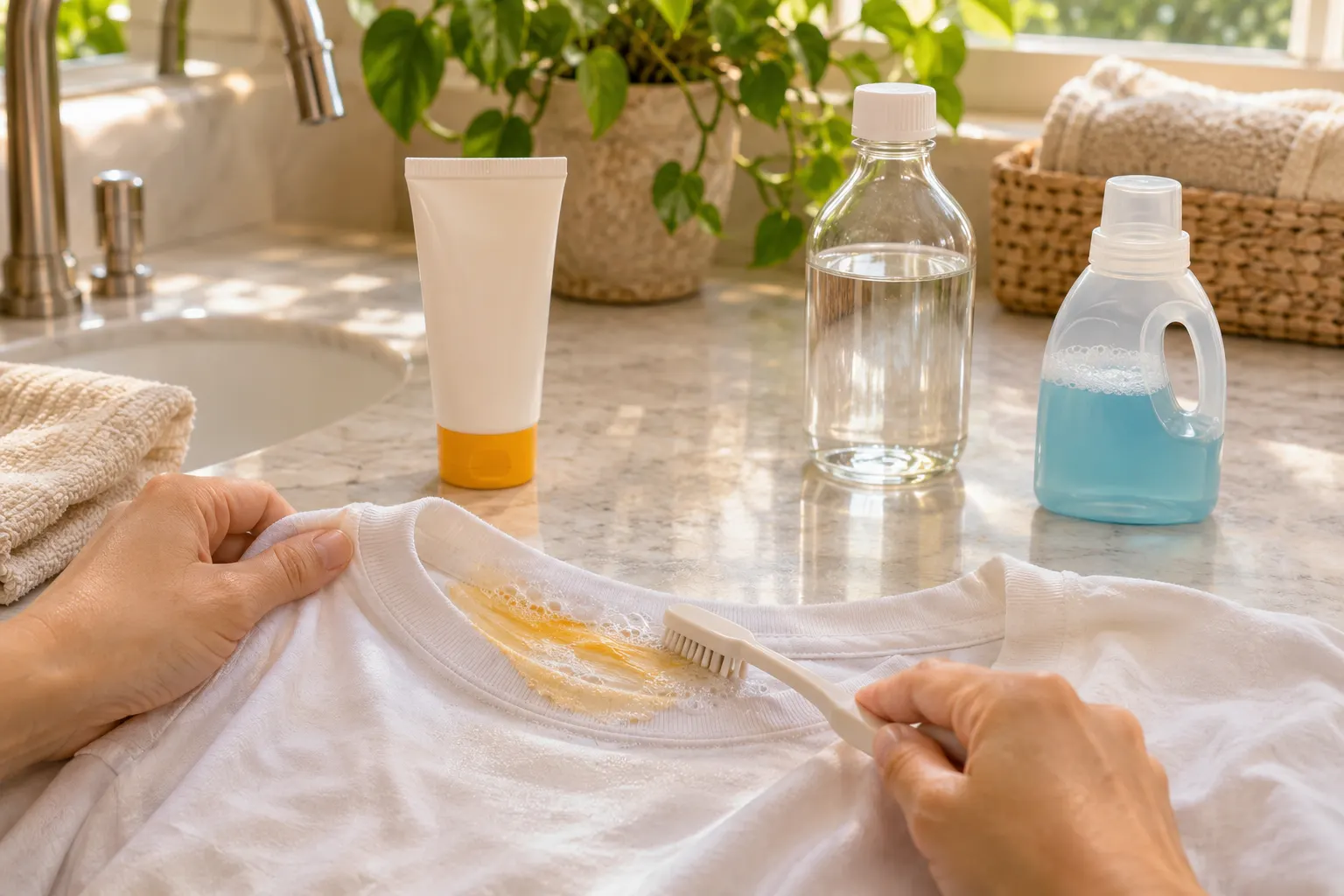
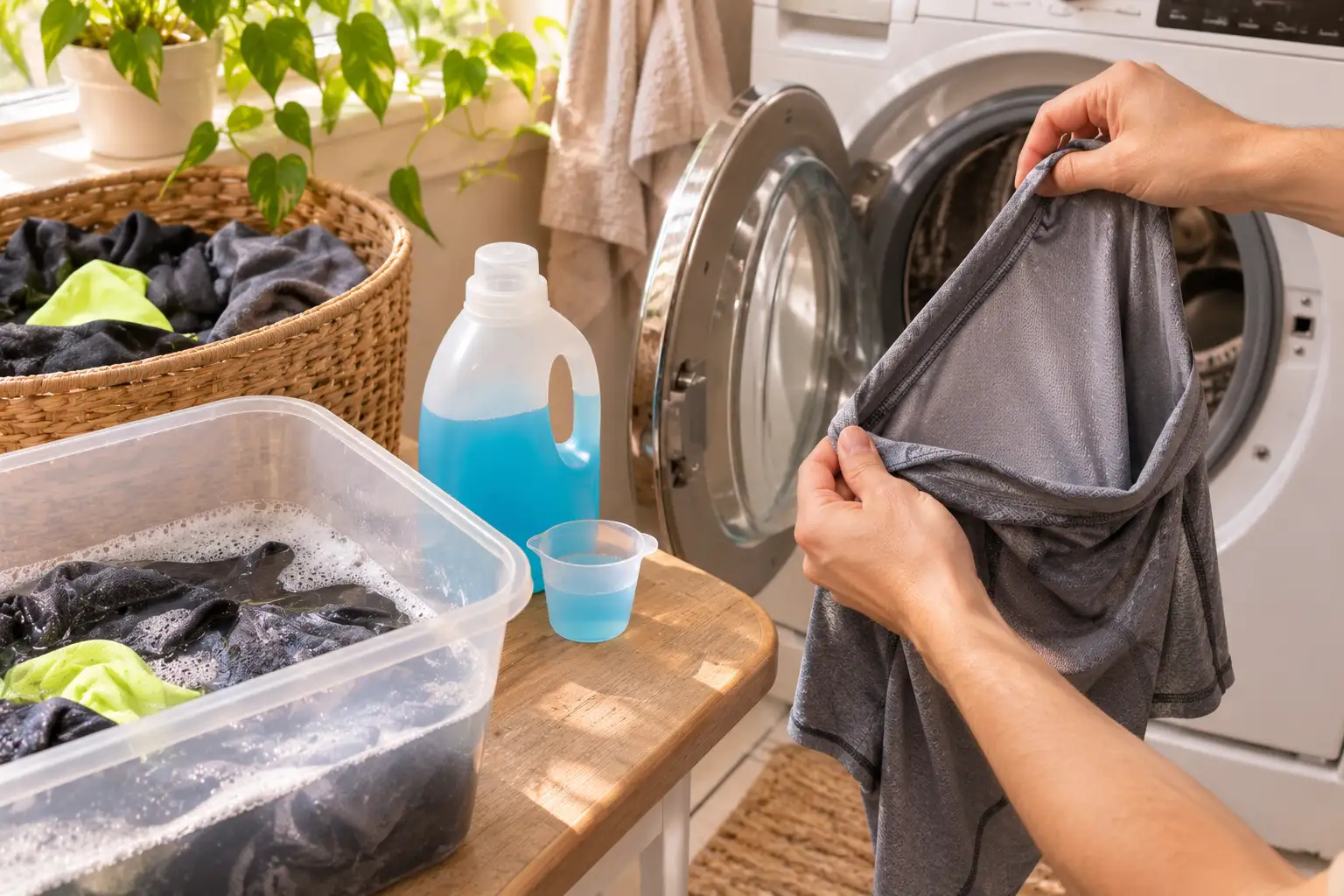
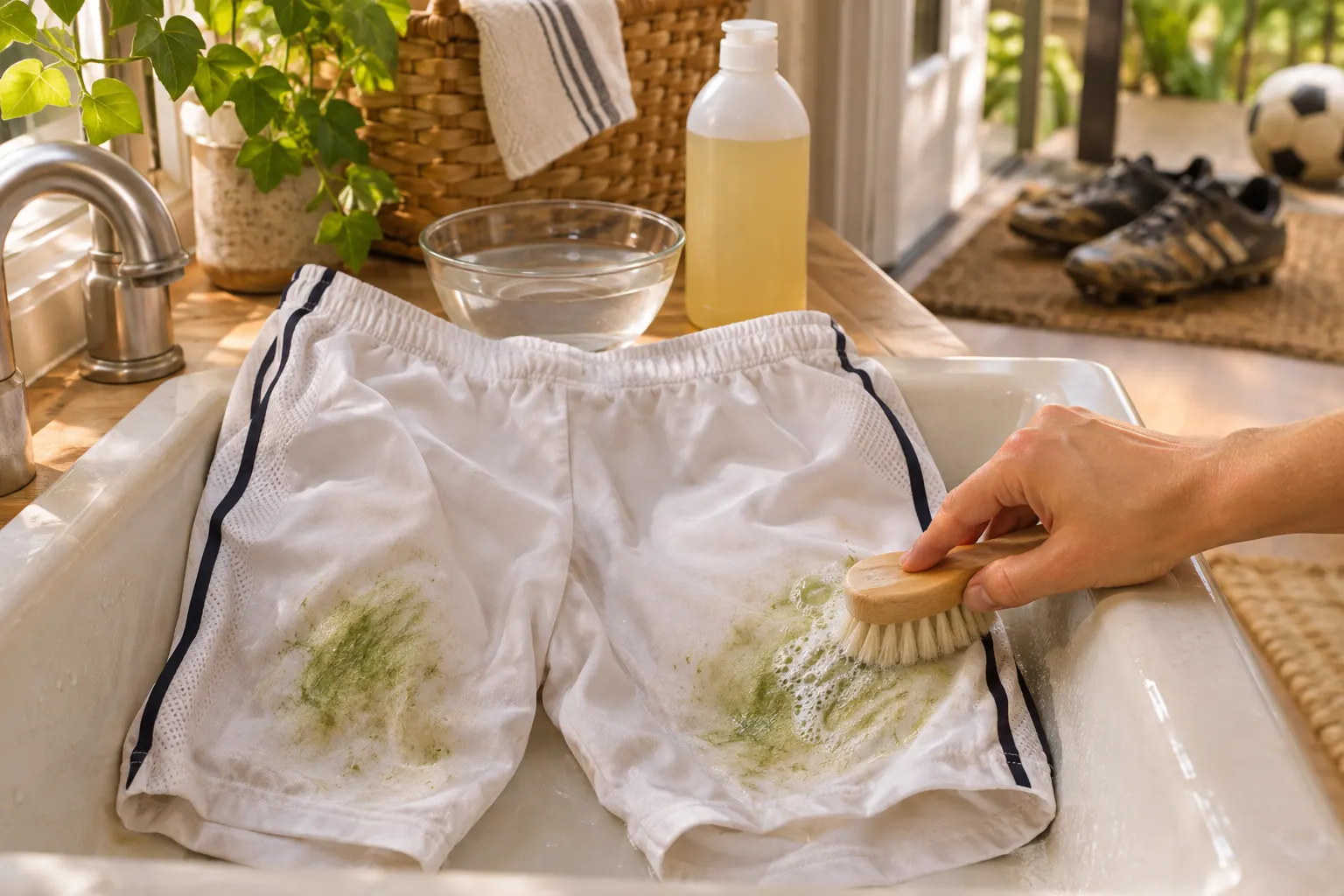
Apply liquid laundry detergent directly to the stain and work it in with a soft-bristled toothbrush or by rubbing the fabric against itself. Tide recommends letting the pretreatment sit for 5 minutes before washing. A grease-cutting detergent helps break up the oils.
04
Step 4 of 7
Soak Stubborn Marks in Dish Soap and Vinegar
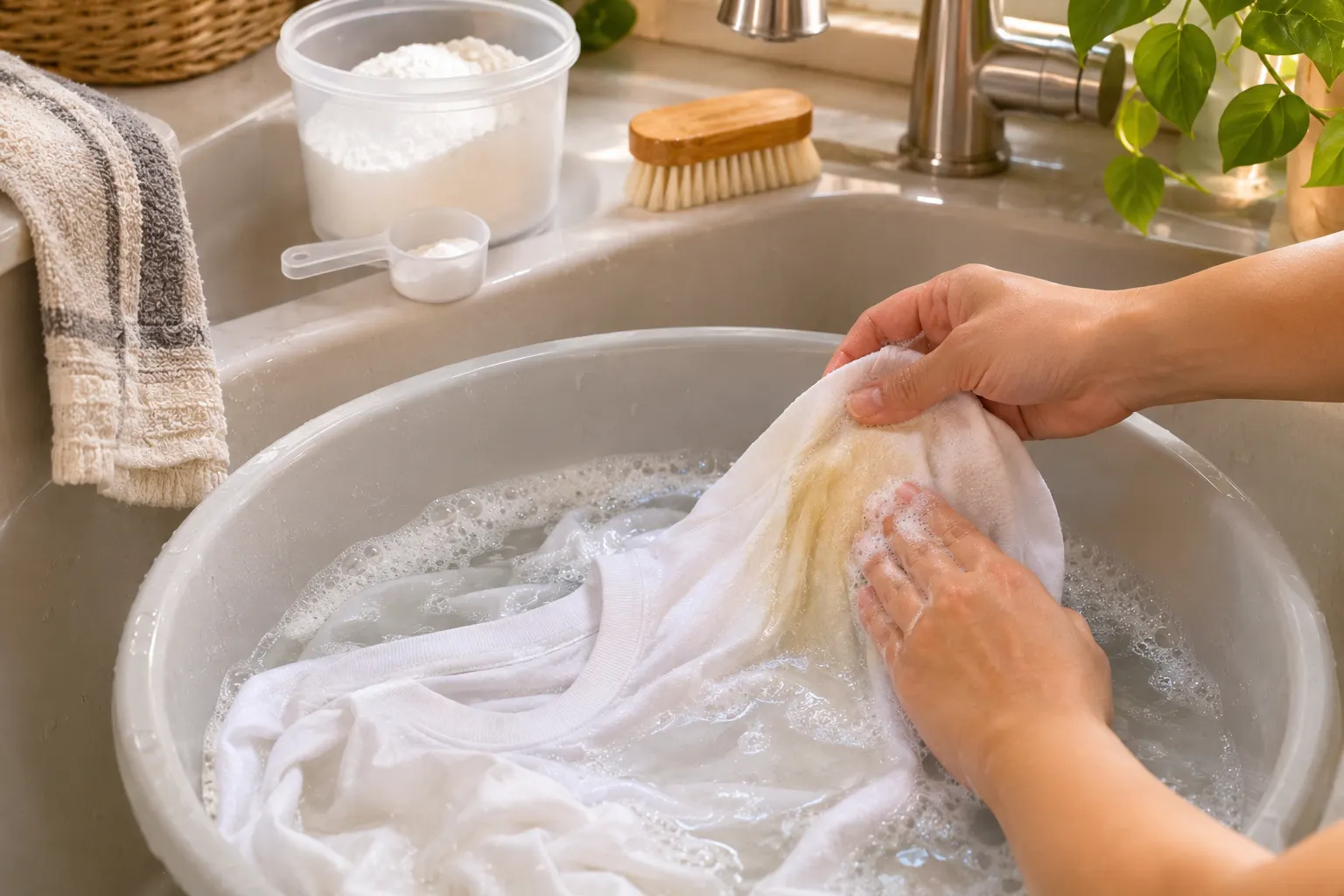
If the oily mark is set, University of Georgia Extension suggests soaking it for 15 minutes in 1 quart of warm water mixed with 1/2 teaspoon liquid hand dishwashing detergent and 1 tablespoon white vinegar. Rinse, sponge with plain water, then apply a commercial pre-wash stain remover, let it stand 1 minute, and launder.
05
Step 5 of 7
Wash as the Care Label Allows
Wash on a normal cycle with your usual detergent. Tide recommends the hottest water the care label allows, while Persil advises warm rather than hot because very hot water can set oily stains. Stay within the care label either way, and if you are unsure, choose warm.
06
Step 6 of 7
Treat Orange Stains as Rust
Do not reach for chlorine bleach. University of Georgia Extension recommends treating rust on washable fabric with a commercial rust remover used exactly as the manufacturer directs, or by sprinkling salt on the stain, squeezing lemon juice over it and drying it in the sun, then rinsing thoroughly and repeating if needed. Wear gloves and ventilate the room when using a rust remover.
07
Step 7 of 7
Check Before You Dry
Pull the garment out as soon as the cycle ends and look at the stain in good light while it is still damp. If any mark remains, repeat the pretreatment and wash rather than drying it. Air-dry or tumble dry only once the stain is completely gone.
If that didn’t work
Stubborn or set-in? Try these next, in order.
AIf an oily mark survives one wash, repeat the detergent pretreatment, or the dish soap and vinegar soak, and wash again. Keep it out of the dryer between attempts.
BIf an orange stain got darker after washing, chlorine bleach or iron-rich water may have reacted with it. Stop bleaching, switch to a rust remover labeled for fabric, and follow its directions.
CFor silk, wool, dry-clean-only items or a stain that has already been through the dryer, take the garment to a professional cleaner and tell them it is sunscreen.
Common questions
Why does sunscreen leave orange stains on clothes?
Some sunscreens contain avobenzone, which can react with iron in hard water to form orange or rust-colored stains, according to Tide. Synthetic fabrics tend to hold these stains more than cotton. Because the mark behaves like rust, it needs a rust treatment rather than a grease remover.
Can you use bleach on sunscreen stains?
Not on orange or rust-colored stains. University of Georgia Extension warns that chlorine bleach sets rust stains. For a plain yellowish oily mark on bleach-safe white fabric, Persil lists diluted chlorine bleach as an option, used per its label in a ventilated room, but detergent pretreatment should come first.
Does vinegar remove sunscreen stains?
It can help as part of a soak. University of Georgia Extension suggests 15 minutes in 1 quart of warm water with 1/2 teaspoon liquid dish detergent and 1 tablespoon white vinegar, followed by rinsing, a pre-wash stain remover and a normal wash.
Are sunscreen stains permanent?
Often not, as long as the garment has not been through the dryer. Tide notes that drying sets the stain, so keep repeating the pretreatment and wash until the mark is gone before applying any heat.
Should you wash sunscreen stains in hot or cold water?
Rinse in cold water first. For the wash itself, Tide recommends the hottest temperature the care label allows, while Persil warns that very hot water can set oily stains and advises warm. When in doubt, use warm water within the care label limit.
Sources we relied on
1.How to Remove Sunscreen Stains — Tide. Sunscreen is a combination stain with an oily and a rusty component; avobenzone can react with iron in hard water to form orange or rust-colored stains, which synthetics hold more than cotton. Brush off residue, rinse under cold running water, pretreat and let sit 5 minutes, wash at the hottest temperature the care label allows, and do not dry until the stain is gone.
2.Remove Stains From Cosmetics/Makeup/Sunscreen — University of Georgia Cooperative Extension. For suntan lotion or sunscreen on fabric, soak 15 minutes in 1 quart warm water with 1/2 teaspoon liquid hand dishwashing detergent and 1 tablespoon white vinegar, rinse, sponge with water and wash; then treat with a pre-wash stain remover for 1 minute and wash. Read the care label and pretest for colorfastness.
3.Remove Stains From Iron, Rust — University of Georgia Cooperative Extension. Do not use chlorine bleach on rust. On fabric, use salt and lemon juice dried in the sun, or a commercial rust remover used carefully per the manufacturer's directions; rust removers can ruin porcelain or enamel finishes, and caustic products need ventilation.
4.How to Remove Sun Cream Stains from Clothes — Persil. Check the care label, pretreat oily sun cream marks with a degreasing detergent, and wash warm rather than hot because hotter water can set oily stains; on whites, sun drying and diluted chlorine bleach used per the label with ventilation are options for yellowish marks.