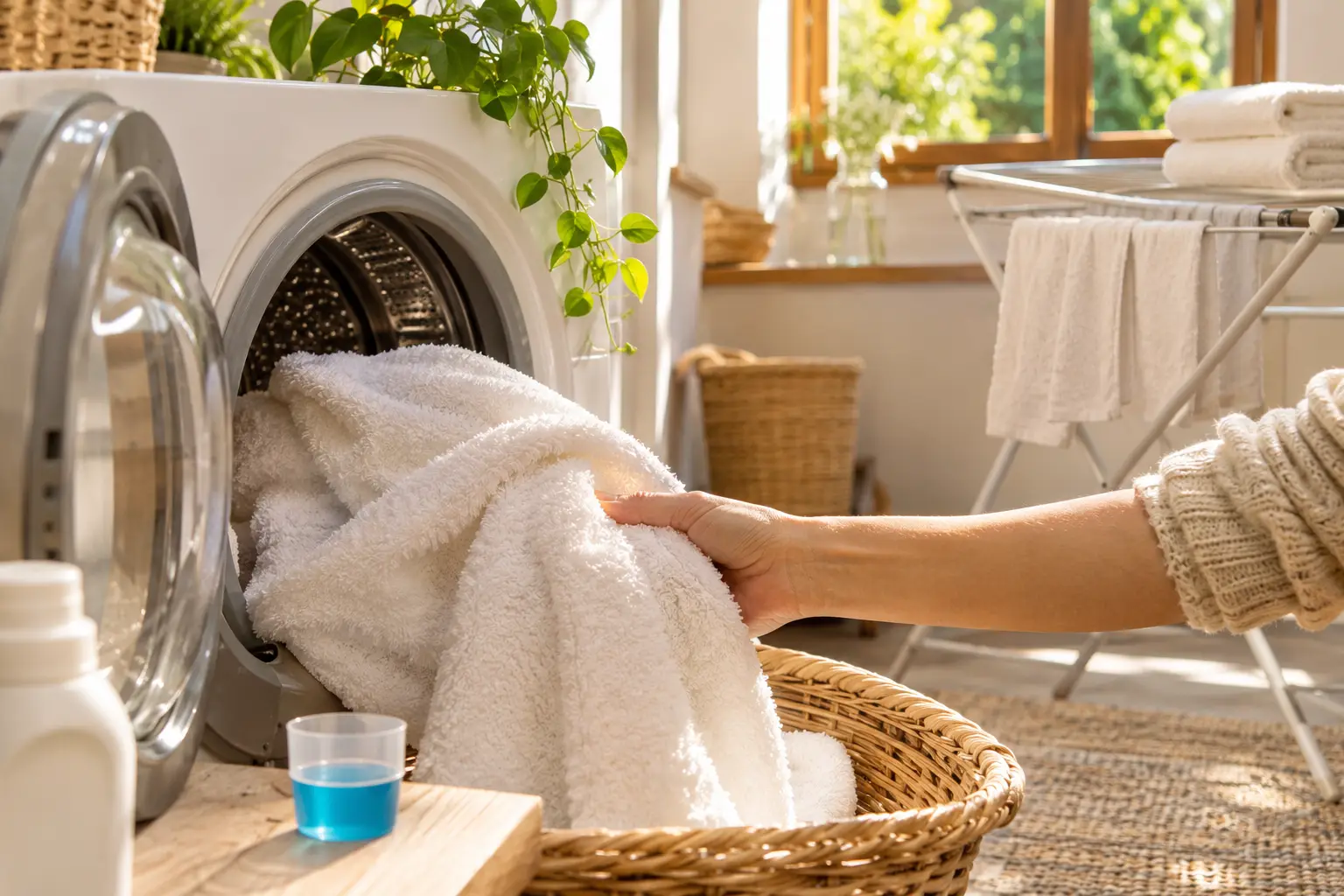
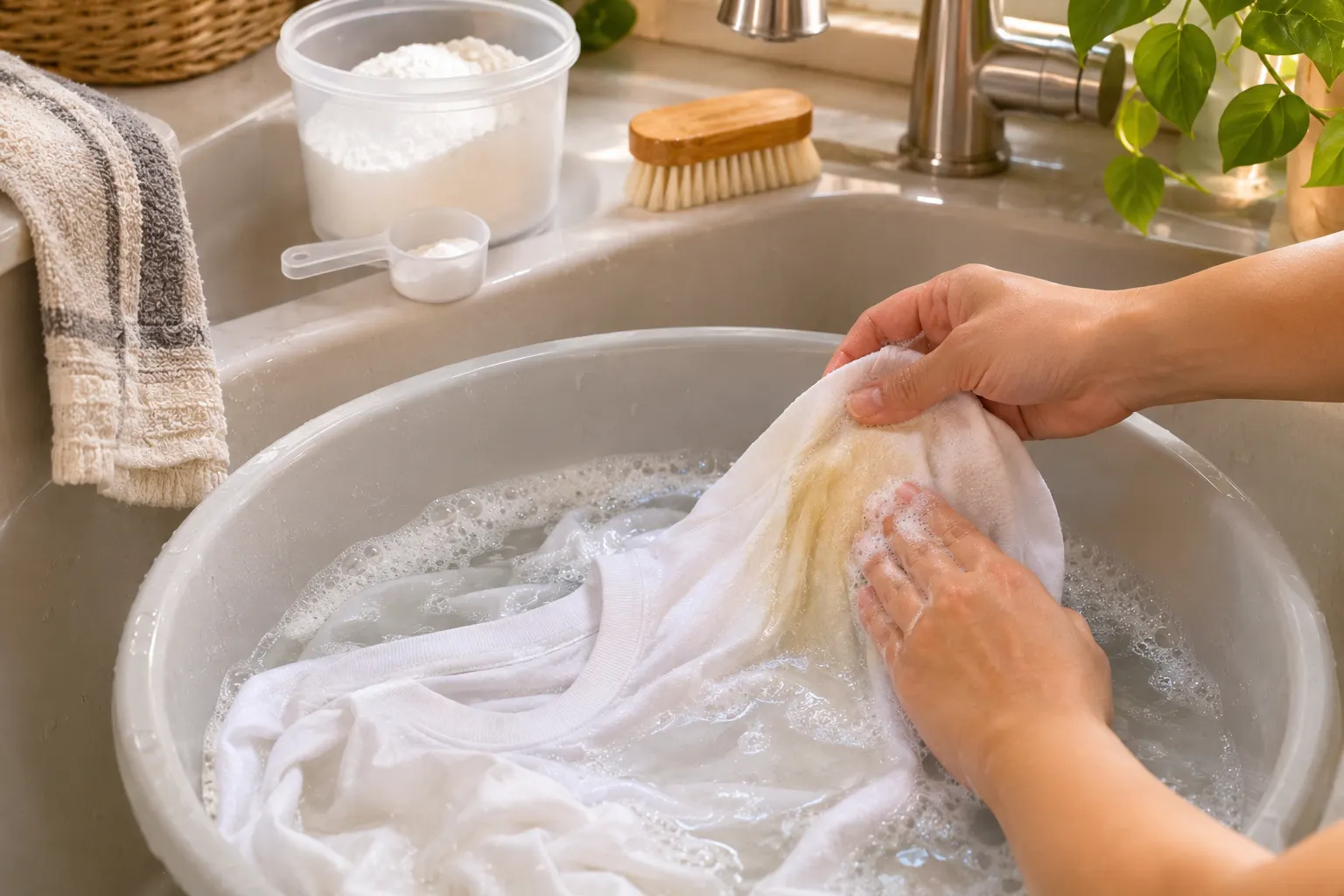
That sour, mildewy smell is trapped moisture and leftover body soil, not a lack of fragrance. Rewash on the warmest setting the label allows with the right detergent dose, dry completely, and stop the habits that bring it back.
Your usual laundry detergent (HE detergent for high-efficiency washers)
White distilled vinegar (for the optional soak)
A tub, sink or bucket large enough to submerge the towels
A drying rack, line or dryer
Washer cleaner or the cleaning product your washer manual names, for the machine itself
Step by step
01
Step 1 of 7
Smell-Test the Towels When Wet
Musty odor comes from body oils, soil and mildew that build up in towel fibers and give off a sour smell when they get damp. A towel that smells fine dry but stinks after one use still has residue in it. Treat the whole set, not just the worst towel, because they share the same washer and hamper.
02
Step 2 of 7
Read the Care Label
Check each towel's care label for the water temperature limit, whether it can be machine dried, and whether chlorine bleach is allowed. Most cotton towels tolerate warm or hot water, but decorative, dyed or blended towels may not.
03
Step 3 of 7
Soak Stubborn Towels in White Vinegar
For towels that still smell after a normal wash, submerge them in white distilled vinegar with about a tablespoon of detergent and let them soak from 30 minutes up to overnight. Rinse them thoroughly before the main wash. Results with vinegar can be hit or miss, so treat this as a booster, not the whole fix.
04
Step 4 of 7
Wash on the Warmest Setting the Label Allows
Wash the towels on the warmest water setting and the cycle shown on the care label. Use the full detergent dose for the load size and soil level: an under-dosed wash leaves body soil behind to sour, and an over-dosed one leaves residue that will not rinse out.
05
Step 5 of 7
Take the Towels Out as Soon as the Cycle Ends
Unload right away. Wet laundry left sitting in the washer drum can grow mildew, which makes both the towels and the washer smell. If you cannot be there when the cycle ends, start the load later rather than letting it sit.
06
Step 6 of 7
Dry Completely Before Folding
Dry the towels fully in the dryer or spread out on a line or rack, following the care label. Feel the thick hems and corners; if any part is still damp, keep drying. Only fold and store towels that are completely dry.
07
Step 7 of 7
Clean the Washer and Change the Habits
A smelly washer passes odor back to clean towels. Leave the washer door open between loads so moisture can evaporate, and run the washer's clean cycle with the cleaner your manual recommends (Whirlpool advises monthly for its front-loaders); our washing machine cleaning guide covers the full routine. Between uses, hang towels spread out to dry away from humidity instead of bunching them on a hook or floor, and never put wet towels in the hamper.
If that didn’t work
Stubborn or set-in? Try these next, in order.
AIf the towels smell musty again within a day or two of use, the washer is the likely source. Clean the drum, dispenser and door area following your washer manual, then rewash the towels.
BIf the smell survives a vinegar soak and a warm wash, repeat the wash with a full detergent dose on the hottest setting the label allows, and make sure the towels dry completely in one go rather than sitting half-damp.
CIf a white cotton towel's care label allows chlorine bleach, a separate bleach wash following the bleach label is another option. Never run it together with vinegar or any other cleaner, and rinse the towels well before any further treatment.
Common questions
Why do my towels smell musty even after washing?
Usually because residue and moisture were never fully removed. Body oils and soil that a wash leaves behind break down and smell sour when the towel gets damp, and towels left wet in the washer, hamper or a bunched-up pile grow mildew. A full detergent dose, the warmest water the label allows, prompt unloading and complete drying remove the source.
Does vinegar get the musty smell out of towels?
It can help. Tide suggests soaking smelly towels in white distilled vinegar for 30 minutes to overnight, then rinsing thoroughly, but also notes that vinegar results are hit or miss and that adding vinegar to the wash with detergent can interfere with how the detergent works. Use it as a separate soak, not a replacement for a proper wash.
Should I use baking soda for smelly towels?
Tide advises against relying on baking soda for odor removal, because it is a high-pH product and it says odor removal needs a low-pH agent. A vinegar soak or a rewash with enough detergent is the better first step. Never combine either one with chlorine bleach.
How do I keep towels from smelling musty?
Hang each towel spread out to dry after every use, away from humidity. Do not leave wet towels in the hamper or wet laundry in the washer, dry washed towels right away and completely, and store them only when fully dry. Leave the washer door open between loads so the machine can dry out too.
Can a dirty washing machine make towels smell?
Yes. Whirlpool notes that wet laundry left in the drum can lead to mildew that causes odors in both the clothes and the washer, and that odor-causing residue builds up when the door stays shut. Run your washer's clean cycle on the schedule in its manual and leave the door open between loads.
Sources we relied on
1.How to Get Mildew Smell Out of Towels — Tide. Mildew smells intensify in warm, moist conditions such as a wet towel left in the washer drum; body soils left by weak washing break down into a sour, musty smell. Wash at the temperature on the care label, soak in white distilled vinegar for 30 minutes to overnight and rinse thoroughly (results can be hit or miss), do not use high-pH baking soda for odor removal, hang towels to dry after each use, and store towels only when completely dry.
2.Removing Odors or Smells - Front Load Washer — Whirlpool Product Help. Remove clothing as soon as the wash cycle ends because wet clothing left in the basket can lead to mildew and odors in both the garment and the washer; leave the door open between loads; use only HE detergent and no more than the recommended amount; run the Clean Washer cycle every month.
3.Laundry and Cleaning Products — University of Georgia Extension. Use white vinegar only because colored vinegar can stain; never mix chlorine bleach and ammonia, and mixing chlorine bleach with other cleaning products may produce noxious fumes.
4.Clothes Captioning: Complying with the Care Labeling Rule — Federal Trade Commission. Care labels must give a water temperature setting if regular use of hot water would harm the product, state the drying method, and state "Only non-chlorine bleach, when needed" or "Do not bleach" when chlorine bleach is not safe.