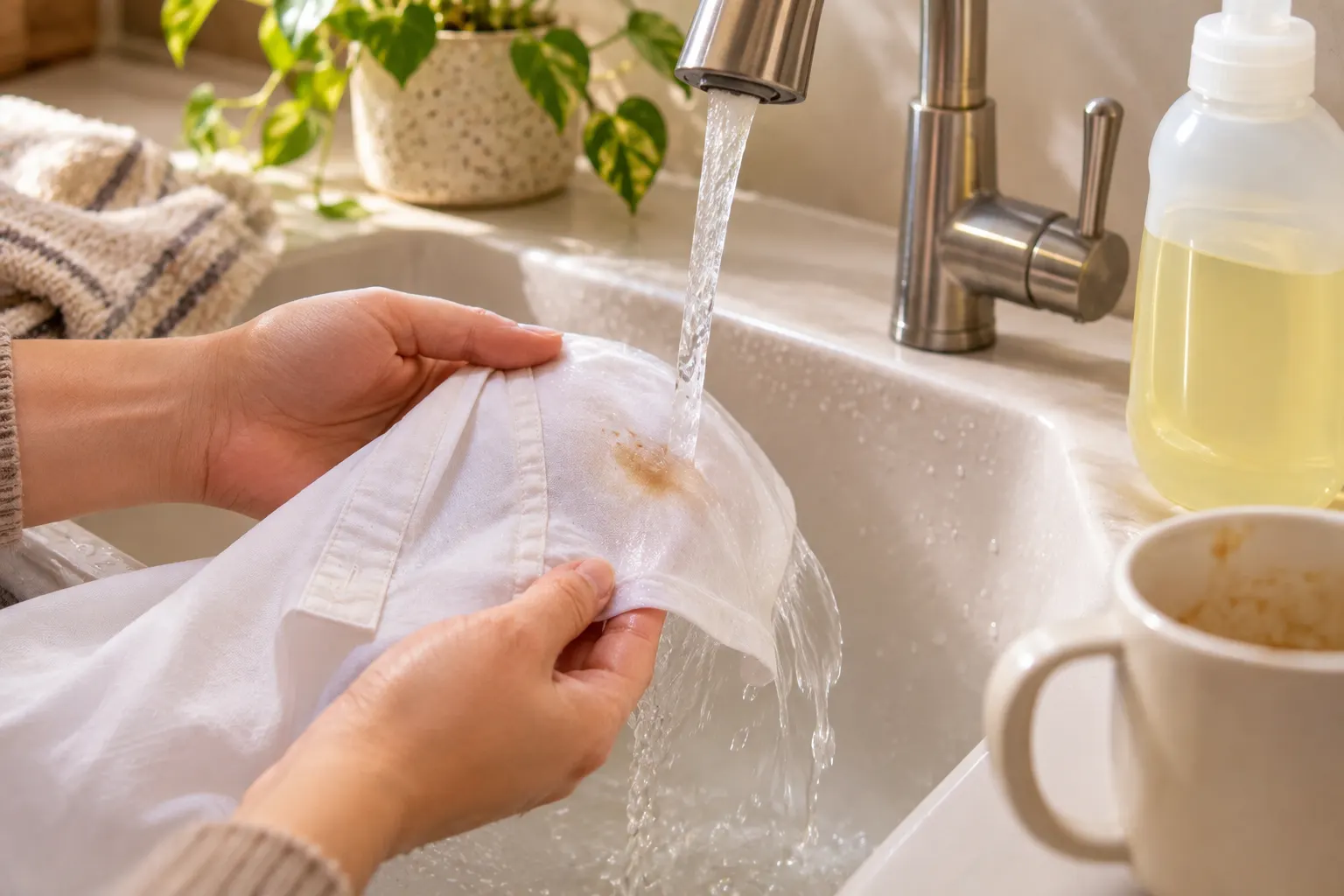
Pretreat with an enzyme stain remover, wash in the warmest water the care label allows, and check before the dryer. When diluted rubbing alcohol helps, and the fabrics that need gentler handling.
Liquid laundry detergent or stain remover that contains enzymes
Oxygen stain remover powder (for soaking tough or set-in stains on washable fabrics)
Soft-bristled toothbrush
Isopropyl rubbing alcohol and water (for stubborn green on colorfast fabric)
Clean white cloths or cotton pads
Bucket or sink for soaking
Bleach that is safe for the fabric (only if the care label allows it)
Step by step
01
Step 1 of 7
Read the Care Label and Act Fast
Check the garment's care label for the warmest water and any bleach it allows, and set dry-clean-only items aside for a professional cleaner. Treat the stain as soon as you can. Grass chlorophyll behaves like a dye, so a stain that has had time to set is much harder to lift.
02
Step 2 of 7
Pretreat with an Enzyme Detergent or Stain Remover
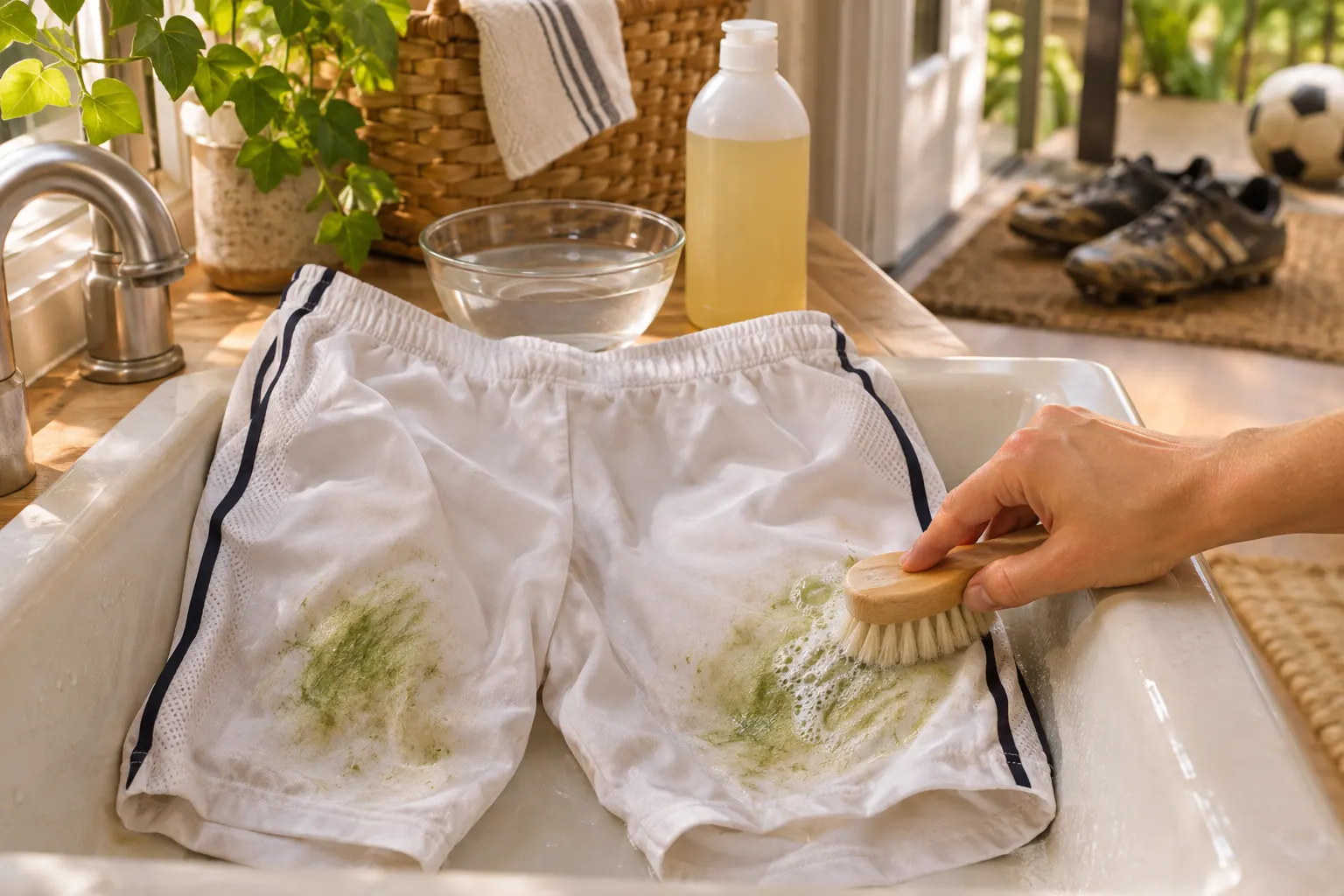
Pour a liquid detergent or stain remover that contains enzymes straight onto the stain until it is completely covered, treating both sides of the fabric. Work it in gently with a soft-bristled toothbrush or by rubbing the fabric against itself, then let it sit for about 5 minutes.
03
Step 3 of 7
Soak Tough or Dried Stains
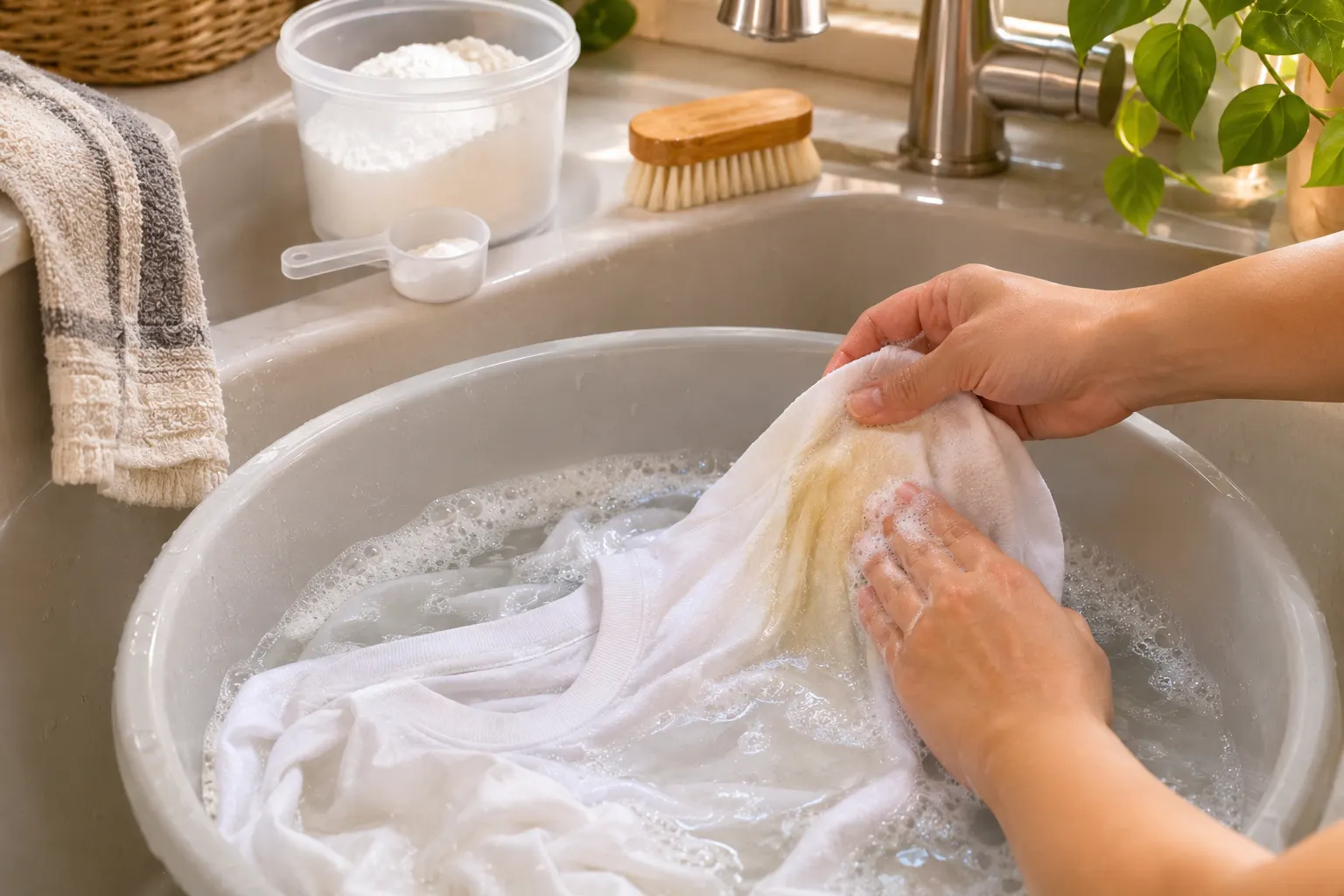
For a heavy or set-in stain on a washable fabric that is not wool or silk, dissolve an oxygen stain remover powder in water at the dose the label gives for tough stains, test it on a hidden spot, and soak the garment. OxiClean, for example, gives a soak of 1 to 6 hours and says 6 hours gives the best results. An enzyme presoak product is another option; follow its label.
04
Step 4 of 7
Wash in the Warmest Water the Fabric Allows
Load the garment with the pretreatment still on it and run the usual cycle with detergent, using the hottest water the care label permits. If the care label allows bleach, you can add a bleach that is safe for that fabric to this wash.
05
Step 5 of 7
Check the Stain Before Drying
Take the garment out as soon as the cycle ends and look at the stained area in good light while it is still wet. If any green or brown shadow remains, do not dry it. Repeat the pretreatment and wash, or move on to the alcohol step.
06
Step 6 of 7
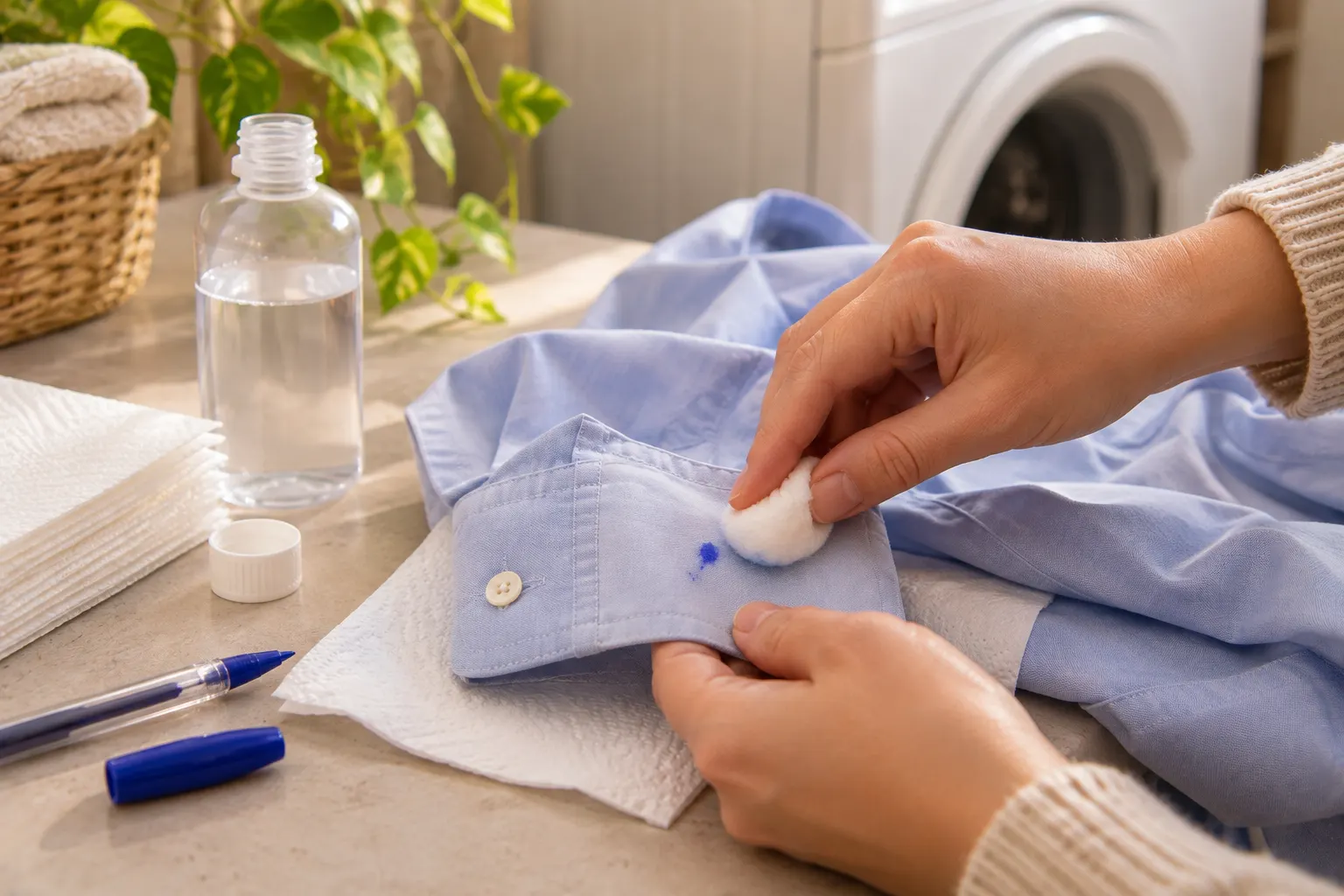
Sponge Stubborn Green with Diluted Rubbing Alcohol
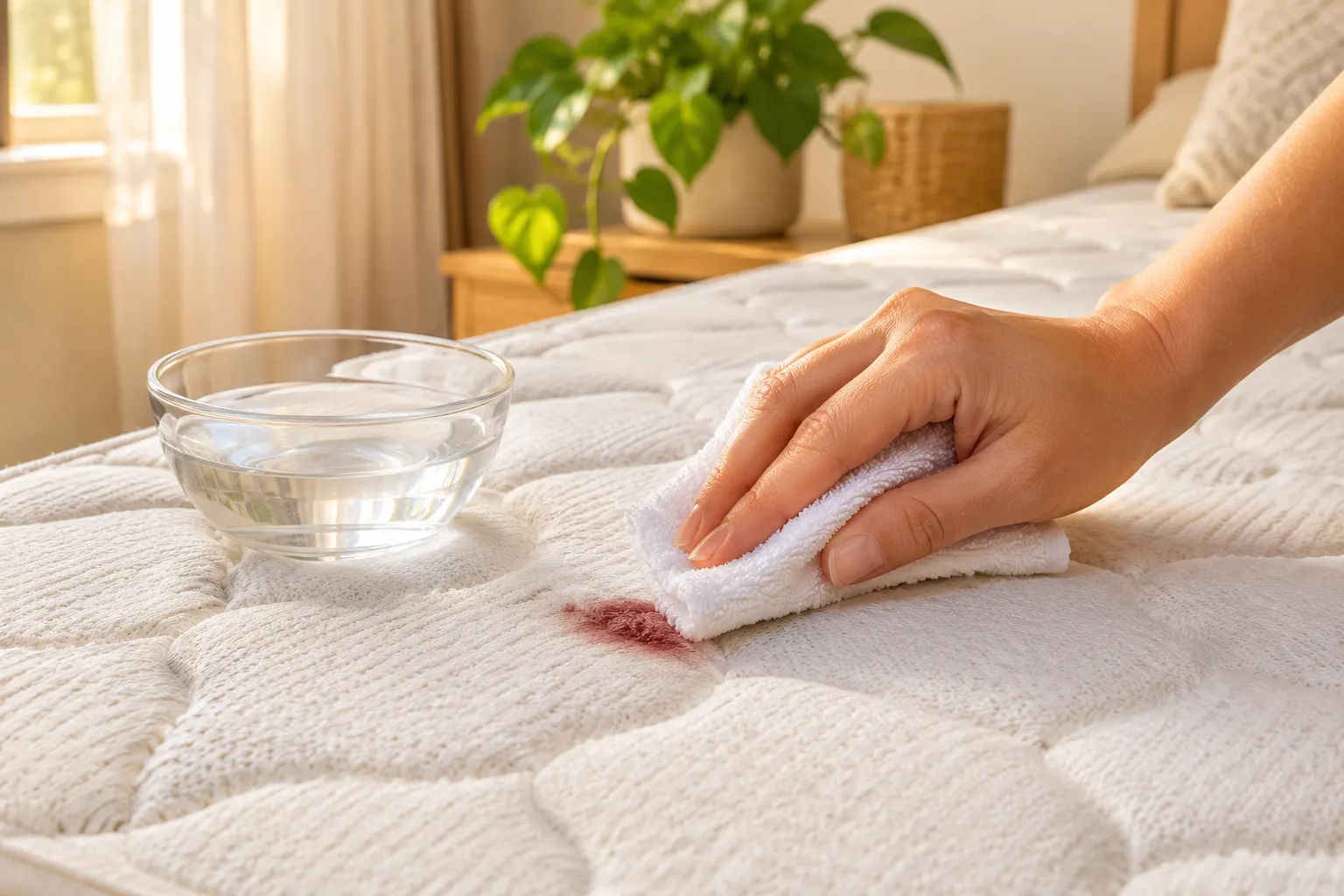
On a colorfast fabric, mix 1 part rubbing alcohol with 2 parts water and test it on a hidden seam. If the color holds, sponge the stain with a white cloth dampened in the mixture, blotting rather than scrubbing, in a ventilated room. Rinse, then pretreat and wash again. On acetate, one extension guide uses 1 part alcohol to 1 part water; test first either way.
07
Step 7 of 7
Air-Dry Only When the Stain Is Gone
Once the stain has disappeared completely, dry the garment as its care label directs. If you are unsure whether a faint mark remains, air-dry it first and check again; heat is what makes a leftover grass stain permanent.
If that didn’t work
Stubborn or set-in? Try these next, in order.
ARepeat the enzyme pretreatment and wash cycle two or three times before drying; old grass stains often fade in stages.
BFor white, bleach-safe cotton, a few drops of hydrogen peroxide on the remaining stain followed by a wash is an option the University of Georgia extension lists; test a hidden area first because peroxide can lighten colors.
CFor dry-clean-only, silk, wool or delicate fabrics, or if the stain has already been through the dryer, take the garment to a professional dry cleaner and point out the stain.
Tools that help
You can do this with cloths and a spray bottle. These make it faster:
As an Amazon Associate, HouseCareWiki earns from qualifying purchases. It costs you nothing extra. How we make money
8.2/10HouseCareWiki rating 8.2 out of 10, research-based
Paid promotion: Little Monsters pays HouseCareWiki a higher commission on this model through Amazon until December 17, 2026. Our notes and scores don’t change because of it.
Grass contains chlorophyll, which acts as a dye on fabric. Like other dye stains, it bonds more firmly the longer it sits and the more heat it is exposed to, which is why fast pretreatment and keeping the garment out of the dryer matter so much.
Does rubbing alcohol remove grass stains?
It can help with stubborn green that is left after an enzyme pretreatment and wash. Mississippi State University Extension says to dilute the alcohol with 2 parts water and sponge it on. Test it on a hidden seam first, because alcohol can affect some dyes, and work in a ventilated room.
Should I use hot or cold water for grass stains?
Tide and Mississippi State University Extension both say to wash in the hottest water that is safe for the fabric, after pretreating. Always check the care label first; the dryer, not the wash water, is the step that most often sets a grass stain.
Can you get old grass stains out after drying?
Sometimes. Soak the garment in an oxygen stain remover or enzyme presoak solution for several hours, then pretreat and wash again, and repeat before drying. Tide notes that set-in grass stains are harder to remove than fresh ones, so expect to repeat the process.
How do you get grass stains out of white baseball pants?
Pretreat both sides with an enzyme stain remover, soak in an oxygen stain remover solution if the label allows it for that fabric, and wash in the warmest water the care label permits. Check the stain before drying and repeat the process until it is gone.
Sources we relied on
1.How to Remove Grass Stains — Tide. Grass chlorophyll acts as a dye; cover the stain completely with liquid detergent, work it in with a soft-bristled toothbrush, wait 5 minutes, wash without rinsing off the pretreatment at the hottest temperature the care label allows, and repeat before drying because drying sets the stain.
2.How to Remove Pesky Stains — Mississippi State University Extension. For grass, pretreat with a stain stick or soak with an enzyme product; if the stain remains, sponge with alcohol diluted with 2 parts water; if still visible, wash in the hottest water safe for the fabric with fabric-safe bleach, and do not put the garment in the dryer until the stain is gone.
3.Remove Stains From Grass — University of Georgia Cooperative Extension. Read the care label and pretest products for colorfastness; pretreat both sides with a prewash stain remover for 2 minutes and launder with fabric-safe bleach; if the stain remains, apply a few drops of hydrogen peroxide or sponge with rubbing alcohol (1 part alcohol to 1 part water on acetate); ensure ventilation.
4.How to Remove Grass Stains — OxiClean. Dissolve Versatile Stain Remover powder (line 2 to 4 per gallon), test in an inconspicuous area, soak 1 to 6 hours (6 hours for best results), wash in the warmest water the fabric accepts, and do not use on wool, silk, their blends, leather or dry-clean-only fabrics.