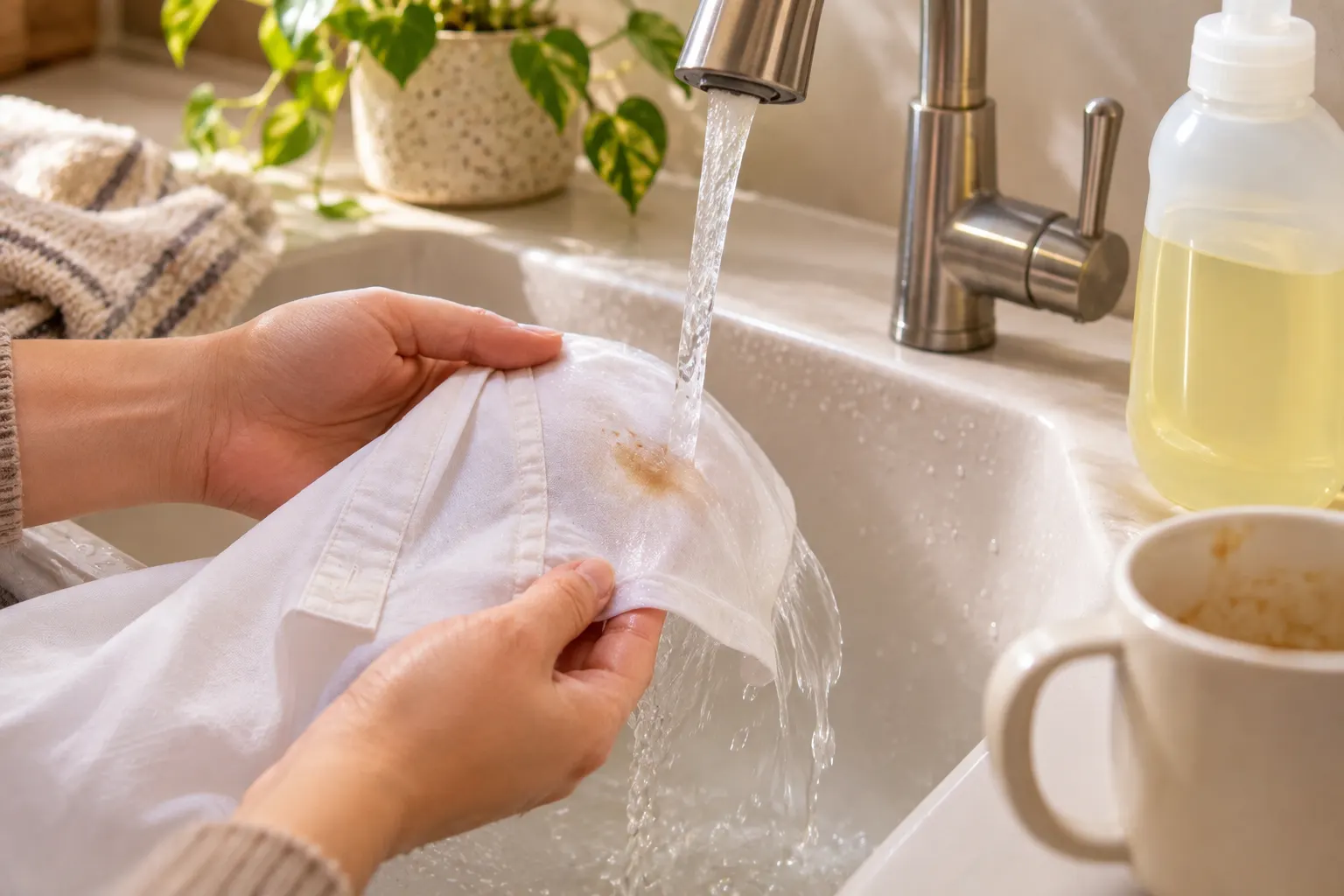
Absorb the excess, work detergent in from the back, then wash in the hottest water the label allows. What changes for set-in stains, synthetics and silk or wool, and for gravy, which also leaves a brown food stain.
Clear liquid dish soap or heavy-duty liquid laundry detergent (1 to 2 tsp)
Soft brush or old toothbrush
Pre-wash spot and stain remover (for set-in stains)
Oxygen bleach (sodium percarbonate or perborate) for whites and colorfast fabrics, optional
Step by step
01
Step 1 of 6
Scrape and Blot Off the Excess
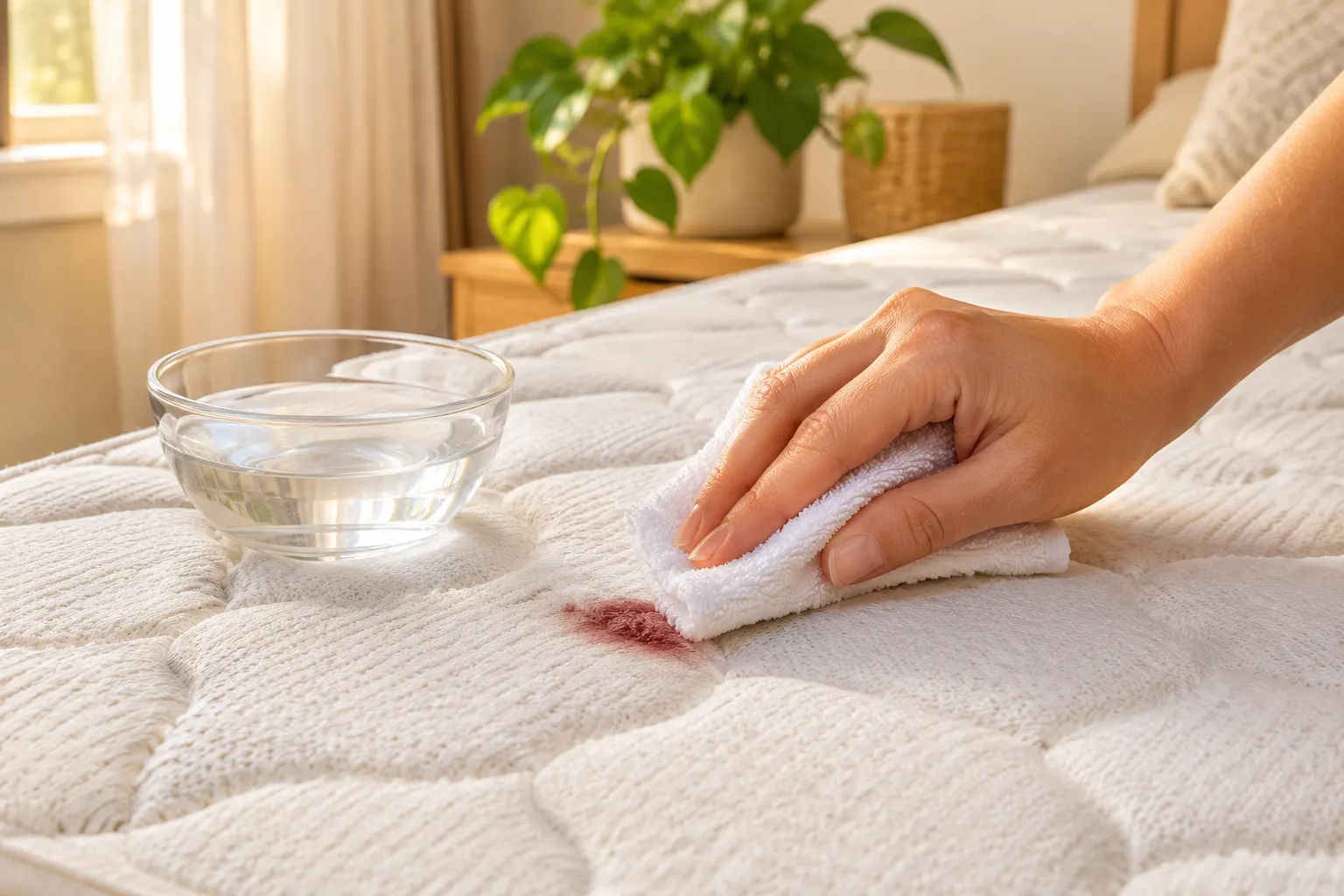
Lift any solid grease off with the edge of a spoon or blunt knife, then press a paper towel on the spot to soak up surface oil. Do not rub, which spreads the oil into a wider ring.
02
Step 2 of 6
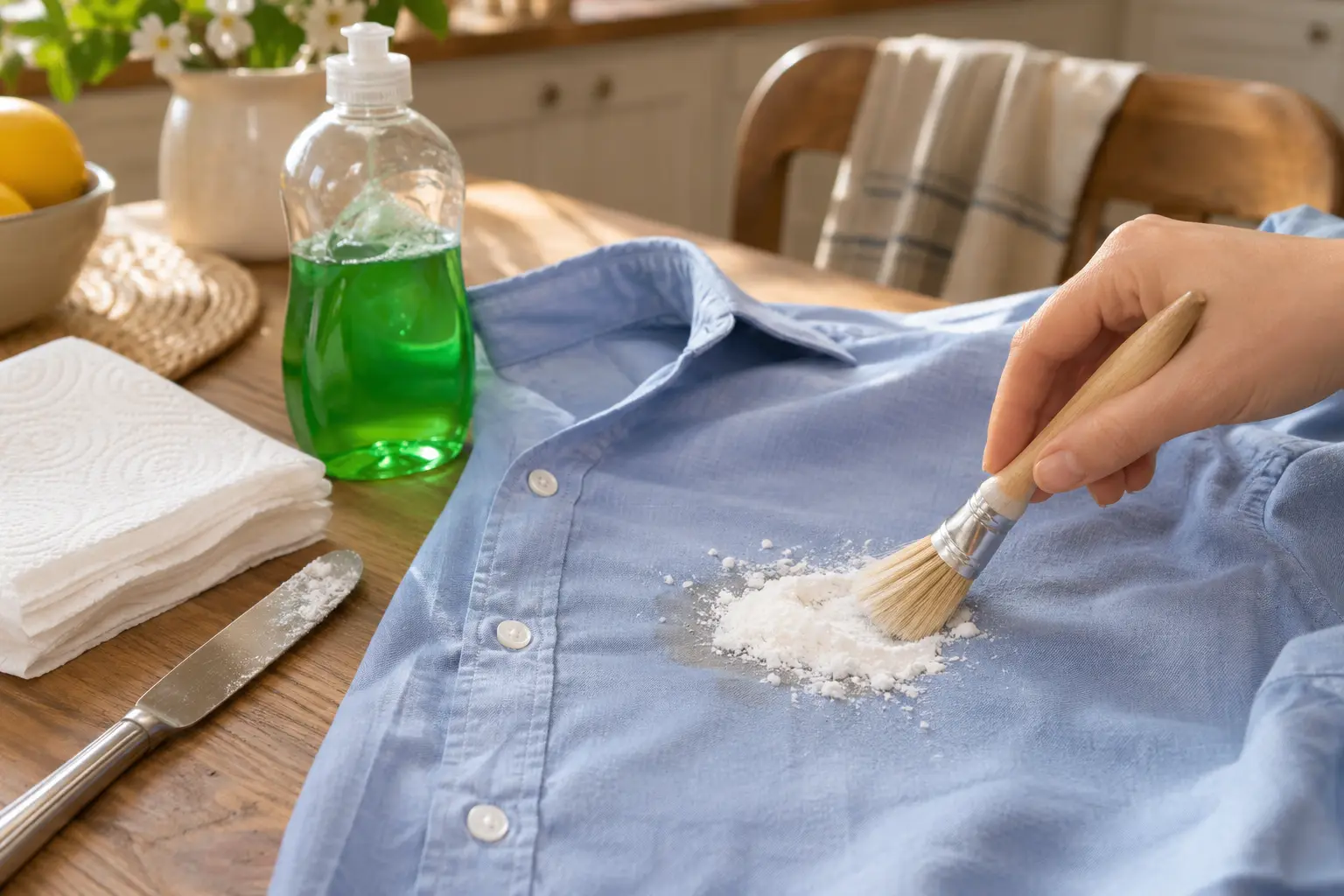
Absorb the Oil With Powder
Cover the stain with a generous layer of talcum powder, cornstarch or baking soda and leave it 15 to 30 minutes. Brush the powder away and repeat while it keeps darkening with oil.
03
Step 3 of 6
Check the Care Label
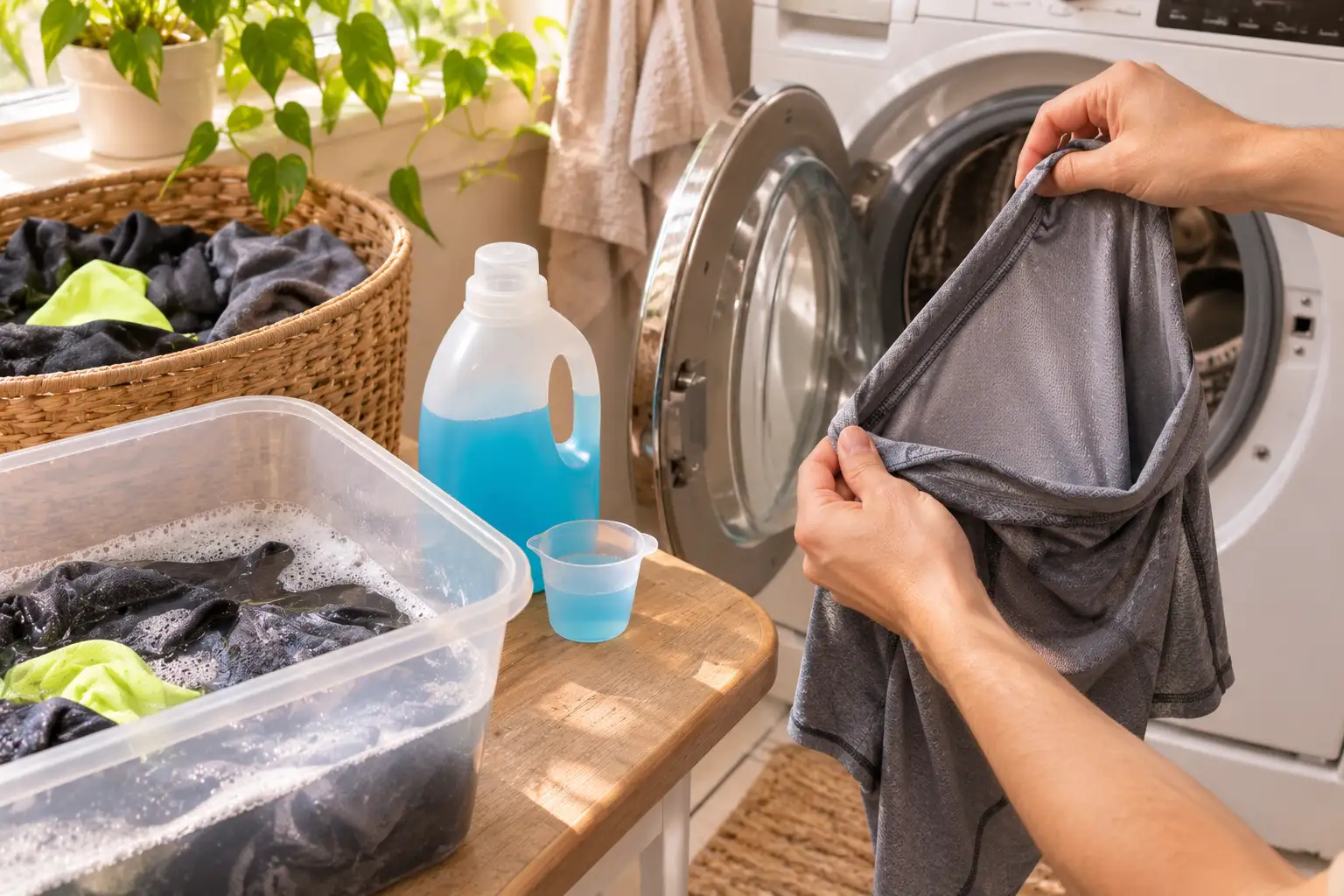
Read the label for washing method, maximum water temperature and bleach instructions. If it says dry clean only, stop here and take it to a cleaner. Cotton and linen usually tolerate warm or hot water; polyester, nylon and other synthetics often call for warm or cool water; silk and wool need cool water and a gentle detergent.
04
Step 4 of 6
Pretreat From the Back of the Stain
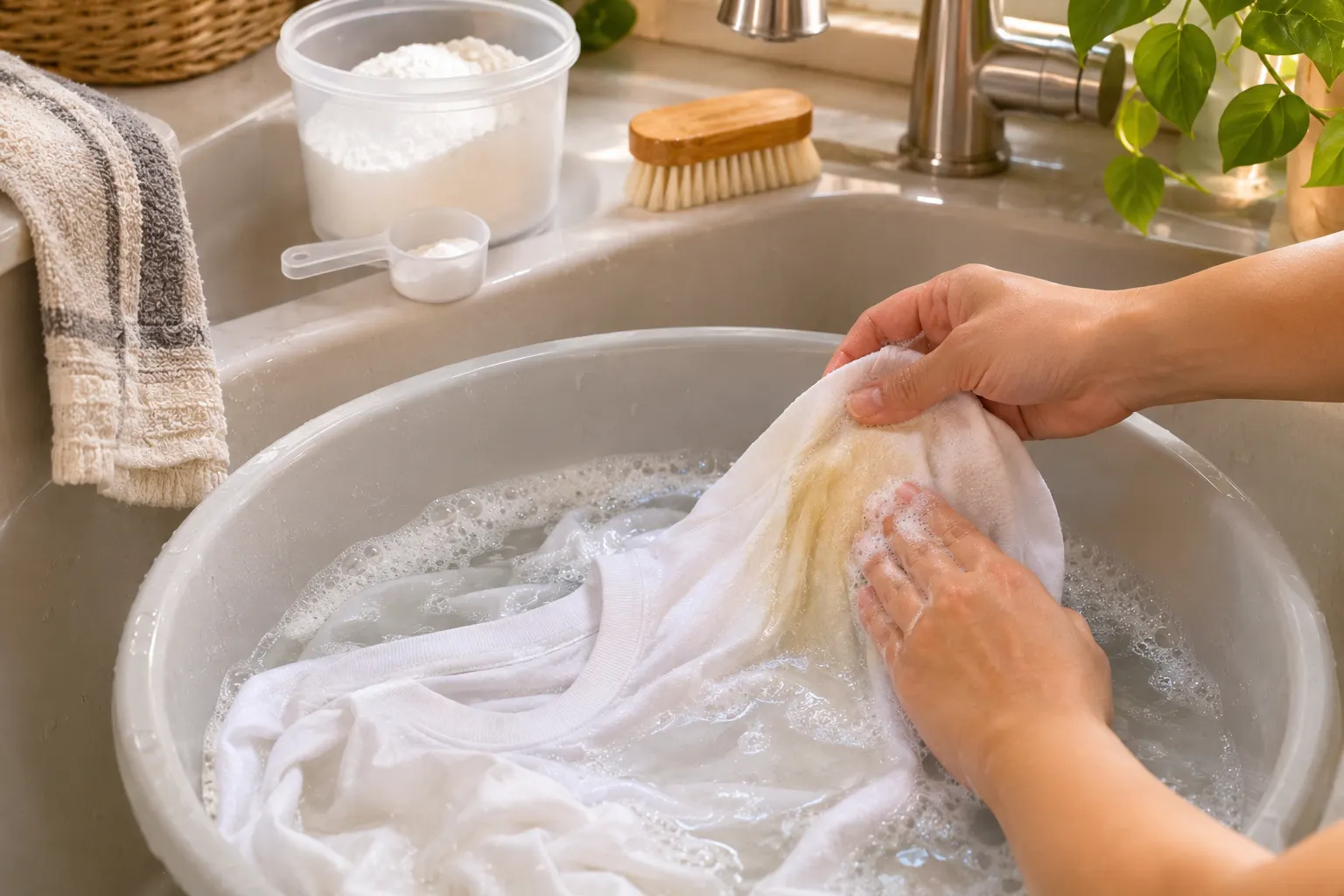
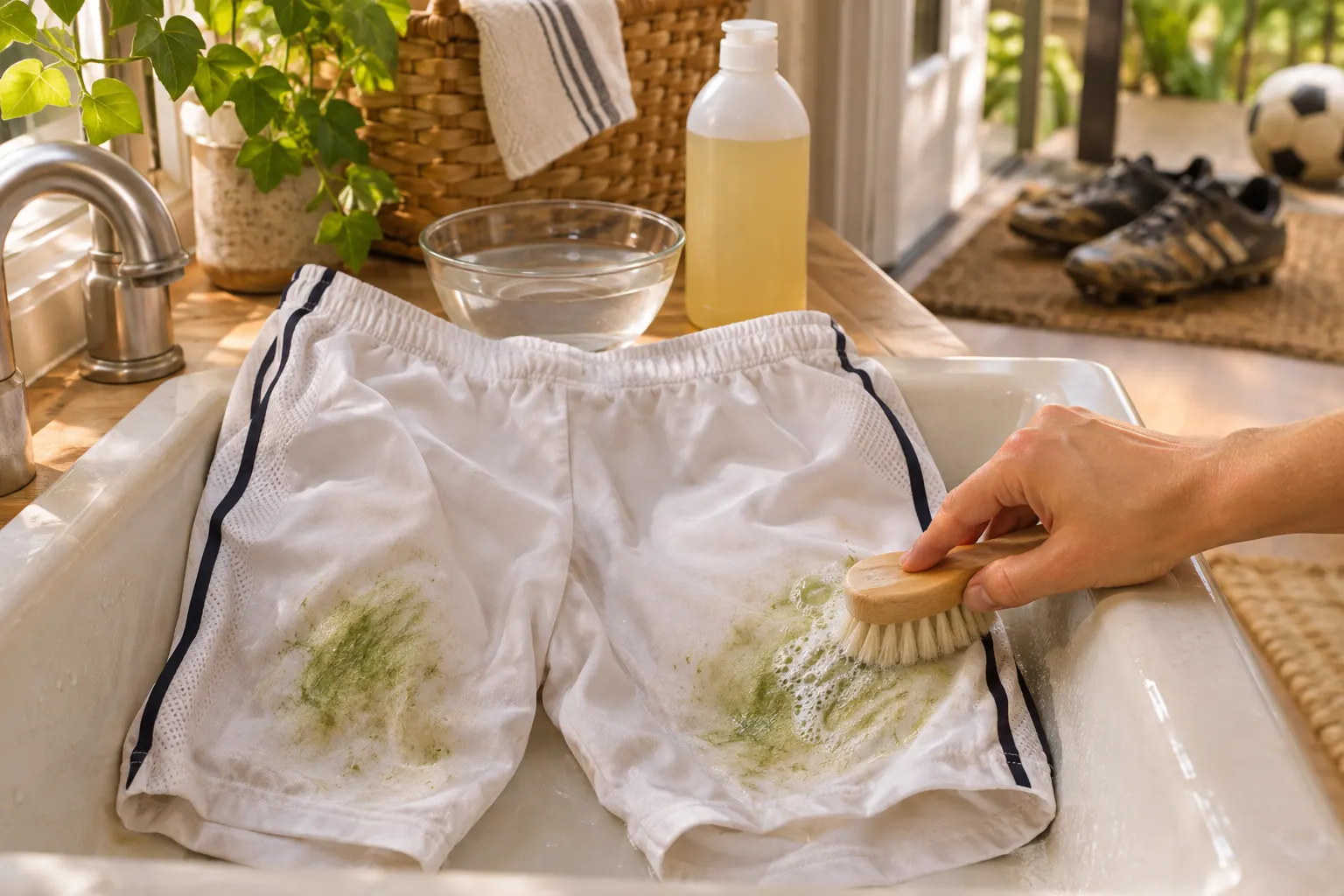
Lay the stain face down on a few clean paper towels. Apply 1 to 2 teaspoons of liquid dish soap or heavy-duty liquid laundry detergent to the back of the fabric and work it in gently with your fingers or a soft brush, so the oil is pushed out onto the towel rather than deeper into the fibers. Let it sit 5 to 10 minutes, or up to 30 minutes for a heavy stain.
05
Step 5 of 6
Wash in the Hottest Water the Label Allows
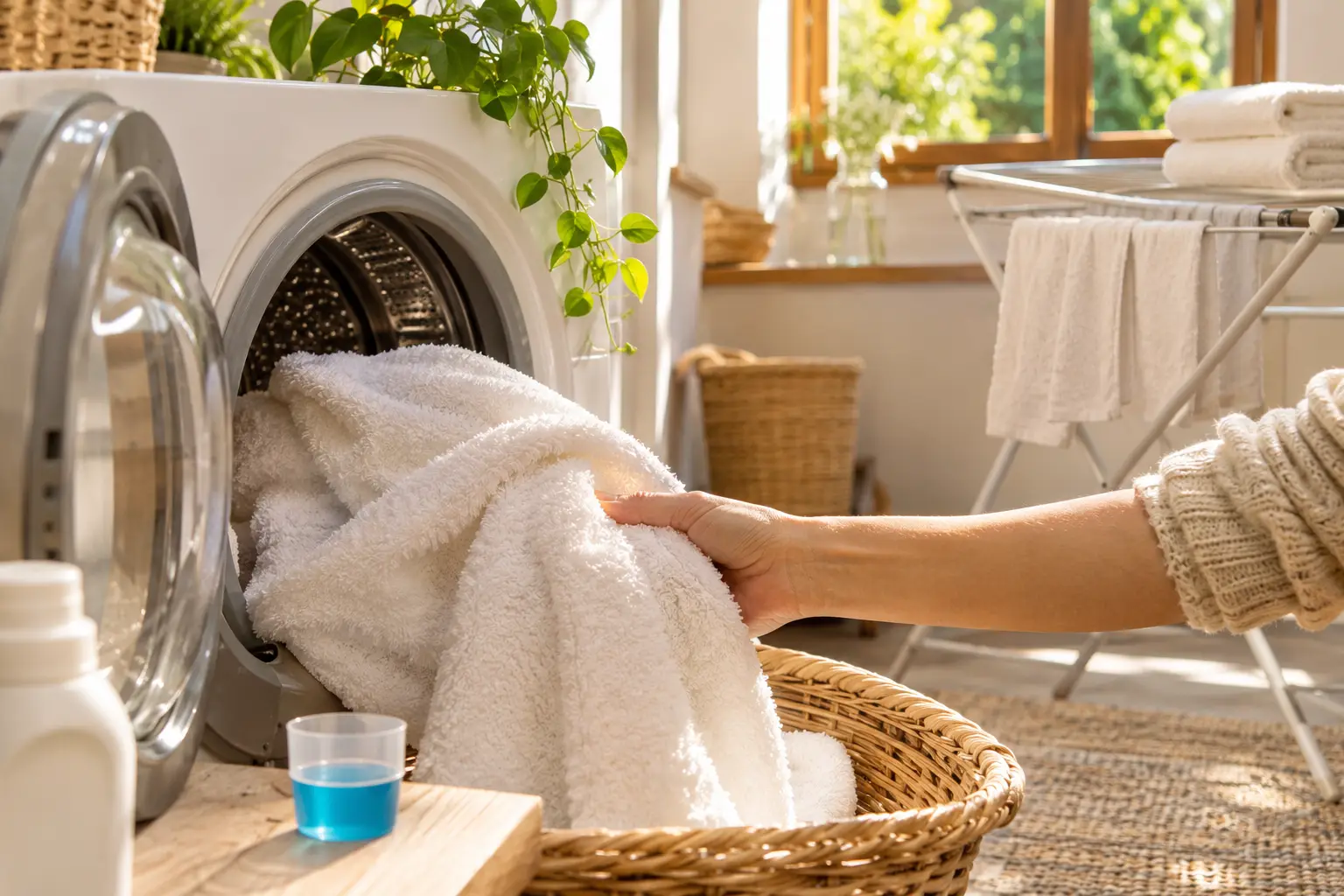
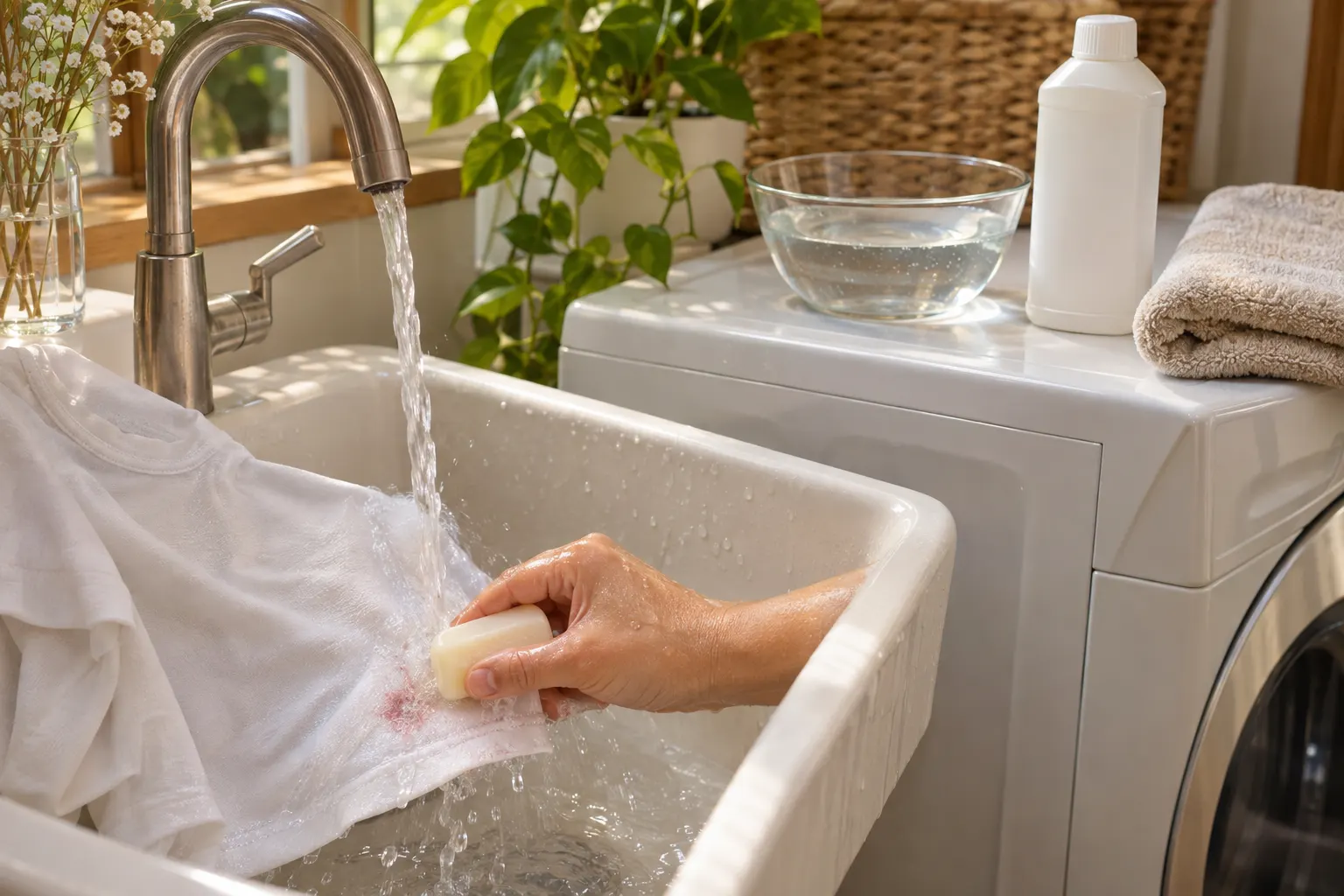
Launder with the normal amount of detergent at the hottest temperature the care label permits. Hot water helps melt and release oil on cotton; synthetics should stay at the label temperature. For whites and colorfast fabrics you can add oxygen bleach to the wash if the label allows bleach.
06
Step 6 of 6
Inspect Before Drying
Check the spot while the garment is still wet, and again after it air-dries, since damp oil stains can be hard to see. If any darkened area remains, repeat steps 4 and 5 before it goes anywhere near the dryer.
If that didn’t work
Stubborn or set-in? Try these next, in order.
AFor an old or set-in grease stain (especially on polyester, which holds oil), apply a commercial pre-wash spot and stain remover, let it sit as the label directs, then rewash in the hottest water safe for the fabric. Two or three rounds are often needed.
BFor automotive grease or heavy oil, a solvent-based spot remover can dissolve what detergent cannot. Test on a seam first, use it outdoors or with good ventilation, let the garment air out fully, then launder.
CIf a light shadow remains on white cotton, soak it for a few hours in warm or hot water with oxygen bleach (follow the package dose), then wash again.
Gravy on clothes
Texas A&M AgriLife and the University of Kentucky class gravy as a combination stain: an oily part and a colored food part. Deal with the grease first. Scrape off thick gravy and blot without rubbing, then rub heavy-duty liquid detergent into the stain, which the University of Kentucky gives for gravy specifically; the University of Georgia uses a pre-wash spot and stain remover, and Tide covers the stain with liquid detergent and lets it sit 5 minutes. Without rinsing, wash in the hottest water the care label allows, as Texas A&M, the University of Kentucky and Tide all advise for this kind of stain.
If a brown shadow is left after washing, the University of Kentucky says the dye part can be removed with a bleach safe for the fabric. The University of Georgia suggests soaking 15 to 30 minutes in 1 quart of warm water with 1 tablespoon of sodium perborate (oxygen) bleach, then laundering again. Do not dry or iron the garment until the stain is gone; Texas A&M, New Mexico State and the University of Kentucky all warn that heat sets stains, and Texas A&M notes that old stains may be impossible to remove. For gravy on upholstery, the University of Georgia uses 1 teaspoon of white liquid dishwashing detergent in 1 cup of lukewarm water.
As an Amazon Associate, HouseCareWiki earns from qualifying purchases. It costs you nothing extra. How we make money
8.2/10HouseCareWiki rating 8.2 out of 10, research-based
Paid promotion: Little Monsters pays HouseCareWiki a higher commission on this model through Amazon until December 17, 2026. Our notes and scores don’t change because of it.
Yes. Grease-cutting liquid dish soap is designed to break up oil, and it works well as a pretreatment on most washable fabrics. Work a teaspoon or two into the back of the stain, wait 5 to 10 minutes, then wash in the hottest water the care label allows.
Can you get a grease stain out after it has been through the dryer?
Often you can lighten it, but it is harder. Pretreat with a pre-wash stain remover or heavy-duty liquid detergent, let it sit up to 30 minutes, and rewash in the hottest water safe for the fabric. Repeat a few times and air-dry between attempts.
Should I use hot or cold water on grease stains?
Grease is an oil-based stain, so the wash should be as hot as the care label allows. A quick cold rinse right after the spill is fine, but the main wash should be warm or hot. Blood, sweat and other protein stains are the opposite and need cold water.
How do you get grease out of polyester or other synthetics?
Synthetic fibers attract and hold oil, so absorb as much as possible with powder first, then pretreat generously with heavy-duty liquid detergent and let it sit longer, around 30 minutes. Wash at the warmest temperature the label allows and repeat before drying if needed.
Does gravy stain clothes permanently?
Not usually if you treat it before drying. Texas A&M and the University of Kentucky warn that heat from a dryer or iron sets stains, so pretreat, wash and check the spot before it is dried.
How do you get an old gravy stain out?
Rub in heavy-duty liquid detergent, wash in the hottest water safe for the fabric, and if color remains, soak in an oxygen bleach solution as the University of Georgia describes. Texas A&M notes that older stains may not come out completely.
Sources we relied on
1.Remove Stains From Grease (Automotive, Cooling, Vaseline) — University of Georgia Cooperative Extension (Textiles). Use talcum powder to absorb as much grease as possible, treat with a pre-wash spot and stain remover, and launder in the hottest water safe for the fabric, with adequate ventilation when using commercial cleaners.
2.How to Remove Pesky Stains — Mississippi State University Extension Service. Grease stains should be washed in the hottest water safe for the fabric, heavy stains treated face down on paper towels with detergent applied to the back, and garments never dried until the stain is gone.
3.How To Remove Grease Stains — Tide (Procter & Gamble). Rub dish soap into fresh grease, pretreat with liquid detergent for a few minutes without rinsing it off, wash at the hottest temperature on the care label, and repeat before drying because the dryer can set the stain.
4.Clothes Captioning: Complying with the Care Labeling Rule — Federal Trade Commission. Care labels must give a water temperature when regular hot water would harm the item, state when only non-chlorine bleach or no bleach may be used, and "dry clean only" means the garment cannot be safely washed.
5.Stain Removal for Washable Fabrics (HE 2-840) — University of Kentucky Cooperative Extension. For washable items only, read the care label; treat stains as soon as possible; blot and gently scrape excess; test on an inconspicuous spot; never iron stained fabric because heat sets stains; gravy is a combination stain, rub heavy-duty liquid detergent into it before washing; for combination stains remove the oily part, then the dye part with a bleach safe for the fabric; oil stains are washed in hot water if safe, then inspected before drying.
6.Removing Stains from Washable Fabrics — Texas A&M AgriLife Extension. Gravy is classified as a combination stain; heat sets stains, do not dry or press a stained fabric until the stain is gone; treat quickly, old stains may be impossible to remove; procedures do not apply to dry clean fabrics; oil-based stains get full-strength heavy-duty liquid detergent and the hottest water safe for the fabric, inspect before drying.
7.Remove Stains From Gravy — University of Georgia Cooperative Extension. Read the care label and pretest each cleaning agent for colorfastness; treat the garment with a pre-wash spot and stain remover and launder; if needed soak 15 to 30 minutes in 1 quart warm water with 1 tablespoon sodium perborate bleach, then launder; for upholstery use 1 teaspoon white liquid dishwashing detergent in 1 cup lukewarm water.
8.Removing Clothing Stains (Guide C-502) — New Mexico State University Cooperative Extension Service. Heat sets stains, do not press a stained fabric or dry it in the dryer; wash in the hottest water safe for the fabric; test a method on an inside seam or hem first.
9.How to Remove Gravy Stains from Clothes — Tide (Procter and Gamble). Cover the stain with Tide liquid, work it in gently and let it sit 5 minutes; do not rinse, wash on the hottest temperature on the care label; if the stain remains repeat before drying, as drying will set the stain.