Blowouts happen. Scrape off the solids, rinse from the back, pretreat, soak in an oxygen stain remover if needed, and wash with an enzyme detergent. Plus when sunlight helps and why the dryer has to wait.
Baby wipes, a spatula or a dull knife for removing solids
Liquid dish soap
Laundry stain remover spray or gel
Oxygen-based (chlorine-free) stain remover powder
Enzyme laundry detergent (check the label for protease)
Bucket or sink for soaking
Optional: chlorine bleach, for bleach-safe whites only
Step by step
01
Step 1 of 7
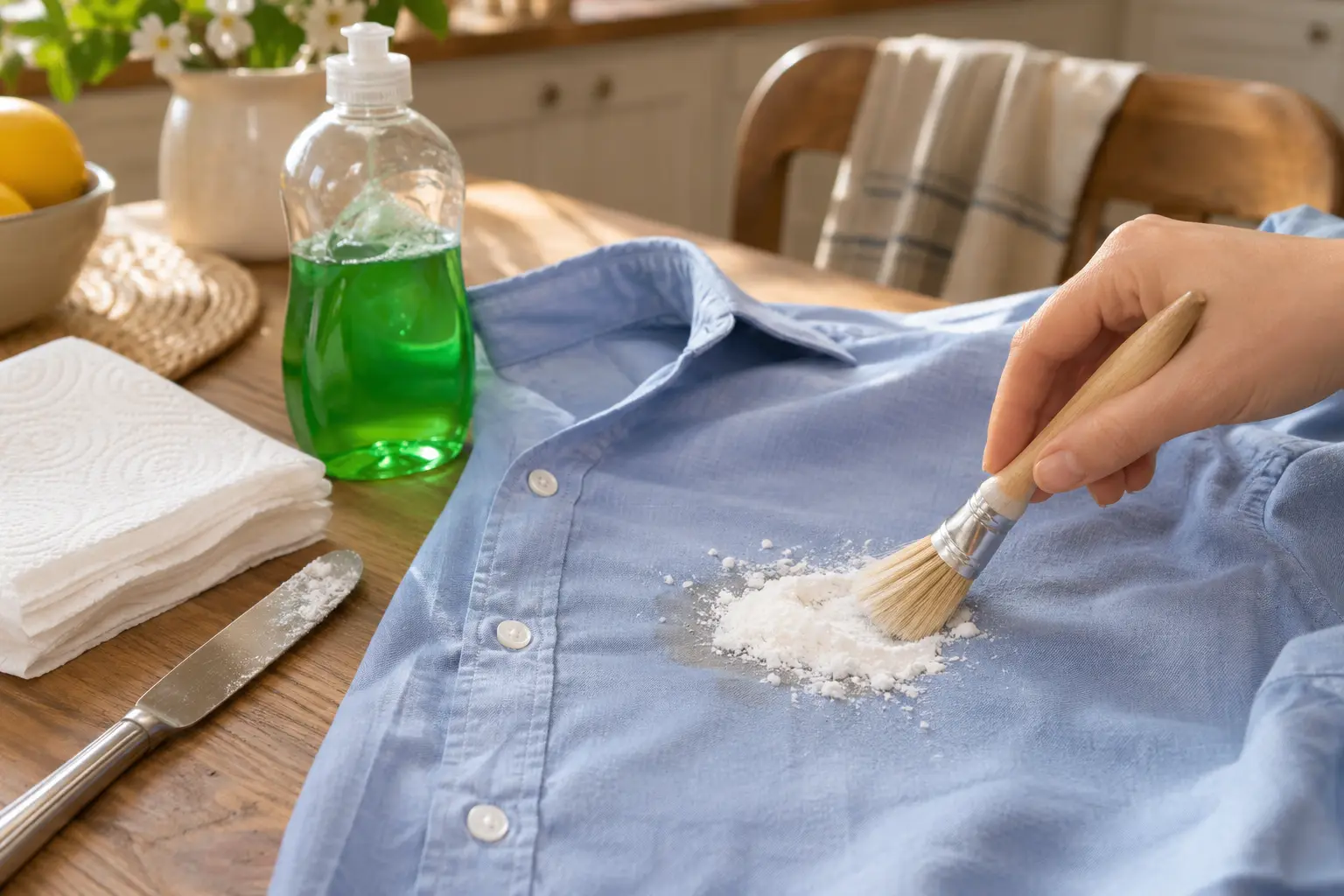
Remove the Solids
Put on gloves and lift off as much as you can before adding any water. Dreft suggests a baby wipe because it follows the contours of your hand; OxiClean suggests scooping with a spatula so you do not smear the mess further into the fabric.
02
Step 2 of 7
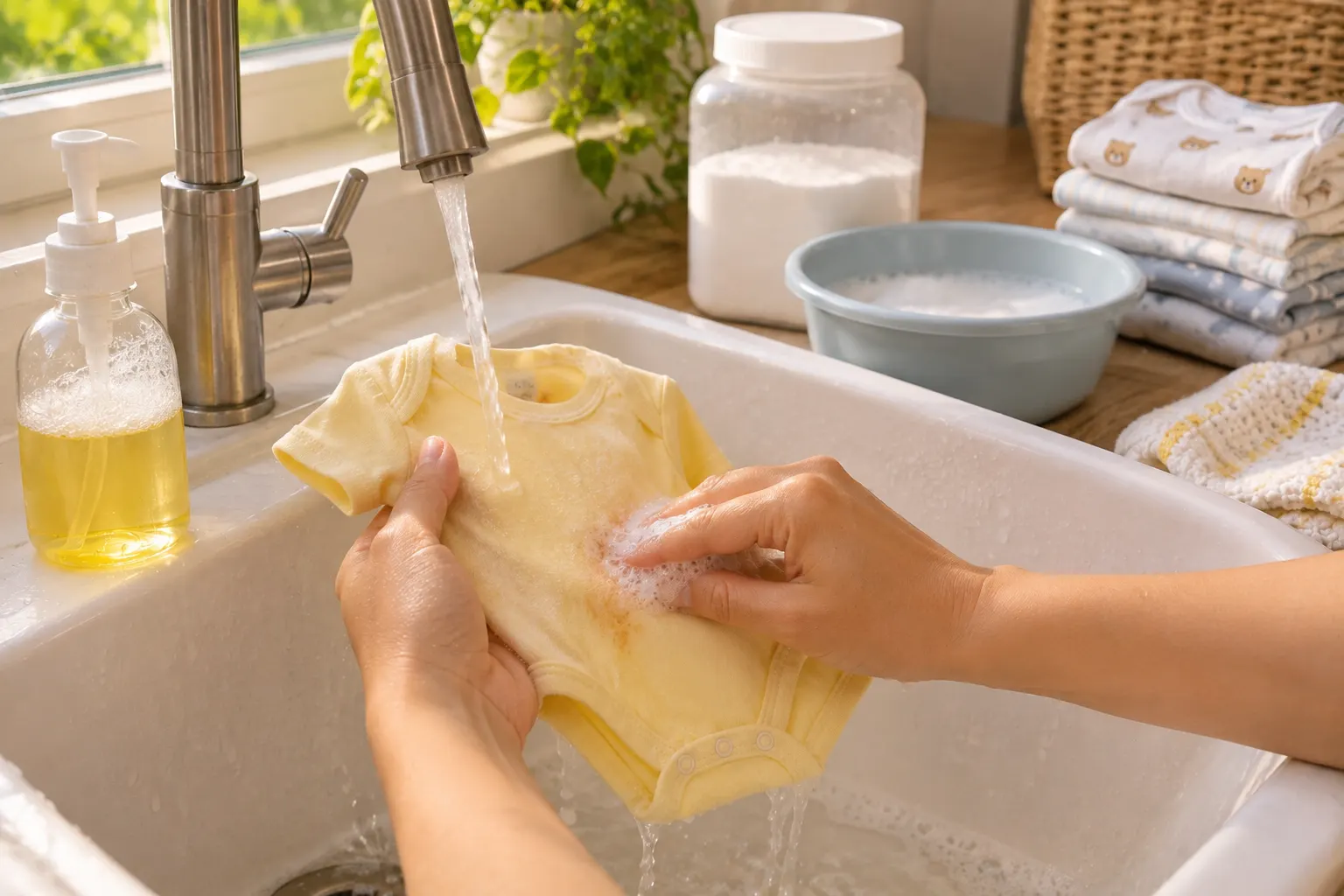
Rinse from the Back with Cold Water
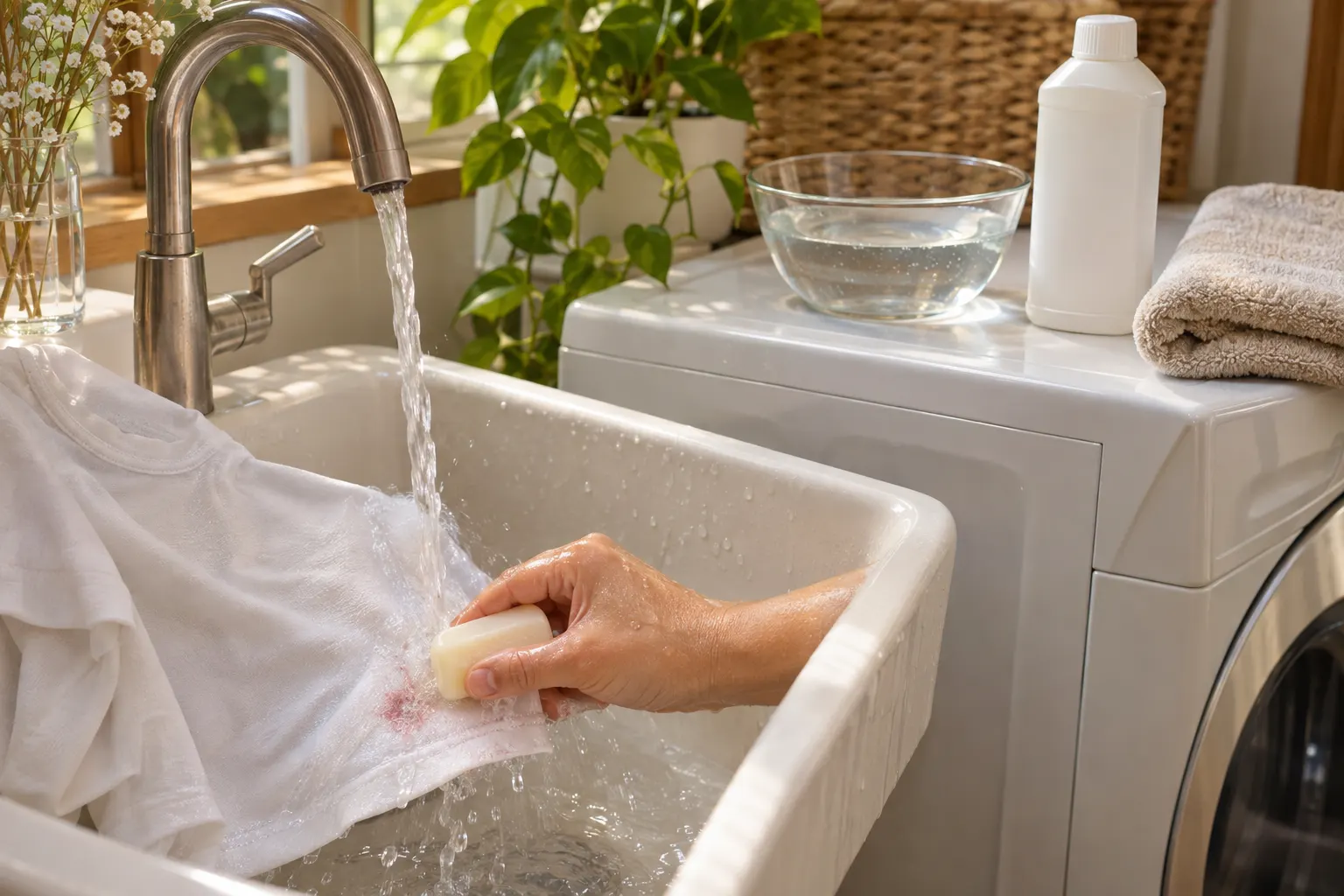
Turn the garment inside out and run cold water through the back of the stain so it pushes the residue out of the fibers instead of deeper in. Tide and OxiClean both recommend cold water at this stage because it helps keep the stain from setting. Do it as soon as you can; fresh stains come out far more easily than dried ones.
03
Step 3 of 7
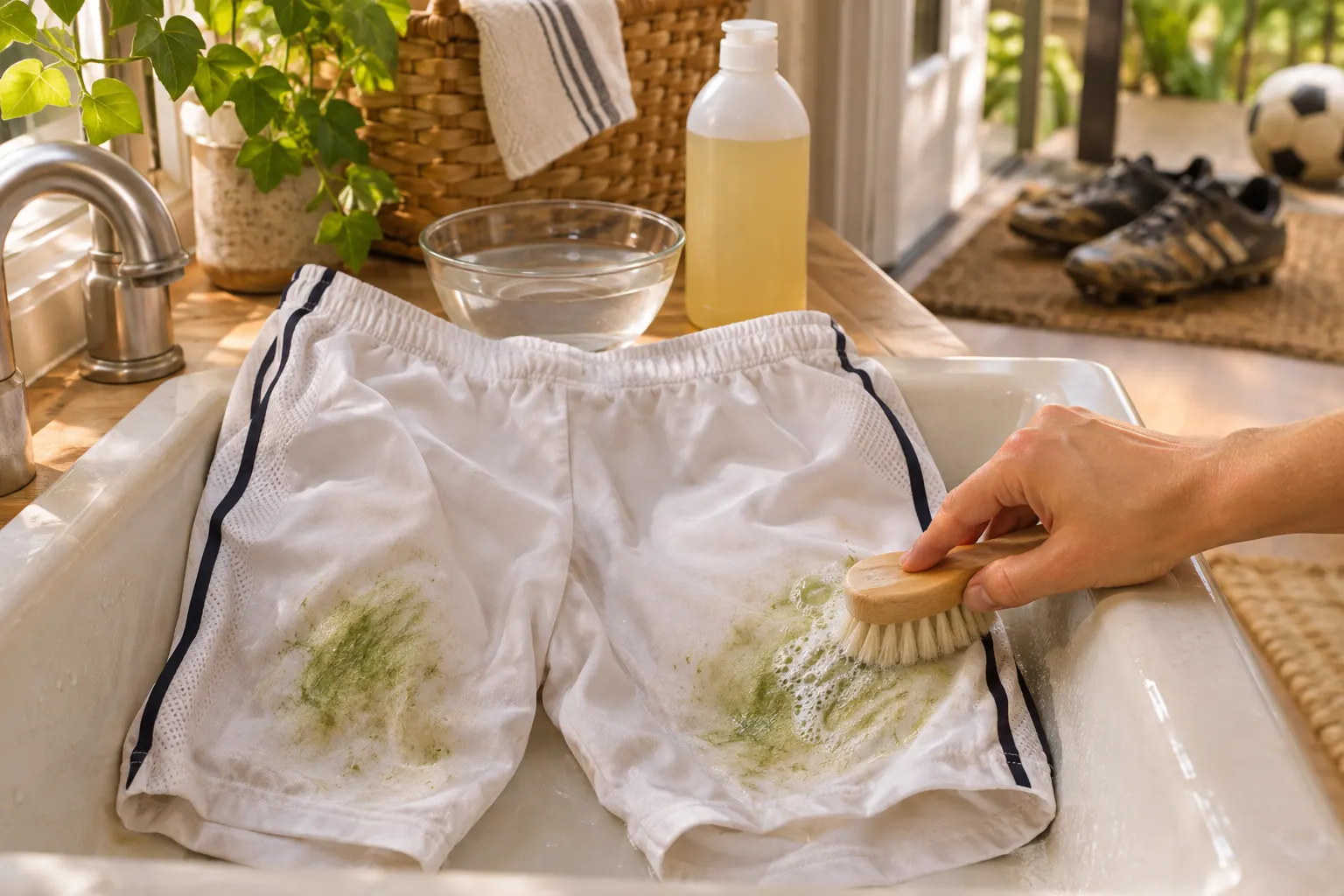
Pretreat with Dish Soap or a Stain Remover
Gently rub liquid dish soap into the stain and rinse, repeating until no more color comes out, as Tide suggests. Then apply a laundry stain remover to both sides. OxiClean's instructions for its Max Force spray are to saturate the stain and let it stand 5 minutes, and no longer than that on fabrics prone to color change.
04
Step 4 of 7
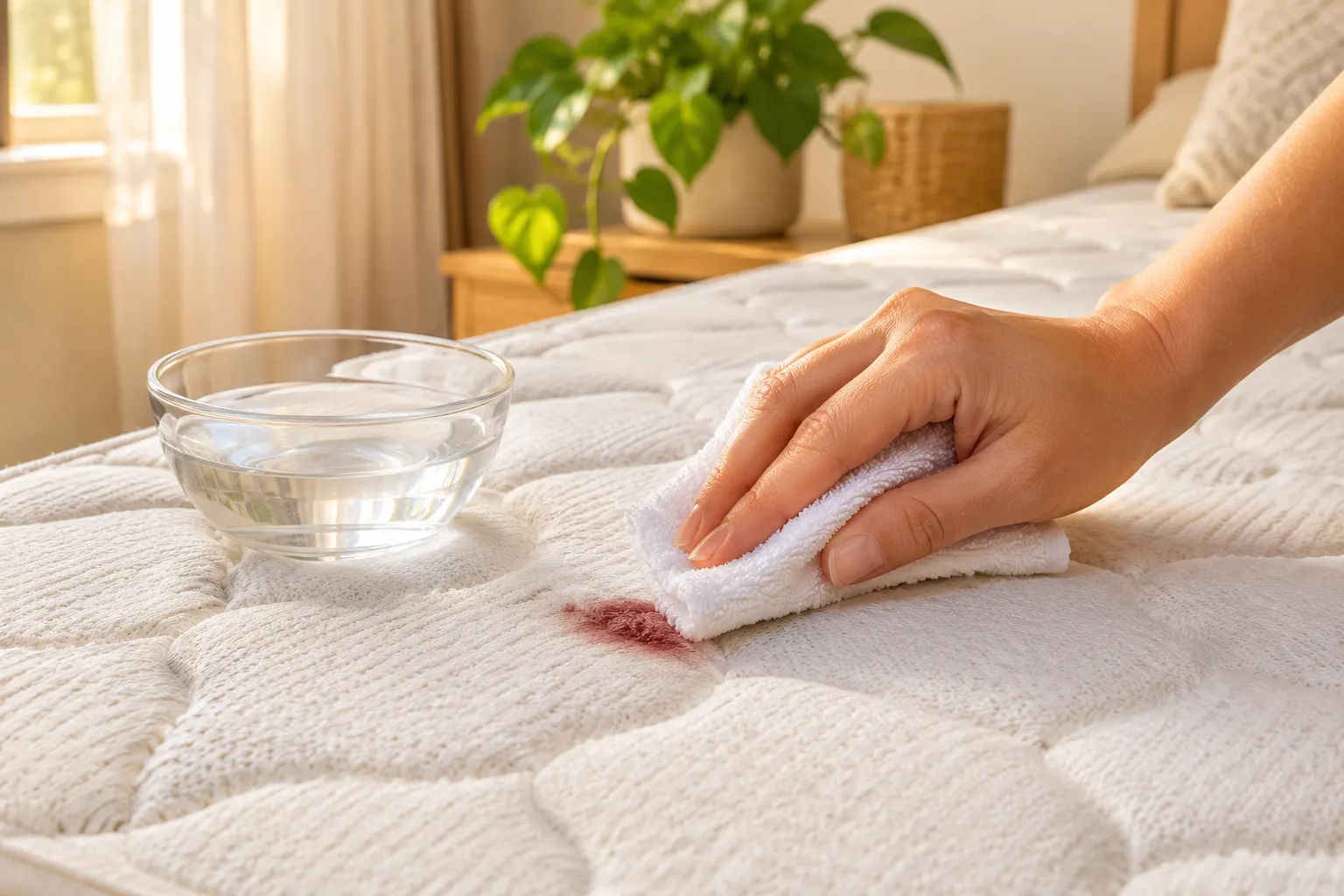
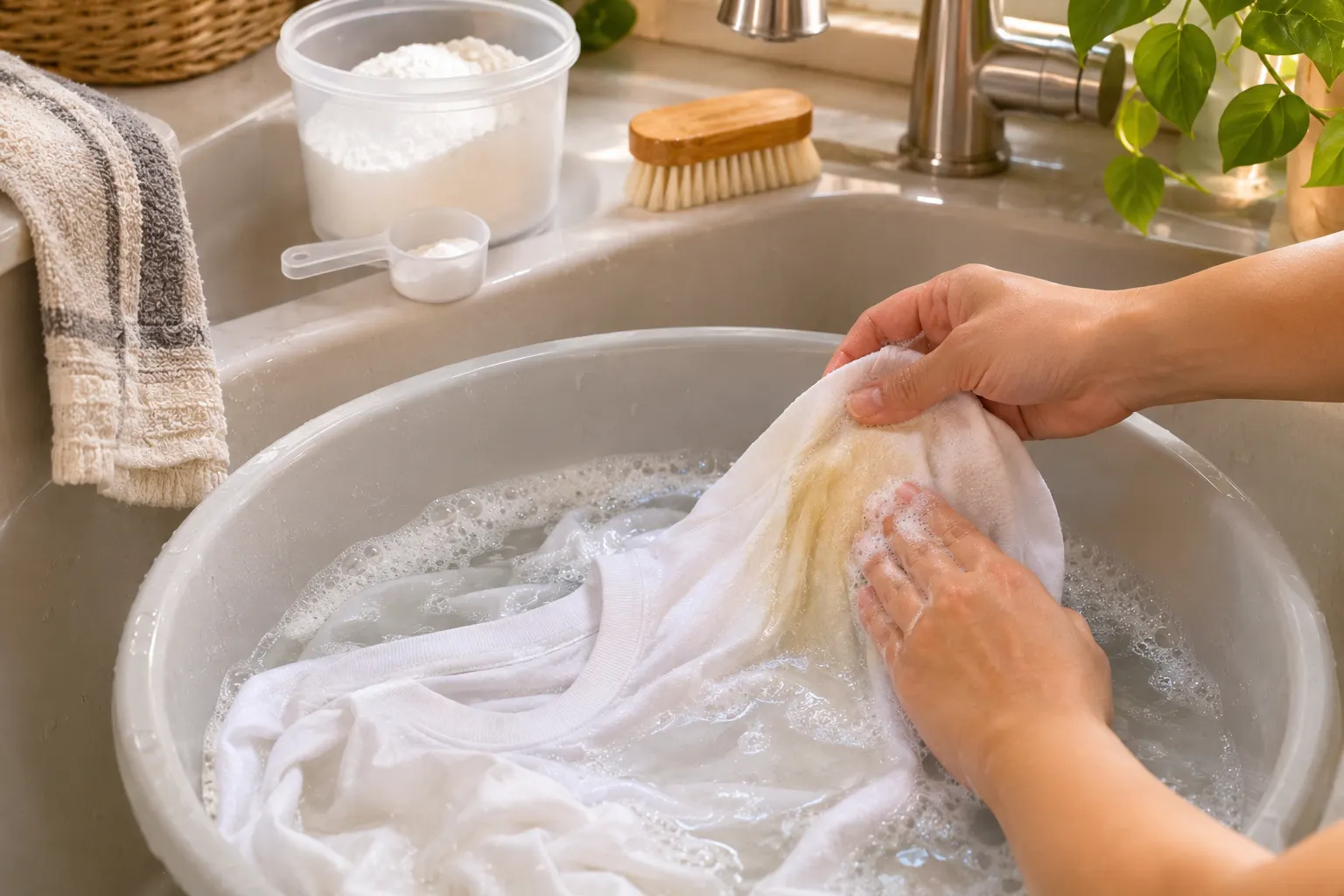
Soak Stubborn or Set-In Stains
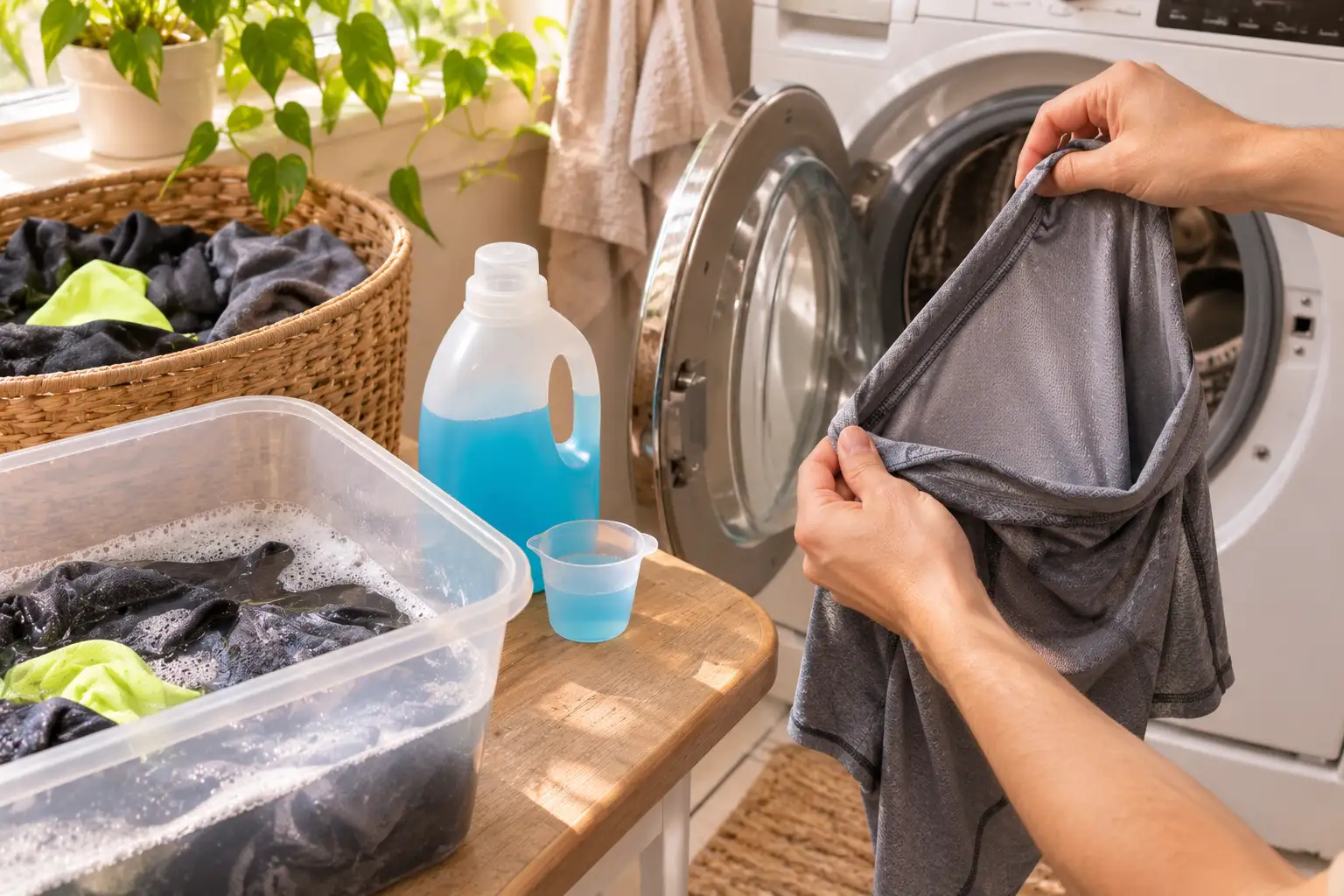
For a heavy blowout or an older stain, dissolve an oxygen-based stain remover powder in water according to the package. OxiClean's directions for its Versatile or Baby Stain Remover are 1 to 6 hours in the warmest water the fabric allows, longer for severe stains. Do not heat or boil the solution, and do not store it in a sealed container.
05
Step 5 of 7
Wash with an Enzyme Detergent
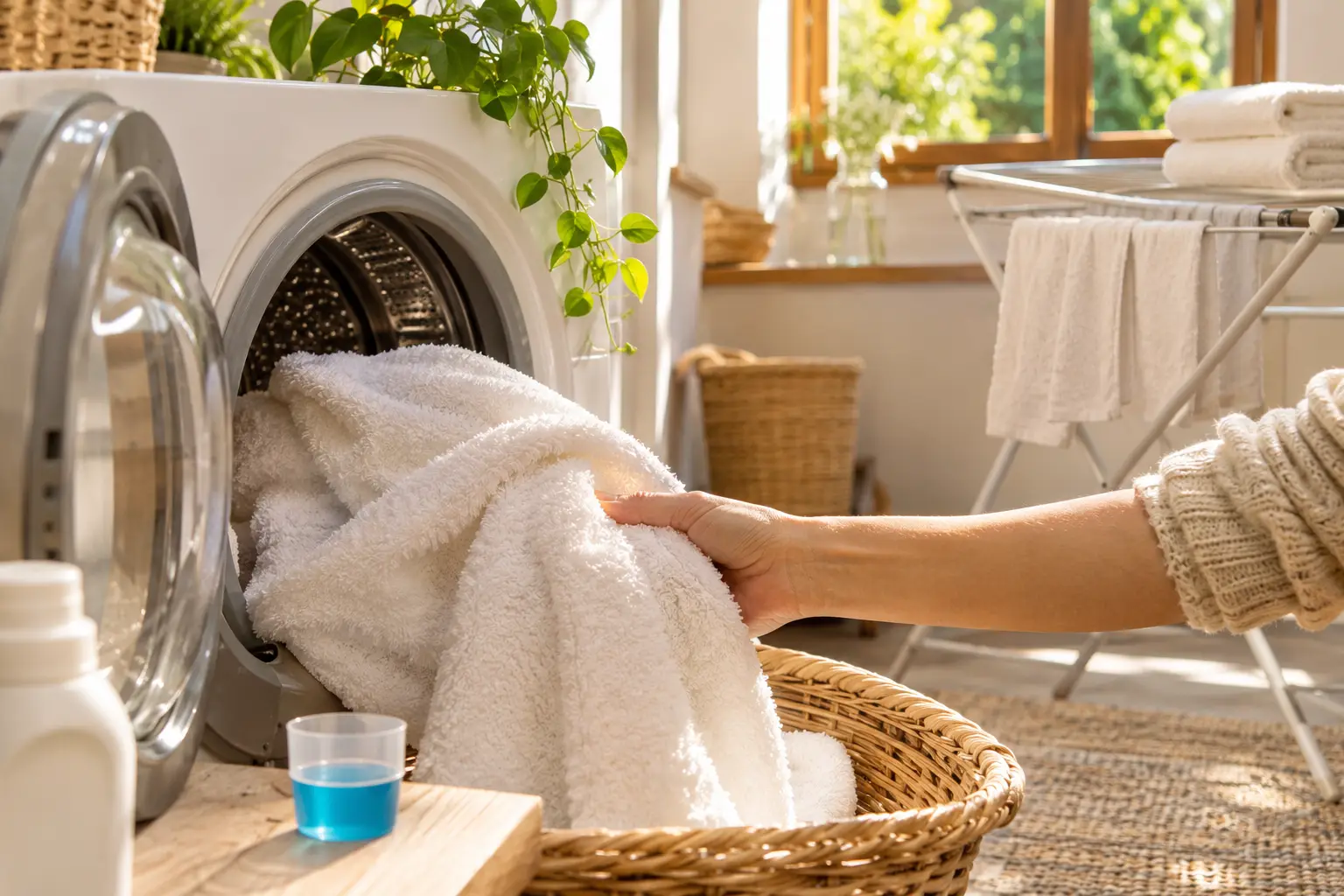
Wash with an enzymatic laundry detergent; OxiClean advises checking the label for protease, the enzyme that breaks down proteins. Use the warmest water the care label allows and a heavy-duty cycle. Dreft recommends the machine's sanitize setting if you have one, but only use it if the garment's care label allows that much heat.
06
Step 6 of 7
Check Before Drying and Repeat if Needed
Pull the item out as soon as the cycle ends and inspect the stain while it is still wet. If anything remains, repeat the pretreatment and wash rather than drying. On bleach-safe whites only, University of Georgia Extension lists laundering with chlorine bleach where the fabric allows; otherwise stick with an oxygen-based product.
07
Step 7 of 7
Let the Sun Fade What Is Left
Tide and Dreft both suggest drying the garment in direct sunlight to help bleach out a remaining stain. Lay it outside with the stained side facing the sun and check on it every so often over a few hours, moving it to keep the stain in direct sun. Wash it once more afterward if the fabric feels stiff.
If that didn’t work
Stubborn or set-in? Try these next, in order.
AFor a set-in stain that has already been through the dryer, Dreft suggests rinsing and scrubbing with detergent, then applying a 50/50 mix of dish soap and hydrogen peroxide and leaving it overnight before treating with a stain remover and washing again. Test the mix on a hidden seam first.
BIf the stain persists on colored clothing, try a longer soak in an oxygen-based stain remover, up to the maximum time on its label, followed by another enzyme-detergent wash.
CFor delicate fabrics such as silk or wool, or anything labeled dry clean only, skip sprays and soaks and take the item to a professional cleaner.
Tools that help
You can do this with cloths and a spray bottle. These make it faster:
As an Amazon Associate, HouseCareWiki earns from qualifying purchases. It costs you nothing extra. How we make money
8.2/10HouseCareWiki rating 8.2 out of 10, research-based
Paid promotion: Little Monsters pays HouseCareWiki a higher commission on this model through Amazon until December 17, 2026. Our notes and scores don’t change because of it.
Should you use hot or cold water on baby poop stains?
Rinse with cold water first; Tide and OxiClean both recommend cold at this stage to keep the stain from setting. Dreft's own method uses a warm-water soak, so brands differ on the soak, but for the main wash all of them defer to the garment care label, using the warmest water it allows.
Does sunlight really remove poop stains?
It can help fade what remains. Tide suggests drying a still-stained item in the sun to help bleach out the leftover stain, and Dreft describes laying the damp garment stain-side up in strong, direct sunlight for a few hours.
Why is baby poop so hard to get out of clothes?
It bonds more tightly to fabric as it dries, which is why Dreft stresses treating it while still wet and OxiClean recommends an enzyme detergent with protease. Drying the item with heat before the stain is gone makes it much harder to remove.
Can I use bleach on baby clothes with poop stains?
Only if the care label allows it. University of Georgia Extension lists chlorine bleach for fabrics that can take it and an oxygen-type bleach for those that cannot. For colored baby clothes, a chlorine-free oxygen stain remover is the safer choice.
How do you sanitize baby clothes after a blowout?
Dreft recommends washing on a heavy-duty setting and using the machine's sanitize feature if it has one. Check the care label first, since sanitize cycles use high heat that not every fabric can handle.
Sources we relied on
1.How to Remove Poop Stains — Tide. Rinse the stain right away with cold water, rub in dish soap and rinse, repeat if needed, then wash per the care label with an enzyme-based detergent; if the stain remains, dry it in sunlight to help bleach it out or soak in an oxygen-based product before washing again.
2.How to Remove Poop Stains — Dreft. Remove excess poop with a baby wipe, pretreat with a stain remover, wash on a heavy-duty setting using the sanitize feature if available, and do not dry until the stain is gone; for set-in stains apply a 50/50 dish soap and hydrogen peroxide mix overnight; placing the item in strong direct sunlight for a few hours can fade stains.
3.How to Remove Poop Stains — OxiClean. Scoop off solids wearing gloves, rinse in cold water from the back of the stain, pretreat with the spray for 5 minutes or soak in dissolved oxygen stain remover for 1 to 6 hours, then wash with an enzymatic detergent containing protease in the warmest water the care label allows; do not use the spray on silk, wool, leather or dry-clean-only fabric.
4.Remove Stains From Feces/Manure (Human, Animal) — University of Georgia Cooperative Extension. Apply detergent, soak with an oxygen-type (sodium perborate) bleach, treat with a pre-wash stain remover, and launder with chlorine bleach only if the fabric allows it; read the care label, pretest for colorfastness, and ventilate when using cleaning chemicals.