Failure to clean is the leading factor in home dryer fires. How to clear the lint screen every load, brush out the vent duct once a year, check the outside flap, and spot the signs of a clogged vent.
Replacement rigid or semi-rigid metal duct, if yours is plastic, foil or damaged
Nylon brush, hot water and liquid detergent for the lint screen
Work gloves and a flashlight
Step by step
01
Step 1 of 7
Clean the Lint Screen Every Load
Pull out the lint screen before or after every load and roll the lint off with your fingers. Whirlpool says not to rinse the screen just to remove lint, because wet lint is hard to get off. Vacuum lint from the screen housing and around the drum opening.
02
Step 2 of 7
Unplug the Dryer and Shut Off the Gas
Unplug the dryer. On a gas dryer, also close the gas shutoff valve. Then carefully pull the dryer away from the wall so you can reach the duct.
03
Step 3 of 7
Disconnect the Duct
Loosen the clamp and slide the duct off the dryer's exhaust outlet, and off the wall connection if you can. Vacuum lint from the dryer outlet and from the floor and wall behind the dryer, where lint builds up.
04
Step 4 of 7
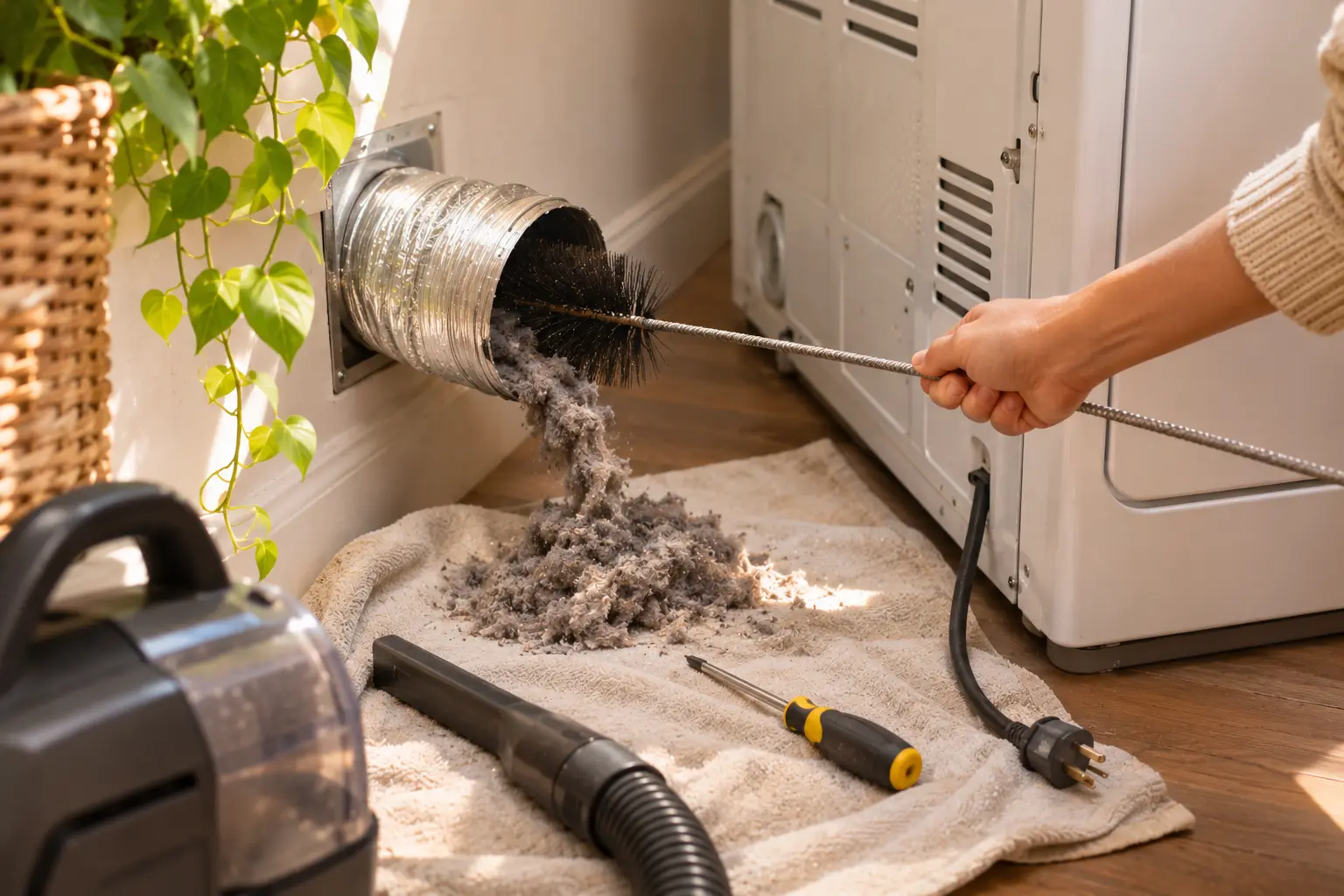
Brush Out the Duct
Run a dryer vent brush through the duct and the wall pipe, turning it clockwise if it is drill-driven, as Samsung describes. Pull the loosened lint out and vacuum it up. Replace any section that is crushed, torn or kinked.
05
Step 5 of 7
Clear the Outside Vent Hood
Go outside and remove lint, nests or debris from the vent hood, taking the cover apart if possible. The flap must open freely. In winter, NFPA and GE say to keep it clear of snow and ice.
06
Step 6 of 7
Reconnect, Then Test the Airflow
Reattach the duct securely at both ends, push the dryer back without crushing the duct, plug it in and turn the gas back on. Run the dryer and check outside that exhaust air is escaping and the flap opens. Weak airflow at the wall cap is a sign the duct is still blocked.
07
Step 7 of 7
Deep Clean the Lint Screen Twice a Year
Whirlpool recommends deep cleaning the screen every 6 months, or sooner if residue from detergent or fabric softener clogs it. Wet both sides with hot water, scrub with a nylon brush, hot water and liquid detergent, rinse, dry thoroughly with a towel and reinstall.
If that didn’t work
Stubborn or set-in? Try these next, in order.
AIf clothes are still damp after a normal cycle, the dryer feels very hot, or there is condensation around the door, the vent may still be restricted. GE lists these as signs of a venting problem; check the duct length and number of elbows against your dryer manual.
BIf you cannot reach the full length of the duct, or it runs through walls, the attic or the roof, have a dryer vent cleaning service do it. NFPA and Samsung both mention hiring a professional.
CIf the dryer cabinet itself is full of lint, CPSC recommends having a qualified service person clean the inside of the cabinet.
Common questions
How often should you clean a dryer vent?
At least once a year, or more often if clothes start taking longer to dry, according to NFPA. Samsung recommends cleaning the exhaust vent once or twice a year. Clean the lint screen before or after every load.
What are the signs of a clogged dryer vent?
Clothes that are still damp after a normal cycle or take longer than usual to dry, a dryer that gets very hot, condensation around the door, and weak airflow at the outside vent. CPSC and GE both list these as warning signs.
Can a clogged dryer vent cause a fire?
Yes. Lint blocks airflow and causes heat to build up, which CPSC says can start a fire. The U.S. Fire Administration reports that failure to clean was the leading factor contributing to home clothes dryer fires, at 31% from 2018 to 2020.
What kind of dryer vent duct is safest?
Rigid or flexible metal duct. CPSC recommends replacing plastic or foil accordion-type ducting with rigid or corrugated semi-rigid metal duct, and GE says not to use plastic flexible ducting.
Should you wash the dryer lint screen?
Not after every load; just roll the lint off. Whirlpool recommends scrubbing it with hot water, liquid detergent and a nylon brush about every 6 months, or sooner if detergent or fabric softener residue clogs it, then drying it fully before reinstalling.
Sources we relied on
1.Appliance and Electrical Fire Safety — U.S. Fire Administration (FEMA). Failure to clean (31%) was the leading factor contributing to the ignition of clothes dryer fires in homes from 2018 to 2020.
2.Clothes Dryer Fire Safety — U.S. Fire Administration (FEMA). Risk of a dryer fire is higher if you do not clean the lint filter and dryer vents; do not use a dryer without a lint filter; clean the lint filter before and after each cycle; clean the back of the dryer; check that venting is not damaged, crushed or restricted; make sure the outdoor vent covering opens while the dryer runs.
3.Clothes Dryer Safety — National Fire Protection Association. The leading cause of home clothes dryer fires is failure to clean them; clean the lint filter before or after each load; use rigid or flexible metal venting; clean lint out of the vent pipe once a year, or more often if drying takes longer than normal, or hire a dryer lint removal service; have gas dryers inspected for gas line leaks; check that the outdoor flap is not covered by snow.
4.Overheated Clothes Dryers Can Cause Fires — U.S. Consumer Product Safety Commission. Lint blocks airflow and causes heat build-up that can start a fire; clean the lint screen before or after each load; damp clothes or long drying times signal a blocked screen or duct; check the outside vent while the dryer runs; reconnect a disconnected duct before use; replace plastic or foil accordion ducting with rigid or corrugated semi-rigid metal duct; have a service person clean the cabinet interior periodically.
5.How to clean your Samsung dryer — Samsung US Support. Clean the lint filter before or after every load and never run the dryer without it; clean the exhaust vent once or twice a year, with professional service recommended; to do it yourself, turn off the gas on a gas dryer, unplug, disconnect the duct, run a vent brush through it turning clockwise, replace a damaged duct, vacuum lint, reconnect and restore power and gas; clean lint from the outside vent cover.
6.Cleaning the Lint Screen on a Dryer — Whirlpool Product Help. Roll lint off the screen after every load and do not rinse it to remove lint; deep clean every 6 months or sooner if residue from detergent or fabric softener clogs it, by scrubbing with a nylon brush, hot water and liquid detergent, rinsing, drying thoroughly and vacuuming the housing; lint falling off the screen in the dryer is a sign of clogging.
7.Dryer - Things To Check For A Venting Issue — GE Appliances. Signs of a venting problem include heat and sweating on the dryer, longer drying times and condensation around the door; use only rigid or flexible metal duct and do not use plastic flexible ducting; keep the wall cap clear of snow and ice; weak airflow at the cap suggests a blocked duct; do not operate a gas dryer without the vent because of carbon monoxide risk.