Shut off the water before it spills, let dish soap and hot (never boiling) water loosen the clog, and reach deeper with a toilet auger. Why chemical drain cleaners do not belong in a blocked toilet, and when it is time to call a plumber.
A pot or bucket of hot tap or stove-heated water (hot, never boiling)
A small container or cup for removing excess water from the bowl
Toilet auger (also called a closet auger)
Step by step
01
Step 1 of 7
Stop the Water Before It Overflows
Find the shut-off valve on the supply line behind the toilet and turn it clockwise until the tank stops refilling. Do not flush again until the clog is cleared; repeated flushing only adds water to a bowl that cannot drain.
02
Step 2 of 7
Protect the Floor and Your Hands
Put on rubber gloves and lay old towels or newspaper around the base of the toilet to catch splashes and drips while you work.
03
Step 3 of 7
Let the Water Level Drop
If the bowl is nearly full, wait about 10 minutes to see whether some of the water drains on its own. If it does not, scoop some out with a small container into a bucket so you have room to add soap and water without spilling.
04
Step 4 of 7
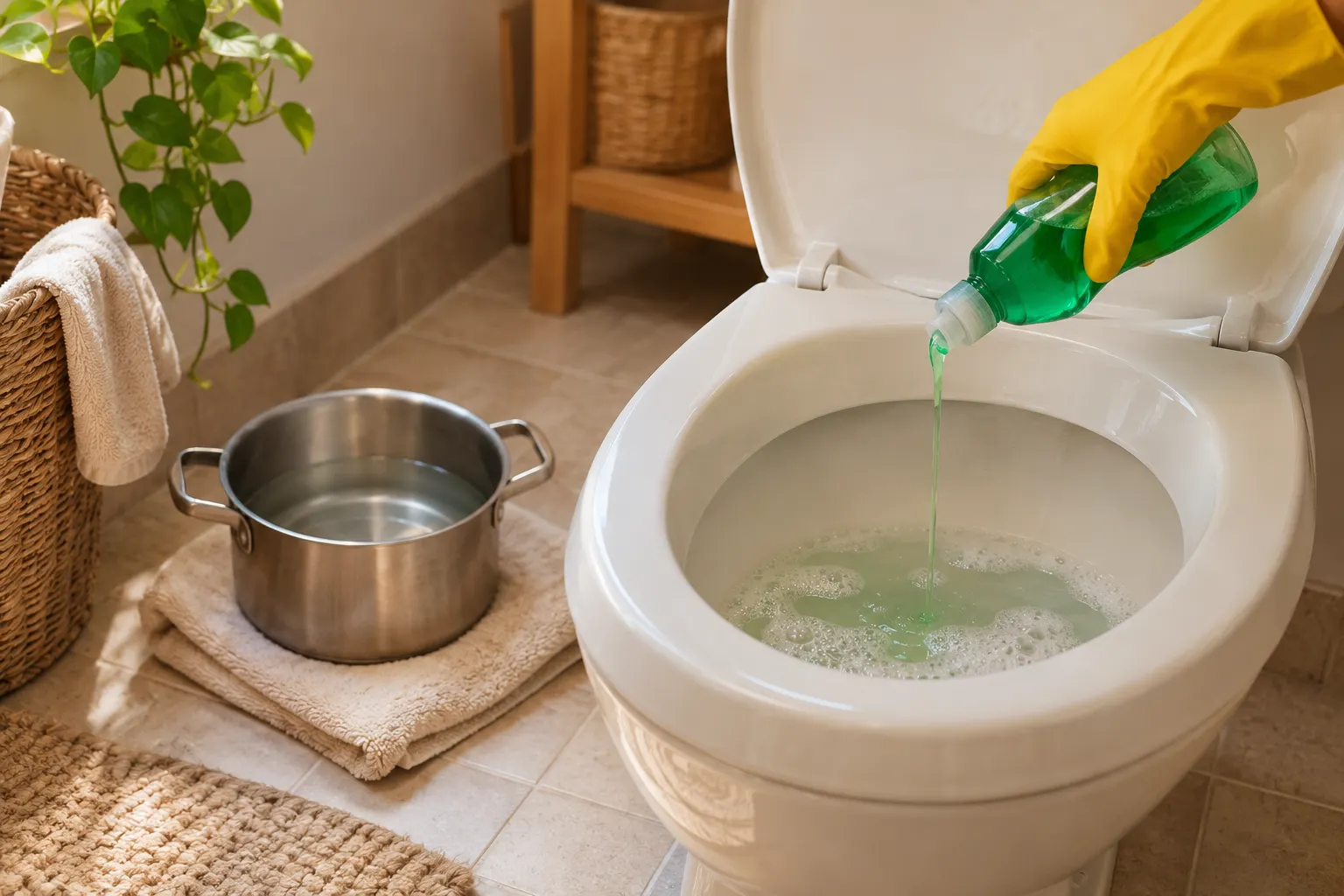
Add Dish Soap and Hot (Not Boiling) Water
Squeeze a generous amount of liquid dish soap into the bowl, then pour in a pot of hot water that is not boiling. Pour it from about waist height, and stop if the level gets close to the rim. Leave it for about 10 to 15 minutes to loosen the blockage.
05
Step 5 of 7
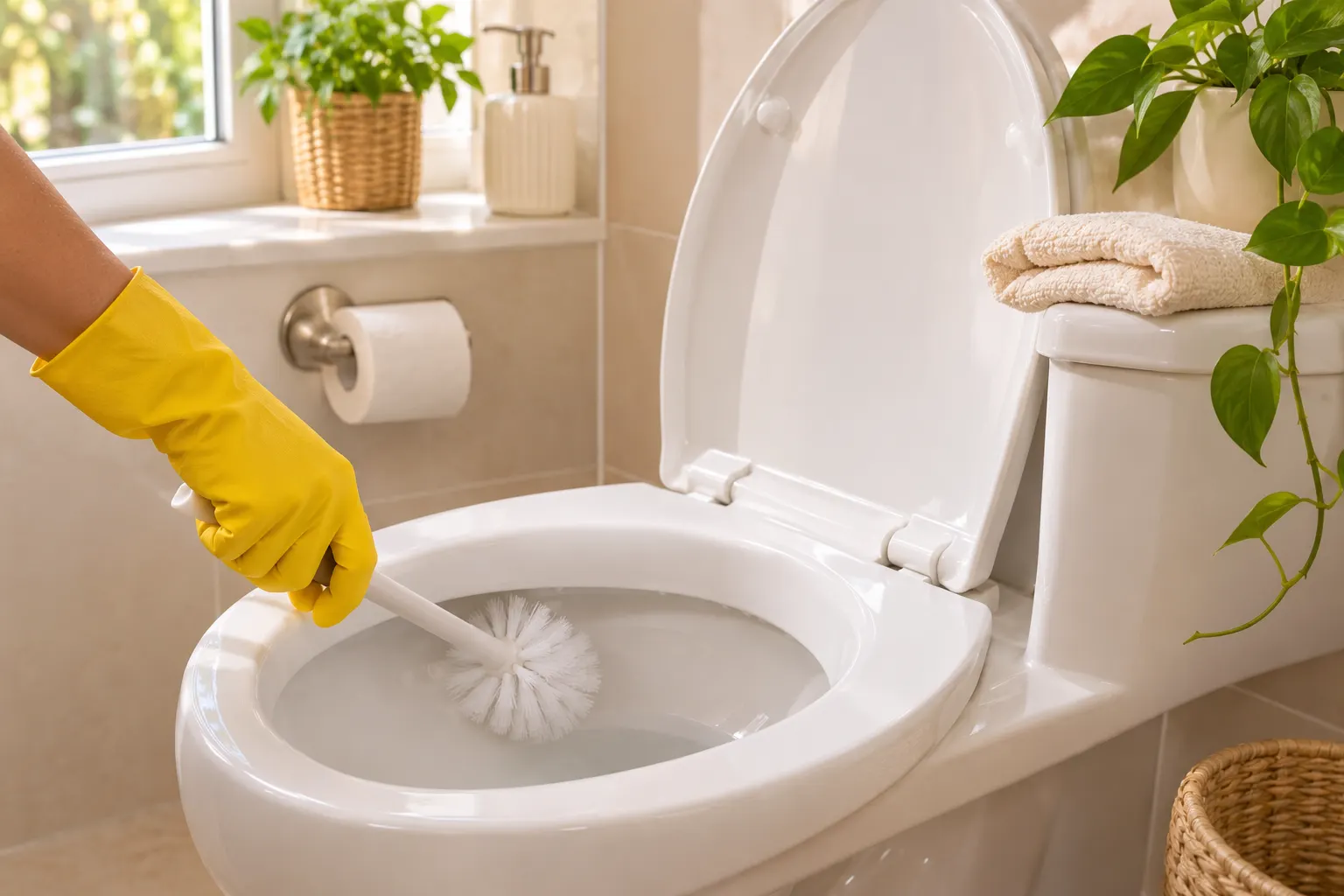
Use a Toilet Auger for a Stubborn Clog
Carefully set the end of the toilet auger into the drain opening at the bottom of the bowl, taking care not to scratch the porcelain. Turn the handle clockwise while gently pushing the cable down the drain. When you feel resistance you have likely reached the clog; keep turning to snag or break it up, then slowly pull the cable back out.
06
Step 6 of 7
Test Before Turning the Water Back On
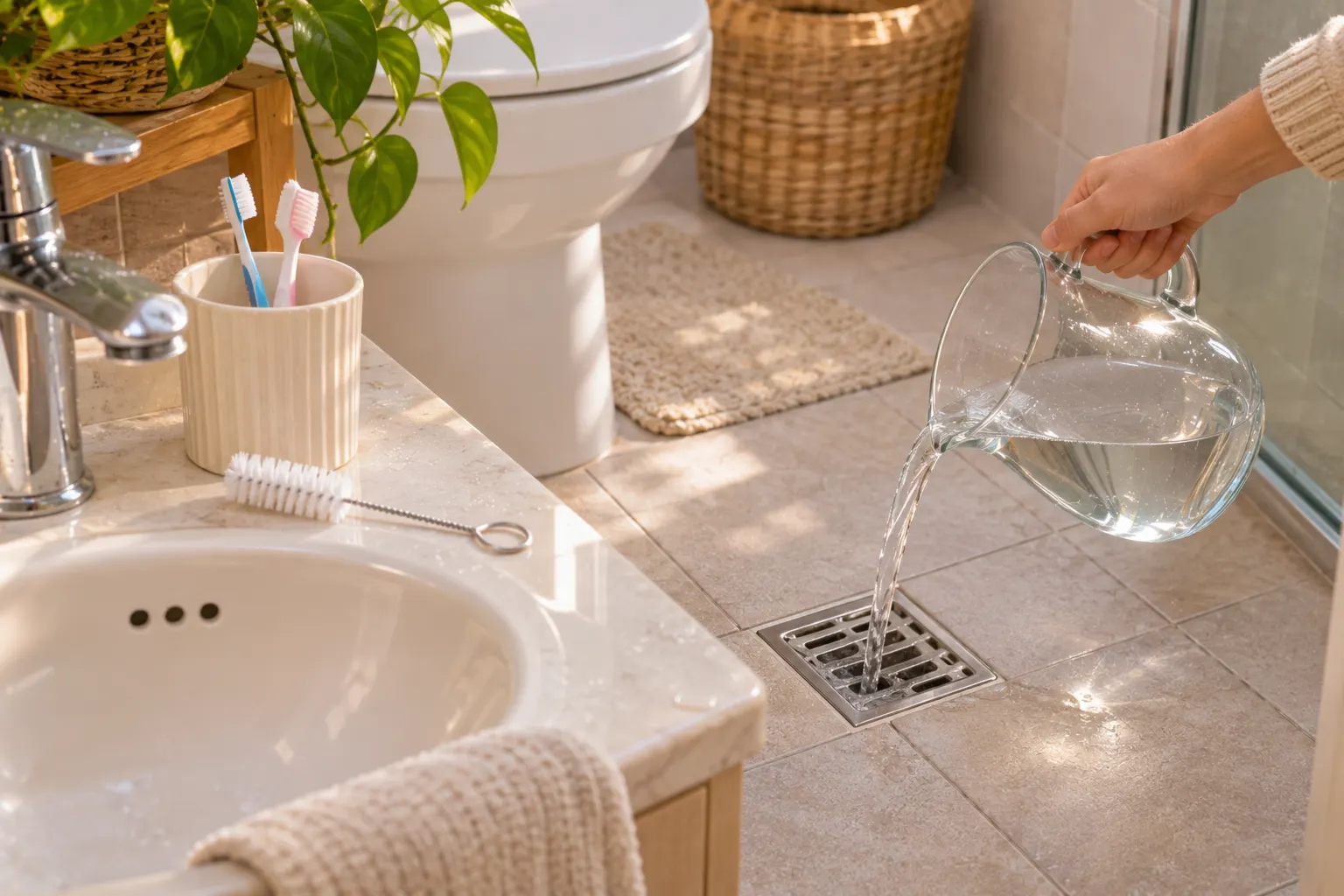
Pour a little water into the bowl. If it drains normally, turn the shut-off valve back on and flush once. If the water rises or drains slowly, the clog is still there: repeat the auger step rather than flushing.
07
Step 7 of 7
Know When to Call a Plumber
Call a licensed plumber if the auger cannot clear the clog, if something solid such as a toy or hygiene product went down, or if the toilet keeps backing up or the drain makes gurgling sounds. Those can point to a blockage beyond the toilet, in the sewer line.
If that didn’t work
Stubborn or set-in? Try these next, in order.
AIf dish soap and hot water did nothing after 10 to 15 minutes, move on to the toilet auger rather than adding more water; a fuller bowl only raises the overflow risk.
BIf the auger meets resistance it cannot break through, or the toilet clears and then clogs again soon after, the blockage may be past the toilet in the drain line. Call a licensed plumber.
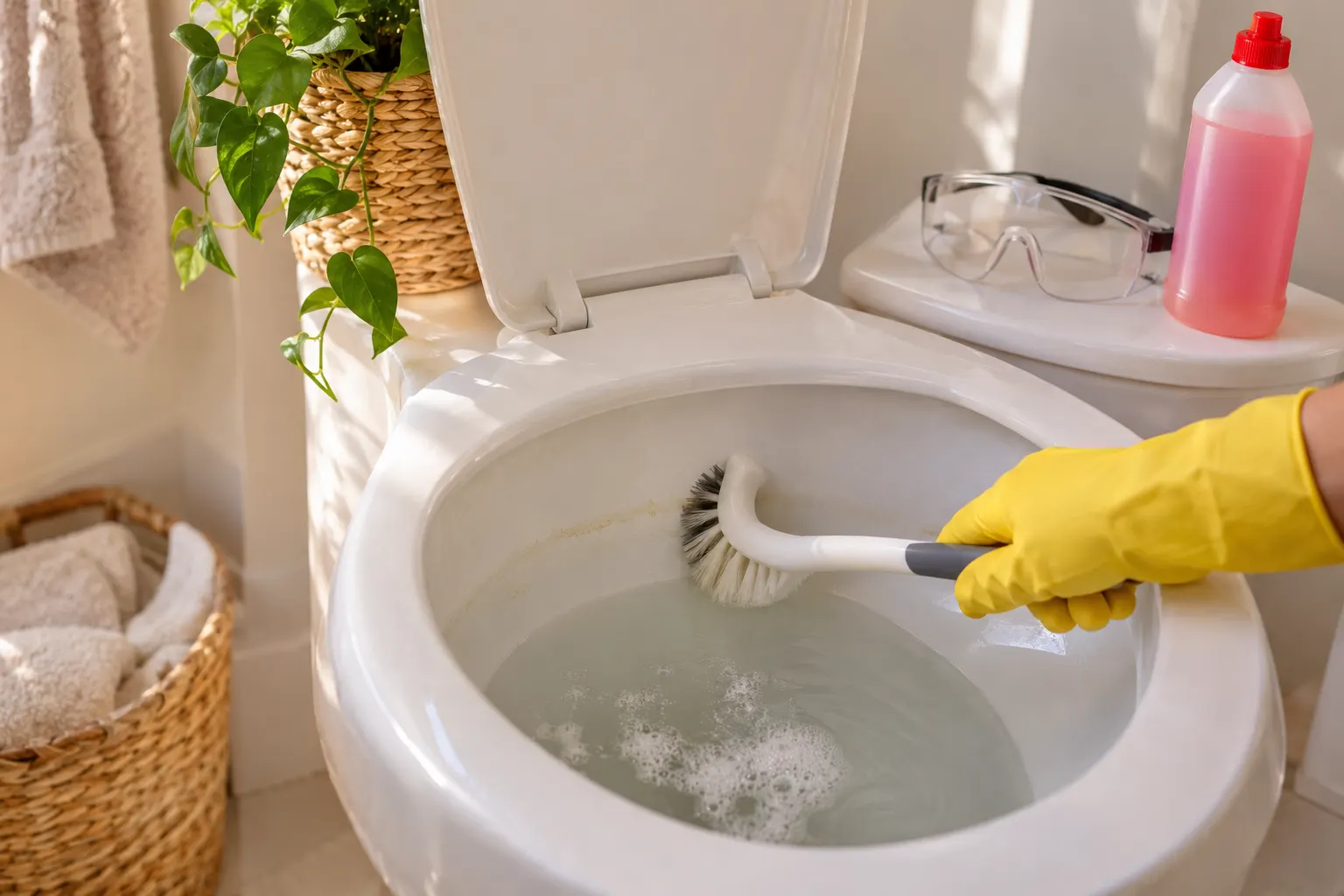
CIf you already poured chemical drain cleaner into a blocked toilet, wear goggles and rubber gloves before working near the bowl, and if any reaches skin or eyes call Poison Control at 1-800-222-1222 right away.
Common questions
Will a toilet eventually unclog itself?
Sometimes the water level slowly drops on its own, which is why it can help to wait about 10 minutes before you act. Do not count on it, though: keep the water shut off, do not flush, and if the bowl still will not drain, use dish soap and hot water or a toilet auger.
Does dish soap and hot water really unclog a toilet?
American Standard suggests a generous squirt of liquid dish soap followed by a pot of hot, not boiling, water, left for about 10 minutes, as a hack for stubborn clogs. Oatey is more cautious and warns that some household remedies can damage the wax seal or porcelain, so never use boiling water, and switch to a toilet auger if it does not work.
Can I use baking soda and vinegar to unclog a toilet?
American Standard lists 1 cup of baking soda and 1 cup of vinegar followed by hot, not boiling, water as an option, but Oatey does not advise it, and Poison Control notes the combination is unlikely to be strong enough to clear tough clogs. A toilet auger is the more reliable tool.
Is it safe to use Drano or other drain cleaners in a toilet?
It is best not to. Oatey's technical team does not recommend drain cleaners for toilets and says they can damage the porcelain finish or corrode pipes over time. Poison Control warns that these products can splash back from a completely blocked drain and cause burns.
What is the difference between a toilet auger and a regular drain snake?
A toilet auger, also called a closet auger, is a hand-cranked drain snake designed to go into a toilet drain. You set it in the bowl opening, turn the handle clockwise while gently pushing, and pull it back once the clog breaks up. Insert it carefully to avoid scratching the porcelain.
Sources we relied on
1.How to Unclog a Toilet — American Standard. Turn off the water to prevent overflow and do not unclog by continuously flushing; protect the floor with towels and wear rubber gloves; for stubborn clogs pour in a generous amount of liquid dish soap and a pot of hot (not boiling) water and let it sit about 10 minutes; flush only toilet paper.
2.How to Unclog a Toilet — Oatey. Turn off the supply valve near the toilet; pour hot (not boiling) water from waist height with dish soap and wait 10 to 15 minutes; insert a toilet auger avoiding scratches on the porcelain, turn the handle clockwise while pushing, then retract; Oatey does not recommend drain cleaners, bleach or coat-hanger snakes for toilets; call a plumber for persistent backups or gurgling.
3.How to Stop a Toilet Bowl from Overflowing — Korky Toilet Repair (Lavelle Industries). Turn the shut-off valve behind the toilet clockwise until the tank stops refilling; if the water is too high, wait about 10 minutes and remove some if it does not drain; pour water in to test before flushing; do not flush again until the clog is fixed; call a plumber for hygiene products, toys or sewer line blockages.
4.What's in Drain Cleaner and What Happens If You Drink It? — Poison Control, National Capital Poison Center. Drain cleaners contain strong acids or alkalis such as sulfuric acid or sodium hydroxide; injury can occur when product splashes back, especially when too much is poured into a completely blocked drain; wear goggles and rubber gloves; baking soda and vinegar is unlikely to be strong enough for tough clogs; call Poison Control at 1-800-222-1222 after an exposure.