How to remove hard water stains from glass shower doors
A 50/50 vinegar solution on the glass, a soft non-scratch pad, a thorough rinse and a daily squeegee. How to keep acid off stone tile and metal hardware, and what changes for factory-coated glass.
Distilled white vinegar and water (equal parts) in a spray bottle
Mild liquid dish detergent (a few drops in warm water)
Soft microfiber cloths or a non-scratch sponge
Silicone shower squeegee
Old towel to lay over a stone shower floor or ledge
Optional: a long-handled squeegee or non-scratch sponge mop for the top of tall panels
Step by step
01
Step 1 of 6
Check the Surround, the Hardware and the Glass Type
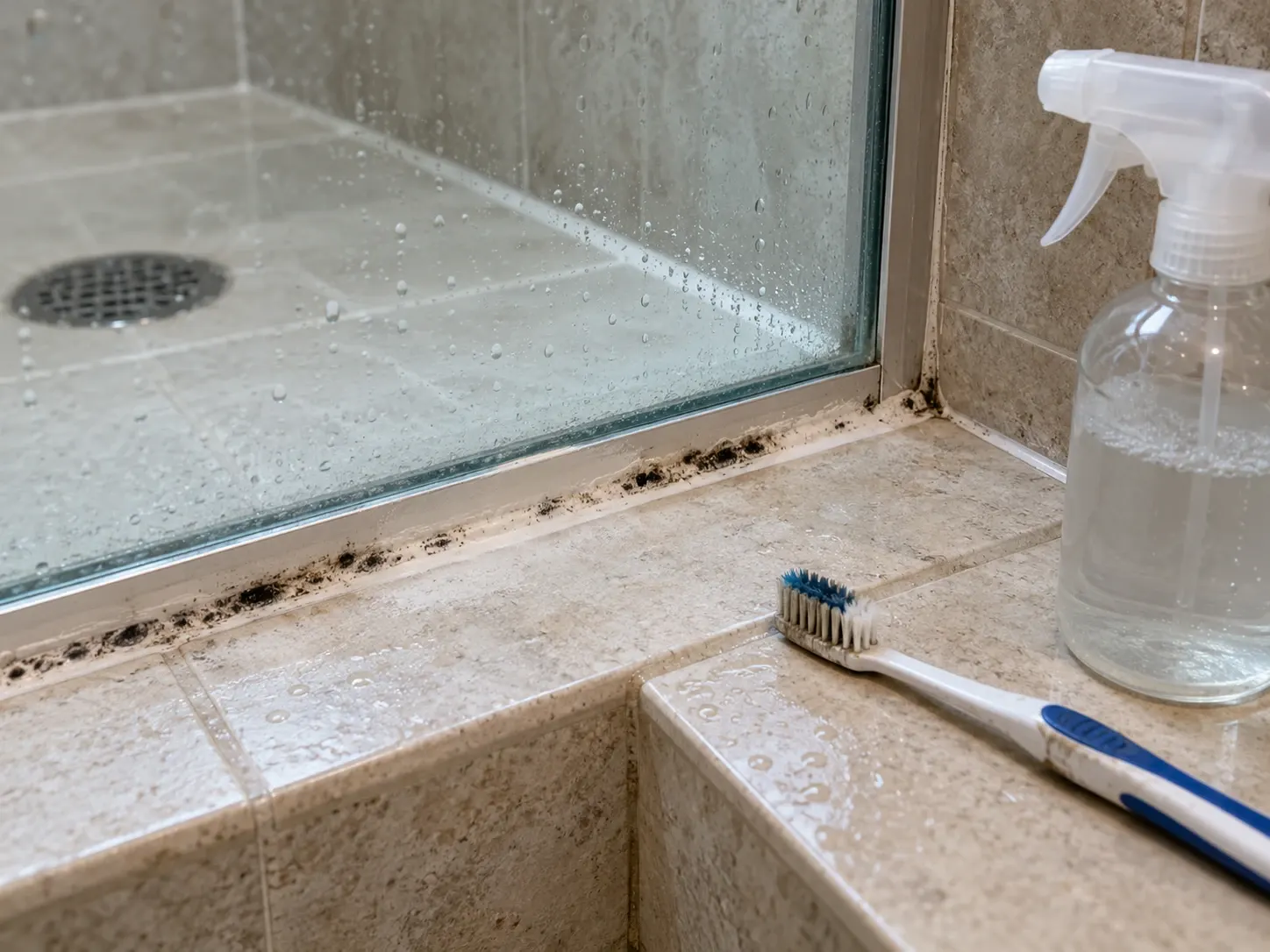
Before any acid touches the shower, look at what sits next to the glass. If the walls, ledge or floor are marble, limestone or travertine, lay a towel along the base and plan to wipe, not spray. Note any metal frame or hinges. If the door came with a factory coating (sold under names such as CleanCoat or ShowerGuard), read the maker's care sheet, since some list approved cleaners only.
02
Step 2 of 6
Wash Off Soap Film First
Wipe the glass with a soft cloth dipped in warm water with a few drops of mild dish detergent, then rinse. Clearing the soap film first shows you which spots are mineral deposits that need the vinegar step.
03
Step 3 of 6
Apply a 50/50 Vinegar Solution to the Glass Only
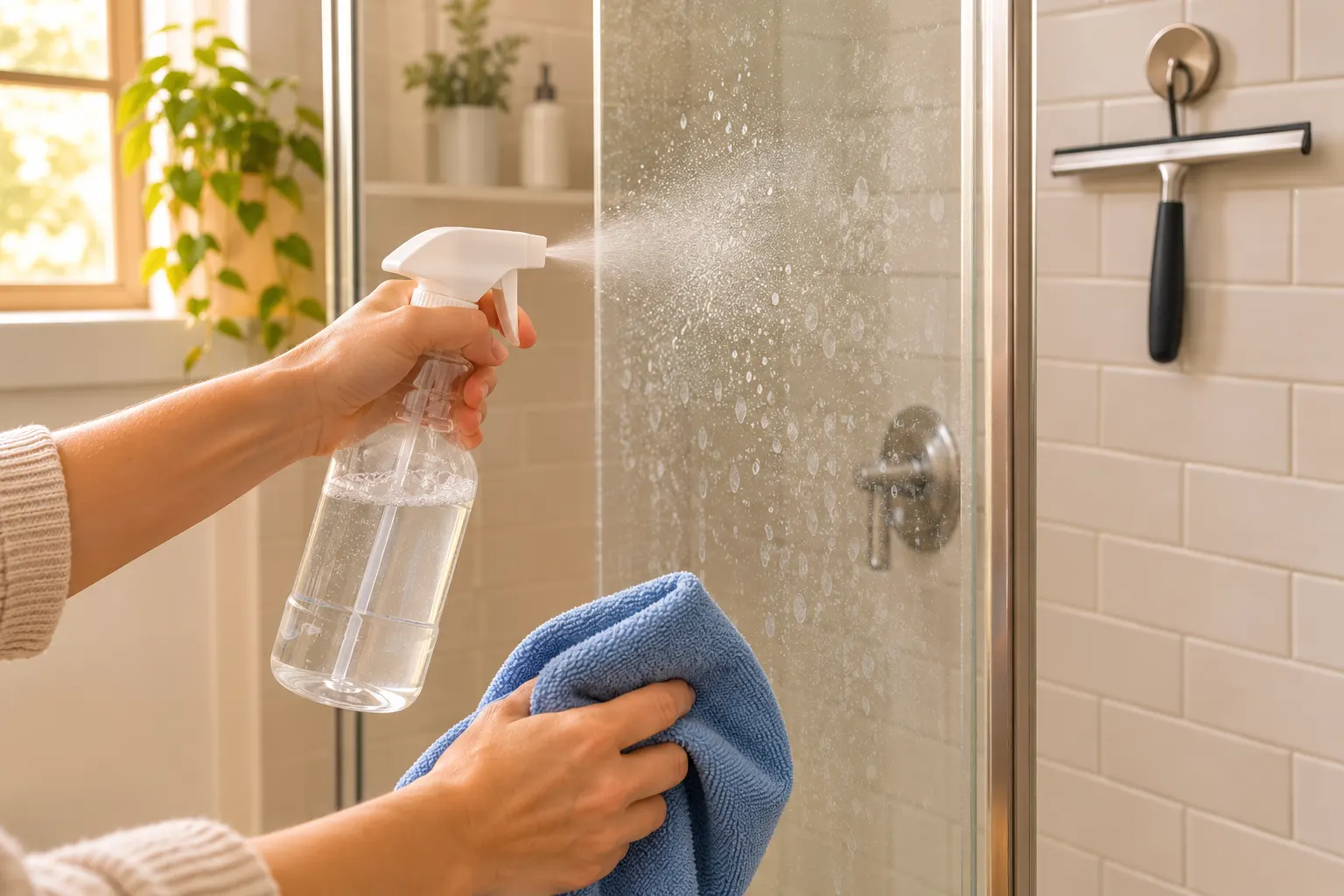
Mix equal parts distilled white vinegar and water. Spray it onto a folded microfiber cloth or non-scratch sponge, or mist the glass directly only where no stone or metal is below it, and wet the stained areas. Leave it for about 5 minutes, re-wetting any patch that starts to dry. Do not leave it soaking longer than it takes to loosen the deposits.
04
Step 4 of 6
Wipe with a Soft, Non-Scratch Pad
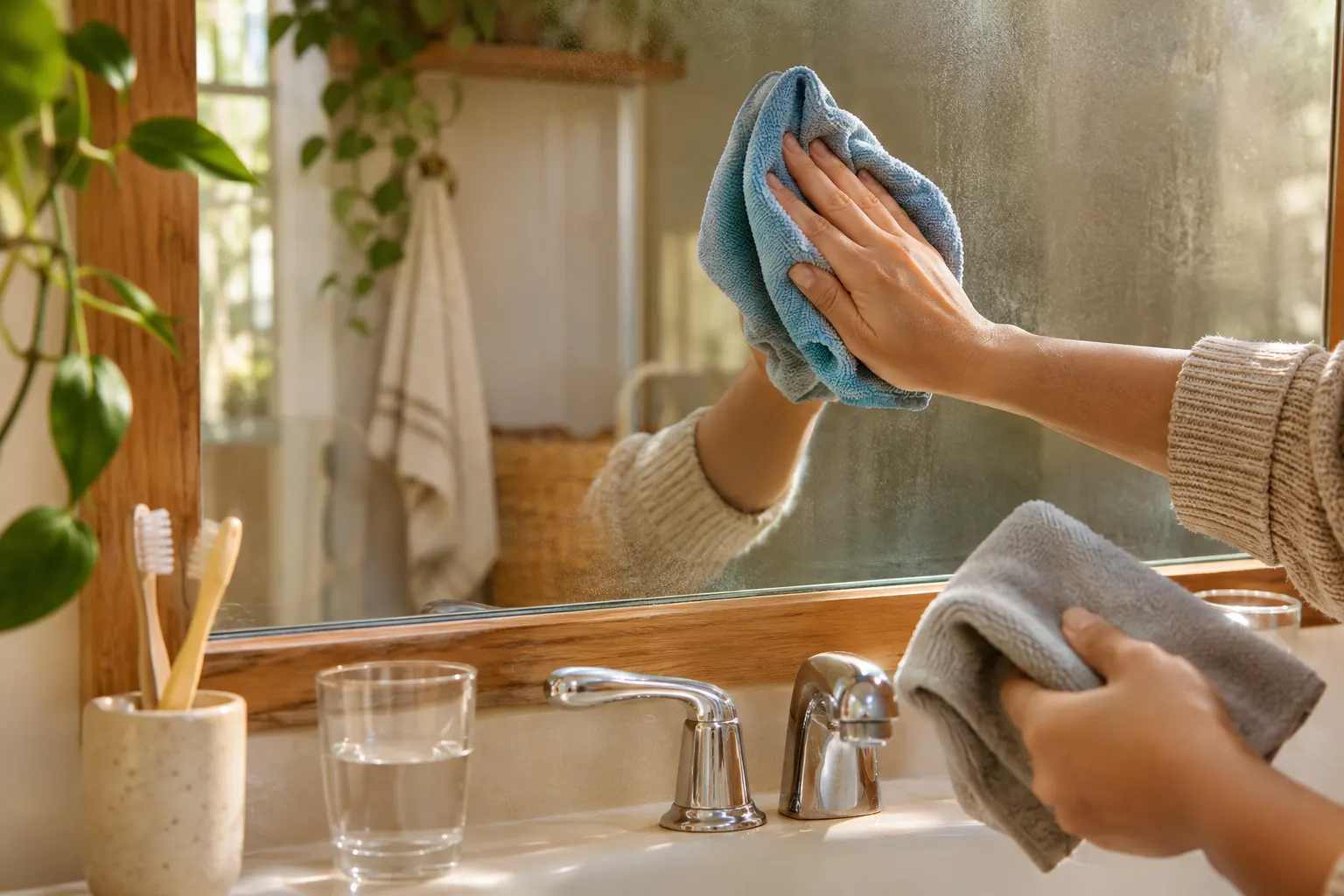
Wipe the loosened deposits with the soft cloth or non-scratch sponge using light, overlapping strokes. For heavier spotting, repeat the vinegar application and wipe again rather than pressing harder or switching to a scouring pad.
05
Step 5 of 6
Rinse Thoroughly with Clean Water
Rinse the whole panel with clean water to remove all vinegar residue, paying attention to the bottom edge, seals and any frame. Wipe the stone ledge or floor below with plain water too.
06
Step 6 of 6
Squeegee Dry and Make It a Daily Habit
Pull a squeegee down the glass in overlapping strokes, then dry the edges with a towel. Repeat that squeegee pass after every shower, while the glass is still wet, and leave the door ajar so the enclosure can dry. Minerals cannot spot glass that does not stay wet.
If that didn’t work
Stubborn or set-in? Try these next, in order.
AIf spots return quickly even with soft or filtered water, the cause may be silica, which water softeners do not remove. Squeegee daily and clean more often rather than reaching for stronger acids.
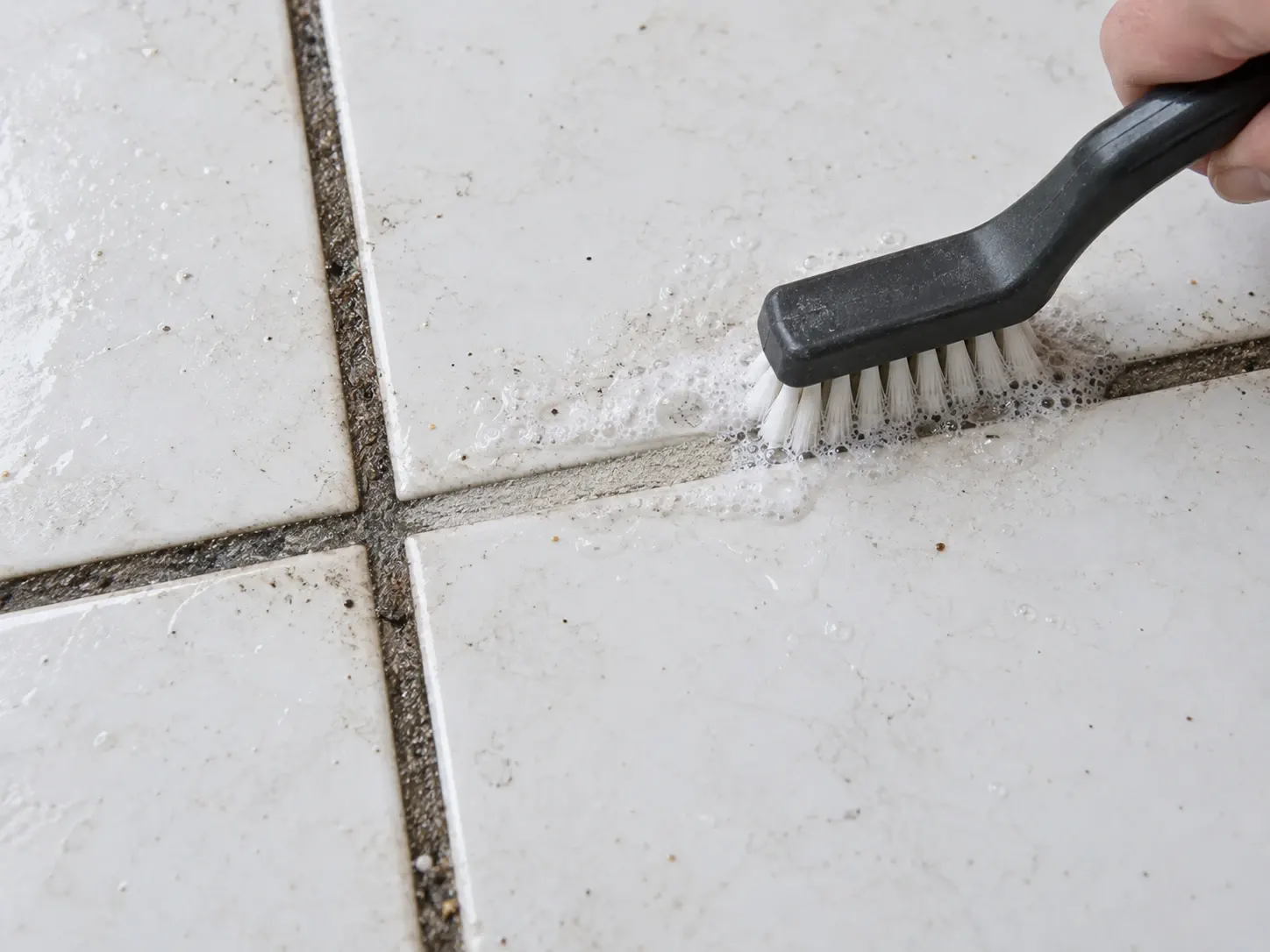
BFor years of buildup, repeat the vinegar, wipe and rinse cycle over several sessions. Do not switch to commercial descalers containing hydrochloric or phosphoric acid; VIGO lists acid-based cleaners like these as damaging to shower door finishes.
CIf the glass still looks cloudy after it is fully clean and dry, it may be etched rather than stained. Etching is surface damage that cleaning cannot remove; contact the door manufacturer or a glass professional.
Common questions
Does vinegar remove hard water stains from glass shower doors?
Yes. A 50/50 mix of white vinegar and water dissolves the mineral deposits that hard water leaves behind, and at least one shower door maker recommends exactly that ratio. Keep it on the glass, away from natural stone and metal hardware, and rinse it off thoroughly afterward.
Can I use vinegar on a shower with marble or travertine tile?
Not on the stone itself. Vinegar is acidic and will etch calcitic stones like marble, limestone and travertine. Apply the solution to a cloth instead of spraying, protect the ledge and floor with a towel, and rinse any drips off the stone right away.
How do I keep hard water spots off my shower glass?
Squeegee or towel-dry the glass after every shower while it is still wet, and leave the door ajar so the enclosure dries. A weekly wipe with a mild, non-abrasive cleaner keeps light spotting from building into scale.
Will a magic eraser or scouring pad scratch shower glass?
Door makers advise against abrasive sponges, bristle brushes, scouring pads and sharp tools on shower glass because they can scratch some glass and remove easy-clean coatings. Stick to microfiber or a sponge labeled non-scratch.
Why does my shower glass still look cloudy after cleaning?
If the haze survives a full vinegar clean and the glass is completely dry, it may be etching, which is permanent surface damage rather than a deposit. Cleaning cannot reverse it, but daily squeegeeing keeps it from getting worse.
Sources we relied on
1.How to Clean Glass Shower Doors (and Keep Them Clean) — VIGO Industries. VIGO's cleaning guide recommends a 50/50 water and vinegar solution for hard water and soap scum on the glass, kept off the hardware and rinsed thoroughly, a squeegee after each use, and no abrasive cleaners, scouring pads, steel wool or acid-based commercial cleaners.
2.How to Clean & Care for Bath & Shower Doors — Sterling Plumbing (Kohler Co.). Squeegee or wipe doors dry after each use to prevent water spots and lime buildup, never use bristle brushes, abrasive sponges or cleaners, or sharp instruments on the glass, keep acids off metal surfaces, do not let cleaners soak, and avoid abrasive cleaners on CleanCoat glass.
3.How to Clean ShowerGuard Shower Doors - Easy Maintenance Guide — Guardian Glass. Drying the glass with a squeegee or towel after each shower helps prevent water spots, aftermarket wipe-on coatings are not recommended on permanently coated ShowerGuard glass, and water softeners do not remove the silica that can still spot glass.
4.Eco-friendly Cleaning Practices for Natural Stone — Use Natural Stone (Natural Stone Institute). Acidic cleaners such as vinegar and lemon juice etch the surface of calcitic stones like marble and limestone, and removing excess water from shower stalls helps prevent soap scum.