A sewer smell is gas getting past a broken seal, so air fresheners and bleach will not fix it. Refill dry traps, clean the sink overflow, check the toilet wax ring and roof vent, and know when it is a job for a plumber.
A bucket or jug (about 1 gallon of water per unused drain)
Mineral oil (1 to 2 tablespoons per trap, optional, for drains left unused during long absences)
Baking soda (1/2 cup) and white vinegar (1 cup) for the sink overflow
Small bottle brush or pipe brush
Flashlight
Optional: a drain seal (one-way trap seal) sized to your drain, 2 or 3 inches
Step by step
01
Step 1 of 7
Air Out the Bathroom First
Open a window and run the exhaust fan for 15 to 20 minutes. This clears the gas while you look for the source. If the smell is strong and spreading through the house, or anyone feels dizzy or sick, leave the building and call the fire department instead of investigating.
02
Step 2 of 7
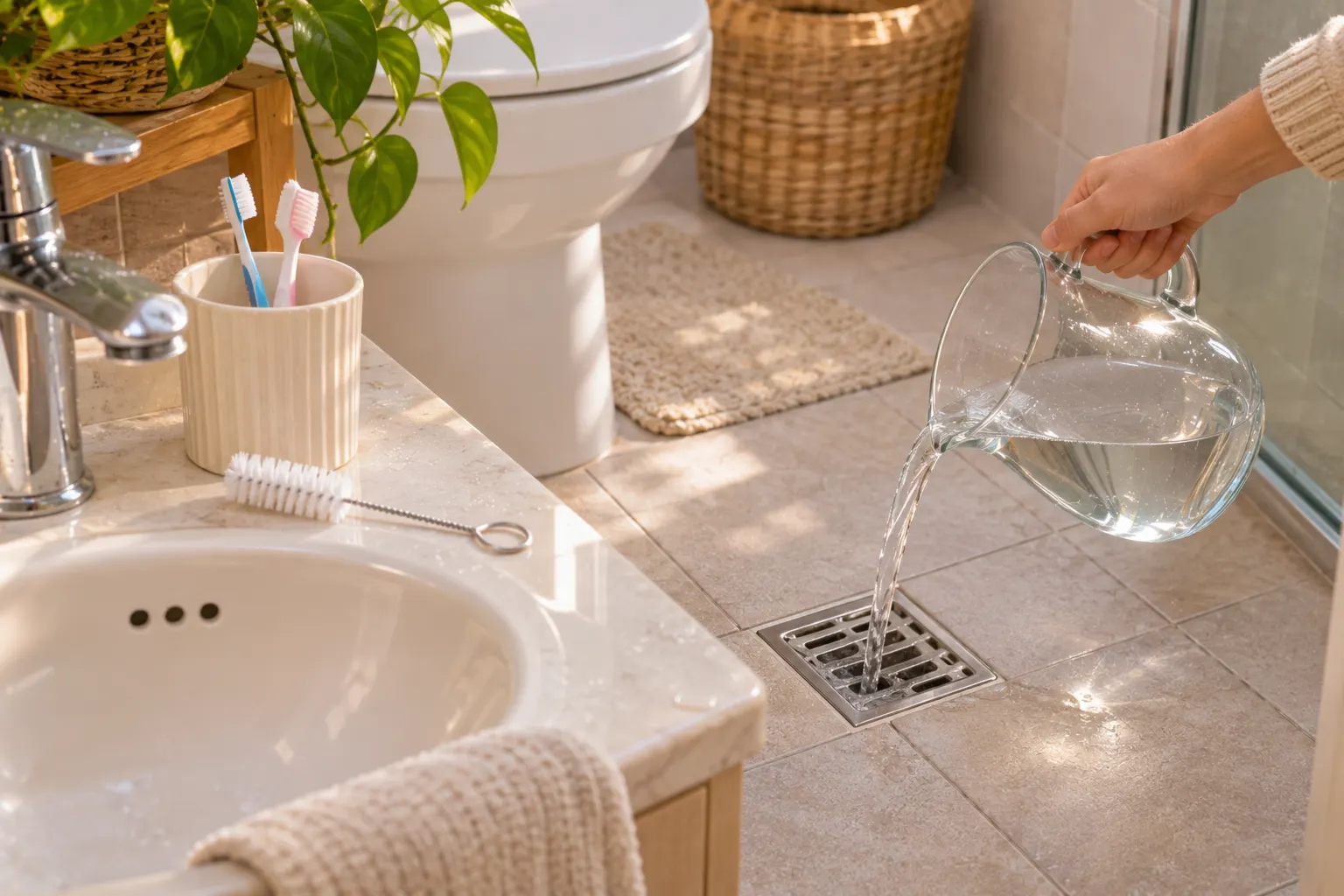
Refill Every Dry Trap
Each drain has a U-shaped trap that holds water as a barrier against sewer gas. When a drain goes unused, that water evaporates and the gas comes straight up. Pour about a gallon of water into floor drains, guest-bathroom sinks, spare tubs and showers that rarely get used. If the smell fades within minutes, you have found the cause.
03
Step 3 of 7
Keep Rarely Used Drains Topped Up
Put a monthly reminder on your calendar to run water through floor drains and spare fixtures. For a floor drain that dries out often, a drain seal (a one-way valve sized to the pipe) opens when water flows and closes when it stops, so gas cannot come up.
04
Step 4 of 7
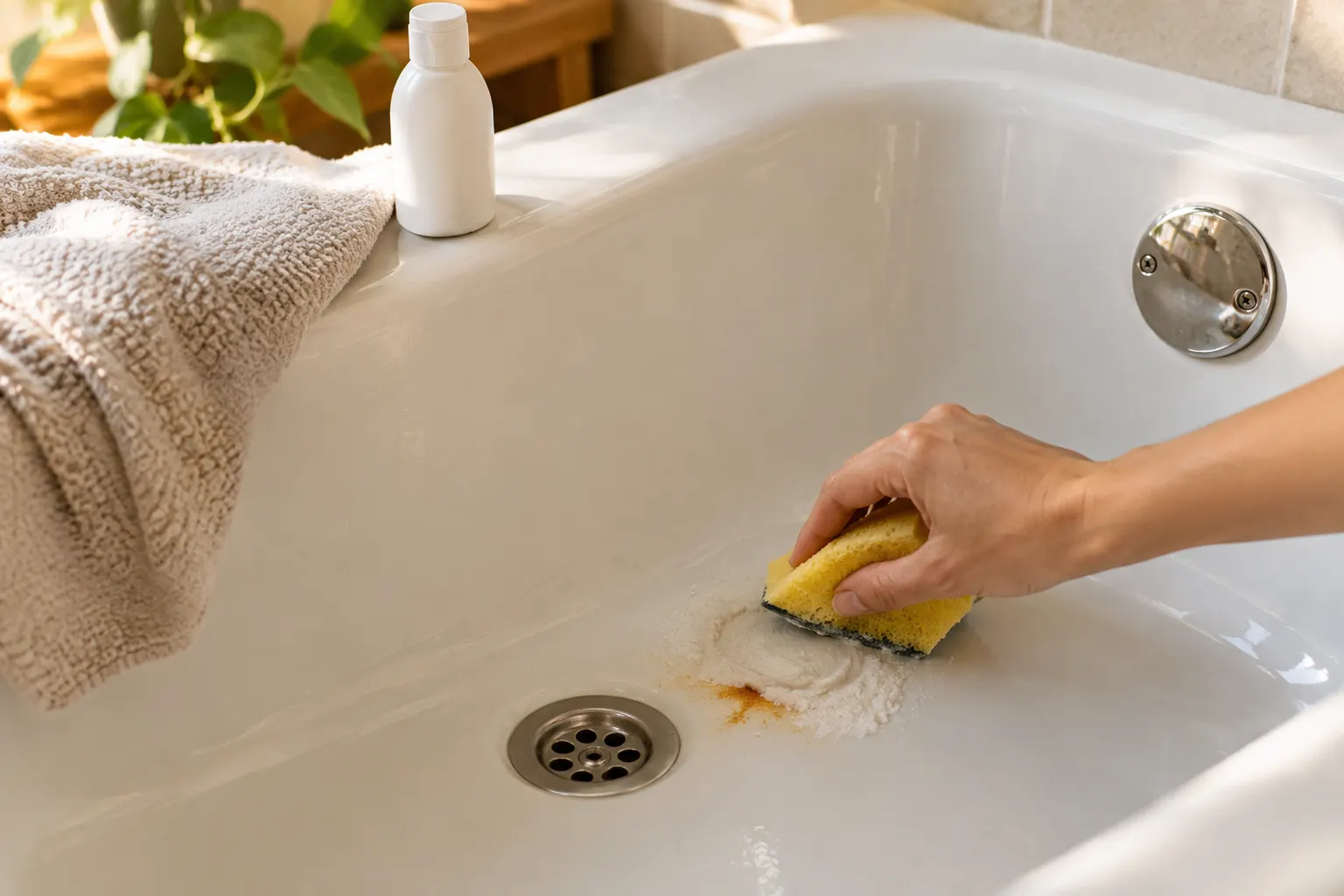
Clean the Sink Overflow
The small hole near the top of the sink basin collects soap scum and debris that grows odor-causing bacteria. Pour 1/2 cup of baking soda into the overflow, follow with 1 cup of white vinegar, wait about 15 minutes, then flush with hot (not boiling) water. Scrub the opening with a small bottle brush.
05
Step 5 of 7
Check the Toilet Wax Ring
Sniff around the base of the toilet and try to rock it gently. A smell at the base, water seeping out, or a toilet that wobbles points to a failed wax ring. The ring has to be replaced, and if the flange sits below the finished floor the new ring cannot seal properly either, so the flange needs fixing too.
06
Step 6 of 7
Look for Vent Problems
Gurgling drains and slow drainage suggest a blocked or damaged plumbing vent, which can pull water out of the traps and push gas back indoors. From the ground or a safe vantage point, check whether the roof vent is blocked by leaves or a bird nest. Leave climbing on the roof and clearing the vent to a plumber or roofer.
07
Step 7 of 7
Call a Plumber If It Persists
If the smell returns after you refill traps, clean the overflow and rule out the toilet, the leak is probably hidden: a cracked pipe, an uncapped drain line behind a wall, or a sewer line problem. A licensed plumber can find it with smoke testing or a camera inspection. Call sooner if more than one person in the home has headaches or nausea.
If that didn’t work
Stubborn or set-in? Try these next, in order.
AIf the smell comes back within days of refilling a trap, the trap may be getting siphoned dry by a blocked vent. Have a plumber check the venting rather than refilling it over and over.
BIf the rotten-egg smell appears only when you run hot water, the source may be sulfur bacteria in the water heater rather than the drains. Follow your water heater manual for flushing, or ask a plumber about the anode rod.
CIf the odor is near a floor drain or cleanout and nothing else explains it, ask a plumber for a camera inspection of the sewer line for cracks, roots or a blockage.
Common questions
Why does my bathroom smell like sewage but nothing is clogged?
The most common reason is a dry trap. When a sink, shower, tub or floor drain goes unused, the water in its trap evaporates and sewer gas comes up through the open pipe. Running water into the drain refills the trap and usually stops the smell.
Is it dangerous to smell sewer gas in the house?
Sewer gas contains hydrogen sulfide, which can irritate the eyes and airways and cause headaches, dizziness and nausea at low levels, and methane, which is flammable. Air the room out and fix the source. If the smell is strong in an enclosed space, leave and call the fire department.
Can a toilet leak sewer gas without leaking water?
Yes. The wax ring under the toilet seals the drain against gas as well as water, and a ring that is compressed unevenly or sitting on a flange set too low can let odor out before any water shows. A smell at the base or a toilet that rocks are the usual signs.
Will bleach get rid of sewer smell in a bathroom?
No. Bleach may cover the odor for a while, but the gas is coming through a dry trap, a failed seal or a vent problem, and bleach fixes none of those. Oatey also warns it can damage pipes. Refill the trap or repair the seal instead.
How often should I run water in an unused bathroom?
Running about a gallon of water through rarely used drains once a month keeps the traps full. For drains that sit unused for long stretches, a tablespoon or two of mineral oil on top of the water slows evaporation.
Sources we relied on
1.Sewer Gas Odor in Your House and What to Do About It — Oatey. Sewer gas odor is typically caused by dry P-traps, plus blocked or broken sewer lines, improper drain capping, toilets with a low flange or failed wax ring, blocked or damaged vents and dirty overflow drains; refill unused drains with about 1 gallon monthly, add 1 to 2 tablespoons of mineral oil before long absences, consider a drain seal, clean overflows with 1/2 cup baking soda and 1 cup vinegar followed by hot (not boiling) water, run exhaust fans 15 to 20 minutes, bleach does not address the cause, and call a plumber if the source cannot be found or odors persist.
2.Air: Sewer Gas — Wisconsin Department of Health Services. Sewer gas contains hydrogen sulfide, ammonia, methane and other gases; low levels of hydrogen sulfide can cause eye and respiratory irritation, dizziness, headaches and nausea; gas enters homes through floor drains, leaking or blocked roof vents or foundation cracks; flush floor and sink drains with water to keep traps from drying out, check roof vents for leaves or bird nests, and if concentrations may be high in an enclosed space, evacuate and call the fire department because methane and hydrogen sulfide are flammable.