Bleach with ammonia, bleach with acids, bleach with rubbing alcohol, hydrogen peroxide with vinegar, and drain cleaners with anything. What each pair forms, where ammonia hides, how to use peroxide and vinegar one after the other, and what to do if fumes form.
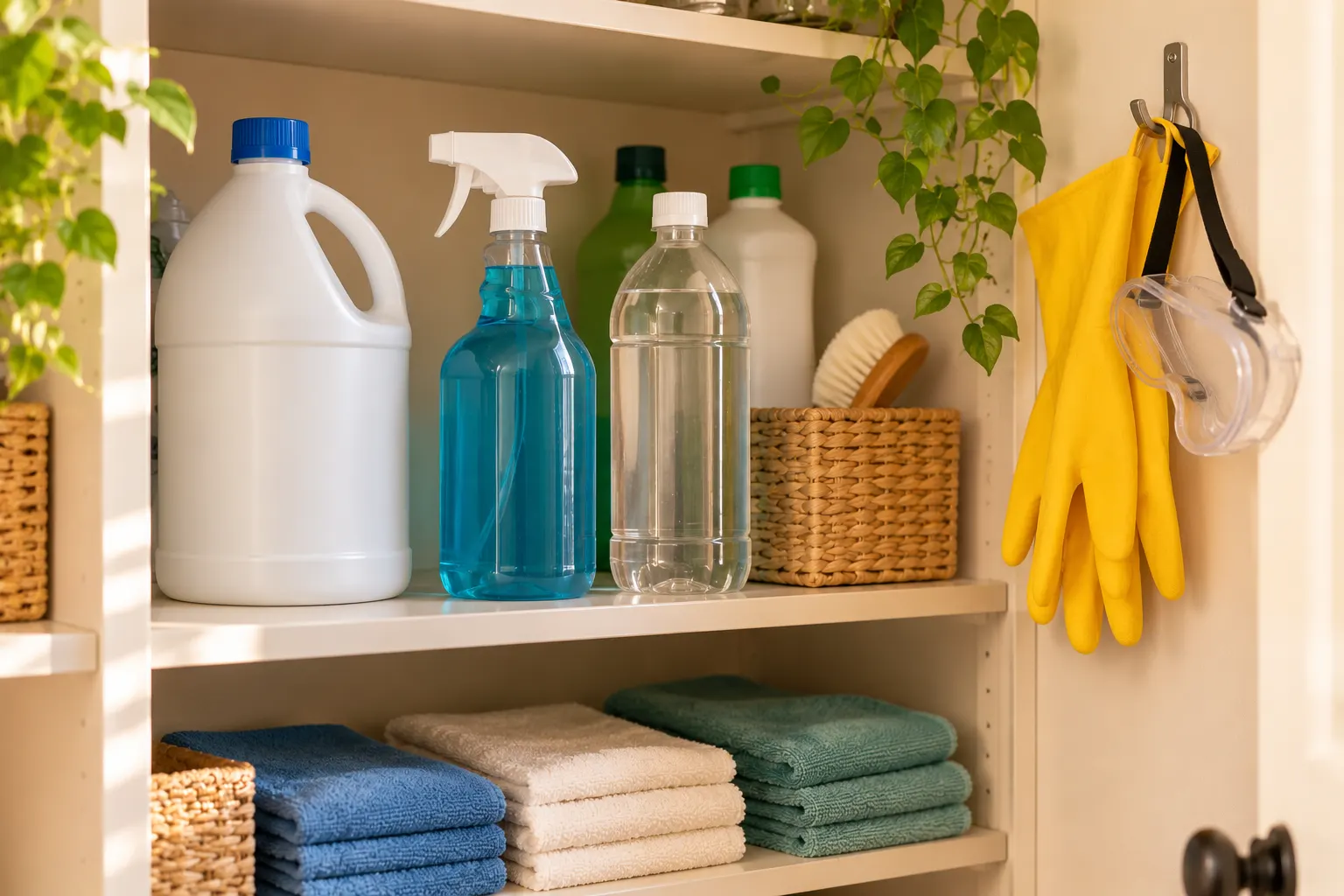
The original, labeled containers for each cleaner you use
Rubber gloves and safety goggles (required for drain cleaners)
Clean water and cloths for rinsing between products
An open window or door and an exhaust fan
A storage spot out of reach of children and pets
Step by step
01
Step 1 of 8
Learn the Combinations That Make Toxic Gas
Bleach plus ammonia forms chloramine gases, which cause coughing, shortness of breath, watery eyes, chest pain and wheezing. Bleach plus an acid releases chlorine gas, which burns the eyes, nose and throat and can cause chest pain and fluid in the lungs. Bleach plus rubbing alcohol can create chloroform, which Clorox warns can cause dizziness, nausea and unconsciousness. Vinegar and bleach are the most common accidental acid-and-bleach mix; we cover it in detail in our separate guide on whether you can mix bleach and vinegar.
02
Step 2 of 8
Keep Hydrogen Peroxide and Vinegar Apart
When vinegar of any kind is mixed with hydrogen peroxide in the same container, peracetic acid forms. In high concentrations it is corrosive and irritates the skin, eyes and airways. If you use both, use them separately and never store them pre-mixed in one spray bottle.
03
Step 3 of 8
Never Combine Drain Cleaners
Do not pour a second drain cleaner on top of one already in the drain, and never add bleach, ammonia or toilet bowl cleaner to a drain that has been treated. Drain cleaners are either strong acids or strong alkalis, some generate heat when their contents are mixed, and acidic drain cleaners release chlorine gas with bleach. Follow the one product's label exactly, and call a plumber rather than layering chemicals if it does not work.
04
Step 4 of 8
Read Every Label Before You Start
Check each product's label for bleach (sodium hypochlorite), ammonia and acids before using two cleaners in the same room on the same day. Acidic products include vinegar, some glass and window cleaners, automatic dishwasher detergents and rinses, toilet bowl cleaners, drain cleaners, rust removers and brick and concrete cleaners. Labels usually list a toll-free number if you are unsure.
05
Step 5 of 8
Use One Cleaner at a Time and Rinse Between
Finish with one product, rinse the surface with clean water or flush the toilet, and only then use a different one. Leftover acid toilet bowl cleaner in the bowl followed by a bleach cleaner is exactly the kind of accidental mix that releases chlorine gas.
06
Step 6 of 8
Ventilate the Room
Open a window and turn on the vent fan before you start, especially in a small bathroom. If a product smells strong, close the door and stay out of the room until the smell fades, and leave right away if symptoms start.
07
Step 7 of 8
Store Cleaners Safely
Keep every product in its original, tightly closed container, never in a reused or unlabeled bottle. Store cleaners out of sight and reach of children and pets.
08
Step 8 of 8
If Fumes Form, Leave and Get Help
Stop, leave the area and get to fresh air. The Missouri Poison Center says mild chloramine symptoms usually improve with fresh air and sipping cool fluids. Call Poison Control at 1-800-222-1222 for free, confidential advice, and get medical care right away or call 911 for trouble breathing or chest pain.
If that didn’t work
Stubborn or set-in? Try these next, in order.
AIf you already mixed products and the smell lingers, stay out of the room with the door closed and the window open until it clears; do not go back in to clean up while fumes remain.
BIf you cannot tell whether a product contains bleach, ammonia or an acid, read the full label or call the toll-free number printed on it before using it alongside anything else.
CIf a single drain cleaner has not cleared the clog, do not add another chemical; flush with water if the label directs and call a plumber.
Bleach and ammonia: chloramine gas, and where ammonia hides
Bleach and ammonia together release chloramine gases. The Washington State Department of Health lists coughing, nausea, shortness of breath, watery eyes, chest pain, wheezing and, in severe cases, pneumonia and fluid in the lungs. Poison Control says chloramine is less volatile than chlorine gas, so it is less likely to cause serious toxicity, but it can still cause a lot of coughing, a sore throat and wheezing.
The risky part is that the ammonia is often not labeled as the main ingredient. Poison Control names glass cleaners as the most common household cleaner with ammonia, and the Washington State Department of Health adds some window cleaners, paints and urine. A bleach spray used right after a glass cleaner on the same mirror, or bleach poured into a urine-soaked litter box, diaper pail or toilet, brings the two together.
Clean a litter box, diaper pail or toilet with soap or detergent and water first, rinse, and only then disinfect with bleach diluted in water.
Rinse bleach off a surface with clean water before a glass cleaner goes anywhere near it.
If the CDC dilution is needed and the label gives none: 5 tablespoons (1/3 cup) of bleach per gallon of room-temperature water, or 4 teaspoons per quart, mixed fresh each day.
Bleach and rubbing alcohol: chloroform
Clorox lists rubbing alcohol among the products never to mix with bleach because the combination can create chloroform, which can cause dizziness, nausea or unconsciousness. Wayne State University's lab safety office says bleach and ethanol form chloroform, hydrochloric acid and other compounds.
ATSDR says breathing low to moderate levels of chloroform for a short time can cause dizziness, tiredness or a headache, and that at high levels people may have trouble breathing and may pass out. If you want both a bleach disinfectant and an alcohol wipe-down on the same surface, do what Wayne State's lab guidance does: rinse the bleach off with water first, let the surface dry, and only then use the alcohol.
Hydrogen peroxide and vinegar: one, wipe, then the other
Houston Methodist says mixing hydrogen peroxide and vinegar in the same mixture can create peracetic acid, which may be toxic and can irritate the throat, lungs, eyes and skin. The New Jersey Department of Health describes concentrated peracetic acid as highly corrosive to the skin and eyes and irritating to the lungs.
Used one after the other, they are fine. Houston Methodist says you can alternate spraying the two on a surface as long as you wipe the surface between sprays. Never keep a pre-mixed batch: Poison Control says to keep hydrogen peroxide in its original opaque bottle, so spray it from that bottle and keep vinegar in its own labeled one.
Spray hydrogen peroxide, wipe with a clean cloth, then spray vinegar on the wiped surface (or the other way round).
Do not add bleach to either one: bleach reacts with hydrogen peroxide, and vinegar is an acid that releases chlorine gas with bleach.
Peroxide splash in the eyes: Poison Control says to rinse with plenty of running water for 15 to 20 minutes, then call 1-800-222-1222.
Common questions
What cleaning products should never be mixed with bleach?
Ammonia, acids (including vinegar, toilet bowl cleaners, some glass cleaners, drain cleaners and rust removers), rubbing alcohol, hydrogen peroxide, some oven cleaners and some insecticides. The simplest rule is to dilute bleach only with water and never combine it with any other cleaner.
Can you mix hydrogen peroxide and vinegar?
Not in the same container. Together they form peracetic acid, which is corrosive in high concentrations and irritates the skin, eyes and respiratory system. Use them separately and rinse the surface between them.
What happens if you mix bleach and ammonia?
The mixture releases chloramine gases, which can cause coughing, nausea, shortness of breath, watery eyes, chest pain, wheezing and, in severe cases, pneumonia and fluid in the lungs. Get to fresh air and call Poison Control at 1-800-222-1222.
Is it safe to use two drain cleaners?
No. Drain cleaners contain strong acids or strong alkalis, some generate heat when mixed, and acidic ones release chlorine gas with bleach. Use one product as its label directs, wear goggles and gloves, and call a plumber if it does not work.
How long should you wait between cleaning products?
There is no set waiting time in the guidance we reviewed. What matters is removing the first product completely: rinse the surface with clean water or flush the toilet, ventilate the room, and only then use the second product.
Is chloramine gas as dangerous as chlorine gas?
Poison Control says chloramine is less volatile than chlorine gas and less likely to cause serious toxicity, but it can still cause heavy coughing, a sore throat, shortness of breath and wheezing. Treat any exposure seriously and call 911 for trouble breathing.
Can you use bleach on pet urine or in a litter box?
With care. Urine contains ammonia, and the Washington State Department of Health specifically advises caution with litter boxes, diaper pails and toilet bowls. Clean with soap or detergent and water first, rinse, ventilate, and use bleach diluted only with water.
What happens if you mix bleach and rubbing alcohol?
Clorox says the combination can create chloroform, which can cause dizziness, nausea or unconsciousness, and Wayne State University says bleach and ethanol also form hydrochloric acid and other compounds. Leave the area, get fresh air and call 1-800-222-1222.
Can you use hydrogen peroxide and vinegar one after the other?
Yes, as long as they never share a container. Houston Methodist says you can alternate spraying them on a surface if you wipe the surface between sprays.
Sources we relied on
1.Dangers of Mixing Bleach with Cleaners — Washington State Department of Health. Do not mix bleach with ammonia, acids or other cleaners; bleach and ammonia form chloramines, bleach and acids (vinegar, some glass cleaners, dishwasher detergents and rinses, toilet bowl and drain cleaners, rust removers, brick and concrete cleaners) release chlorine gas, and bleach also reacts with some oven cleaners, hydrogen peroxide and some insecticides; always read the product label.
2.Some Things Just Don't Mix — Missouri Poison Center. Bleach plus ammonia (including urine) creates chloramine gas and bleach plus acids such as vinegar releases chlorine gas; vinegar mixed with hydrogen peroxide in the same container forms corrosive peracetic acid; use one cleaner at a time, ventilate, keep chemicals in original containers, and call 1-800-222-1222.
3.How to Clean with Bleach Safely in Your Home: The Do's and Don'ts — Clorox. Do not mix bleach with ammonia (chloramine gas), vinegar (chlorine gas), rubbing alcohol (can create chloroform, causing dizziness, nausea and unconsciousness) or toilet bowl cleaner (may produce toxic fumes); ventilate, wear gloves, and store bleach out of reach of children and pets.
4.What's in drain cleaner and what happens if you drink it? — Poison Control (National Capital Poison Center). Non-enzymatic drain cleaners contain acids such as sulfuric or hydrochloric acid or alkalis such as sodium or potassium hydroxide, some generate heat when their contents are mixed, and users should wear goggles and rubber gloves, pour carefully close to the drain, and keep containers tightly closed and out of children's reach.
5.Chlorine Gas: Get the Facts — Poison Control (National Capital Poison Center). Bleach mixed with ammonia, a common glass cleaner ingredient, forms chloramine gas, which is less volatile than chlorine gas and less likely to cause serious toxicity; after breathing fumes leave the area, breathe fresh air, shower if possible, change clothes, seek medical attention for trouble breathing and call 1-800-222-1222.
6.Ammonia: History, Usage and Safety — Poison Control (National Capital Poison Center). Glass cleaners are the most common household cleaning products with ammonia; ammonia and bleach produce chloramine gas, which can cause a lot of coughing, sore throat, shortness of breath and wheezing; call 911 any time someone has trouble breathing or is wheezing.
7.Cleaning and Disinfecting with Bleach — Centers for Disease Control and Prevention. Never mix household bleach with any other cleaners or disinfectants; ensure good ventilation; clean visibly dirty surfaces with soap or detergent first; without label directions use 5 tablespoons (1/3 cup) of bleach per gallon or 4 teaspoons per quart of room-temperature water and make fresh solution daily.
8.Laboratories: Choosing an Appropriate Disinfectant — Wayne State University Office of Environmental Health and Safety. Do not mix bleach and ethanol, as this forms chloroform, hydrochloric acid and other compounds; after bleach, a water rinse followed by 70% ethanol is recommended to remove bleach residue.
9.Chloroform - ToxFAQs — Agency for Toxic Substances and Disease Registry (ATSDR). Breathing low-to-moderate levels of chloroform for a short time can cause dizziness, tiredness or headache; at high levels people may have trouble breathing and may pass out.
10.Natural Cleaning Products: How They Work and How to Make Them Yourself at Home — Houston Methodist. Do not mix hydrogen peroxide and vinegar in the same mixture, because it can create peracetic acid, which may be toxic and irritate the throat, lungs, eyes and skin; you can alternate spraying them on a surface as long as you wipe between sprays.
11.Is Hydrogen Peroxide Safe? — Poison Control (National Capital Poison Center). Keep hydrogen peroxide in its original opaque bottle and out of the sight and reach of children; for a splash in the eyes rinse with plenty of running water for 15 to 20 minutes; call 1-800-222-1222.
12.Hazardous Substance Fact Sheet: Peroxyacetic Acid — New Jersey Department of Health. Peroxyacetic (peracetic) acid is highly corrosive and reactive; contact can severely irritate and burn the skin and eyes, and breathing it can irritate the nose, throat and lungs.