Pull the pop-up stopper and clear the hair wound around it, plug the overflow before you plunge, then open the trap where most clogs sit. Why chemical drain openers are a risky shortcut, and what never to do after pouring one in.
A piece of stiff wire or a small drain cleaning tool
Hot water and liquid dish soap for the final rinse
Step by step
01
Step 1 of 7
Check What Is Already in the Drain
Before you touch the sink, find out whether anyone has poured a chemical drain opener into it. If they have, do not plunge and do not open the trap; let the product clear as the label directs or call a plumber. If the water is plain, bail out most of the standing water into a bucket so you can see the stopper.
02
Step 2 of 7
Lift Out the Pop-Up Stopper
Try lifting the stopper straight out first. If it will not come, it is held by the horizontal pivot rod on the back of the drain pipe under the sink. Put a towel down, unscrew the nut that holds the rod (counterclockwise), pull the rod straight back about an inch, and the stopper will come free of the drain.
03
Step 3 of 7
Clear the Hair from the Stopper and Drain
Pull off the hair and gunk wound around the stopper; long hair is the usual culprit. Shine a flashlight into the drain and remove any debris you can reach in the pop-up assembly with gloved fingers or a bent piece of wire.
04
Step 4 of 7
Refit the Rod and Test the Flow
With the stopper still out, put the pivot rod and its nut back in place so water cannot leak from that opening, then run the tap. If the sink now drains freely, skip ahead to reinstalling the stopper.
05
Step 5 of 7
Plug the Overflow and Plunge
Push a wet washcloth or rag firmly into the overflow hole near the rim and hold it there, or the plunger will just push air out of it. Set a cup plunger over the drain, press down smoothly, then jerk it up sharply. Repeat 20 to 30 times. If the clog clears, flush the drain with hot soapy water.
06
Step 6 of 7
Open the Trap Cleanout
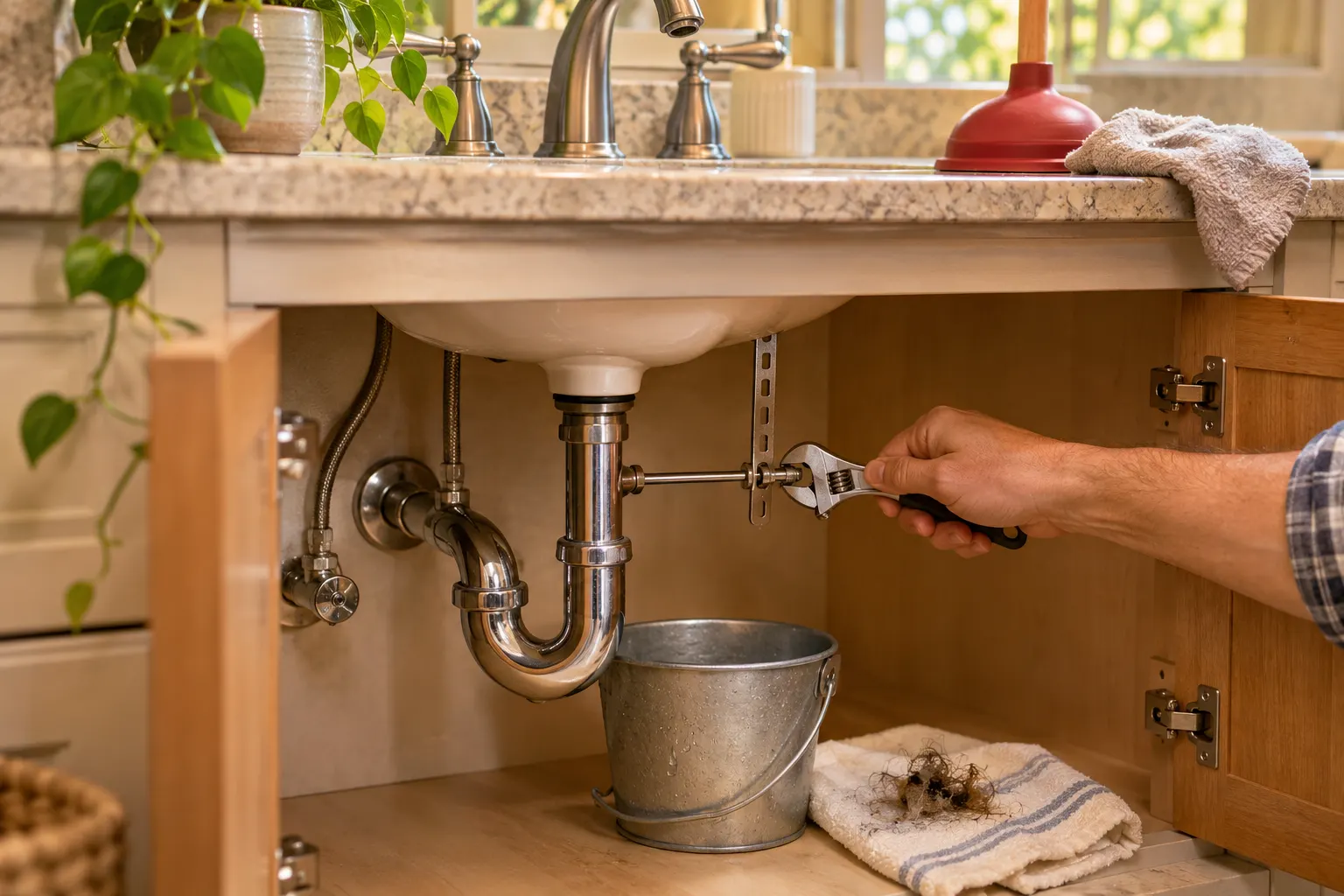
If plunging twice does not work, look at the U-shaped trap under the sink for a cleanout plug at the bottom of the bend. Put a pan or bucket underneath, unscrew the plug with an adjustable wrench, and clear the trap with a gloved finger, a pencil or wire; most clogs sit here. Screw the plug back in and run hot soapy water through the drain.
07
Step 7 of 7
Reinstall the Stopper and Check the Seal
Drop the stopper in with the hole at its base lined up with the rod opening, make sure the washer sits firmly on the ball of the rod, and thread the rod through the hole. Wiggle it to confirm the stopper moves, then tighten the nut clockwise until it stops plus a quarter turn with a wrench. Close the stopper, fill the basin and check that it holds water.
If that didn’t work
Stubborn or set-in? Try these next, in order.
AIf you can see no debris in the stopper or drain and the sink still drains slowly, the clog is further down the line; Pfister recommends having a licensed plumber check it.
BIf plunging and clearing the trap cleanout do not help, or the trap has no cleanout plug, notify your landlord or call a plumber rather than reaching for chemicals.
CIf the sink drains but will not hold water after reassembly, clean any debris off the stopper O-ring, make sure the stopper cap is fully threaded on, and pull up the lift rod to seat the stopper.
Common questions
Why is my bathroom sink draining slowly?
Usually hair and soap caught on the pop-up stopper or in the pop-up assembly just below it. Pulling the stopper and clearing the hair fixes many slow sinks in a few minutes; if not, the next most likely spot is the trap under the sink.
Can I use Drano or another drain cleaner in a bathroom sink?
It is not the safer choice. Chemical drain cleaners are caustic, help only sluggish drains, can damage pipes and fixture finishes, and can splash back. If one is already in the sink, do not plunge or open the trap. Mechanical methods are safer: stopper, plunger, trap.
Do I need to cover the overflow hole when plunging a sink?
Yes. Plug the overflow with a wet washcloth or rag and hold it in place while you plunge. Otherwise the pressure escapes through the overflow instead of pushing on the clog.
Will baking soda and vinegar unclog a bathroom sink?
Probably not a real clog. Poison control experts note that the fizz generally does not build enough pressure to dislodge a blockage and is unlikely to be strong enough to break up tough clogs. Pulling the hair off the stopper and plunging work better.
How do you get a pop-up stopper out of a bathroom sink?
Lift it first; some come straight out. If it is stuck, look under the sink for the horizontal rod on the back of the drain pipe, unscrew its nut, and pull the rod back about an inch. The stopper will then lift free.
Sources we relied on
1.Making Simple Repairs: Clogged Drains (FCS5234) — University of Florida IFAS Extension. Plug the overflow of a single-bowl sink with a washcloth or rag, press the plunger down smoothly and jerk it up sharply 20 to 30 times, rinse with hot soapy water; if still clogged, place a pan under the trap, unscrew the cleanout plug and clear the clog, since most clogs are in the trap. Chemical drain cleaners are caustic, help only sluggish drains, can damage pipes or finishes; do not mix brands and do not use a plunger after them.
2.How do I remove my bathroom sink drain stopper for cleaning? — Delta Faucet. If a stopper does not lift straight out, it is held by the horizontal rod on the back of the drain pipe; remove the nut, pull the rod straight away from the pipe about an inch, and the stopper comes free.
3.My pop up drain is not draining water — Pfister. Unfasten the ball rod by turning the nut counterclockwise, pull the stopper out, remove hair and debris from it and the pop-up assembly, reinstall the rod and test drainage; reinstall the stopper aligned with the rod opening, tighten the nut until it stops plus a quarter turn, and call a licensed professional if no debris is visible.
4.What's in Drain Cleaner? — Poison Control (National Capital Poison Center). Non-enzymatic drain cleaners contain corrosive acids or alkalis that burn skin and tissue; splashback happens when product is poured from too high or into a completely blocked drain; wear goggles and rubber gloves, store containers closed and away from children; baking soda and vinegar is unlikely to clear tough clogs.