Melamine foam cleans by fine abrasion, like a very fine sandpaper. The surfaces the Mr. Clean package says to keep it off, why skin is on the list, and how to test before you scrub.
Mr. Clean Magic Eraser or similar melamine foam sponge
Clean water
A damp cloth for rinsing food-contact surfaces
The product package, to check the not-recommended surface list for your version
The care instructions for the surface you want to clean
Step by step
01
Step 1 of 7
Check the Surface Against the Package List
Before you scrub, compare the surface with the not-recommended list on the Magic Eraser package: high gloss, polished, dark, brushed, satin and faux finishes, bare or polished wood, copper, stainless steel appliances, non-stick coatings and vehicle bodies. If the surface is on that list, put the eraser away and follow that surface's own care instructions instead.
02
Step 2 of 7
Know Why the List Exists
Melamine foam is not a chemical cleaner. As it is rubbed it breaks into very hard microscopic particles that scrub the surface, an effect McGill University's Office for Science and Society compares to very fine sandpaper. That is why it lifts scuffs, and also why it can scratch electronic screens, marble counters, non-stick pans and car paint.
03
Step 3 of 7
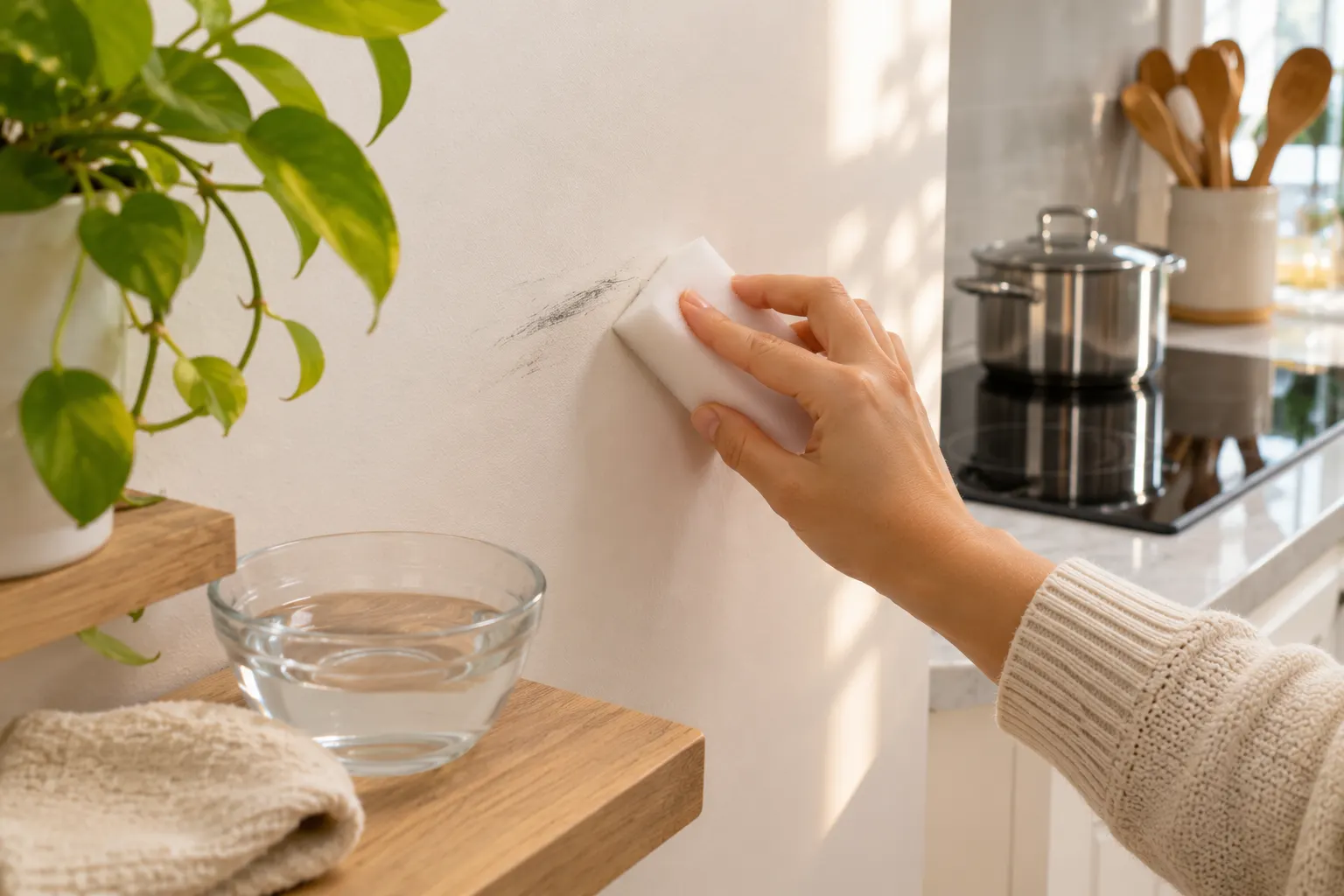
Wet Both Sides and Squeeze
Wet both sides of the eraser thoroughly with water, then squeeze out the excess. Mr. Clean's directions say squeezing activates the scrubbing power. Use water alone; do not add chlorine bleach or other household cleaners to it.
04
Step 4 of 7
Test a Small Hidden Area with Light Pressure
Pick an inconspicuous spot on the surface and rub gently with light pressure, as the package directs. Wipe it off and look at it in good light from several angles. Any dulling, change in sheen or fine scratching means the surface is too delicate for melamine foam.
05
Step 5 of 7
Clean Gently and Rinse
If the test spot looks unchanged, work on the mark with light pressure and stop as soon as it lifts. Extra scrubbing only removes more of the surface. Wipe the area with a damp cloth afterward, and always rinse surfaces that come into direct contact with food.
06
Step 6 of 7
Keep It Off Skin
Do not use a Magic Eraser to remove ink, paint or stains from hands or any other part of the body. The package warns that using it on skin will likely cause abrasions. Store it where children will not use it as a toy or a bath sponge.
07
Step 7 of 7
Rinse and Reuse, Then Replace
Rinse the eraser out and reuse it while it holds together; Mr. Clean's directions describe it as rinse-and-reuse. As it wears it sheds small particles, which McGill notes can end up in drains, so throw a crumbling eraser in the trash rather than rinsing the last pieces down the sink.
If that didn’t work
Stubborn or set-in? Try these next, in order.
AIf the test spot turned dull or hazy, stop. The eraser has abraded the finish, and more scrubbing will widen the damaged patch. Check the surface maker's care guide for how to restore that finish.
BIf the mark did not lift with light pressure, do not press harder on a glossy or coated surface. Switch to the cleaner the surface manufacturer recommends.
CIf someone rubbed their skin with an eraser and it is sore or broken, stop and wash the area gently with water; for anything more than a minor scrape, contact a doctor.
Common questions
Can you use a Magic Eraser on stainless steel appliances?
No. The Mr. Clean package lists stainless steel appliances among the surfaces it is not recommended for, along with brushed and polished finishes. Our guide to cleaning stainless steel appliances without streaks covers the soap-and-water method appliance makers recommend.
Is it safe to use a Magic Eraser on a car?
Not on the paint. The package lists vehicle body as a not-recommended surface, and McGill University's Office for Science and Society notes the foam can scratch a car's surface because it cleans by abrasion.
Can you use a Magic Eraser on your skin?
No. The package warns against using it on skin or any part of the body and says doing so will likely cause abrasions. Melamine foam works like a very fine sandpaper.
Can you use a Magic Eraser with bleach?
No. The Mr. Clean package says not to use it with chlorine bleach or other household cleaners. Wet it with water only.
Will a Magic Eraser scratch granite, marble or a glossy countertop?
It can. McGill's Office for Science and Society lists marble counters among surfaces melamine foam can scratch, and the package rules out high-gloss and polished surfaces. Test a hidden spot with light pressure, and if there is any change in shine, use the cleaner your countertop maker recommends.
Sources we relied on
1.Mr. Clean Magic Eraser Whole Home Extra Durable Sponges (package directions and warnings) — Procter & Gamble product label, as published by Hannaford. Test a small area with light pressure before use; not recommended for high gloss, polished, dark, brushed, satin, faux, bare or polished wood, copper, stainless steel appliances, non-stick coating or vehicle body; do not use with chlorine bleach or other household cleaners; rinse required for surfaces in direct contact with food; do not use on skin, which will likely cause abrasions.
2.Magic Eraser Sponge Whole Home Extra Durable — Mr. Clean (Procter & Gamble). Directions: wet both sides of the eraser thoroughly, squeeze to activate scrubbing power, erase everyday messes, then rinse and reuse.
3.Is There Really Magic in the Magic Eraser? — McGill University Office for Science and Society. Melamine foam cleans purely physically: rubbing breaks the polymer into very hard microscopic particles, a very fine sandpaper effect, which can scratch electronic screens, marble counters, non-stick pots and car surfaces; worn particles can end up in drains.