Mineral rings need an acid, not bleach. How to lower the water so the cleaner reaches the ring, which tools are safe on the glaze, how long to leave it, and why the acid cleaner must never meet bleach.
Acidic lime and rust or hard-water toilet bowl cleaner (check that the label says it is acidic or for lime scale)
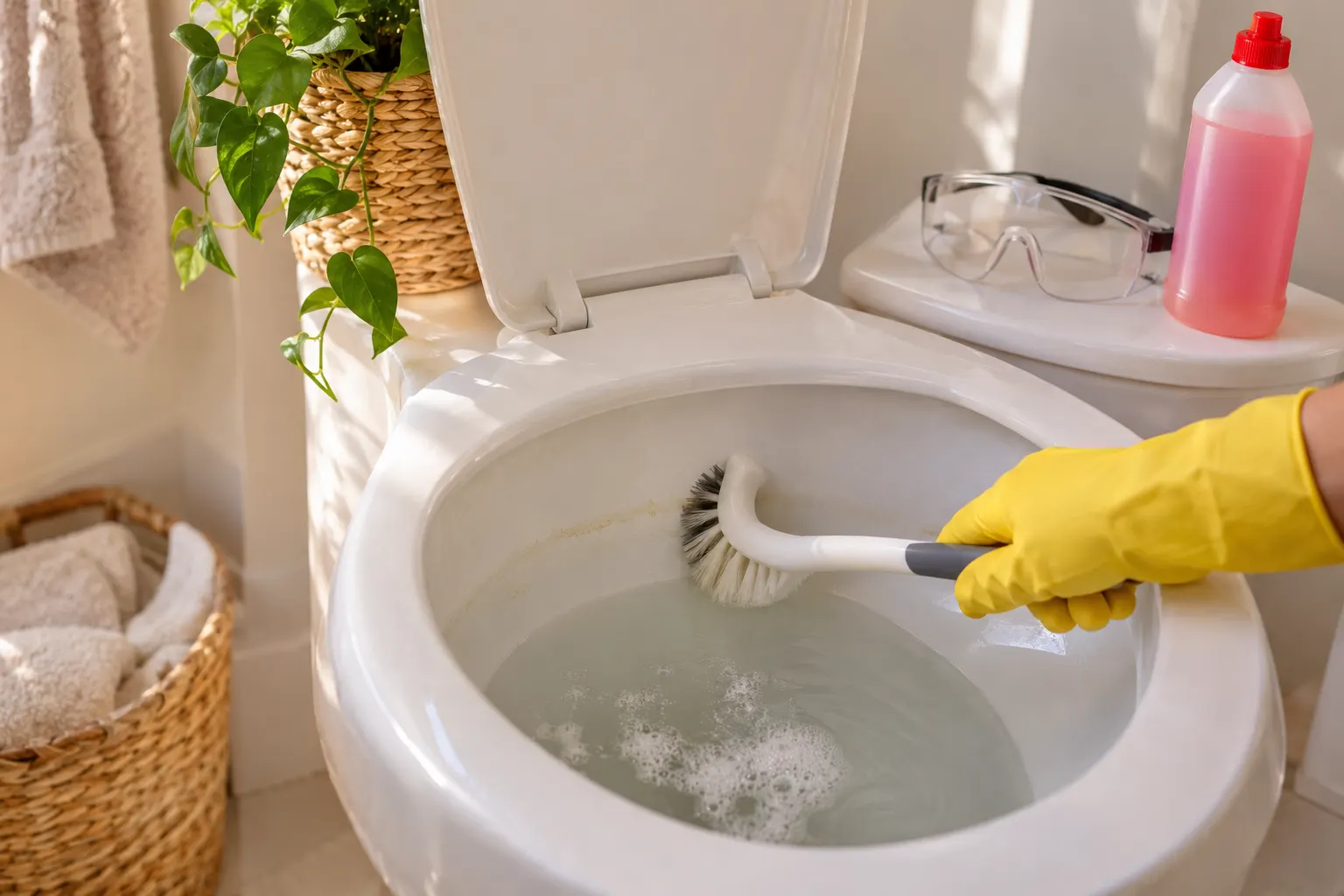
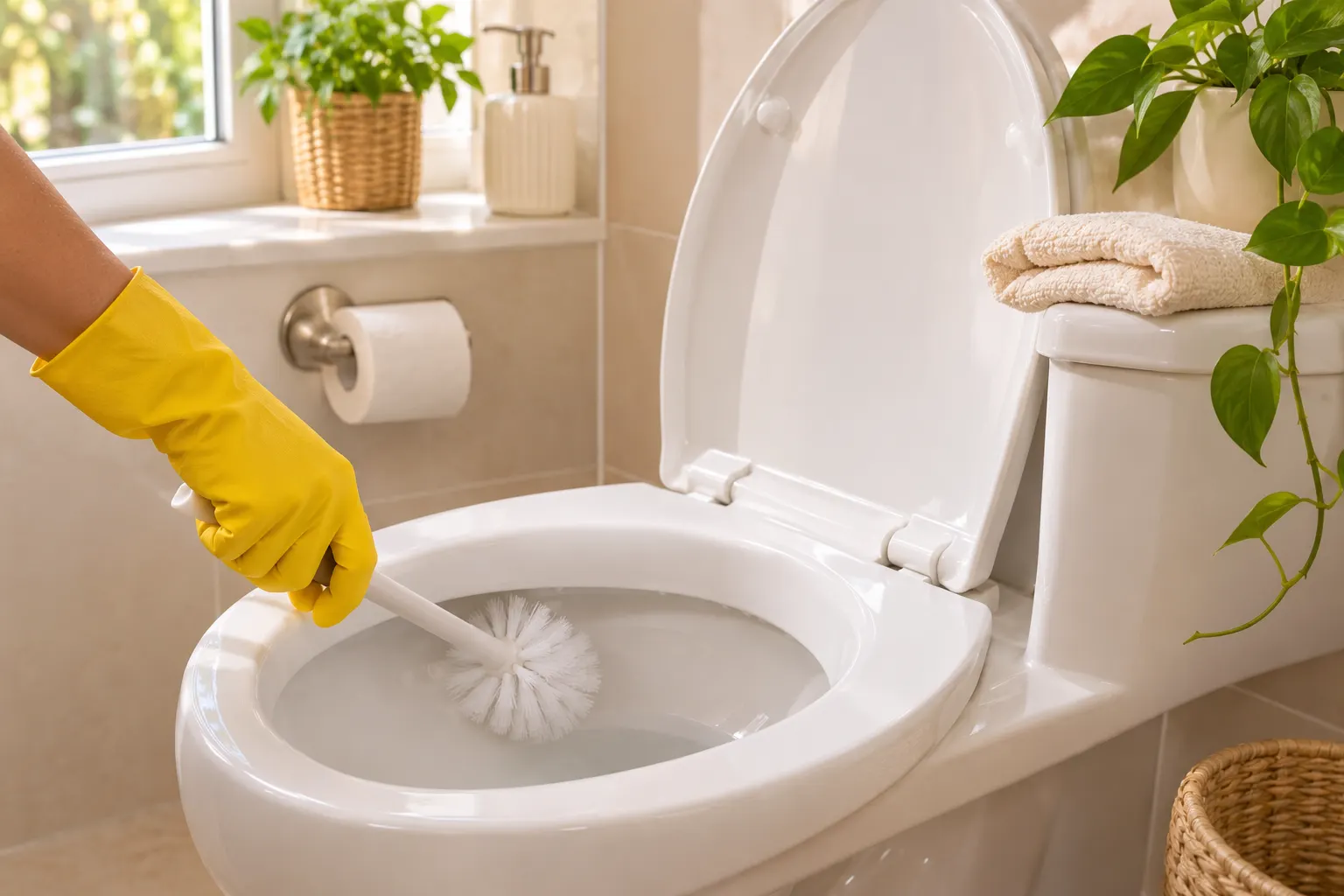
Toilet brush with nylon bristles, ideally with an angled head
Rubber gloves
Safety glasses
Optional: CLR Calcium, Lime and Rust Remover, diluted 1 to 1 with warm water, only on a plain white glazed bowl
Optional for grey metal marks only: a ceramic polishing pad or mild abrasive cleaner, as TOTO suggests
Step by step
01
Step 1 of 7
Confirm It Is a Mineral Ring and Pick One Cleaner
A chalky white, brown or orange ring at the waterline that bleach does not shift is lime scale, mineral or rust buildup. Choose a single acidic lime and rust toilet cleaner and read its label for the contact time. If anything containing bleach has been in the bowl recently, flush first so nothing is left to mix.
02
Step 2 of 7
Glove Up and Ventilate
Put on rubber gloves and safety glasses, open a window or turn on the exhaust fan, and keep children and pets out of the bathroom while you work.
03
Step 3 of 7
Lower the Water Below the Ring
Turn off the water supply valve behind the toilet, then flush to drain as much water from the bowl as possible. With the ring exposed and dry, the cleaner stays concentrated on the stain instead of being diluted by the water in the bowl.
04
Step 4 of 7
Coat the Ring with the Acidic Cleaner
Aim the nozzle under and around the rim and onto the ring itself so the cleaner coats the whole stained band. If you use CLR instead, mix equal parts CLR and warm water, apply it only to a standard white glazed bowl and rinse within two minutes; CLR says not to use it on coated or metallic glazed surfaces and that it may etch older fixtures.
05
Step 5 of 7
Scrub with a Non-Scratch Brush
Scrub the ring firmly with the toilet brush, working along the waterline and up under the rim. Stick to a nylon toilet brush rather than metal or harsh abrasive tools, which can scratch the glaze and leave a rough patch that stains faster.
06
Step 6 of 7
Wait the Label Time, Then Flush
Leave the cleaner on only for the time on its label, for example 5 minutes for Clorox Toilet Bowl Cleaner with Lime and Rust Destroyer, and no longer. Turn the water supply back on and flush to rinse the bowl thoroughly.
07
Step 7 of 7
Repeat Instead of Escalating
If a faint ring remains, repeat the treatment once more on the dry ring rather than reaching for a stronger chemical or a scraper. Wash your hands when you finish and store the acidic cleaner away from bleach products.
If that didn’t work
Stubborn or set-in? Try these next, in order.
AIf grey or black streaks remain after the ring is gone, they may be metal marks rather than minerals. TOTO says these can be gently rubbed off with a ceramic polishing pad or a mild commercial abrasive cleaner; check your own toilet maker's care guide first.
BIf the bowl surface has turned rough from heavy buildup, TOTO notes that vinegar or CLR mineral remover may be used, strictly as directed on the product packaging, followed by a thorough rinse.
CIf the ring returns within days, the water supply is likely very hard. Treat the bowl more often at the waterline, and consider asking a water treatment specialist about softening the supply.
Common questions
Why won't bleach remove the ring in my toilet?
Clorox explains that its regular bleach is alkaline, while hard water stains, lime scale and rust need an acidic cleaner. Use an acidic lime and rust toilet bowl cleaner instead, and never combine it with bleach in the same bowl.
Can I use a pumice stone on a toilet ring?
Many people do, but none of the toilet manufacturer care pages we checked approve pumice, and TOTO recommends non-abrasive cleaners for ceramic bowls. Try an acidic cleaner on a drained, dry ring first, and use pumice only if your toilet's manual explicitly allows it.
Is CLR safe to use in a toilet bowl?
TOTO lists CLR mineral remover as an option for heavy buildup, used only as directed on the packaging. CLR says to dilute its Calcium, Lime and Rust Remover with an equal amount of warm water, leave it on no longer than two minutes, avoid coated or metallic glazed surfaces, and never mix it with bleach or other cleaners.
How do I get the water out of the toilet bowl to clean a ring?
Turn off the water supply valve behind the toilet, then flush. Most of the water drains out of the bowl, so you can apply cleaner directly to the dry ring. Turn the valve back on when you are ready to rinse.
What happens if you mix toilet bowl cleaner and bleach?
Poison Control warns that mixing an acid toilet bowl cleaner with bleach forms irritating chlorine fumes that can cause serious breathing problems. Leave the room, get fresh air and call Poison Control at 1-800-222-1222 if anyone has symptoms.
Sources we relied on
1.How to Remove Hard Water Stains from Toilet — Clorox. Regular bleach is alkaline and will not remove hard water stains, which need an acidic cleaner; flush, apply the lime and rust cleaner under the rim, scrub, wait 5 minutes and flush; for tough stains turn off the water and flush to drain the bowl first; wear gloves and safety glasses and never mix the cleaner with bleach.
2.Product FAQ — TOTO USA. TOTO recommends non-corrosive, non-abrasive gel cleaners, dish soap or cleaning vinegar for ceramic bowls, warns not to leave chemical cleaners on ceramic for extended periods, says vinegar or CLR may be used for heavy buildup as directed, and says metal marks can be rubbed off with a ceramic polishing pad or mild abrasive cleaner.
3.CLR Calcium, Lime & Rust Remover FAQs — CLR Brands. Mix equal amounts of Calcium, Lime and Rust Remover and warm water in a well-ventilated area, never leave it on a surface longer than two minutes, avoid painted, coated, sealed or metallic glazed surfaces, note it may etch older sinks, tubs and tiles, and never mix it with other household cleaners or bleach.
4.Spring Cleaning — Poison Control (National Capital Poison Center). Toilet bowl cleaners are among strongly acidic cleaners that can injure skin, eyes and lungs; mixing an acid toilet bowl cleaner with bleach forms irritating chlorine fumes that might cause serious breathing problems; ventilate the work area and call 1-800-222-1222 for help.