Gloves on, solids off, then extract, blot and rinse before stomach acid and food dyes set. What to do about dried vomit, wool carpet, odor in the pad, and a stomach bug in the house.
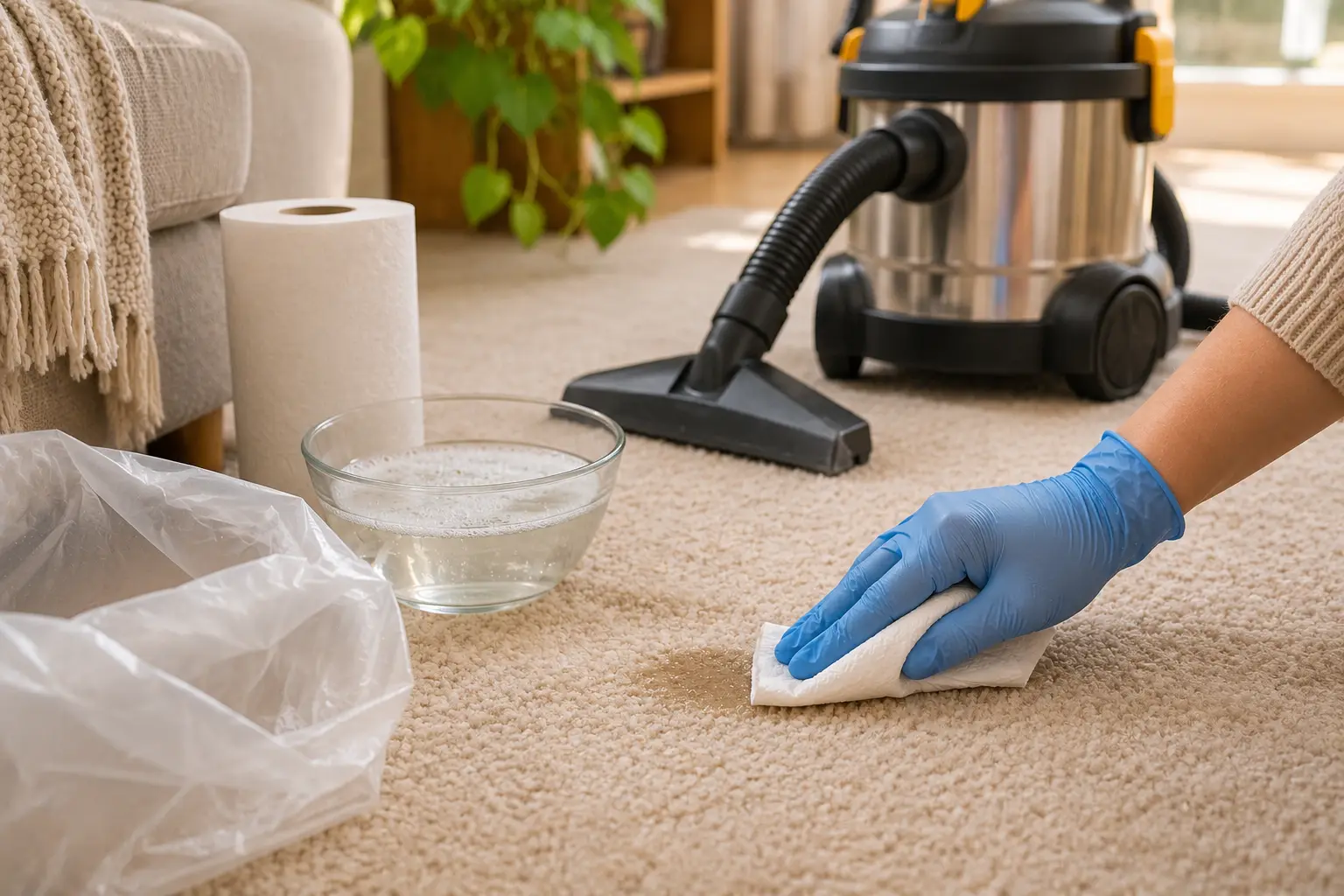
Paper towels, a rounded spoon or dustpan, and a plastic trash bag
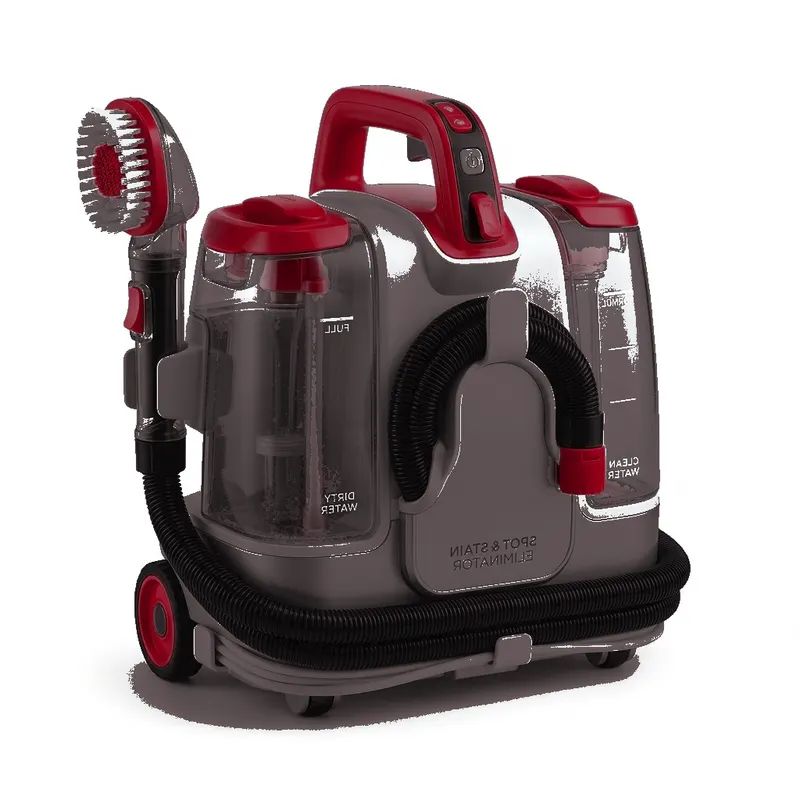
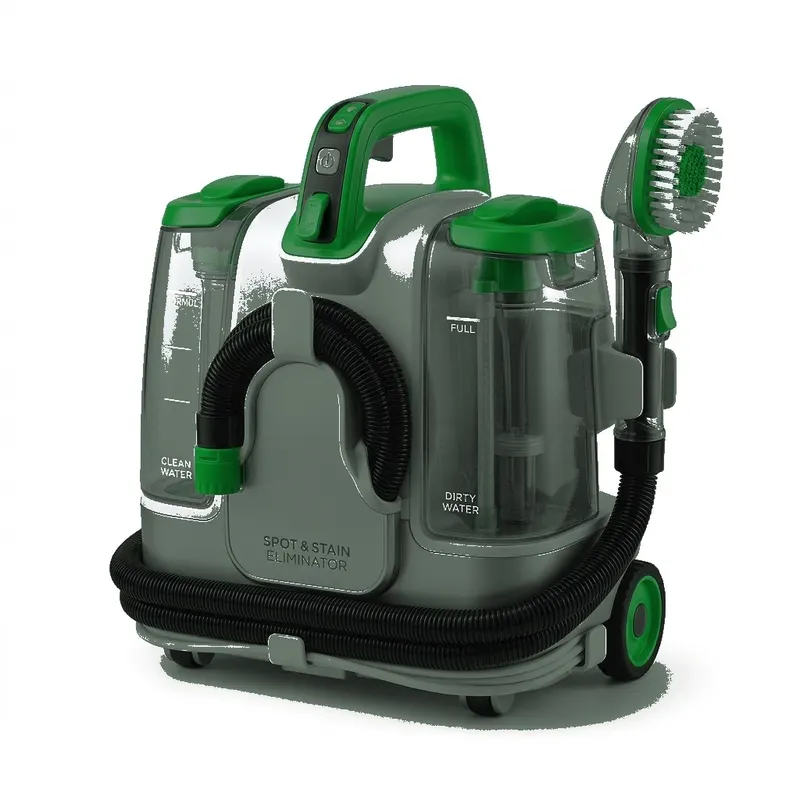
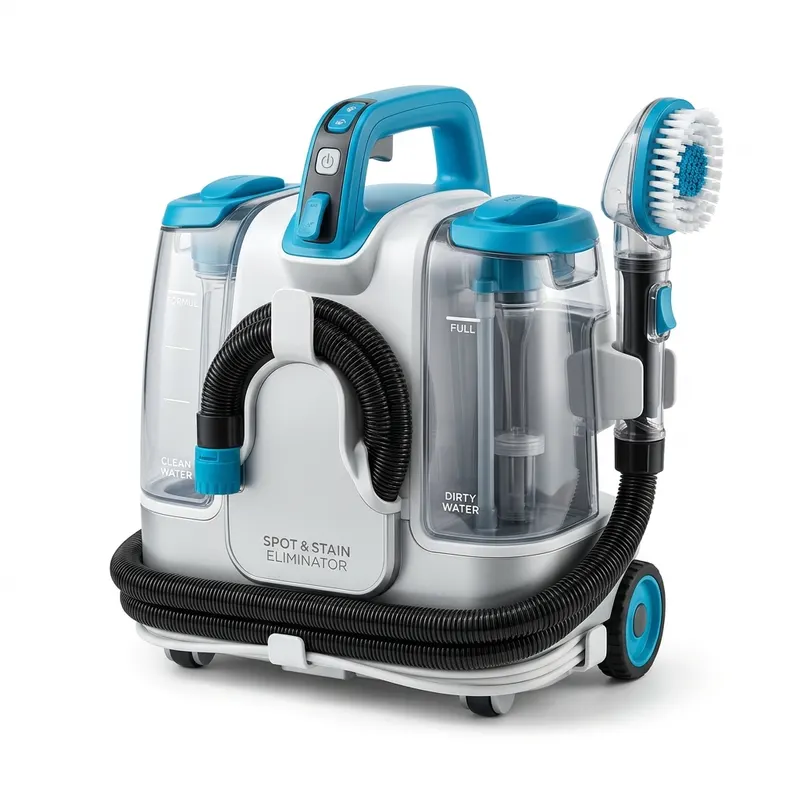
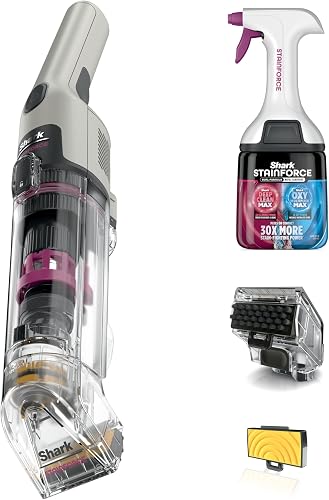
Wet/dry vacuum or portable spot cleaner such as the Bissell SpotClean Pro (optional but best)
White microfiber cloths
Spray bottle with 1 cup lukewarm water and a few drops (no more than 1/4 teaspoon) of clear dish soap
Fresh 3% hydrogen peroxide (synthetic carpet only, after a hidden-spot test)
6 to 10 layers of white paper towel, a plastic bag and a few heavy books
Step by step
01
Step 1 of 6
Glove up and remove the solids
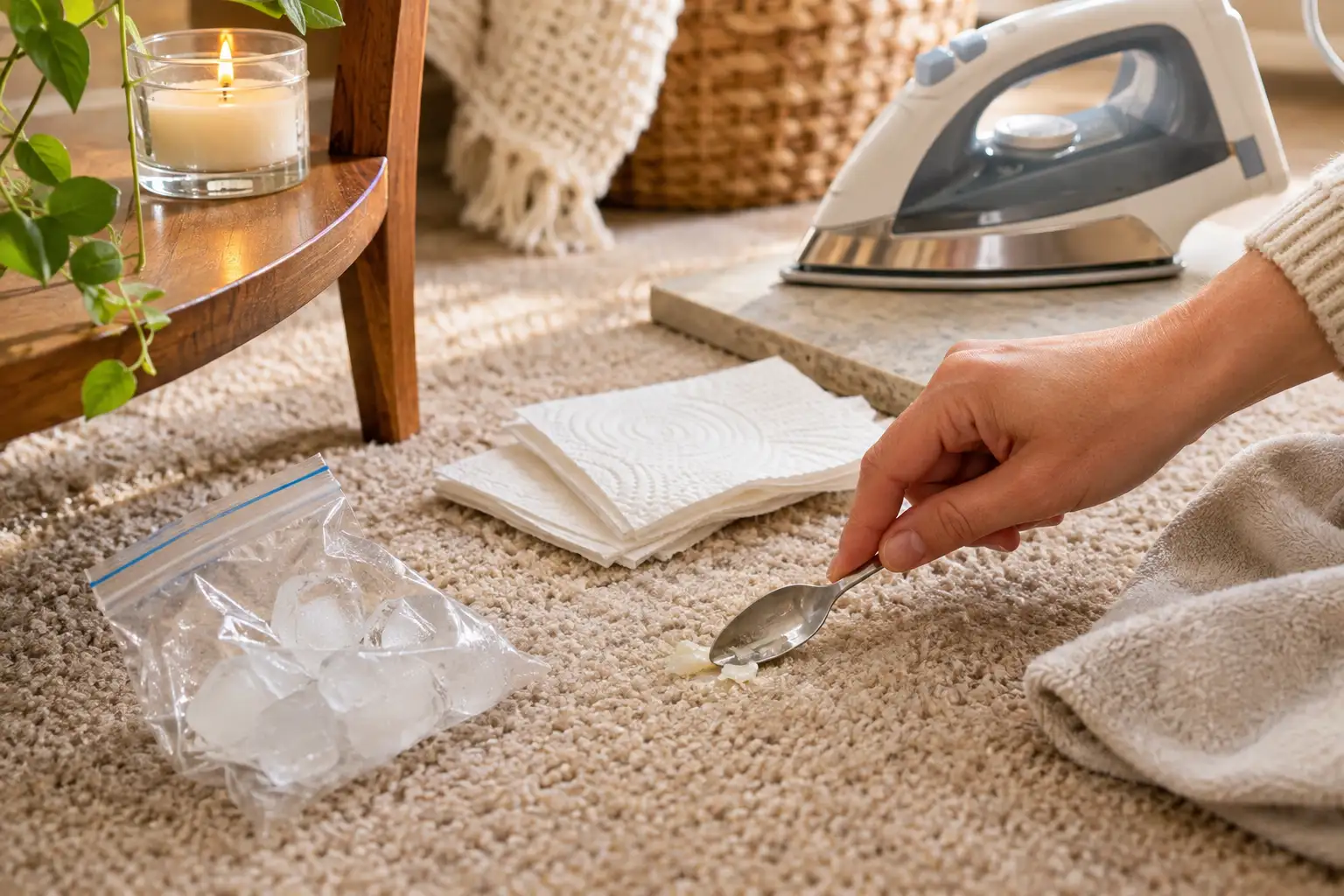
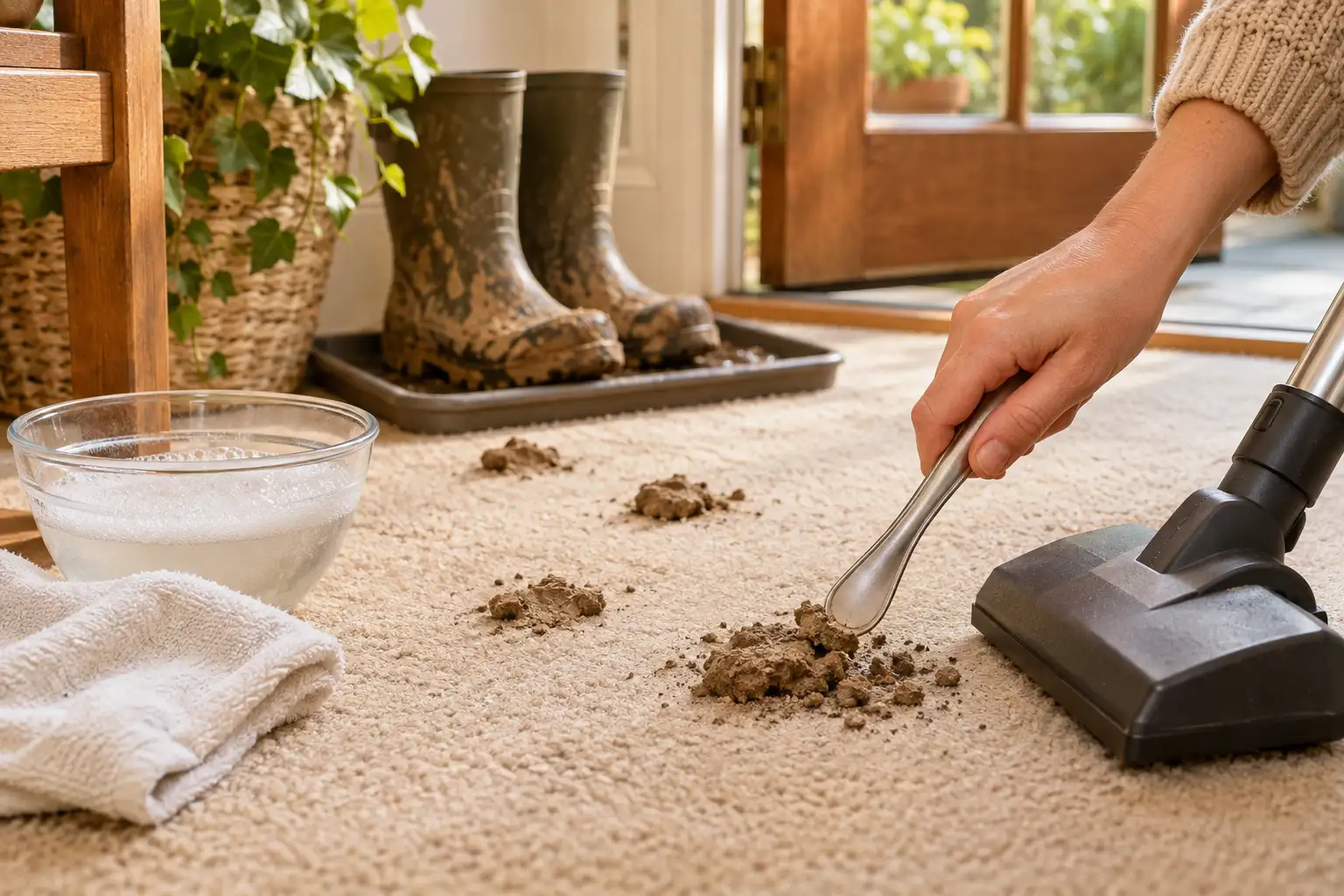
Put on gloves and open a window. Scoop up solid matter with stiff paper towels, a rounded spoon or a dustpan edge, lifting rather than pushing so you do not grind it into the pile. Seal everything in a plastic trash bag.
02
Step 2 of 6
Extract the liquid
Use a wet/dry vacuum or a portable spot cleaner on suction only to pull as much liquid as possible out of the pile before you add any cleaner. No machine? Press a thick stack of dry white paper towels onto the spot and lift straight up, changing towels until they come up nearly dry.
03
Step 3 of 6
Blot with plain water
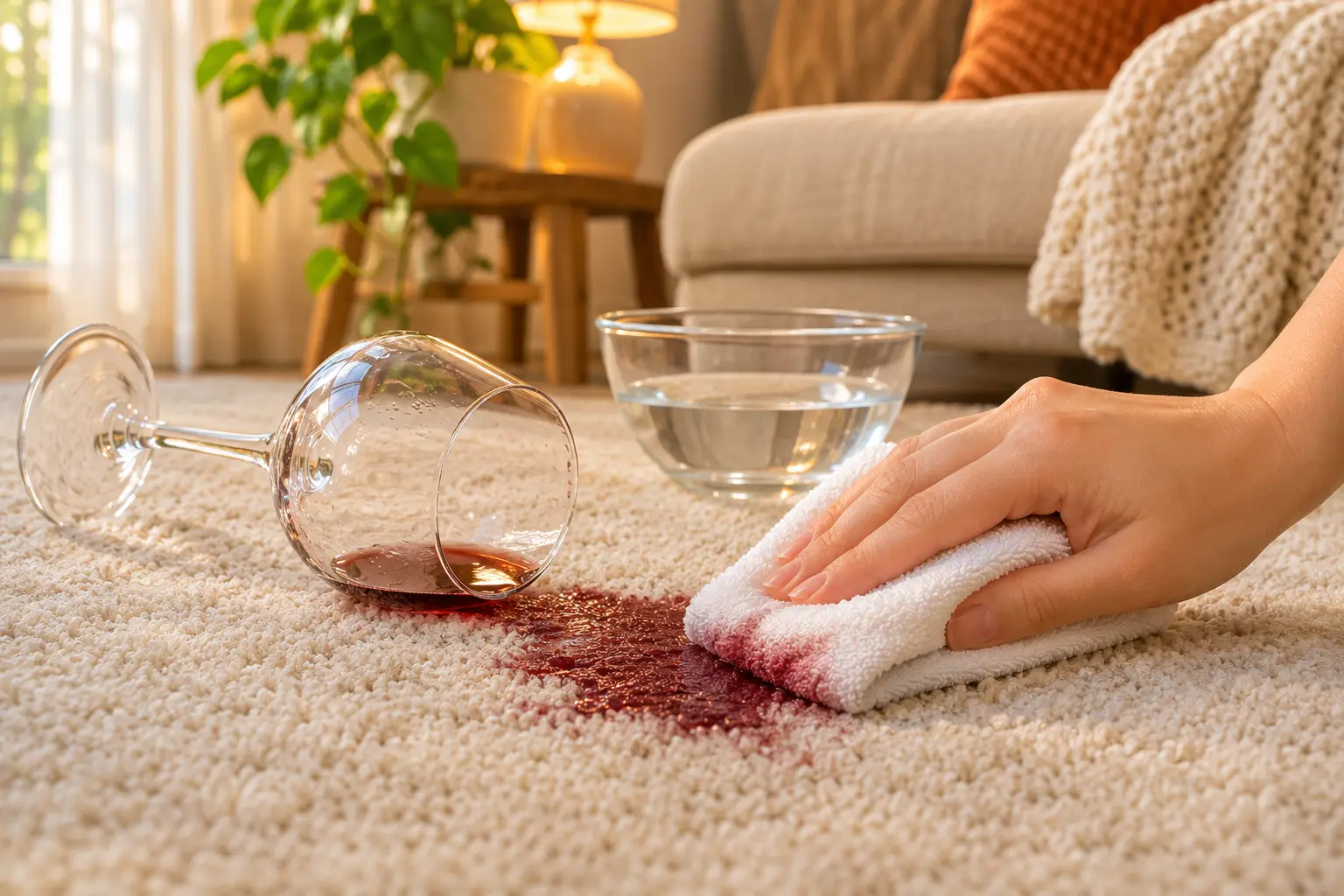
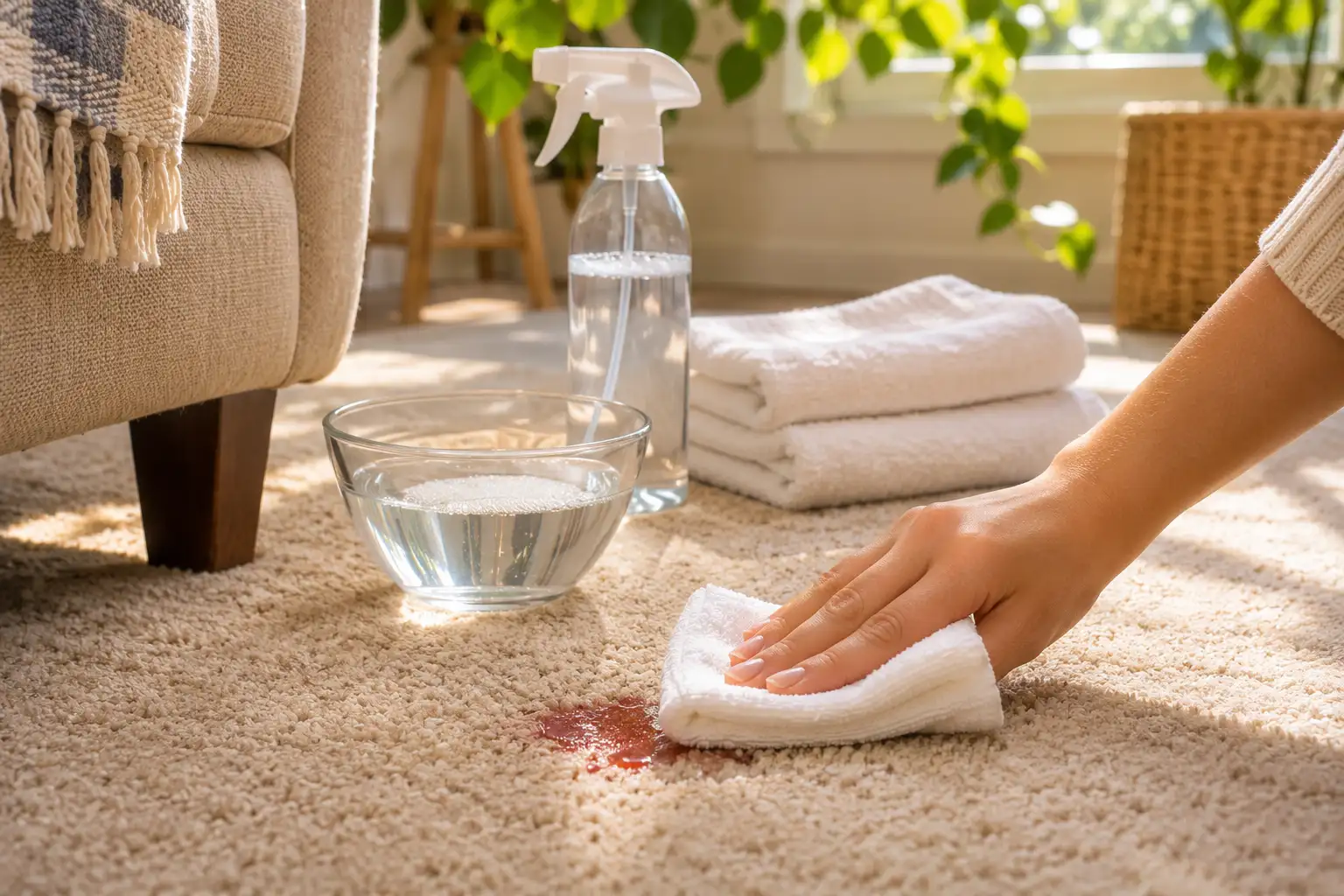
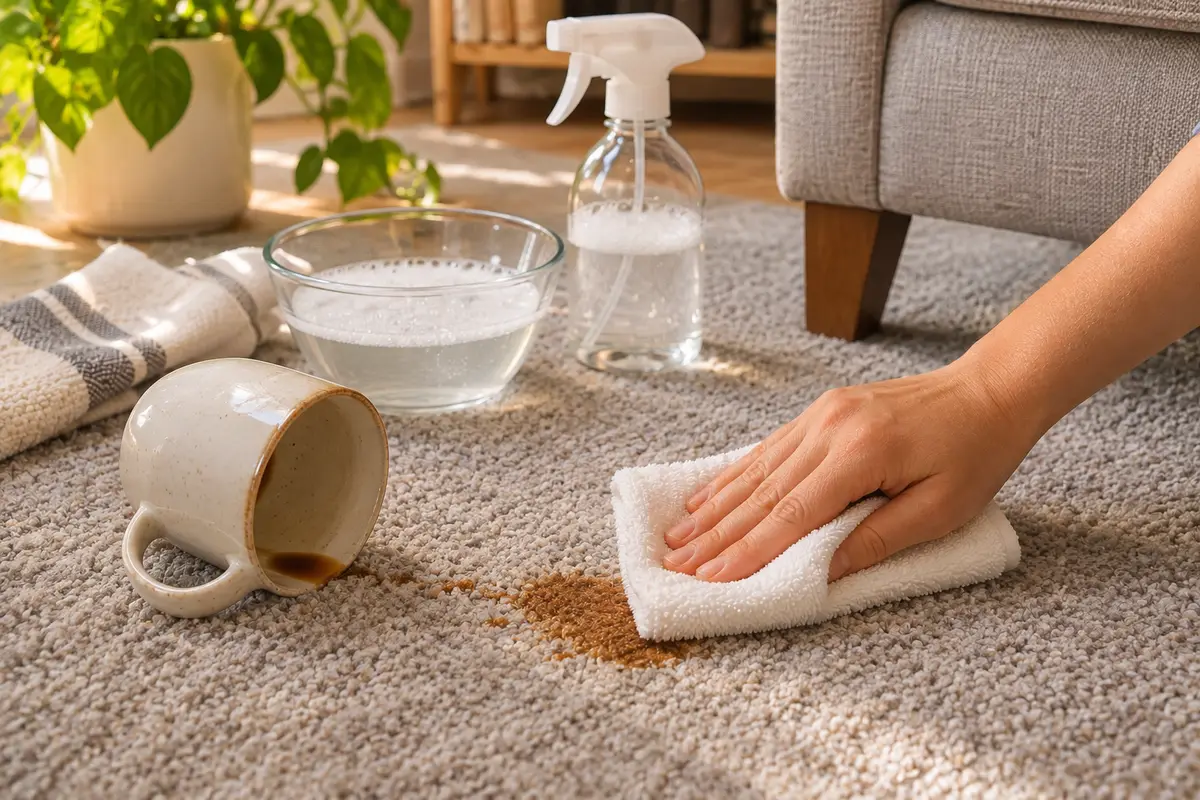
Dampen a microfiber cloth with lukewarm water, wring it out, and blot from the edges of the spot toward the center. Do not rub. Keep blotting while color or residue is still transferring to the cloth.
04
Step 4 of 6
Mist the weak dish-soap solution and blot
Spray a light mist of the dish-soap solution (a few drops, never more than 1/4 teaspoon, per cup of water) onto the area. Wait a few minutes, then blot with a dry cloth. Repeat mist and blot until the stain stops transferring.
05
Step 5 of 6
Fade leftover color, then rinse
If a yellow or orange tint remains on nylon or polyester, test fresh 3% hydrogen peroxide on a hidden spot, then apply it to the stain and leave it on; it can take a few hours or a couple of applications. Once no stain is visible, rinse with clear water, misting and blotting two or three times, or run a spot cleaner with clear water only.
06
Step 6 of 6
Dry under weighted towels
Cover the spot with 6 to 10 layers of white paper towel or a folded white terry towel, lay a plastic bag on top, and weigh it down with a few books for 6 to 8 hours, swapping towels whenever they show color. Then remove your gloves, wash your hands with soap and water, and wash any cloth towels in hot water.
If that didn’t work
Stubborn or set-in? Try these next, in order.
AFor dried vomit, gently break up and lift the crust, then extract with a wet/dry vacuum, and rehydrate the stain with a water-dampened cloth for a few minutes before working through steps 3 to 6. Old stains may need several rounds.
BIf a sour smell comes back after the carpet dries, the liquid reached the pad. Pads and cushions can need subsurface treatment or replacement, which is a job for an IICRC-certified cleaner.
CIf someone in the home has a stomach bug, the spill was large, or the carpet is wool, call an IICRC-certified professional. Vomit is treated as potentially infectious, and professionals use protective procedures and equipment beyond regular cleaning.
Tools that help
You can do this with cloths and a spray bottle. These make it faster:
As an Amazon Associate, HouseCareWiki earns from qualifying purchases. It costs you nothing extra. How we make money
9.0/10HouseCareWiki rating 9.0 out of 10, research-based
Paid promotion: Shark pays HouseCareWiki a higher commission on this model through Amazon until December 19, 2026. Our notes and scores don’t change because of it.
8.1/10HouseCareWiki rating 8.1 out of 10, research-based
Paid promotion: Shark pays HouseCareWiki a higher commission on this model through Amazon until December 19, 2026. Our notes and scores don’t change because of it.
What is the first thing to do when someone throws up on the carpet?
Put on gloves, remove the solids, and pull out the liquid right away with a wet/dry vacuum, spot cleaner or thick paper towels. The longer vomit sits, the more its stomach acid and any food or medicine dyes can permanently stain the fibers and cause lingering odor.
Can I use bleach to disinfect vomit on carpet?
No. Chlorine bleach can permanently lighten or discolor carpet. Use the bleach dilution or an EPA-registered disinfectant labeled for norovirus on hard surfaces only, and for carpet after a stomach bug, clean thoroughly and consider an IICRC-certified cleaner.
How do you get dried vomit out of carpet?
Break up and lift the dried crust, extract loose material with a wet/dry vacuum, then rehydrate the spot with a damp cloth before misting the weak dish-soap solution and blotting. Rinse with clear water and dry under weighted paper towels. Expect to repeat the process.
How do I get the vomit smell out of carpet?
Odor usually means residue is still in the yarn base, backing or pad. Repeat the water and dish-soap blotting and rinse well, then dry under weighted towels so moisture is pulled up and out. If the smell persists after the carpet is dry, the pad likely needs professional subsurface treatment.
Sources we relied on
1.IICRC Consumer Floor and Furnishings Care Information (Tip Sheet: Carpet Topics) — Institute of Inspection, Cleaning and Restoration Certification (IICRC). Vomit section: vomit is considered pathogenic, its stomach acids and food or medicine dyes can permanently stain the longer it sits, pads may need subsurface treatment or disposal; extract with a wet/dry vacuum, remove solids, blot with water, mist a few drops of dish soap per cup, use 3% peroxide for residual color (not on wool without testing), rinse, and call an IICRC Certified cleaner if it fails; the general spotting section adds 6 to 10 layers of weighted towels for 6 to 8 hours.
2.Vomit - The Carpet and Rug Institute — The Carpet and Rug Institute (CRI). Act quickly, scrape semi-solids with a rounded spoon, blot with white cloths, pretest solutions, work from the edges inward without rubbing, use 1/4 teaspoon dish detergent per cup of lukewarm water (never stronger), rinse residue thoroughly, and consult a professional for stubborn spills.
3.How to Prevent Norovirus — U.S. Centers for Disease Control and Prevention (CDC). After vomiting, wear rubber or disposable gloves, wipe up with paper towels into a plastic trash bag, disinfect surfaces with 5 to 25 tablespoons of household bleach per gallon or an EPA-registered norovirus disinfectant left on at least 5 minutes, wash soiled laundry in hot water, and wash hands with soap and water.