A musty carpet is a moisture problem, not a fragrance problem. Find and fix the water source, dry the carpet and pad fast, then deodorize with baking soda and hot-water extraction. When the pad or the whole carpet has to go.
Hot-water extraction carpet cleaner, rented or professional
Gloves and a mask for handling damp, musty carpet
Step by step
01
Step 1 of 7
Find and Fix the Moisture Source
A musty smell means something is keeping the carpet damp: a plumbing leak, a pet water bowl, a wet basement slab, a window or door leak, condensation, or a past spill or flood that never dried. Check the pad and the floor underneath, not just the surface. Fix the water problem before cleaning anything, because EPA warns mold that is cleaned without fixing the moisture will most likely come back.
02
Step 2 of 7
Extract the Water
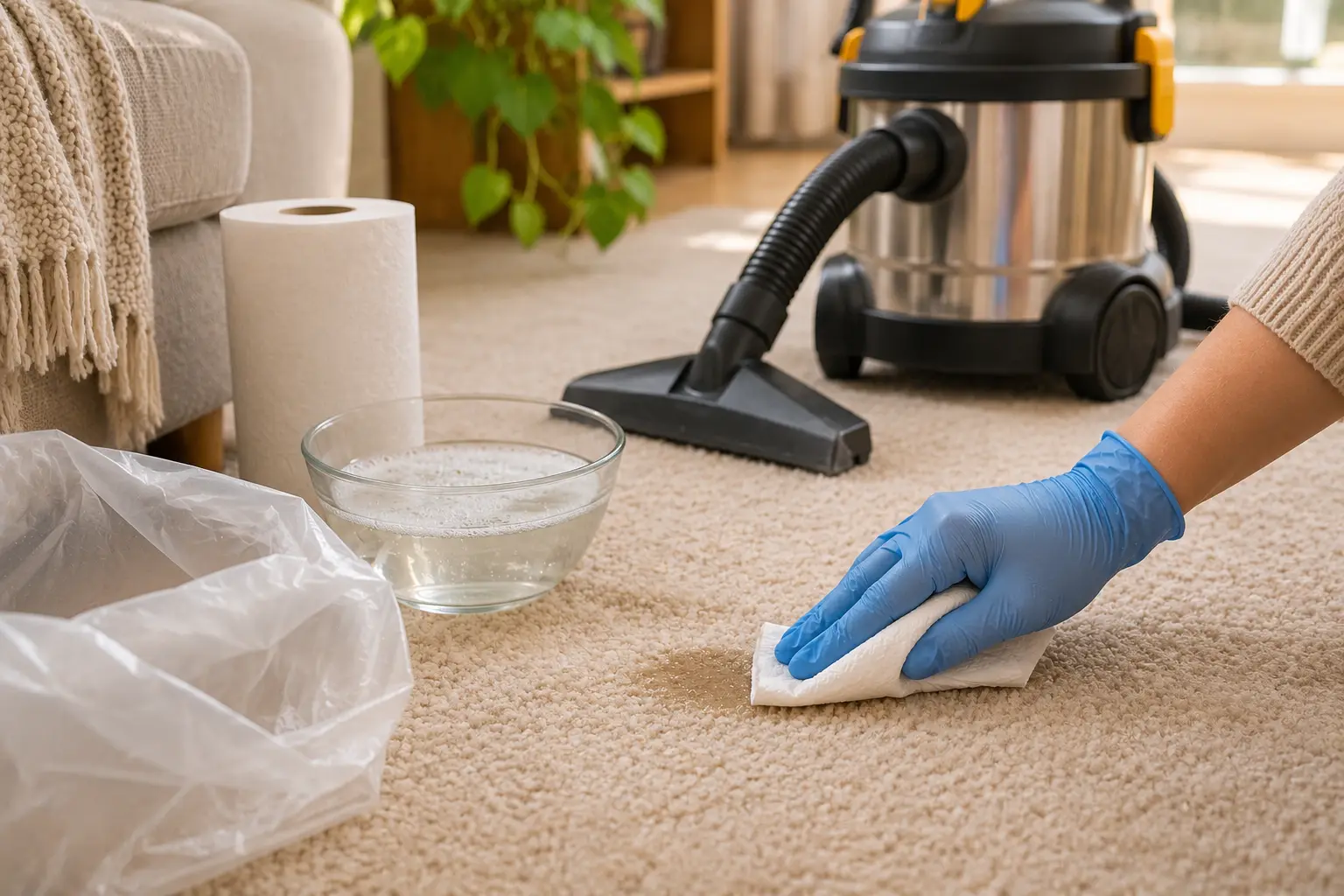
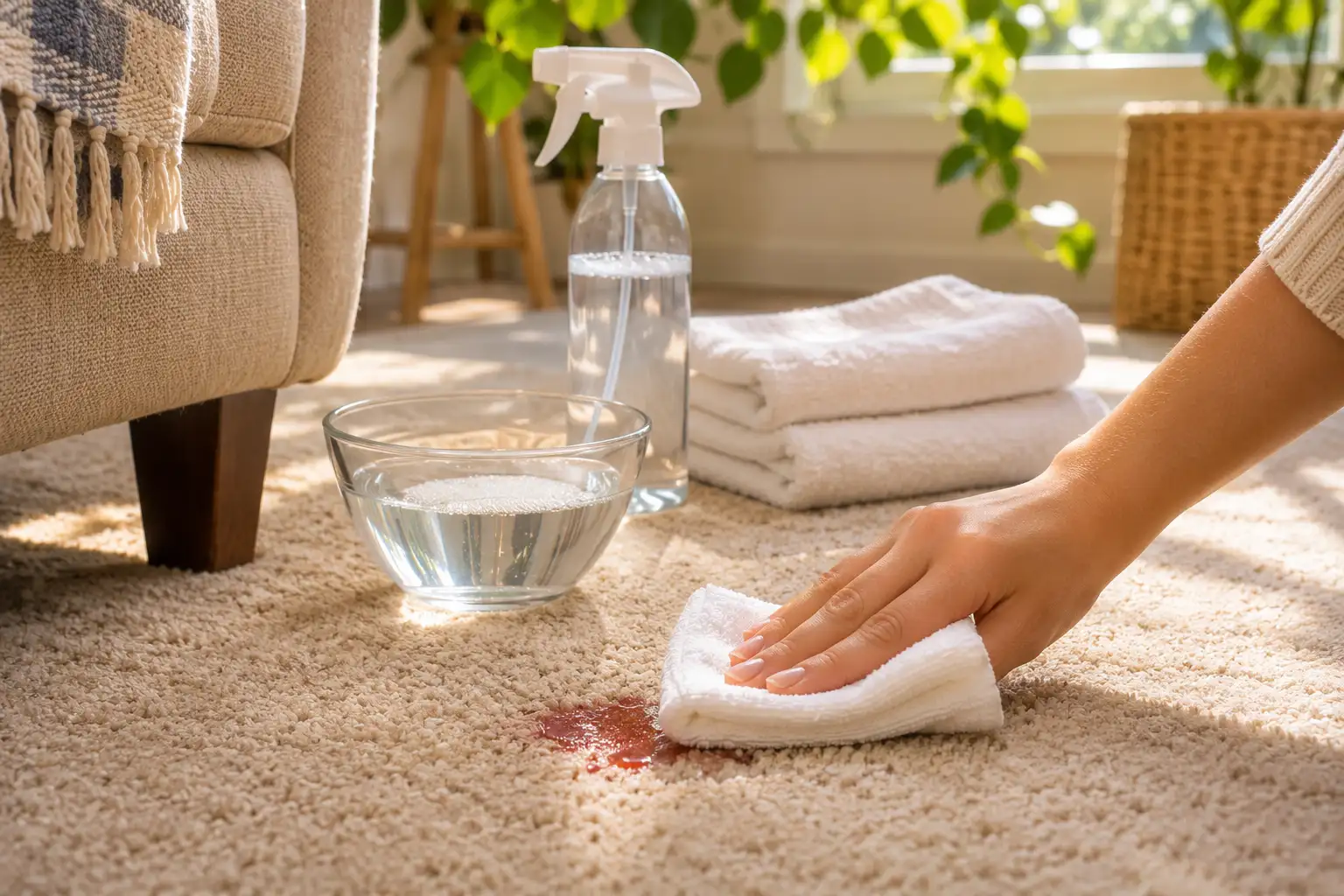
Go over the damp area slowly with a wet/dry vacuum until it stops pulling up water. If the carpet is soaked through, lift a corner and check the pad, since it holds far more water than the pile and can stay wet after the top feels dry.
03
Step 3 of 7
Dry Everything Within 24 to 48 Hours
Set fans to blow across the carpet and run a dehumidifier, keeping windows closed while it runs. EPA advises drying wet carpet and backing within 24 to 48 hours to prevent mold growth, and the subfloor underneath must be dried too.
04
Step 4 of 7
Bring Indoor Humidity Down
Use a hygrometer and keep indoor humidity below 60 percent, ideally between 30 and 50 percent, with a dehumidifier or air conditioner. Basements and closed-up rooms are the usual culprits for slow-building musty smells, so keep the dehumidifier running there after the carpet is dry.
05
Step 5 of 7
Deodorize with Baking Soda Overnight
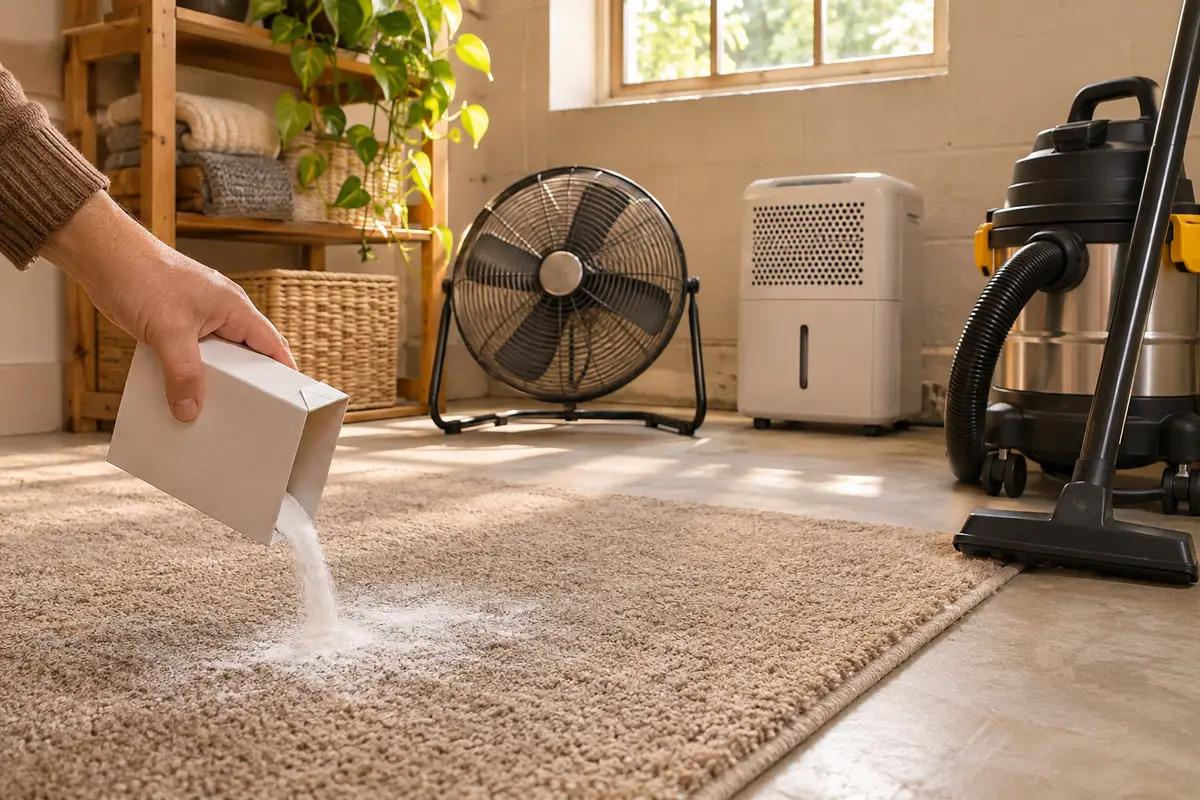
Only once the carpet is completely dry, vacuum it, then sprinkle baking soda over the area and work it into the pile with a broom or sponge mop. Leave it overnight. Vacuum thoroughly the next day, then vacuum a second time in a different direction to lift the rest of the powder.
06
Step 6 of 7
Deep Clean with Hot-Water Extraction
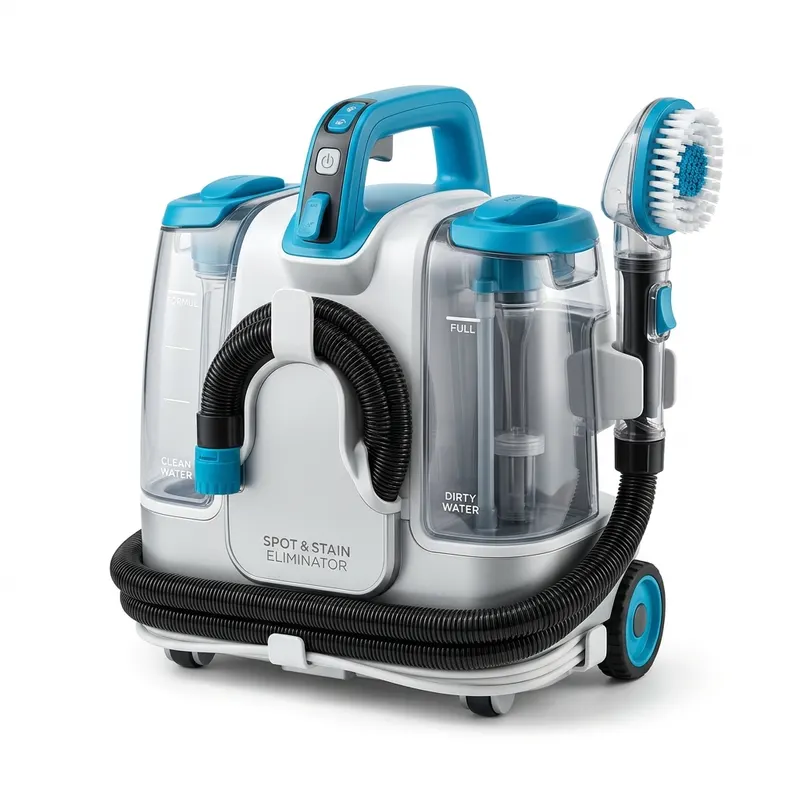
If odor remains, clean the carpet with hot-water extraction (often called steam cleaning), using a rental machine or a professional. Follow the machine and cleaning-solution labels, use as little solution as the label allows, and dry the carpet with fans and a dehumidifier afterward so the cleaning does not add new moisture.
07
Step 7 of 7
Decide Whether the Pad or Carpet Must Go
Replace the carpet if it was covered by sewage-contaminated water, if it shows visible mold, or if it stayed soaked for more than 24 hours after a flood. Carpet padding is nearly impossible to clean, so a pad that got soaked or smells musty should be replaced even when the carpet above it can be saved.
If that didn’t work
Stubborn or set-in? Try these next, in order.
AIf the musty smell comes back days after cleaning, moisture is still getting in or mold is hidden under the pad or in the subfloor. Pull back a corner, check the pad and floor, and look again for leaks or a damp slab.
BIf the carpet sits on a basement slab that stays damp, run a dehumidifier full time and confirm humidity stays below 60 percent. A carpet that keeps smelling in that spot may not be a good fit for the room.
CIf mold is visible over a large area, or the water was contaminated, call a professional water damage or mold remediation company rather than cleaning it yourself.
Tools that help
You can do this with cloths and a spray bottle. These make it faster:
As an Amazon Associate, HouseCareWiki earns from qualifying purchases. It costs you nothing extra. How we make money
9.0/10HouseCareWiki rating 9.0 out of 10, research-based
Paid promotion: Shark pays HouseCareWiki a higher commission on this model through Amazon until December 19, 2026. Our notes and scores don’t change because of it.
8.3/10HouseCareWiki rating 8.3 out of 10, research-based
Paid promotion: Shark pays HouseCareWiki a higher commission on this model through Amazon until December 19, 2026. Our notes and scores don’t change because of it.
Musty odor comes from moisture and the mold or mildew that grows when carpet, pad or the floor below stays damp. Common causes are leaks, spills or floods that never fully dried, damp basement slabs and high indoor humidity. A room that smells moldy without visible mold can mean hidden growth under the pad or behind walls.
Does baking soda get rid of musty smell in carpet?
Baking soda helps with lingering odor once the carpet is fully dry. Work it into the pile, leave it overnight and vacuum twice in different directions. It will not fix a carpet that is still damp or moldy; the moisture source has to be removed first or the smell returns.
How long does wet carpet take to get moldy?
EPA advises drying wet carpet and backing within 24 to 48 hours, and says that in most cases mold will not grow if damp items are dried within that window. After 48 hours, assume mold may have started and treat the carpet and pad more cautiously.
Can you save carpet that smells musty after water damage?
Often, if the water was clean and the carpet was dried quickly. The pad usually needs replacing because it is nearly impossible to clean. Carpet covered by sewage-contaminated water should be discarded, and NDSU Extension advises replacing carpet that was soaked for more than 24 hours by floodwater.
Should I use bleach on musty carpet?
No. Most modern carpet is nylon, and bleach is not recommended for it. Bleach also does nothing about the moisture that causes the smell. Dry the carpet, lower the humidity, deodorize with baking soda and use hot-water extraction instead.
Sources we relied on
1.A Brief Guide to Mold, Moisture and Your Home — U.S. Environmental Protection Agency. Clean up mold and fix the water problem or the mold will most likely return; dry water-damaged areas and items within 24 to 48 hours to prevent mold growth; keep indoor humidity below 60 percent, ideally 30 to 50 percent; absorbent materials such as carpet may have to be thrown away if they become moldy; a building that smells moldy without a visible source may have hidden mold; call a professional for damage from sewage or contaminated water.
2.Mold Remediation in Schools and Commercial Buildings Guide: Chapter 4 — U.S. Environmental Protection Agency. Table 1 lists carpet and backing to be dried within 24 to 48 hours by removing water with a water extraction vacuum, reducing ambient humidity with a dehumidifier and speeding drying with fans, and notes the subfloor under carpet must also be cleaned and dried.
3.Cleaning Flood-Damaged Carpets and Rugs — North Dakota State University Extension. Discard carpet covered by sewage-contaminated floodwater and replace carpet soaked more than 24 hours; padding is nearly impossible to clean and should be replaced; dry with a wet/dry vacuum, fans and a dehumidifier with windows closed; do not bleach nylon carpet; for musty smell, work baking soda in with a broom or sponge mop, leave overnight and vacuum twice in different directions; hot-water extraction is the preferred cleaning method.
4.Back to Basics: How to Keep Carpet Clean in Your Home — Carpet and Rug Institute. Vacuum at least once a week, more often in heavy-traffic areas, and deep clean every 12 to 18 months; hot-water extraction and steam cleaning are other names for deep cleaning.