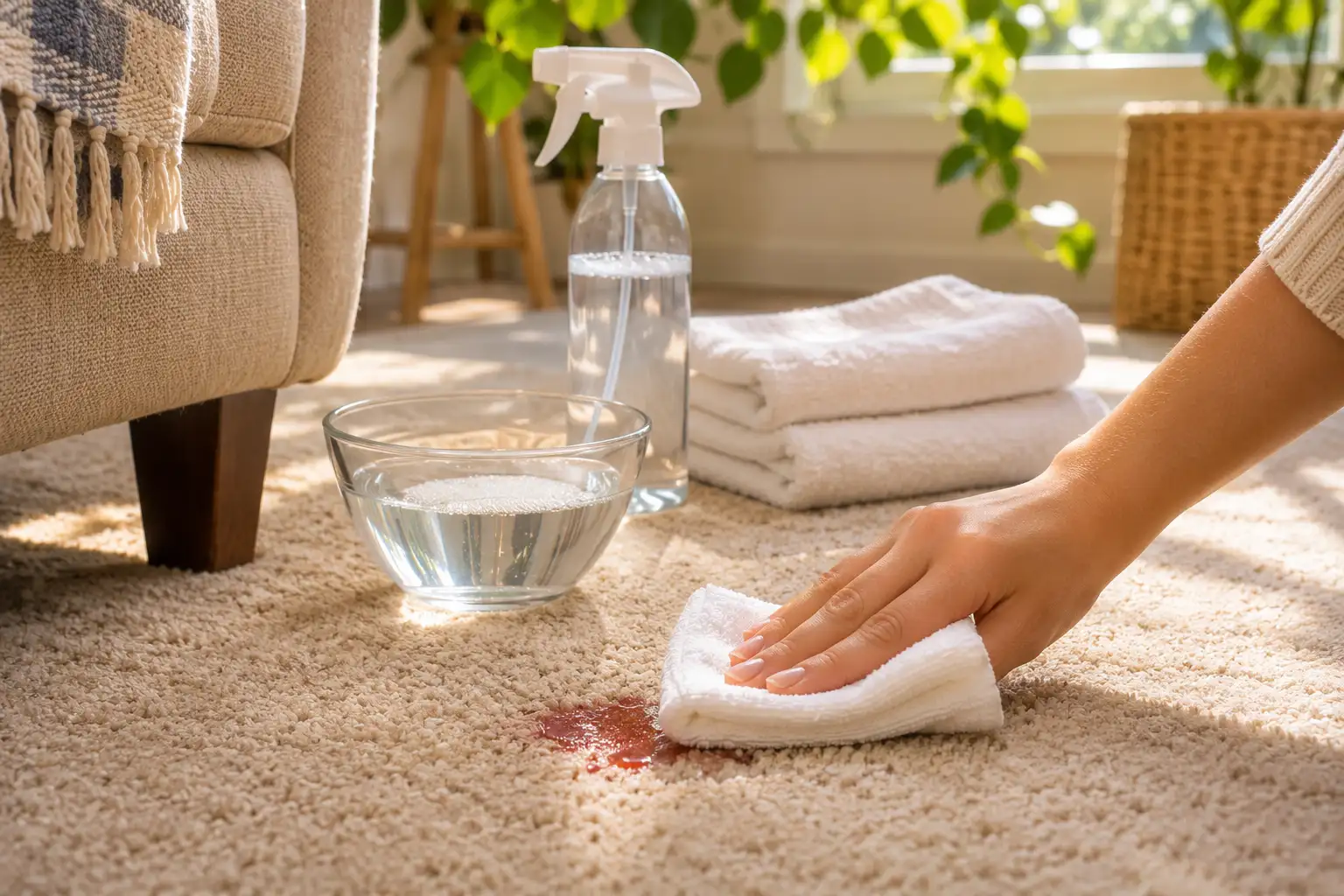
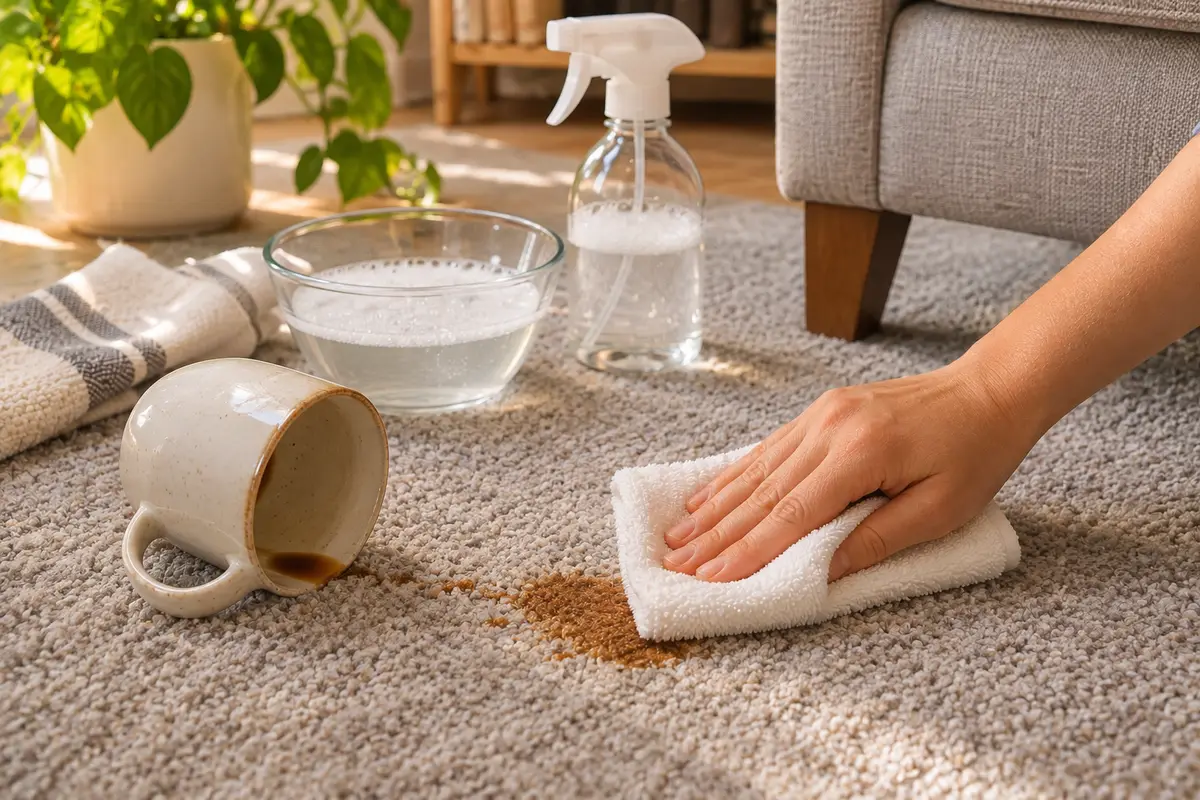
Let it dry, break it up and vacuum, then spot clean the leftover dirt with a weak dish-soap solution. Why wet mud should be left alone, how to rinse without soaking the pad, and what to do when the dirt mark comes back.
Butter knife handle or rounded spoon for breaking up dried mud
Clean white cloths or white paper towels
Clear liquid dish soap (no more than 1/4 teaspoon per cup of water)
Lukewarm tap water
Spray bottle or mist sprayer
Optional, synthetic carpet only after a hidden-spot test: fresh 3% hydrogen peroxide
Paper towels, a plastic bag and a few heavy books for drying
Step by step
01
Step 1 of 7
Leave Wet Mud Alone Until It Dries
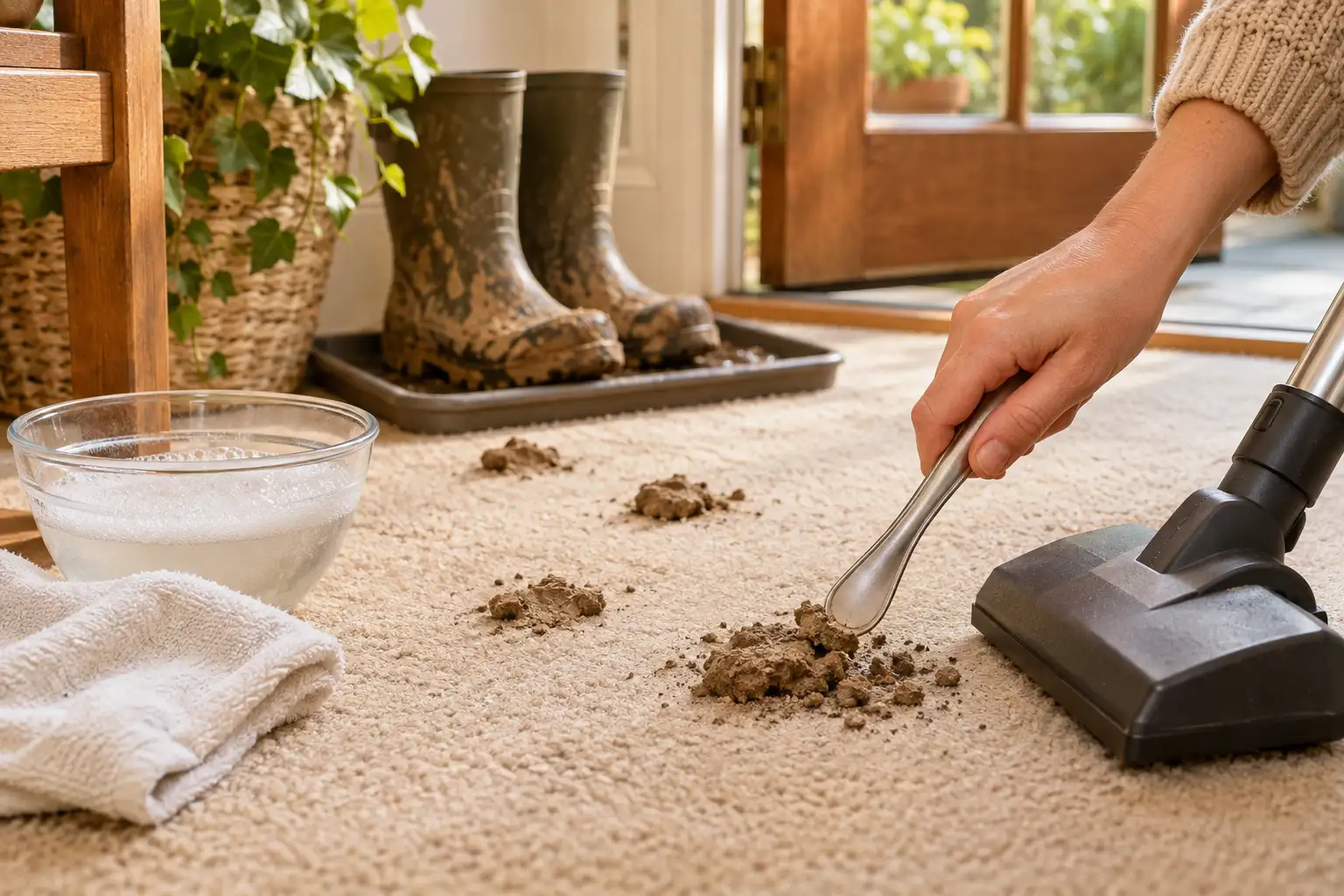
Resist the urge to wipe fresh mud. Let it dry completely so it turns into loose dirt you can lift out, rather than a paste you smear deeper into the pile. If there are large wet clumps on top, you can gently lift them off with a spoon without pressing down.
02
Step 2 of 7
Break Up the Dried Mud
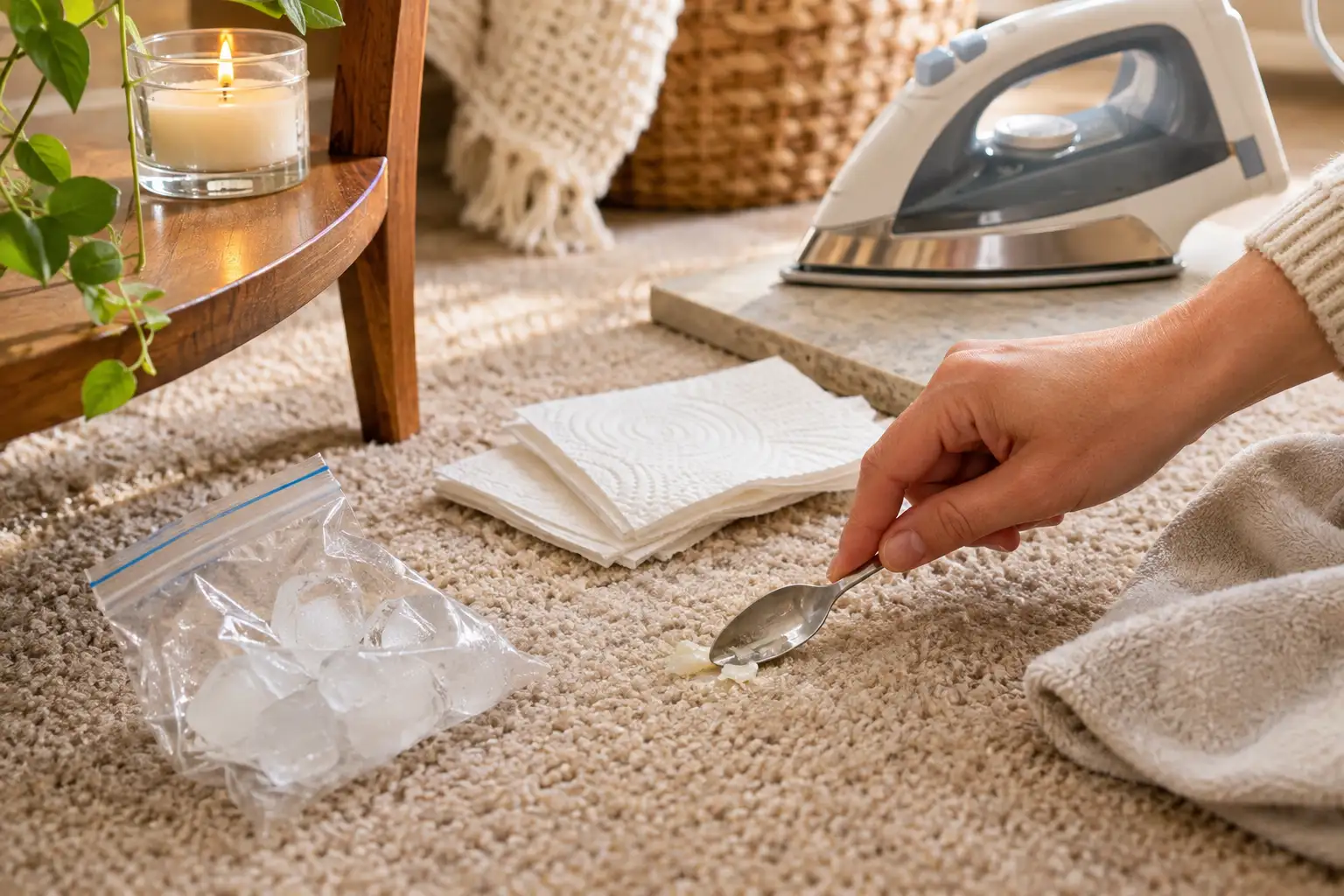
Once it is fully dry, shatter the crust by tapping it with the handle of a butter knife, or crumble it with a spoon. The goal is to turn the clumps into small, loose particles that a vacuum can pull out.
03
Step 3 of 7
Vacuum Thoroughly from Several Directions
Vacuum the area slowly, passing over it from three or more directions so the brush roll and suction reach dirt lodged at the base of the yarns. Keep going until no more grit comes up.
04
Step 4 of 7
Pretest a Weak Dish-Soap Solution
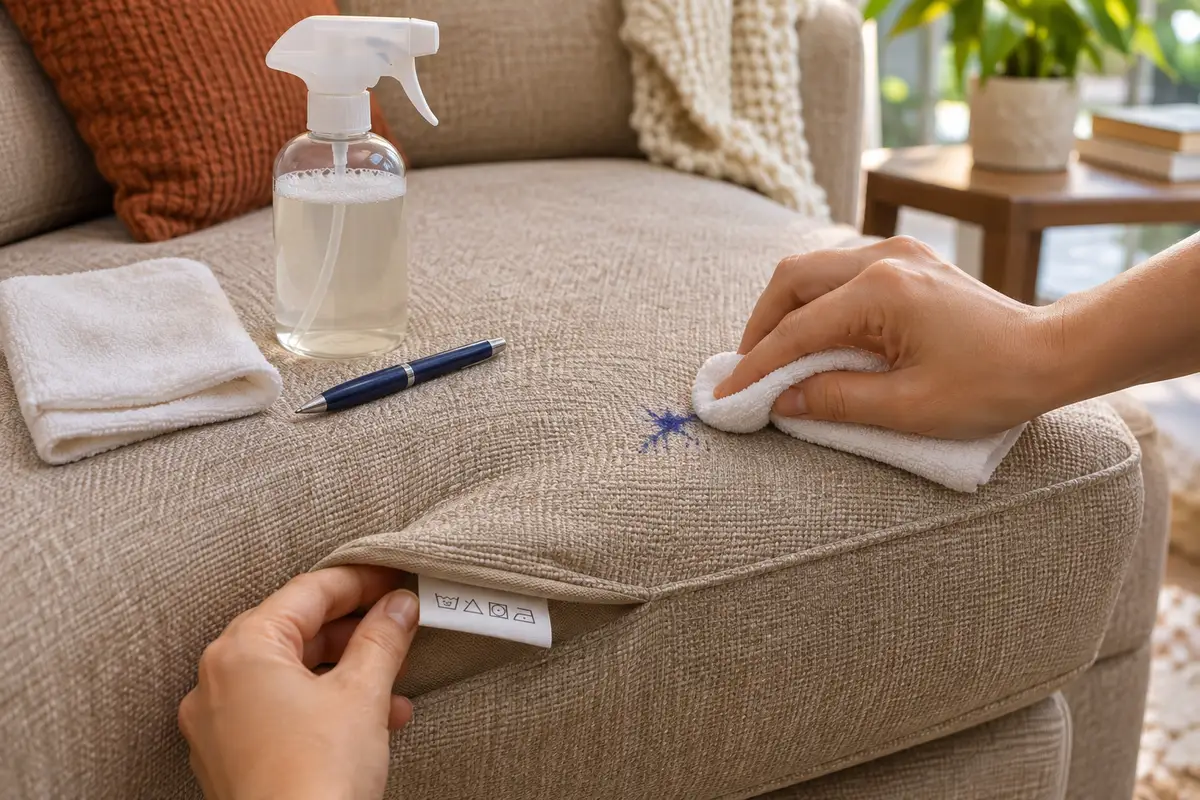
Mix no more than 1/4 teaspoon of clear liquid dish soap into 1 cup of lukewarm water. Dab a little on a hidden spot, blot with a white cloth, and check for color transfer or fiber change before using it on the mud mark.
05
Step 5 of 7
Blot the Remaining Dirt Mark
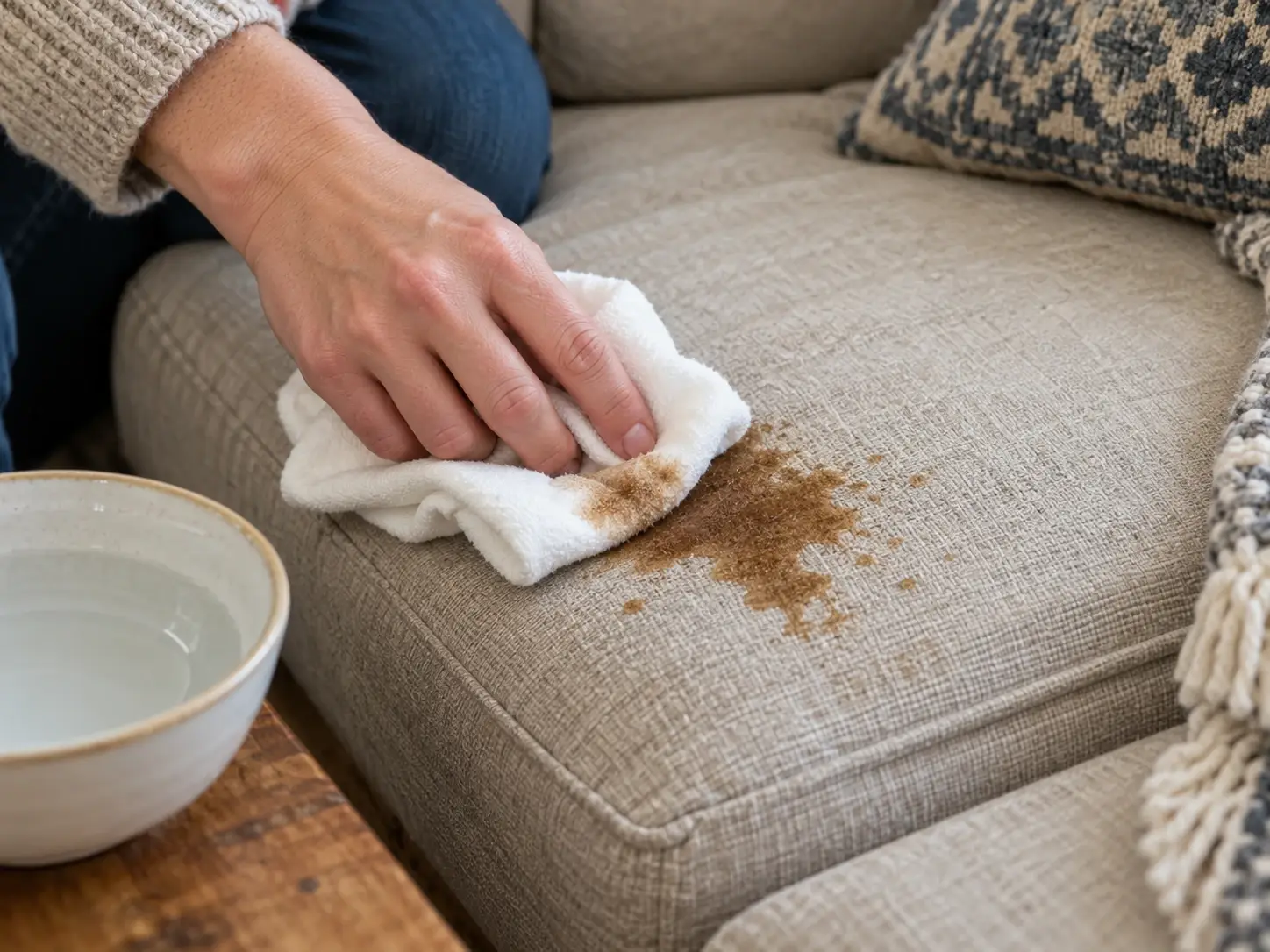
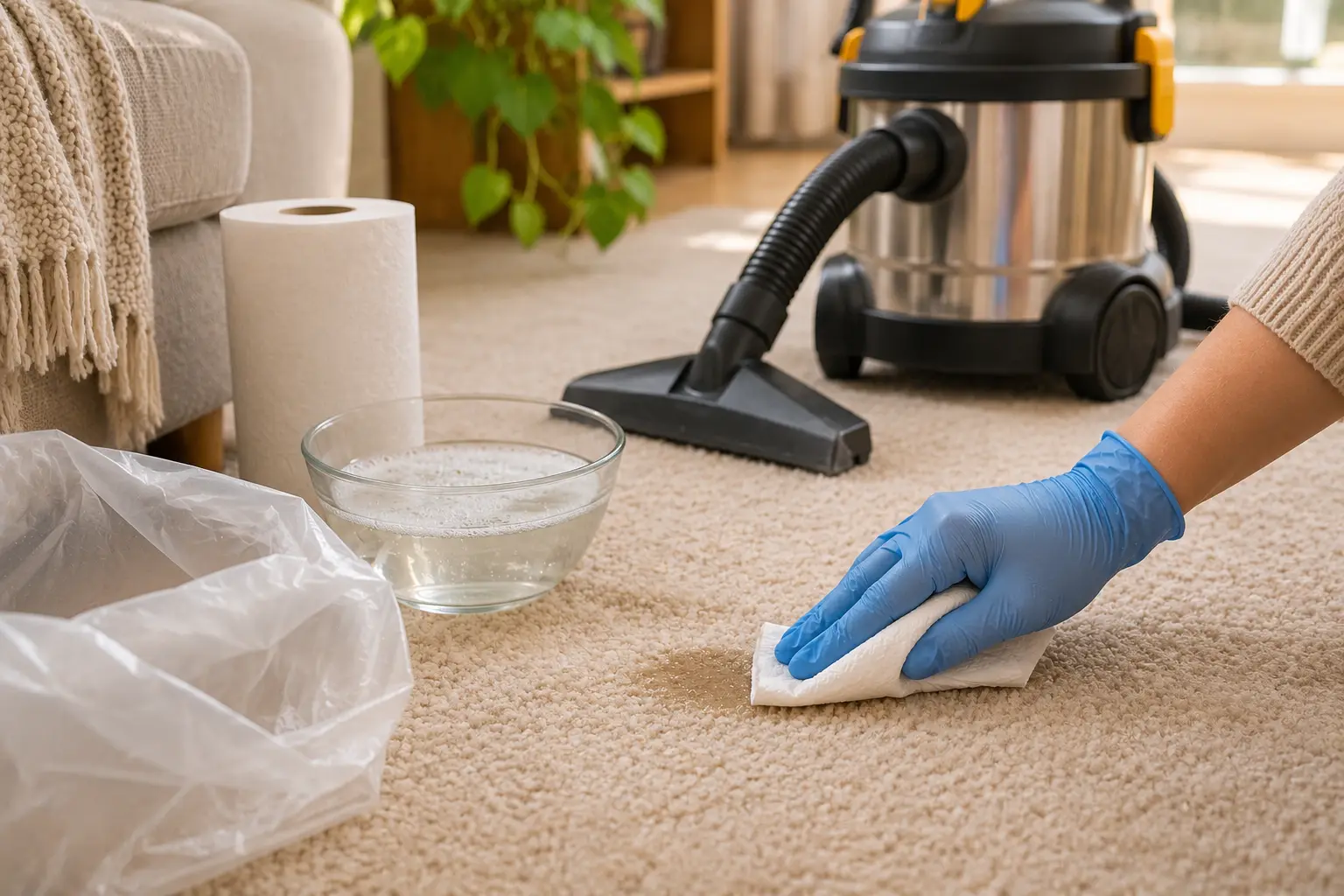
Dampen a white cloth or paper towel with the solution and work gently from the edges of the mark toward the center, blotting rather than rubbing. Let it sit a few minutes, then blot with a dry cloth. Repeat while dirt keeps transferring to the cloth.
06
Step 6 of 7
Rinse Out the Soap
Lightly mist the area with clear lukewarm water and blot, repeating several times. Soap left in the pile attracts new soil and leaves a dark patch, so rinse until the cloth no longer feels slippery.
07
Step 7 of 7
Blot Dry and Weigh It Down
Blot with a dry cloth until no more moisture comes up. Then cover the spot with 6 to 10 layers of white paper towel, put a plastic bag on top, and weigh it down with a few books for 6 to 8 hours, changing the towels if they show dirt. Brush the pile upright with your fingers once it is dry.
If that didn’t work
Stubborn or set-in? Try these next, in order.
AIf a dirt shadow reappears after the carpet dries, soil left at the base of the yarns has wicked up. Let the carpet dry for at least 48 hours, vacuum again slowly from three or more directions, then lightly mist with distilled water and blot with a microfiber towel until the transfer stops.
BIf a stain remains on synthetic carpet after cleaning, test fresh 3% hydrogen peroxide in a hidden spot, then moisten the stained tufts with it, let it stand for about an hour and blot. Repeat if needed and dry under weighted paper towels. Skip this on wool and other natural fibers.
CIf regular spot cleaning cannot remove the mark, or a large area was tracked through, call a professional carpet cleaner. They have stronger solutions and extraction equipment.
Tools that help
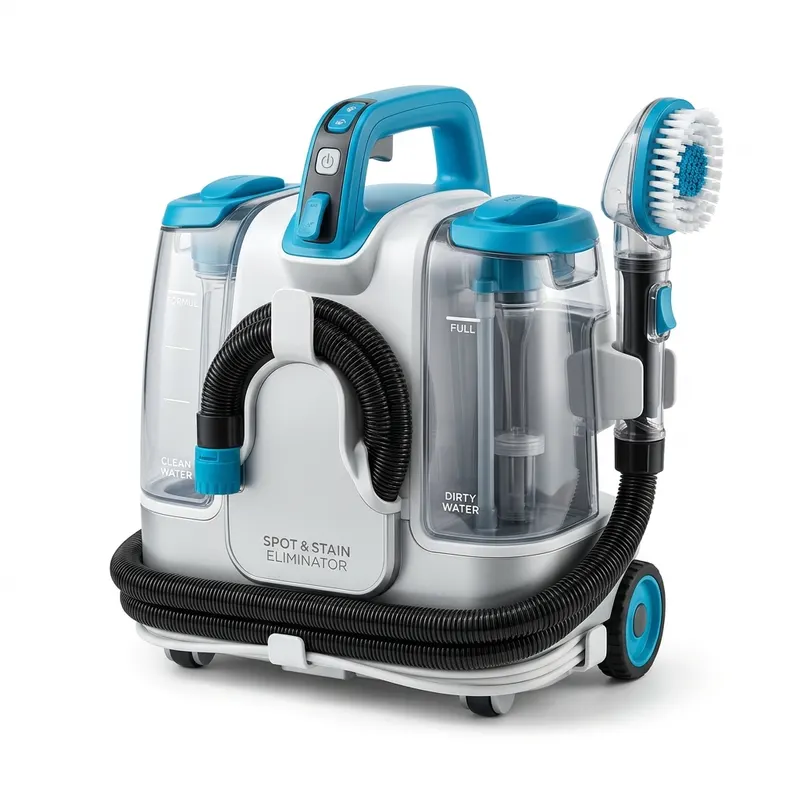
You can do this with cloths and a spray bottle. These make it faster:
As an Amazon Associate, HouseCareWiki earns from qualifying purchases. It costs you nothing extra. How we make money
9.0/10HouseCareWiki rating 9.0 out of 10, research-based
Paid promotion: Shark pays HouseCareWiki a higher commission on this model through Amazon until December 19, 2026. Our notes and scores don’t change because of it.
8.3/10HouseCareWiki rating 8.3 out of 10, research-based
Paid promotion: Shark pays HouseCareWiki a higher commission on this model through Amazon until December 19, 2026. Our notes and scores don’t change because of it.
Should you let mud dry before cleaning it out of carpet?
Yes. Carpet care guidance says to allow mud to dry completely, then break it up and vacuum. Cleaning it while wet tends to spread it and push it deeper into the pile.
What is the best homemade solution for mud stains on carpet?
A very weak dish-soap solution: no more than 1/4 teaspoon of clear liquid dish detergent in 1 cup of lukewarm water, according to the Carpet and Rug Institute. Some manufacturer care sheets use an even weaker mix. Avoid laundry and dishwasher detergents, and rinse well afterwards.
Why does the mud stain keep coming back on my carpet?
This is wicking. Dirt left at the base of the yarns or in the backing travels up to the tips as the carpet dries. Let it dry fully, vacuum again, then lightly mist and blot, and dry the spot under weighted paper towels.
Can I use a carpet cleaner machine on mud?
Only after the mud is dry and vacuumed. Start by vacuuming up as much dry soil as possible, then spot clean or rinse with the machine using clear water so no detergent is left in the pile, and extract as much moisture as you can.
Can you use hydrogen peroxide on a mud stain?
On synthetic carpet, a fresh 3% hydrogen peroxide treatment can help with a stain that remains after cleaning, but test it in a hidden spot first. The IICRC does not recommend peroxide on wool or other natural fibers without extensive testing for color loss.
Sources we relied on
1.Mud - The Carpet and Rug Institute — The Carpet and Rug Institute (CRI). Act quickly, break up solids and vacuum, pretest solutions in a hidden area, work from the edges inward without rubbing, use 1/4 teaspoon dish detergent per cup of lukewarm water (never stronger, never laundry or dishwasher detergent), rinse several times with a mist sprayer to avoid residue and overwetting, and consult a professional for stubborn spills.
2.Carpet Cleaning and Maintenance (homeowner care sheet referencing Mohawk FloorCare Essentials) — D.R. Horton. Mud and dirt: allow mud to dry completely, shatter it with the handle of a knife, then vacuum; treat dirt with a small amount of detergent solution (1/4 teaspoon per quart of water), blot, rinse with tap water from a spray bottle and blot; for remaining stains, moisten tufts with 3% hydrogen peroxide for one hour, blot and repeat, and dry under weighted paper towels.
3.Carpet Care and Maintenance — Shaw Floors. Give spots prompt attention, blot with a clean white absorbent cloth, never rub or scrub abrasively because it can fray the fibers, vacuum often to keep soil from working below the pile surface, and consult a professional cleaner if regular spot cleaning cannot remove a stain.
4.IICRC Consumer Floor and Furnishings Care Information (Tip Sheet: Carpet Topics) — Institute of Inspection, Cleaning and Restoration Certification (IICRC). Wicking section: soil left at the base of yarns and backing can migrate to the tips as carpet dries; let it dry at least 48 hours, vacuum slowly from three or more directions with a brush-roll upright, mist distilled water and blot with microfiber, and dry under 6 to 10 layers of weighted towels for 6 to 8 hours; 3% hydrogen peroxide is not recommended on wool or natural fibers without extensive testing.