Wash it, then polish gently with a mild silver polish or a calcium carbonate paste on soft cotton, and rinse and dry right away. What museum conservators say about dips, the aluminum foil trick, silver plate, the dishwasher and storing silver so it tarnishes less.
Warm water and a few drops of mild, unscented dish soap
Soft toothbrush for crevices
Gentle silver polish, or precipitated calcium carbonate mixed with water into a paste
Soft cotton cloths
Soft, lint-free cloth for buffing
Optional: cotton or nitrile gloves
For storage: anti-tarnish silver cloth or acid-free tissue and sealable plastic bags
Step by step
01
Step 1 of 6
Wash Off Food and Grime
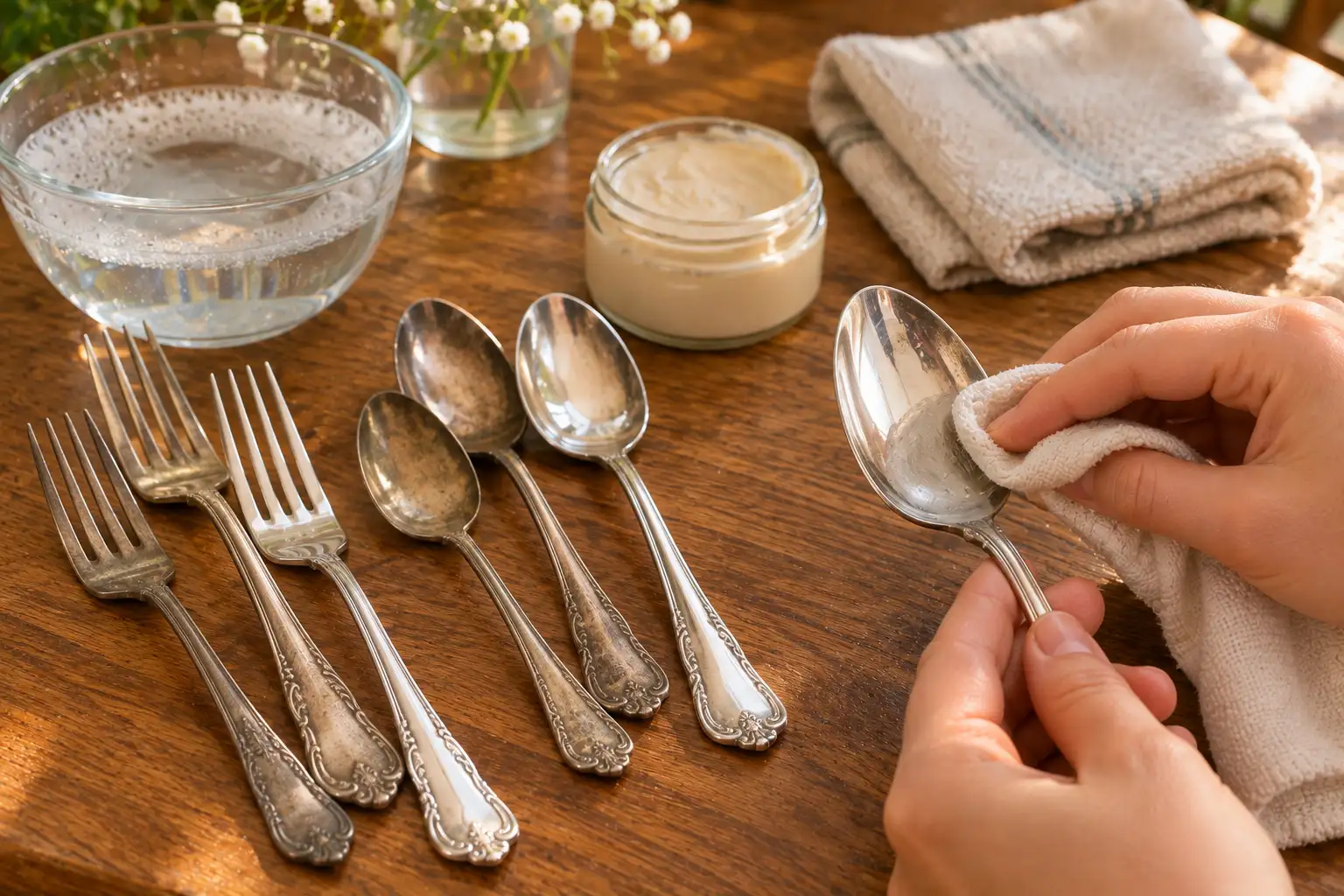
Wash the silverware in warm water with a few drops of gentle, unscented dish soap, using a soft toothbrush in the crevices, as Winterthur Museum describes. Dry each piece right away with a soft cloth.
02
Step 2 of 6
Decide How Much to Polish
Tarnish itself is not damaging, according to Winterthur, and each polish removes some silver. Polish only the pieces you want to use or display, and treat silver plate with extra care because the plating can wear through.
03
Step 3 of 6
Choose a Gentle Polish
Use a mild polish made for silver. CCI names gentle silver polishes such as Twinkle, Goddard's, Hagerty's and Silvo, and warns that old, dried-out polish and multipurpose metal polishes are more abrasive. Winterthur, which avoids most commercial polishes, recommends a slurry of precipitated calcium carbonate and water instead; CCI also describes this paste and says not to substitute ground chalk or whiting.
04
Step 4 of 6
Polish in Small Circles
Apply a little polish or paste to a soft cotton cloth and rub the silver gently in small circles. Turn to a clean part of the cloth often as it picks up tarnish, so you are not rubbing the removed tarnish back over the surface.
05
Step 5 of 6
Wash, Rinse and Buff Dry
Wash the polish residue off with warm water and mild dish soap, rinse, and dry immediately with a soft cloth to avoid water spots, then buff lightly.
06
Step 6 of 6
Store It to Slow Tarnish
Wrap each piece in acid-free tissue or anti-tarnish silver cloth, such as Pacific Silvercloth, and seal it in a plastic bag; Winterthur suggests tissue, then silver cloth, then a sealed bag. Keep it in a dry place, ideally below 50 percent relative humidity, and away from wood, oil-based paint and plastic wrap.
If that didn’t work
Stubborn or set-in? Try these next, in order.
AIf heavy tarnish will not shift with gentle polish, CCI describes an aluminum method: silver touching aluminum in a warm washing soda solution. It leaves a dull matte surface that needs light polishing, can cause pitting if the aluminum stops working, and should not be used on hollow pieces.
BIf you choose a chemical dip, CCI says to apply it locally with a cotton swab rather than submerging the piece, then rinse well. Winterthur advises against dips because they dissolve silver and remove intended dark tones in recesses.
CFor antique, valuable or heavily damaged silver, consult a professional conservator rather than polishing harder.
Common questions
What is the best way to clean tarnished silver?
Wash it, then polish gently with a mild silver polish or a paste of precipitated calcium carbonate and water on a soft cotton cloth, changing to a clean part of the cloth often. Wash off the residue and dry it right away. Museum conservators at CCI and Winterthur stress polishing only as often as needed, since each polish removes some silver.
Does the aluminum foil and baking soda trick work on silver?
The Canadian Conservation Institute describes the aluminum method using warm washing soda, which is sodium carbonate, rather than baking soda. It does convert tarnish back to silver, but CCI notes it leaves a dull matte finish, can pit the silver if the aluminum stops working, and should not be used on hollow pieces.
Can you put silverware in the dishwasher?
Christofle allows it with conditions: powder detergent, knives blade-down, sterling and stainless washed separately, no crystal in the same load, and drying right away. It says stainless knives and cutlery made before 1968 should stay out of the dishwasher. Hand washing in mild dish soap is gentler.
Is it bad to leave silver tarnished?
No. Winterthur Museum says tarnish is not damaging and recommends polishing as rarely as possible, because every polish removes some silver. CCI also says tarnish does not have to be removed before storage.
How do you keep silverware from tarnishing?
Store it wrapped in acid-free tissue or anti-tarnish silver cloth inside a sealed plastic bag, in a dry place. Winterthur suggests keeping humidity below 50 percent and keeping silver away from wood, oil-based paint and plastic wrap.
Can you polish silver plated flatware the same way?
Yes, but much more gently and less often. CCI warns that any tarnish removal can be very damaging to plated silver, and Winterthur says over-polishing removes the plating.
Sources we relied on
1.Silver: Care and Tarnish Removal (CCI Notes 9/7) — Canadian Conservation Institute, Government of Canada. Every polish or chemical tarnish removal removes some silver; any method can be very damaging to plated silver; avoid multipurpose metal polishes and old dried-out polish; names gentle polishes Twinkle, Goddard's, Hagerty's and Silvo; describes a precipitated calcium carbonate paste and warns against ground chalk or whiting; dips should be applied with a swab, with gloves and ventilation, and never on sealed hollow parts; the aluminum method uses warm sodium carbonate, leaves a matte surface and can pit; tarnish need not be removed before storage; Pacific Silvercloth is especially effective.
2.Silver Treatment Advice — Winterthur Museum. Tarnish is not damaging; polish as rarely as possible because each polish removes silver; avoid most commercial polishes and never use dips; brass and chrome polishes are too abrasive; polish with a precipitated calcium carbonate slurry on soft cotton in circles, changing cloths often, then wash and buff; wash with a few drops of gentle unscented dish soap and a soft toothbrush and dry immediately; over-polishing removes plating; wear cotton or nitrile gloves; store below 50 percent relative humidity wrapped in acid-free tissue, Pacific Silvercloth and a sealed bag, away from wood, oil paints and plastic wrap.
3.Everyday Silver Care — Christofle. In the dishwasher use powder detergent, place knives blade-down, wash stainless and sterling separately, do not run crystal in the same cycle, and keep stainless knives and cutlery made before 1968 out; hand wash with a soft sponge and mild dish liquid without chlorine, citric acid or lemon scent; dry immediately; store in cases lined with anti-tarnish fabric.