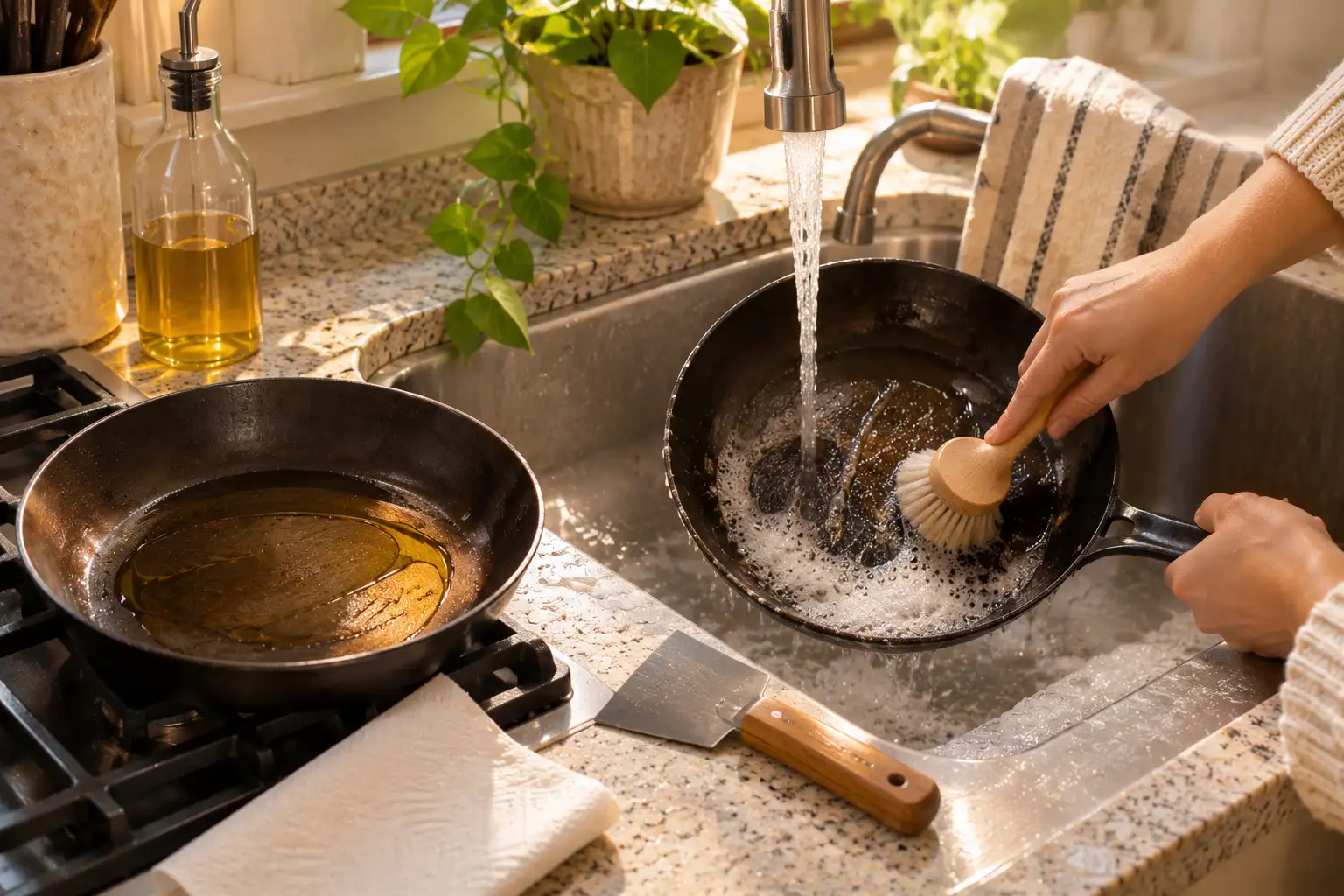
The everyday routine that keeps stainless cookware bright: cool, soak, wash, dry right away. Plus how to lift brown stains with Bar Keepers Friend, clear rainbow tint and white spots with vinegar, and stop salt pitting before it starts.
Bar Keepers Friend Cookware Cleanser & Polish or the original powder cleanser, or another nonabrasive, non-chlorine cleanser your pan maker approves
White vinegar
Wooden spoon
Dry dish towel
Rubber gloves
Step by step
01
Step 1 of 8
Let the Pan Cool, Then Deglaze or Rinse
Take the pan off the heat and let it cool before washing; cold water on a hot pan can warp it. If you have just seared or browned food, All-Clad suggests deglazing with wine or stock while you cook so the browned bits become a sauce instead of a cleaning job. Then rinse out any remaining food.
02
Step 2 of 8
Soak in Warm Soapy Water
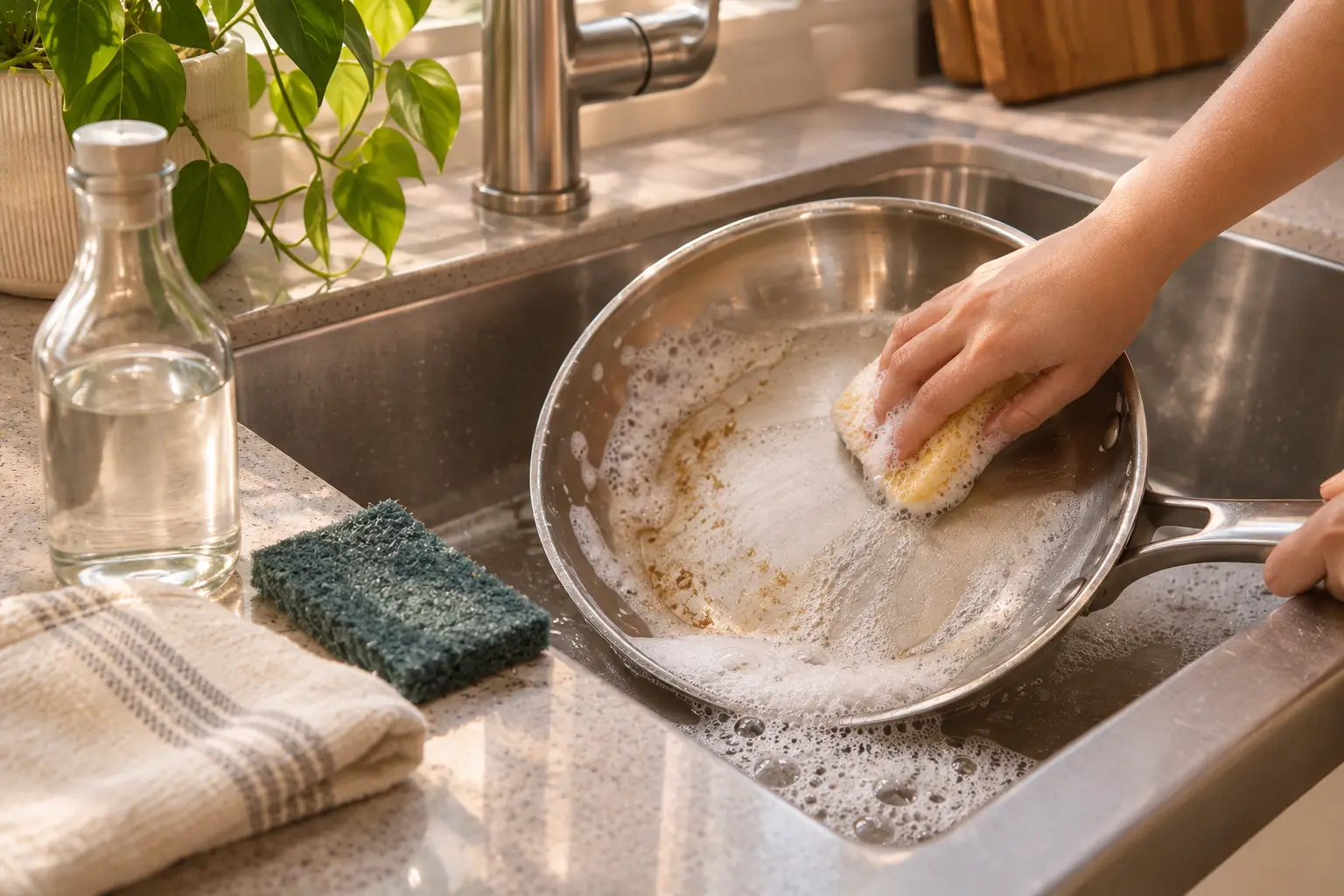
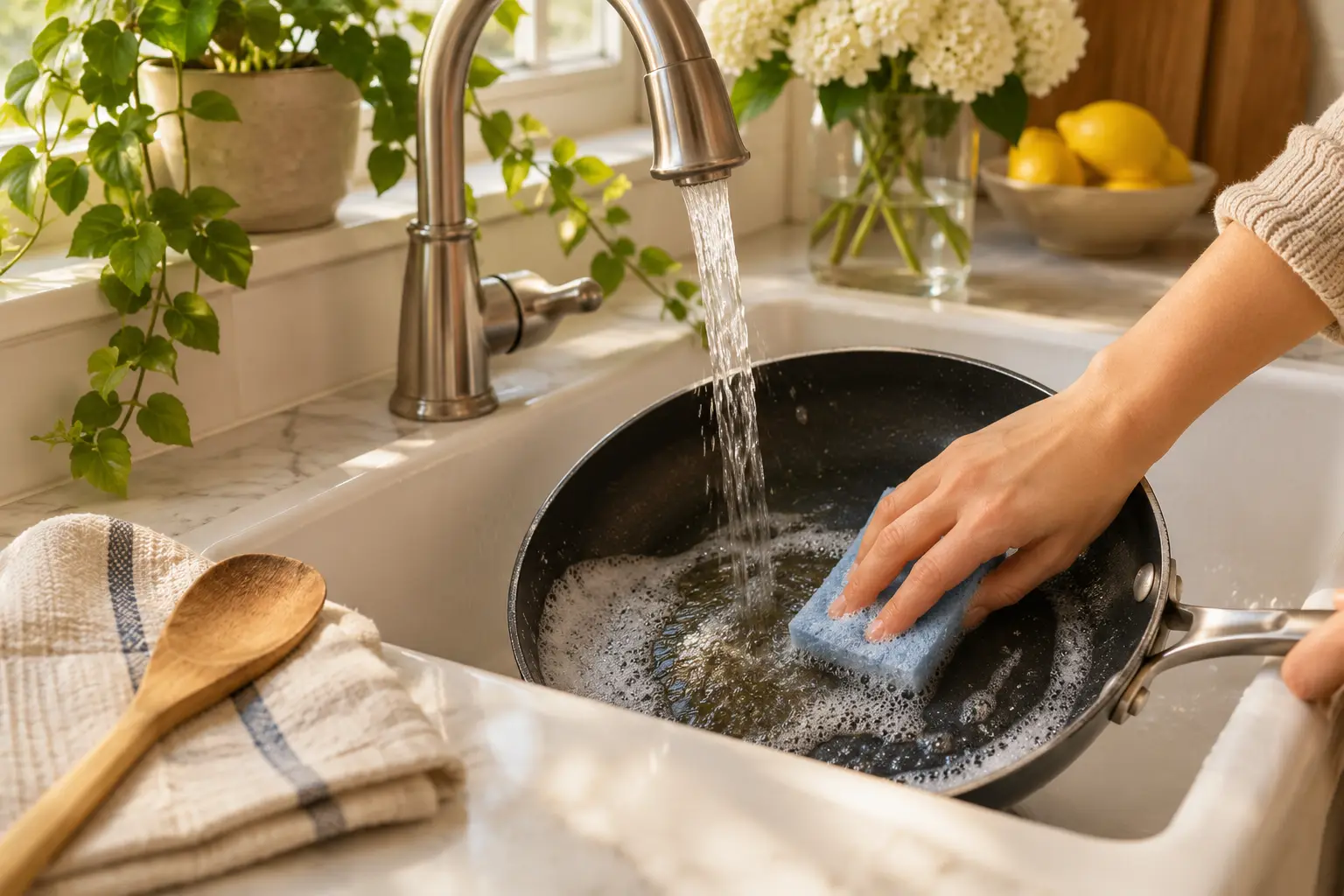
Fill or submerge the pan in warm water with a little dish soap and let it soak to soften stuck-on residue. Soaking first means less scrubbing later.
03
Step 3 of 8
Wash with a Sponge or Soft Cloth
Wash inside and out with a sponge or soft cloth. For residue that will not budge, switch to a nylon scouring pad. Do not use steel wool or steel scouring pads, which can damage the surface.
04
Step 4 of 8
Rinse and Dry Immediately
Rinse off all soap and dry the pan right away with a towel. Water left to sit on stainless steel leaves chalky white calcium spots.
05
Step 5 of 8
Lift Brown Stains with Bar Keepers Friend
For brown marks, burnt-on fat or protein shadows that soap leaves behind, wet the pan, then sprinkle on Bar Keepers Friend or mix it with a little water into a paste. Rub gently with a soft wet cloth or sponge in circles. Leave the paste on for no more than one minute, rinse thoroughly, and wipe dry. Repeat if needed rather than leaving it on longer or scrubbing harder.
06
Step 6 of 8
Wipe Rainbow or Blue Heat Tint with Vinegar
Blue or rainbow discoloration comes from overheating. Wipe the cooled pan with white vinegar on a sponge or soft cloth, then wash, rinse and dry. Keep heat at low to medium and do not leave an empty pan on a hot burner beyond a brief preheat to prevent it.
07
Step 7 of 8
Boil Out Cloudy White Spots
For cloudy white hard-water or calcium spots, boil a vinegar and water mix in the pan with the kitchen ventilated. All-Clad uses equal parts vinegar and water; Made In uses 1 part vinegar to 3 parts water. Use your pan maker's ratio, let it cool, pour it out, rinse and dry immediately.
08
Step 8 of 8
Salt Only After Water Boils to Prevent Pitting
Small white dots or pits are caused by salt sitting on the steel. Add salt only once water is boiling or food is already cooking so it dissolves on contact instead of settling on the bottom. Made In notes pitting cannot be reversed, though it does not affect cooking performance.
If that didn’t work
Stubborn or set-in? Try these next, in order.
AIf brown stains remain after one Bar Keepers Friend pass, repeat the one-minute application rather than letting the paste sit longer; the label says not to leave it on or rub harder than necessary.
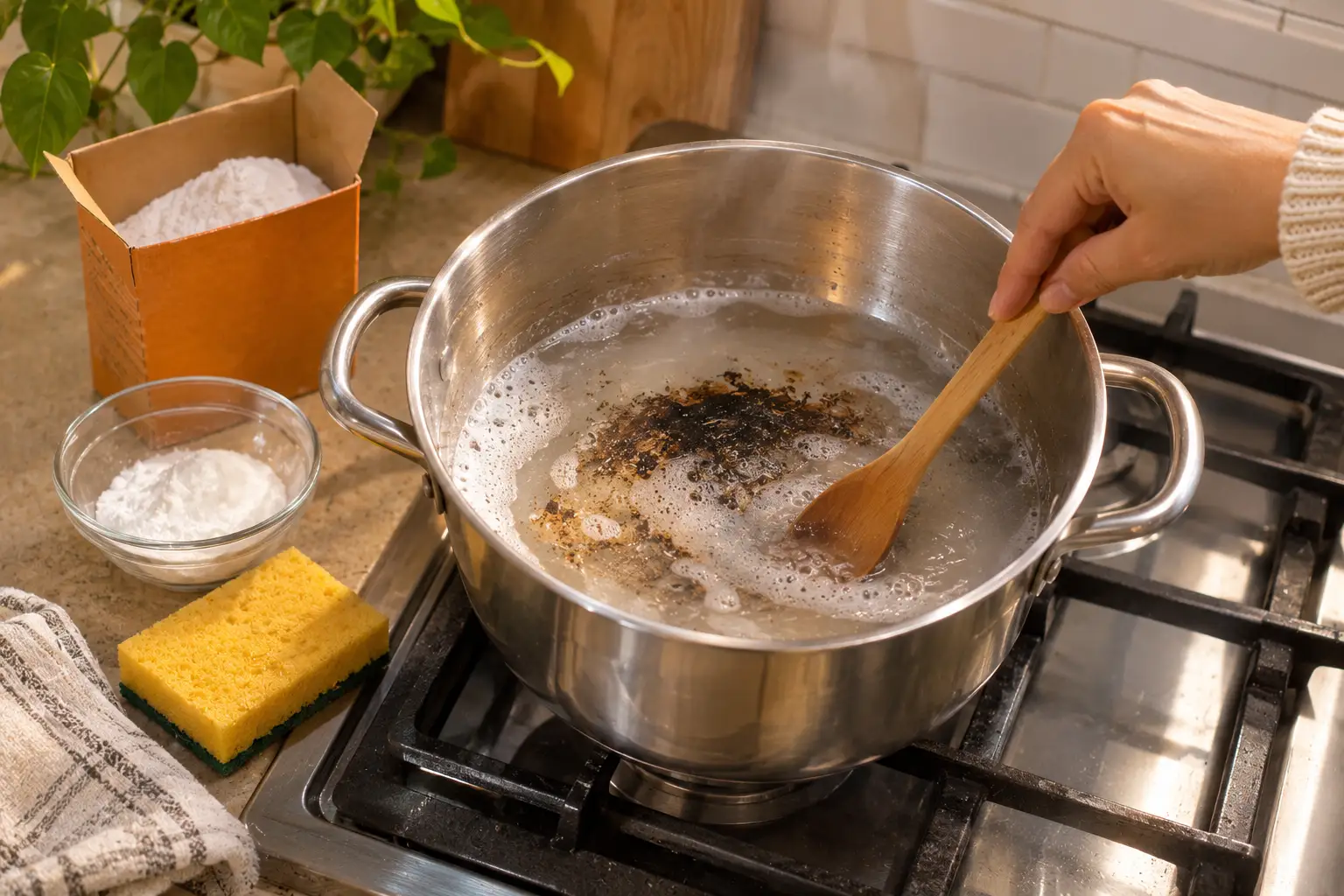
BIf food is charred or burnt on rather than just stained, treat it as a burnt pan: All-Clad suggests sprinkling baking soda over the surface, adding water and bringing it to a boil, then loosening the bits with a wooden spoon.
CIf tiny dull dots remain after vinegar and cleanser, they are probably salt pitting, which Made In says cannot be removed. Prevent more by salting only boiling water or hot food and drying the pan right after washing.
Common questions
Why does my stainless steel pan have a rainbow color?
Blue or rainbow tint is heat discoloration from overheating. It does not hurt cooking performance. All-Clad says to wipe it off with white vinegar on a sponge or soft cloth, then wash and dry. Cooking on low to medium heat helps prevent it.
What are the white spots on my stainless steel pan?
Cloudy white film is usually calcium from hard water left to dry on the pan; boil a vinegar and water mix in the pan to remove it. Small white dots or pits are usually salt pitting, which comes from adding salt to cold water and cannot be reversed.
Is Bar Keepers Friend safe on stainless steel pans?
Yes. All-Clad and Made In both name it as a cleaner for stainless cookware. Make a paste, rub gently with a soft cloth, leave it no longer than one minute, rinse thoroughly and dry. Do not mix it with bleach, ammonia or other chemicals.
Can you use steel wool on stainless steel pans?
No. All-Clad and Made In both warn against steel wool and steel scouring pads. Use a sponge or soft cloth for routine washing and a nylon scouring pad for stubborn residue.
Should I soak stainless steel pans?
A soak in warm soapy water after the pan cools softens stuck-on food and cuts down on scrubbing. Just wash, rinse and dry the pan promptly afterwards so water does not leave spots.
Sources we relied on
1.All-Clad Use and Care Guide — All-Clad. Cool the pan, rinse, soak in warm soapy water, wash with a sponge or soft cloth or a nylon pad for tough residue, and dry right away; use a nonabrasive non-chlorine cleanser such as Bar Keeper's Friend for tough spots, white vinegar for blue or rainbow discoloration, a boiled 1:1 vinegar and water mix for white spots, add salt after liquid boils to prevent pitting, and avoid steel wool, bleach and placing a hot pan under cold water.
2.How to Prevent Pitting in Stainless Steel Cookware — Made In. Pitting is caused by chloride in salt and by bleach, cannot be reversed and does not affect performance; add salt only after water boils, dry pans right after washing to avoid white calcium spots, remove them by boiling 1 part vinegar to 3 parts water, and avoid bleach, steel wool, oven cleaner and abrasive brushes.
3.Cookware Cleanser & Polish — Bar Keepers Friend. Sprinkle onto a wet surface and rub gently with a wet cloth or sponge; for difficult stains leave a paste on for up to one minute, rinse thoroughly within a minute and wipe dry; do not mix with other chemicals including bleach or ammonia, and use gloves for prolonged use or sensitive skin.
4.How to Clean Stainless Steel Pans — Bar Keepers Friend. Dampen the pan, apply a paste of the powder and water with a soft cloth, let it dwell one minute and no longer, rub in a circular motion, wash in hot soapy water and rinse; clean pan bottoms by sprinkling water and cleanser and scrubbing with a soft sponge, using nothing abrasive.