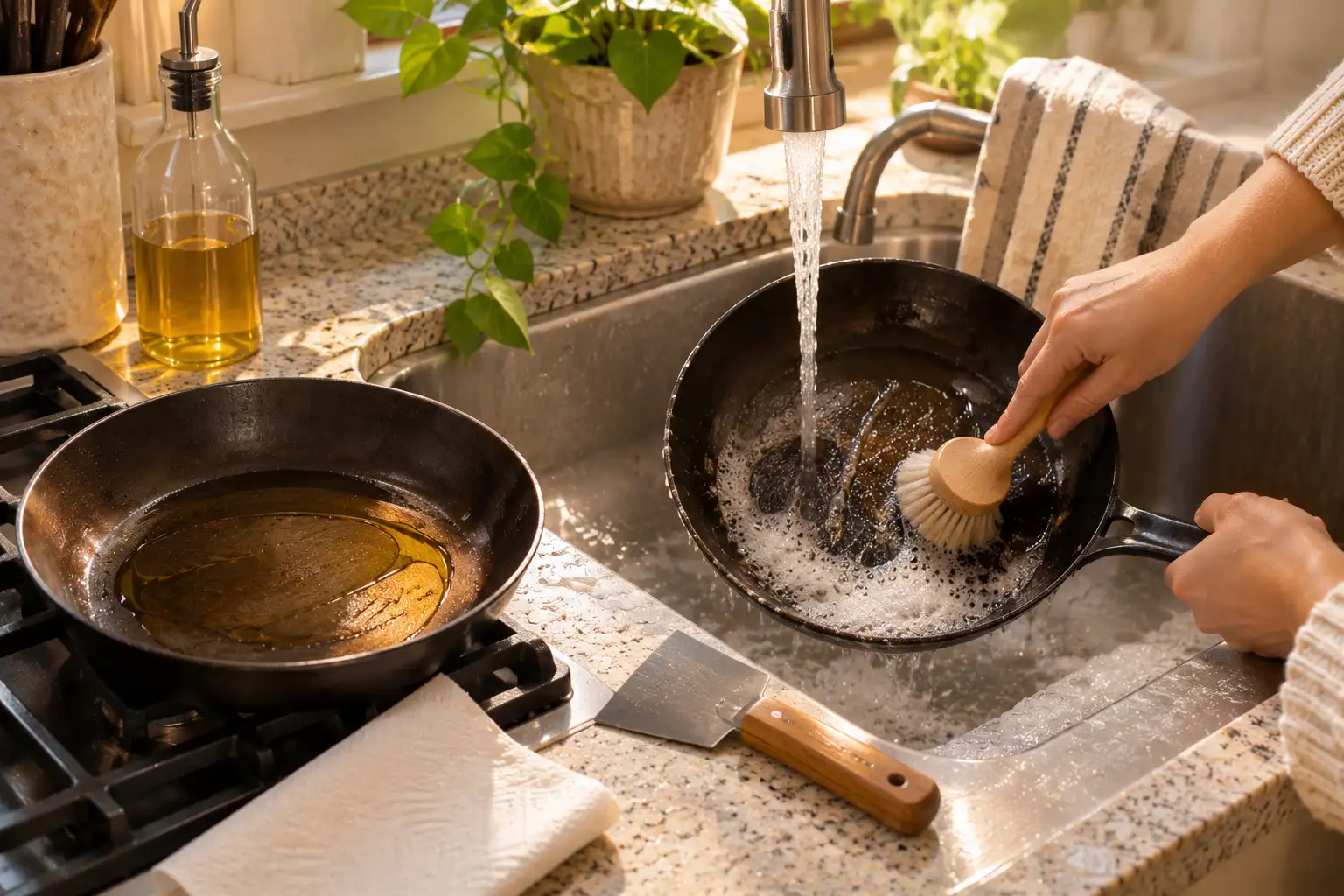
Wash with warm water and a little soap if you like, scrub off stuck food, dry it completely and rub in a thin coat of oil. What Lodge and Field Company say about soaking, rust and re-seasoning, why bare cast iron stays out of the dishwasher, and how enameled cast iron differs.
Stiff-bristled brush, scrubbing pad or chain mail scrubber
Nylon brush or pan scraper for stuck-on food
Paper towels or a lint-free cloth
Cooking oil or a cast iron seasoning oil
For rust only: steel wool or a rust eraser, aluminum foil and an oven
Step by step
01
Step 1 of 7
Clean the Skillet Soon After Cooking
Once the pan has cooled enough to handle, take it to the sink. Cleaning it the same day keeps food from drying on and keeps the skillet out of standing water, which Lodge and Field Company both warn leads to rust.
02
Step 2 of 7
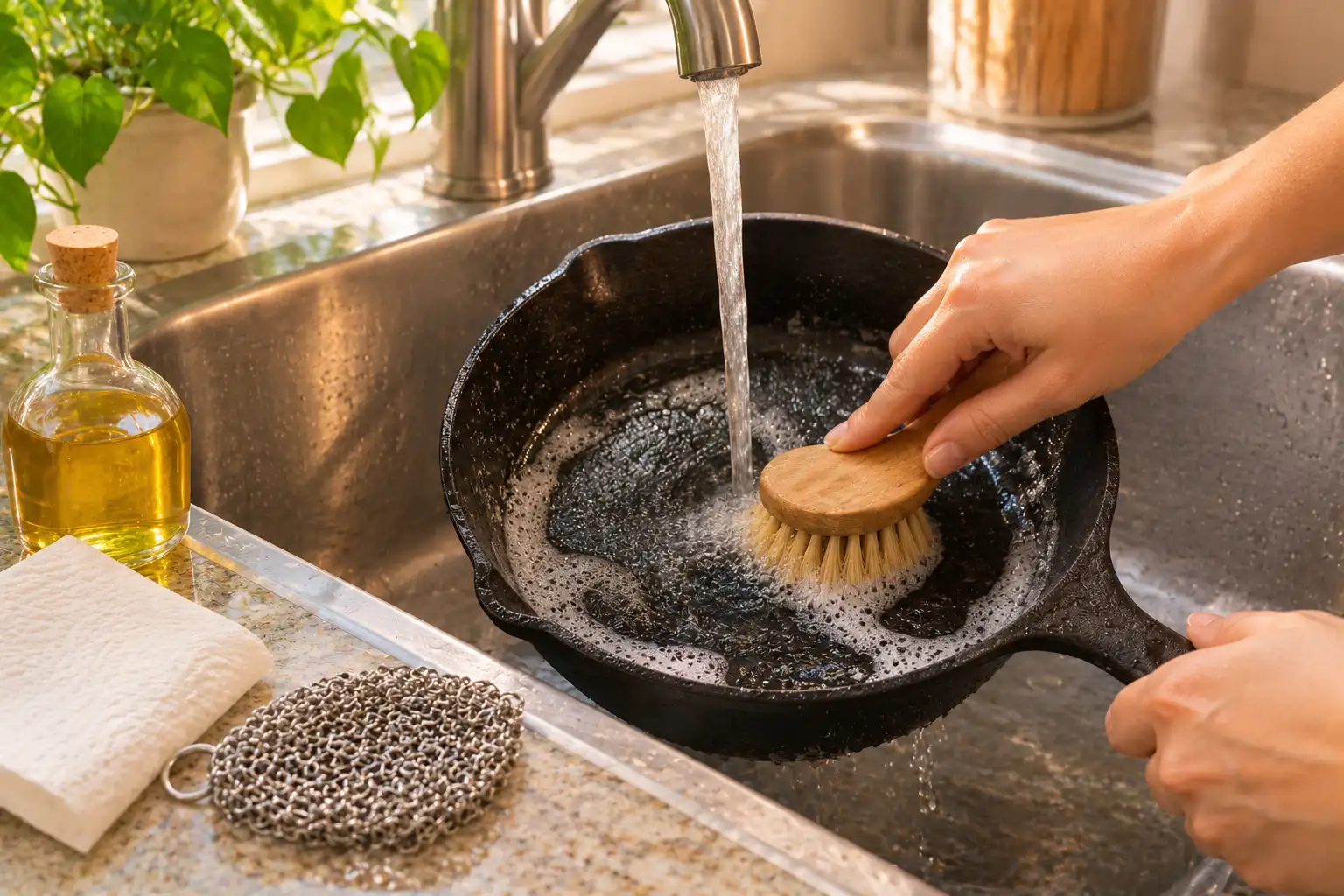
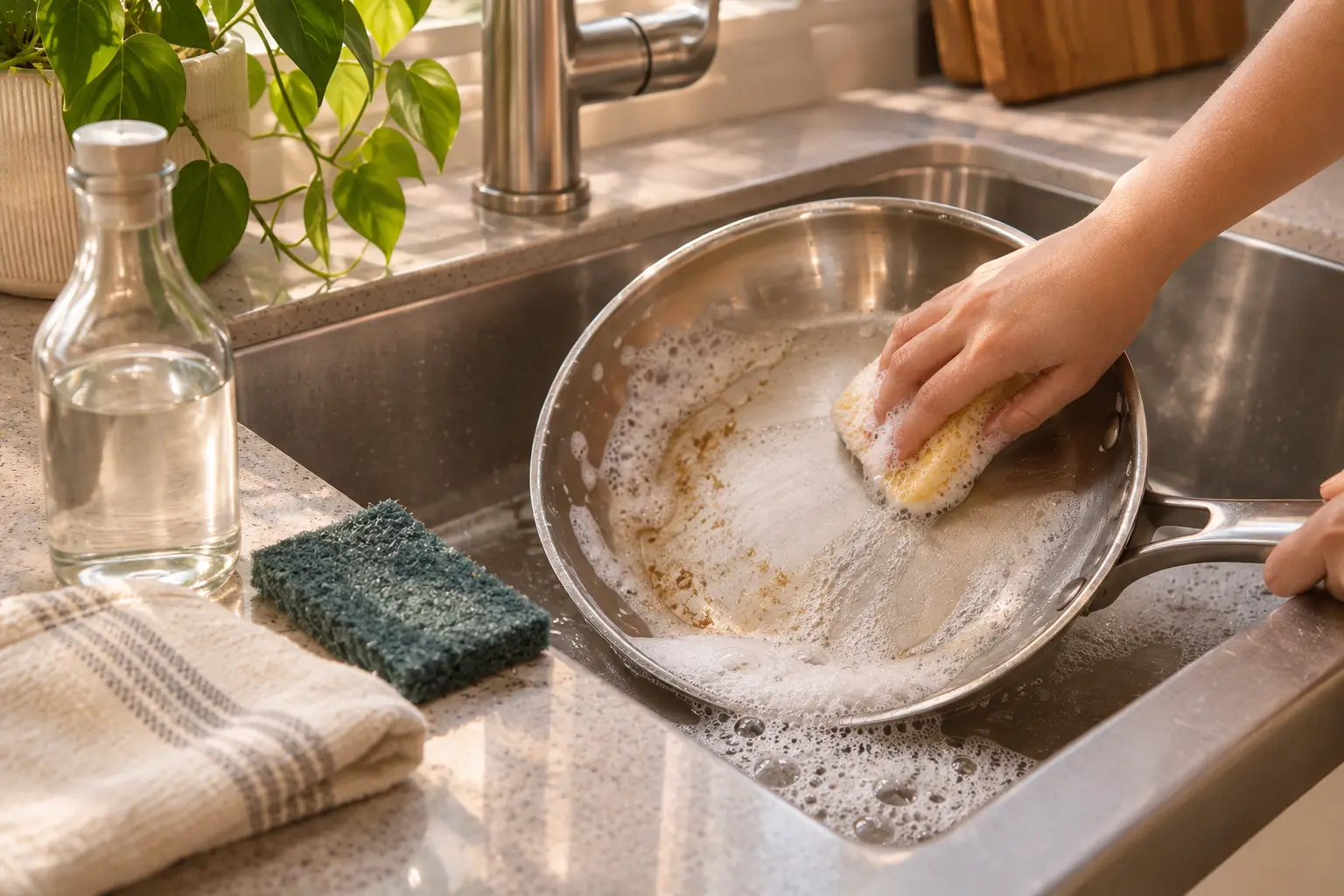
Wash with Warm Water and a Little Soap
Rinse the skillet under warm water and scrub it with a stiff-bristled brush or scrubbing pad. A small amount of mild dish soap is fine: Lodge says modern dish soap is not strong enough to strip seasoning, and a Virginia Tech food scientist explains that well-polymerized seasoning does not wash off with soap. Soap is optional, not required.
03
Step 3 of 7
Loosen Stuck-On Food
For bits that stay stuck, work them loose with a nylon brush or pan scraper, as Lodge recommends, then rinse under warm water. A chain mail scrubber also lifts residue and lightly scuffs the surface, which Field Company says helps new seasoning bond.
04
Step 4 of 7
Dry the Skillet Completely
Dry the pan straight away with a paper towel or lint-free cloth, inside, outside and on the handle. Then set it on the stovetop over low heat for a few minutes to evaporate any moisture left in the pores of the iron. Wipe up any last droplets.
05
Step 5 of 7
Rub In a Thin Layer of Oil
Put a small dab of cooking oil or seasoning oil on a paper towel and spread it over the entire cooking surface. Field Company says to wipe off the excess so the pan has a dry, matte finish rather than a sticky or shiny one. Store the skillet in a dry place.
06
Step 6 of 7
Scour Off Any Rust
If you find rust spots, scour only the rusty areas with steel wool or a rust eraser. Lodge says it is fine to use a scouring pad and soap at this stage because you are about to re-season the pan. Wash in warm soapy water, then dry it completely, finishing on the stovetop over low heat.
07
Step 7 of 7
Re-Season in the Oven
Coat the whole skillet with a very thin layer of cooking oil so nothing drips when you tilt it. Put foil on the bottom oven rack, preheat the oven to 450 to 500 degrees F, place the skillet upside down on the center rack and bake for 1 hour. Turn the oven off and let the skillet cool inside, following Lodge's restoration steps.
If that didn’t work
Stubborn or set-in? Try these next, in order.
AIf the skillet feels sticky after oiling, too much oil was left on. Wipe it back with a clean paper towel, warm the pan on the stove, and next time apply a thinner coat and wipe off the excess.
BIf rust keeps coming back, the pan is not drying fully or the seasoning has worn thin. Scour the rust, wash, dry on the stovetop and re-season in the oven as in steps 6 and 7.
CIf acidic dishes have dulled the seasoning, re-season the pan. Lodge notes that long cooks with large amounts of very acidic food can break seasoning down, and that re-seasoning fixes it.
Can cast iron go in the dishwasher?
Not bare, seasoned cast iron. Lodge says a dishwasher strips the seasoning and can cause rust, Field Company says never to put cast iron in the dishwasher, and University of Maine Cooperative Extension and University of Illinois Extension give the same advice. A pan that already went through a cycle is usually not ruined, since Lodge calls rust common and easy to fix at home: scour it, wash and dry the pan completely, oil it very thinly and re-season it in the oven as in steps 6 and 7. University of Maine Cooperative Extension says most pans need 3 to 5 rounds of oiling and baking to build a solid coat, so a badly stripped pan may need more than one.
Enameled cast iron, the kind with a colored glassy coating, follows different rules. Le Creuset says most of its enameled cast iron is dishwasher safe, and Staub describes its cookware as dishwasher approved, though both recommend hand washing to protect the finish. Le Creuset adds that constant dishwashing may dull the enamel; the dulling is not harmful and does not affect performance, but its warranty does not cover it. Unlike bare iron, enameled pieces can be soaked: both makers suggest warm soapy water for stubborn residue.
Let an enameled piece cool to room temperature before washing, and never add cold water to a hot pan, as Le Creuset advises. University of Maine Cooperative Extension says cold water on a hot bare pan can warp or crack it too.
Before loading enameled cast iron, check that the dishwasher rack can hold its weight, and let the full cycle finish before opening the door so the piece dries thoroughly.
Hand wash Le Creuset pieces with wooden handles, enamel-on-steel lids, colored stainless steel knobs or decals.
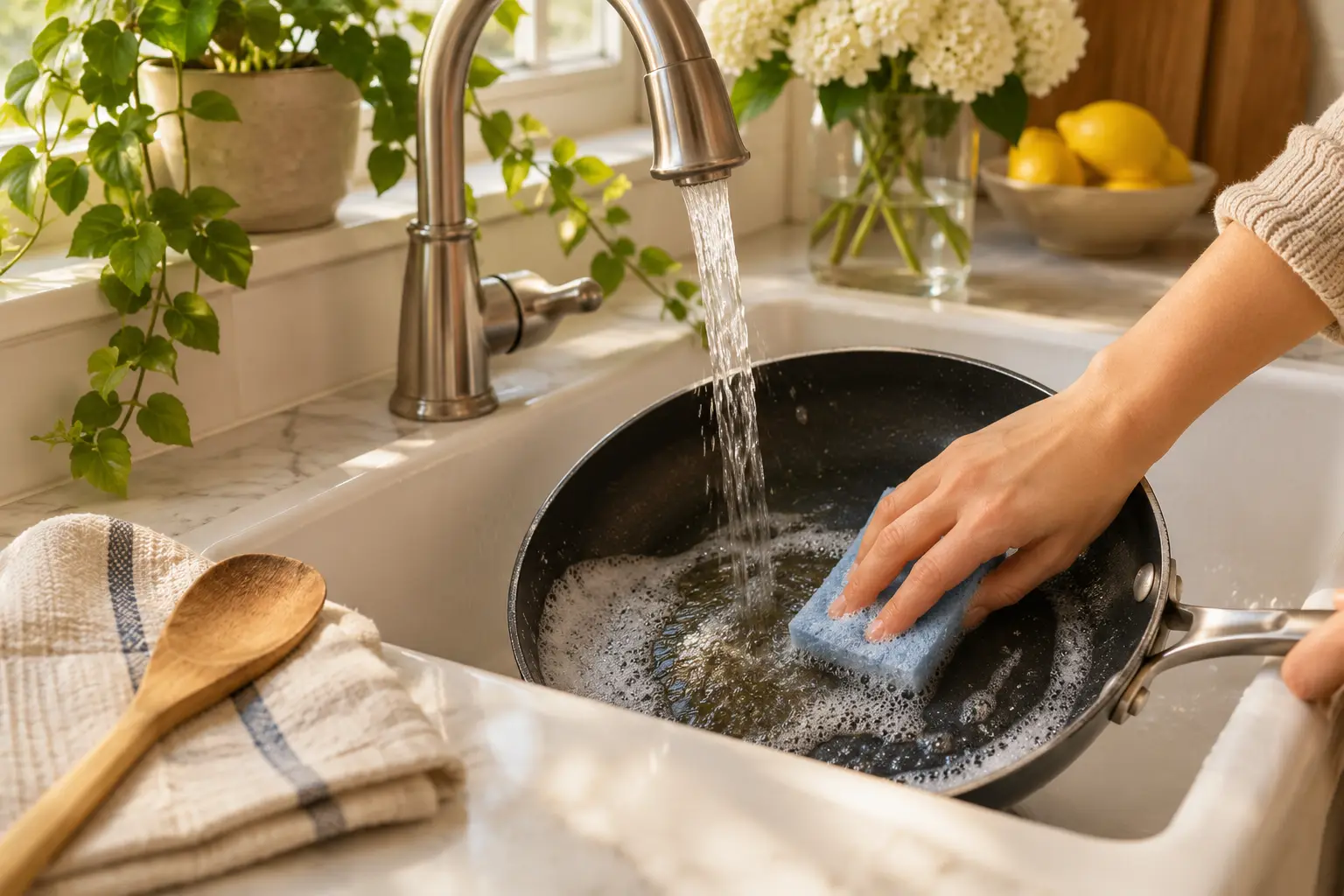
Use a soft sponge or brush on enamel. Le Creuset rules out metal pads and harsh abrasive cleaners, and Staub says metal scouring pads could damage the enamel.
Common questions
Can you use soap on a cast iron skillet?
Yes. Lodge says soap is not necessary but you can use mild dish soap, because today's dish soaps are not strong enough to strip seasoning. Some older advice and a few extension guides still say to skip soap, a rule that dates from when soap contained lye. Field Company treats soap as optional and advises re-oiling after washing.
Can you soak a cast iron pan overnight?
No. Lodge warns that soaking cast iron in water causes rust, and Virginia Tech's food scientist also advises against long soaks. Loosen stuck food with a scraper, brush or chain mail scrubber instead, then dry the pan right away.
Can cast iron go in the dishwasher?
Seasoned bare cast iron should not. Lodge says the dishwasher strips the seasoning and will likely cause rust, so wash it by hand. Enameled cast iron has different care instructions, so check the maker for that kind of pan.
How do you get rust off a cast iron skillet?
Scour the rusty areas with steel wool or a rust eraser, wash in warm soapy water and dry the pan completely. Then oil it very thinly and bake it upside down at 450 to 500 degrees F for 1 hour, letting it cool in the oven, which is how Lodge restores rusty cast iron.
Can you use metal utensils on cast iron?
Yes. Lodge lists silicone, wooden and even metal utensils as fine for cooking in seasoned cast iron. The caution about metal applies to steel wool and metal scrubbers for everyday cleaning, which Lodge reserves for rust removal.
Is cast iron ruined after one trip through the dishwasher?
Usually not. Lodge says rust on cast iron is common and easy to fix at home: scour the rust off, wash and dry the pan completely, apply a very thin layer of cooking oil and, for more than a little rust, re-season it upside down in a 450 to 500 degree F oven for one hour.
Can enameled cast iron go in the dishwasher?
In many cases, yes. Le Creuset says most of its enameled cast iron is dishwasher safe, and Staub says its cookware is dishwasher approved but recommends hand washing to protect the finish. Le Creuset adds that constant dishwashing may dull the enamel, which is not harmful.
Can you rinse a hot cast iron pan under cold water?
No. University of Maine Cooperative Extension says rinsing a hot cast iron pan under cold water can warp or crack it, and Le Creuset says not to add cold water to a hot enameled pan or plunge it into cold water. Let the pan cool enough to handle first.
Sources we relied on
1.How to Clean Cast Iron — Lodge Cast Iron. Wash by hand with warm water and soap using a stiff-bristled brush or scrubbing pad, use a nylon brush or pan scraper for stuck-on food, dry completely, rub in a thin layer of oil, and avoid soaking and the dishwasher because both lead to rust or stripped seasoning; metal scrubbers are for rust only.
2.How to Restore and Season a Rusty Cast Iron Skillet — Lodge Cast Iron. Scour rust with steel wool or a rust eraser, wash in warm soapy water, dry completely (low heat on the stovetop helps), apply a very thin layer of cooking oil, then bake upside down on the center rack at 450 to 500 degrees F for 1 hour with foil below and let it cool in the oven.
3.Cast Iron Cleaning and Care: The Field Method — Field Company. Rinse with warm water and a natural fiber brush (soap optional), scrub with a chain mail scrubber, heat-dry on the stovetop for a few minutes, spread a small dab of seasoning oil over all surfaces and wipe off the excess for a dry, matte finish.
4.Virginia Tech food scientist dispels the myths behind cast iron pan use — Virginia Tech News. Washing with soap will not remove polymerized seasoning (the old rule came from lye soaps), warm water and soap if needed are fine for cleaning, the pan should be dried thoroughly, and seasoned cast iron should not be soaked because water causes rust.
5.Care and Use — Le Creuset. Most enameled cast iron products are dishwasher safe, but pieces with wooden handles, enamel-on-steel lids, colored stainless steel knobs or decals should be hand washed; check the rack can hold the weight and let the full cycle finish before opening the door; constant dishwashing may dull the enamel, which is not harmful, does not affect performance and is not covered by warranty; cool to room temperature before cleaning and do not add cold water to a hot pan; never use metal pads or harsh abrasive cleaners; soak stubborn residue in warm soapy water; dry completely to prevent rust on the rim.
6.STAUB Use and Care — Staub (Zwilling J.A. Henckels). Staub enameled cast iron is dishwasher approved with hand washing recommended to protect the finish and extend the life of the enamel; the enamel interior needs no seasoning and cleans with soap and water; avoid metal scouring pads, which could damage the enamel, and use a soft sponge or brush; soak stubborn residue in warm soapy water.
7.Cast Iron Basics: How to Clean, Season, and Maintain Your Cast Iron Pan — University of Maine Cooperative Extension. Never soak a cast iron pan or put it in a dishwasher, which ruins the seasoning and rusts the pan; if using soap, use a small amount and fully rinse and dry; dry with a towel or on the stovetop or in the oven; use a neutral high smoke point oil such as vegetable or canola and remove the excess; season with a thin layer of oil, upside down in an oven at about 450 degrees F for one hour with foil or a baking pan below, repeating for 3 to 5 cycles; never rinse a hot pan under cold water because it can warp or crack.
8.A guide to cast-iron cookware — University of Illinois Extension. Never put cast iron cookware in the dishwasher; avoid harsh detergents and scrub pads for routine cleaning; dry thoroughly because leftover moisture may cause rust; if the pan rusts, use a scrub pad, clean it well, dry it and re-season; season with a thin layer of cooking oil, upside down in a 450 degree F oven for one hour; re-season when the pan looks dry and discolored or food begins to stick.