Not good kitchen knives: Wüsthof, Global and Shun all say to wash by hand, and even makers that allow some knives in the machine rule out wooden handles and recommend hand washing. Wash with warm water and mild soap, dry right away and store safely. Based on Wüsthof, Zwilling, Victorinox, Shun, Global and Yoshikin care guides.
Knife block, in-drawer tray, blade guard or magnetic strip
Step by step
01
Step 1 of 8
Check What Your Knife's Maker Says
Wüsthof, Global, Yoshikin and Shun all direct you to wash by hand, and Yoshikin's support page simply says not to use a dishwasher. Victorinox says its synthetic-handled household knives can go in the dishwasher but large knives and wooden handles should not, and Zwilling says its knives with polypropylene handles are dishwasher safe while recommending hand washing.
02
Step 2 of 8
Wash Soon After Use
Clean the knife right after you use it. Wüsthof says food left on the blade, such as spices, sauces and juices, can cause spots and corrosion, and Victorinox and Yoshikin say salty or acidic foods in particular can stain or rust a blade.
03
Step 3 of 8
Use Warm Water and Mild Soap
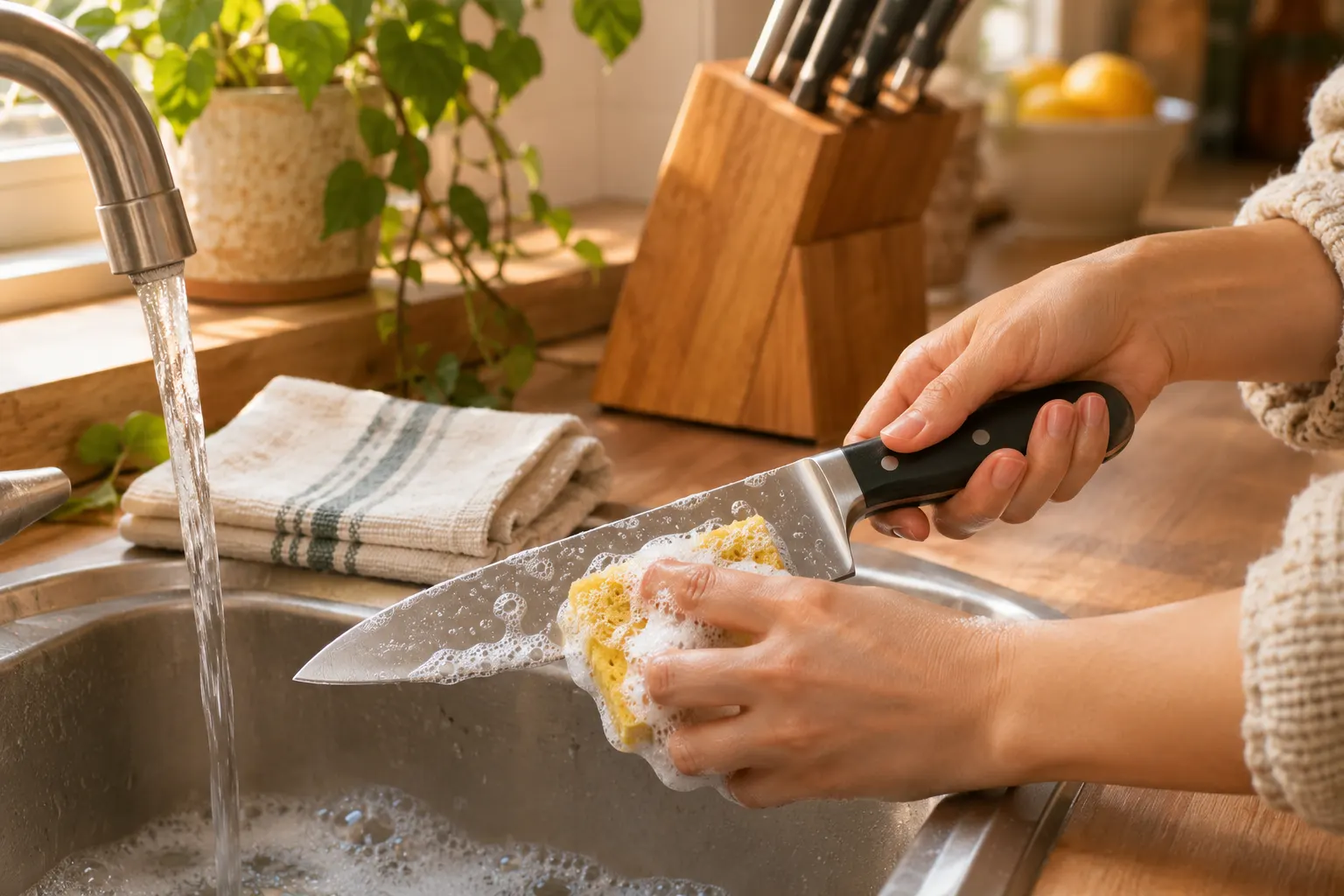
Wash the knife with warm water, a little mild dish soap and a soft sponge or non-scratch cloth, as Wüsthof, Zwilling and Global recommend. Wüsthof says not to use abrasive sponges, cloths or cleaners, which can scratch the blade.
04
Step 4 of 8
Keep the Edge Away from Your Fingers
Victorinox suggests holding the blade parallel to the sink and wiping without touching the sharp edge, and Shun suggests cleaning one side at a time with the blade flat against the back wall of the sink.
05
Step 5 of 8
Do Not Soak It
Do not leave the knife sitting in the sink or in soapy water. Wüsthof says food left on a soaking blade can cause spots and corrosion, and Shun says long submersion is hard on metal and dangerous when you reach into the sink.
06
Step 6 of 8
Dry It Right Away
Dry the knife immediately with a clean towel. Victorinox says not to let knives air-dry because limescale spots can form, and Shun warns that leftover dampness can cause rust.
07
Step 7 of 8
If You Use the Dishwasher Anyway
Only do this for knives the maker allows, never wooden handles. Victorinox says to rinse the blade first, keep knives from touching other metal items in the cutlery basket, open the door briefly after the cycle to let out steam, and change detergent if blades come out stained. Zwilling says its special formula steel knives tolerate the dishwasher only at 55 degrees C or lower.
08
Step 8 of 8
Store It Safely
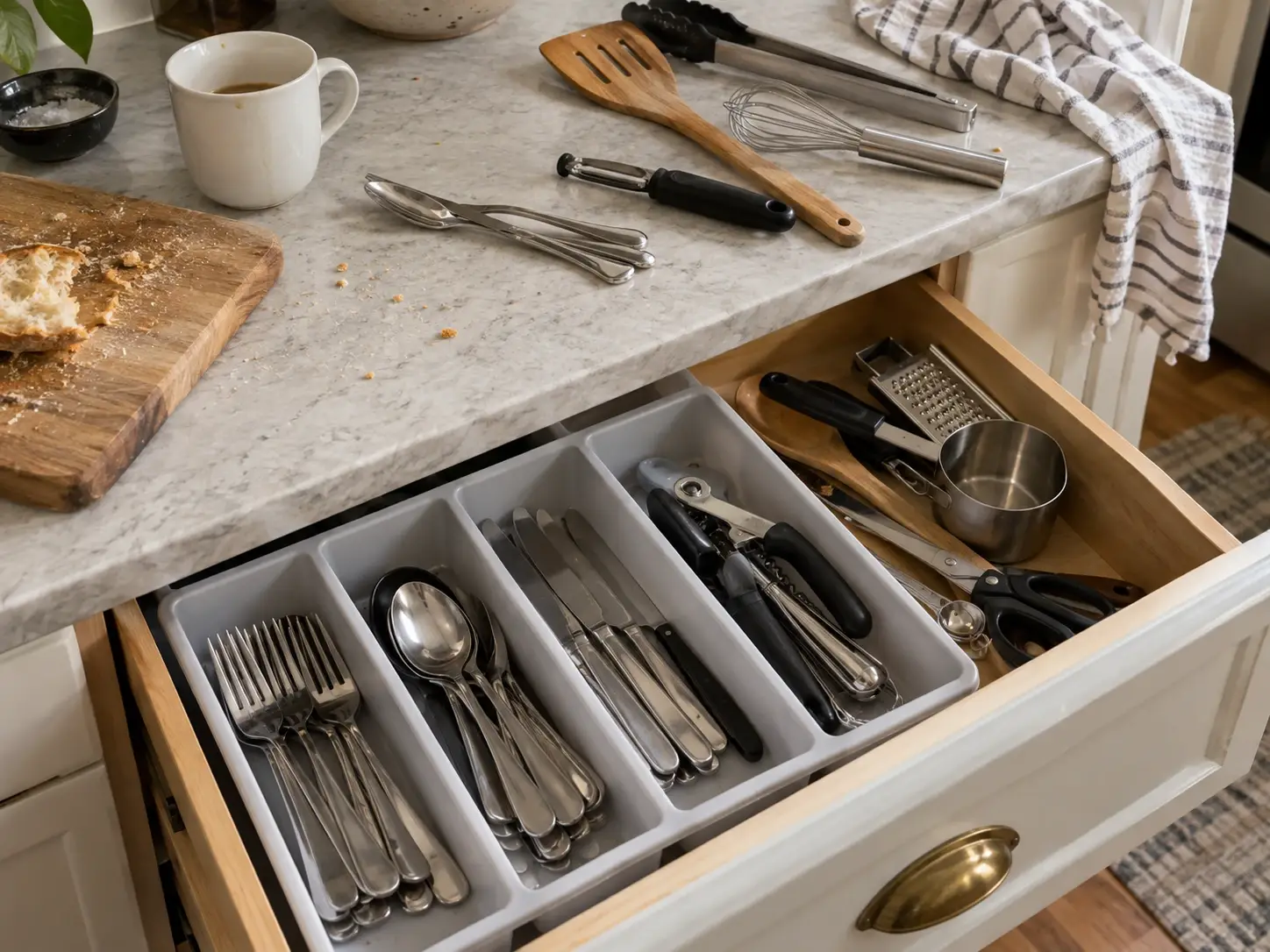
Put the dry knife in a knife block, in-drawer tray, sheath or blade guard, or on a magnetic strip. Victorinox says blades rubbing against each other in a drawer lose sharpness.
If that didn’t work
Stubborn or set-in? Try these next, in order.
AIf a blade has spots or light staining, Shun suggests a paste of baking soda and water rubbed on with a soft cloth in the direction of the blade's finish.
BIf knives come out of the dishwasher stained, Victorinox suggests changing your detergent and opening the door briefly after the cycle to release steam.
CIf a wooden handle looks dry after washing, Wüsthof suggests a few drops of food-grade mineral oil on the handle, and Zwilling suggests linseed oil or beeswax.
Common questions
Why shouldn't you put knives in the dishwasher?
Wüsthof says high temperatures and knives rubbing against other items during the cycle can damage them. Global says the dishwasher can damage the sharp edge and its heat and detergents can harm the steel, and Yoshikin says dishwasher residue and high-heat drying can promote rust.
Are any knives dishwasher safe?
Some. Victorinox says its synthetic-handled household knives can go in the dishwasher, and Zwilling says its polypropylene-handled knives are dishwasher safe. Both still recommend washing by hand, and both say wooden-handled knives must never go in.
Can you put Wüsthof knives in the dishwasher?
No. Wüsthof says not to put its knives in the dishwasher. Wash them by hand with warm water and mild dish soap right after use and dry them immediately with a soft cloth.
Can you put Global knives in the dishwasher?
No. Global Cutlery USA says Global knives should not go in the dishwasher, and Yoshikin, the maker, says not to use one. Wash them by hand in warm soapy water and dry them thoroughly.
Should knives go point up or down in the dishwasher?
The knife makers in this guide would rather you hand wash. If your knife is dishwasher safe and your dishwasher manual allows it, Victorinox says to keep knives from touching other metal items in the cutlery basket, and Zwilling says to keep them from bumping against other items.
Sources we relied on
1.How To Care For Your WÜSTHOF Knives — Wüsthof. Hand-wash knives right after use with warm water and mild dish soap; dry immediately with a soft cloth; do not place knives in the dishwasher, to avoid damage from high temperature or knives rubbing during the cycle; do not leave knives soaking in the sink, as food remains can cause spots and corrosion; no abrasive sponges, cloths or cleaners; store in a block, tray, roll or blade guards; food-grade mineral oil for wooden handles.
2.How to Clean and Care for Your Knife — Zwilling J.A. Henckels. Recommends cleaning knives by hand with lukewarm water, mild dish soap and a non-scratch cloth or sponge; special formula steel knives are dishwasher safe only at 55 degrees C or lower; tablet chemicals, high heat, bumping and long cycles can harm knives; wooden-handled knives are not dishwasher safe; polypropylene handles are dishwasher safe; store knives in their own space such as a block; oil or wax wooden handles with linseed oil or beeswax.
3.Knife Care Tips — Victorinox. Synthetic-handled household knives are dishwasher safe, but large knives should be hand washed and wooden-handled knives should not go in the dishwasher; rinse first and keep knives from touching other metal items in the basket; change detergent if blades stain; open the door briefly after the cycle; hold the blade parallel to the sink without touching the edge; salty or acidic food can stain blades; do not air-dry, dry immediately with a cotton or linen towel; never store knives loose in a drawer.
4.Use & Care — Shun Cutlery (KAI USA). Hand wash knives with gentle dish soap; do not use soaps with citrus extracts or bleach, which can promote rust; clean one side at a time with the blade flat against the back of the sink; do not leave a knife in a sink of soapy water, which is hard on metal and a danger when you reach in; dry immediately because dampness can cause rust; store in a block, tray, sheath or case, never unsheathed in a drawer; baking soda paste for spots.
5.Knife Care — Global Cutlery USA. GLOBAL knives should not be placed in the dishwasher because it can damage the sharp edge, and extreme heat and powerful detergents can harm the steel; hand wash with warm soapy water, rinse and dry thoroughly with a towel; avoid soaking and chlorine bleach cleansers; store carefully and keep out of reach of small children.
6.How to Handle — Yoshikin. Do not use a dishwasher, because water-jet residue can prevent the protective film from forming and high-heat drying can promote rust; wash with neutral detergents and dry thoroughly before storing; rinse soon after cutting salty or acidic foods; avoid bleach and strongly alkaline or acidic detergents.