Marble is a calcareous stone, so acids dull it on contact. A pH-neutral daily routine, how to blot spills, how to tell an etch from a stain, and why sealing helps with stains but not with etching.
pH-neutral cleaner labeled safe for natural stone, a stone soap, or mild liquid dish soap
Warm water
Soft cotton or microfiber cloths (one to wash, one to rinse, one to dry)
Paper towels for blotting spills
Coasters, trivets and large cutting boards
For light etches on polished marble: marble polishing powder or an etch remover made for marble
Penetrating stone sealer, food-safe for kitchen counters (only if the water test shows you need it)
Step by step
01
Step 1 of 8
Know What Marble Can and Cannot Handle
Marble is made mostly of calcium carbonate, so acids react with it. Tomatoes, citrus, juice, alcohol and vinegar can leave an etch, a dull spot or burn-like mark, even if you wipe them up quickly. Oils and red wine are the main stain risks if they sit. Expect some etching over time; your job is to keep it to a minimum and avoid stains.
02
Step 2 of 8
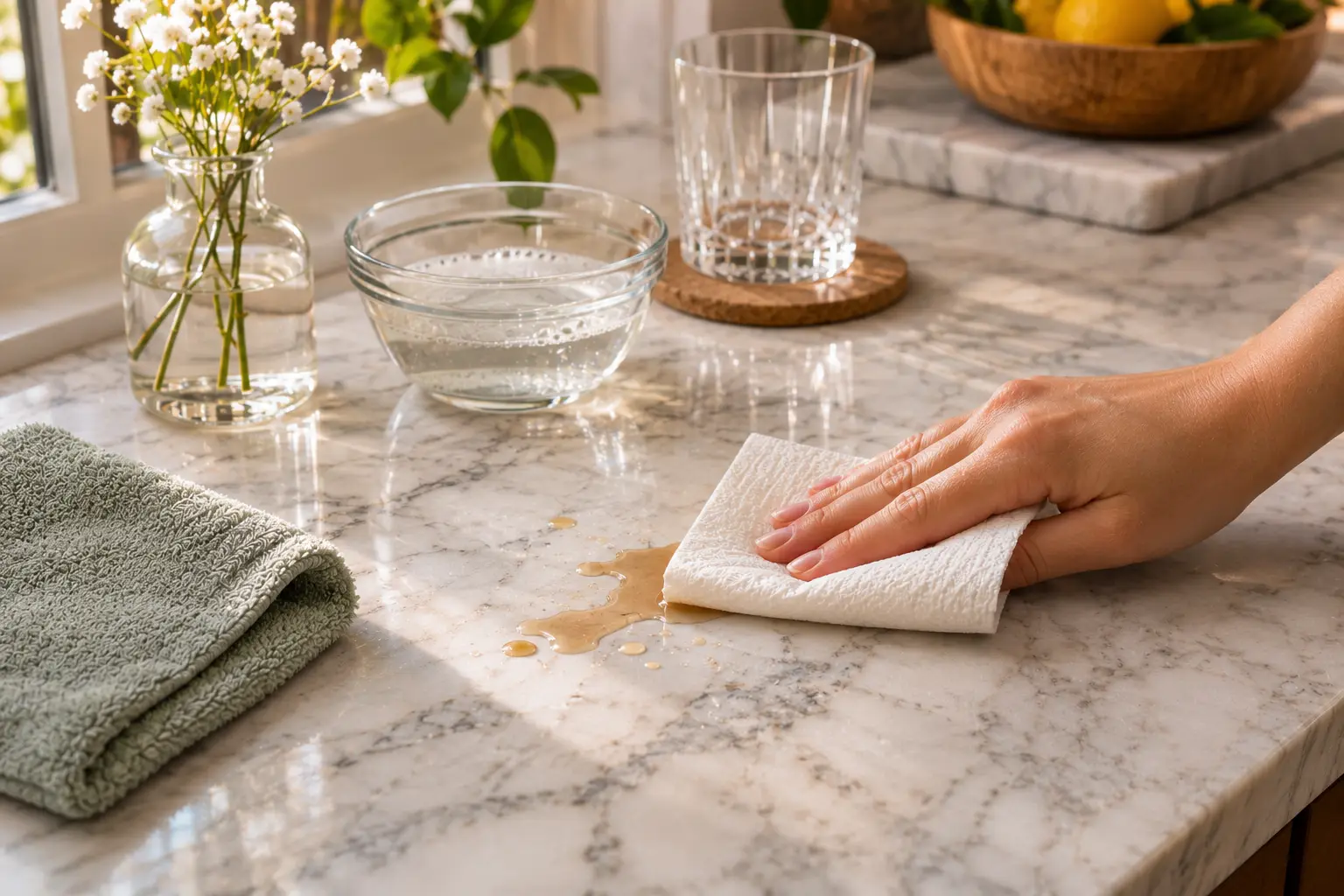
Blot Spills Immediately
Blot the spill with a paper towel right away. Do not wipe it, which spreads the liquid over a larger area. Then flush the spot with water and a little mild soap, rinse several times, and dry it thoroughly with a soft cloth.
03
Step 3 of 8
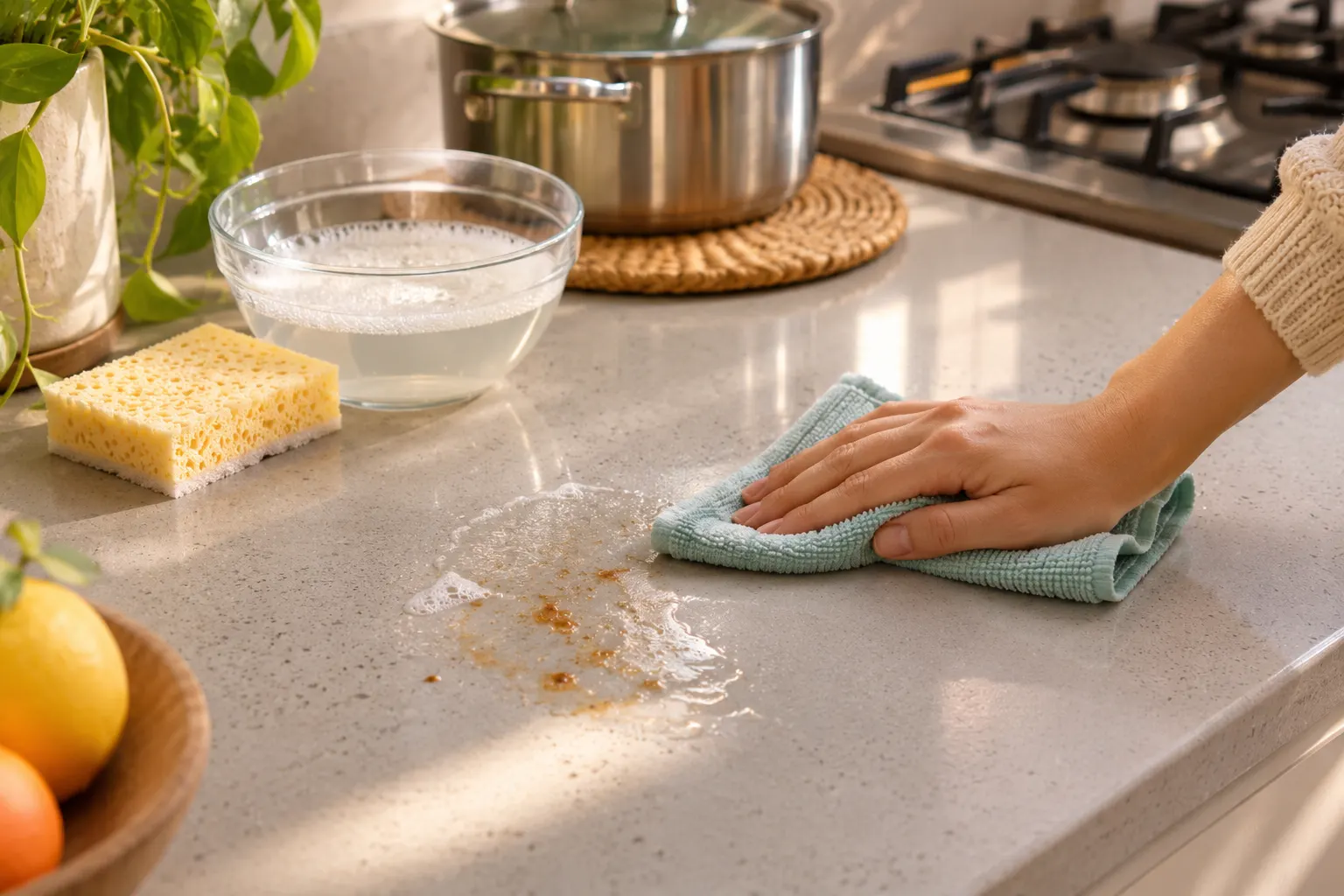
Wash with a pH-Neutral Stone Cleaner
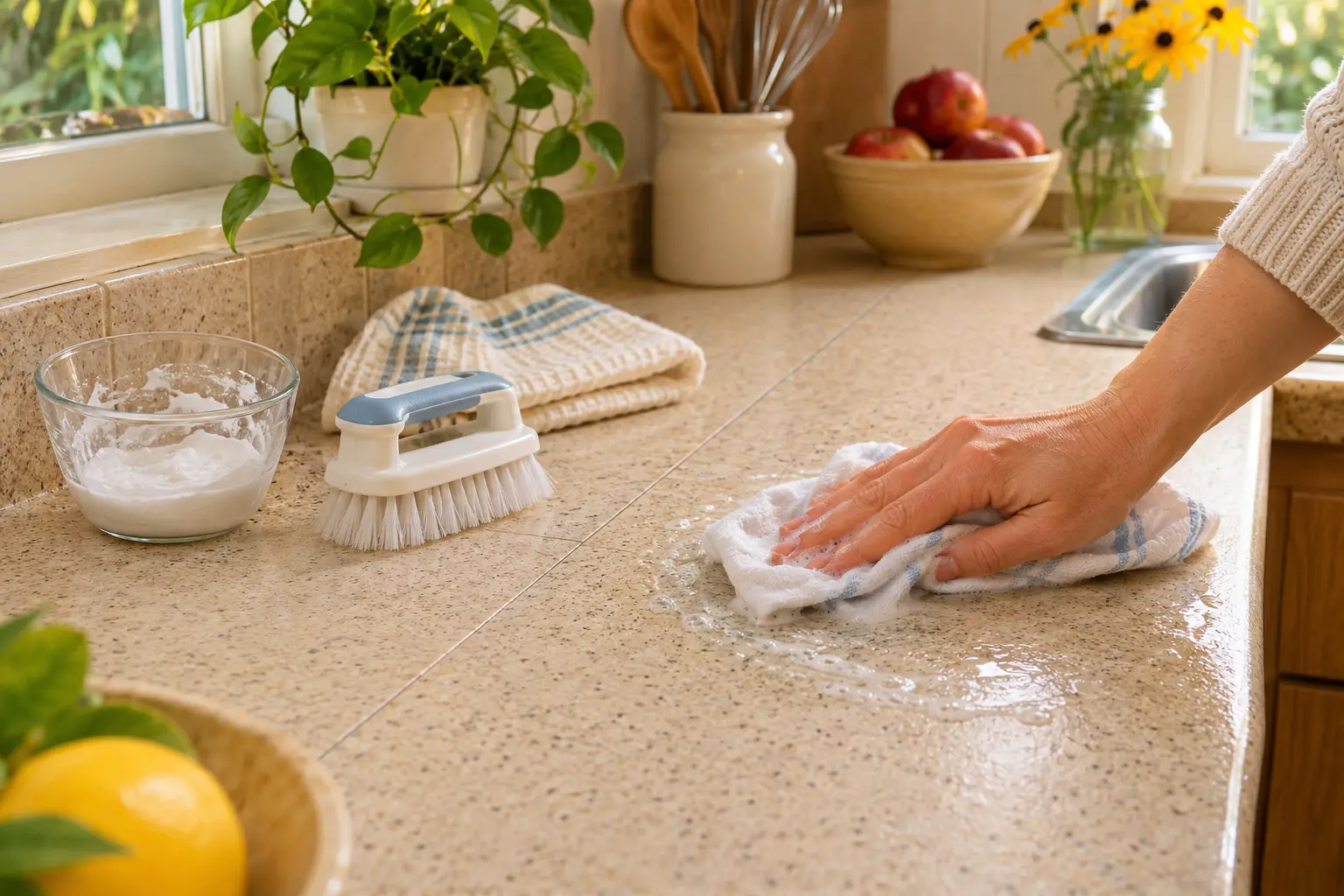
For daily cleaning, use a neutral cleaner labeled for stone, a stone soap, or a few drops of mild dish soap in warm water on a soft cloth. Read the label and make sure the product is made for stone. Use only as much cleaner as the label calls for, because too much leaves a film and streaks.
04
Step 4 of 8
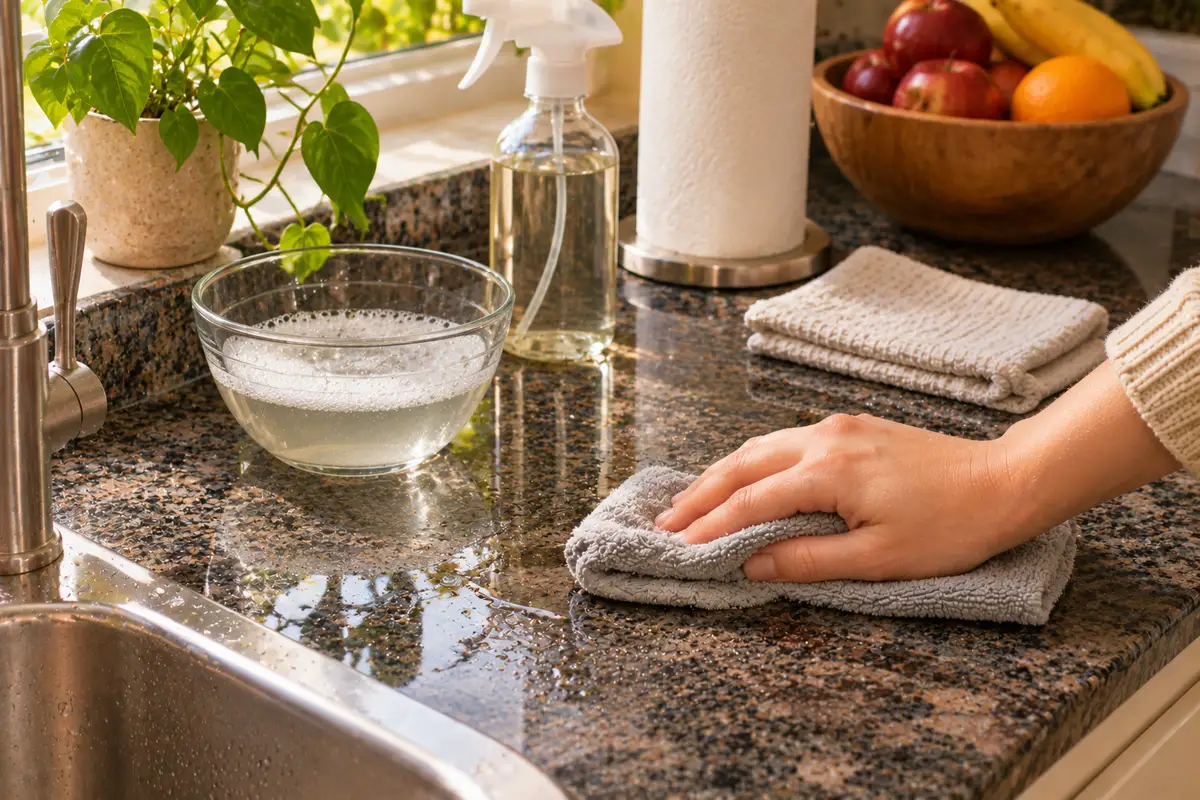
Rinse and Dry with a Soft Cloth
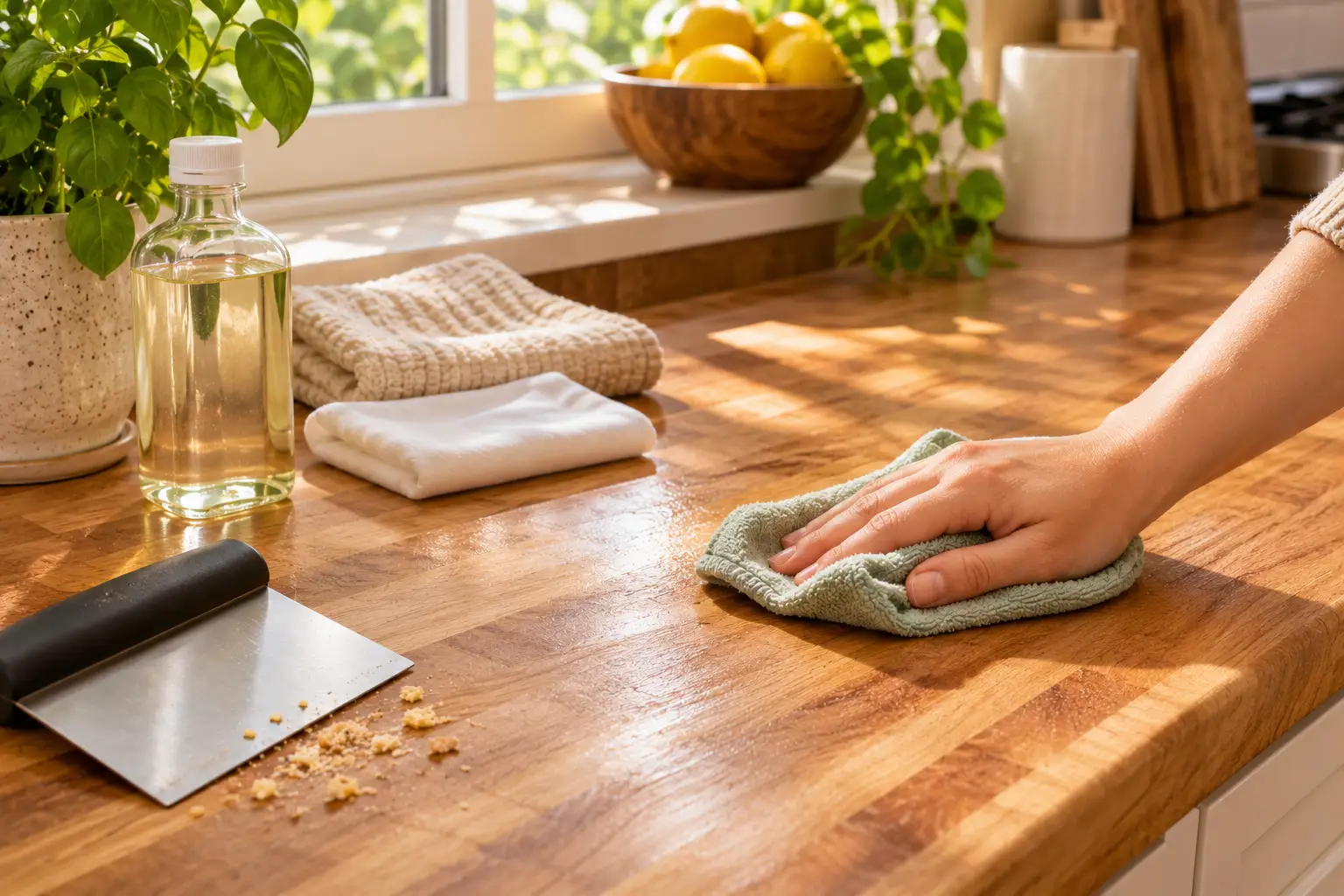
Wipe the counter again with a cloth dampened in clean water to remove any cleaner, changing the rinse water often. Then dry the whole surface with a soft, dry cloth so no film or water is left behind.
05
Step 5 of 8
Protect the Surface from Acids and Heat
Put coasters under all glasses, especially those holding alcohol or citrus juice. Keep large cutting boards by the sink and the stove, never cut directly on the marble, and do not squeeze lemons over the stone. Use trivets or mats under hot pans.
06
Step 6 of 8
Tell an Etch from a Stain
An etch is a dull, lighter or rough-looking patch you see best when light hits the stone at an angle; it is damage to the polish, not something sitting in the stone. A stain is a discoloration inside the stone, and oil-based stains darken it. For an oil stain, the Natural Stone Institute suggests a poultice of baking soda and water, which draws the stain out as it dries.
07
Step 7 of 8
Buff Out Light Etches on Polished Marble
For a light etch on polished marble, wet the area with clean water, sprinkle on marble polishing powder, and rub it in with a damp cloth until the mark fades and the shine returns. An etch remover product made for marble works the same way; follow its label. Deep or widespread etching needs a professional stone restorer to repolish the surface.
08
Step 8 of 8
Check Whether It Needs Sealing
Put a few drops of water on the marble. If the spot darkens, the stone is absorbing liquid and should be sealed with a penetrating sealer safe for food-prep surfaces, applied per the label. Sealing makes marble more stain resistant, not stain proof, and it does not protect against etching.
If that didn’t work
Stubborn or set-in? Try these next, in order.
AIf a dull mark will not buff out with polishing powder or an etch remover, the etch is too deep for a home fix. A professional stone restorer can hone and repolish the area; stone pros say polished marble may need refinishing every two to three years and honed marble every three to five.
BIf a dark stain remains after a poultice, repeat it once more, then call your stone dealer or a stone restorer rather than reaching for acidic or abrasive cleaners.
CIf the counter looks streaky or cloudy after cleaning, you may be using too much cleaner. Rinse with clean water, dry with a soft cloth, and dilute the cleaner as the label directs next time.
Common questions
Can I use vinegar to clean marble countertops?
No. Vinegar is an acid, and the Natural Stone Institute warns that products containing lemon, vinegar or other acids may dull or etch calcareous stones like marble. Use a pH-neutral stone cleaner or mild dish soap and warm water instead.
What is the difference between etching and staining on marble?
Etching is a chemical reaction: acids such as lemon juice dissolve a tiny bit of the surface and leave a dull spot or burn-like mark. Staining is a discoloration absorbed into the stone, such as oil or red wine left sitting. Stains can often be drawn out with a poultice; etches have to be polished out.
Does sealing marble prevent etching?
No. A penetrating sealer only makes marble more resistant to stains. Stone professionals note that a sealer does nothing to stop etching, no matter how much you apply, so coasters, cutting boards and blotting spills fast are still essential.
Is dish soap safe for marble countertops?
Yes, in small amounts. The Natural Stone Institute lists a mild liquid dishwashing detergent with warm water as an option alongside neutral stone cleaners and stone soaps. Rinse well and dry with a soft cloth so no soap film is left behind.
How often should marble countertops be sealed?
It depends on the stone and the sealer, and experts disagree, with recommendations ranging from about once a year to every five to ten years. Use the water drop test: if water darkens the stone, it is time to reseal, following the sealer label.
Sources we relied on
1.Care and Cleaning for Natural Stone Surfaces — Natural Stone Institute. Clean stone with a neutral cleaner, stone soap or mild dishwashing detergent and warm water, rinse and dry with a soft cloth; blot spills immediately without wiping; use coasters under glasses with alcohol or citrus; products containing lemon, vinegar or other acids may dull or etch calcareous stones; sealing makes stone more stain resistant, not stain proof; never mix ammonia and bleach.
2.Stain Removal for Natural Stone — Natural Stone Institute. Etch marks are caused by acids left on the stone; light etches can be buffed with marble polishing powder rubbed in with a damp cloth, deeper ones need a stone dealer or professional restorer; oil-based stains darken stone and can be poulticed with baking soda and water.
3.How to Care for Your Marble Countertops — Use Natural Stone (Natural Stone Institute). Clean marble daily with a mild soap or a cleaner labeled for stone; acids cause etching that looks like a dull spot or burn mark; a sealer does nothing to protect against etching; use the water drop test for sealing; use large cutting boards, trivets and coasters; honed marble is more practical than polished, and refinishing intervals run about two to three years for polished and three to five for honed.
4.A Year with Marble Countertops in the Kitchen — Use Natural Stone (Natural Stone Institute). Etching occurs when acids like lemon juice dull the stone and shows when light hits it at an angle; a honed finish hides etches best; the owner cleans with an acid-free cleaner or dish soap and water, avoids squeezing lemons on the stone or cutting directly on it, and removed etches by rubbing in an etch remover product.