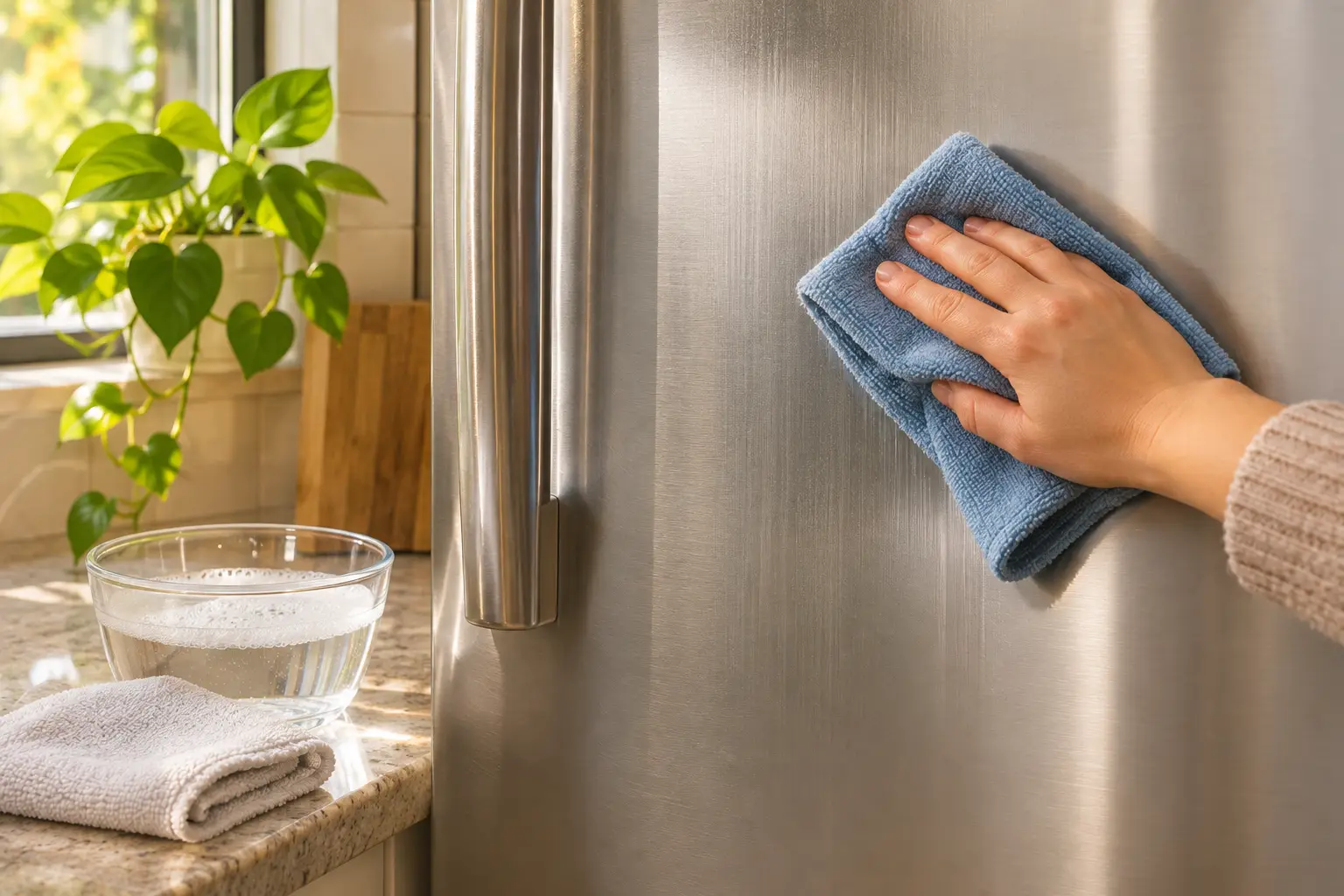
Scrape, wash with mild soap on a damp cloth, rinse and dry. How to sanitize without wrecking the wood, how often to oil with food-grade mineral oil or board cream, and why standing water is the real enemy.
Steel scraper or bench scraper (not a steel brush)
Mild liquid dish soap and warm water
Clean cloths and a dry towel
Food-grade mineral oil, butcher block oil or board cream
Lint-free cloth or applicator for oiling
Fine-grit sandpaper (about #200) for marks and scratches
Optional, only if your maker allows: 3% hydrogen peroxide or household bleach for a diluted sanitizing rinse
Step by step
01
Step 1 of 7
Identify Your Finish
Oil-finished butcher block is meant to be cut on and needs regular oiling. Varnished or polyurethane-finished wood counters are sealed, clean up with mild soap and water, and should not be cut on or oiled. Check the care sheet that came with your top; this guide focuses on oil-finished butcher block.
02
Step 2 of 7
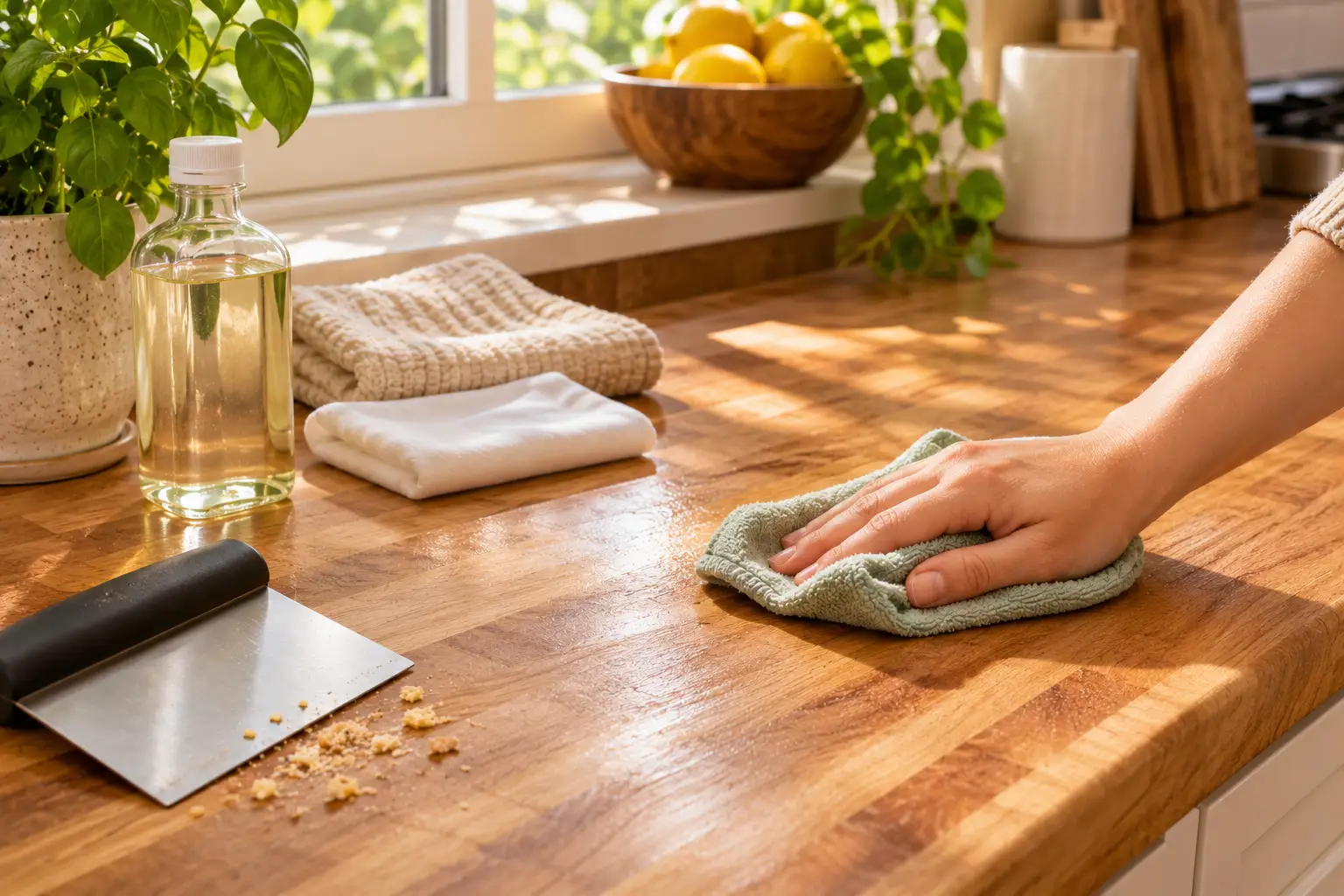
Scrape Off Food and Crumbs
Use a steel scraper or spatula to push crumbs, dough and food bits off the surface, as often as needed through the day. Do not use a steel brush, which tears up the wood fibers.
03
Step 3 of 7
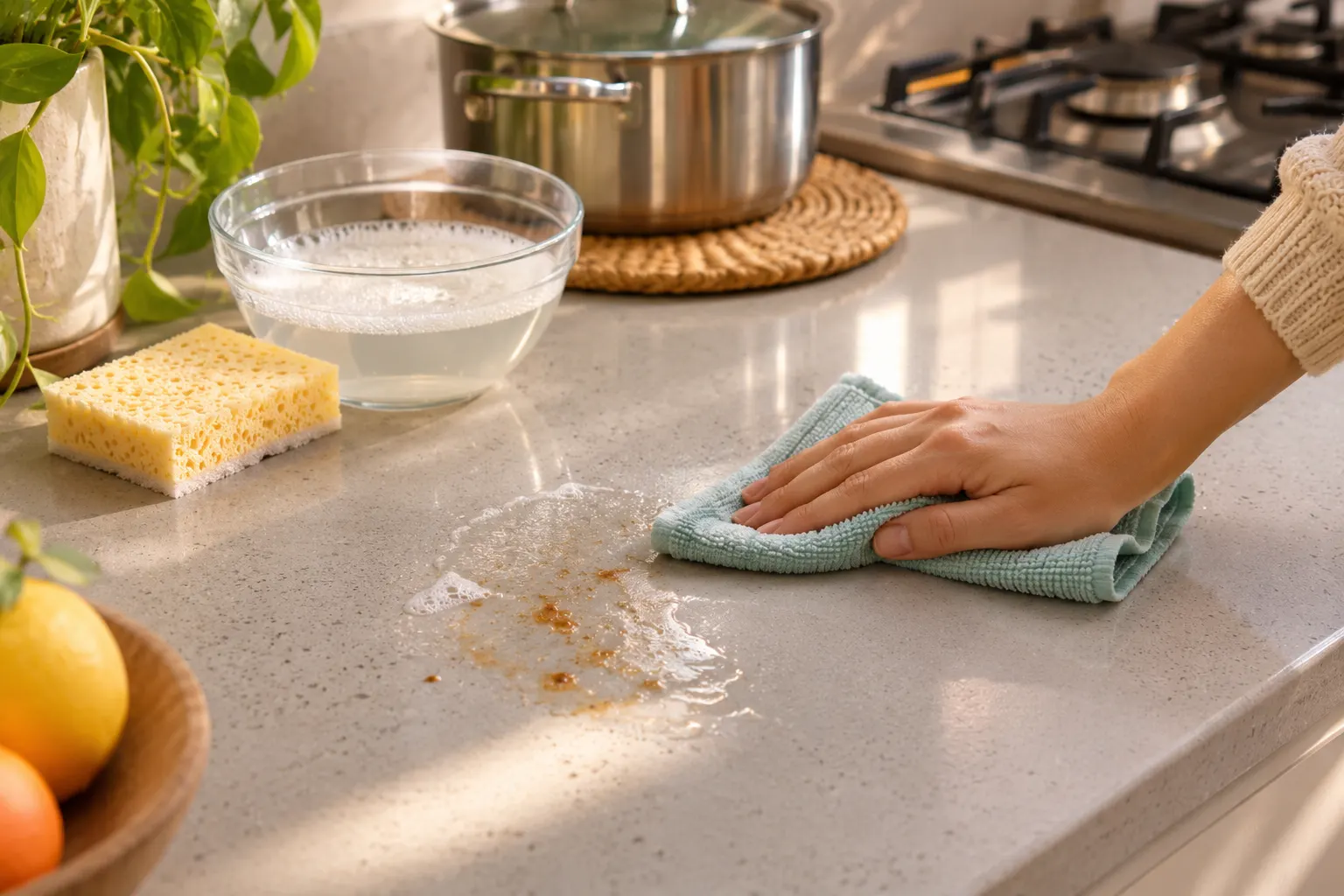
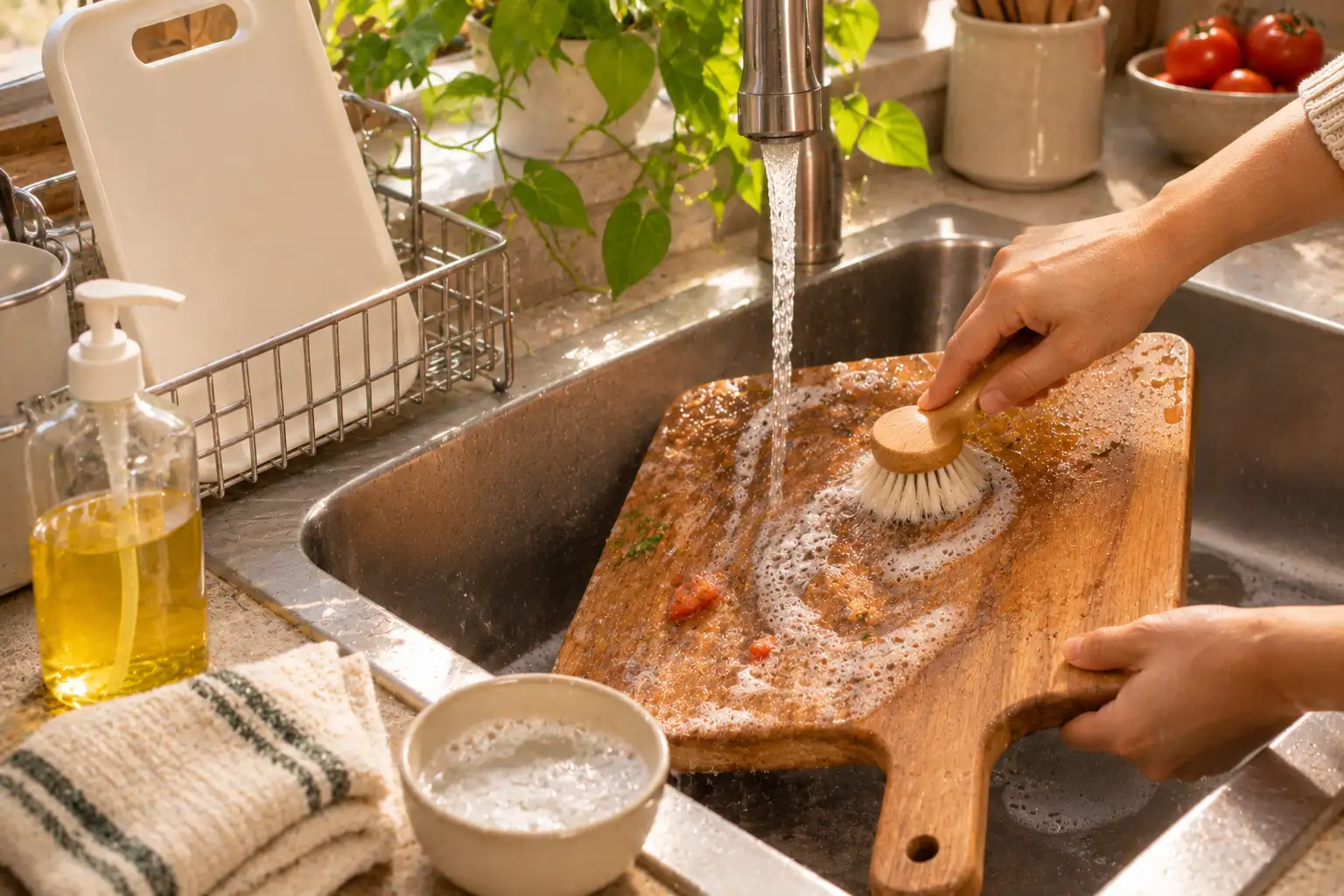
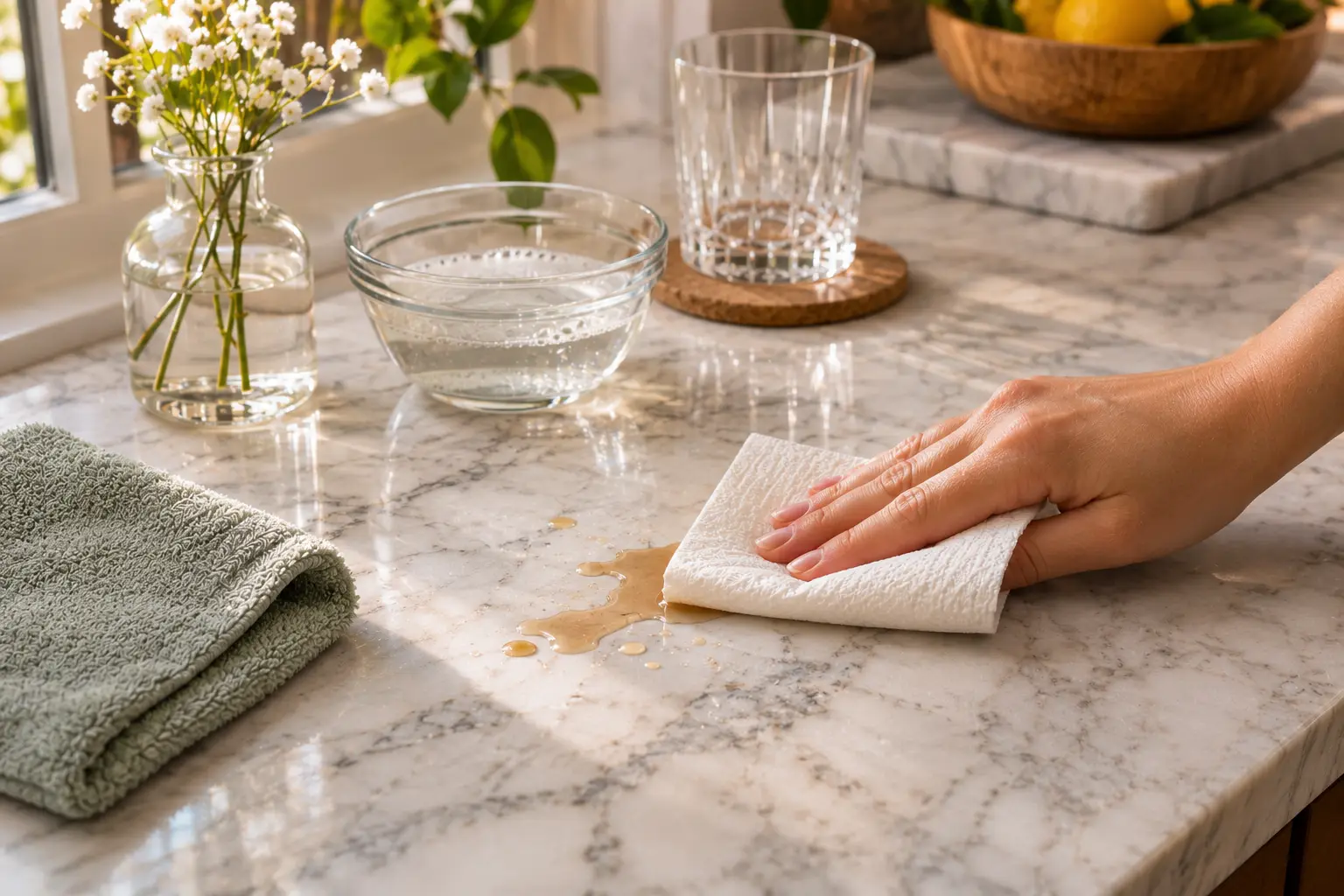
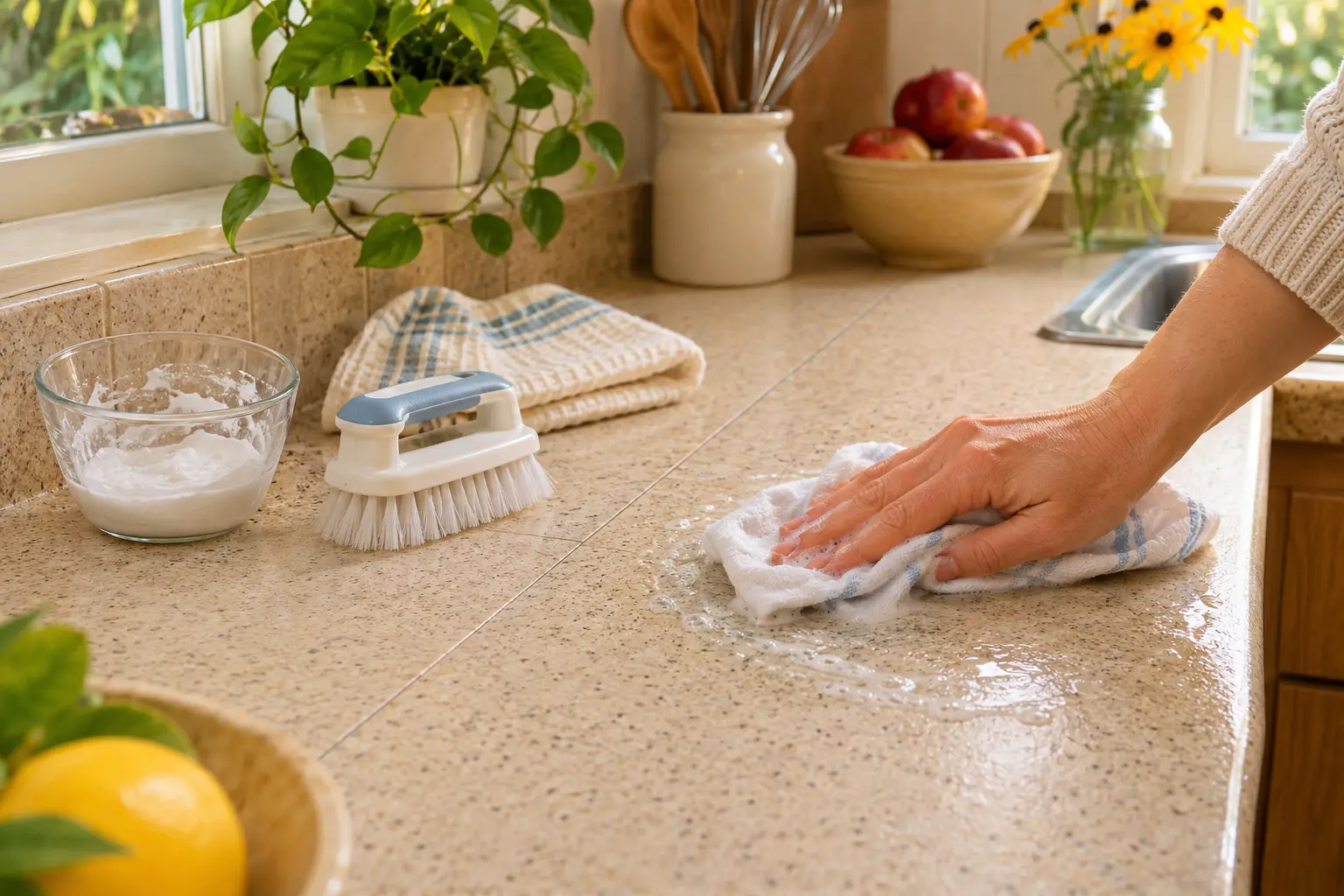
Wash with Mild Soap on a Damp Cloth
Dampen a clean cloth in a mild soap-and-water solution, such as warm water with a little dish detergent, and wipe the top until all the debris is gone. Keep the cloth damp, not dripping. Clean food-prep areas thoroughly after each use, especially after raw fish or poultry.
04
Step 4 of 7
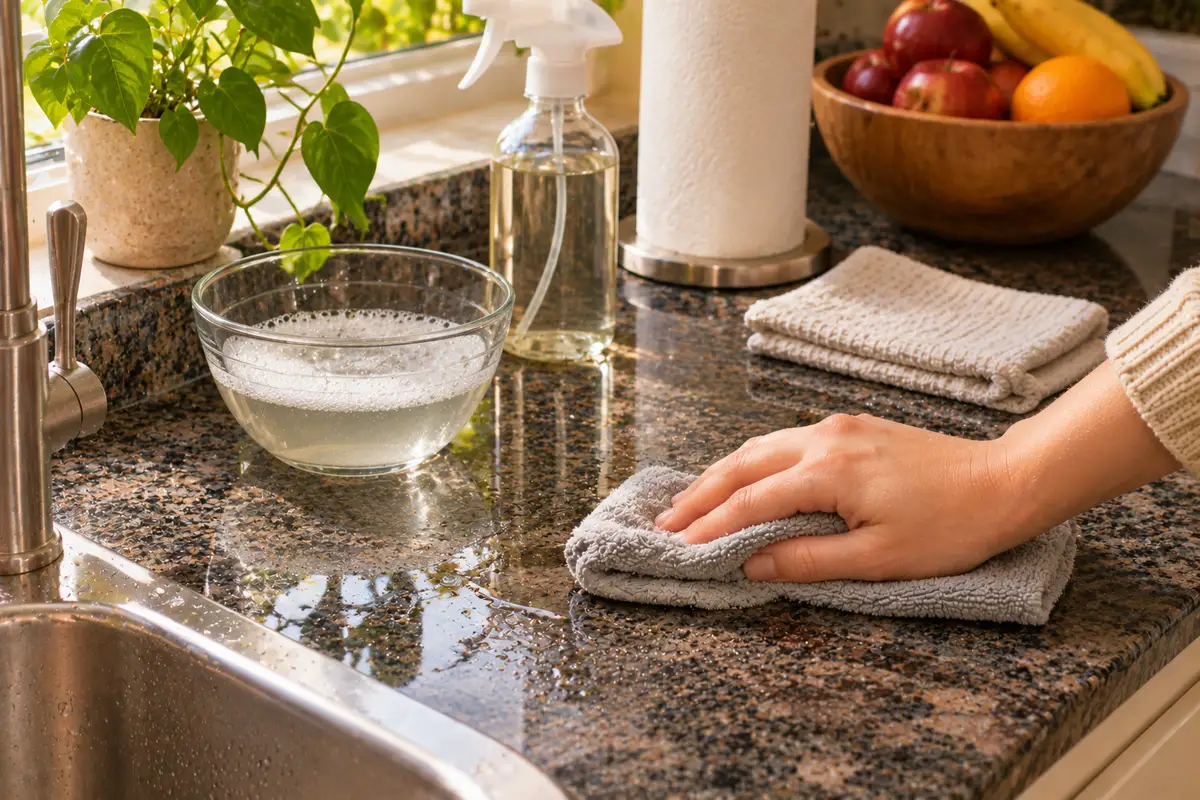
Rinse and Dry Thoroughly
Rinse the cloth in clean water and wipe the surface again to remove the soap. Then dry the counter with a towel or soft cloth. Do not leave puddles, wet sponges or dish racks sitting on the wood.
05
Step 5 of 7
Sanitize Only the Way Your Maker Allows
Care instructions differ here, so follow the sheet for your countertop. The Hardwood Manufacturers Association says a solution of one tablespoon of bleach per gallon of water helps kill bacteria; one butcher block maker suggests 3% hydrogen peroxide for deeper sanitizing of oiled tops. Wipe it on, then rinse with clean water and dry. If your maker, like John Boos, says no harsh detergents of any kind, stick to soap and water and a thorough wash after raw meat.
06
Step 6 of 7
Oil When the Wood Looks Dry
On a clean, dry surface, apply an even coat of food-grade mineral oil or butcher block oil to the top, and to the edges where you can reach. Let it soak in overnight, then wipe off the excess. Do this at least once a month, or sooner when the wood looks dry or lighter in color, but do not over-oil.
07
Step 7 of 7
Sand Out Light Marks and Scratches
For knife marks, minor scratches and surface marks that washing will not lift, sand the area lightly with fine (about #200) sandpaper, always with the grain. Wipe away all the dust, then re-oil the sanded area so the bare wood is protected again.
If that didn’t work
Stubborn or set-in? Try these next, in order.
AIf the wood stays rough or fuzzy after oiling, the grain has raised. Sand lightly with fine sandpaper along the grain, wipe clean and oil again.
BIf a dark mark remains after light sanding, it may run deeper into the wood. Check with the countertop maker before sanding further.
CIf joints are separating or the wood near the sink has turned soft, water has soaked in. Stop standing water at the source and contact the manufacturer or a woodworker about repair or refinishing.
Common questions
What is the best thing to clean butcher block countertops with?
A mild soap, such as liquid dish detergent, and warm water on a clean damp cloth, followed by a wipe with a rinsed cloth and a thorough drying. Avoid harsh detergents, abrasive scouring cleansers and anything that leaves the wood wet.
Can you use vinegar on butcher block?
Some butcher block makers list white vinegar as an option for oiled tops, but others, such as John Boos, say to avoid harsh cleaners of any kind. Check your countertop care sheet; mild soap and water is safe for all oil-finished tops.
How often should you oil butcher block countertops?
John Boos recommends at least once a month, depending on use and household conditions. Oil sooner whenever the wood looks dry or lighter in color, let the oil soak in overnight, and wipe off the excess.
Can I use olive or vegetable oil on butcher block?
Stick to oils sold for the job: food-grade mineral oil, butcher block oil or board cream. Countertop makers recommend these, and your care sheet will name the products approved for your top.
Is it safe to cut raw meat on butcher block?
On an oil-finished top with an intact oil barrier, yes, but clean the surface thoroughly right after cutting fish or poultry, and do not let meat juices or blood sit on the wood. Never cut on varnished or polyurethane-finished wood counters.
Sources we relied on
1.Caring for Countertops and Worktops: Kitchen Countertops — John Boos & Co.. Scrape with a steel scraper, not a steel brush; wipe with a mild soap-and-water solution, wipe again to remove soap and dry thoroughly; no harsh detergents; oil at least once a month, let it soak in overnight and wipe off excess, without over-oiling; Board Cream adds protection; sand minor scratches with #200 sandpaper with the grain; do not let liquids stand on the surface; clean thoroughly after cutting fish or poultry.
2.Caring for Hardwood Countertops — American Hardwood Information Center (Hardwood Manufacturers Association). Clean food-prep wood counters thoroughly after each use with mild soap and water and dry with a towel; a solution of one tablespoon of bleach per gallon of water helps kill bacteria; oil the wood when it dries out or lightens; knives permanently damage polyurethane-finished counters.
3.Wood Countertop Installation, Care and Maintenance — Hardwood Lumber Company. Clean oiled tops with mild soap and warm water or full-strength white vinegar, use 3% hydrogen peroxide for deeper sanitation, let surfaces dry before re-oiling, oil with mineral oil or butcher block conditioner, sand raised grain with fine sandpaper, and do not allow standing water or soak the wood.