How to clean stainless steel appliances without streaks
Warm soapy water, a soft microfiber cloth, every stroke with the grain, and a separate dry cloth to buff. What fingerprint-resistant finishes need, and the cleaners that scratch or dull stainless.
Two or three clean microfiber cloths (one for washing, one for rinsing, one for buffing)
Warm water
Mild liquid dish soap (a few drops)
Non-abrasive sponge (for dried-on food only)
Optional, traditional stainless only and only if your manual allows: stainless steel spray or cream cleaner
Optional for brown stains on traditional stainless: baking soda
Step by step
01
Step 1 of 7
Check Your Finish and Your Owner's Manual
Look up the model in your owner's manual or on the manufacturer's support site. Traditional brushed stainless, fingerprint-resistant stainless and black stainless have different care instructions, and the manual lists the cleaners that are safe for your finish. Fingerprint-resistant and black finishes generally call for mild soap and water only.
02
Step 2 of 7
Find the Direction of the Grain
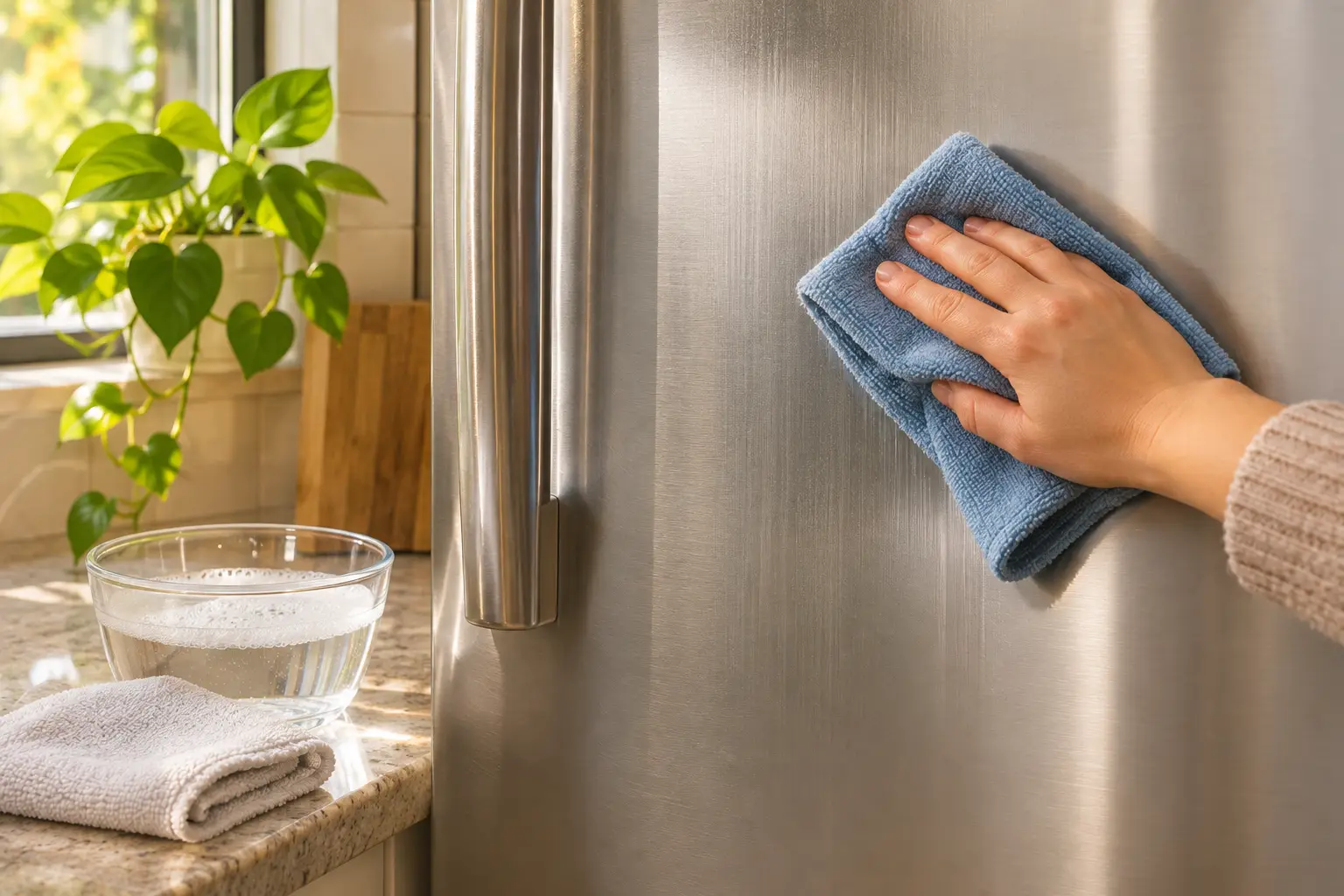
Look closely, or shine a light across the door, for the fine parallel lines brushed into the metal. If the grain runs horizontally, every stroke goes left to right. If it runs vertically, wipe downward. Wiping across the grain leaves visible streaks.
03
Step 3 of 7
Lift Food and Water Deposits
Dampen a microfiber cloth with warm water and wipe off drips, splatters and dried water spots, following the grain. For dried-on food, hold the damp cloth against it for a minute to soften it, or use a non-abrasive sponge, never a scouring pad.
04
Step 4 of 7
Wash with Warm Water and Mild Dish Soap
Add a few drops of mild dish soap to a bowl of warm water. Dip the cloth, wring it until it is just damp, and wipe the whole panel with the grain using even, overlapping strokes. A damp cloth, not a wet one, means less water to dry off and fewer streaks.
05
Step 5 of 7
Wipe Off the Soap with Plain Water
Rinse a second cloth in clean water, wring it out, and wipe the panel again with the grain to remove soap residue. Leftover soap film is one of the main causes of streaks and smears.
06
Step 6 of 7
Buff Completely Dry with a Separate Cloth
With a clean, dry microfiber cloth, buff the whole surface with the grain until no moisture remains. Do not let it air-dry: water left on stainless can leave spots and discoloration, and the dry buff is what removes the last streaks.
07
Step 7 of 7
Treat Brown Stains Gently (Traditional Stainless Only)
For brown stains or discoloration on traditional stainless, mix baking soda and warm water into a paste, rub it gently into the stain with a soft cloth in the direction of the grain, and leave it 2 to 3 minutes. Wipe it off with a damp cloth and buff dry. If your manual recommends a stainless steel cleaner instead, use that and follow its label.
If that didn’t work
Stubborn or set-in? Try these next, in order.
AIf streaks remain after buffing, the panel likely still has residue on it. Repeat the plain-water wipe with a freshly rinsed cloth, then buff again with a completely dry one, keeping every stroke with the grain.
BIf a store-bought stainless cleaner left a greasy, smeary film, wash it off with warm soapy water, rinse, and dry; then stick to soap and water or the product your manual names.
CScratches, pitting and worn patches in a fingerprint-resistant coating are damage, not dirt. Contact the appliance manufacturer rather than trying to buff them out with abrasives, which manufacturers warn can scratch or dull the finish.
Common questions
Why does my stainless steel fridge streak after I clean it?
Streaks usually come from three things: soap or cleaner residue left on the surface, water left to air-dry, and wiping across the grain. Rinse with a cloth dampened in plain water, then buff completely dry with a separate clean microfiber cloth, always with the grain.
Can I use Windex or glass cleaner on stainless steel appliances?
Many glass cleaners contain ammonia, and Whirlpool advises against cleaners with ammonia or bleach on stainless steel appliances. Warm water with a little mild dish soap, followed by a plain-water wipe and a dry buff, is the safer choice.
Is vinegar safe on stainless steel appliances?
It depends on your appliance. Some manufacturer blogs list vinegar as a home remedy, but Whirlpool's product help page for traditional stainless steel lists vinegar-based cleaners among products to avoid. Check your owner's manual; when in doubt, use mild soap and water.
How do you clean fingerprint-resistant stainless steel?
Wash with warm water and mild soap or detergent on a soft cloth, wipe, and dry thoroughly with a clean microfiber cloth. Do not use chlorine bleach, abrasive or harsh cleaners, scouring pads, steel wool, gritty cloths or paper towels, which can scratch or dull the protective coating.
Should I polish stainless steel with oil?
Some guides suggest a light mineral oil buff on traditional stainless, but care instructions for fingerprint-resistant finishes list only mild soap and water. Use oil only if your owner's manual allows it, and never on a fingerprint-resistant or black stainless finish without the manufacturer's approval.
Sources we relied on
1.How to Clean and Polish Stainless Steel Appliances — Whirlpool. Consult the owner's manual first, wipe in the direction of the grain (left to right for horizontal grain, downward for vertical), buff with a separate clean microfiber cloth to remove streaks, use a baking soda paste for brown stains, and avoid cleaners with bleach or ammonia, steel brushes and steel wool.
2.Cleaning Traditional Stainless Steel — Whirlpool Product Help. Wash with warm soapy water and a nonabrasive sponge, always rub evenly with the grain, polish and dry with a clean microfiber or soft cloth because water left on the surface can cause discoloration, and avoid abrasive cloths, paper towels, steel wool, abrasive powders, ammonia, citrus-based and vinegar-based cleaners.
3.Cleaning Fingerprint Resistant Stainless Steel — Whirlpool Product Help. Fingerprint-resistant stainless should be washed with warm water and mild soap or detergent and dried thoroughly with a microfiber or soft cloth, without soap-filled scouring pads, abrasive or harsh cleaners, chlorine bleach, steel wool, gritty washcloths or paper towels.