Find and throw out whatever is spoiling, wash the shelves, bins and liner with a mild solution, then let baking soda or activated charcoal pull out what lingers. Plus the defrost drain, filters and old ice, and what to toss after a power outage.
Baking soda: 2 tablespoons for a quart of wash water, plus an open box for absorbing odors
Warm water, a bucket and a clean sponge or soft cloth
Soft dry cloths or towels
Optional: white vinegar and lemon juice for stubborn odors (Whirlpool method)
Optional: activated charcoal in a paper bowl
Optional: turkey baster for flushing the defrost drain
Replacement air filter or water filter if yours is due
Step by step
01
Step 1 of 7
Empty the Fridge and Throw Out the Source
Take everything out and check each item for spoilage, leaks and loose lids. Throw out anything spoiled, rotting or past its prime, including forgotten leftovers at the back and anything with an unusual smell, color or texture. Look for spills under the crisper drawers and in door bins. Removing the source is the actual fix; deodorizers only work once it is gone.
02
Step 2 of 7
Unplug the Refrigerator
Unplug the refrigerator or disconnect the power at the breaker before cleaning inside it. This is the first step in Whirlpool's odor-removal process and keeps you safe while you wipe around lights and controls.
03
Step 3 of 7
Wash the Shelves, Bins and Drawers
Remove the shelves, crisper drawers and door bins. Hand wash them in warm water with a mild detergent, rinse, and dry them thoroughly with a soft cloth. Whirlpool says glass shelves and bins can go on the top rack of a dishwasher once they reach room temperature, but prefers hand washing, and shelves with built-in LED lights are not dishwasher safe.
04
Step 4 of 7
Wipe the Walls, Floor and Door Gasket
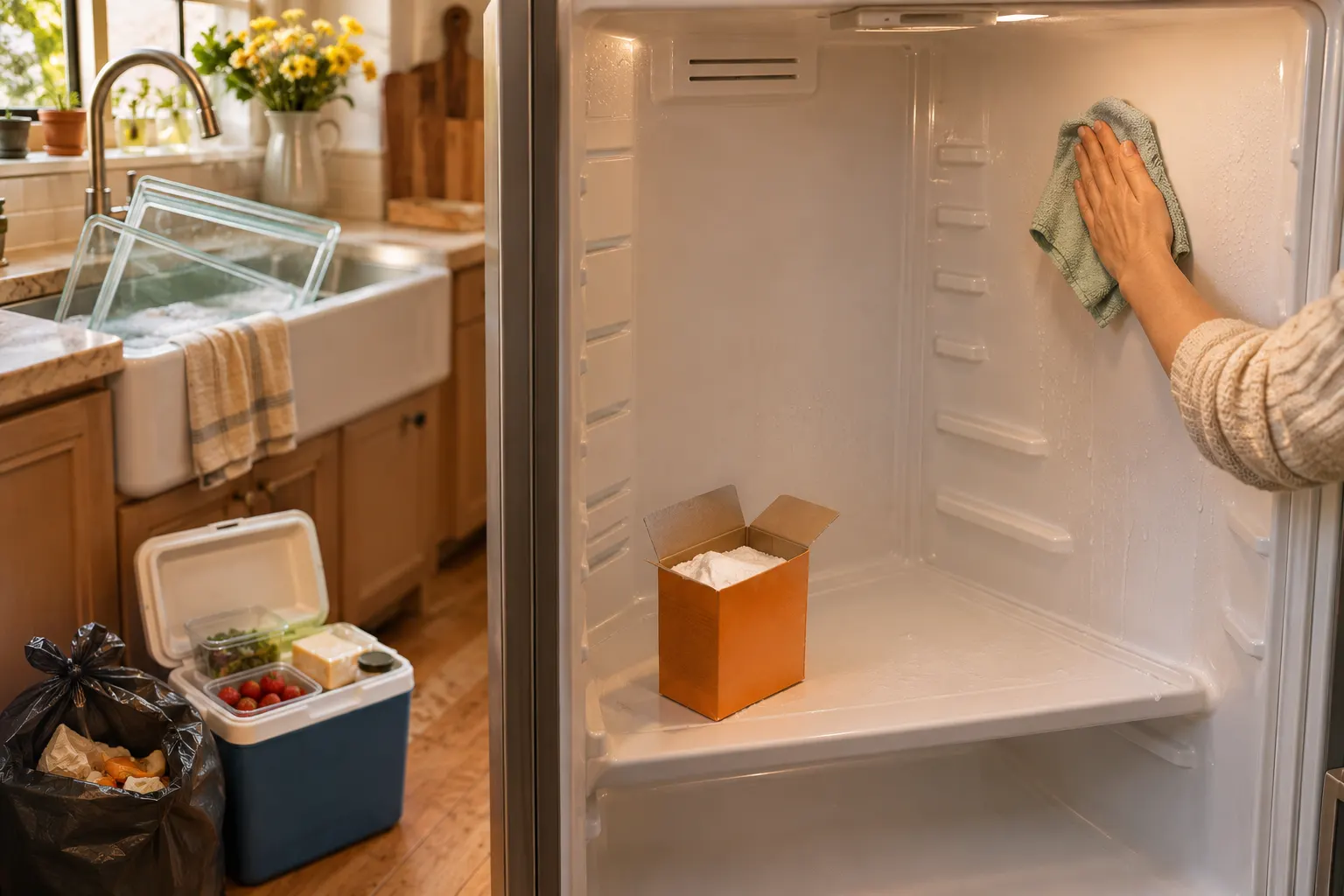
Mix 2 tablespoons of baking soda into a quart of warm water, or use a mild detergent in warm water. With a clean sponge or soft cloth, wipe the interior walls, floor, door liner and the folds of the door gasket, where spills and crumbs collect. Wipe with clean water and dry. Skip bleach and heavily scented cleaners, which can soak into the plastic liner.
05
Step 5 of 7
Reassemble, Restore Power and Absorb What Lingers
Put the dry shelves and bins back, plug the refrigerator in, and return the food in covered or tightly wrapped containers. Place an open box of baking soda in the fridge and another in the freezer. For a stronger absorber, Whirlpool suggests activated charcoal in a paper bowl in each compartment.
06
Step 6 of 7
Clear the Defrost Drain and Check the Drain Pan
On many refrigerators, melted frost runs through a drain at the back of the fridge or freezer into an evaporation pan underneath. If water pools under the crisper drawers, the drain is likely clogged. GE suggests flushing the drain opening with warm water using a turkey baster. With the power off, check that the drain pan under the unit sits flat and is not cracked, and clean under the refrigerator to remove trapped dirt and debris. Follow your owner's manual for how to reach the pan on your model.
07
Step 7 of 7
Replace Overdue Filters and Dump Old Ice
If your refrigerator has a carbon air filter, replace it according to its indicator tab; GE lists this as an odor fix. GE says a water filter should be replaced every 6 months or as the manufacturer recommends, because an old filter can make water and ice taste bad. Old, stale ice absorbs food odors, so empty the ice bin and let the icemaker make a fresh batch.
If that didn’t work
Stubborn or set-in? Try these next, in order.
AFor a stubborn odor, Whirlpool recommends an empty refrigerator: wash the removable parts in one part vinegar to one part warm water, rinse them in one part lemon juice to one part warm water, dry them, then set out activated charcoal and open boxes of baking soda in both compartments. Whirlpool says this can take several weeks and should be repeated every week or two, with fresh charcoal and baking soda each time, until the smell is gone.
BIf water keeps pooling under the crisper drawers or the smell is musty rather than food-like, the defrost drain is probably still blocked. Unplug the refrigerator and flush the drain opening again with warm water using a turkey baster, as GE suggests, and check that the drain pan underneath is in place and not cracked.
CIf a strong odor survives repeated cleaning, especially after spoiled meat or fish leaked, contact the manufacturer or an appliance service technician rather than trying harsher chemicals on the liner.
Common questions
What is the fastest way to get a bad smell out of a refrigerator?
Throw out the spoiled food causing it, then wash the removable parts in warm water with mild detergent and wipe the interior with 2 tablespoons of baking soda in a quart of warm water. That basic cleaning is the first step in Whirlpool's odor process; an open box of baking soda or activated charcoal absorbs what is left.
Does an open box of baking soda really get rid of fridge odors?
It helps absorb lingering odors once the source is gone, and Whirlpool includes it in its stubborn-odor process alongside activated charcoal. It will not fix a smell while spoiled food, a spill or a clogged drain is still there. On models with a carbon air filter, replacing an overdue filter also helps.
Can I use bleach to clean the inside of my refrigerator?
Check your owner's manual first. Some food-safety guides recommend a dilute bleach rinse, but Whirlpool lists bleach among cleaners to avoid on plastic parts, liners and gaskets, and GE warns that harsh bleach can soak into plastic liners. We follow the manufacturers: use mild detergent or a baking soda solution instead.
Why does my ice smell or taste bad?
Ice absorbs odors from open or spilled food in the refrigerator and freezer, and old ice that sits unused absorbs more. An overdue water filter or minerals in the water supply can also cause bad taste. Clean up the food, dump the old ice, and replace the water filter every 6 months or as your manufacturer recommends.
How long is food safe in the fridge without power?
The CDC says refrigerated food stays safe for up to 4 hours if the doors stay closed, and a full freezer holds for about 48 hours, a half-full one about 24. After that, throw out perishable food such as meat, fish, eggs, milk and leftovers. Never taste food to check it; when in doubt, throw it out.
Sources we relied on
1.Removing and Preventing Odors — Whirlpool Product Help. Basic odor removal: empty the fridge and check for spoiled food and spills, unplug it, hand wash removable parts and clean walls and floor with mild detergent and warm water. Stubborn odors (empty fridge): wash parts in 1:1 vinegar and warm water, rinse in 1:1 lemon juice and warm water, set out activated charcoal and baking soda in both compartments; may take several weeks, repeat every week or two. Avoid bleach, scouring cleansers, window sprays and similar harsh cleaners on plastic parts, liners and gaskets; clean under the refrigerator; replace the air filter per its indicator tab.
2.FAQs: Refrigerators — GE Appliances. For odors, discard old leftovers and expired food, wipe surfaces with two tablespoons of baking soda in a quart of warm water, avoid harsh bleach or heavily scented detergents that can soak into plastic liners, and replace the carbon air filter if equipped; a clogged defrost drain is usually behind water under the crispers and can be flushed with warm water using a turkey baster; unplug the fridge and check the defrost drain pan sits flat and is not cracked.
3.Refrigerator - Ice Cubes Taste Bad — GE Appliances. Food can transfer odors and tastes to ice; open or spilled food and old, stale ice from low ice usage cause bad-tasting ice; water supply contaminants can cause bad taste; the water filter should be replaced every 6 months or as recommended by the manufacturer.
4.Keep Food Safe After a Disaster or Emergency — Centers for Disease Control and Prevention. Keep refrigerator and freezer doors closed; refrigerated food stays safe up to 4 hours without power and the refrigerator should be at 40 F or below; a full freezer holds 48 hours and a half-full freezer 24 hours; throw out perishable refrigerated food after 4 hours without power and any food with an unusual smell, color or texture; never taste food to check safety; when in doubt, throw it out.