A damp cotton cloth, mild liquid detergent, a clean-water rinse and a dry wipe. How Formica and Wilsonart say to lift stains, why seams hate standing water, and the cleaners that permanently etch laminate.
Mild liquid dish detergent or a mild household cleaner
Warm, clean water for rinsing
Nylon-bristled hand brush or soft vegetable brush (textured finishes and stains)
Baking soda (for a stain paste)
Optional, for stubborn stains: denatured or isopropyl alcohol, used as the label directs
Trivets or hot pads
Step by step
01
Step 1 of 7
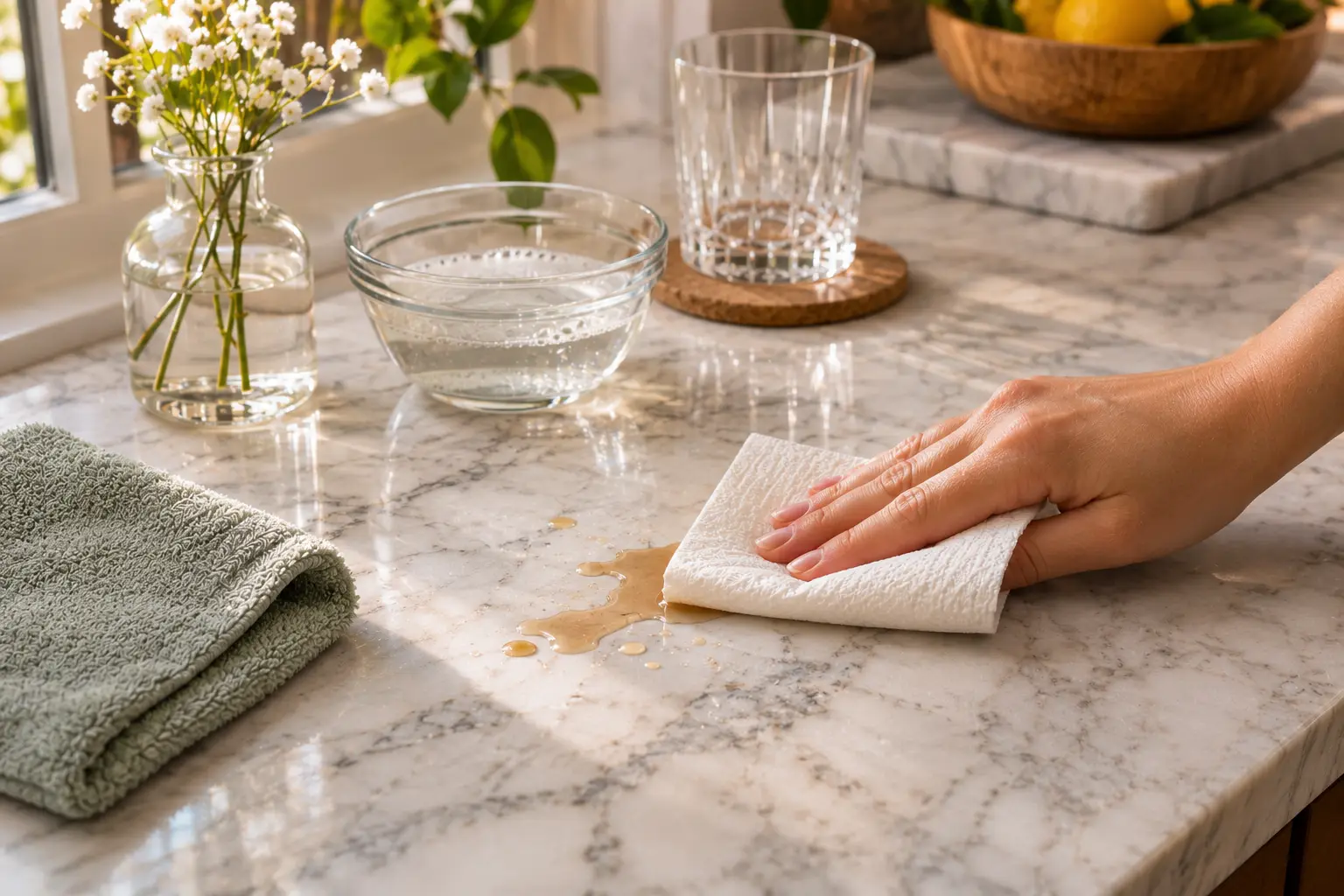
Wipe Up Spills Right Away
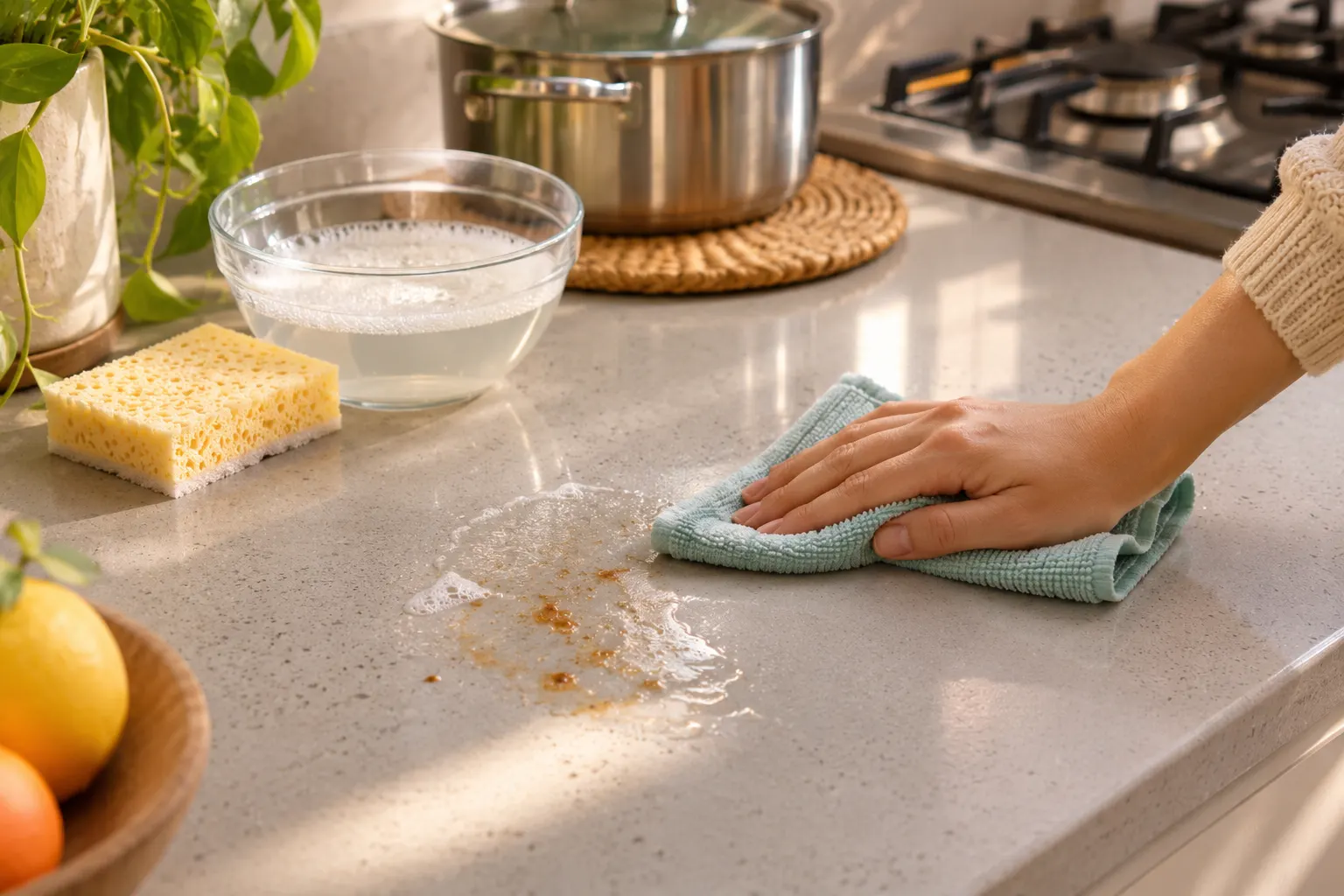
Clean up spills as soon as they happen. Wilsonart warns that hair, textile and food dyes can leave permanent stains if they sit, so wipe a dye spill immediately with dishwashing detergent or an all-purpose cleaner. Harsh chemicals such as drain cleaner or oven cleaner should be wiped off at once and the spot rinsed several times with water.
02
Step 2 of 7
Wash with Mild Detergent and a Soft Cloth
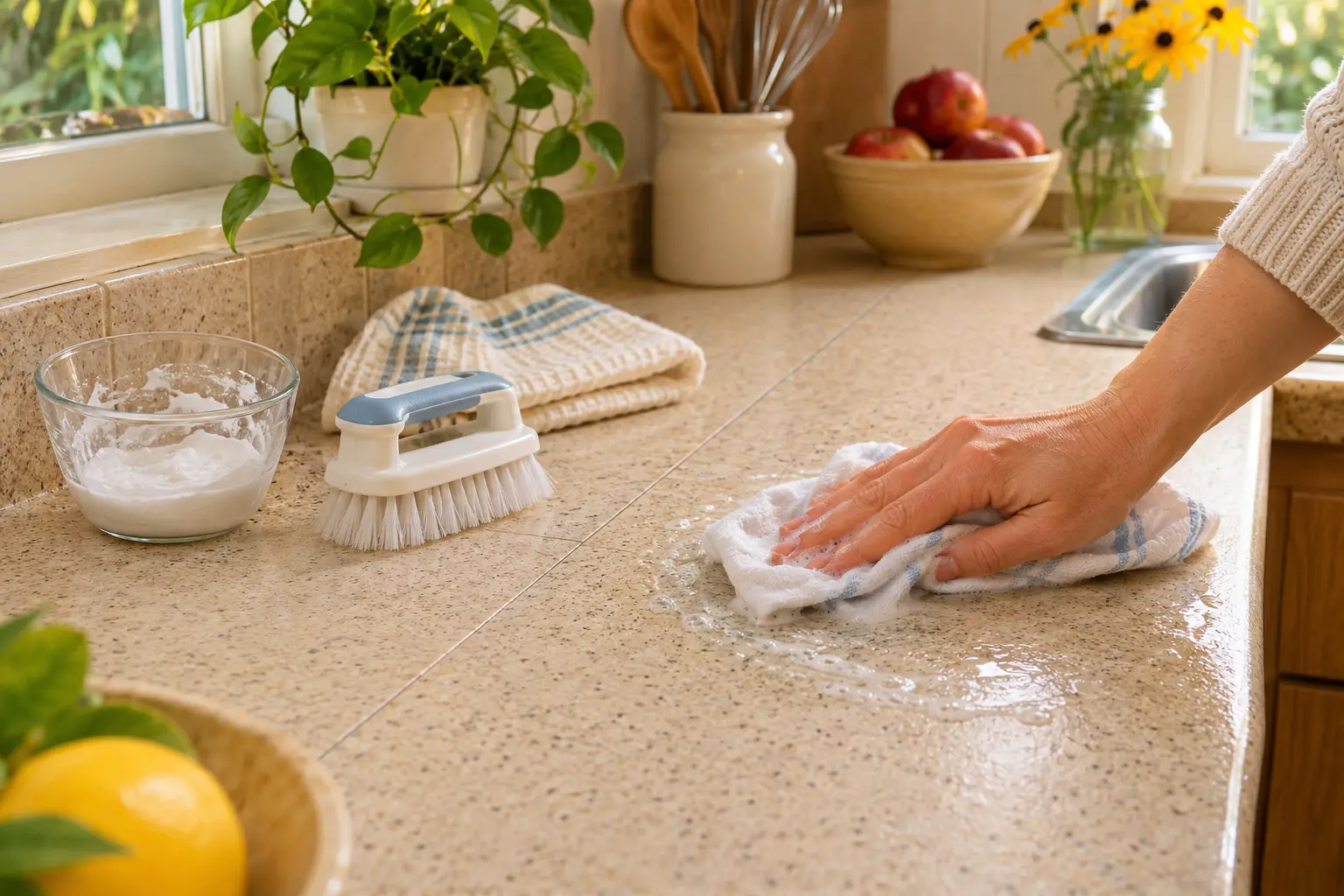
Dampen a clean, non-abrasive cotton cloth or sponge in warm water with a little mild liquid detergent or a mild household cleaner, and wipe the whole counter. For everyday cleaning this is all laminate needs.
03
Step 3 of 7
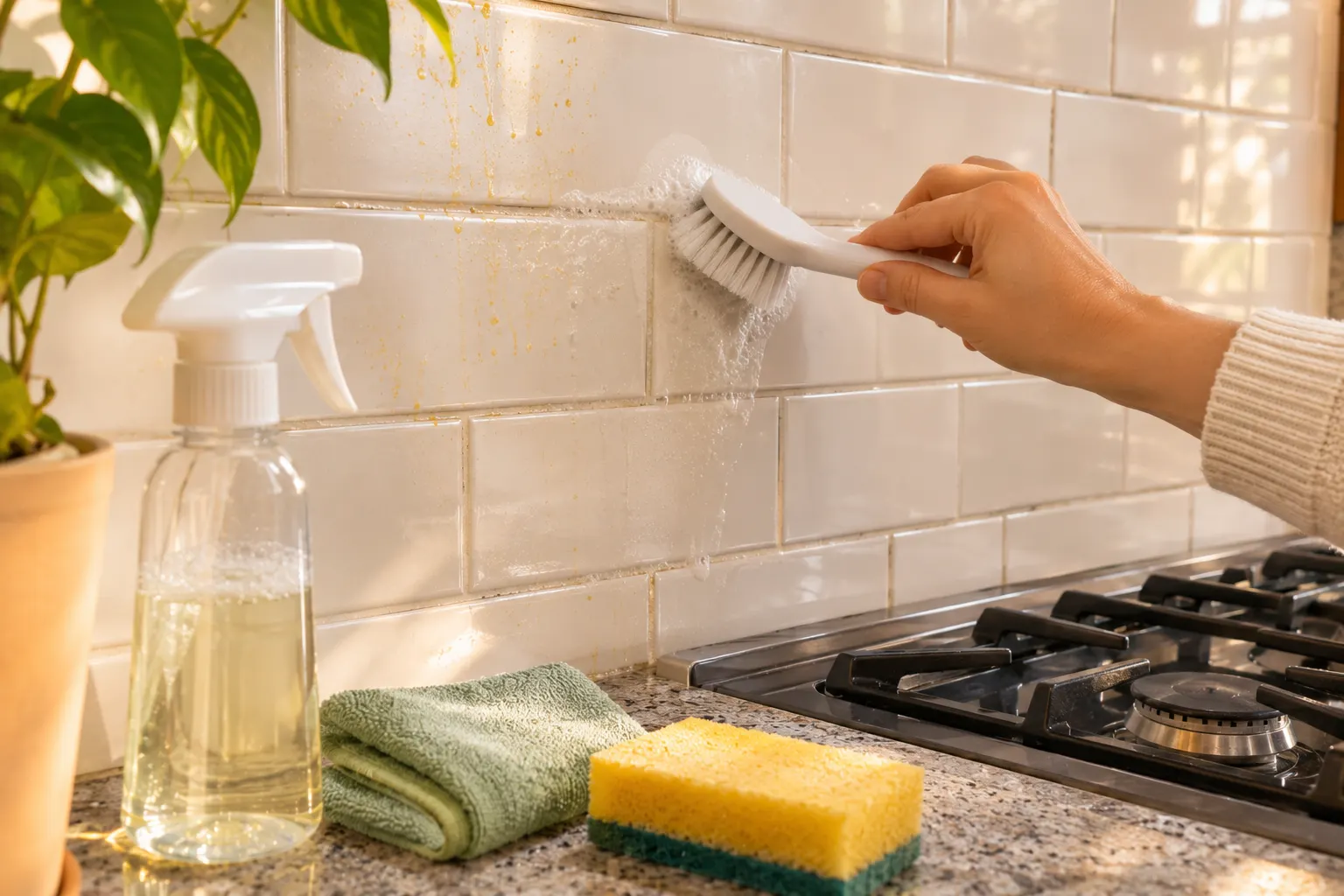
Scrub Textured Finishes with a Nylon Brush
Matte, sparkle and textured laminates trap dirt in their low spots. Use a nylon-bristled hand brush or a vegetable brush with the same mild detergent solution and scrub in a circular motion, then move on to rinsing.
04
Step 4 of 7
Rinse with Clean Water
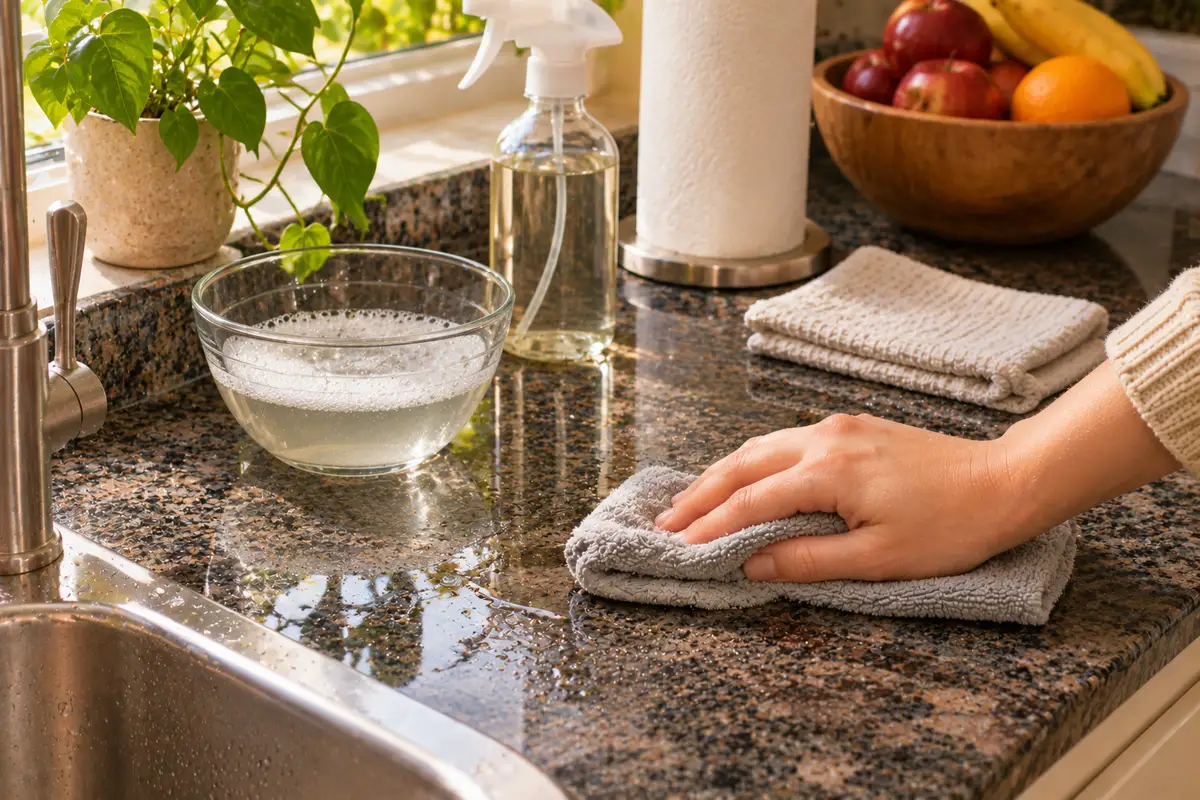
Wipe the counter again with a clean cotton cloth dampened in plain water to remove every trace of cleaner. Wilsonart's care guide calls skipping the rinse the most common cause of laminate damage, because leftover cleaner can be reactivated by moisture from cups and plates and leave permanent marks.
05
Step 5 of 7
Dry the Surface and Keep Seams Dry
Dry the counter with a soft, clean, non-abrasive cotton cloth. Pay extra attention to the seams and the area around the sink: water that sits there can seep in and make the core underneath swell.
06
Step 6 of 7
Lift Stains with a Household Cleaner, Then Baking Soda
Apply a mild household cleaner full strength to the stain and let it sit to draw the stain out, then blot with a damp cotton cloth and rinse. If the stain persists, make a paste of baking soda and water and apply it to the spot. Formica says not to rub the paste because it is slightly abrasive; Wilsonart allows light scrubbing with a soft-bristled brush for 10 to 20 strokes. Follow the guidance from your laminate's maker, go gently on gloss finishes, then wipe the paste off with a damp cloth and rinse.
07
Step 7 of 7
Use a Stronger Remedy Only If Your Maker Allows It
For a stain that survives baking soda, Formica allows a solvent such as denatured alcohol, and Wilsonart lists isopropyl alcohol among its recommended cleaners; follow the label and ventilate the room. Wilsonart also permits undiluted household bleach or nail polish remover on stubborn stains for no longer than two minutes, followed by a thorough warm-water rinse, but warns that prolonged bleach exposure discolors laminate. Formica says never to use chlorine bleach on its laminate, so skip bleach unless your countertop's own care guide allows it.
If that didn’t work
Stubborn or set-in? Try these next, in order.
AIf a stain did not budge, repeat the household cleaner and baking soda steps a few times before reaching for anything stronger; Formica notes that many food, coffee and tea stains disappear after repeated cleanings.
BSome marks are permanent on laminate. Formica lists marking pen and indelible inks, newsprint, lemon juice, wood stains, hair dyes and some medicines among stains that may never come out completely; harsher scrubbing will only dull the surface.
CBubbling, lifting or a swollen edge near a seam or the sink is water or heat damage to the core, not a stain. Cleaning will not fix it; contact the countertop installer or manufacturer.
Common questions
What is the best thing to clean laminate countertops with?
A clean, damp, non-abrasive cotton cloth and a mild liquid detergent or mild household cleaner. Rinse with clean water and dry with a soft cloth. Both Formica and Wilsonart say that is all routine cleaning needs.
Can you use bleach on laminate countertops?
It depends on the brand, and the manufacturers disagree. Formica says never to use cleaners containing chlorine bleach on its laminate. Wilsonart allows undiluted household bleach on a stubborn stain for no more than two minutes, then a thorough rinse, and warns that longer exposure causes discoloration. Check your countertop's care guide, and never mix bleach with ammonia or acids.
Is vinegar safe on laminate countertops?
Neither maker recommends it. Wilsonart says acidic cleaners can damage laminate, and Formica says to never use cleaners containing acid. Stick with mild detergent and water.
How do you get stains out of a white laminate countertop?
Let a mild household cleaner sit on the stain, blot, and rinse. If that fails, apply a baking soda and water paste, then wipe it off and rinse. Formica says not to rub the paste, while Wilsonart allows a few light strokes with a soft brush; both warn that abrasives scratch the surface.
Can you put hot pans on laminate countertops?
No. Formica says its laminate can handle up to 275°F only for short periods and that prolonged exposure at 140°F or more can make the laminate separate from its core. Wilsonart warns that pots straight from the oven or burner can crack or blister the surface. Always use a trivet or hot pad.
Sources we relied on
1.Formica Laminate and ColorCore2 by Formica Group: Use and Care Guide / Warranty — Formica Group. Clean with a damp non-abrasive cotton cloth and mild liquid detergent or household cleaner, rinse, and dry; do not flood seams because water can swell the substrate; never use abrasive pads, steel wool or cleaners containing acid, alkali or sodium hypochlorite such as chlorine bleach; a baking soda paste applied without rubbing can reduce stains; prolonged heat of 140°F or more can cause separation, with short exposure tolerated up to 275°F.
2.Care and Maintenance: Wilsonart Laminate — Wilsonart. Clean with a damp cloth or sponge and mild soap or detergent; treat persistent stains with a baking soda paste and 10 to 20 light strokes of a soft-bristled brush; undiluted bleach or nail polish remover may be left on stubborn stains no longer than two minutes, but prolonged bleach exposure discolors laminate; acidic or abrasive cleaners, steel wool, lye drain cleaners and hot pans can damage the surface; always rinse after cleaning.