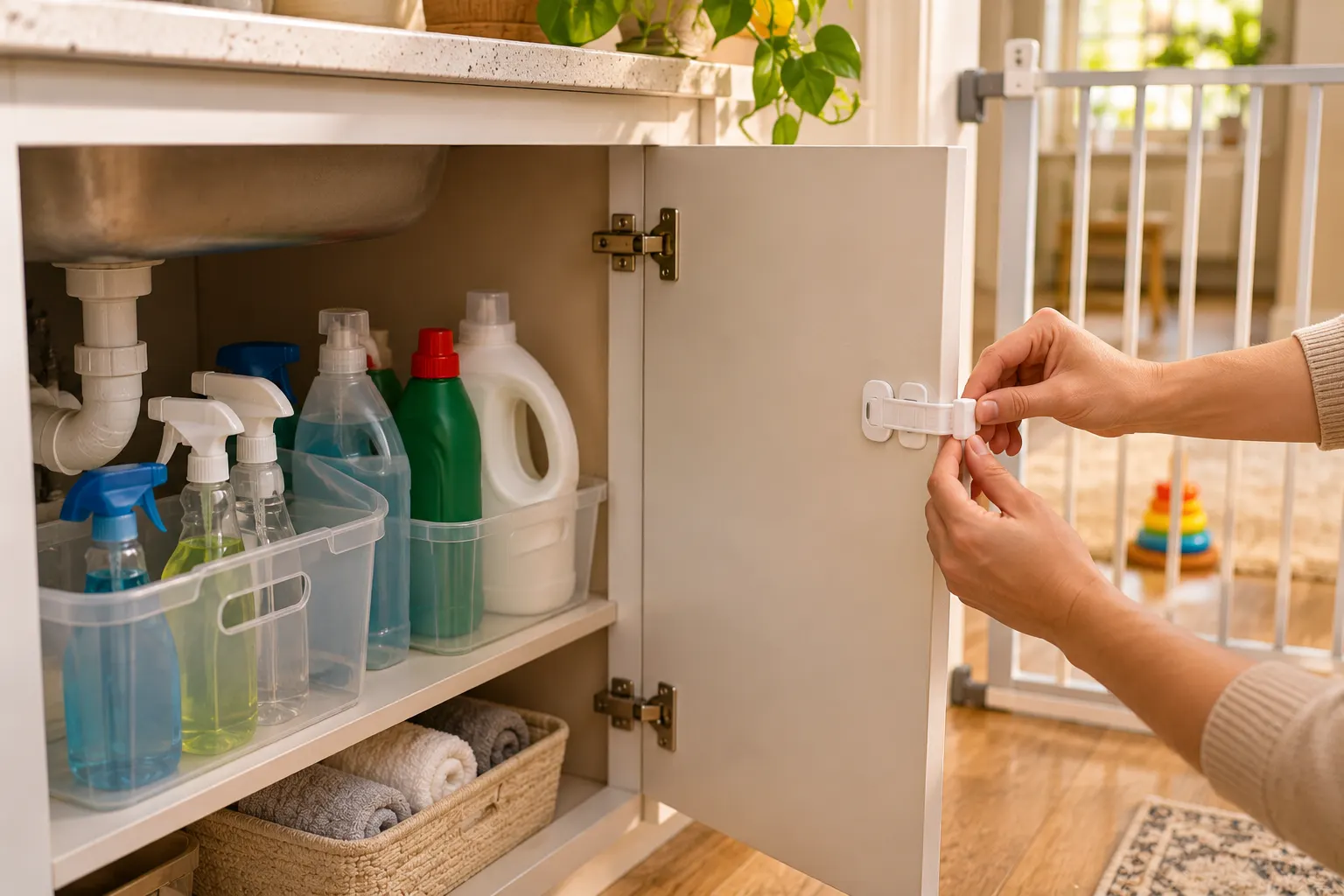
Original labeled containers, child-resistant latches, laundry pods locked away, bleach never near ammonia or vinegar, and leftovers taken to a hazardous waste collection instead of the drain.
Child-resistant cabinet latches or a lockable cabinet or box
A high shelf or cabinet away from food and medicines
A permanent marker and labels, only if a product must be moved to another container
The Poison Control number, 1-800-222-1222, saved in your phone
Step by step
01
Step 1 of 8
Keep Every Product in Its Original Container
Leave each cleaner in the bottle it came in, with the original label on. The label carries the directions, precautions and first-aid information you will need in an emergency, and it tells you how to store and dispose of that product. Never pour a cleaner into a cup, jar, food tub or drink bottle.
02
Step 2 of 8
Lock or Latch Them Away from Children and Pets
Store all cleaning products out of the reach of children and pets. If they live under the sink or in a low cabinet, fit child-resistant latches on it; better still, use a locked cabinet where poisons are out of sight as well as out of reach.
03
Step 3 of 8
Store Laundry Pods Sealed and Locked Up
Keep laundry packets sealed in their original packaging, locked up and out of a child's sight and reach, as the U.S. Consumer Product Safety Commission advises. Do not let children handle them. Make sure your hands are dry before you take one out, and wash and dry your hands after each use.
04
Step 4 of 8
Separate Cleaners from Food and Medicine
Do not store cleaning products in the same cupboard or shelf as food, drinks or medications, and never put a non-food product in the refrigerator. A pantry shelf or the cabinet with your dishes is the wrong place for spray cleaners.
05
Step 5 of 8
Keep Bleach Away from Ammonia and Acids
Never mix household chemicals: chlorine bleach mixed with ammonia or vinegar can create toxic fumes. Keep caps tightly closed so nothing leaks, and give bleach its own shelf or bin, apart from ammonia-based glass cleaners and acidic cleaners such as vinegar, so a drip or spill cannot combine them.
06
Step 6 of 8
Seal Tightly and Watch the Temperature
Store products in tightly sealed containers, away from heat, sparks and flames, and do not let them freeze. Follow any storage temperature or ventilation instructions on each label, which can differ from product to product.
07
Step 7 of 8
Dispose of Old or Unwanted Products the Right Way
Do not pour hazardous leftovers down the drain, onto the ground or into a storm sewer, and never mix leftovers together. Read the label's disposal directions, then contact your local environmental, health or solid waste agency to find a household hazardous waste collection site or collection day.
08
Step 8 of 8
Know What to Do After an Accidental Exposure
Save 1-800-222-1222 in your phone. If a child bites into a laundry packet, rinse as much detergent from the mouth as possible and call Poison Control immediately. If detergent gets in an eye, flush it with water for at least 15 minutes and call. For any other suspected poisoning, call the same number or use the webPOISONCONTROL online tool.
If that didn’t work
Stubborn or set-in? Try these next, in order.
AIf you have no cabinet you can latch or lock, buy a lockable storage box for the most hazardous products, such as bleach, drain cleaner and laundry pods, and keep it on a high shelf.
BIf a product has lost its label or is in an unmarked container and you cannot identify it, do not use it or mix it with anything. Treat it as household hazardous waste and ask your local collection program how to drop it off.
CIf a container is leaking, cracked or bulging, close it as best you can, ventilate the area, keep children and pets away, and take it to household hazardous waste collection rather than the trash or the drain.
Common questions
Is it safe to keep cleaning products under the kitchen sink?
Only if young children and pets cannot get into it. The National Capital Poison Center advises keeping household cleaners in cabinets with child-resistant latches, so fit latches or move the products to a locked cabinet. Also keep them separate from any food stored nearby.
Can you store bleach and ammonia together?
Keep them apart. Mixing chlorine bleach with ammonia or vinegar can create toxic fumes, so cap both tightly and store bleach on a different shelf or in a different bin from ammonia and acidic cleaners, where a leak cannot let them combine.
Where should you store laundry pods?
Sealed in their original packaging, locked up and out of a child's sight and reach, according to the U.S. Consumer Product Safety Commission. Handle them with dry hands, wash your hands afterward, and do not let children touch them.
Is it OK to put cleaning products in other bottles?
It is safest not to. Keep cleaners in their original containers and never use a food or drink container. If you must transfer one, use a child-resistant container and label it with the product name, date, manufacturer details and the Poison Control number.
How do you get rid of old cleaning products?
Follow the disposal directions on the label. For hazardous products, the EPA says not to pour them down drains, onto the ground or into storm sewers; check with your local environmental, health or solid waste agency for a household hazardous waste collection program.
Sources we relied on
1.Container Transfers — National Capital Poison Center (poison.org). Keep cleaning products in original containers with original labels; never transfer them into containers meant for food or drink; store them away from foods and medications in cabinets with child-resistant latches; never place non-food items in the refrigerator; if a product is transferred, add a copy of the label and the poison center number; call 1-800-222-1222 or use webPOISONCONTROL, free, confidential and available 24 hours a day.
2.CPSC and ACCC Warn of Poison Dangers with Liquid Laundry Packets — U.S. Consumer Product Safety Commission. Do not let children handle laundry packets; keep them sealed in their original packaging, locked up and out of a child's sight and reach; use dry hands and wash and dry hands after use; after exposure call Poison Help at 1-800-222-1222, rinse detergent from the mouth, and flush eyes with water for at least 15 minutes.
3.Safe Storage and Use of Hazardous Household Products — Indiana Department of Environmental Management. Keep products in original containers and never in food or beverage containers; label any transferred product with its name, the date and the manufacturer's contact details in a child-resistant container; store out of reach of children and pets and apart from food; keep containers tightly sealed, away from heat, sparks and flames, and from freezing; never mix chemicals, as bleach with ammonia or vinegar can create toxic fumes.
4.Household Hazardous Waste (HHW) — U.S. Environmental Protection Agency. Keep household hazardous products in their original containers with labels, never store them in food containers, never mix leftovers with other products, do not pour them down drains, onto the ground or into storm sewers, and contact local environmental, health or solid waste agencies about household hazardous waste collection programs.