A musty closet is a damp closet. Find the moisture, empty and launder, scrub mildew off hard surfaces with detergent and water, then keep humidity under 60 percent with airflow or a dehumidifier so the smell does not come back.
Long rubber or nitrile gloves, unvented goggles and an N-95 respirator
Vacuum (empty or replace the bag outdoors afterward)
Fan for drying
Hygrometer (humidity meter)
Optional: dehumidifier sized for the room
Step by step
01
Step 1 of 7
Find Where the Moisture Comes From
Smell alone does not fix anything; the source does. Look and feel for damp spots on the walls, floor and ceiling, sweating exterior walls, and stains near plumbing or the roofline. Mildew grows in dark places with little air circulation, which is exactly what a closed closet is. If you find a leak or damp wall, get it fixed before you clean; otherwise the moisture that fed the mildew is still there.
02
Step 2 of 7
Empty the Closet Completely
Take everything out: clothes, shoes, bins, boxes and bedding. Spread items out in a dry, airy room or outdoors so they stop sharing damp air. Set aside anything that looks visibly mildewed or still feels damp to treat first.
03
Step 3 of 7
Scrub Mildew Off Walls and Shelves
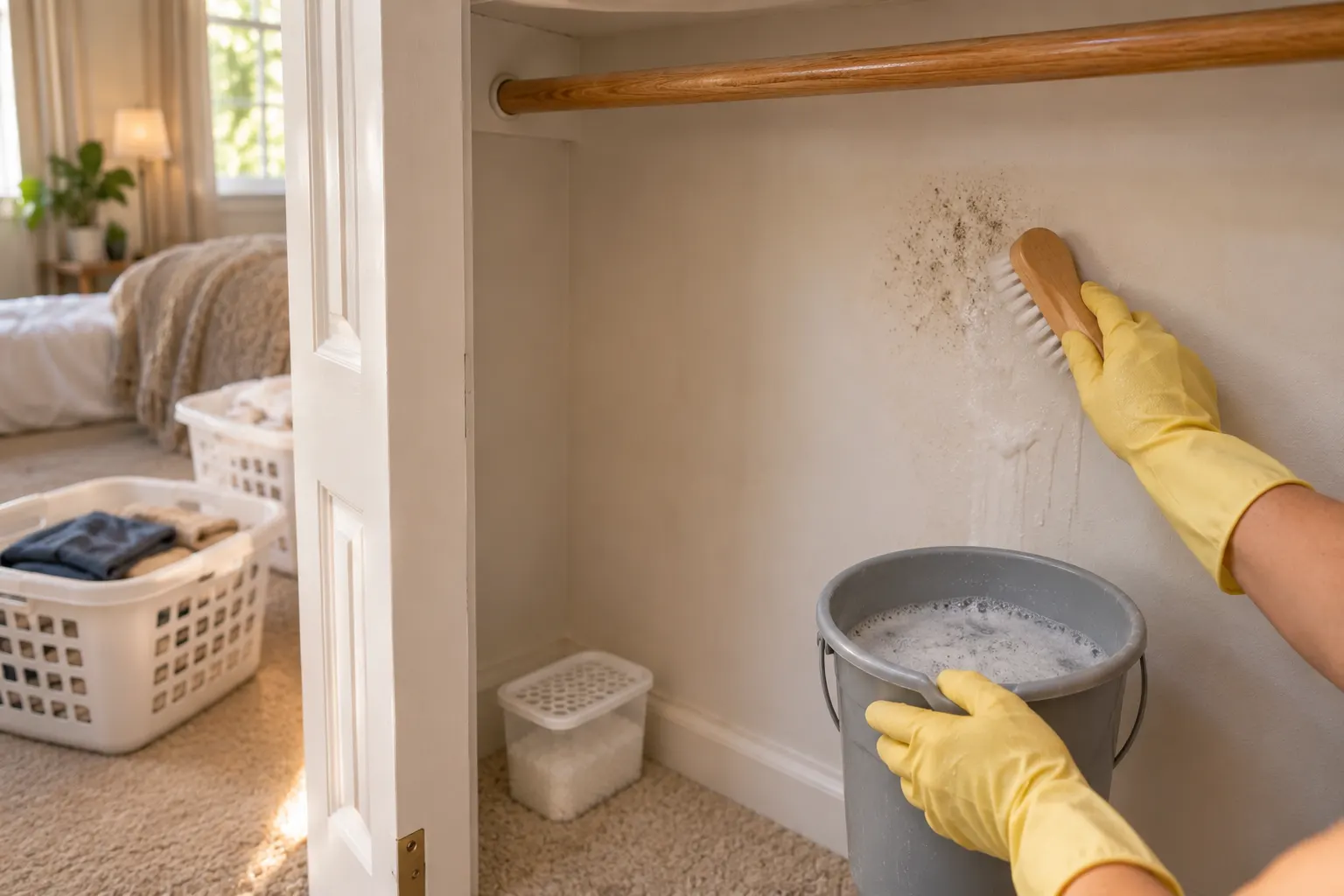
Put on gloves, goggles and an N-95. Vacuum loose dust from the floor and corners, then scrub any visible mildew off hard surfaces such as shelves, wire racks, rods and painted walls with detergent and water. Wipe with a clean damp rag and dry everything completely. Porous materials such as carpet or ceiling tiles that stay moldy may need to be removed, because mold can be hard or impossible to clean out of them.
04
Step 4 of 7
Dry the Closet Out
Leave the door open and run a fan into the empty closet until the walls, floor and shelves are completely dry. The EPA advises drying damp areas within 24 to 48 hours to prevent mold growth. Do not put anything back while it still feels cool or damp.
05
Step 5 of 7
Air Out and Launder the Contents
Brush visible mildew off clothing outdoors, then let the items sun and air before laundering or dry cleaning, as UF/IFAS Extension recommends. Wash washable items according to their care labels, test any stain treatment on a hidden seam, and keep chlorine bleach away from silk, wool and spandex. Dry everything thoroughly before it goes back.
06
Step 6 of 7
Put Back Only Clean, Dry Items, Loosely
Return only clothes, shoes and linens that are clean and fully dry; damp and soiled items are what start mildew in storage. Do not pack the rod or shelves tightly. Leave space between hangers and bins so air can move through the closet.
07
Step 7 of 7
Keep the Humidity Down
Keep indoor relative humidity below 60 percent, ideally between 30 and 50 percent. Improve airflow by opening the closet door or running a fan, use bathroom and kitchen exhaust fans, and if the space stays damp, run a dehumidifier in the room with doors and windows closed so it works efficiently. ENERGY STAR notes that dehumidifiers address damp spaces with musty odors and that certified models have a built-in humidistat you can set to a target level.
If that didn’t work
Stubborn or set-in? Try these next, in order.
AIf the smell returns within days, moisture is still getting in. Recheck the walls behind the closet, the ceiling and any nearby bathroom, laundry or exterior wall for a leak or condensation, and measure the humidity with a hygrometer.
BIf mildew keeps growing back on drywall, carpet or ceiling tile, the material itself may be contaminated. Porous materials may need to be removed and replaced once the moisture source is fixed.
CIf the moldy area is larger than about 10 square feet or followed a leak or flood, call a professional, as the EPA advises.
Common questions
Why does my closet smell musty?
Musty odor comes from mildew, which grows where moisture, warmth and still air meet. Closets are dark, often closed, and packed with fabric, so damp air, a hidden leak or clothes put away slightly damp or soiled are the usual causes.
Will an air freshener or scented sachet get rid of a musty closet smell?
No. Fragrance only masks the odor while the mildew keeps growing. Remove the source by cleaning and drying the closet and its contents, then control humidity so it does not return.
What humidity should a closet be to prevent mildew?
The EPA recommends keeping indoor humidity below 60 percent, ideally between 30 and 50 percent. ENERGY STAR gives the same 30 to 50 percent range and notes higher levels may promote mold growth.
Should I use bleach to clean mildew in my closet?
The EPA says scrubbing hard surfaces with detergent and water and drying them completely is the standard method, and that bleach is not recommended as a routine part of mold cleanup. If you use bleach, ventilate and never mix it with ammonia or other cleaners.
Do I need to wash all my clothes if the closet smells musty?
Anything that smells musty or shows mildew spots should be brushed off outdoors, aired and laundered or dry cleaned according to its care label before it goes back. Putting musty items back into a clean closet brings the smell straight back.
Sources we relied on
1.A Brief Guide to Mold, Moisture and Your Home — U.S. Environmental Protection Agency. Keep indoor humidity below 60 percent (ideally 30 to 50 percent), dry damp areas within 24 to 48 hours, scrub mold off hard surfaces with detergent and water and dry completely, porous materials may need to be discarded, bleach is not recommended routinely and must never be mixed with ammonia, wear an N-95, long gloves and unvented goggles, get professional help above about 10 square feet, and do not paint over mold.
2.Mildew Removal — UF/IFAS Extension Jefferson County. Keep items clean, dry and cool with good air circulation, do not pack closets too densely, brush mildew off clothing outdoors and sun and air it before laundering or dry cleaning, test for colorfastness, avoid chlorine bleach on silk, wool and spandex, and dispose of the vacuum bag after vacuuming mildew.
3.Dehumidifiers — ENERGY STAR. Optimum relative humidity is generally 30 to 50 percent and higher levels may promote mold growth; dehumidifiers address damp spaces with musty odors and mildew; certified models have a built-in humidistat; keep doors and windows closed while the unit runs, size by room and dampness, and oversizing is preferable to undersizing.