Vacuum the supply registers and return grilles, take the covers off and wash them in warm soapy water, vacuum the opening behind them, dry the covers before they go back on and check the furnace filter while you are there. Includes when professional duct cleaning is and is not worth it. Based on EPA, NADCA, UGA Extension, Reggio Register and Carrier guidance.
Vacuum with a brush attachment (HEPA or high-efficiency bags if you have them)
Screwdriver (for wall and ceiling covers)
Mild dish detergent and warm water
Rag or sponge
Degreaser or rubbing alcohol (greasy kitchen vents only)
Plastic sheet (for ceiling vents)
Step ladder and a helper (for ceiling vents)
Flashlight and small mirror
Replacement furnace filter in the correct size
Step by step
01
Step 1 of 8
Turn the System Off and Prepare the Area
Reggio Register says turning off the heating and cooling system is not required but makes the job easier, so set the thermostat to off before you start. For a ceiling vent, Reggio Register suggests laying plastic underneath to catch falling dust and having someone nearby while you are on the ladder.
02
Step 2 of 8
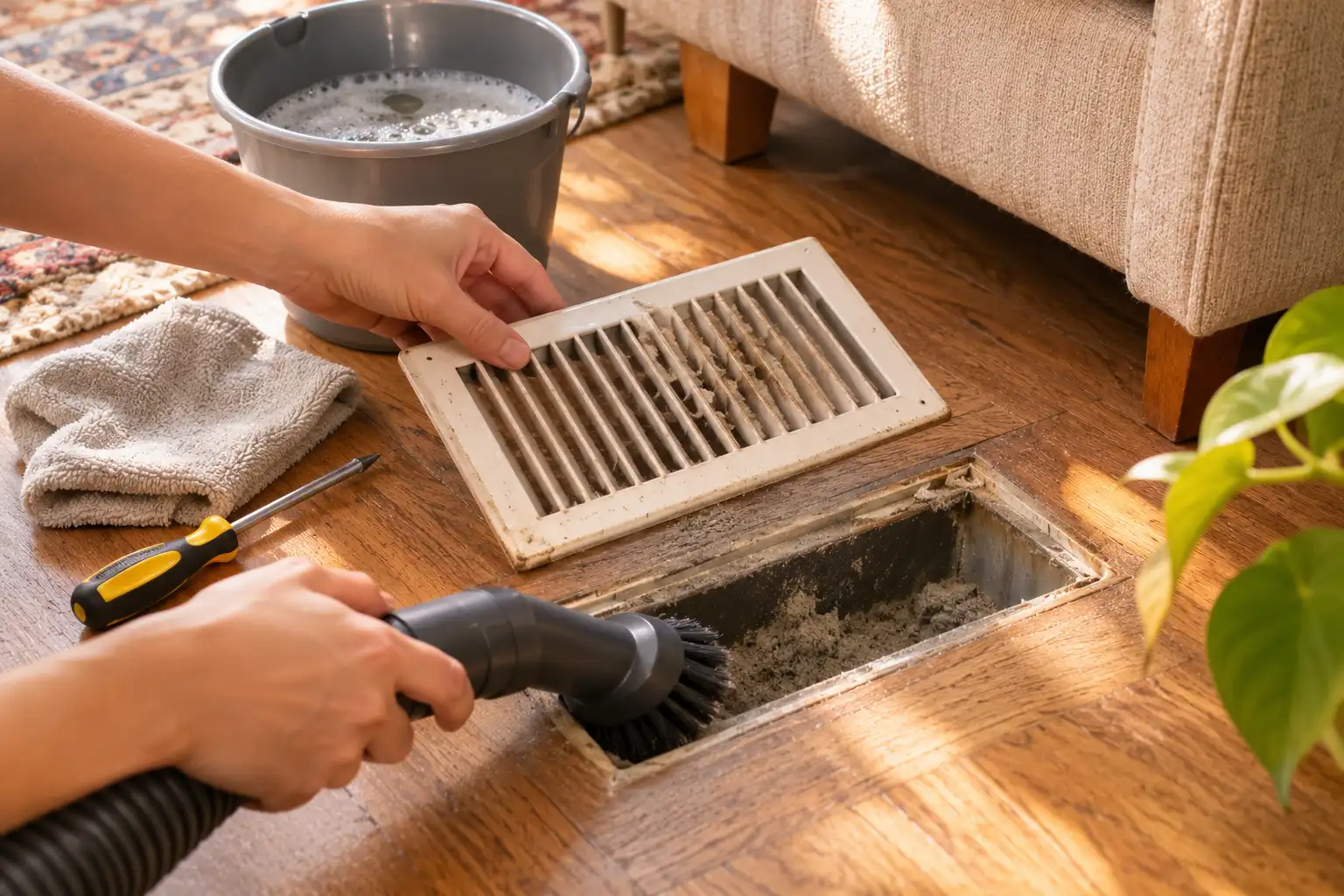
Vacuum the Covers in Place
Reggio Register says to vacuum the vent cover first, before you take it off. The EPA notes that it is normal for return registers to get dusty, because dust-laden air is pulled through the grate, and says they can be easily vacuumed or removed and cleaned. For general dust control, the EPA recommends a HEPA vacuum or the highest-efficiency filter bags your vacuum can take.
03
Step 3 of 8
Remove the Covers
Reggio Register says floor covers can simply be lifted out, while wall and ceiling covers need their screws removed. Keep the screws together so each cover goes back where it came from.
04
Step 4 of 8
Wash the Covers
Reggio Register says to wipe covers with a rag or sponge and a mild cleaner, or for a deeper clean, to scrub both sides in warm water with mild dish detergent. For greasy kitchen vents, it suggests a degreaser or rubbing alcohol.
05
Step 5 of 8
Vacuum and Inspect the Opening
With the cover off, Reggio Register says to clean the inside of the duct opening and the area around the vent. Use the vacuum here rather than water, since the EPA says moisture-based methods should not be used on duct work. NADCA says homeowners can look into the ducts with a flashlight and a mirror, though a professional can reach system components more fully.
06
Step 6 of 8
Let the Covers Dry Completely, Then Reinstall
Reggio Register says to let covers dry thoroughly before putting them back, because particles moving through the vents will stick to wet surfaces. Then set floor covers back in place and screw wall and ceiling covers back on.
07
Step 7 of 8
Check the Furnace Filter
Carrier says to turn the system off at the thermostat or the furnace power switch before changing the filter, buy a replacement that matches the size your unit requires, and line up the airflow arrow so air flows from the ductwork into the furnace. Carrier generally recommends changing filters about every three months and says a 1-inch filter may need changing about monthly. The EPA says to use the highest-efficiency filter your system manufacturer recommends and to make sure air cannot bypass the filter through gaps.
08
Step 8 of 8
Decide Whether the Ducts Need Professional Cleaning
The EPA says to consider duct cleaning if there is substantial visible mold growth inside hard-surface ducts or other system parts, if rodents or insects are living in the ducts, or if the ducts are clogged with dust and debris or particles are released from the supply registers. If none of these apply and no one has unexplained symptoms, the EPA says cleaning is probably unnecessary. The EPA also says to fix the cause first, such as moisture or an ongoing dust source, or the problem will likely come back.
If that didn’t work
Stubborn or set-in? Try these next, in order.
AIf dust or debris keeps blowing out of the supply registers after you clean them, the EPA lists that as one of the situations where duct cleaning is worth considering, and says to find and fix the source of the dust as well.
BIf kitchen vent covers are still sticky after vacuuming, wash them and use a degreaser or rubbing alcohol, as Reggio Register suggests for greasy vents.
CIf airflow from the vents still seems weak with clean covers, check the furnace filter. Carrier lists reduced airflow from vents as a sign the filter needs changing, along with a gray, dusty filter surface and a system that takes longer than normal to heat the home.
DIf you find what looks like mold inside the ducts, do not try to wash it out. The EPA says mold confirmation takes an expert and may require lab analysis, and that wet or moldy insulation should be removed and replaced.
Common questions
Do I need to have my air ducts professionally cleaned?
Usually not. The EPA does not recommend duct cleaning as a routine practice and says it is probably unnecessary if no one in the household has allergies or unexplained symptoms and there is no heavy dust or mold. It recommends considering it when there is visible mold, vermin in the ducts, or dust and debris coming out of the supply registers.
Does duct cleaning improve health or indoor air?
The evidence is weak. The EPA says duct cleaning has never been shown to prevent health problems, and that studies do not conclusively show that dirty ducts raise household particle levels. UGA Extension adds that cleaning can dislodge particles and increase airborne contaminants. The EPA says cleaning is not harmful if it is done properly.
How often should you clean air vent covers?
Reggio Register recommends cleaning vent covers at least once or twice a year, depending on how quickly they collect dust, with a deep clean at least once a year. It also suggests checking them each time you change the furnace filter.
How often should air ducts be cleaned?
There is no fixed schedule. NADCA says frequency depends on several factors, including homeowner preference, and that homes with smokers, heavy-shedding pets, water damage, allergy or asthma sufferers or recent renovations may need it more often. The EPA recommends cleaning only as needed rather than routinely.
How do I choose a duct cleaning company?
The EPA says to get written estimates from at least three providers, ask them to show you the contamination, check references and confirm they follow NADCA standards. NADCA says its members must have a certified Air System Cleaning Specialist on staff and recommends verifying membership in its directory. The EPA says it does not certify duct cleaners, so be wary of anyone who claims EPA certification.
How often should I change the furnace filter in winter?
Carrier generally recommends about every three months, says a 1-inch filter may need changing about monthly, and advises checking the filter monthly during peak heating and cooling seasons. It says to change it sooner if the filter looks gray or dusty or the system takes longer than usual to heat the home.
Sources we relied on
1.Should You Have the Air Ducts in Your Home Cleaned? — U.S. Environmental Protection Agency. Consider duct cleaning for substantial visible mold in hard-surface ducts or system components, vermin in the ducts, or ducts clogged with dust and debris or particles released from supply registers; otherwise it is probably unnecessary; it is normal for return registers to get dusty and they can be vacuumed or removed and cleaned; duct cleaning has never been shown to prevent health problems, but is not harmful if done properly; wet insulation should be removed and replaced; mold confirmation requires an expert and may need lab analysis; no biocide is registered for fiberglass duct board or lined ducts; steam and other moisture methods should not be used on duct work; get estimates from at least three providers and confirm NADCA standards; EPA does not certify duct cleaners; use the highest-efficiency filter the manufacturer recommends with no bypass gaps; seal registers and do not run the system during dusty renovation; use a HEPA vacuum or high-efficiency bags.
2.HVAC filters, duct cleaning, and indoor air quality — UGA Extension Forsyth County. EPA does not recommend duct cleaning as routine practice; cleaning can dislodge particles and increase airborne contaminants; warning signs include visible mold, insect or rodent infestation and dust or debris blowing from registers; a dirty filter restricts airflow and makes the system work harder; use the highest-efficiency filter the manufacturer recommends; be cautious of providers recommending chemical biocides, which are pesticides that may not be safe indoors and can create secondary pollutants.
3.FAQs — National Air Duct Cleaners Association (NADCA). Cleaning frequency depends on several factors including homeowner preference; homes with smokers, heavy-shedding pets, water damage, allergy or asthma sufferers or recent renovations may need it more often; homeowners can check ducts with a flashlight and mirror; source removal under negative pressure is the most effective method; antimicrobials are optional and only after thorough cleaning; NADCA members must have a certified Air System Cleaning Specialist on staff; be wary of whole-house specials and blow-and-go services.
4.Avoid the Scams — National Air Duct Cleaners Association (NADCA). Beware of blow-and-go air duct cleaning companies that advertise low prices but deliver minimal cleaning; a red flag is being told, without proper inspection, that mold or other dangerous substances are present; some companies falsely claim NADCA membership, so verify it in the NADCA directory.
5.How to Clean Vent Covers: A Quick Guide — Reggio Register. Vacuum the cover first, then lift out floor covers or unscrew wall and ceiling covers; wipe with a rag or sponge and mild cleaner, or scrub both sides in warm water with mild dish detergent; use a degreaser or rubbing alcohol on greasy kitchen vents; clean the duct opening and surrounding area; let covers dry thoroughly before replacing because particles stick to wet surfaces; turning off the HVAC is not required but helps; put plastic under ceiling vents and have someone nearby on a ladder; clean covers once or twice a year with a deep clean at least once a year, and check registers when changing filters.
6.Furnace Filter Replacement: The How and Why of Changing Furnace Filters — Carrier. Carrier generally recommends changing air filters about every three months; a 1-inch filter may need changing about monthly and a 4-inch filter can last around six months; check monthly during peak seasons; turn the system off at the thermostat or furnace power switch first; match the required filter size and the airflow arrow; signs of a dirty filter include a gray or dusty surface, more household dust, longer heating or cooling times and reduced airflow from vents.