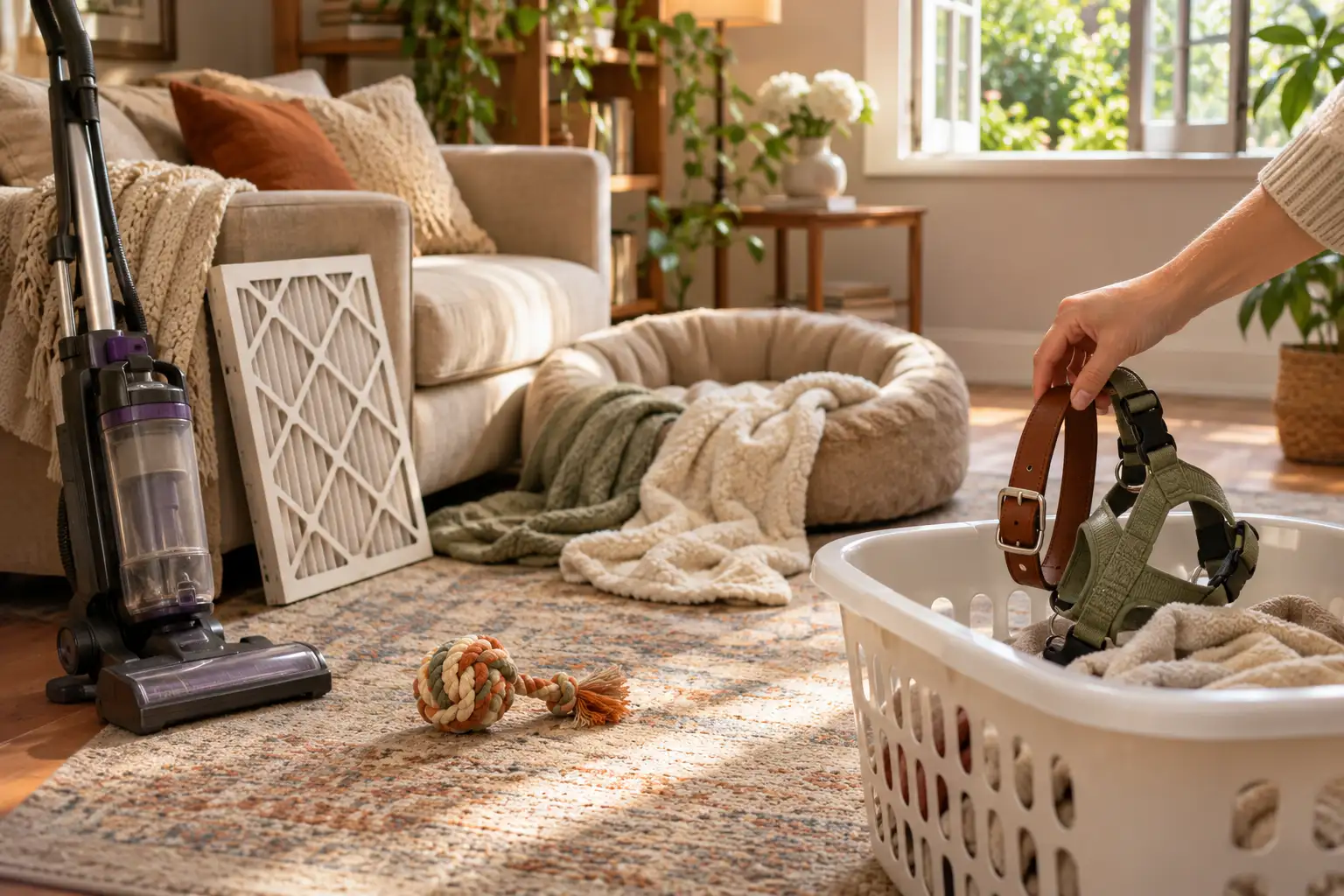
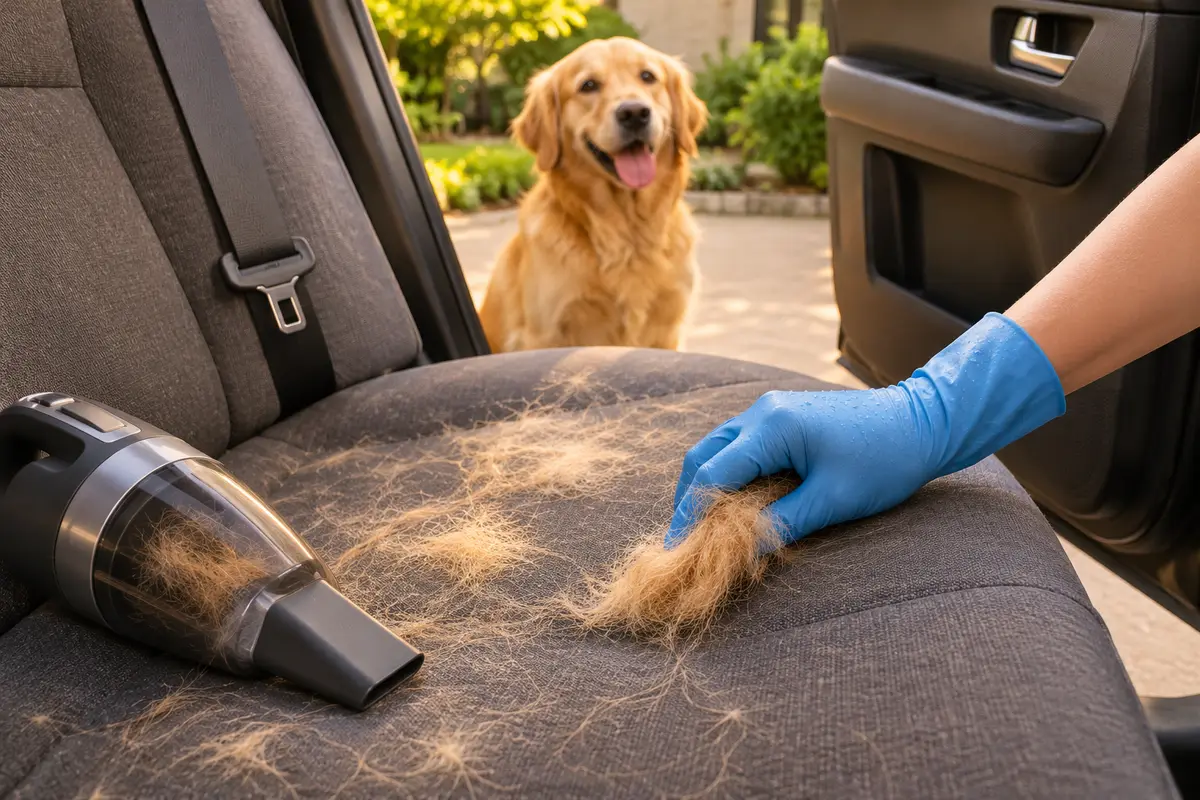
Dog smell comes from things you can wash: the bed, the blankets, the collar, the carpet and the dog. Clean the sources, keep everything dry, change the HVAC filter and bring in fresh air instead of covering it up.
White vinegar (1 to 2 cups) and baking soda (1/2 cup), for a follow-up wash cycle on very dirty beds
Dog shampoo, a heavy-duty dog towel or dog blow dryer
Replacement HVAC filter (MERV 13 or the highest your system accepts)
Enzyme cleaner, if there are urine spots
Step by step
01
Step 1 of 7
Find the Source Before You Clean
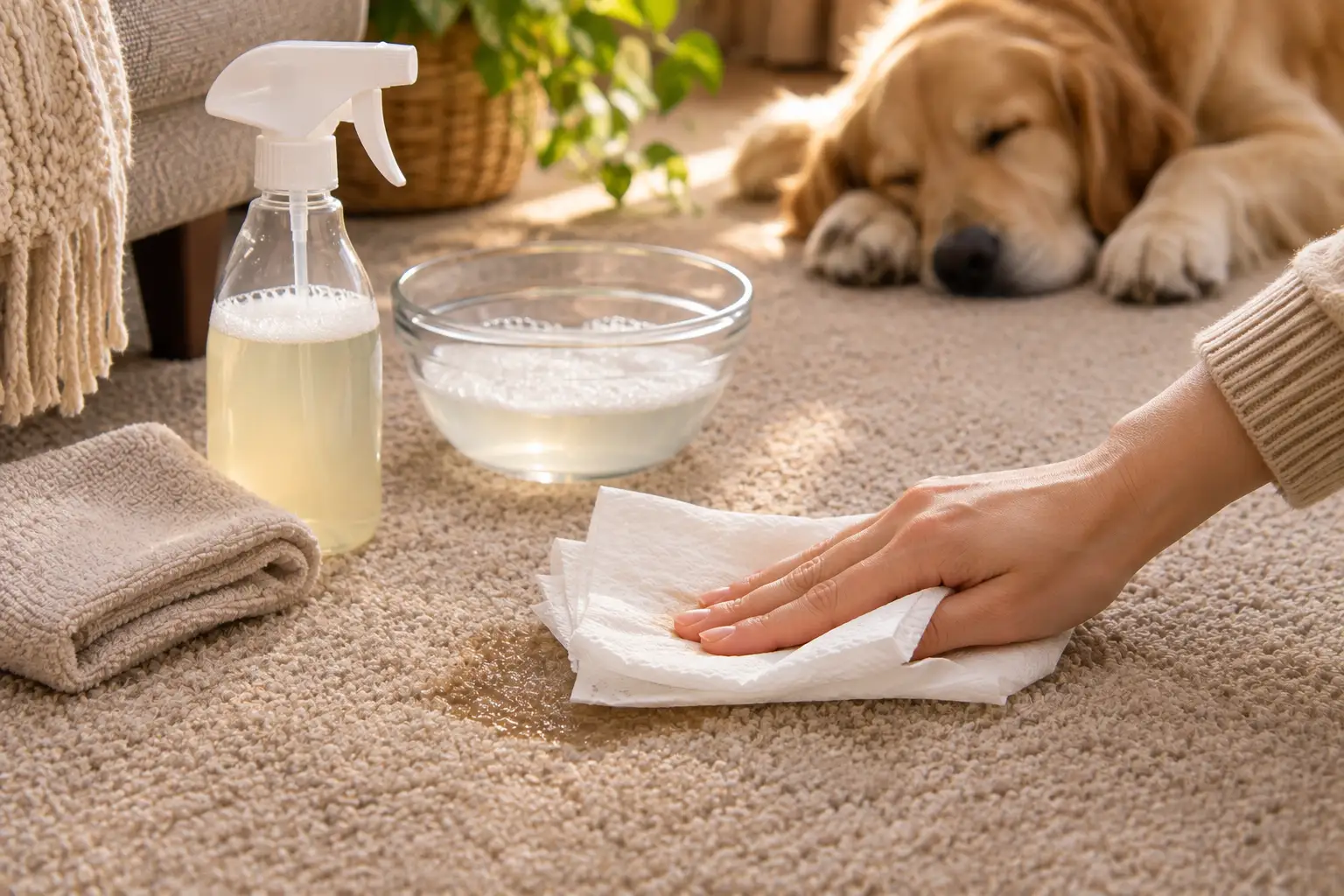
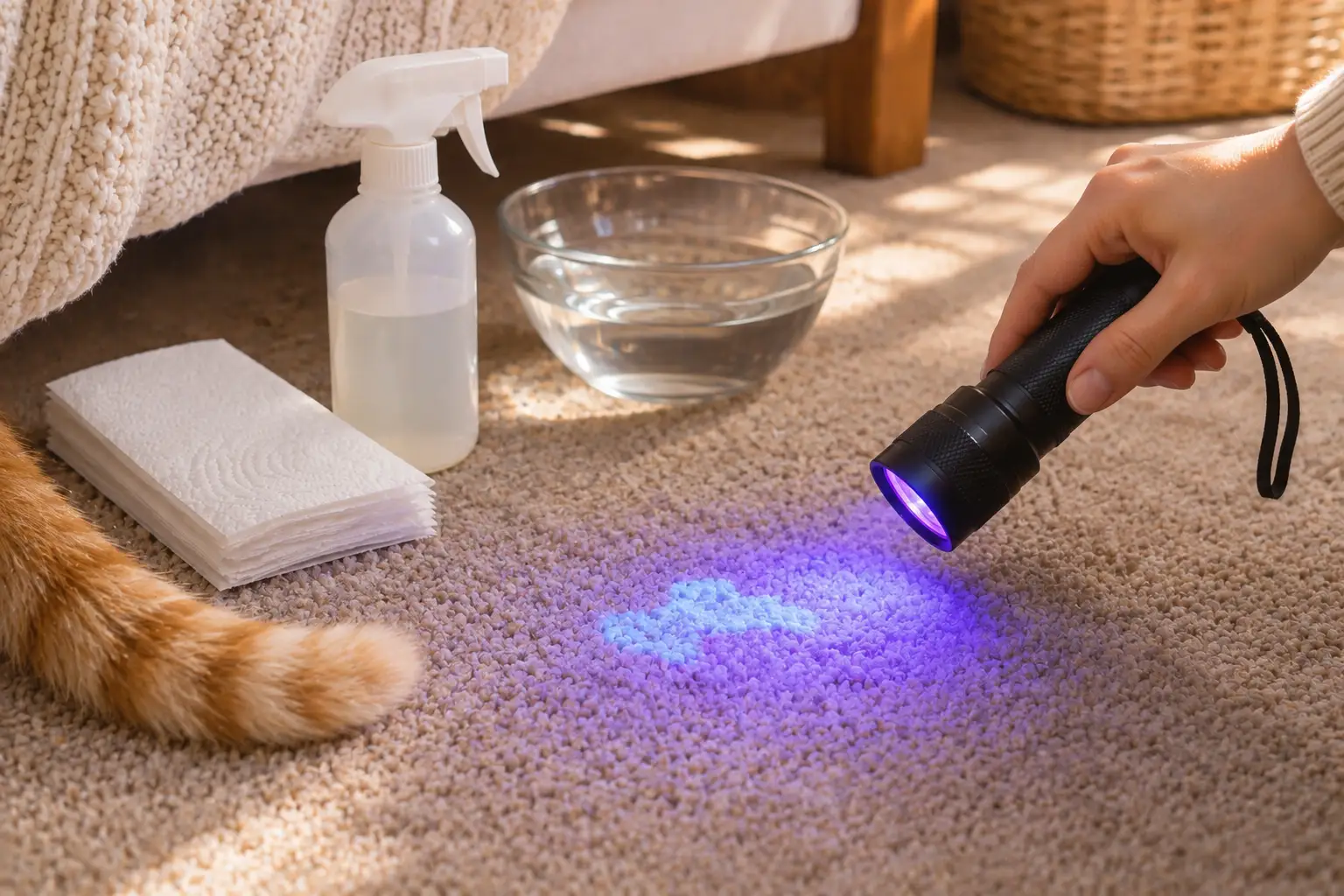
Sniff the places your dog spends time: the dog bed, blankets and throws, the couch, the rug by the door and the collar and harness. Fragrance sprays and candles only mask odor. The smell goes away when you wash or remove what is holding it. If you find a urine spot, treat it as described in our guide to getting dog urine out of carpet.
02
Step 2 of 7
Vacuum Hair Off the Dog Bed, Then Wash It
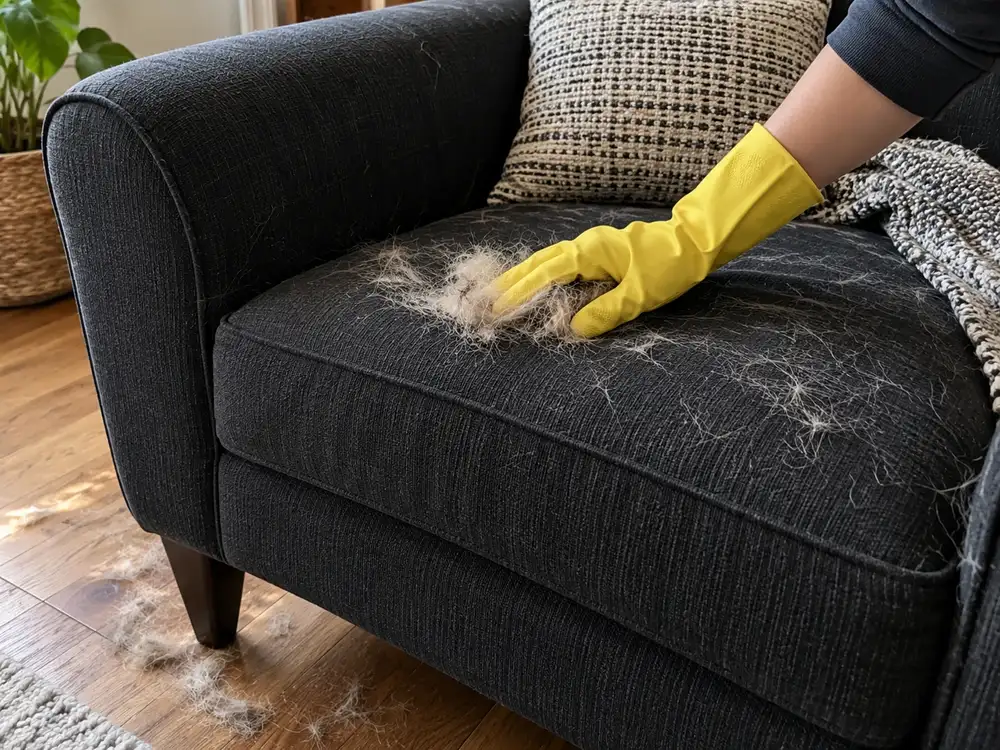
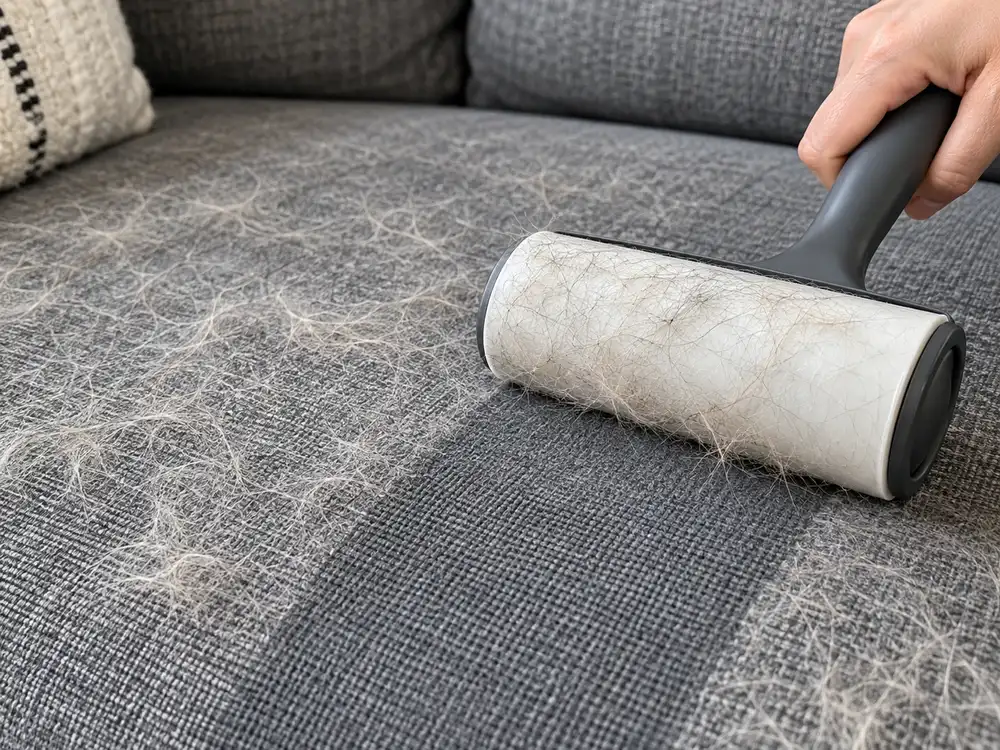
Vacuum the bed's surface, crevices and sides, then pick up leftover hair with a lint roller or a rubber glove; wet dog hair clumps and can clog your washer. Machine wash the removable cover, or the whole bed if the label allows, with a fragrance-free, pet-friendly detergent on a high-temperature program. For a very dirty bed, run an empty cycle afterward with 1 to 2 cups of white vinegar and 1/2 cup of baking soda in the dispenser to remove lingering odor.
03
Step 3 of 7
Dry Bedding Completely Before It Goes Back
Air drying is usually best, since some fillings clump in a dryer. Let thick, fiber-filled beds dry all the way through before your dog uses them; a damp bed breeds mold and mildew. If a bed still smells after washing and drying, it is time to replace it.
04
Step 4 of 7
Wash Collars, Harnesses, Toys and Throws
Collars and harnesses often hold smells and should be washed regularly. Nylon collars can go in the laundry; leather ones need a leather cleaner. Wash toys, couch covers and any blankets your dog sleeps on along with the bedding.
05
Step 5 of 7
Vacuum Carpets and Upholstery
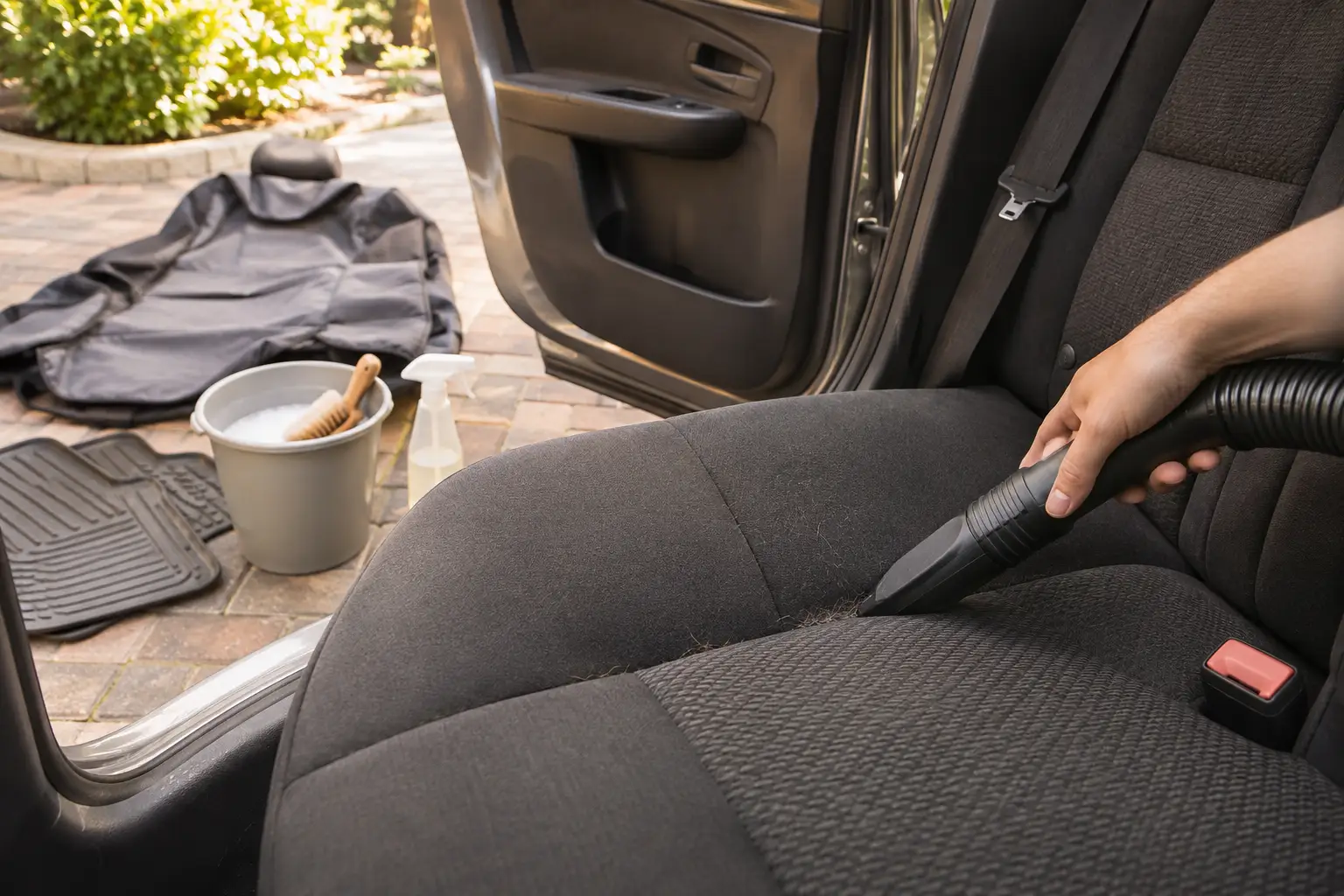
Vacuum carpets, rugs and upholstered furniture where your dog lies, using the upholstery tool on cushions and in the seams. Removing shed hair and dirt takes away material that holds odor. Wash removable cushion covers according to their care labels.
06
Step 6 of 7
Bathe Your Dog, Then Dry It Thoroughly
Wet dog smell comes from yeasts and bacteria on the coat; as moisture evaporates it carries their odor compounds into the air. The AKC says bathing once to twice a month is plenty for most dogs. Drying matters as much as washing: use a heavy-duty dog towel or a dog blow dryer, and dry your dog before it roams the house after baths, rain or swimming. Wrinkly breeds need cleaning under skin folds, and drooling breeds need the damp areas around the mouth wiped dry.
07
Step 7 of 7
Change the HVAC Filter and Bring In Fresh Air
Replace your furnace or HVAC filter with one rated at least MERV 13, or the highest rating your system fan and filter slot can handle. Change it as the manufacturer suggests, typically every 60 to 90 days, and sooner if it looks heavily soiled. Then ventilate: open windows when weather allows and run kitchen and bathroom exhaust fans. Filtration helps, but the EPA says it does not replace controlling the source and ventilating.
If that didn’t work
Stubborn or set-in? Try these next, in order.
AIf the smell comes from your dog itself and seems unusual or will not go away after bathing and drying, have your veterinarian check your dog, and ask a professional groomer for help with drying and coat care.
BIf the house smells like urine rather than dog, follow our guide to getting dog urine out of carpet: urine needs an enzyme cleaner, not fragrance, and soaked padding may need replacing.
CIf odor lingers in a room after cleaning, look for damp items: a wet dog towel, a bed that never fully dried or a rug by the door. Moisture keeps odors and mildew going, so wash and fully dry them.
Tools that help
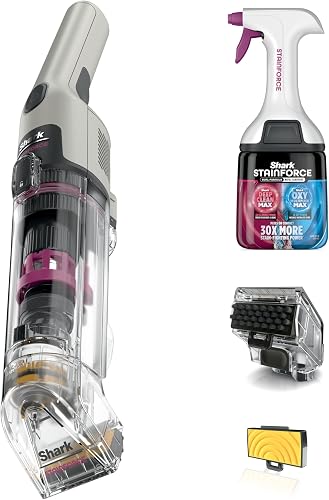
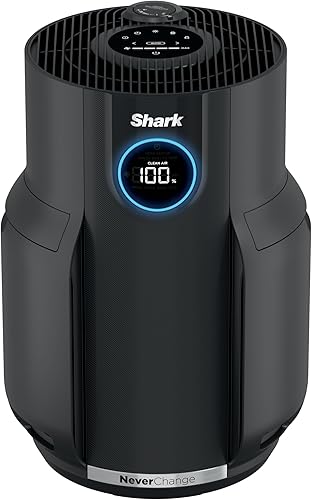
You can do this with cloths and a spray bottle. These make it faster:
As an Amazon Associate, HouseCareWiki earns from qualifying purchases. It costs you nothing extra. How we make money
8.1/10HouseCareWiki rating 8.1 out of 10, research-based
Paid promotion: Shark pays HouseCareWiki a higher commission on this model through Amazon until December 19, 2026. Our notes and scores don’t change because of it.
8.6/10HouseCareWiki rating 8.6 out of 10, research-based
Paid promotion: Shark pays HouseCareWiki a higher commission on this model through Amazon until December 17, 2026. Our notes and scores don’t change because of it.
8.4/10HouseCareWiki rating 8.4 out of 10, research-based
Paid promotion: Shark pays HouseCareWiki a higher commission on this model through Amazon until December 19, 2026. Our notes and scores don’t change because of it.
8.6/10HouseCareWiki rating 8.6 out of 10, research-based
Paid promotion: Shark pays HouseCareWiki a higher commission on this model through Amazon until December 19, 2026. Our notes and scores don’t change because of it.
8.7/10HouseCareWiki rating 8.7 out of 10, research-based
Paid promotion: Shark pays HouseCareWiki a higher commission on this model through Amazon until December 17, 2026. Our notes and scores don’t change because of it.
Usually because of things your dog touches every day: the bed, blankets, collar, couch and carpet. Yeasts and bacteria on a dog's coat produce odor compounds, and those transfer to fabrics, especially when the dog or the fabric is damp. Washing those items and keeping them dry removes most of the smell.
How often should I wash my dog's bed to stop the smell?
The AKC cites CDC guidance to wash pet bedding weekly, and says heavy shedding, coat oils, outdoor time or allergies can call for more frequent washing. Vacuum hair off first, use a fragrance-free pet-friendly detergent and let the bed dry completely.
How often should I bathe my dog so it doesn't smell?
The AKC says once to twice a month is plenty for most dogs. Drying thoroughly afterward matters as much as the bath, because moisture evaporating from the coat is what spreads wet dog smell. If your dog smells bad soon after a bath, ask your vet.
Do air purifiers or ozone generators get rid of dog smell?
An air cleaner with an activated carbon filter can help reduce some odors, but the EPA says filtration only supplements removing the source and ventilating. Ozone generators are a bad choice: the EPA says ozone at safe levels does not effectively remove many odors and that no federal agency has approved them for occupied spaces.
Does changing the air filter help with pet odor?
It can help, as part of a plan. The EPA recommends a filter rated at least MERV 13, or the highest your system accepts, changed about every 60 to 90 days or when visibly dirty. Standard filters capture particles, not gases, so washing the sources and ventilating still matter most.
Sources we relied on
1.How to Clean Your Dog's Bed and Why It's Important — American Kennel Club (AKC). Cites CDC guidance to wash pet bedding weekly; vacuum hair off first because wet hair clumps and clogs washers; machine wash with a fragrance-free, pet-friendly detergent on a high-temperature program; for very dirty beds run an empty cycle with 1 to 2 cups white vinegar and 1/2 cup baking soda; air dry and let beds dry completely because damp beds encourage mold and mildew; replace beds that still smell.
2.Why Do Wet Dogs Smell So Bad? — American Kennel Club (AKC). Wet dog smell comes from compounds left by yeasts and bacteria on the coat, carried into the air as moisture evaporates; bathing once to twice a month is plenty; dry thoroughly with a dog blow dryer or heavy-duty towel; wash collars, harnesses, beds and toys regularly; clean skin folds; see a vet if the smell is abnormal or persists.
3.Guide to Air Cleaners in the Home — U.S. Environmental Protection Agency. Reducing or removing pollutant sources is most effective and filtration does not replace source control and ventilation; choose an HVAC filter rated at least MERV 13 or as high as the system accommodates, typically replaced every 60 to 90 days; most filters target particles or gases and gases need activated carbon; avoid devices that intentionally produce ozone.
4.Ozone Generators that are Sold as Air Cleaners — U.S. Environmental Protection Agency. At concentrations within public health standards, ozone is not effective at removing many odor-causing chemicals; no federal agency has approved ozone generators for occupied spaces; EPA advises source control and ventilation instead.