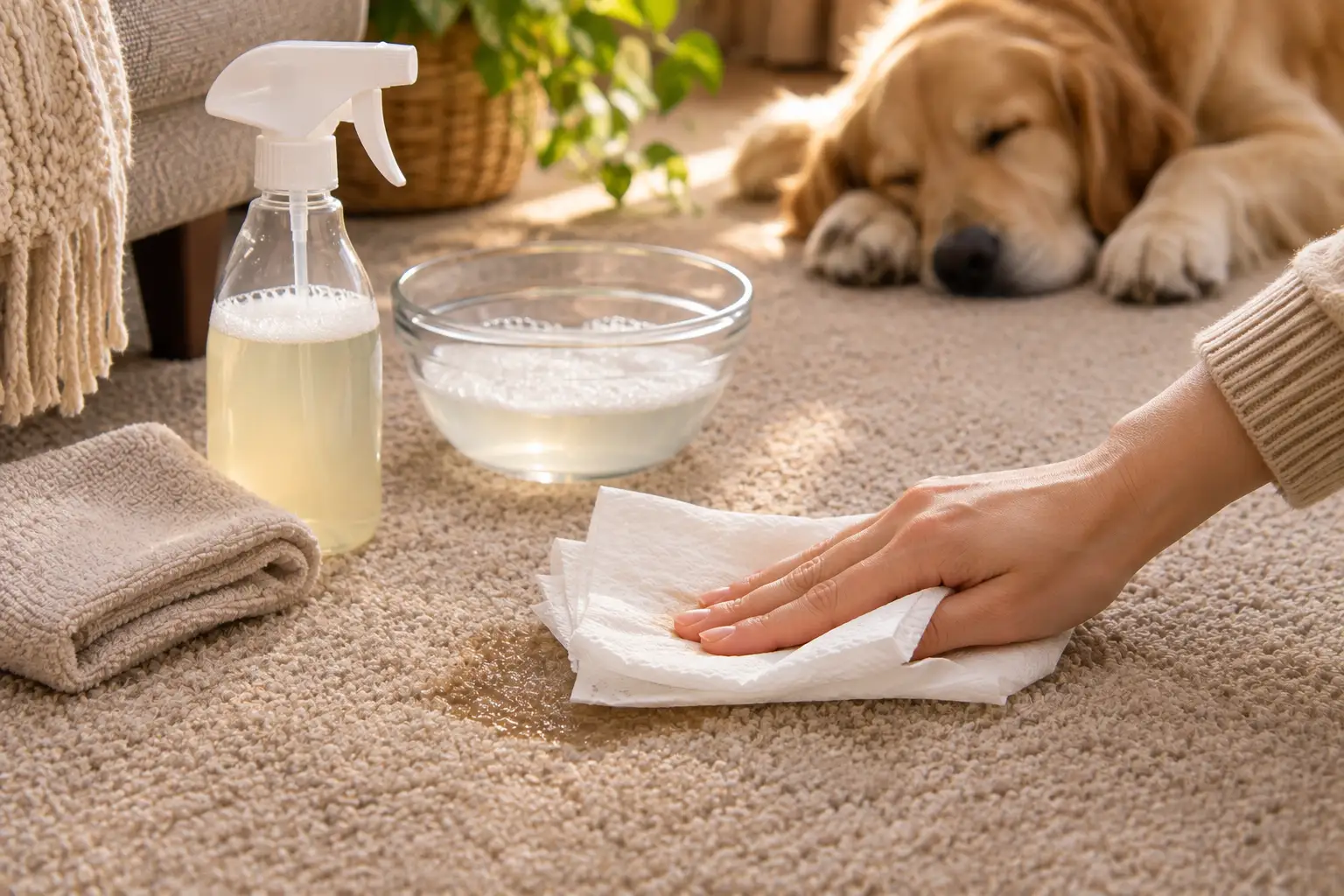
Blot it dry, wash it out with a mild detergent solution, then let an enzyme cleaner break down the odor. What changes for old spots, soaked padding and the urge to steam clean.
Plain white paper towels (a thick stack) or white cotton towels
Clear liquid dishwashing detergent without bleach or lanolin (1/4 tsp)
Lukewarm water (1 cup for the detergent solution, plus more for rinsing)
Pet enzyme stain and odor cleaner
UV black light (for finding old or dried spots)
Chalk or painter's tape to mark spots
A few heavy books or a weighted pan
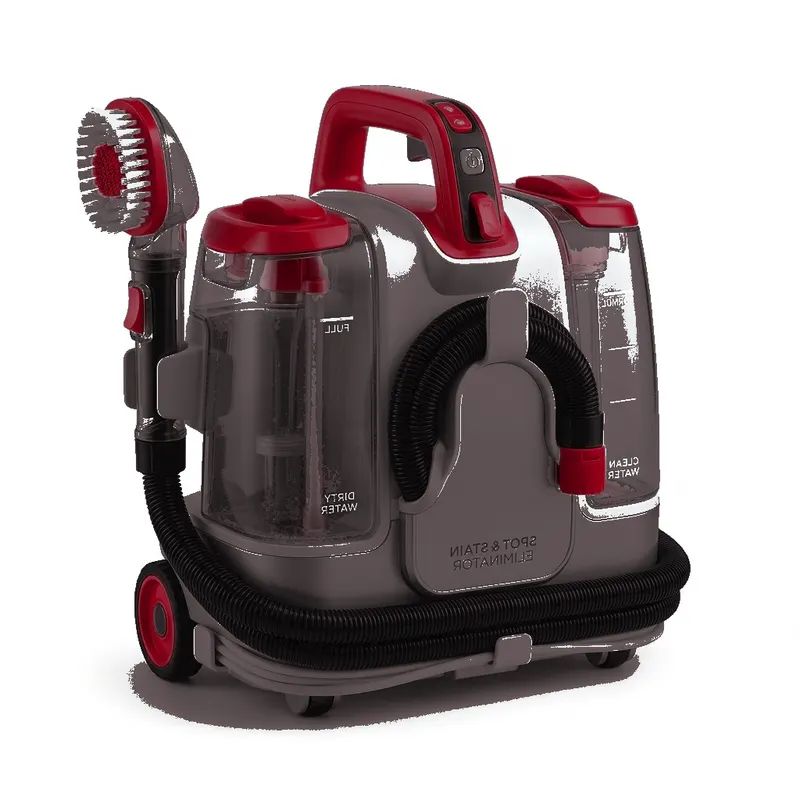
Optional: portable carpet cleaner used with cool or tap-temperature water (e.g., Bissell SpotClean Pro)
Step by step
01
Step 1 of 6
Find Every Spot with a Black Light
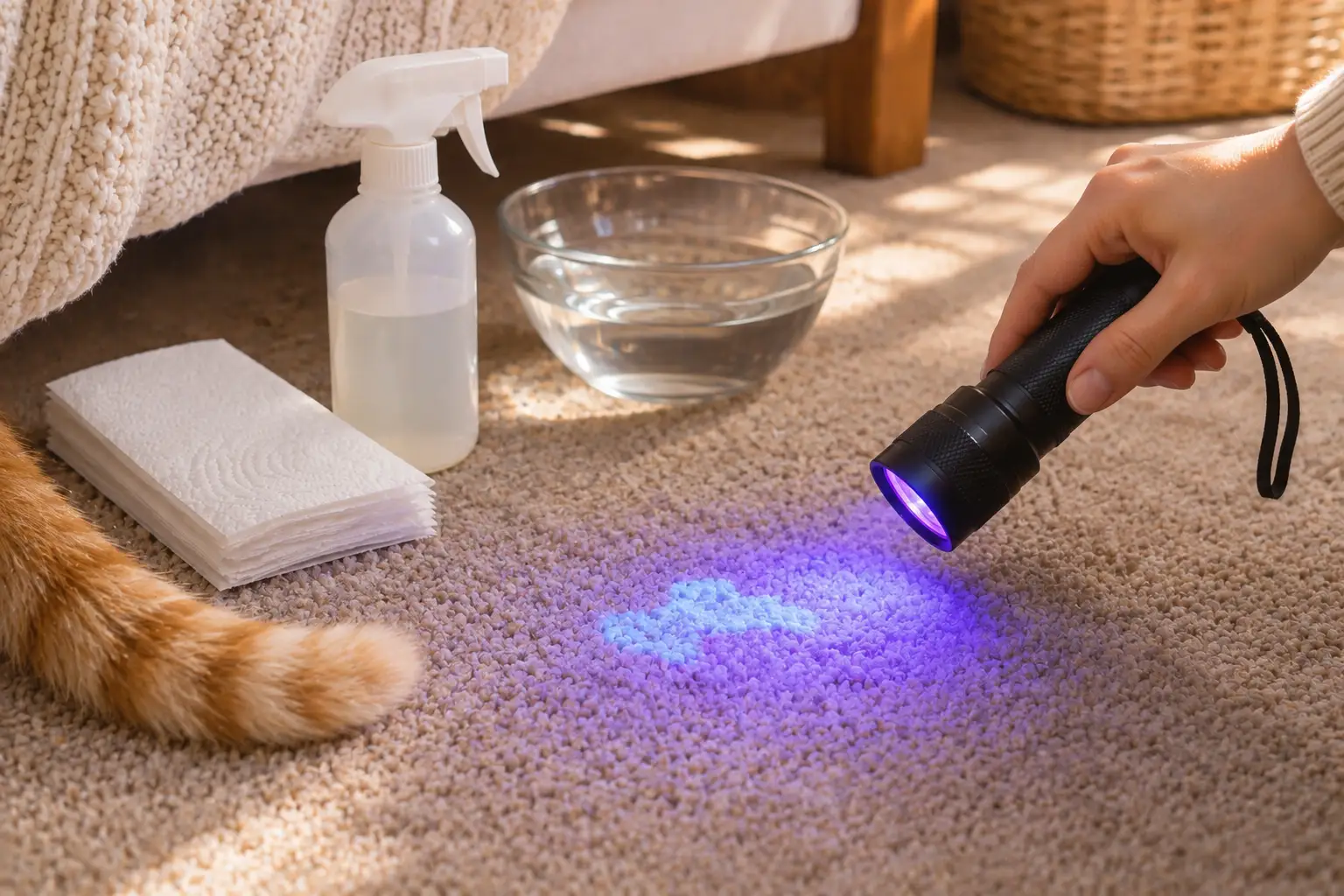
Dried urine is often invisible but still smells to your dog. Turn off the lights after dark and scan the carpet with a UV black light; urine residue glows. Outline each spot lightly with chalk or tape so you treat the full area, not just the middle of it.
02
Step 2 of 6
Blot Fresh Urine Until the Carpet Is Barely Damp
Lay a thick layer of white paper towels over the wet spot, cover it with a few sheets of newspaper or a folded towel, and stand on it. Replace the soaked towels and repeat until the carpet feels only slightly damp. Press straight down; rubbing spreads urine sideways into dry fibers.
03
Step 3 of 6
Wash It Out with a Mild Detergent Solution
Mix 1/4 teaspoon clear liquid dishwashing detergent (no bleach, no lanolin) into 1 cup of lukewarm water. Dampen a white towel with it, blot it into the spot, then blot up the moisture. Rinse by blotting with plain lukewarm water and blot dry again. Repeat the detergent and rinse cycle for as long as color or odor still transfers to the towels.
04
Step 4 of 6
Saturate with an Enzyme Cleaner and Let It Work
Once the spot is rinsed and blotted, apply a pet enzyme cleaner over an area slightly wider than the chalk outline, using enough product to reach as deep as the urine went. Leave it for the full dwell time on the label; enzymes need to stay wet to break down the odor-causing residue. Do not rinse it away early.
05
Step 5 of 6
Extract Large or Old Spots with Cool Water (Optional)
For big accidents or spots you found days later, a portable carpet cleaner pulls out more of the dissolved urine than blotting can. Fill it with cool or tap-temperature water and a formula labeled for pet urine, make two wet passes, then three or four slow dry passes. Never use a heated steam setting on urine.
06
Step 6 of 6
Dry Under Weight, Then Re-Check
Cover the area with about a half-inch layer of paper towels, weigh them down with books or a heavy pan, and change them as they get damp until the carpet is dry. Then repeat the black-light check. If the spot still glows or still smells, repeat the enzyme step.
If that didn’t work
Stubborn or set-in? Try these next, in order.
AIf the smell comes back on humid days, the urine has likely soaked into the carpet pad or subfloor. Lift the carpet at the edge to check; soaked sections of pad usually have to be cut out and replaced, and the subfloor treated with an enzyme cleaner before the carpet goes back down.
BFor set-in spots a hand tool cannot reach, rent a full-size carpet extractor, run it with cool water and a pet urine formula, and follow with the enzyme step once the area is blotted.
CIf the same dog keeps going in the same place, ask your vet to rule out a urinary problem, and block access to the spot until the odor is completely gone.
Tools that help
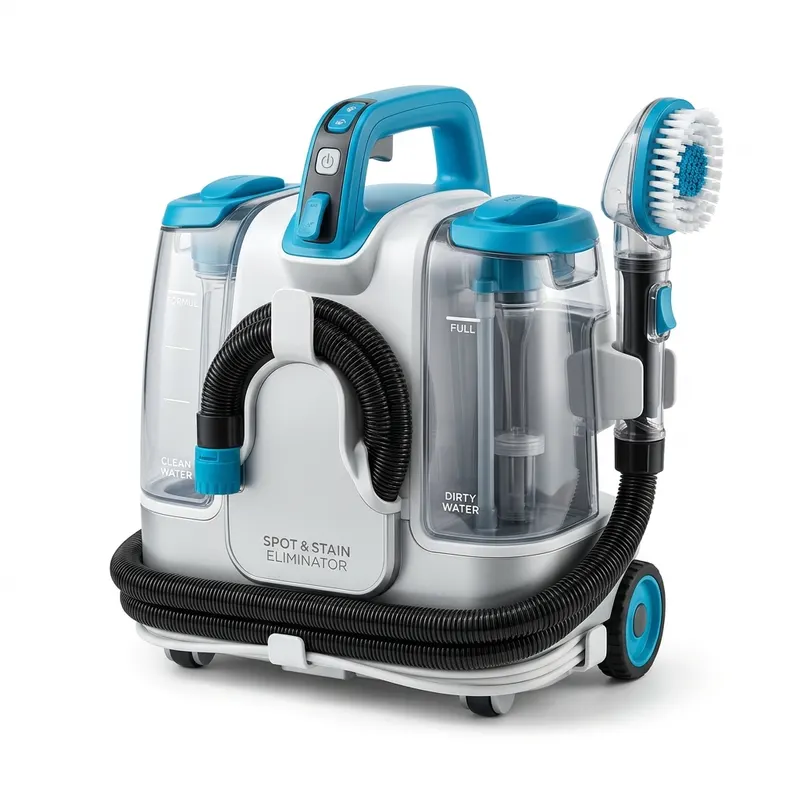
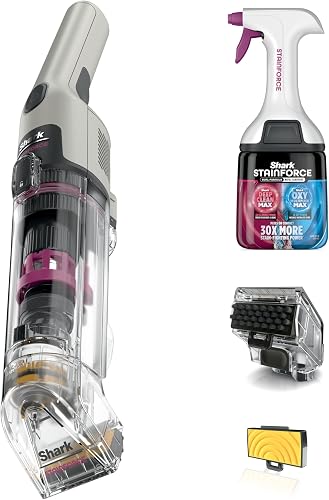
You can do this with cloths and a spray bottle. These make it faster:
As an Amazon Associate, HouseCareWiki earns from qualifying purchases. It costs you nothing extra. How we make money
9.0/10HouseCareWiki rating 9.0 out of 10, research-based
Paid promotion: Shark pays HouseCareWiki a higher commission on this model through Amazon until December 19, 2026. Our notes and scores don’t change because of it.
8.1/10HouseCareWiki rating 8.1 out of 10, research-based
Paid promotion: Shark pays HouseCareWiki a higher commission on this model through Amazon until December 19, 2026. Our notes and scores don’t change because of it.
A diluted vinegar rinse can help lift the stain, and The Carpet and Rug Institute lists 1 cup white vinegar to 2 cups water as an optional step after the detergent wash. Animal welfare groups caution that strong smells like vinegar can encourage a dog to mark the spot again, so if your dog is re-marking, skip vinegar and go straight to an enzyme cleaner.
Why does dog urine smell come back after cleaning?
The odor usually returns because urine reached the carpet pad or subfloor, where blotting and surface cleaners never touch it. Humidity reactivates the residue. Check with a black light, treat the full depth with an enzyme cleaner, and replace soaked padding if the smell persists.
Can I steam clean dog urine out of carpet?
No. Steam and hot water can permanently set the stain and odor by bonding urine proteins into synthetic fibers. Use a portable or rental extractor with cool or tap-temperature water instead, and only after the spot has been blotted and treated.
How do you get old dried dog urine out of carpet?
Find the full extent of each spot with a UV black light, then rehydrate it with the mild detergent solution and blot, rinse and repeat. Follow with a generous application of enzyme cleaner left wet for the label dwell time, extract with cool water if you have a carpet cleaner, and dry the area under weighted paper towels.
What should you not use on dog urine on carpet?
Avoid steam cleaners and hot water, ammonia-based cleaners, chlorine bleach, laundry detergent and automatic dishwasher detergent. Heat sets odor, strong smells like ammonia can prompt re-marking, bleach strips carpet color, and laundry or dishwasher detergents leave residue or bleaching agents behind.
Sources we relied on
1.Technical Bulletin: Pet Urine and Carpet — The Carpet and Rug Institute (CRI). Blot urine immediately with white paper toweling, clean with 1/4 teaspoon nonbleach, non-lanolin liquid dishwashing detergent in 1 cup lukewarm water, rinse and repeat while there is transfer, dry under a weighted half-inch layer of towels; urine can reach the cushion and subfloor, and enzyme treatments are available.
2.How to Remove Pet Stains and Odors Naturally — Humane World for Animals (formerly The Humane Society of the United States). Blot with a thick layer of paper towels and stand on them, use a black light to find and chalk-outline old soiling, use enzymatic cleaners for remaining odor, avoid ammonia and vinegar because strong odors can encourage re-marking, avoid steam cleaners because heat permanently sets stain and odor, and replace soaked carpet padding if needed.