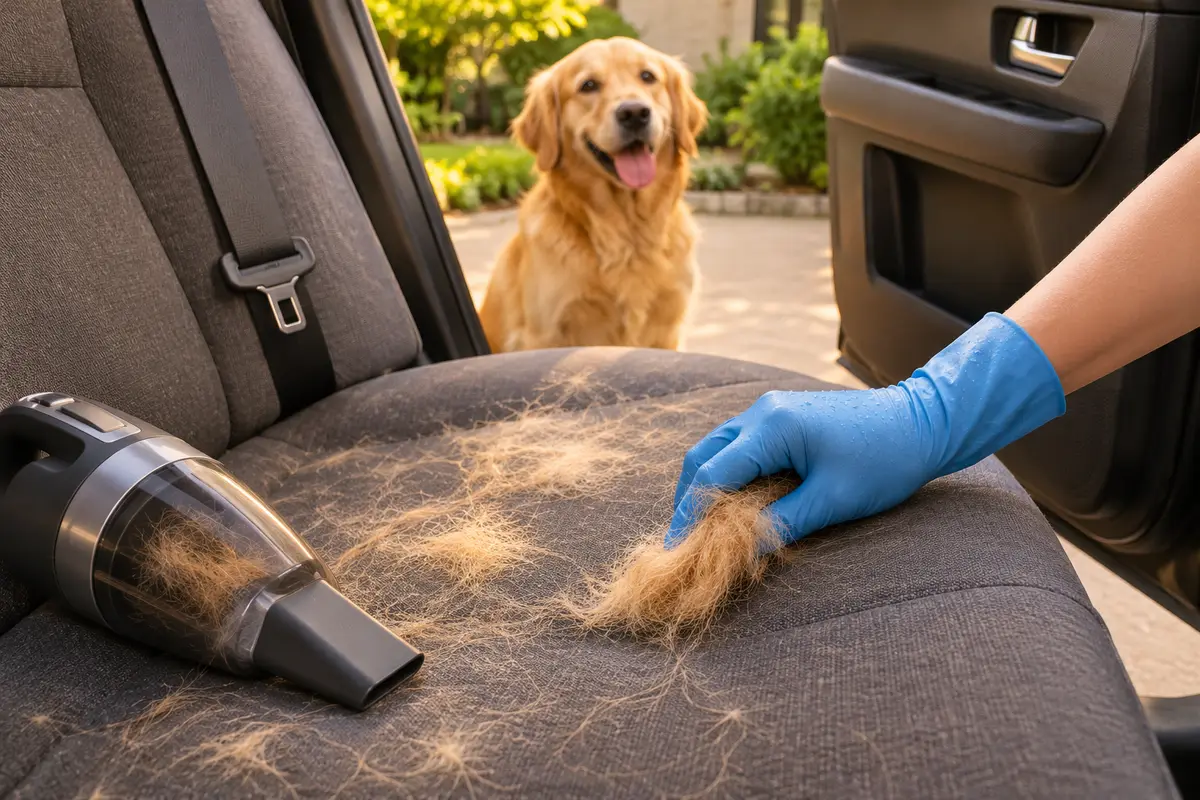
Find every spot, blot and rinse it, then let an enzymatic cleaner break down what is left. Why ammonia and vinegar invite your cat back, and why a vet check and a better litter box setup are part of the fix.
Thick stack of plain white paper towels and some newspaper
Cool water
Enzymatic pet urine cleaner (labeled for cat urine)
UV black light
Chalk or painter's tape to mark spots
For washable items: laundry detergent and a 1-pound box of baking soda
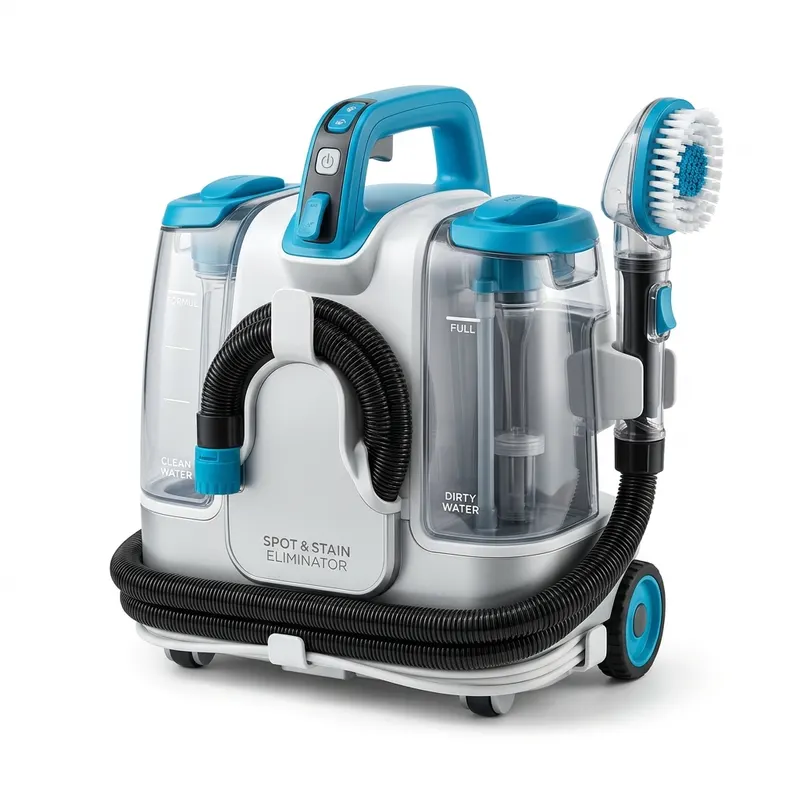
Optional: rental carpet cleaner for set-in spots
Step by step
01
Step 1 of 7
Find Every Spot, Not Just the Obvious One
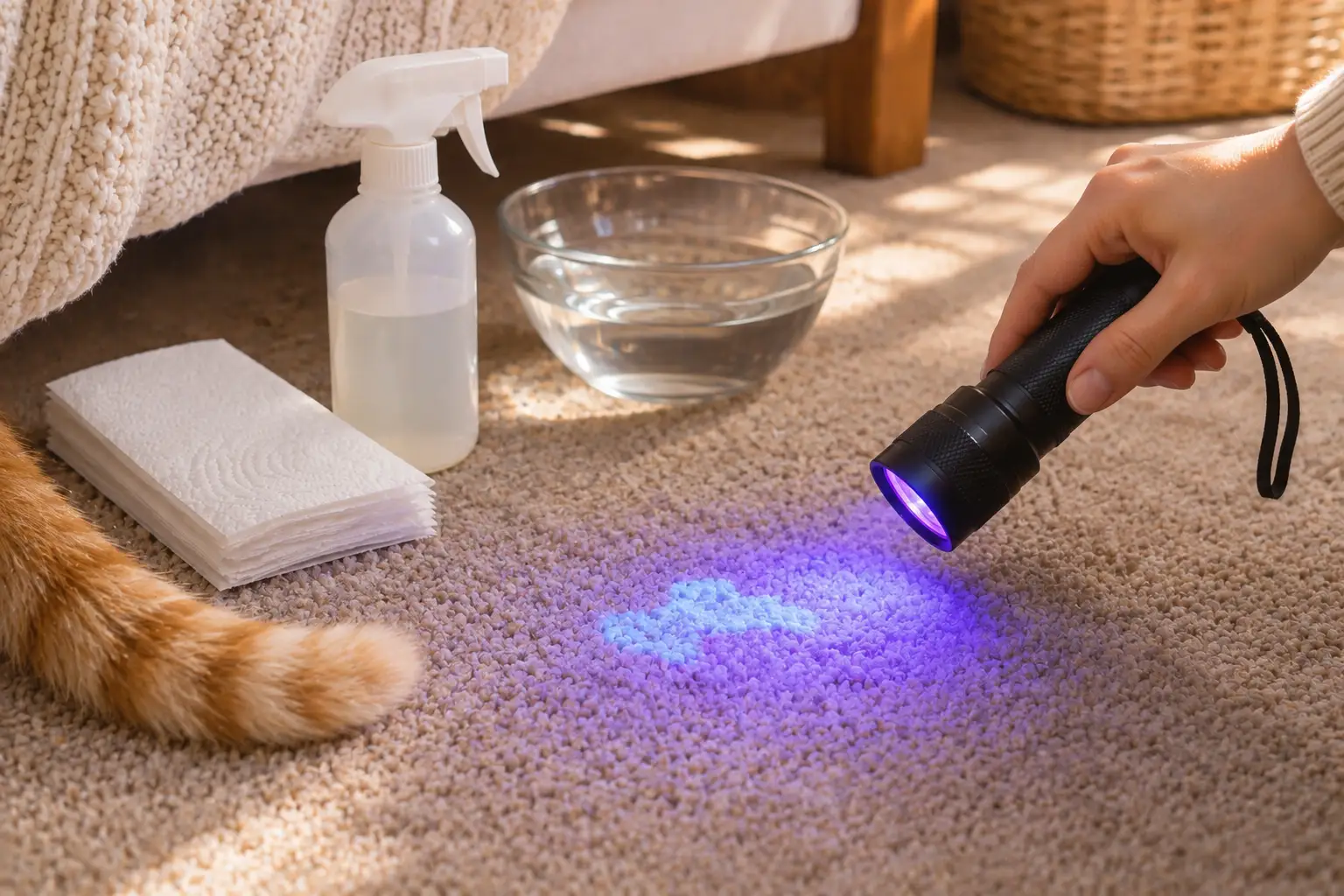
Follow your nose first: sniff low around the area, along baseboards and on soft furnishings. Then darken the room and scan carpets, upholstery and walls with a UV black light, which can reveal old stains you cannot see. Outline each one with chalk or tape so you treat its full edge. Look at walls and the backs of furniture too; a cat that sprays marks vertical surfaces with small amounts of urine.
02
Step 2 of 7
Blot Up Fresh Urine Until Barely Damp
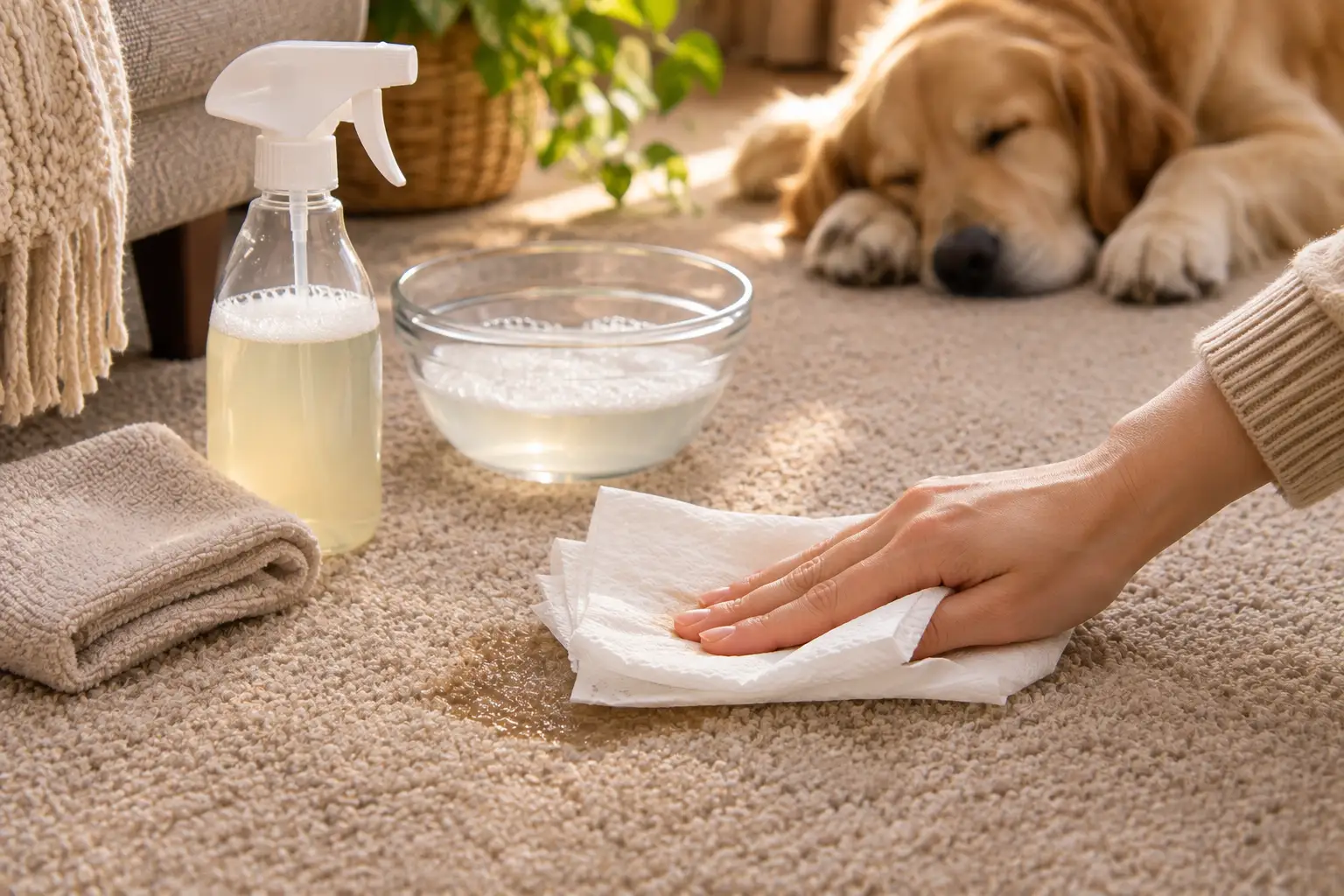
Layer a thick pad of paper towels over a fresh spot, add newspaper on top, and stand on it. Swap in fresh towels and repeat until the carpet or cushion is only barely damp. Press straight down rather than rubbing, which spreads urine into dry fibers.
03
Step 3 of 7
Rinse with Cool Water and Blot Again
Pour or blot a little cool water onto the spot to dilute what is left, then blot it dry the same way. Use cool water only; hot water and steam set urine odor in carpet and upholstery.
04
Step 4 of 7
Treat the Area with an Enzymatic Cleaner
Apply an enzymatic cleaner designed to neutralize pet urine odor over the whole marked area and a little beyond the edge, using enough to reach as deep as the urine went. Follow the label for how long to leave it and whether to blot afterward, and let it dry naturally. Enzymes break down the odor rather than masking it, which is what stops your cat from smelling the spot as a toilet.
05
Step 5 of 7
Launder Bedding, Throws and Washable Rugs
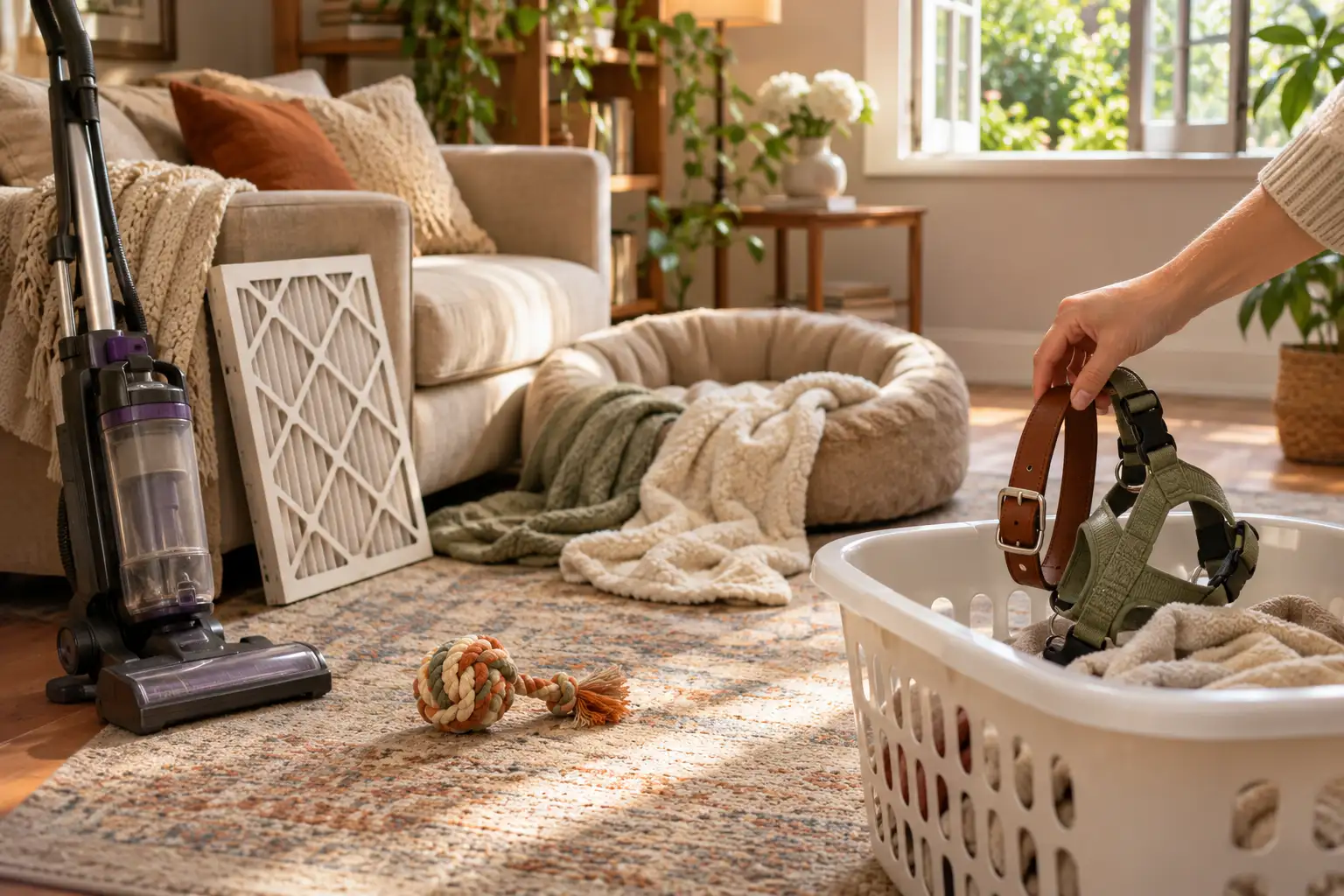
Wash soiled washable items with your regular detergent plus a 1-pound box of baking soda, then air dry if you can. If the smell survives the wash, wash again with an enzymatic cleaner added.
06
Step 6 of 7
Deal with Set-In Spots and Soaked Padding
For old stains, rent a carpet cleaner (no heated steam setting), then apply a pet odor neutralizer once the area is clean. If urine has soaked through to the carpet padding, that section of pad, and sometimes carpet, may need to be replaced. Urine can also discolor wood, varnish and paint; those finishes may need to be removed and redone.
07
Step 7 of 7
Rule Out Medical Causes and Fix the Litter Box
A cat peeing outside the box should see a vet first: urinary tract infections, cystitis, kidney disease, thyroid disease and diabetes can all cause it, and cats do not always act sick. Then check the setup: one box per cat plus one extra, unscented clumping litter about 1 to 2 inches deep, boxes away from noisy appliances and food bowls, scooped at least once a day and washed weekly with warm water and unscented soap or baking soda.
If that didn’t work
Stubborn or set-in? Try these next, in order.
AIf the smell returns after cleaning, urine has probably reached the carpet padding or subfloor. Lift the carpet edge to check; soaked padding usually has to be cut out and replaced before the odor will go away.
BIf the spot still glows under a black light after drying, repeat the enzymatic treatment over a wider area and leave it to work for the full time on the label.
CIf your cat keeps returning to the same spot after a clean bill of health, make that area unavailable for a while (close the door or cover it) and make the litter box more appealing. Retraining can take a week or more.
Tools that help
You can do this with cloths and a spray bottle. These make it faster:
As an Amazon Associate, HouseCareWiki earns from qualifying purchases. It costs you nothing extra. How we make money
9.0/10HouseCareWiki rating 9.0 out of 10, research-based
Paid promotion: Shark pays HouseCareWiki a higher commission on this model through Amazon until December 19, 2026. Our notes and scores don’t change because of it.
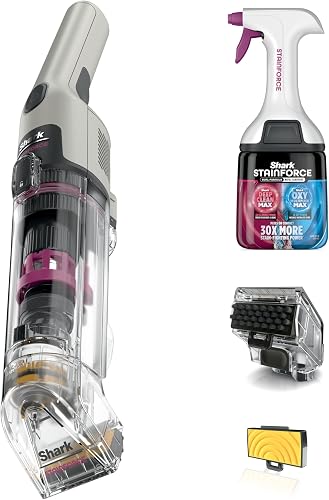
8.1/10HouseCareWiki rating 8.1 out of 10, research-based
Paid promotion: Shark pays HouseCareWiki a higher commission on this model through Amazon until December 19, 2026. Our notes and scores don’t change because of it.
An enzymatic cleaner made for pet urine, used after you have blotted and rinsed the spot. Animal welfare groups and the ASPCA recommend enzyme products because they neutralize the odor instead of covering it. Air fresheners and scented sprays only mask the smell, and your cat can still detect it.
Why does my cat keep peeing in the same spot?
Cats return to places that still smell like their urine, even if you cannot smell it any more. Cleaning with ammonia or vinegar makes it worse because those products smell like urine. Neutralize the spot with an enzymatic cleaner, and have a vet check for a medical problem, since urinary and other conditions often cause cats to avoid the box.
Does vinegar get rid of cat pee smell?
It is not a good choice for cats. Cornell's Feline Health Center advises avoiding cleaning products with ammonia or vinegar because they smell like urine and can be irritating, and the Humane World for Animals says strong chemical odors like these can encourage a pet to mark the same spot again.
Will cat urine smell ever go away on its own?
Rarely. Dried urine residue keeps smelling to your cat and keeps signaling your cat to return. The smell goes away when the urine residue is broken down or removed, which means enzymatic treatment for carpet and upholstery and, for soaked areas, replacing the padding.
How do I get cat urine smell out of a couch?
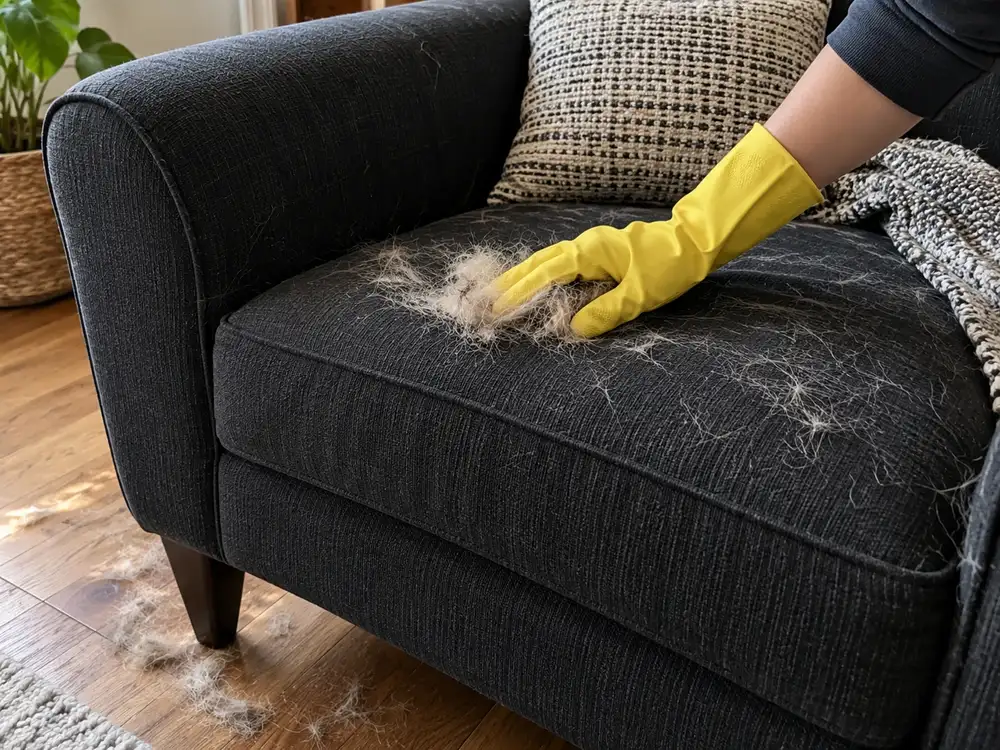
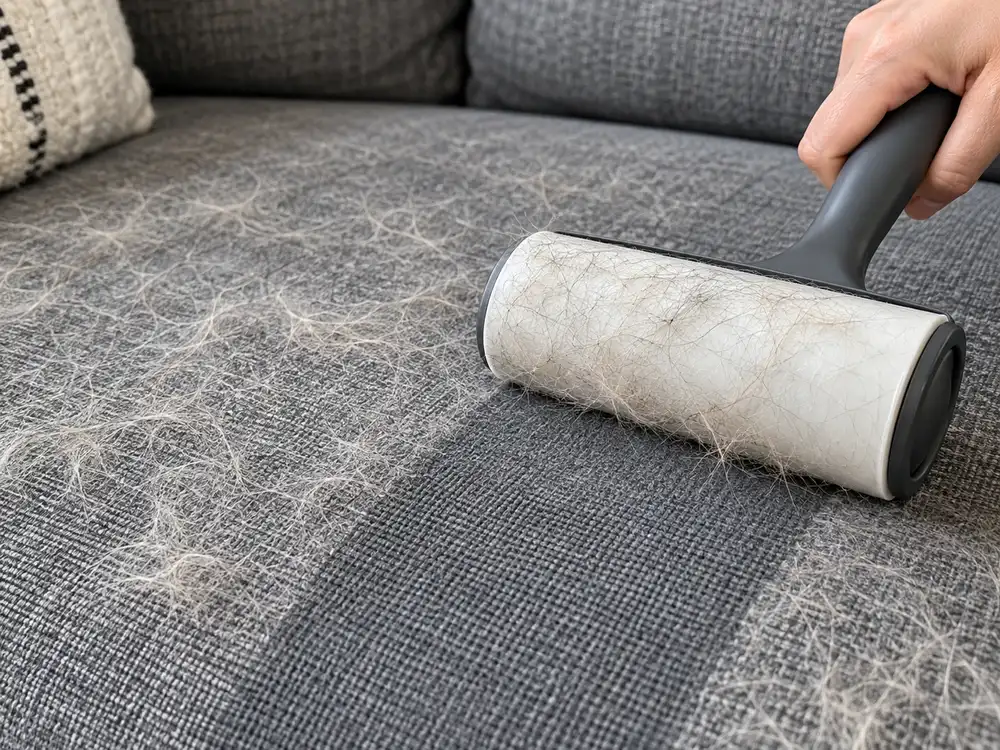
Blot as much as you can with a thick layer of paper towels, rinse with cool water and blot again, then treat the cushion with an enzymatic cleaner as the label directs and let it dry. Wash removable covers with detergent and a box of baking soda. Do not steam clean upholstery that has urine on it, because heat sets the odor.
Sources we relied on
1.How to Remove Pet Stains and Odors Naturally — Humane World for Animals (formerly The Humane Society of the United States). Blot with layered paper towels and newspaper until barely damp, rinse with cool water, use a black light and chalk to find old stains, avoid steam cleaners because heat sets the stain and odor, avoid ammonia and vinegar because strong odors can encourage re-marking, wash items with detergent plus a 1-pound box of baking soda and re-wash with an enzymatic cleaner if needed, and replace soaked padding.
2.Litter Box Problems — ASPCA. Rule out medical problems with a veterinarian, clean accidents with an enzymatic cleanser designed to neutralize pet odors, avoid ammonia because urine contains ammonia and it can attract the cat back, provide one box per cat plus one, scoop at least daily and wash boxes weekly with warm water and unscented soap or baking soda.
3.Feline Behavior Problems: House Soiling — Cornell Feline Health Center, Cornell University College of Veterinary Medicine. Medical conditions such as kidney disease, thyroid disease and diabetes can cause litter box problems and cats may not act sick; cats re-soil areas they have marked, so odors must be neutralized, not just deodorized; avoid products containing ammonia or vinegar; spraying is small amounts of urine on vertical surfaces.