A kettle descaler, a vinegar boil or a spoonful of cream of tartar, depending on what your kettle maker says. The Cuisinart, Breville and Hamilton Beach methods side by side, how to rinse the vinegar out, and why the base never goes near the sink.
Commercial kettle descaler, or the one your manufacturer sells (such as Breville Kettle Cleaner)
Distilled white vinegar
Cream of tartar (Hamilton Beach method)
Clean tap water
Soft cloth and a clean soft brush or toothbrush (for the scale filter)
Soft dry cloth for polishing the outside
Step by step
01
Step 1 of 7
Check Your Kettle's Manual
Look up the care section for your exact model. Kettle makers give different descaling methods, and Breville notes that letting scale build up can discolor the inside, damage the element and may affect the warranty. If your kettle heats but does not reach a boil, Hamilton Beach says it may need descaling.
02
Step 2 of 7
Unplug, Cool and Clean the Scale Filter
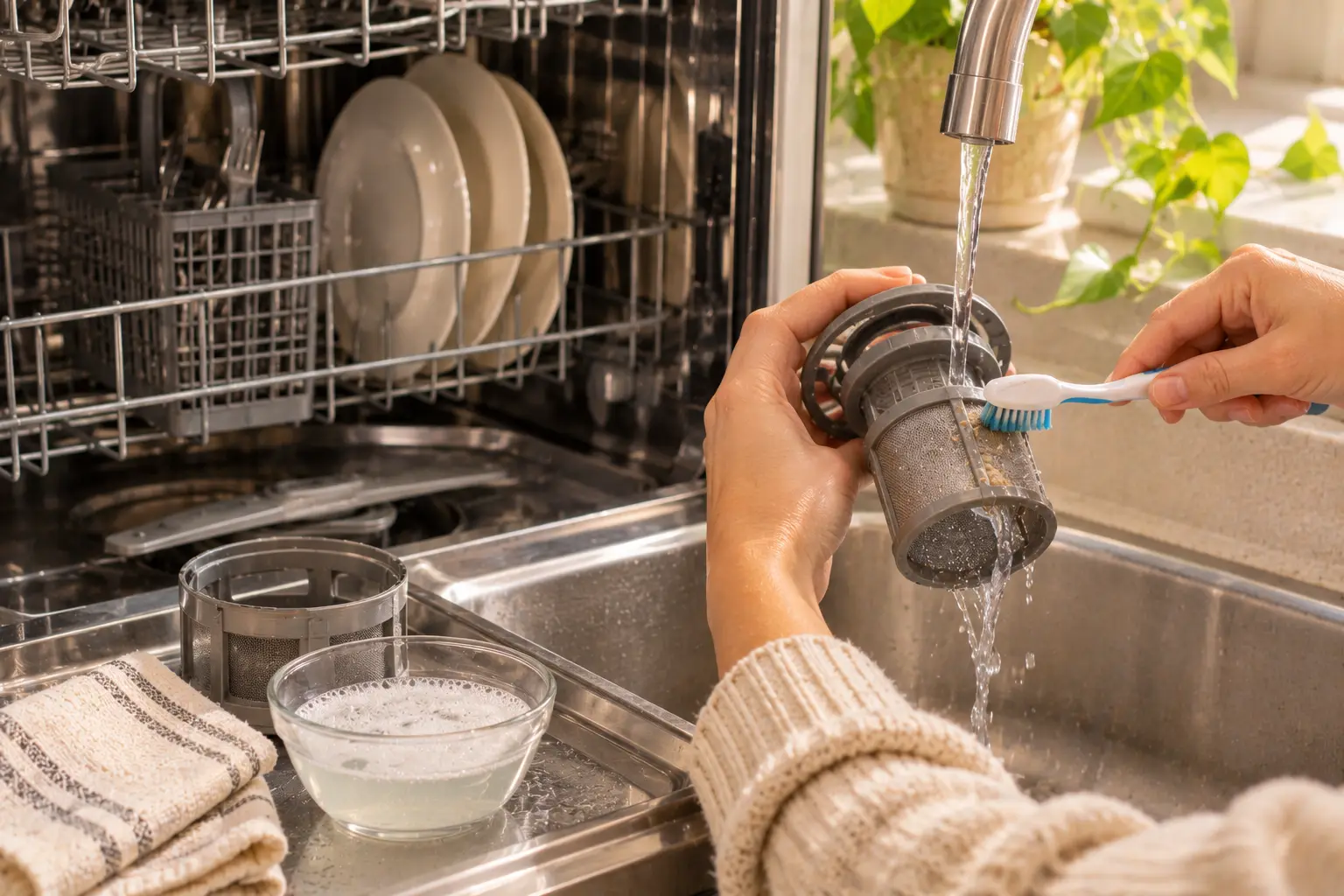
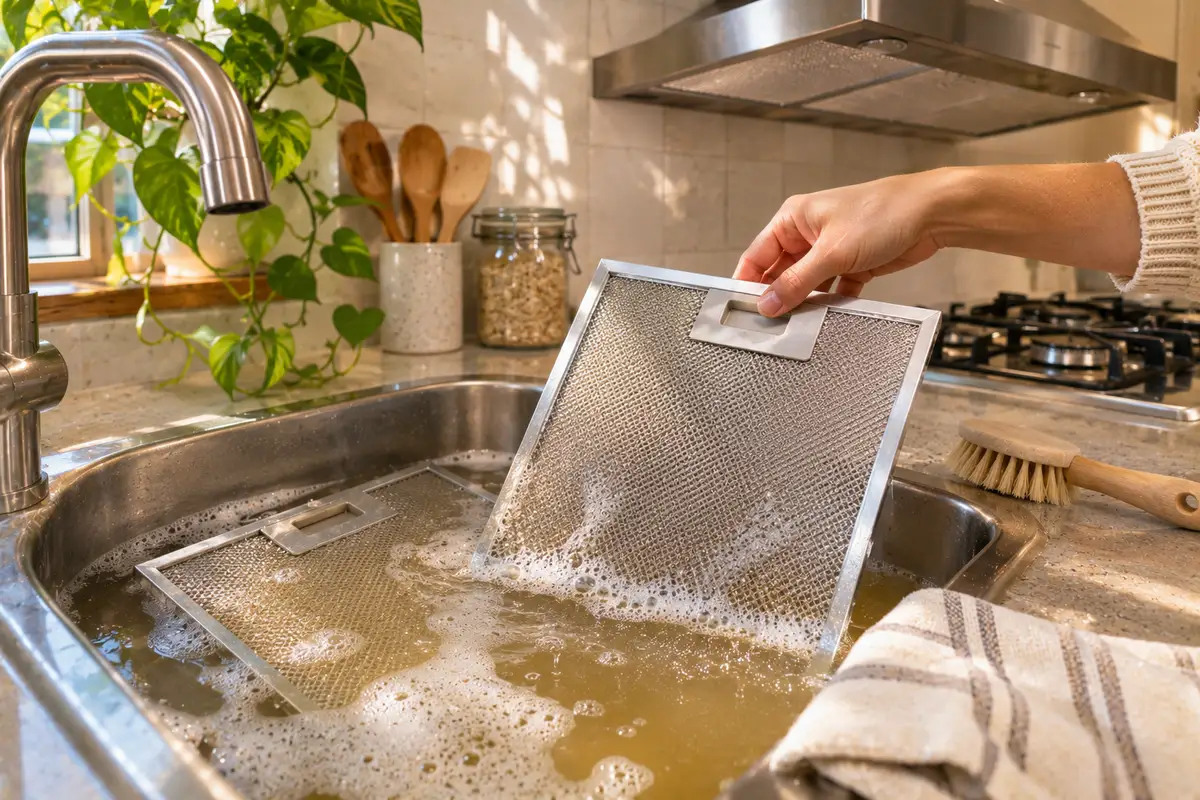
Unplug the kettle, empty it and let it cool. If it has a removable mesh scale filter near the spout, lift it out, hold it under running hot water and rub it with a clean cloth or brush; Hamilton Beach suggests a clean, wet toothbrush. Slide it back into place. Check it for damage and replace it if it is torn.
03
Step 3 of 7
Use a Kettle Descaler If You Have One
Cuisinart suggests a commercial kettle descaler, and Breville recommends its own Breville Kettle Cleaner. Follow the directions on the package exactly for the amount, the boil and how long to let it stand.
04
Step 4 of 7
Or Add Your Maker's Vinegar or Cream of Tartar Mix
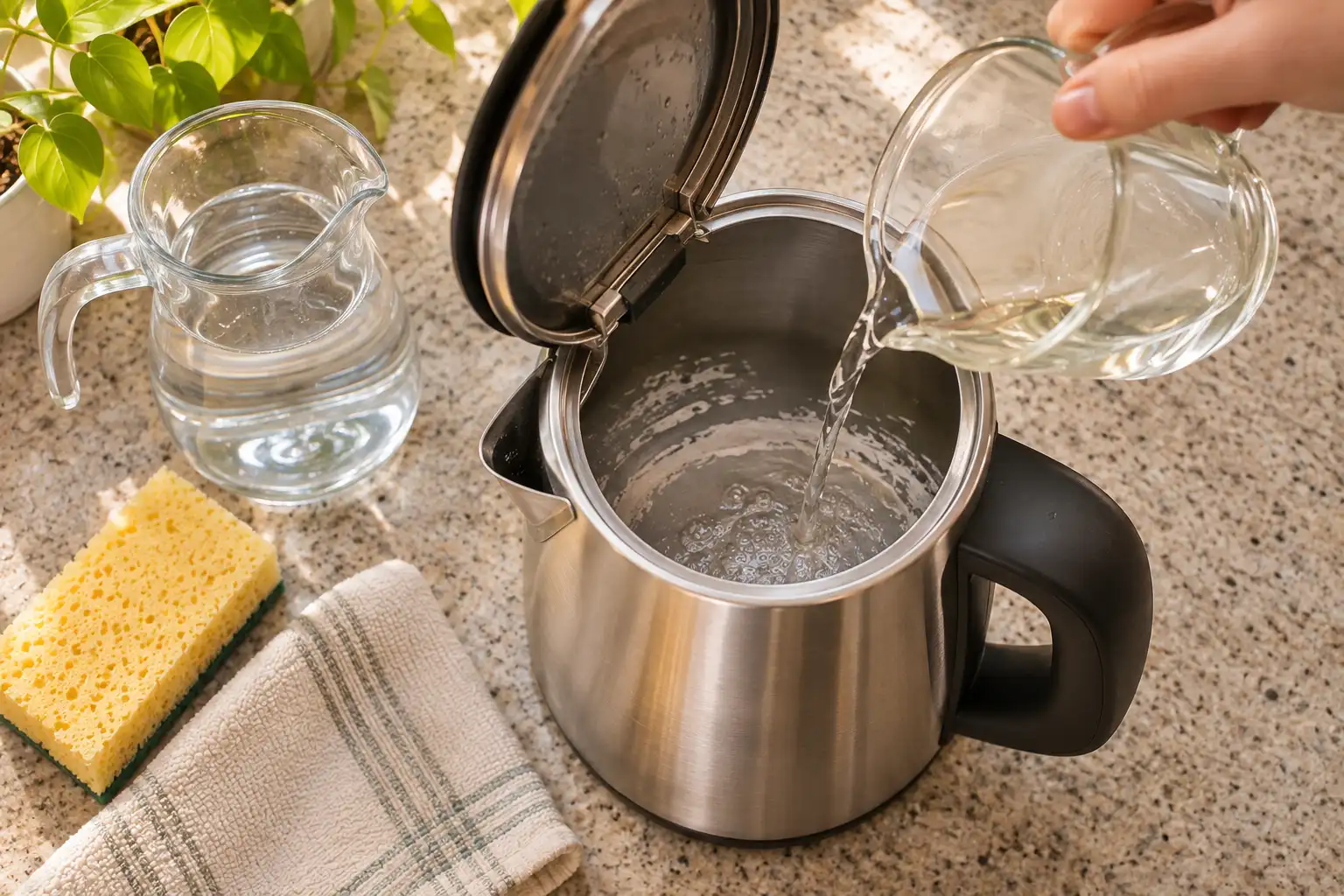
Breville: fill the kettle two-thirds full with 1 part vinegar and 2 parts water. Cuisinart: pour in enough white vinegar to cover the bottom by about half an inch. Hamilton Beach: add 1/2 teaspoon cream of tartar, or on some glass models 1 tablespoon of white vinegar or lemon juice, then fill the kettle half full with water. Stay below the MAX line.
05
Step 5 of 7
Boil and Let It Work
Set the kettle on its base, plug it in and bring the solution to a boil. Breville says to let its vinegar mix stand overnight; Hamilton Beach says to switch off and let the kettle cool. With Cuisinart's straight-vinegar method, repeat with cooled vinegar until all the deposits are gone.
06
Step 6 of 7
Empty and Do Rinse Boils
Pour the solution down the sink. Fill the kettle with clean water, bring it to a boil and discard the water, then repeat; Breville says the kettle is then ready to use. Cuisinart and Hamilton Beach both say to rinse several times with clean water. Keep going until you cannot smell vinegar.
07
Step 7 of 7
Wipe the Outside and Keep Scale Away
Wipe the outside of the kettle and the power base with a damp cloth, then polish with a soft dry cloth, keeping the base socket dry. To slow new buildup, Hamilton Beach recommends emptying the kettle after each use.
If that didn’t work
Stubborn or set-in? Try these next, in order.
AIf white or chalky deposits remain, repeat the descaling boil. Cuisinart's method is to keep repeating with cooled vinegar until all deposits are removed.
BIf your manual's vinegar method is not working on heavy scale, switch to a commercial kettle descaler or the manufacturer's own kettle cleaner and follow the package directions.
CIf the kettle still will not reach a boil after descaling, or the filter is damaged, contact the manufacturer's customer service rather than taking the base apart; the manuals say other servicing should be done by an authorized service representative.
Common questions
How do you descale an electric kettle with vinegar?
Follow your kettle maker's ratio. Breville says to fill the kettle two-thirds full with 1 part vinegar to 2 parts water, boil it and let it stand overnight, then do two boil-and-discard rinses with clean water. Cuisinart instead uses enough straight white vinegar to cover the bottom by about half an inch.
How often should you descale a kettle?
There is no fixed schedule. Cuisinart and Breville both say the frequency depends on how hard your tap water is and how often you use the kettle. Descale when you see white scale or discoloration inside, or if the kettle is slow to boil.
Can you put an electric kettle in water to clean it?
No. Cuisinart, Breville and Hamilton Beach all warn never to immerse the kettle, power base, cord or plug in water. Descale the inside with a solution and wipe the outside with a damp cloth.
How do you get the vinegar taste out of a kettle?
Empty the vinegar, fill the kettle with clean water, boil it and pour it away, then repeat. Breville recommends two of these rinse boils; if you can still smell vinegar, do another.
Is the brown stain on the bottom of my kettle rust?
Hamilton Beach says it is normal for stainless steel heating elements to discolor and that it does not affect the kettle's performance. Mineral scale can also discolor the inside. Descale it, and avoid abrasive pads that can scratch the surface.
Sources we relied on
1.PerfecTemp Cordless Programmable Kettle CPK-17C Instruction and Recipe Booklet — Cuisinart. Never immerse the kettle or power base; decalcify from time to time depending on water hardness and use, preferably with a kettle descaler, or else boil enough white vinegar to cover the bottom by about half an inch, repeat with cooled vinegar until deposits are gone, then rinse several times with clean water.
2.the Smart Kettle Luxe BKE845 Instruction Book — Breville. Recommends Breville Kettle Cleaner, or filling the kettle two-thirds full with 1 part vinegar and 2 parts water, boiling and standing overnight, then twice filling with clean water, boiling and discarding; do not immerse the base, cord or plug, and do not use chemicals, steel wool or abrasive cleaners.
3.1.7L Electric Glass Kettle Use and Care Guide (models 40864, 40865, 40866, 40869, 40876) — Hamilton Beach. Do not immerse the kettle, power base or plug; empty the kettle after each use; remove scale with 1/2 teaspoon cream of tartar or 1 tablespoon white vinegar or lemon juice in a half-full kettle, boiled, cooled and rinsed several times; abrasive pads can scratch the glass and cause it to break.