How to clean shower tiles (and remove hard water stains)
A gentle, grout-safe cleaner, a soft non-metallic brush, a thorough clear-water rinse and a dry finish. How to handle soap scum and hard water spots on ceramic and porcelain walls, when a lime remover is worth the risk, and why natural stone needs a different routine.
Multipurpose tile and bath spray cleaner labeled safe for ceramic tile and grout (neutral pH or all-purpose, low VOC)
Soft sponge, microfiber cloth or non-metallic scrub brush
Bucket or handheld shower sprayer for clean rinse water
Clean dry towel or squeegee
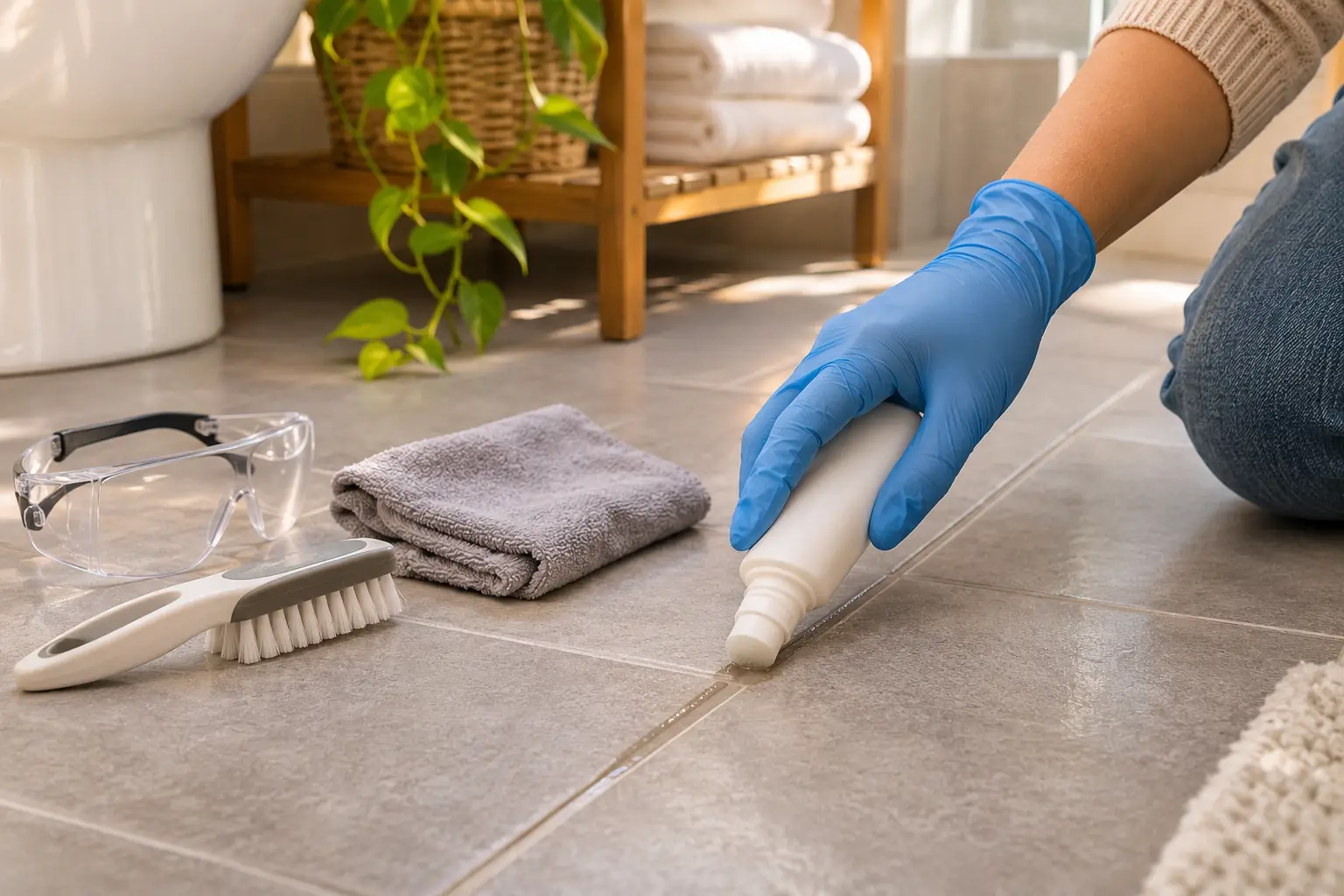
Rubber gloves
Optional for heavy buildup: professional-strength tile and grout cleaner
Step by step
01
Step 1 of 7
Confirm the Tile Is Ceramic or Porcelain
This method is for glazed ceramic and porcelain tile. If your shower walls are marble, travertine, limestone or another natural stone, stop here: stone is porous and manufacturers say it needs a different maintenance program and different cleaners than ceramic tile.
02
Step 2 of 7
Ventilate and Rinse the Walls
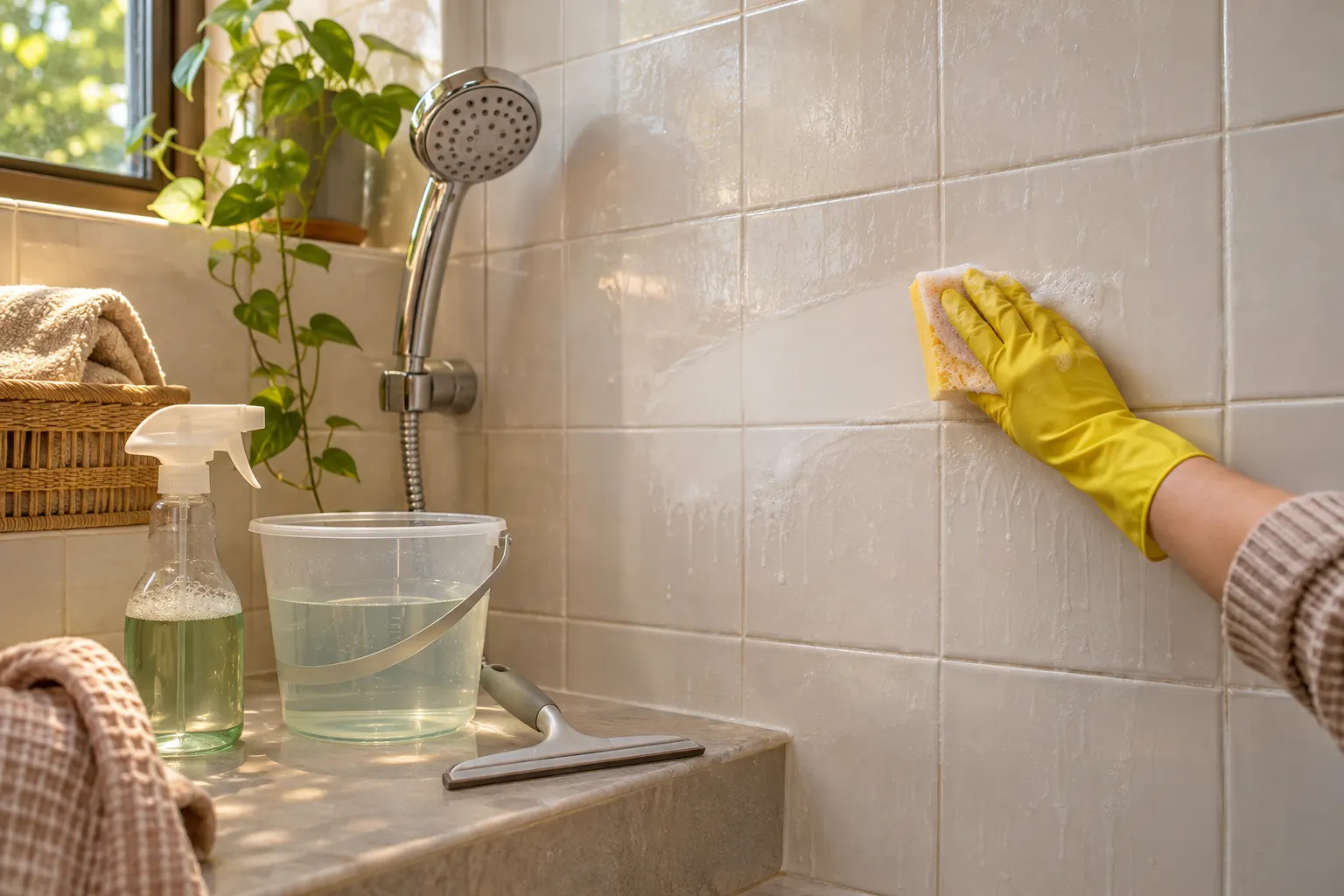
Turn on the exhaust fan or open a window, then wet the walls with warm water from the shower head to loosen surface soil and soap residue before you apply any cleaner.
03
Step 3 of 7
Apply a Gentle Grout-Safe Cleaner
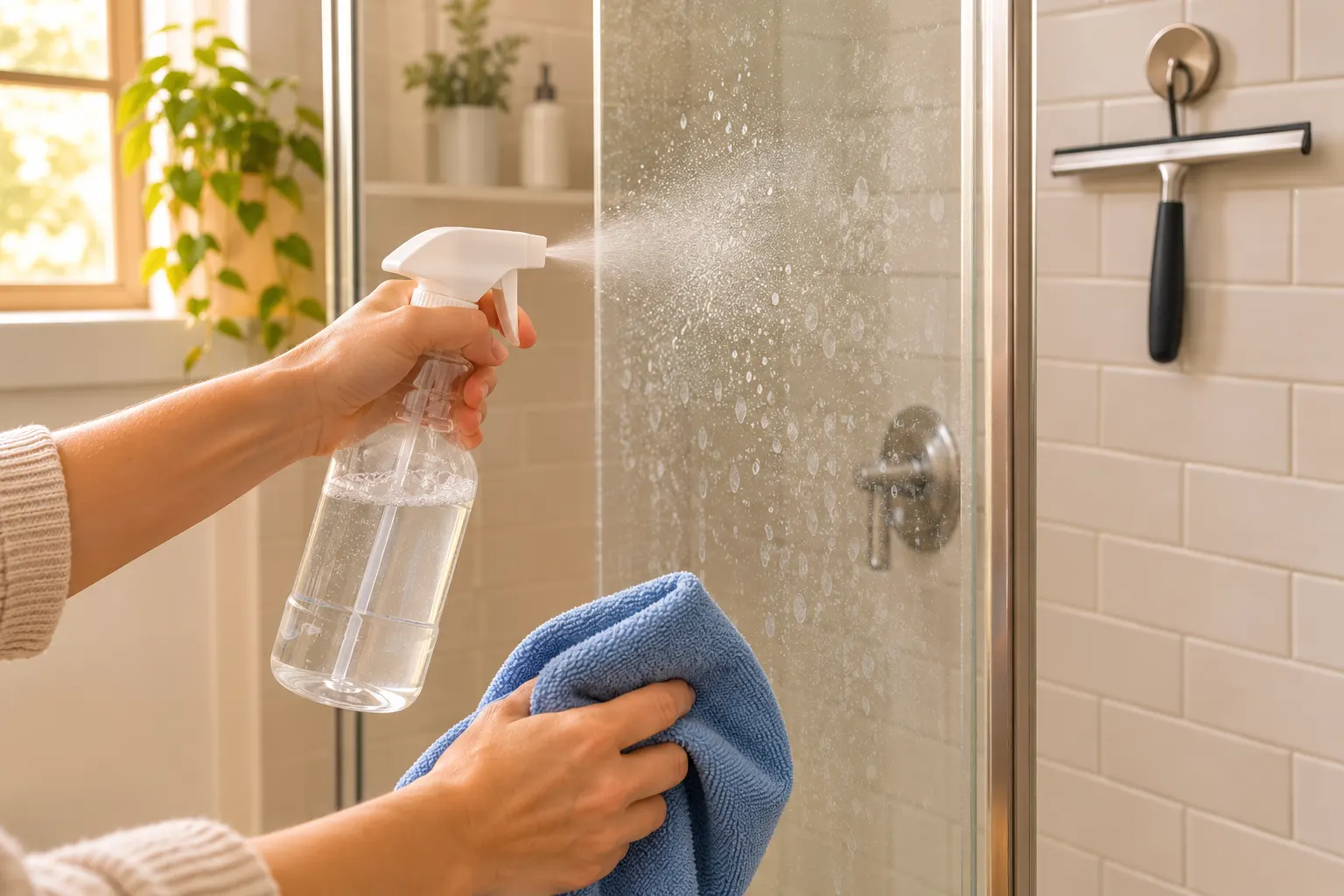
Spray a multipurpose tile and bath cleaner that is labeled safe for ceramic tile and grout. Tile manufacturers recommend an all-purpose, low-VOC cleaner for glazed tile and a neutral-pH tile cleaner for unglazed tile. Skip products that contain acids or ammonia. Let it sit only as long as the label directs.
04
Step 4 of 7
Scrub with a Soft Non-Metallic Tool
Agitate the cleaner with a sponge, cloth or non-metallic brush, paying extra attention to the lower wall where soap scum collects. Do not use steel wool or abrasive pads, which manufacturers warn against.
05
Step 5 of 7
Rinse Thoroughly with Clean Water
Rinse every section with clean water until no suds or slick film remain. TCNA notes that even good cleaners leave a sticky soap film if they are not properly rinsed, and that film attracts dirt.
06
Step 6 of 7
Dry the Tile
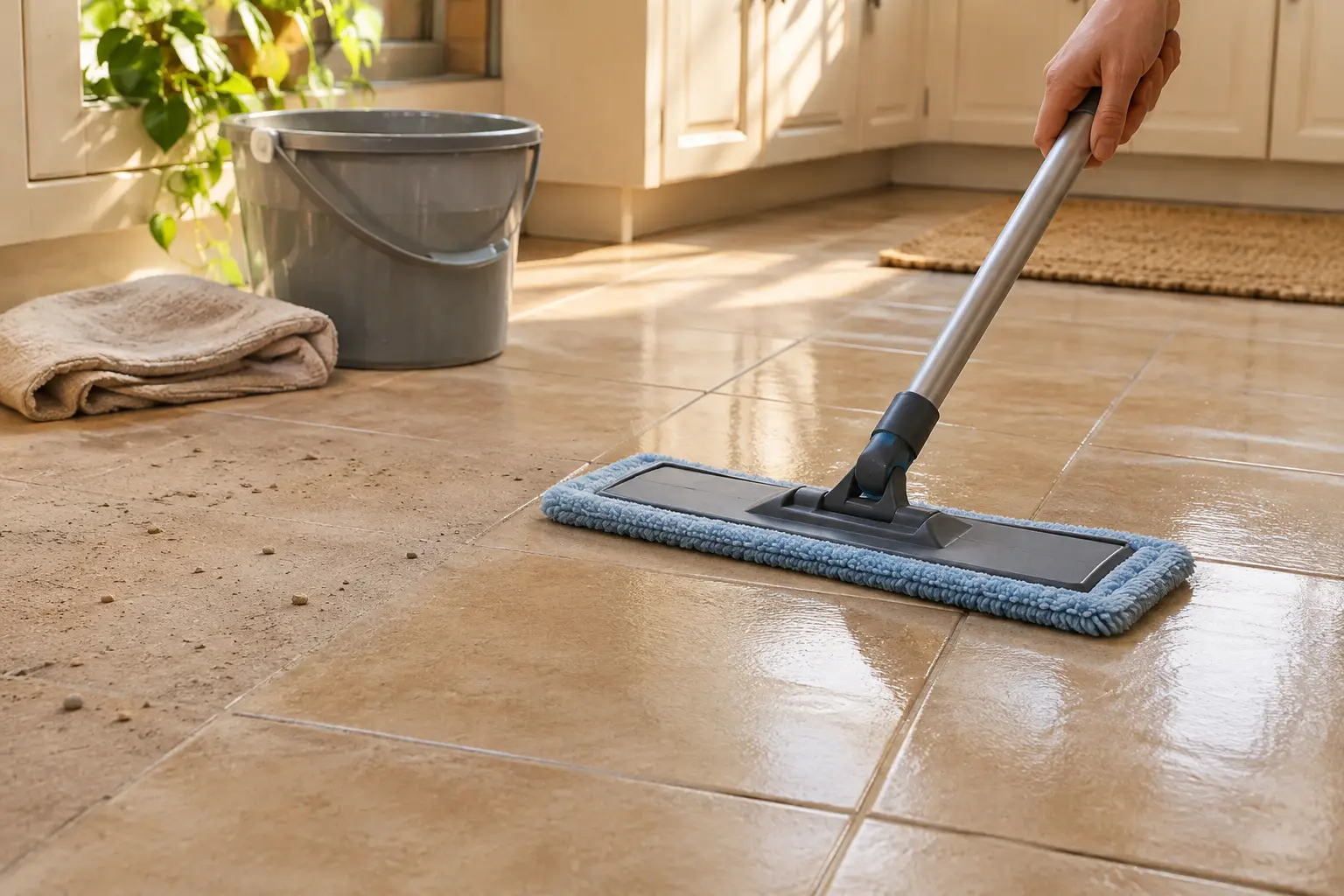
Dry the walls thoroughly with a clean towel or squeegee. Marazzi recommends always drying porcelain thoroughly after cleaning, which also leaves less water to dry into spots.
07
Step 7 of 7
Step Up for Heavy Soap Scum
If buildup remains, use a professional-strength tile and grout cleaner made to remove soap scum, body oil and mildew, following the label for dilution and dwell time. Start with the least aggressive pad or brush, then rinse with clear water and dry. Grout lines need their own periodic cleaning; see our guide on cleaning grout in bathroom tiles.
If that didn’t work
Stubborn or set-in? Try these next, in order.
AIf the walls feel sticky or look dull after cleaning, residue was left behind. Rinse again with plenty of clean water and dry; TCNA recommends repeated clear-water rinses for soapy dirt.
BIf a waxy or hazy film persists, it may be an old topical sealer or wax. Manufacturers recommend a tile sealer and adhesive remover for ceramic tile only; test a small area first and never use it on natural stone.
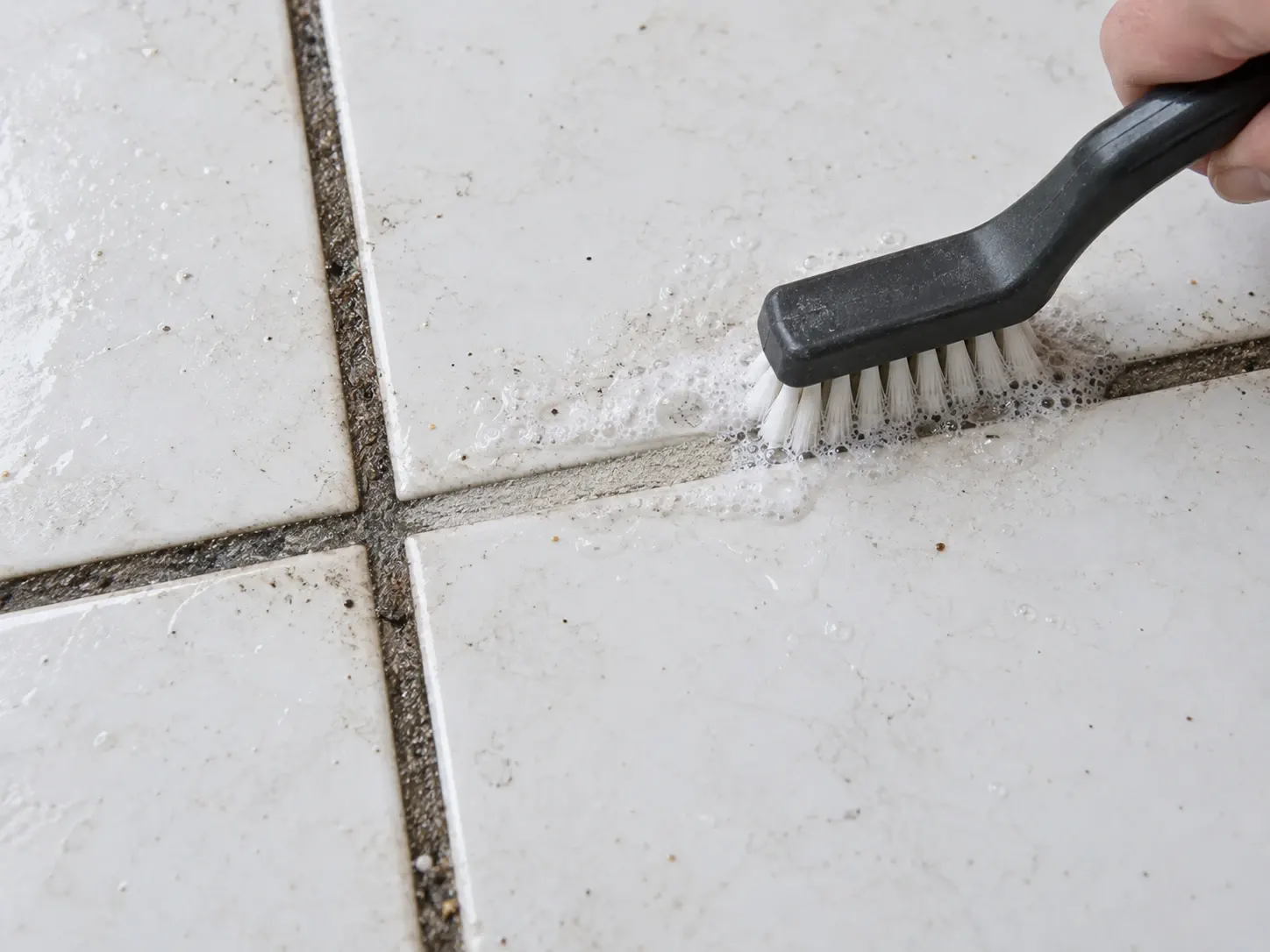
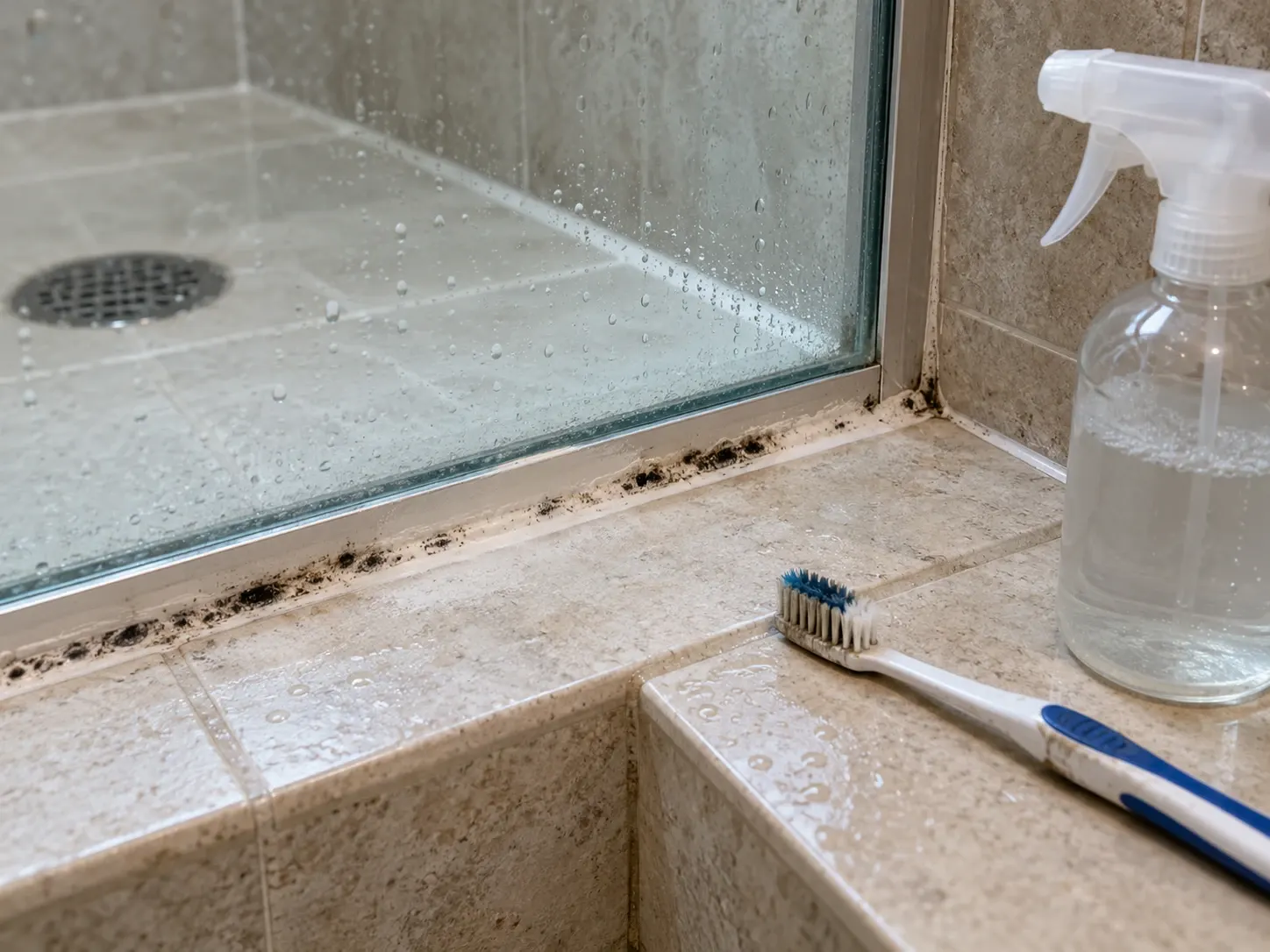
CIf grout stays dark after the tile is clean, the problem is in the grout, not the tile. Treat it with a grout-specific routine rather than a stronger cleaner on the whole wall.
Removing hard water stains from shower tile
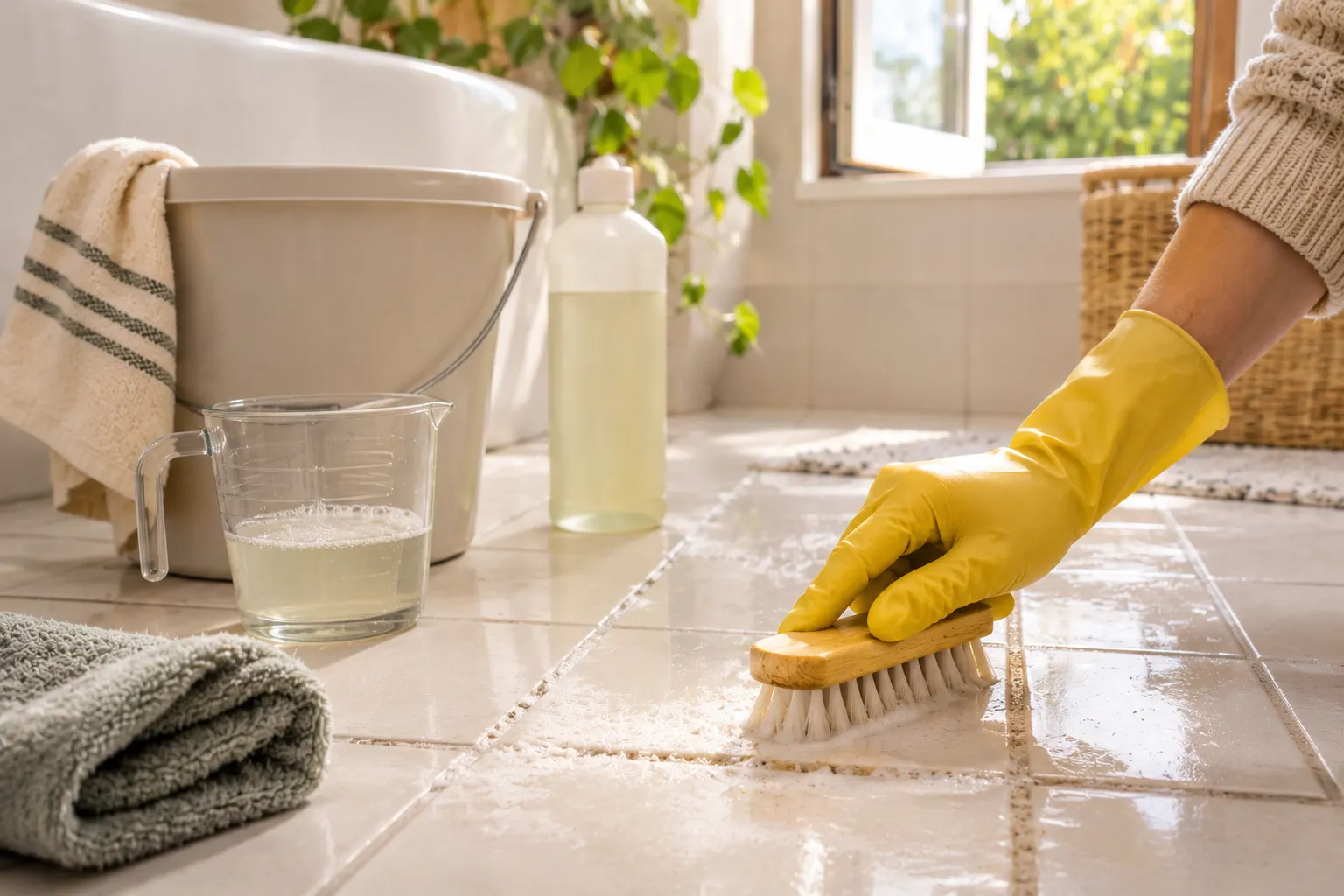
Hard water spots are the minerals left behind when water dries on the tile. Start with the routine above: a neutral tile cleaner and a nylon or plastic brush, then a rinse from a fresh bucket of clean water rather than the dirty cleaning water, which the Tile Council of North America recommends to remove residue. Leftover cleaner dries into a dull film that can look like hard water staining, so judge the tile only once it is dry. White, chalky spots that remain are mineral scale.
For scale on glazed ceramic or porcelain, a calcium and lime remover is the last resort, not the first step, since TCNA says acids are not generally recommended for cleaning tile and cement grout reacts with them. If you use one, pick a product whose label lists your surface and follow it exactly. CLR Calcium, Lime and Rust Remover, for example, is mixed with an equal amount of warm water, tested on a hidden spot first and never left on longer than 2 minutes before a prompt, thorough cold-water rinse. CLR warns it may etch older sinks, tubs and tiles and says to keep it off natural stone and colored grout, meaning any color other than white. Repeat a short pass on stubborn spots instead of leaving the product on longer; if spots survive two passes, they may be etching or a worn glaze, so stop and ask a tile professional.
Marble, travertine or limestone: no vinegar, lemon or lime remover, which the Natural Stone Institute says can dull or etch these stones. It suggests buffing surface hard water spots with dry 0000 steel wool and using non-acidic cleaners, and calling a stone professional for etching.
Rust removers and some toilet bowl cleaners can contain hydrofluoric acid, which the Natural Stone Institute says attacks all stone, including granite and quartzite. Do not use them as a tile cleaner.
Never mix a lime or rust remover with bleach or any other household cleaner, and wear gloves in a ventilated bathroom.
To stop new spots forming, squeegee or towel-dry the walls after every shower.
Tools that help
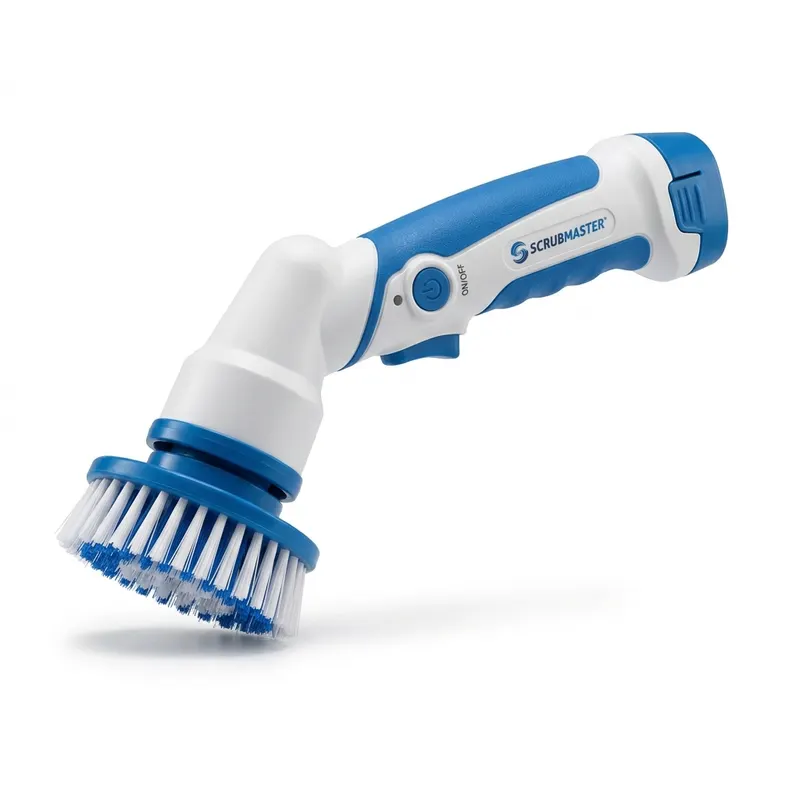
You can do this with cloths and a spray bottle. These make it faster:
As an Amazon Associate, HouseCareWiki earns from qualifying purchases. It costs you nothing extra. How we make money
What is the best thing to clean shower tiles with?
A multipurpose tile and bath cleaner labeled safe for ceramic tile and grout. Marazzi and American Olean recommend an all-purpose, low-VOC cleaner for glazed tile and a neutral-pH tile cleaner for unglazed tile, applied with a sponge, cloth or non-metallic brush and rinsed off with clean water.
Can I use vinegar on shower tiles?
Tile manufacturers advise against acidic cleaners on glazed tile because acids can damage the glaze and the grout, and TCNA explains that cement grout is dissolved by acids. Vinegar is an acid, so stick to a cleaner made for tile and grout.
How do you get soap scum off shower tiles?
Use a multipurpose bath spray made to remove soap scum, hard water deposits and mildew, scrub with a non-metallic brush, and rinse thoroughly. For heavy buildup, Daltile recommends a professional-strength tile and grout cleaner formulated for soap scum and body oil, followed by a clear-water rinse.
Do I need to seal ceramic shower tiles?
Glazed ceramic and porcelain tile does not need to be sealed, according to Marazzi and American Olean. They do recommend sealing cement grout with a penetrating sealer that does not contain silicone.
Can I clean marble or stone shower tiles the same way?
No. Natural stone is porous and needs a different maintenance program than ceramic tile. Products made for ceramic, such as sealer removers and sulfamic acid grout removers, should never be used on stone, so use a cleaner made for natural stone.
What removes hard water stains from shower tile?
On glazed ceramic or porcelain, start with a neutral tile cleaner and a nylon brush, then rinse with clean water. For mineral scale that remains, a calcium and lime remover labeled for your surface works, used briefly as the label directs and rinsed off promptly.
Is CLR safe on ceramic tile?
CLR lists porcelain among suitable surfaces but warns it may etch older sinks, tubs and tiles and should be kept off natural stone and colored grout. Dilute it as the label says, test a hidden spot, never leave it on longer than 2 minutes and rinse promptly with cold water.
How do you remove hard water stains from marble or travertine tile?
Not with acidic lime removers or vinegar, which can etch calcium-based stone. The Natural Stone Institute suggests buffing surface hard water spots with dry 0000 steel wool and using non-acidic cleaners; for etching, call a stone professional.
Sources we relied on
1.Cleaning Grout — Tile Council of North America (TCNA). Cement grout is dissolved by acids, so it is better cleaned with an alkaline cleaner than an acid; oil- or wax-based cleaners leave a film in grout; even good cleaners leave a sticky soap film if not properly rinsed; tile can often be cleaned with water, and soapy dirt calls for repeated clear-water rinses.
2.Tile Care and Maintenance — Marazzi. Clean glazed tile with an all-purpose, low-VOC cleaner safe for grout and unglazed tile with a neutral-pH tile cleaner; use a multipurpose spray for soap scum, hard water and mildew on shower walls; do not use acids or ammonia on porcelain; use non-abrasive tools; rinse and dry thoroughly; glazed tile does not need sealing.
3.Ceramic Tile Care Instructions — American Olean. Apply cleaner with a cotton mop, cloth, sponge or non-metallic brush, rinse with clean water and dry; acids damage grout and glazed tile and ammonia discolors grout; natural stone is porous and needs a different maintenance program, and sealer removers, sulfamic acid and grout removers must never be used on stone.
4.How to Care for and Maintain Ceramic and Porcelain Tile — Daltile. For heavier cleaning, use a professional-strength tile and grout cleaner that removes soap scum, grease, body oil and mildew, starting with the least aggressive pad, then rinse with clear water; bleach and alkaline cleaners may need multiple rinses to remove.
5.Bathroom Tile and Grout: A Few Tips on Keeping Them Clean — Tile Council of North America (TILE Magazine). Grout contains cement, which is alkaline and reacts with acids, so acidic cleaners like vinegar may eat away at unprotected grout; acids are not generally recommended to clean tile; use a neutral tile cleaner for regular cleaning, nylon or plastic scrubbers, and rinse thoroughly with fresh clean water to remove residue.
6.Care and Cleaning for Natural Stone Surfaces — Natural Stone Institute. Products containing lemon, vinegar or other acids may dull or etch calcareous stones; rust removers and toilet bowl cleaners can contain hydrofluoric acid, which attacks all stones; surface hard water spots can be buffed with dry 0000 steel wool; a squeegee after each use minimizes soap scum.
7.CLR Calcium, Lime & Rust Remover — CLR Brands. In a well-ventilated area mix equal parts product and warm water, test on a small hidden area, let it sit 2 minutes and never longer, rinse promptly and thoroughly with cold water; avoid natural stone and sealed or coated surfaces; do not mix with bleach or other household cleaners; older tiles may be more sensitive.
8.Calcium, Lime and Rust Remover FAQs — CLR Brands. Calcium, Lime and Rust Remover may etch older sinks, tubs and tiles, should not be used on colored grout (any color other than white) or any natural stone including granite, should never be left on longer than two minutes, and should never be mixed with other household cleaners or bleach.