Unplug and cool it, wash the stoneware and lid in hot soapy water or the dishwasher, lift baked-on food with Crockpot's vinegar and baking soda soak, and only wipe the heating base. Plus the same routine for an electric roaster oven after the turkey. Based on Crockpot, Hamilton Beach and Nesco care instructions.
Switch the slow cooker off, unplug it and let the crock cool before cleaning. Use oven mitts to lift out the crock if it is still warm.
02
Step 2 of 7
Wash the Stoneware and Lid
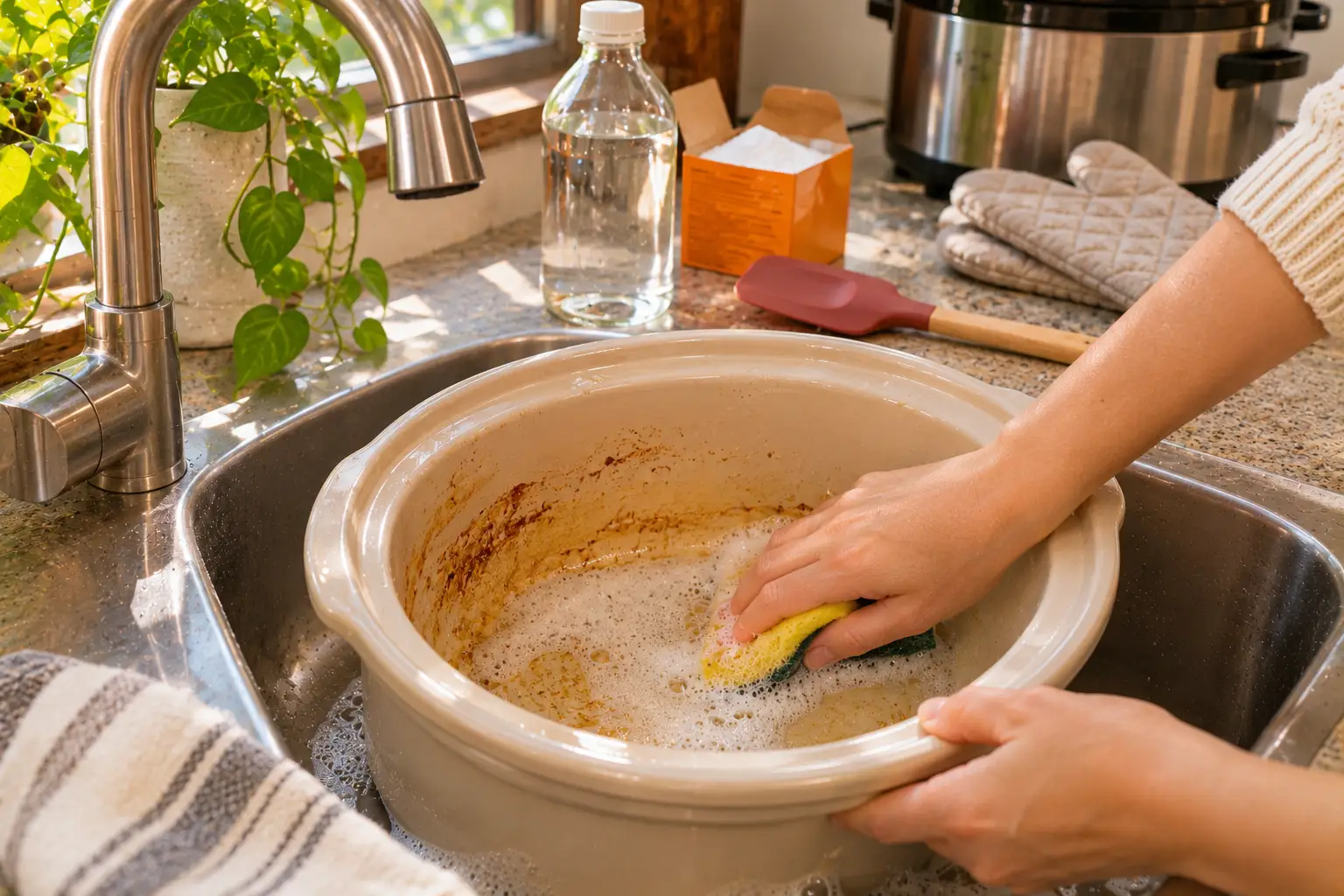
Wash the removable stoneware and the lid in hot, soapy water, or put them in the dishwasher. Use a sponge, cloth or rubber spatula to lift residue; Crockpot says not to use scouring pads or abrasive cleaners.
03
Step 3 of 7
Loosen Baked-On Food with Vinegar and Baking Soda
For stubborn residue, fill the crock with water to just above the food line. Add 1/2 cup of distilled white vinegar for a 3-quart cooker or 1 cup for a 6-quart cooker, then slowly pour in the same amount of baking soda and let the bubbling settle. Cover and set it on LOW for 1 hour, as Crockpot recommends.
04
Step 4 of 7
Scrub, Cool and Wash Again
Scrub the loosened residue with a soft sponge. Let the cooker cool, then wash the crock in the sink with warm, soapy water, rinse and dry.
05
Step 5 of 7
Remove Water Spots with Vinegar
To remove water spots and light stains on the stoneware, wipe them with a non-abrasive cleaner or vinegar, then rinse.
06
Step 6 of 7
Wipe the Heating Base
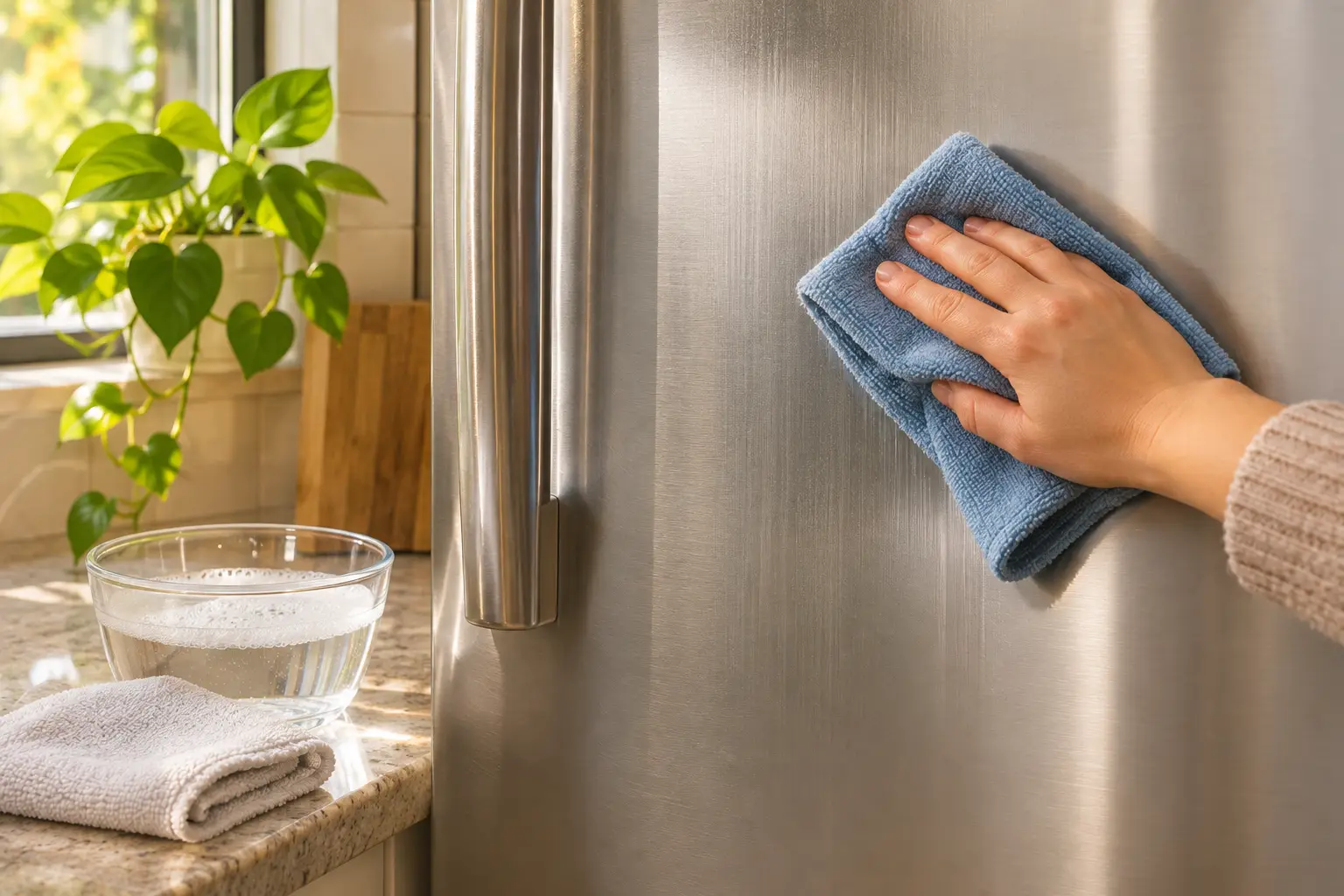
Clean the outside and inside of the heating base with a soft cloth dampened in warm, soapy water, then wipe it dry. Do not use abrasive cleaners, and never immerse the base.
07
Step 7 of 7
Dry and Store
Let all parts dry completely on the counter before reassembling. Hamilton Beach says not to clip the lid on during storage.
If that didn’t work
Stubborn or set-in? Try these next, in order.
AIf residue remains after one vinegar and baking soda cycle, let the crock cool, repeat the soak, and scrub again with a soft sponge or rubber spatula.
BIf you find a chip or crack in the crock or lid, stop using it and replace the part.
CTo make cleanup easier next time, Crockpot suggests using slow cooker liners.
DIf the heating base is stained, wipe it again with a soapy, well-wrung cloth rather than any abrasive product.
How to clean a roaster oven
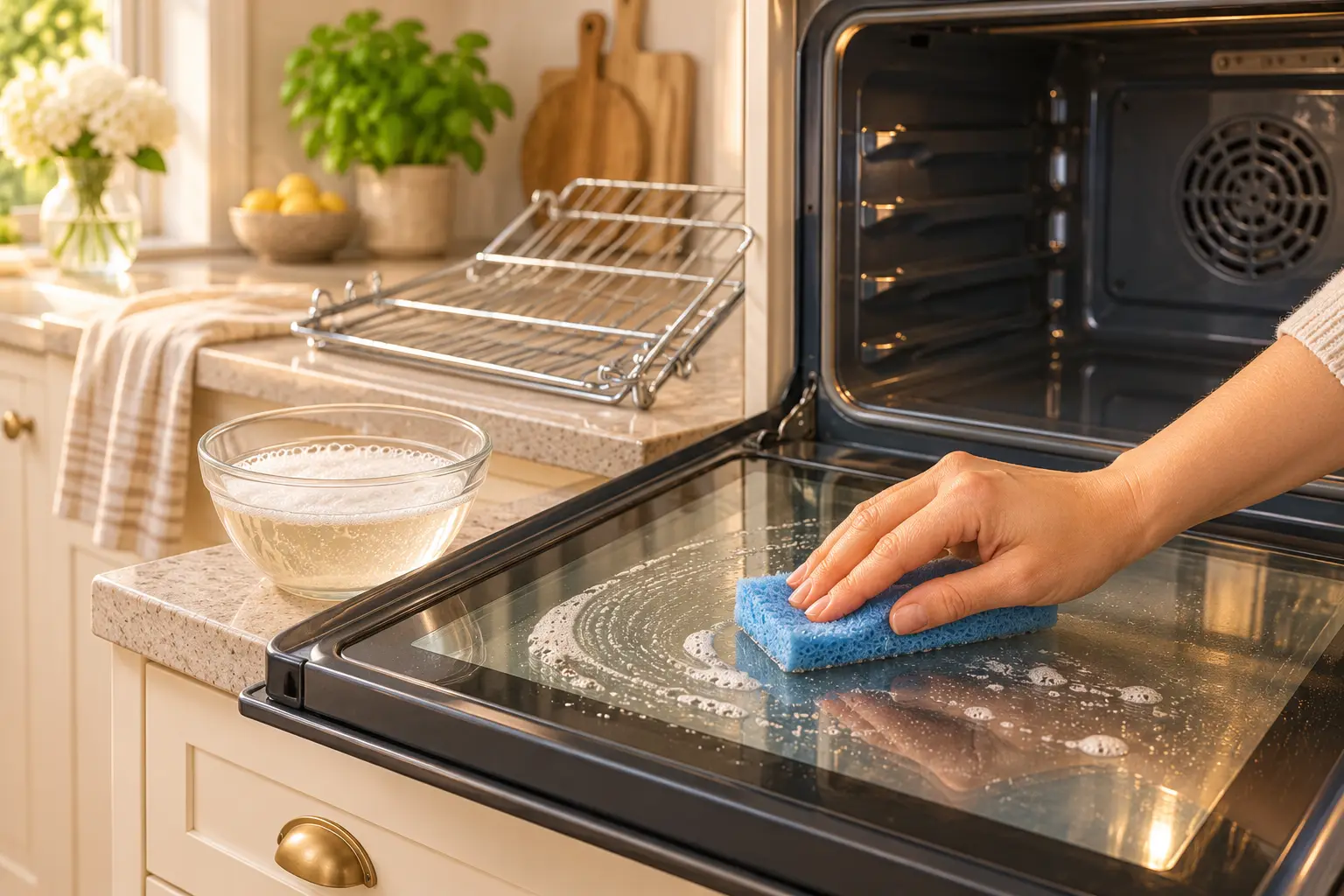
An electric roaster oven is cleaned much like a slow cooker: only the lid, rack and removable roasting pan go in water, and the heating base is wiped, never immersed. Hamilton Beach says to turn the control to MIN (Proctor Silex says OFF), unplug the roaster and let it cool completely, then wash the cover, rack and pan in hot, soapy water, soak burned-on food and scrub it with a nylon scouring pad, rinse in hot water and dry. For stubborn baked-on turkey drippings, Nesco suggests setting the cookwell in the base, filling it with hot water, covering it and heating it at 350 degrees Fahrenheit for 30 minutes, then letting it cool completely before washing. Wipe the inside of the base with a damp cloth and the outside with a damp, soapy cloth, then dry it.
Treat the pan by its finish. Nesco says abrasive cleaners and steel wool can scratch porcelain enamel or a non-stick finish, that household vinegar or a non-abrasive cleanser removes water spots and white mineral film from porcelain enamel, and that a non-stick cookwell needs rubber, plastic or wooden utensils. It notes that a band of discoloration on non-stick sidewalls after high-temperature roasting is normal. Dishwasher rules differ by brand: Nesco says its cookwell and rack can go in the dishwasher but not the cover, and Proctor Silex says the lid may discolor if washed there, so the lid is safest washed by hand.
Never pour water or food straight into the heating base. Nesco says to always use the cookwell, so clean the base with a damp cloth only.
Do not use metal scouring pads on the outside. Nesco says pieces can break off and touch electrical parts, creating a shock hazard.
A discolored lid is not a cleaning failure. Hamilton Beach says discoloration from cooking is natural and does not affect performance.
Common questions
Can you put a slow cooker crock in the dishwasher?
Crockpot and Hamilton Beach both say the removable stoneware and lid can go in the dishwasher. Hamilton Beach adds that you should not use the Sanitize setting, because its high temperatures could damage the crock. The heating base never goes in the dishwasher or in water.
How do you get burnt food off a slow cooker?
Fill the crock with water just above the food line, add white vinegar and baking soda, 1/2 cup each for a 3-quart or 1 cup each for a 6-quart cooker, cover and run on LOW for 1 hour. Then scrub with a soft sponge, let it cool and wash with warm, soapy water.
Why did my slow cooker crock crack?
Sudden temperature changes are a common cause. Crockpot and Hamilton Beach warn not to wash hot stoneware with cold water, set a hot crock on a wet surface, or add refrigerated food to a heated crock.
How do you clean the heating base of a slow cooker?
Unplug it and let it cool, then wipe it with a soft cloth dampened in warm, soapy water and dry it. Do not use abrasive cleaners, and never immerse the base in water or any liquid.
Is it safe to reheat leftovers in a slow cooker?
The USDA does not recommend it. Refrigerate leftovers within two hours after cooking, reheat them to 165 degrees F, and only then hold them in a preheated slow cooker at 140 degrees F or above.
Can you put a roaster oven pan in the dishwasher?
It depends on the model. Nesco says its cookwell and rack can go in the dishwasher, but not the cover. Hamilton Beach tells you to wash the cover, rack and roasting pan in hot, soapy water, and Proctor Silex notes that the lid may discolor if it is washed in the dishwasher.
How do you get burnt turkey drippings off a roaster pan?
Soak first. Hamilton Beach says to let burned-on food soak, then scrub it with a nylon scouring pad. Nesco suggests filling the cookwell with hot water, covering it and heating it in the base at 350 degrees Fahrenheit for 30 minutes, then letting it cool completely before washing.
Can you submerge an electric roaster oven in water?
No. Only the removable pan, rack and lid get washed. Hamilton Beach and Weston say not to immerse the cord, plug or base in any liquid, and warn that doing so can result in death or electrical shock. Nesco says never to immerse the roaster oven in water and to wipe the outside with a damp cloth.
Sources we relied on
1.Slow Cooker Cleaning Tips — Crockpot. Turn off, unplug and cool before cleaning; glass lids and removable stoneware can be washed in hot, soapy water or the dishwasher; no scouring pads or abrasive cleaners, use sponges, cloths or a rubber spatula; use a non-abrasive cleaner or vinegar on stains; do not wash hot stoneware with cold water; never immerse the heating base; deep clean by filling with water above the food line, adding 1/2 cup vinegar and 1/2 cup baking soda for a 3-quart or 1 cup each for a 6-quart, and running on LOW for 1 hour, then scrubbing, cooling and washing; liners ease cleanup.
2.Cleaning Your Slow Cooker & Stoneware — Crockpot. Turn off, unplug and cool before cleaning; the lid and removable stoneware can be washed in the dishwasher or hot, soapy water; no abrasive compounds or scouring pads; use a non-abrasive cleaner or vinegar for water spots and stains; stoneware and lid will not withstand sudden temperature changes; clean the outside of the heating base with a soft cloth and warm, soapy water and wipe dry; never immerse the heating base.
3.Slow Cooker Use & Care Manual (Models 33167, 33608, 33665, 33666) — Hamilton Beach Brands. Disconnect power before cleaning and do not immerse cord, plug or base; unplug, cool and use oven mitts to remove the crock; wash lid and crock in hot, soapy water or the dishwasher, but not on the Sanitize setting, which could damage them; wipe the base with a damp cloth and dry; do not clip the lid during storage; avoid sudden temperature changes such as placing a hot crock in cold water or on a wet surface, or adding refrigerated food to a heated crock; do not use a chipped, cracked or severely scratched crock or lid; no abrasive cleansers or metal scouring pads.
4.Slow Cookers and Food Safety — USDA Food Safety and Inspection Service. Begin with a clean cooker, utensils and work area; refrigerate leftovers within two hours after cooking; reheating leftovers in a slow cooker is not recommended; reheat to 165 degrees F, then hold in a preheated slow cooker at least 140 degrees F.
5.Roaster Oven Use and Care Guide (840263301) — Hamilton Beach. Do not immerse the roaster base, cord or plug in water; unplug before cleaning and allow to cool; to disconnect, turn the control to MIN; do not use without the roasting pan designed for the model; steam from under the lid can burn; to clean, turn the control to MIN, unplug and cool completely, wash the cover, rack and roasting pan in hot soapy water, soak burned-on food then scrub with a nylon scouring pad, rinse in hot water and dry, wipe the inside of the base with a damp cloth and the outside with a damp soapy cloth; the lid may discolor from cooking without affecting performance; turkey must reach 165 F, use a meat thermometer, and thaw in the refrigerator (12 to 15 lb takes 2 to 3 days) or in cold water for 6 to 9 hours, changing the water often.
6.Roaster Oven Use and Care Guide (840161602) — Proctor Silex (Hamilton Beach Brands). Turn the temperature control to OFF, unplug and let cool; wash the cover, rack and insert pan in hot soapy water, soaking burned-on food and scrubbing with a nylon scouring pad, then rinse in hot water and dry; wipe the inside of the base with a damp cloth and the outside with a damp soapy cloth; the lid may discolor if washed in the dishwasher; disconnect power before cleaning and do not immerse the cord, plug or base in any liquid.
7.18 Qt. Series Electric Roaster Ovens Care and Use Guide (4818 Series) — Nesco. Do not immerse the appliance, cord or plug in water; unplug before cleaning and let cool completely; do not use metal scouring pads on the exterior because pieces can touch electrical parts and create a shock hazard; never put food or water directly in the heatwell; after cooling, wash the cover, rack and cookwell in warm soapy water or the dishwasher, but not the cover; use non-abrasive pads and cleansers, not abrasive cleaners or steel wool; for baked-on residue, fill the cookwell with hot water and heat covered at 350 F for 30 minutes, then cool and wash; wipe the outside with a damp cloth; vinegar removes mineral film on porcelain enamel; use non-metal utensils on non-stick and expect harmless sidewall discoloration.
8.Roaster Ovens 03-4000-W and 03-4100-W Instruction Manual — Weston Brands. Disconnect power before cleaning and do not immerse the cord, plug or base in any liquid, since doing so can result in death or electrical shock; turn the control to MIN, unplug and cool completely; wash the cover, rack and roasting pan in hot soapy water, soak burned-on food and scrub with a nylon scouring pad, rinse and dry; wipe the inside of the base with a damp cloth and the outside with a damp soapy cloth; the lid may discolor from cooking.