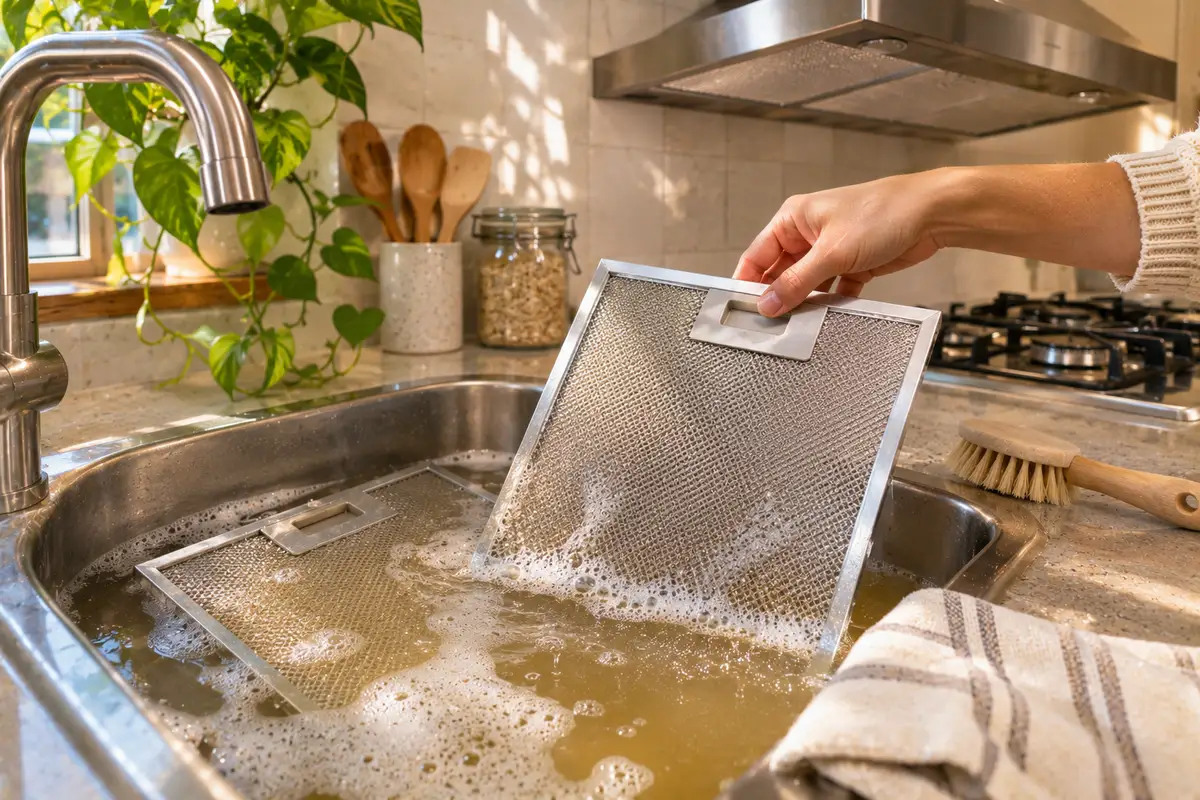
How to clean a baking sheet, roasting pan or glass baking dish
Hand wash with warm soapy water, soak stuck-on food, then use baking soda and vinegar or Bar Keepers Friend on burnt residue. What Nordic Ware, USA Pan and Made In say about aluminum and nonstick sheet pans, why the dishwasher is a bad idea for them, and what changes for a stainless roasting pan or a glass baking dish.
Baking soda and distilled white vinegar (bare aluminum only)
Bar Keepers Friend powdered cleanser (bare aluminum only)
Soft rag and a clean dish towel
Parchment paper or a silicone baking mat for next time
Step by step
01
Step 1 of 7
Let the Pan Cool
Set the baking sheet aside until it is cool enough to handle. Made In says to let a sheet pan cool before cleaning it.
02
Step 2 of 7
Hand Wash in Warm Soapy Water
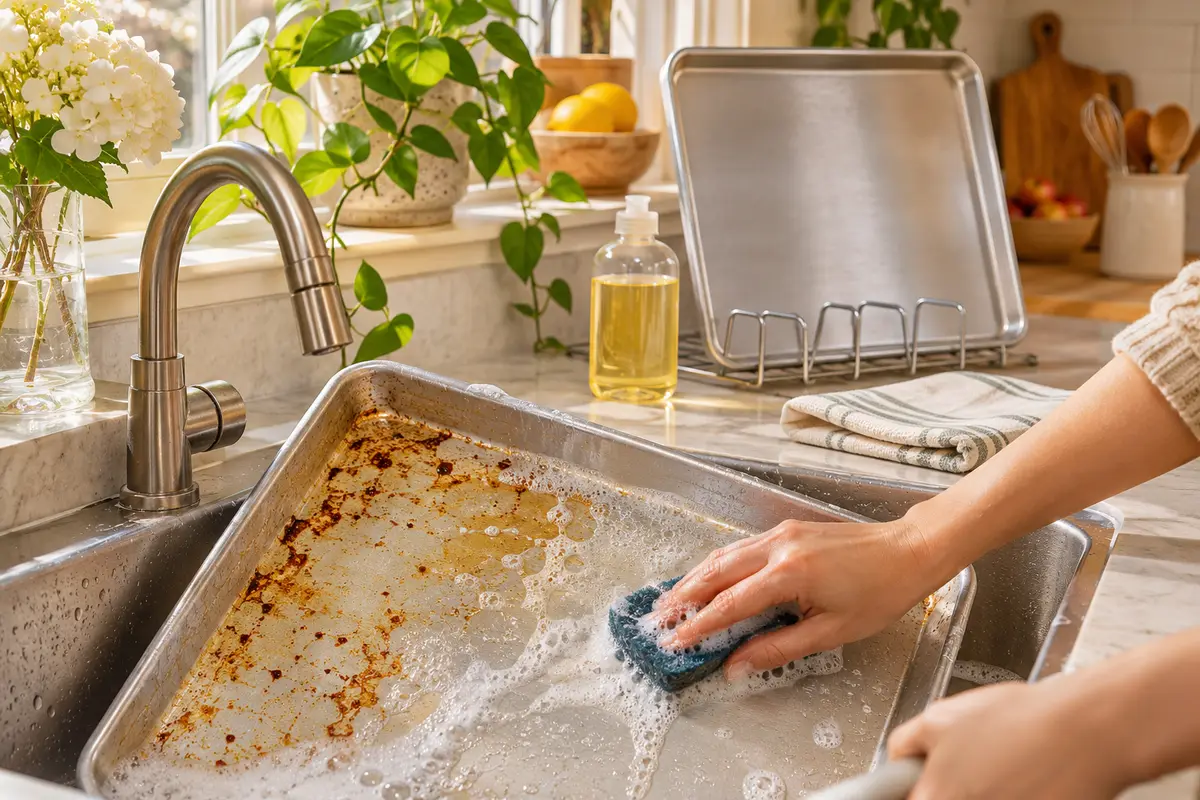
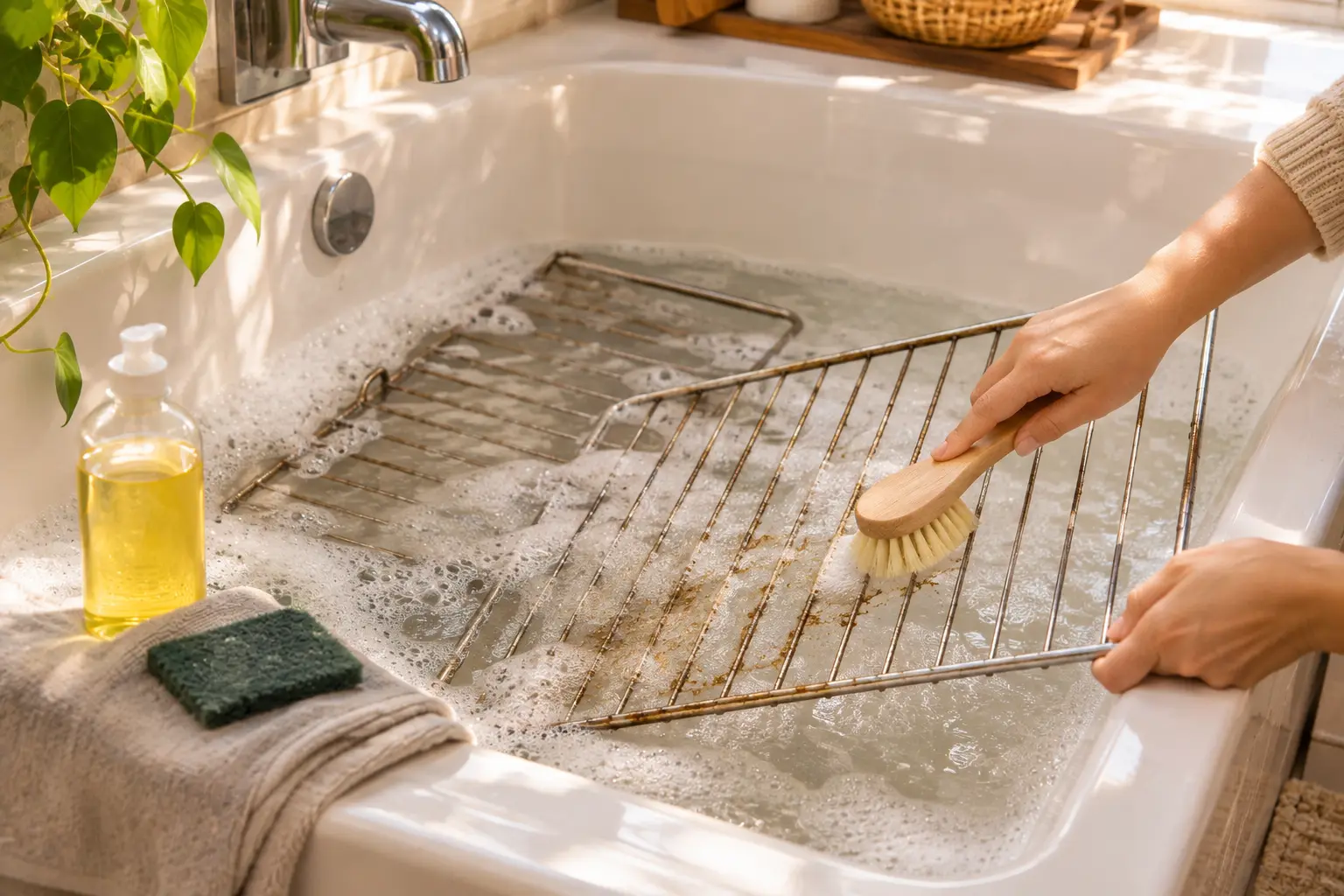
Wash the pan with warm, soapy water and a sponge, textured scrubber or dishcloth, as Nordic Ware recommends for its aluminum bakeware. On nonstick sheets, USA Pan says to scrub gently with a sponge or nylon pad and mild dish soap.
03
Step 3 of 7
Soak Stuck-On Food Briefly
If food is stuck on, Made In suggests soaking the pan in hot soapy water for up to 30 minutes, then scrubbing with a scouring pad, hot water and soap while avoiding very abrasive steel wool. Do not leave bare aluminum soaking for long; Nordic Ware says to avoid extended soaking.
04
Step 4 of 7
Lift Burnt Residue with Baking Soda and Vinegar (Bare Aluminum)
For burnt residue on an uncoated aluminum sheet, Made In suggests sprinkling half a cup of baking soda on the pan, adding half a cup of vinegar, adding water until the surface is covered, and soaking for an hour before scrubbing. Made In says not to use this method on nonstick.
05
Step 5 of 7
Use a Cleanser Paste on Stains That Remain
For brown stains on bare aluminum, Bar Keepers Friend says to wet the pan, shake on its powdered cleanser, add a little water to make a paste, and rub firmly with a soft rag before rinsing. Made In also names Bar Keepers Friend for heavy-duty cleaning. Skip green scouring pads and steel wool, which Bar Keepers Friend says scratch the pan.
06
Step 6 of 7
Rinse and Dry
Rinse the pan well, wipe it mostly dry with a clean cloth and let it air dry, as Made In describes.
07
Step 7 of 7
Line the Pan Next Time
To keep the next bake from sticking, line the sheet with parchment paper, a silicone baking mat or aluminum foil, which Nordic Ware and Made In both suggest. USA Pan does not recommend cooking sprays on its bakeware because they may stain it.
If that didn’t work
Stubborn or set-in? Try these next, in order.
AIf burnt residue is still there on bare aluminum, repeat the baking soda and vinegar soak or the Bar Keepers Friend paste rather than switching to steel wool.
BIf the pan stays dark or discolored, Nordic Ware says dishwasher discoloration is cosmetic and does not affect baking or safety.
CIf a nonstick sheet is scratched or the coating is chipping, stop using abrasive tools on it and check the maker's care guide.
Cleaning a roasting pan
Most roasting pans are stainless steel, which takes more heat and scrubbing than a sheet pan. Let the pan cool first, because Tramontina warns that a hot roasting pan put into cold water can warp, then pour the liquid fat into a container and push out loose bits with a wooden or silicone spatula. Soak it in hot water with a little dish soap: Made In says a few minutes and Le Creuset 10 to 15 minutes in warm water for stainless. Do not leave it dirty for hours, since Tramontina notes very salty or acidic food left in the pan can cause light pitting.
For blackened drippings on stainless, Made In suggests covering the bottom with equal parts water and distilled white vinegar, bringing it to a boil on the stovetop and scraping with a wooden or silicone tool as it loosens. For stains that remain, it suggests a baking soda paste followed by a little vinegar, or a small amount of Bar Keepers Friend on a non-abrasive pad, which Tramontina also recommends for rainbow or cloudy discoloration. Made In says steel wool leaves permanent scratches on stainless and lists bleach among things to avoid. A nonstick roaster gets only soft sponges and no metal tools, as Le Creuset advises. Soak the rack for an extended time, and dry the pan and rack completely, with a cloth between stacked pans.
Keep the vinegar boil at a moderate heat, stay with the pan, and use oven mitts to move it. A roaster that spans two burners can sit across both.
Dishwasher: Tramontina says its stainless roasting pan and rack are dishwasher safe but should be dried right after the rinse cycle or washed by hand to keep the finish. Le Creuset recommends hand washing nonstick.
Cleaning a glass baking dish
Glass bakeware breaks from sudden temperature changes, so the first step is patience. Set the hot dish on a dry cloth, potholder or trivet, not a wet towel, cold countertop or the sink, and let it cool before any water goes in; Pyrex and Anchor Hocking both warn against adding liquid to a hot dish or setting it on a wet or cold surface. Then scrape out loose food with a plastic or silicone scraper, fill the dish with warm water and a little detergent, and let stubborn baked-on food soak, as Anchor Hocking recommends.
Scrub with a plastic or nylon non-scratch pad and a non-abrasive cleanser made for glass bakeware. Pyrex says never to use steel wool, metal scouring pads or metal tools on it. Unlike aluminum sheet pans, Pyrex and Anchor Hocking glass is dishwasher safe; Pyrex says to load it so it does not bump into other items, and Anchor Hocking says to check each product's care statement. Never try to burn residue off on the stovetop, under the broiler or in a toaster oven, since both brands say glass bakeware is not for direct heat.
Dry the dish and look it over in good light. Anchor Hocking says not to use a dish that is chipped, cracked or noticeably scratched.
Common questions
Can you put a baking sheet in the dishwasher?
Aluminum baking sheets should be hand washed. Nordic Ware says the dishwasher discolors aluminum and shortens the life of nonstick, Made In says harsh detergents can damage and dull the metal, and Bar Keepers Friend says not to put aluminum pans in the dishwasher.
How do you get burnt grease off a baking sheet?
On bare aluminum, Made In suggests half a cup each of baking soda and vinegar with water to cover, soaked for an hour, then scrubbed. Bar Keepers Friend made into a paste and rubbed with a soft rag is another option. Neither method is for nonstick.
Why did my aluminum baking sheet turn dark?
Nordic Ware says dishwasher heat and detergent cause discoloration and that acidic foods such as tomato products, vinegar and fruit can darken, pit or corrode aluminum. The dishwasher discoloration is cosmetic.
Can you use steel wool on a baking sheet?
Avoid it. Made In says to avoid very abrasive steel wool, Bar Keepers Friend says steel wool and green scouring pads scratch aluminum pans, and USA Pan says steel wool can harm a nonstick coating.
Should you use cooking spray on a nonstick baking sheet?
USA Pan does not recommend cooking sprays on its bakeware because they may stain it. Parchment paper or a silicone mat is an alternative.
How do you get burnt grease off a roasting pan?
Soak it in hot soapy water first. For stainless steel, Made In suggests boiling equal parts water and white vinegar in the pan and scraping with a wooden or silicone tool, or using a baking soda paste followed by vinegar, or a cleanser such as Bar Keepers Friend on a non-abrasive pad.
Why did my roasting pan warp?
A common cause is thermal shock. Tramontina warns that putting a hot roasting pan into cold water can warp it, so let it cool before washing.
Can you put a glass baking dish in the dishwasher?
Yes, for Pyrex and Anchor Hocking glass bakeware. Pyrex says it can be washed in the dishwasher or by hand, and Anchor Hocking says its bakeware is dishwasher safe. Check the care statement for your specific dish.
Why did my glass baking dish shatter?
Pyrex and Anchor Hocking link breakage to sudden temperature changes, such as adding liquid to a hot dish or placing it on a wet or cold surface, and to direct heat like a stovetop or broiler. Anchor Hocking also says not to use a chipped, cracked or scratched dish.
Sources we relied on
1.Naturals Aluminum Bakeware — Nordic Ware. Hand wash with warm soapy water and a sponge, textured scrubber or dishcloth; the dishwasher is not advised because heat and detergent cause cosmetic discoloration; for darker baked-on food spray Dawn Powerwash, wait 10 minutes and scrub with a non-metal brush; avoid extended soaking; acidic foods may darken, pit or corrode aluminum; can be used with parchment, silicone mats or foil.
2.Naturals Nonstick Baker's Half Sheet — Nordic Ware. Hand washing in warm soapy water is recommended to preserve the nonstick; the dishwasher shortens the life of the nonstick and discolors exposed aluminum; metal utensils, sharp knives and scouring pads scratch the nonstick.
3.Frequently Asked Questions: Use and Care — USA Pan. Scrub bakeware gently with a sponge or nylon pad, mild dish soap and warm water; avoid harsh abrasives or steel wool, which can harm the nonstick coating; cooking sprays are not recommended because they may stain the bakeware.
4.How to Clean Sheet Pans — Made In Cookware. Let the pan cool; wash with hot soapy water; not recommended for the dishwasher because harsh detergents can damage and dull the metal; soak stuck-on food up to 30 minutes and avoid very abrasive steel wool; for burnt residue use half a cup each of baking soda and vinegar plus water to cover and soak an hour, aluminum only, not nonstick; Bar Keepers Friend for heavy-duty cleaning; line with parchment, silicone mat or foil; wipe mostly dry then air dry.
5.Get the Grime off Aluminum Baking Pans — Bar Keepers Friend. Do not put aluminum pans in the dishwasher; soaking too long can cause oxidation; wet the pan, shake on the powdered cleanser, add water to make a paste, rub firmly with a soft rag and rinse; no abrasive scrubbers, green scouring pads or steel wool.
6.How to Clean and Care for a Roasting Pan — Made In Cookware. Let the pan cool and pour off liquid grease; loosen debris with a stiff spatula; soak in hot water with a little dish soap for a few minutes; use Made In cleaner or Bar Keepers Friend in a small amount; avoid steel wool and overly abrasive scrubbers, which leave permanent scratches; for stubborn stains use baking soda then vinegar, or boil a 1:1 water and white vinegar mix and scrape with wood or silicone; avoid bleach; dry fully and place a cloth between stacked pans.
7.Gourmet Roasting Pans 18/10 Stainless Steel Use and Care Instructions — Tramontina USA. Do not put a hot pan in cold water, as it can warp; always let it cool before washing; do not leave food in the pan for long, as very salty or acidic food can cause superficial pitting; pan and rack are dishwasher safe but should be hand-dried after the rinse cycle or hand-washed; use a nonabrasive pad and a stainless cleanser such as Bar Keepers Friend for discoloration; soak the rack for stuck-on food.
8.Le Creuset Care And Use — Le Creuset. Soak stainless pans 10 to 15 minutes in warm water and use nylon or soft abrasive pads, never metallic pads or harsh cleaners; uncoated stainless is dishwasher safe; nonstick is dishwasher safe but hand washing is recommended, with no metal or abrasive pads, and metal tools must never be scraped across the coating.
9.How to Clean a Burnt Stainless Steel Pan — Made In Cookware. Cover charred food with water and dish soap, boil and scrape gently with a wooden spoon; then use Bar Keepers Friend with dish soap and scrub, repeating as needed; baking soda followed by a little vinegar is an alternative.
10.Product Warranties, Safety and Usage — Pyrex. Avoid sudden temperature changes to reduce the risk of breakage; do not add liquid to hot glassware or place it on a wet or cool surface; not for use on or under a flame, stovetop or broiler; let hot glassware cool before washing; dishwasher or hand wash; use non-abrasive cleansers and only plastic or nylon pads; do not clean with metal, steel wool or metal scouring pads.
11.How to Clean Glass Bakeware and Cookware — Anchor Hocking. Avoid sudden or severe temperature changes; do not add liquid to a hot dish or place it on wet or cold surfaces; not for direct heat including stovetop, broiler, toaster oven or grill; wash in detergent and water with plastic or nylon non-scratch pads; soak stubborn baked-on food; dishwasher safe; do not use if chipped, cracked or noticeably scratched.
12.FAQ — Anchor Hocking. Most products are dishwasher safe, check each Care and Use statement; place a hot dish on a dry cloth, potholder or trivet; never place hot glass on a wet or cold surface; soak stubborn baked-on food and scrub with a pad meant for glass ovenware.