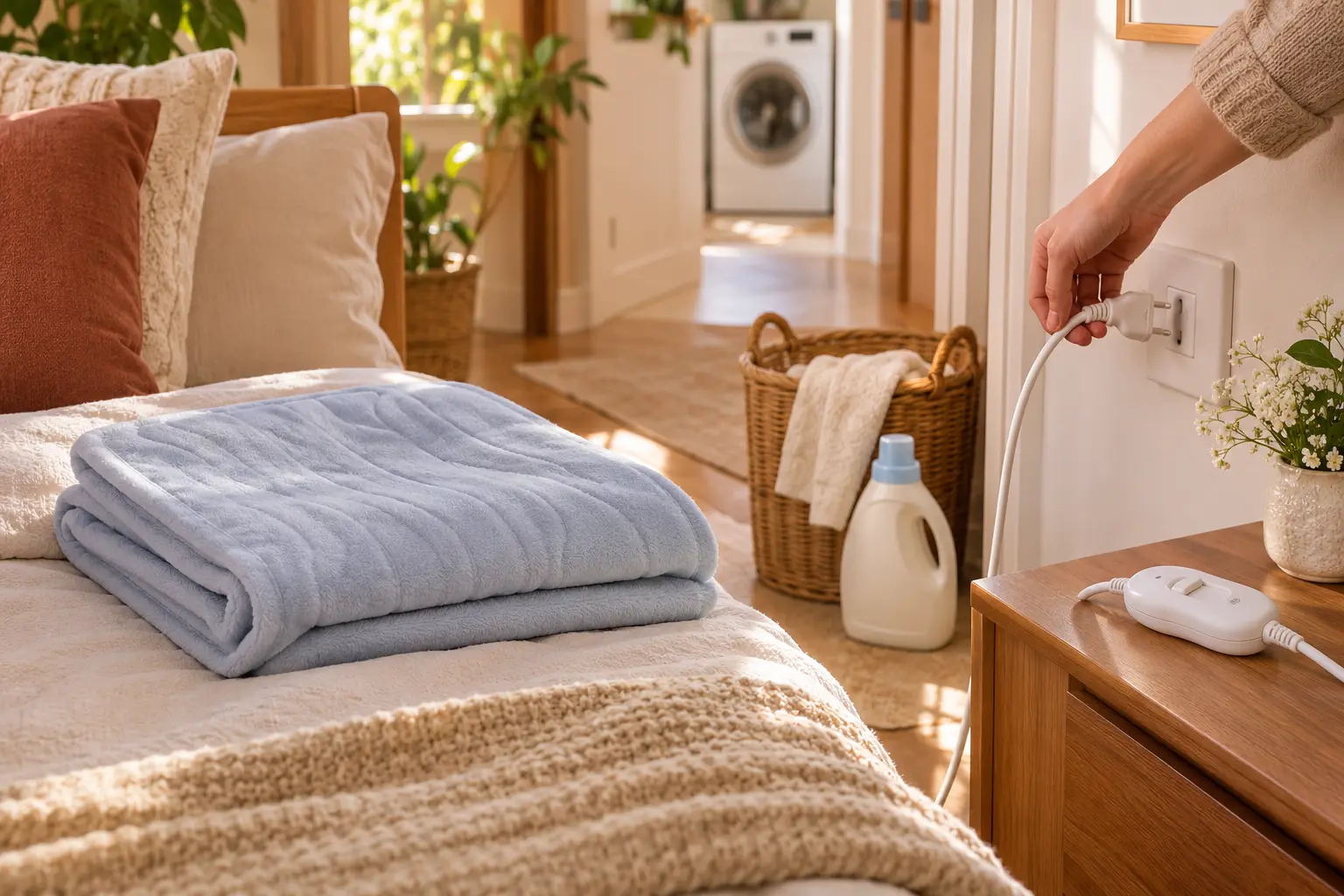
Follow the care label, wash in cold or warm water with mild detergent, skip bleach and fabric softener, dry on the gentle heat your brand allows, never iron it and let it dry completely before it goes back on the bed. Based on Protect-A-Bed, Saatva, Tempur-Pedic, Purple and Avocado care guidance and the Sleep Foundation.
Dryer with a low or medium heat setting, or a clothesline
A few other bed linens or towels to dry with
Step by step
01
Step 1 of 8
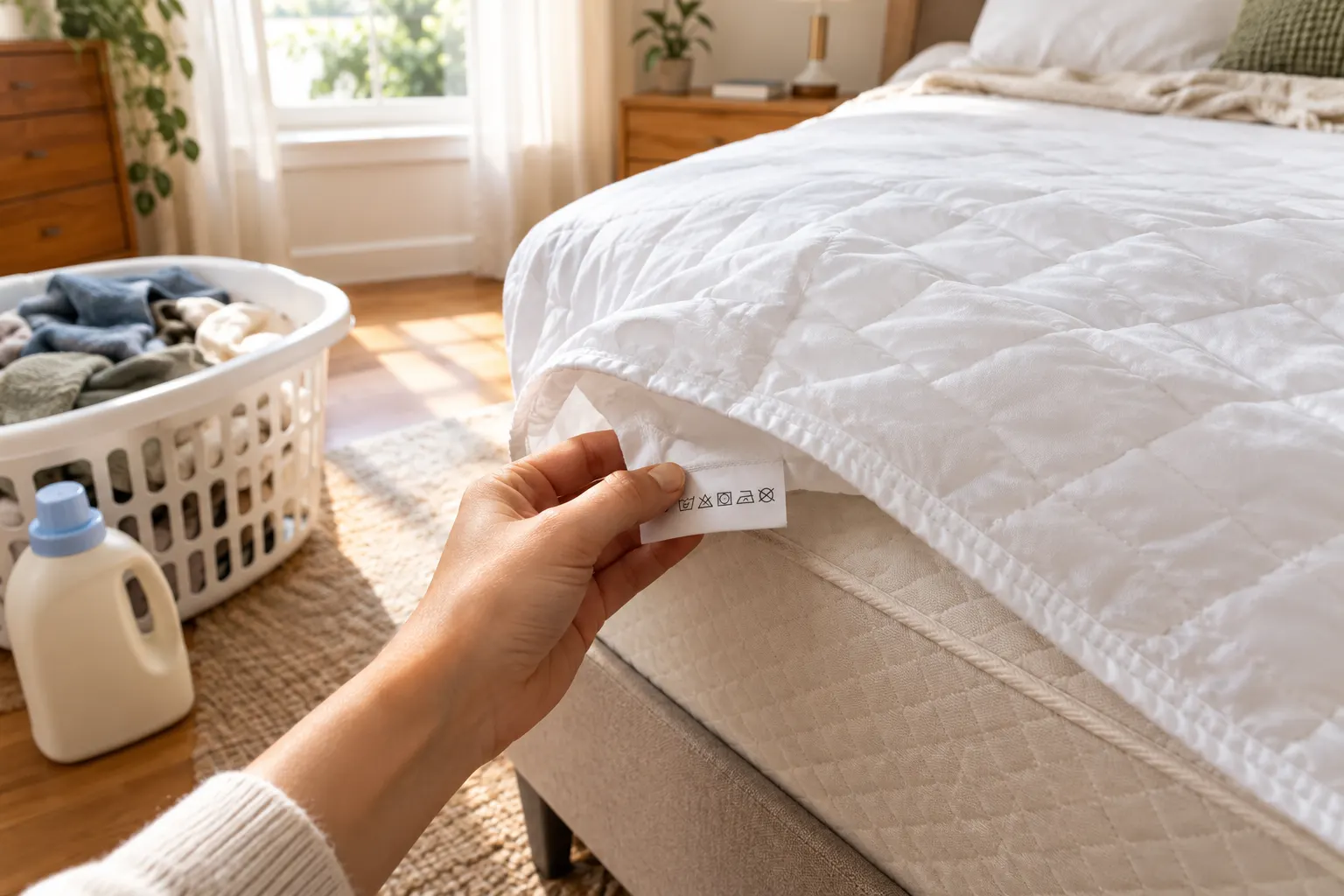
Read the Care Label
Care rules vary by brand, so start with the label sewn into your protector. Saatva's waterproof protector says machine wash cold, gentle cycle, no bleach and tumble dry low. Tempur-Pedic says machine wash cold, no chlorine bleach, tumble dry on low heat only and do not iron. Protect-A-Bed says to wash at the warm setting and dry on medium heat with other linens. Purple also advises following your manufacturer's care label.
02
Step 2 of 8
Wash a New Protector Before First Use
Protect-A-Bed recommends washing and tumble drying a protector before you use it the first time, saying this softens it, makes it more flexible and removes packaging odors.
03
Step 3 of 8
Choose Cold or Warm Water, Not Hot
Use the water temperature your label gives. Saatva, Tempur-Pedic and Avocado call for cold water, and Avocado says to use the gentle or delicate setting. Protect-A-Bed says its protectors should be washed at 86 to 104 degrees F, its warm setting, though its Bedscape-branded protectors can go up to 140 degrees F. The Sleep Foundation says hot water might degrade a protector, especially one with a waterproof backing.
04
Step 4 of 8
Use Mild Detergent, No Bleach or Softener
Wash with a mild detergent, as the Sleep Foundation and Purple suggest. Leave out bleach and bleach alternatives, which Protect-A-Bed says destroy the polyurethane lining. Skip fabric softener too, since Purple says it can reduce a protector's ability to absorb liquids. Purple also suggests a second rinse to remove all the detergent.
05
Step 5 of 8
Dry on Gentle Heat
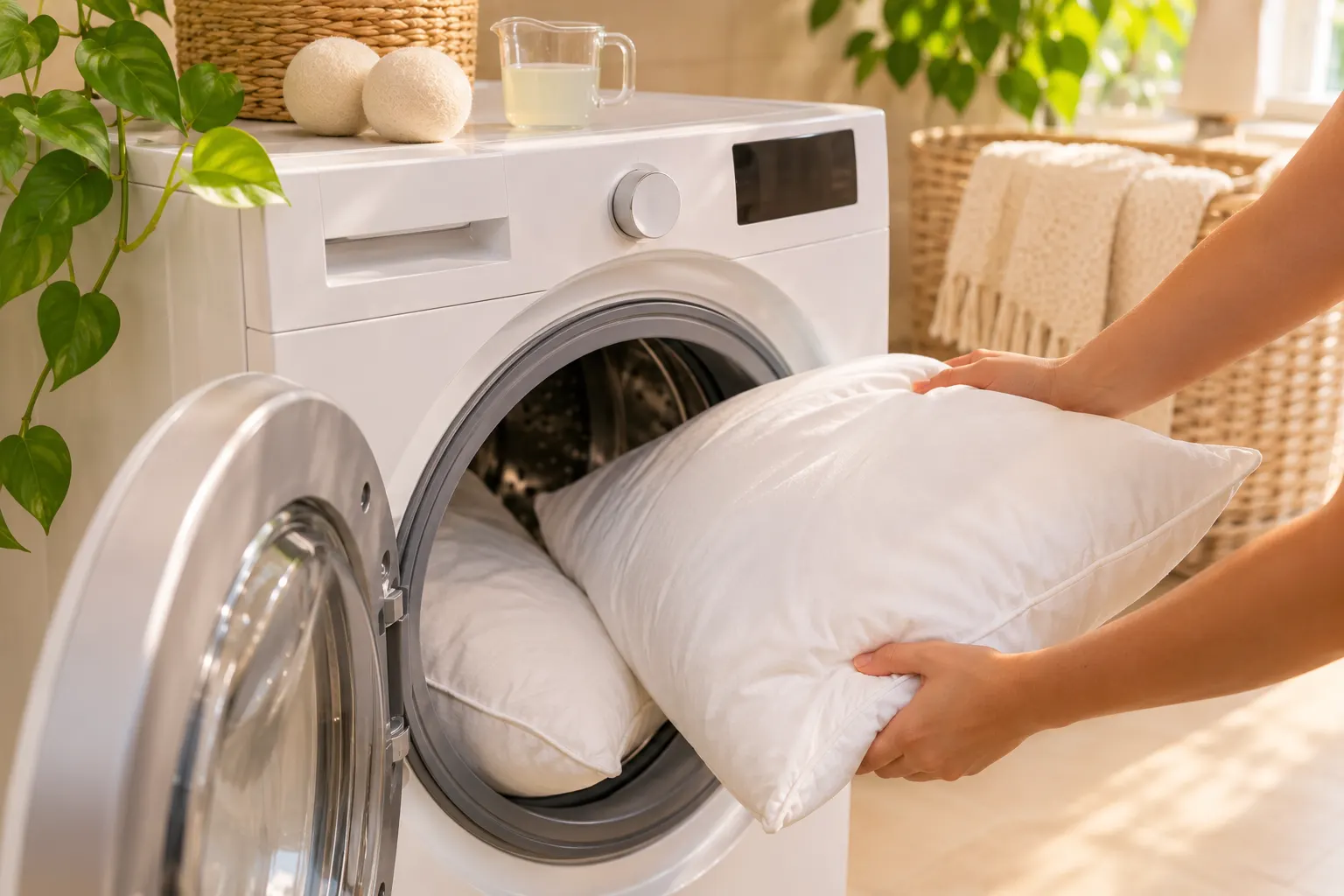
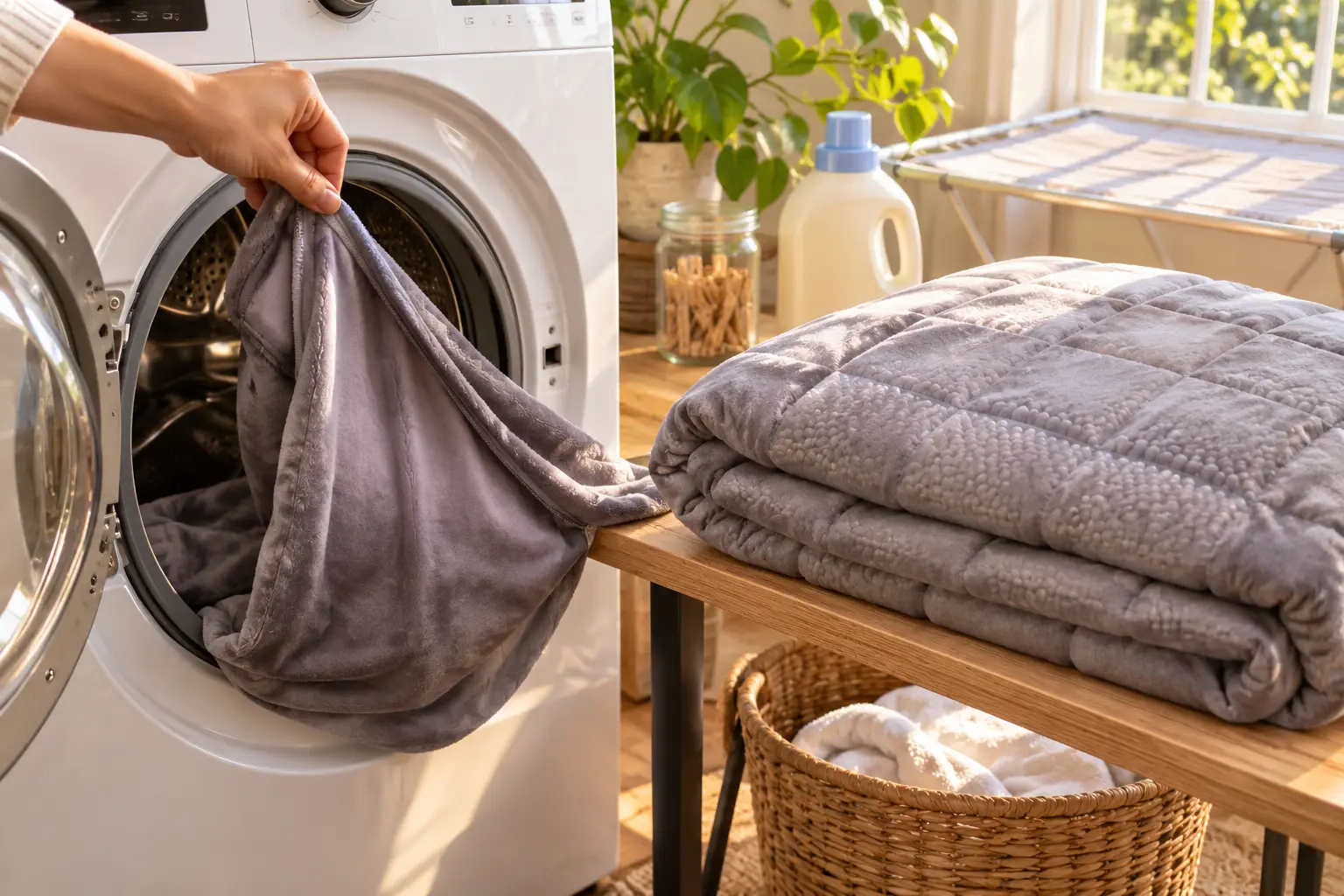
Tumble dry on low, as Saatva, Tempur-Pedic and Avocado direct, or on medium with other bed linens or towels if you have a Protect-A-Bed protector, which is what that brand recommends. The Sleep Foundation says to avoid high heat because it can shrink the material and damage waterproof layers, and that air-drying is also an option. Avocado says you can tumble dry low or hang it on a line until completely dry.
06
Step 6 of 8
Skip the Iron and Check the Lining
Do not iron the protector, as Tempur-Pedic directs. After drying, look over the waterproof side. Protect-A-Bed says blisters in the lining come from overheating in the dryer and that a blistered protector should be retired because it will leak.
07
Step 7 of 8
Make Sure It Is Completely Dry
Put the protector back on the mattress only once it is fully dry. The Sleep Foundation says a damp protector can encourage mold, especially in humid climates, and Purple says to let a hand-washed cover air-dry completely before putting it back on.
08
Step 8 of 8
Wash It on a Regular Schedule
Protect-A-Bed and the Sleep Foundation both say to wash a protector every one to two months. The Sleep Foundation adds that you should wash it sooner after spills or accidents or after someone in the bed has been sick, and more often if you have pets or allergies. Purple suggests about every two weeks for allergy sufferers.
If that didn’t work
Stubborn or set-in? Try these next, in order.
AIf the protector shrank or feels stiff after drying, the heat may have been too high. Switch to low heat or air-drying, as the Sleep Foundation suggests, and follow your label's dryer setting next time.
BIf the waterproof lining has blistered, cracked or started to leak, stop using the protector and replace it, as Protect-A-Bed advises for blistered linings.
CIf the protector seems to absorb spills poorly, check whether fabric softener has been going into the wash. Purple says softener can reduce a protector's ability to absorb liquids, so leave it out.
Common questions
Can you put a waterproof mattress protector in the dryer?
Usually yes, on gentle heat. Saatva, Tempur-Pedic and Avocado say to tumble dry low, and Protect-A-Bed says to dry on medium heat with other linens or towels. The Sleep Foundation says to avoid high heat, which can damage waterproof layers, and that air-drying is another option.
Should you wash a mattress protector in hot or cold water?
Cold or warm, depending on the label. Saatva and Tempur-Pedic say cold, while Protect-A-Bed recommends warm water of 86 to 104 degrees F. The Sleep Foundation says hot water might degrade a protector, especially one with a waterproof backing.
Can you use fabric softener on a mattress protector?
It is best to skip it. Purple says fabric softener can reduce a mattress protector's ability to absorb liquids. Use a mild detergent instead.
Can you bleach a mattress protector?
No. Protect-A-Bed says bleach, bleach alternatives and non-chlorine bleach destroy the polyurethane lining, and Saatva, Tempur-Pedic and Avocado all say not to use bleach.
How often should you wash a mattress protector?
Every one to two months, according to Protect-A-Bed and the Sleep Foundation. Wash it sooner after a spill, an accident or an illness, and more often if you have pets or allergies, as the Sleep Foundation suggests.
Can you iron a mattress protector?
No. Tempur-Pedic's care instructions say do not iron its protectors. Stick to washing and gentle drying as your label directs.
Sources we relied on
1.Product Care Information — Protect-A-Bed (Nationwide Sleep Inc). Wash and tumble dry before first use to soften the product, improve flexibility and remove packaging odors; wash every 1 to 2 months; do not use bleach, bleach alternatives or non-chlorine bleach, which destroy the polyurethane lining; wash at 86 to 104 degrees F, the warm setting, with Bedscape-branded protectors safe up to 140 degrees F; do not dry clean; dry with other bed linen or towels on medium heat; overheating can blister the lining, and a blistered protector should be discontinued because it will leak.
2.Waterproof Mattress Protector — Saatva. Care instructions read machine wash cold, gentle cycle, no bleach, tumble dry low; the protector has a jersey knit cotton fabric and a food-grade polyurethane moisture barrier.
3.TEMPUR-Protect Mattress Protectors — Tempur-Pedic. Care instructions for its protectors read machine wash cold, no chlorine bleach, tumble dry on low heat only and do not iron.
4.How to Wash Mattress Protectors — Purple. Follow the manufacturer's care label; cold water is typically preferred to prevent shrinking; use a mild detergent and avoid fabric softeners, which can reduce the protector's ability to absorb liquids; do a second rinse to remove detergent; let a hand-washed cover air-dry completely before putting it back; wash about every two months, right after spills or illness, and about every two weeks for allergy symptoms.
5.How to Wash a Mattress Protector — Sleep Foundation. Wash every one to two months, sooner after spills, accidents or illness and more often with pets or allergies; use cold or warm water since hot water might degrade a protector, especially one with a waterproof backing; use a mild detergent and avoid bleach; machine dry on low or air-dry and avoid high heat, which can shrink the material and damage waterproof layers; make sure it is fully dry before putting it back, since a damp protector could let mold grow.
6.How Should I Clean My Waterproof Mattress Protector? — Avocado Green Mattress. Use the gentle or delicate setting with cold water, do not bleach, and tumble dry low or hang on the line until completely dry.