Read the label first, then a big washer without an agitator, a gentle cycle, an extra rinse and a long, patient tumble dry with dryer balls. Where the bedding makers disagree on water and heat, when a king needs a laundromat, how a down jacket differs, and why damp down is the real danger.
Large-capacity front-loading washer, or a top-loader without a central agitator
Mild laundry detergent or a down-specific wash (a small amount)
Two or three wool dryer balls or clean tennis balls
Dryer large enough for the comforter to tumble freely (a laundromat dryer for queen and king sizes)
Needle and thread for small repairs
Step by step
01
Step 1 of 7
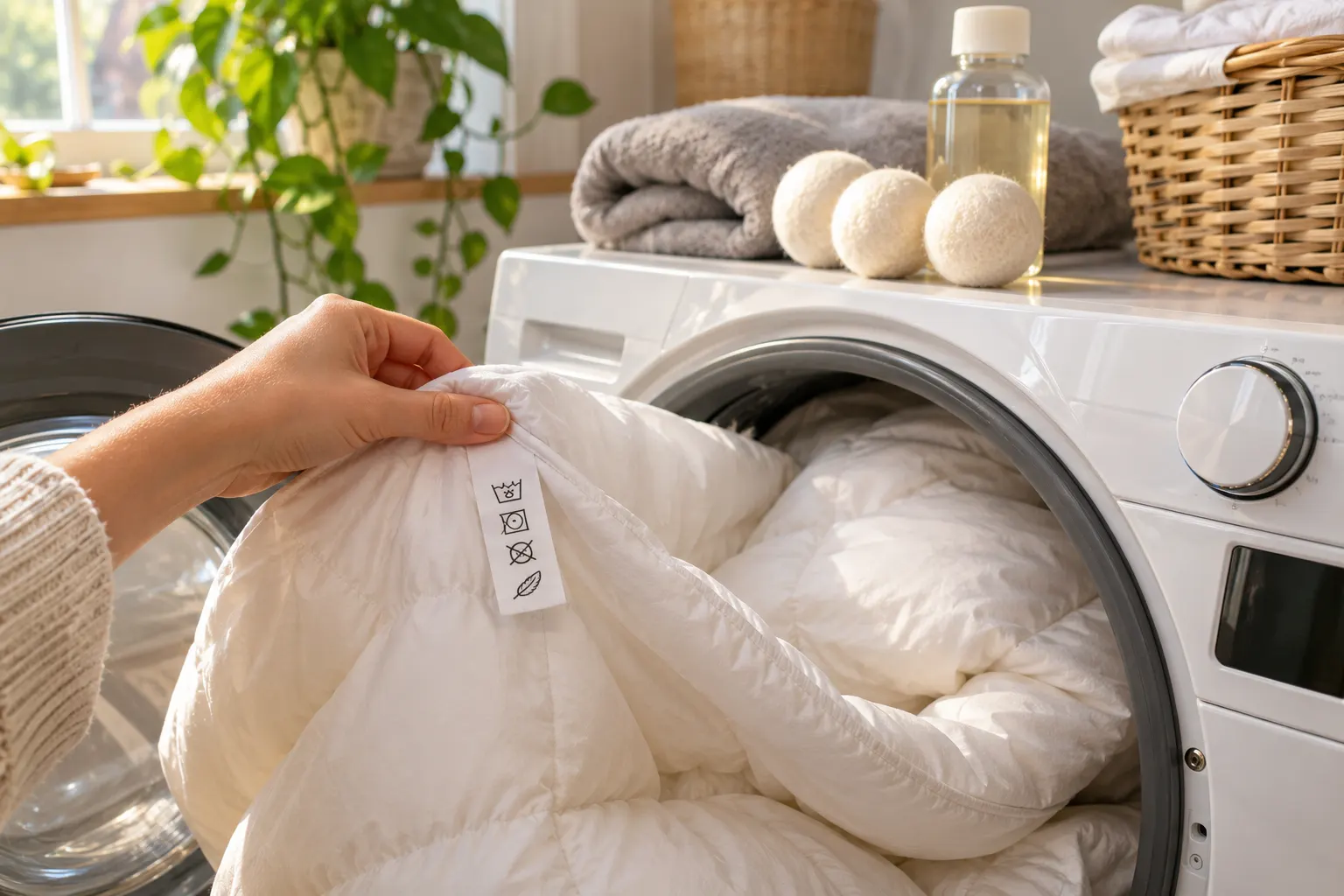
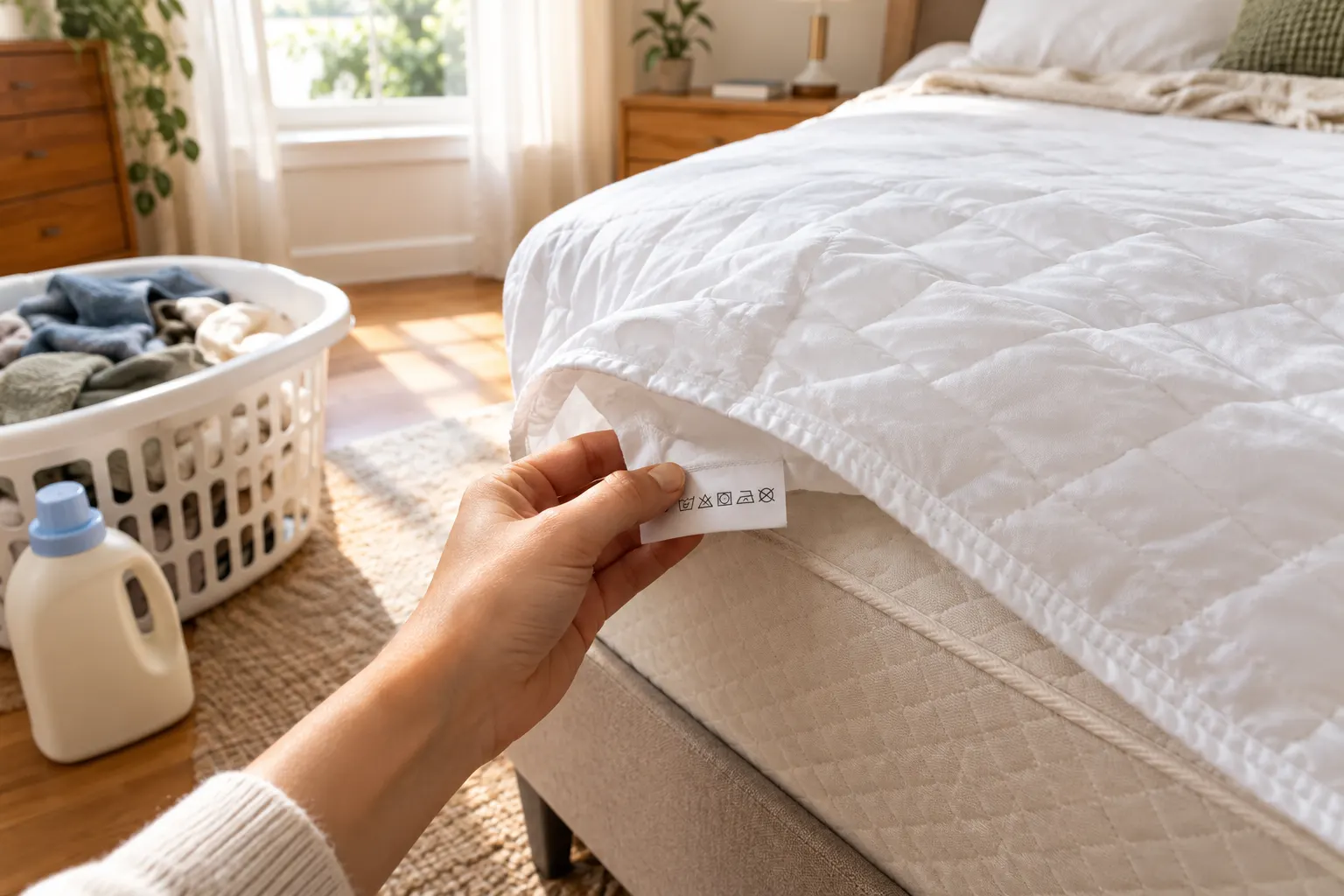
Read the Care Label
Find the sewn-in label before you do anything else. If it says dry clean only, The Company Store recommends a reputable dry cleaner rather than home washing. Pacific Coast advises spot cleaning or dry cleaning its comforters and avoiding machine washing. Only machine wash a comforter whose label allows it.
02
Step 2 of 7
Check the Size Against Your Washer
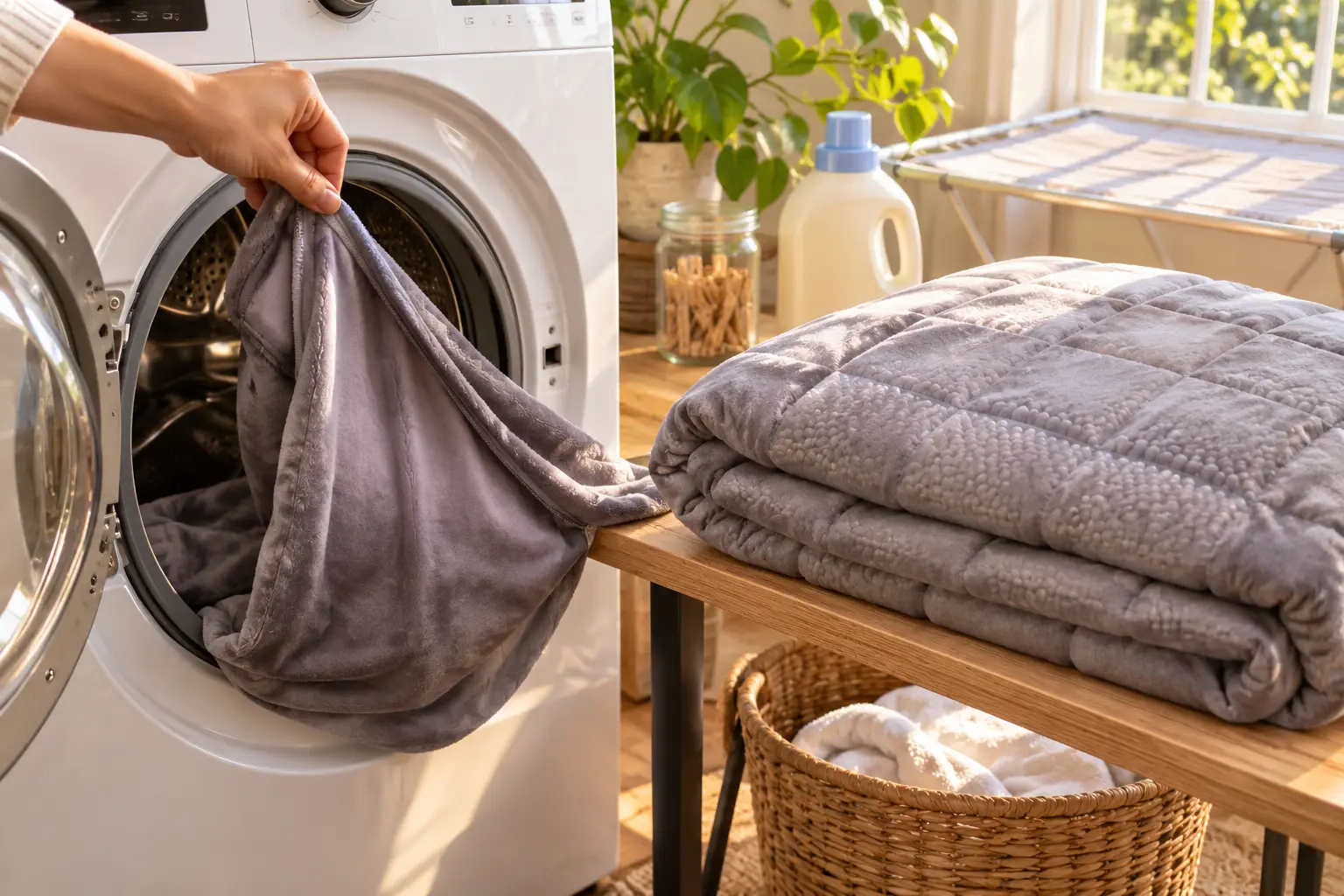
DOWNLITE says twin, twin XL and full comforters usually fit home machines, while queen, king and California king are usually too big. Parachute adds that a large king may need an industrial machine. If the comforter cannot move freely in your drum, take it to a laundromat with a large-capacity washer. Avoid machines with a center agitator.
03
Step 3 of 7
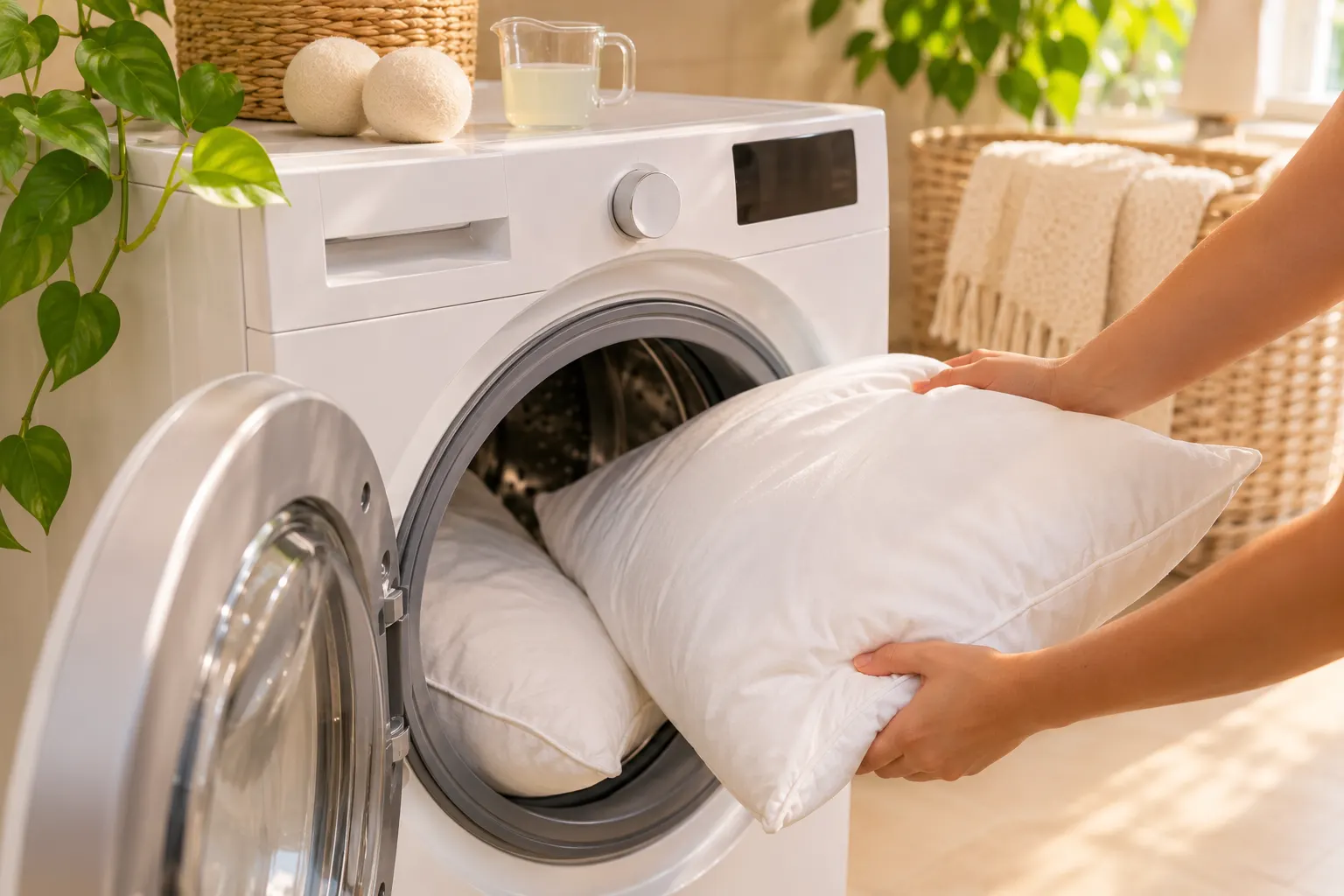
Mend Holes and Load Loosely
Stitch up any small holes or open seams so the down stays inside, then load the comforter loosely into the drum without stuffing it in. A few tennis balls in socks or dryer balls in the wash help keep it moving, as DOWNLITE suggests.
04
Step 4 of 7
Wash Gently with a Mild or Down Detergent
Choose the gentle or delicate cycle and a small amount of mild detergent or a down-specific wash. Bedding makers differ on water temperature: The Company Store says cold, Parachute says cool or lukewarm, and DOWNLITE uses warm. If your label gives a temperature, use it; if not, the cooler end is the gentler choice. Skip bleach and fabric softener.
05
Step 5 of 7
Run an Extra Rinse
Add a second rinse cycle with clean water so no detergent stays in the down, which DOWNLITE recommends. Parachute suggests a fast spin to remove as much water as possible before drying.
06
Step 6 of 7
Untangle and Start the Dryer
Take the comforter out as soon as the cycle ends and gently untangle it. Put it in a large dryer with two or three wool dryer balls or clean tennis balls. The Company Store and Parachute say low heat; DOWNLITE uses heated cycles and says machine drying is required. Use the lowest heat your label allows and expect it to take a long time.
07
Step 7 of 7
Fluff Often and Dry Until Bone Dry
Every 30 minutes or so, take the comforter out, shake it and break up any clumps by hand, then put it back. DOWNLITE says this can take several hours or three to four dryer cycles. Keep going until there are no damp or lumpy spots anywhere, because trapped moisture can lead to mold and mildew. Line drying is not effective, according to Parachute.
If that didn’t work
Stubborn or set-in? Try these next, in order.
AIf the down is still clumped after drying, it is usually still damp inside. Run more low-heat cycles with the dryer balls and keep breaking up the clumps by hand between cycles.
BIf your washer is too small or has an agitator, use a large-capacity front-loader at a laundromat instead of forcing the comforter in.
CIf the label says dry clean only, or you would rather not risk it, take it to a dry cleaner or laundry service that handles down bedding.
DIf there is only a small spill, spot clean that area instead of washing the whole comforter, then dry it thoroughly.
Washing a down jacket
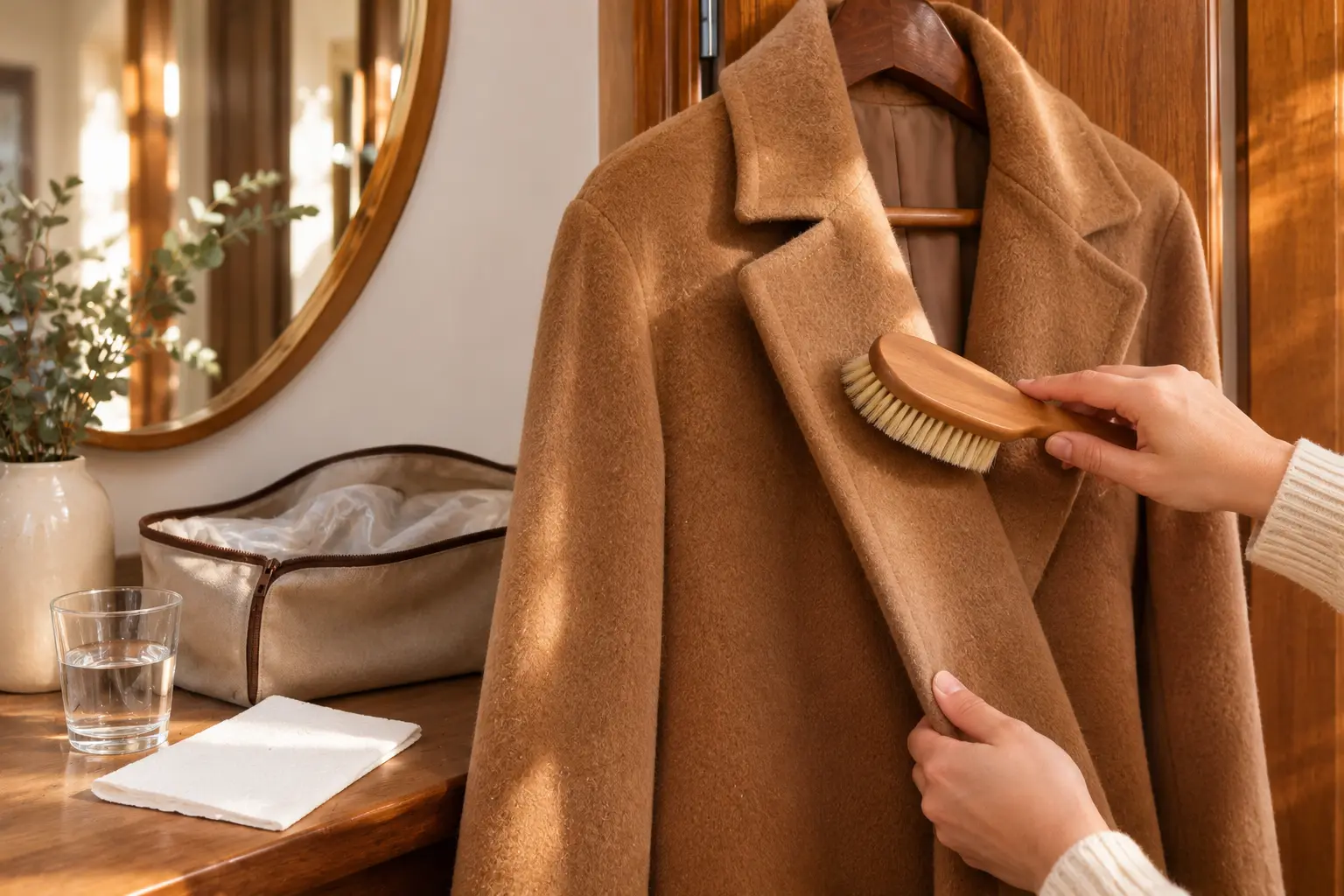
A down jacket goes through the same gentle wash, but Arc'teryx, Outdoor Research and Nikwax add a few jacket-specific steps. Wash it only when it is dirty, losing loft or clumping, and run an empty rinse cycle first so leftover regular detergent in the drum does not end up in the down, as Arc'teryx suggests. Close the main zip and any pit zips, open the pocket zips, release the drawcords and fasten the cuff Velcro so it cannot snag. Use a front-loader or a washer without a center agitator, which Outdoor Research and Nikwax say can snag the shell or clump the down, and a down-specific cleaner: Outdoor Research says regular detergent strips the natural oils from down, and Nikwax uses about 50 mL, one capful, of Down Wash per jacket. On temperature the makers split, with Arc'teryx at 40°C (104°F) and Outdoor Research at cold, so follow the label, as Nikwax says. Finish with a double rinse.
Tumble dry on low with two clean dryer or tennis balls and nothing heavier, as Outdoor Research advises. Arc'teryx says drying can take upwards of three hours and that air drying alone will not restore the loft, and Nikwax says to keep resetting the timer until the jacket is lump-free. If water no longer beads on the shell, Nikwax suggests a second cycle with about 150 mL of Down Proof while the jacket is still wet; Arc'teryx says a factory water-repellent finish lasts roughly 10 to 20 washes. Store the jacket hanging or in a large breathable bag rather than compressed in a stuff sack, and skip bleach, fabric softener and the iron.
Squeeze the baffles before you stop drying. Clumps or cool, damp spots mean the down is still wet inside.
With only a top-loader with an agitator at home, Outdoor Research suggests a front-loader at a laundromat.
Outdoor Research says washing at home works well for most jackets, and about once a month is reasonable with heavy weekly use.
Common questions
Can you put a down comforter in the washing machine?
Usually yes, if the care label allows it. Use a large front-loader or a washer without a central agitator, the gentle cycle and a mild or down-specific detergent. Some makers, such as Pacific Coast, advise against machine washing their comforters, so always check the label first.
How long does it take to dry a down comforter?
Several hours. DOWNLITE says it can take three to four dryer cycles. Dry it with dryer or tennis balls, take it out to fluff it every 30 minutes or so, and stop only when there are no damp or clumpy spots left.
How often should you wash a down comforter?
Not often. The Company Store suggests about twice a year and DOWNLITE once or twice a year. Parachute says every one or two years without a duvet cover, or every three to five years if you use a cover and wash the cover about once a month.
Can you wash a king size down comforter at home?
Often not. DOWNLITE says queen, king and California king comforters are usually too big for home machines, and Parachute says a large king may need an industrial washer. A large-capacity washer and dryer at a laundromat is the usual answer.
Should you dry clean a down comforter?
Only if the label says so. The Company Store says a dry clean only comforter belongs at a reputable dry cleaner, and Pacific Coast lists dry cleaning as an option. DOWNLITE, by contrast, warns that dry cleaning chemicals can ruin down filling, and Parachute calls it unnecessary for washable comforters.
Can you use fabric softener on a down comforter?
No. The Company Store and Parachute both say never to use fabric softener on a down comforter. Use a small amount of mild or down-specific detergent and an extra rinse instead.
Can you use regular detergent on a down jacket?
It is not recommended. Outdoor Research says regular detergent strips the natural oils from down, and Arc'teryx does not recommend household detergents. Use a down-specific cleaner instead.
How long does it take to dry a down jacket?
Often three hours or more on low heat. Arc'teryx says drying can take upwards of three hours. Use two dryer or tennis balls and keep drying until the down is fully lofted with no clumps.
How often should you wash a down jacket?
Only when it needs it, when it is dirty, losing loft or starting to clump, according to Arc'teryx. Outdoor Research notes that with heavy weekly use, about once a month is reasonable.
Sources we relied on
1.How To Care for Your Down Comforter — The Company Store. Clean about twice a year; take dry clean only comforters to a reputable dry cleaner; machine wash only if the label allows, in a front-loader with room to move, cold water, mild detergent, gentle cycle; never bleach or fabric softener; untangle and tumble dry low with tennis or wool dryer balls, shaking periodically; dry completely to prevent mold and mildew.
2.How to Wash a Down Comforter at Home — Parachute Home. Front-loaders without a central spindle are gentler; a large king may need an industrial machine; cool or lukewarm water, gentle cycle, fast spin; gentle or down detergent, non-chlorine bleach only, never fabric softener; dry on low with dryer or tennis balls; line drying is not effective; wash every one or two years, or three to five with a duvet cover; dry cleaning is unnecessary.
3.How to Care for Your Luxury Down Comforter — DOWNLITE. Wash once or twice a year; repair holes first; use a large-capacity washer without an agitator; a wet comforter weighs two to three times its dry weight; delicate cycle with tennis balls; run a second rinse; machine dry with heat and dryer balls, fluffing about every 30 minutes; drying can take several hours or three to four cycles.
4.How To: Home Wash & Dry For Bedding — DOWNLITE. Check care labels first; twin, twin XL and full fit home machines while queen, king and California king are usually too big and should go to a laundromat; wash one comforter per load; dry until bone dry with a dryer ball, fluffing between cycles; dry cleaning chemicals can ruin the filling.
5.FAQs — Pacific Coast Feather. Check the sewn-in label first; for Pacific Coast comforters, spot clean or dry clean when needed and avoid machine washing and high heat; fluff after cleaning.
6.Down home wash guide — Arc'teryx. Wash when dirty, losing loft or clumping and avoid unnecessary washing; run an empty rinse cycle first; close main and pit zips, open pocket zips, release drawcords, fasten Velcro; front-loader recommended; use a down detergent, household detergents not recommended; 40°C or 104°F gentle or permanent press cycle; double rinse; tumble dry low with two dryer or tennis balls, which can take upwards of three hours; dry fully before storage; air drying will not restore loft; water repellency lasts about 10 to 20 washes.
7.How to Wash Your Down Jacket — Outdoor Research. Use a front-loader, as a top-loader agitator can snag fabric or clump down, or go to a laundromat; cold water with a down-specific cleaner because regular detergent strips the oils from down; rinse thoroughly; dry on low over several cycles with tennis balls and nothing heavier; no bleach, fabric softener or iron; washing at home is fine; about once a month with heavy weekly use.
8.How to Wash and Waterproof a Down Jacket — Nikwax. Use a detergent-free down cleaner; no special washer needed unless it has a center-mount agitator; rinse and spin twice; optionally run a second cycle with Down Proof; tumble dry with one or two clean tennis balls and keep resetting the timer until lump-free and dry; store hanging or in a large breathable bag; follow the garment label for temperature.
9.Get DOWN with yo' bad self! (Or how to clean your down jacket) — Nikwax. Wash in a front-loader with about 50 mL or one capful of Down Wash; for waterproofing, run a second cycle with about 150 mL or three capfuls of Down Proof while the jacket is still wet.