Tell a scratch in the finish from one in the wood, then match the fix to it: polish or oil refresher for micro scratches, a touch-up marker for color, a filler stick for gouges, and a certified pro for damage that runs deep or wide.
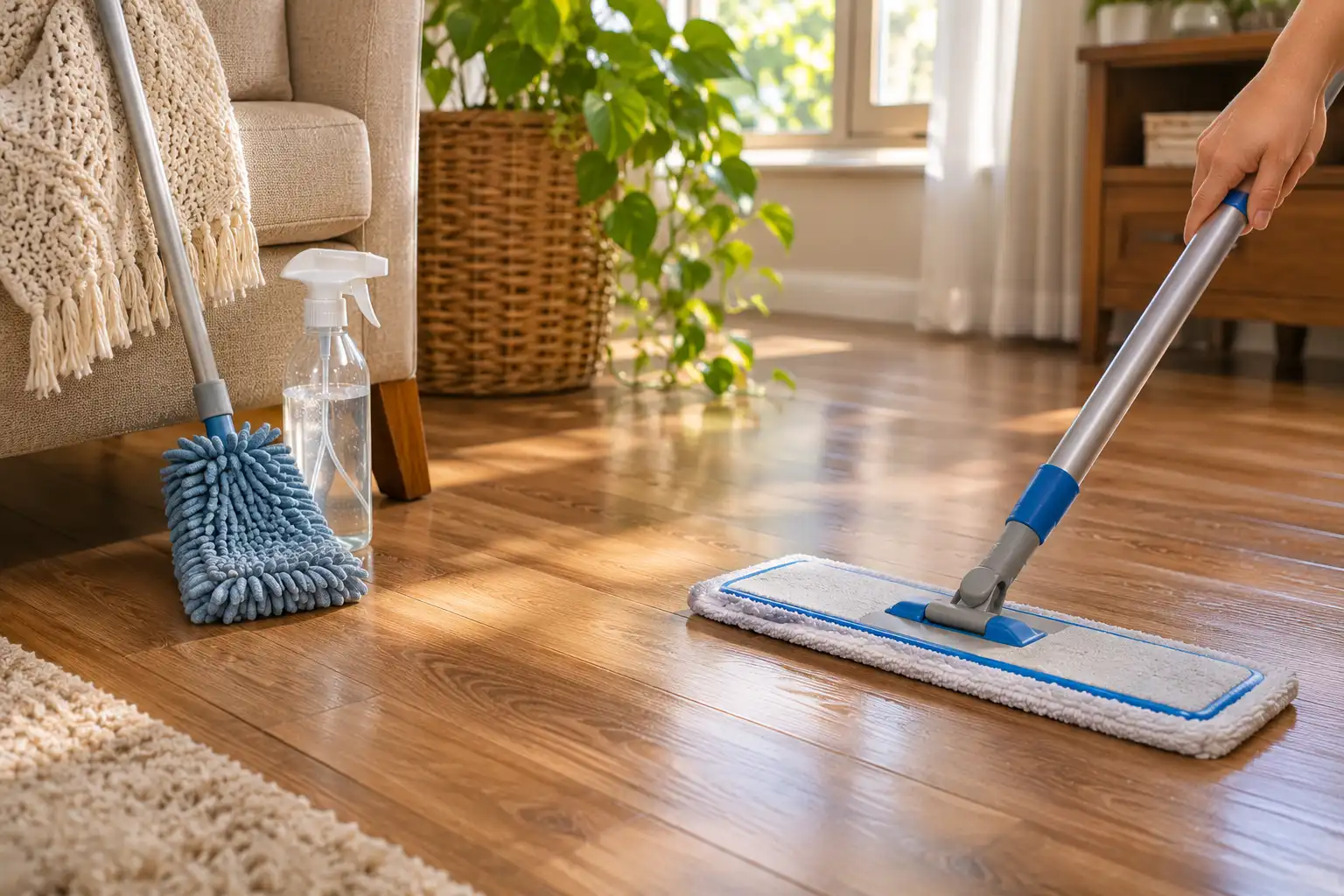
Wood floor cleaner made for your finish and a microfiber pad or cloth
Wood floor polish (lacquered or polyurethane floors) or oil refresher (oiled floors)
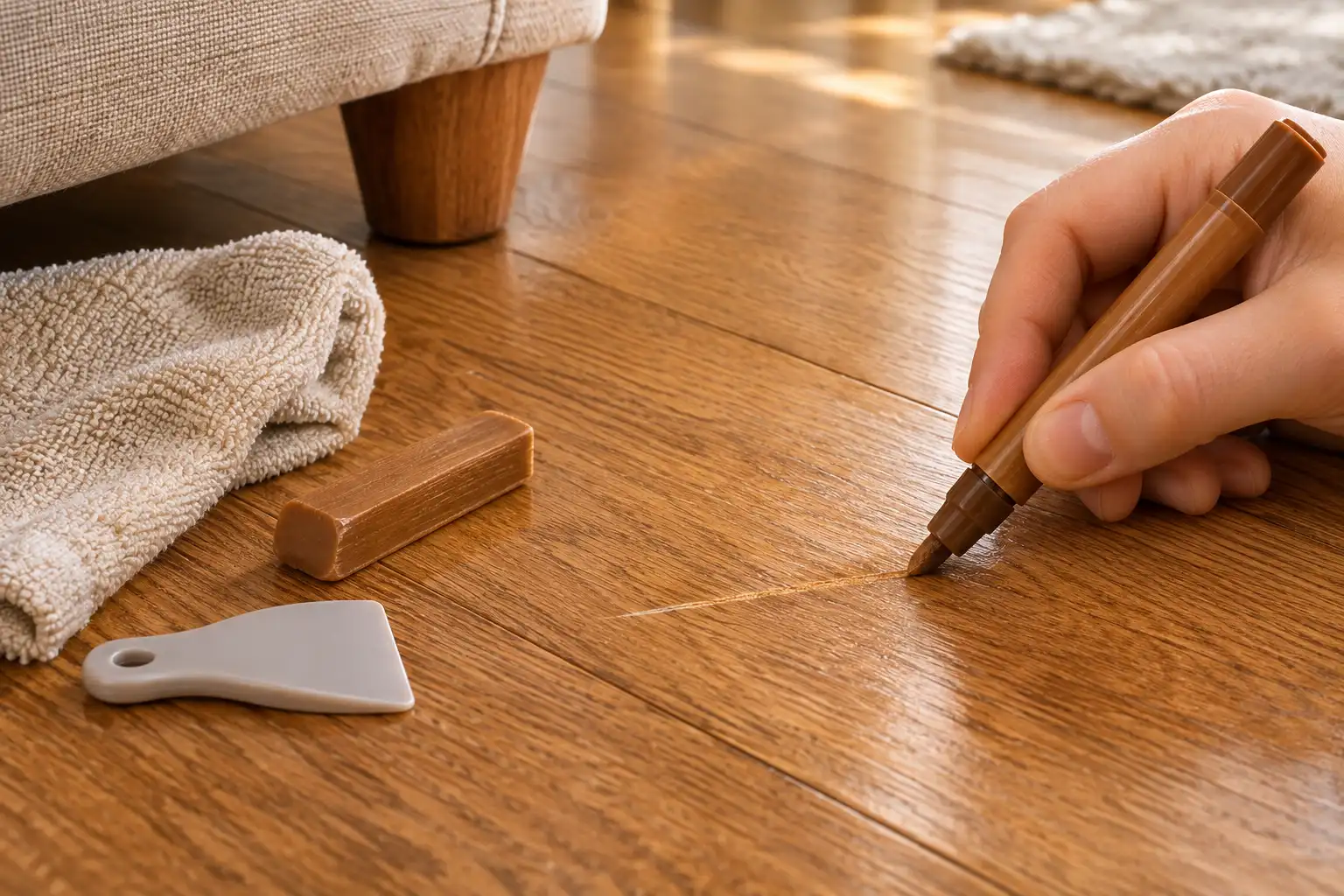
Hardwood touch-up kit or markers in your floor's color (stain markers, filler sticks, finish marker)
Plastic scraper card and a clean soft cloth
Small amount of odorless mineral spirits (for wiping off excess filler)
Optional, real hardwood only: 100-grit and 220-grit sandpaper, or very fine sandpaper for oiled floors
Felt furniture pads and area rugs (for prevention)
Step by step
01
Step 1 of 8
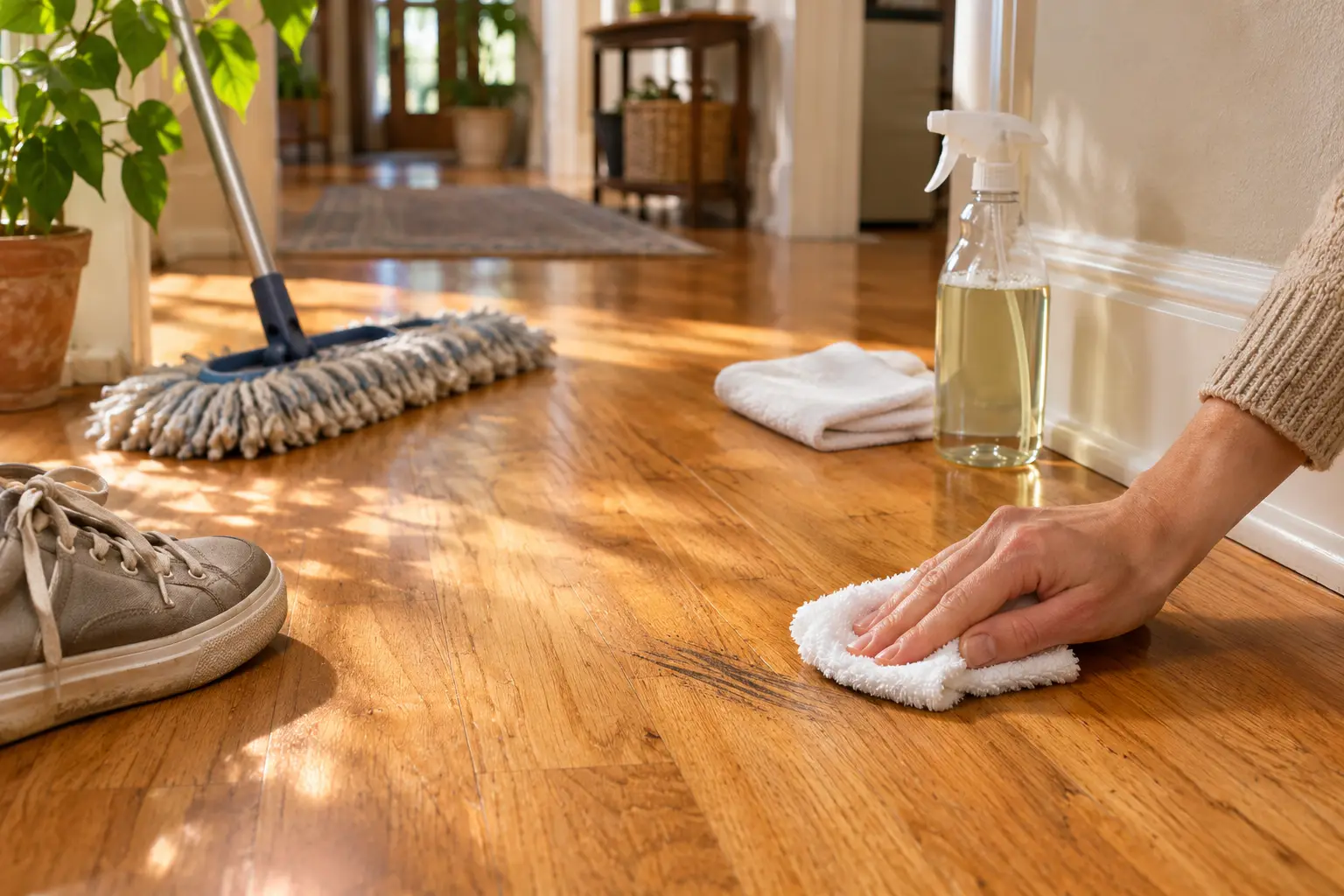
Identify the Finish and the Depth of the Scratch
Find out whether your floor has a lacquered (polyurethane) finish or an oiled finish, and whether it is solid hardwood, engineered wood, laminate or vinyl. Then look at the scratch: a pale, shallow line is usually only in the finish, while a mark that shows raw, lighter-colored wood has cut into the wood. A chip or gouge is missing wood altogether.
02
Step 2 of 8
Vacuum and Clean the Area
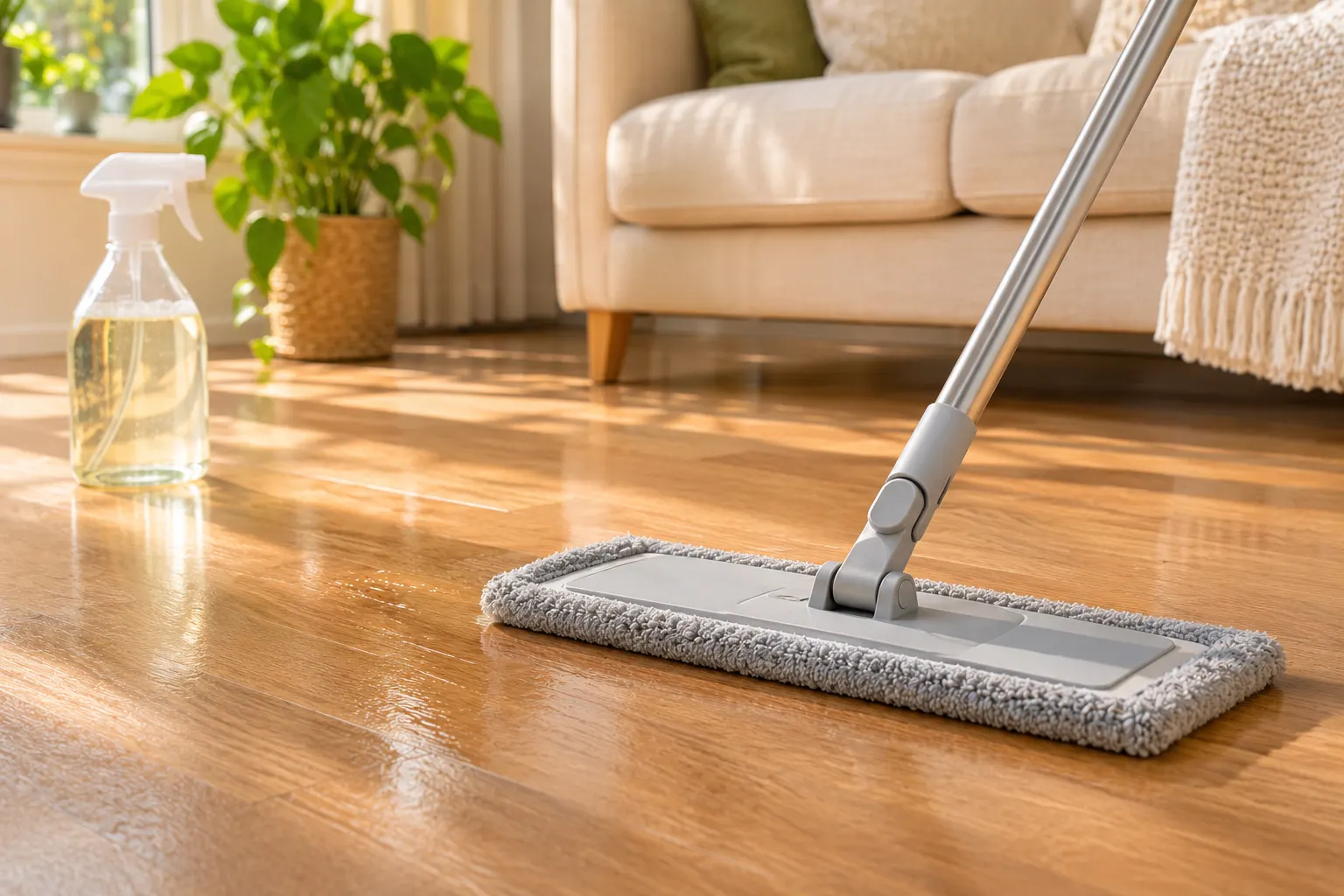
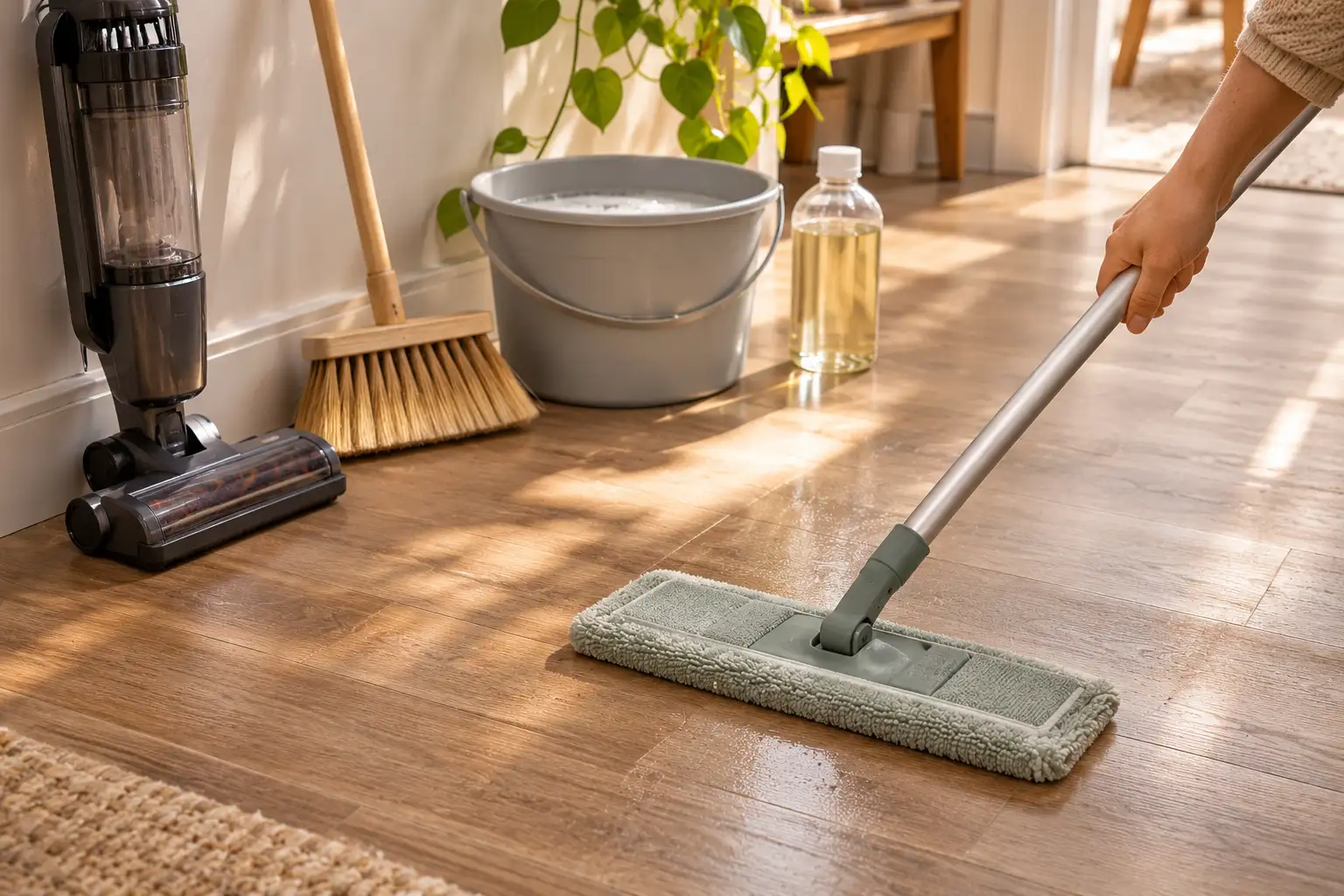
Vacuum up grit, then clean the spot with a wood floor cleaner made for your finish on a microfiber pad and let it dry fully. Touch-up products need a clean surface, and Bruce's kit instructions call for wiping the damaged area with a hardwood floor cleaner first on urethane-finished floors.
03
Step 3 of 8
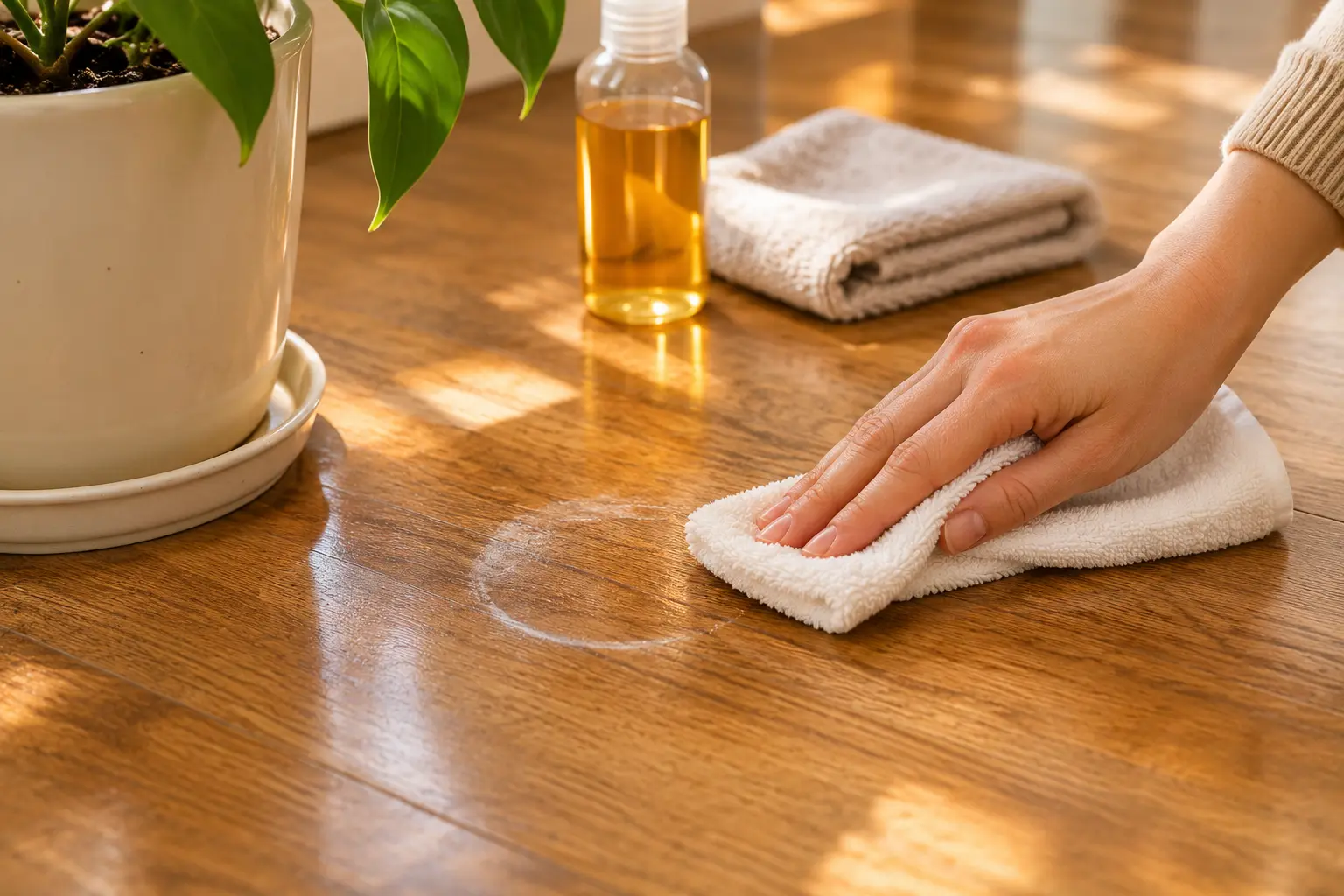
Treat Fine Surface Scratches with Polish or Refresher
On a lacquered floor, apply a wood floor polish as the label directs; Bona says its polish repairs smaller micro scratches. On an oiled floor, apply an oil refresher with a microfiber applicator pad and wipe up the excess. If scratches still show on an oiled floor, lightly sand the spot with very fine sandpaper and reapply the same type of oil that was used before.
04
Step 4 of 8
Color Scratches That Show Bare Wood
Activate a touch-up stain marker as its label directs, start with the lighter shade, and apply it only to the scratch. Wipe off any excess with a clean cloth, and move to a darker shade only if needed. Some colors need several applications. Let the stain dry thoroughly before the next step.
05
Step 5 of 8
Fill Deep Scratches and Gouges
Choose the closest filler stick color and test it on a small area first. Rub the filler stick over the scratch or gouge until it is filled, then remove the excess with the plastic scraper card or a clean cloth with a small amount of odorless mineral spirits. Bruce notes that deep scratches cutting into real hardwood may need light sanding with 100-grit and then 220-grit paper; never sand laminate or vinyl.
06
Step 6 of 8
Glue Back Chips Instead of Pulling Them Out
If a board has splintered, remove loose debris, glue the splinter back into place with carpenter's glue applied with a toothpick, tape it down and let it dry. If the piece is gone, fill the hole with wood putty or filler, sand it smooth on real hardwood only, match the color with a stain marker or wood crayon, and add a protective coat similar to the existing finish.
07
Step 7 of 8
Even Out the Sheen with a Finish Marker
A filled or colored spot can look shinier or duller than the boards around it. Activate the finish marker and cover the repair using long strokes, adding more coats if needed for an even look.
08
Step 8 of 8
Call a Pro for Deep or Widespread Damage
If the floor is dull and scratched across whole rooms, a professional maintenance coat (cleaning the existing finish, lightly sanding it and applying a new coat) can renew it. Deep scratches, dents, bare worn wood and other damage call for a full sand and refinish. The NWFA advises hiring a certified wood flooring professional for this work.
If that didn’t work
Stubborn or set-in? Try these next, in order.
AIf a marker repair looks too dark, stop adding color and wipe what you can while it is still wet; it is easier to build color up gradually from a lighter shade than to remove it.
BIf many fine scratches remain after polish or refresher, the finish itself is worn. Ask a certified wood flooring professional about a maintenance coat rather than layering on more polish.
CIf a gouge is too deep or wide for filler, or the damage is spread across the floor, have a certified wood flooring professional assess it; the NWFA lists deep scratches and dents among reasons for a complete sand and refinish.
Common questions
Can you fix scratches in hardwood floors without refinishing?
Yes, for most small scratches. Fine scratches in a lacquered finish can be treated with a wood floor polish, and oiled floors with an oil refresher. Scratches that show bare wood can be colored with a touch-up marker, and gouges filled with a matching filler stick. Full refinishing is for deep, widespread damage or bare worn wood.
Do hardwood floor touch-up markers really work?
They work well on scratches and nicks where the color is the problem. Pick the shade closest to your floor, start lighter, apply only to the scratch and wipe off the excess. Several coats may be needed. For deeper damage, a filler stick fills the groove first, and a finish marker evens out the sheen afterward.
How do you fix deep scratches in hardwood floors?
Clean the area, fill the scratch with a filler stick or wood filler in a matching color, and remove the excess with a scraper card. On real hardwood, Bruce notes that deep scratches may need light sanding with 100-grit and then 220-grit paper first. Finish with a matching stain and finish marker, or call a certified professional if the damage is large.
What is the difference between recoating and refinishing a wood floor?
A recoat, which the NWFA calls a maintenance coat, cleans the existing finish, lightly sands it and adds a new coat of finish, which renews a dull, lightly scratched floor. Refinishing sands the floor down to bare wood before new finish is applied and is meant for deep scratches, dents and other damage.
How do I stop my hardwood floors from getting scratched?
Put felt pads under the legs of chairs, tables and sofas, lift furniture instead of dragging it, and place rugs or mats in high-traffic areas and under furniture. Sweep or vacuum regularly so grit does not grind into the finish, and avoid walking on the floor in high heels.
Sources we relied on
1.How to Fix Scratches on Hardwood — Bruce Flooring. Scuffs can be treated by rubbing a stain marker or wax stick over the area and buffing with a soft cloth; deep scratches are filled with matching wood filler and finished; splintered chips should be glued back rather than pulled out; felt pads on furniture legs and rugs in high-traffic areas help prevent scratches.
2.Touch-Up Kit Product Information — Bruce (AHF Products) Floor Expert. Keep the repair area small; clean urethane, laminate or vinyl floors first and never sand laminate or vinyl; start with a lighter stain marker and wipe off excess; fill gouges with a filler stick and remove excess with the scraper card or a little odorless mineral spirits; deep hardwood scratches may need 100-grit then 220-grit sanding; use the finish marker in long strokes; the kit contents are flammable and vapor is harmful.
3.Furniture Scratches on Wood Floor — Bona. On lacquered floors, vacuum, clean and apply wood floor polish, which repairs smaller micro scratches; on oiled floors, clean, apply oil refresher and, if scratches remain, lightly sand with very fine sandpaper and reapply the same oil; contact a certified craftsman for deep scratches; use felt pads, do not drag furniture and avoid high heels.
4.Refinishing Your Floors — National Wood Flooring Association (NWFA). A maintenance coat cleans the existing finish and applies a new coat after light sanding; deep scratches, dents, other damage or bare worn wood call for a complete sand and refinish, done by a certified wood flooring professional.