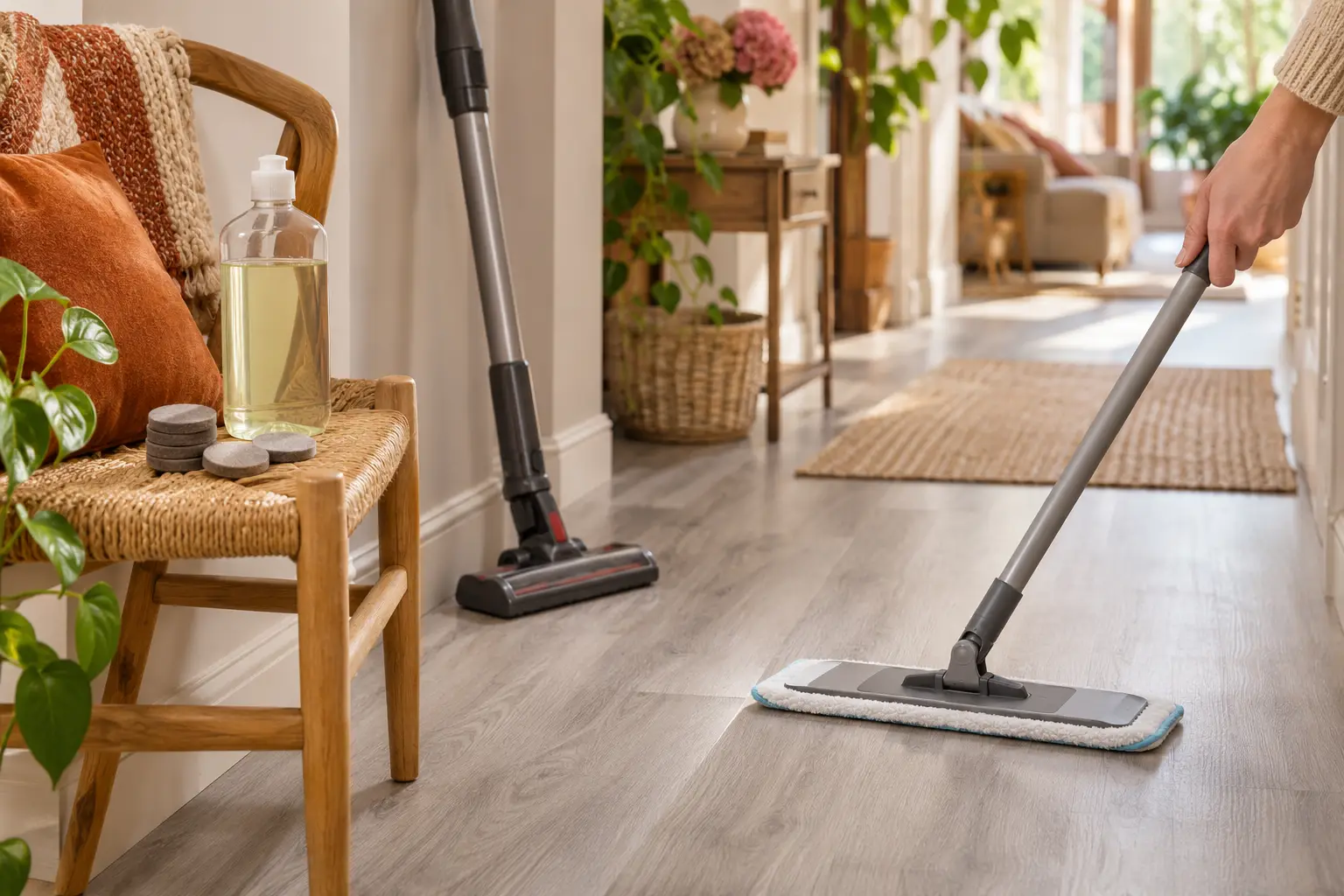
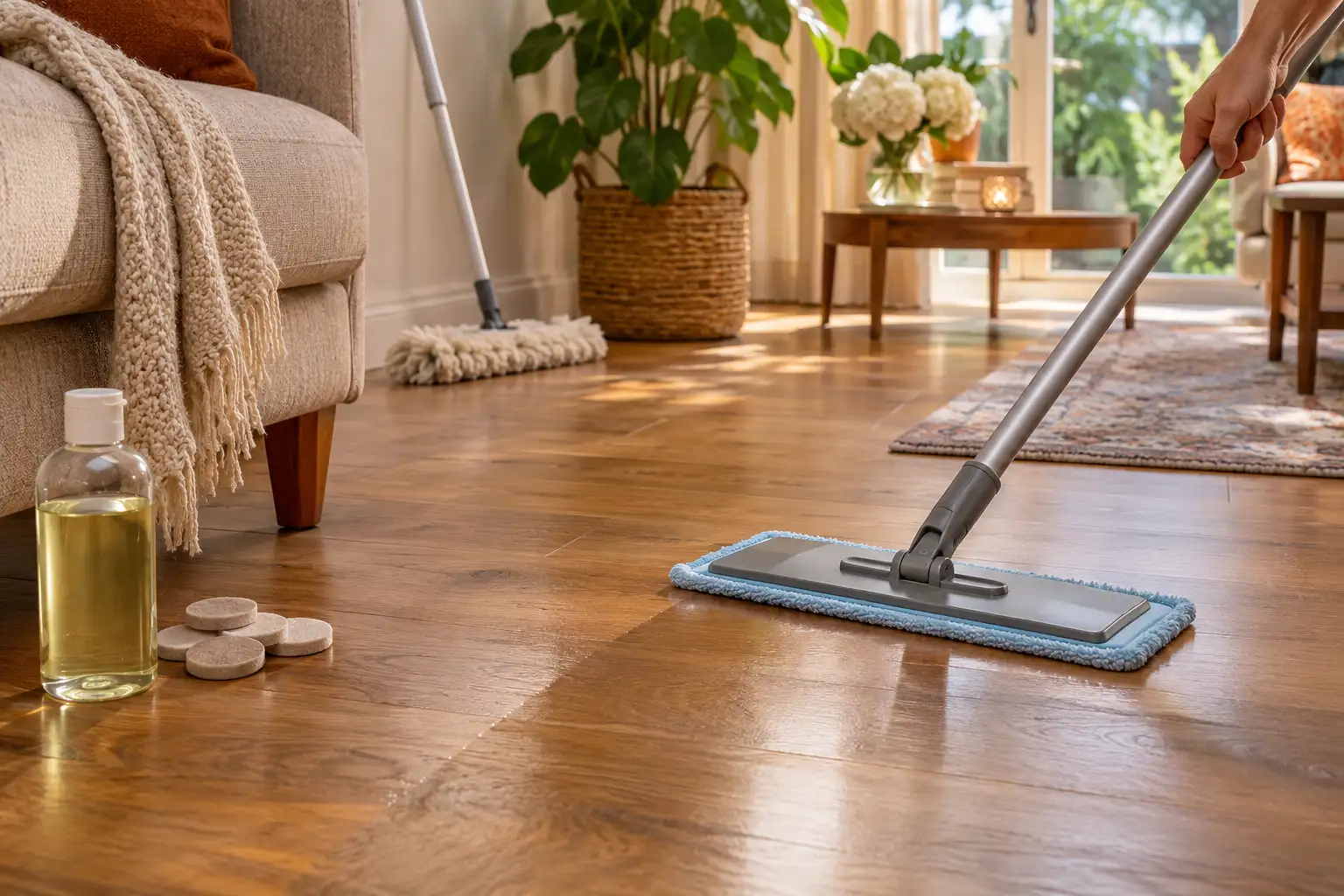
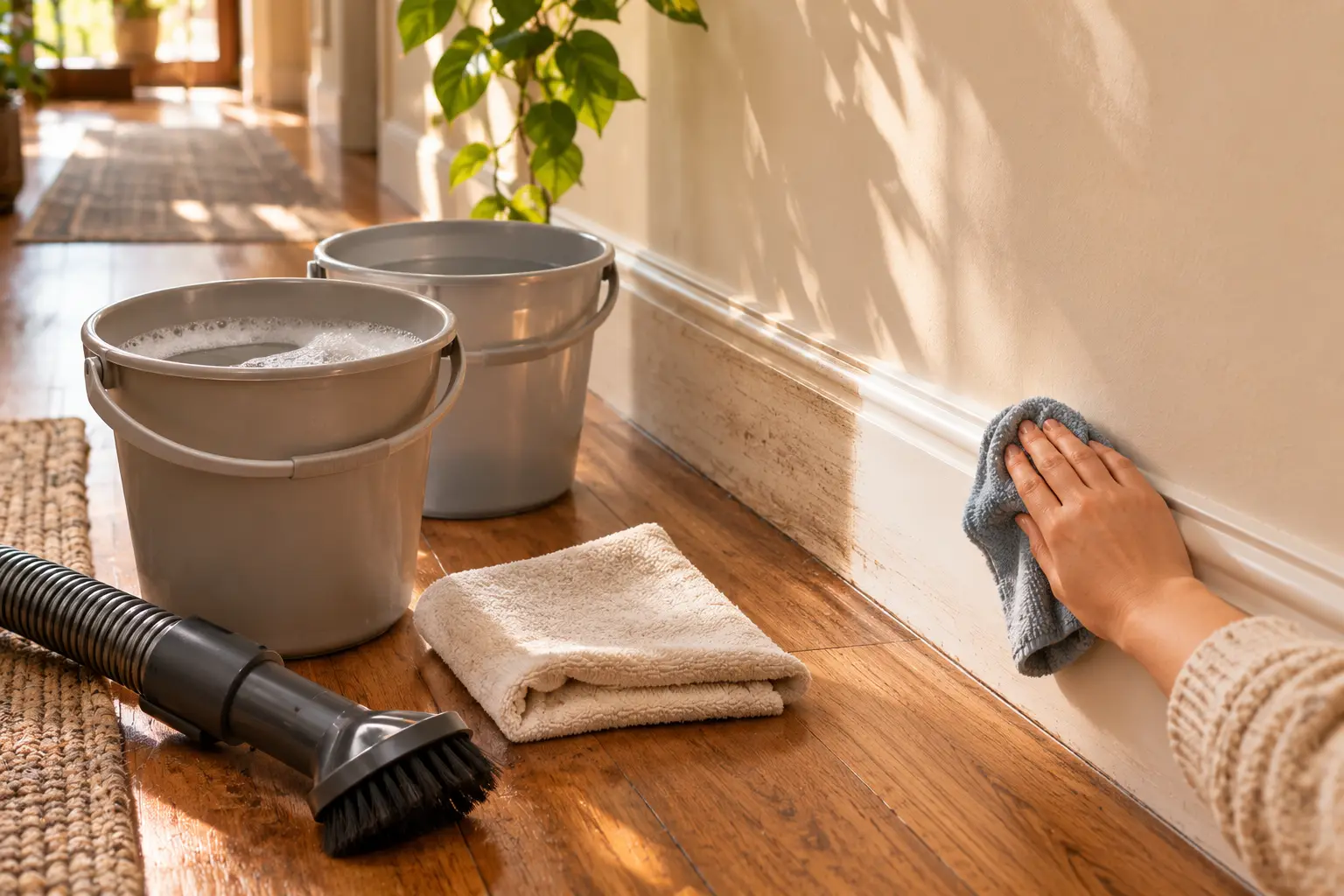
Dry soil off first, then clean with a barely damp microfiber mop and a cleaner made for your floor's finish. Why vinegar, steam mops, wet mops, oil soaps and wax do more harm than good, how steam can affect your warranty, and the habits that keep wood looking new.
Wood floor cleaner made for your floor's finish (the one your flooring manufacturer recommends, if it names one)
Dry and slightly damp soft cloths for spills
Stick-on felt protectors for furniture legs
Doormats or throw rugs for entrances (natural or colorfast backing)
Step by step
01
Step 1 of 8
Identify Your Finish and Check the Care Guide
Find out how your floor is finished. Many floors have a surface finish such as polyurethane, while others are waxed or oiled, and the two need different products. Look up your flooring manufacturer's care guide or warranty, because it names the cleaners that are safe and the ones that void coverage.
02
Step 2 of 8
Sweep or Dust-Mop Every Day
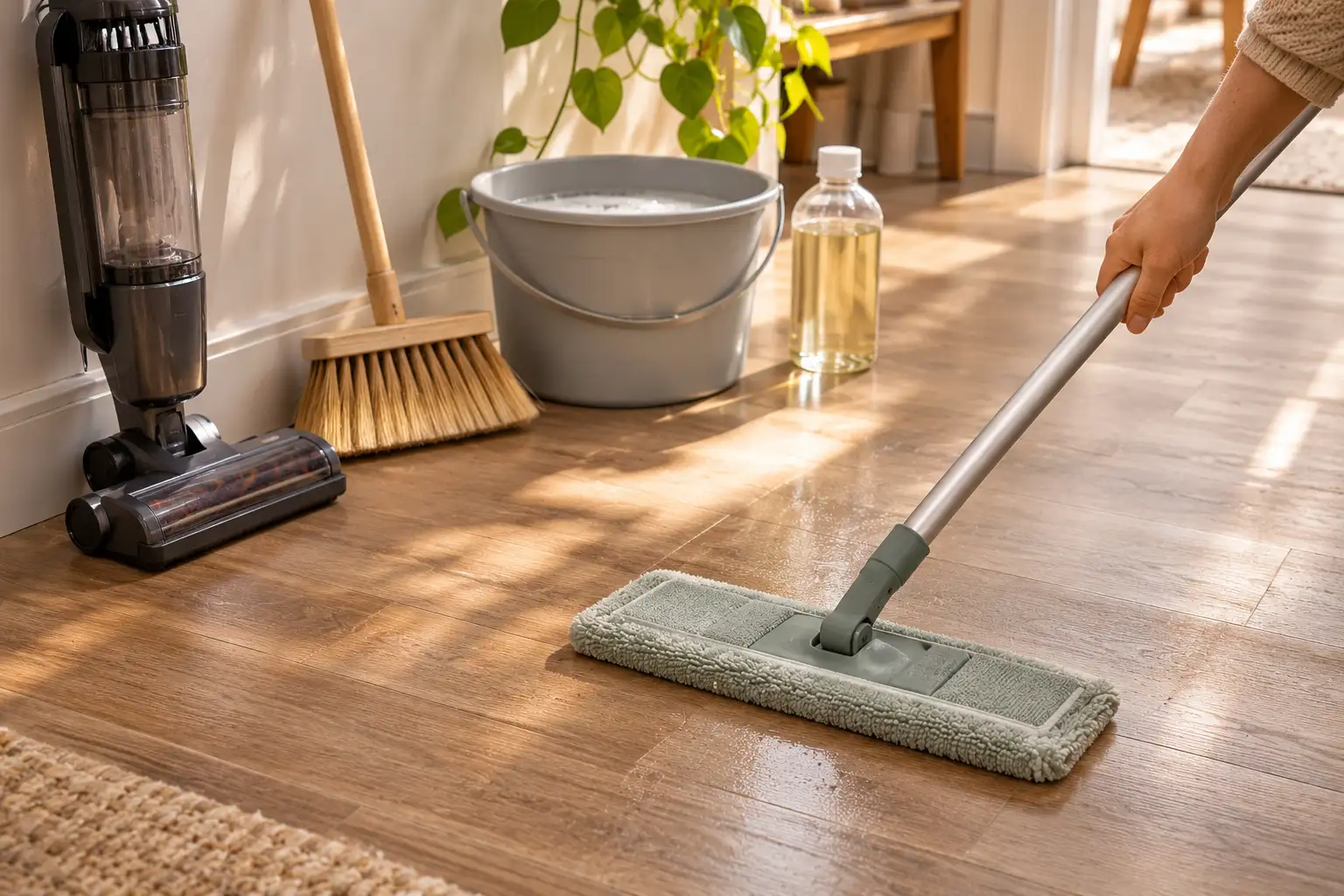
Go over the floor with a soft microfiber dust mop or a soft broom. Dust and grit settle into the grain and between boards, and tracked-in debris acts like sandpaper on the finish, so frequent dry cleaning is the most important part of the routine.
03
Step 3 of 8
Vacuum Weekly on the Bare-Floor Setting
Once a week, or more often in busy areas, vacuum with the bare-floor setting or with the beater bar switched off. This picks up crumbs and dirt from between boards and along baseboards that sweeping misses, before they can scratch the floor.
04
Step 4 of 8
Clean with a Finish-Specific Wood Floor Cleaner
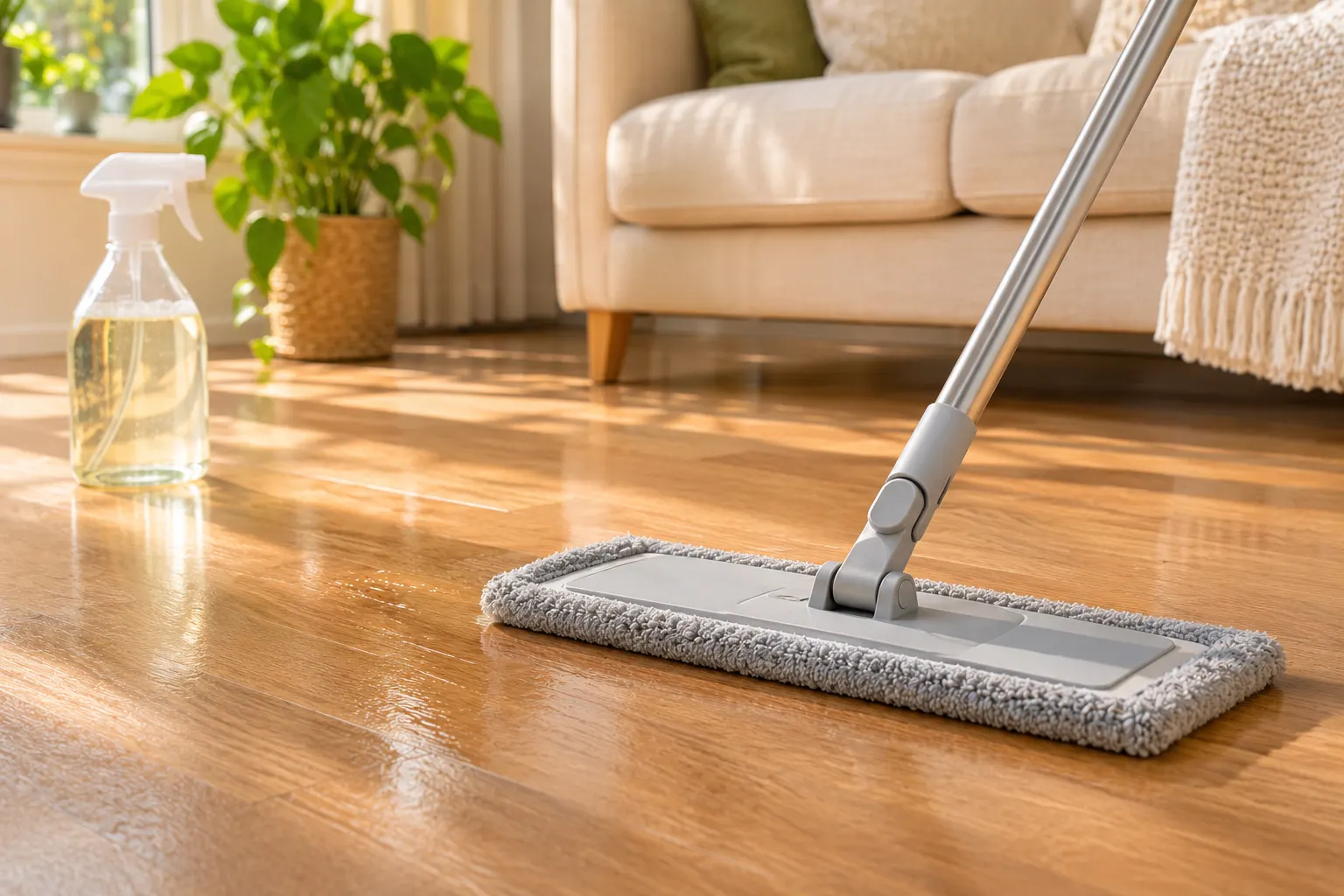
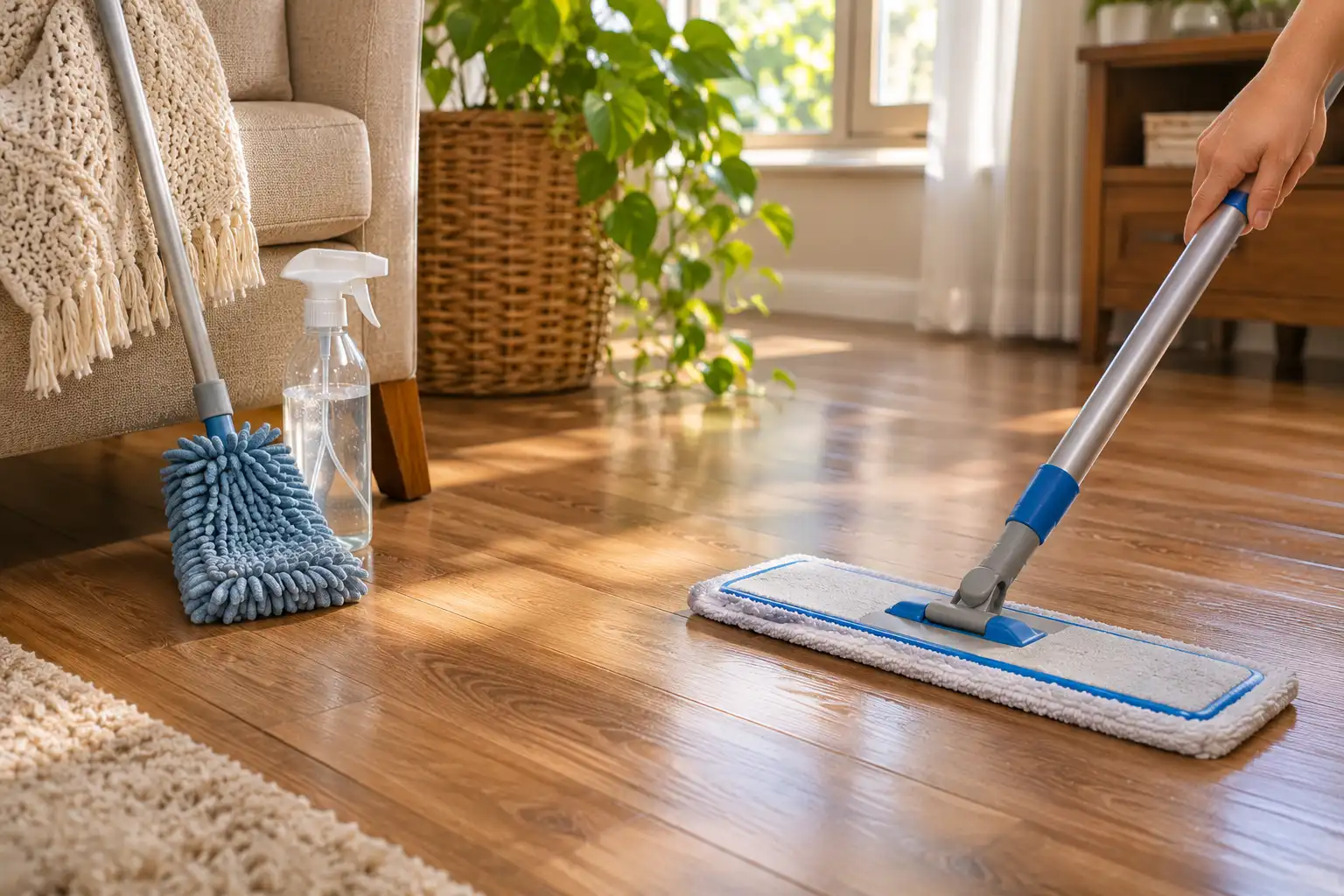
For a deeper clean, use a cleaning product made specifically for your floor's finish, such as the hardwood cleaner your flooring manufacturer recommends. Apply it as the label directs and wipe with a microfiber or terry cloth mop cover. Work in sections and keep the floor only barely damp; never let liquid puddle on the boards.
05
Step 5 of 8
Dry Any Standing Moisture Immediately
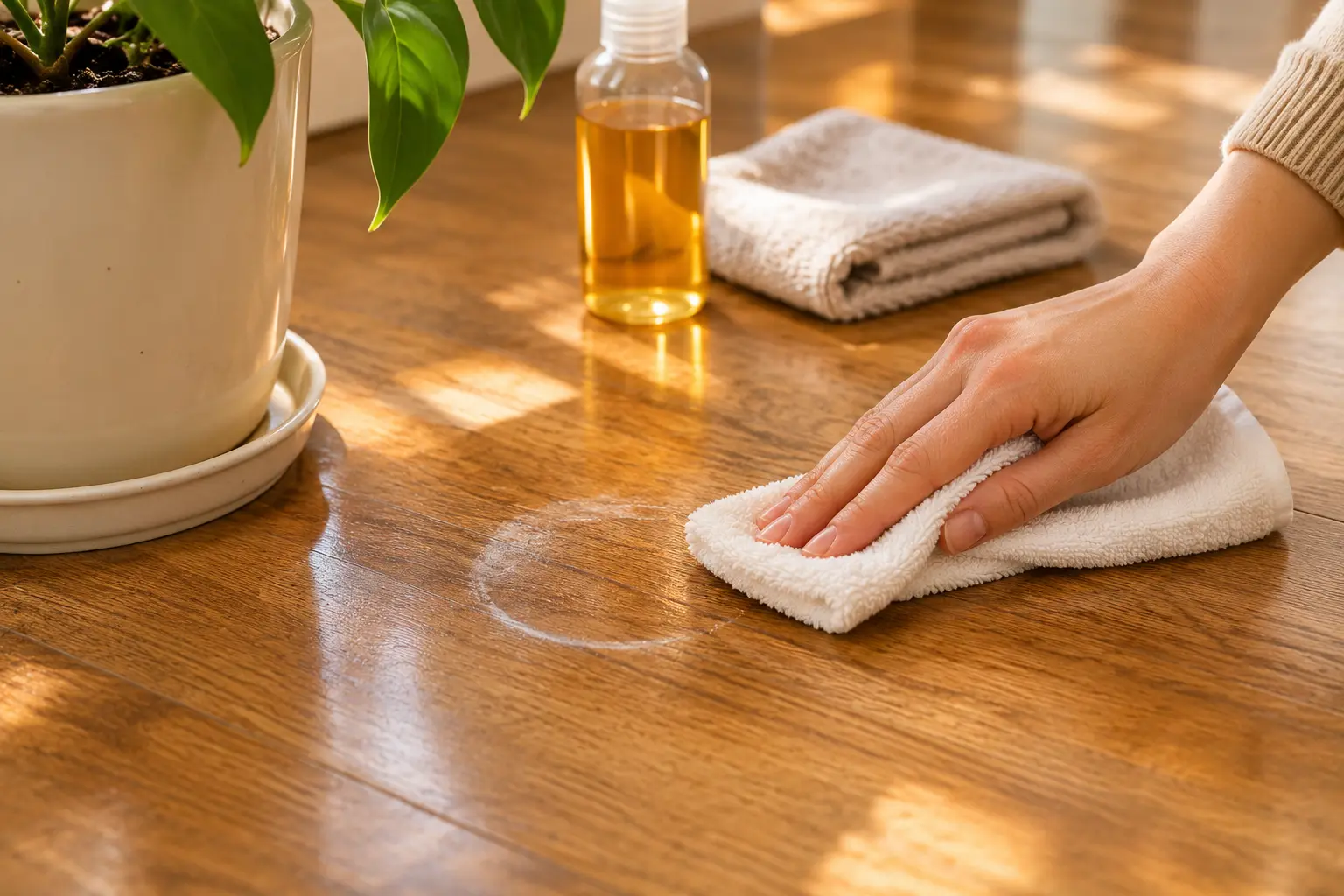
If any liquid pools during cleaning, dry it right away with a soft cloth. Standing water can soak into the wood and lead to warping, cupping and staining.
06
Step 6 of 8
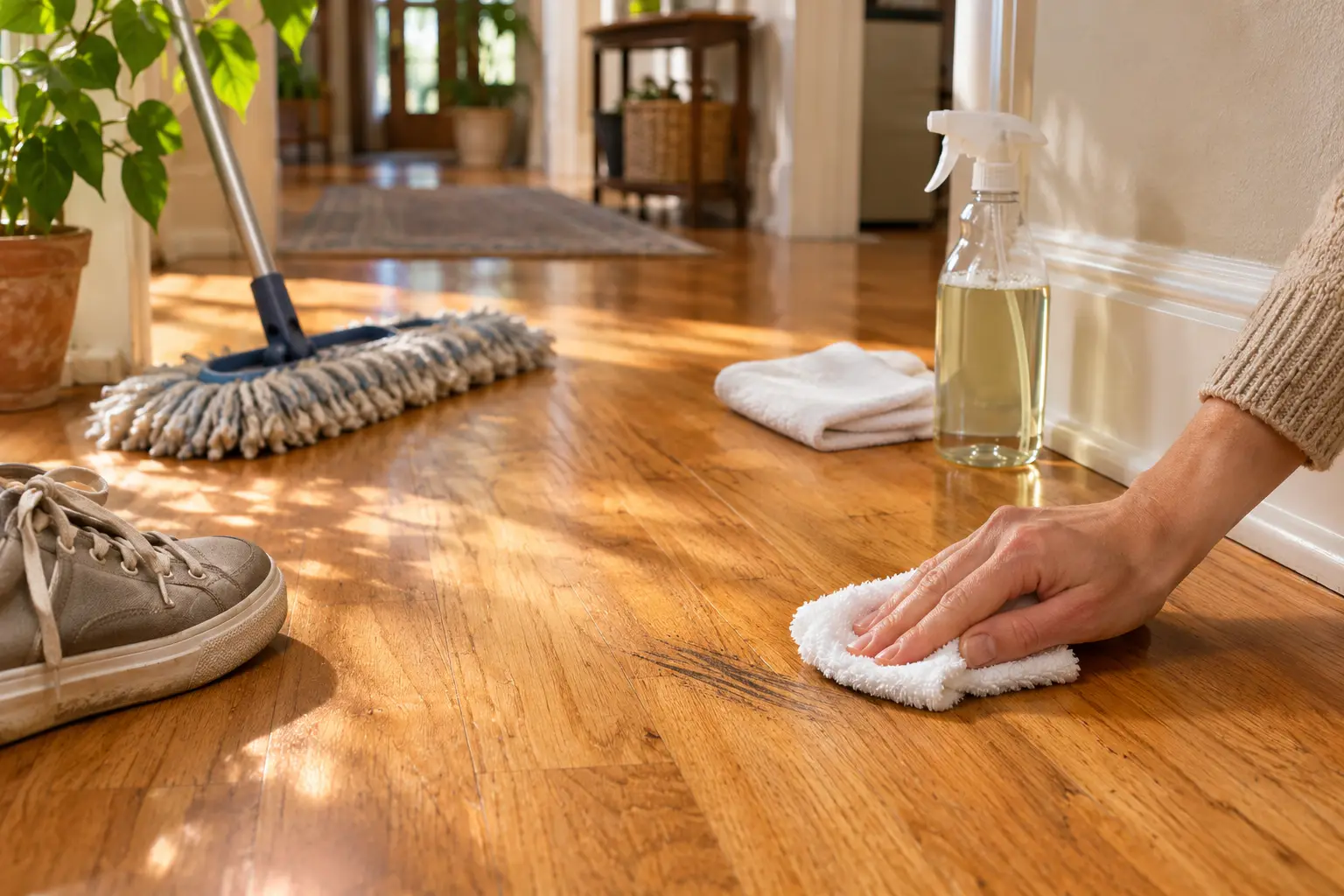
Wipe Spills Up Right Away
Between cleanings, clean any spill immediately with a dry or slightly damp cloth. Do not leave spills to sit, and do not reach for a wet mop to deal with them.
07
Step 7 of 8
Protect the Floor Between Cleanings
Put stick-on felt protectors under furniture legs, lift heavy furniture instead of sliding it, and place doormats or throw rugs at entrances to catch grit. Bruce recommends natural or colorfast mats and avoiding rubber or vinyl backings where possible because they can trap moisture. Leave cleats and high heels at the door, and keep pets' nails trimmed.
08
Step 8 of 8
Keep Indoor Humidity Steady
Wood moves with moisture. The NWFA suggests keeping your home between 60 and 80 degrees Fahrenheit and between 30 and 50 percent relative humidity to help avoid cupping, splitting and gapping between boards.
If that didn’t work
Stubborn or set-in? Try these next, in order.
AIf the floor looks hazy or streaky after cleaning, there is probably residue from too much product or an unsuitable cleaner. Switch to a cleaner made for your finish, use less of it, and wipe with a clean, dry microfiber pad.
BIf the finish looks dull or worn even when the floor is clean, cleaning will not bring it back. The NWFA says dull floors can be renewed by a professional recoat, a fresh coat of finish, typically every few years depending on wear.
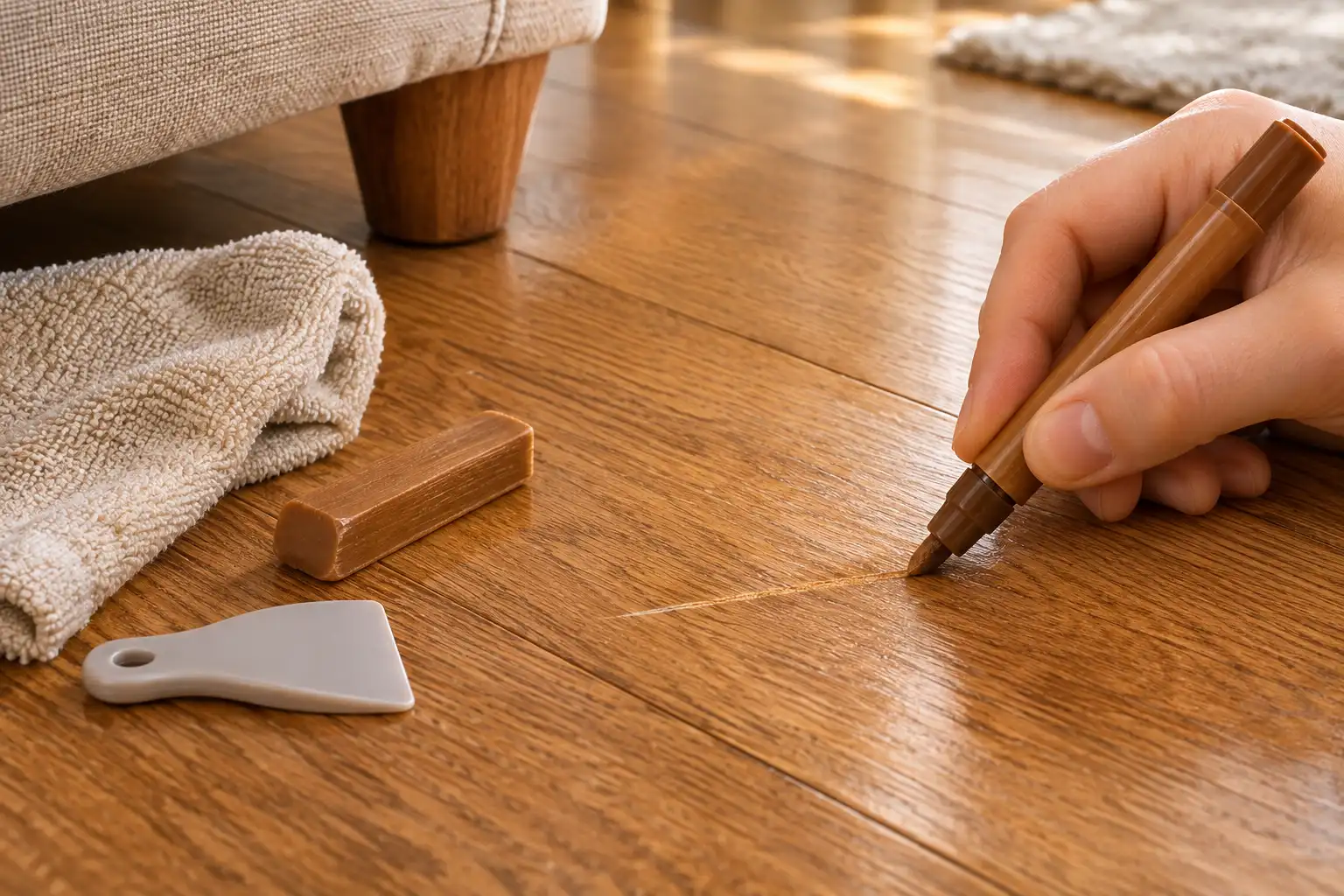
CDeep scratches, gray water stains, cupping or warped boards are damage rather than dirt. Contact a wood flooring professional instead of trying wax, polish or restorer products, which can make the floor slippery and dull.
Can you use vinegar on hardwood floors?
No, not even diluted. NWFA guidance says vinegar is acidic and will degrade a wood floor finish, and Bona says it breaks down the finish on the surface of the floor. The NWFA describes the damage as happening over time, so a floor can look fine for a while before it turns dull and worn. Bona points to a second problem: vinegar-and-water mopping often leaves too much water behind, which can cause swelling and discoloration.
Bleach and ammonia are no better. The NWFA says bleach and ammonia-based cleaners can strip the finish and cause permanent damage, Shaw says to avoid harsh chemicals, ammonia and abrasive cleaners, and Bona says to stay clear of multi-surface cleaners and oil soaps. What they recommend instead is a pH-neutral cleaner made for wood floors, tested in a hidden spot first and misted lightly in sections rather than poured. Do not overdo it: the NWFA notes that excessive use of wood floor cleaners can itself damage the floor. Waxed and oiled floors are a separate case, and the NWFA says never to use water-based cleaners on them.
If the floor already looks dull or hazy after vinegar, stop using it and switch to a pH-neutral wood floor cleaner. Worn or etched finish does not wipe off; a wood flooring professional can tell you whether the floor needs a recoat.
If you do not know who made your floor, the NWFA suggests buying a wood floor cleaner from a local wood flooring professional.
The NWFA suggests using a wood floor cleaner about monthly and recoating the finish every 3 to 5 years, depending on traffic.
Can you use a steam mop on hardwood floors?
No. The NWFA says wet mops and steam mops damage the finish and the wood over long periods of time, and that water vapor penetrates the wood fibers and can cause irreversible damage. Bona explains that steam cleaners put heat and excessive water on the floor, which can lead to cupping and long-term damage. Shaw and Mannington both tell owners not to steam mop their hardwood, and Mannington says never to mop or flood it.
None of the makers we checked make an exception for sealed floors. Steam can also cost you warranty coverage: Bruce says it recommends not introducing heat and moisture, and that damage resulting from a steam mop is not covered under its warranty. Engineered hardwood has a real wood surface, so follow your engineered floor maker's care guide and do not steam it unless that guide explicitly allows it.
If you have already steam mopped and see cupping, white haze or a dull finish, stop using steam and contact your floor manufacturer or a wood flooring professional.
If you are not sure what finish or brand your floor is, avoid any steam or wet method until you find out.
For the same clean without steam, use a barely damp microfiber mop with a pH-neutral cleaner made for your floor's finish, as in step 4.
Common questions
What is the best way to clean hardwood floors?
Remove dry soil first with a soft dust mop or broom and a vacuum on the bare-floor setting, then clean with a product made for your floor's finish on a microfiber mop, keeping the floor only barely damp. Wipe spills right away and dry any standing moisture.
Can I use vinegar and water on hardwood floors?
Flooring manufacturers advise against it. Bruce lists acidic cleaners such as vinegar among the products to avoid on its hardwood floors, alongside ammonia, bleach, detergents and oil soaps. Use a cleaner made for your floor's finish instead.
Is a steam mop safe for hardwood floors?
No. The National Wood Flooring Association says wet mops and steam mops damage the finish and the wood over long periods of time, and Bruce warns that cleaning with water or steam may permanently damage the floor and void the warranty.
Can I use Murphy Oil Soap on hardwood floors?
Not on a typical surface-finished hardwood floor. Bruce lists oil soaps among the cleaners to avoid. Check your flooring manufacturer's care guide and use the cleaner it recommends for your finish.
How often should you clean hardwood floors?
The NWFA recommends sweeping or dust-mopping daily, vacuuming on the bare-floor setting about once a week or as needed, and using a cleaner made for the floor's finish periodically, with spills wiped up as soon as they happen.
Can you use ammonia or bleach on hardwood floors?
No. The NWFA warns that bleach and ammonia-based cleaners can strip the finish off wood floors and cause permanent damage, and Bruce and Shaw also list ammonia among the products to avoid.
Does steam mopping void a hardwood floor warranty?
It can. Bruce says damage that results from using a steam mop is not covered under its warranty. Check the warranty for your own floor before using steam or any heat and moisture.
Can you use a steam mop on engineered hardwood?
Engineered hardwood has a real wood surface, and Bruce, Shaw and Mannington give the no-steam advice for their hardwood floors. Follow your engineered floor maker's care guide, and do not steam it unless that guide explicitly allows it.
Sources we relied on
1.Spring Cleaning: Top Tips for Caring for Wood Floors — National Wood Flooring Association. Sweep or use a soft microfiber dust mop daily, vacuum on the bare-floor setting weekly or as needed, use a cleaning product made for the floor's finish, steer clear of wet mops and steam mops, do not use vinyl or tile cleaners on wood, and note that polishes, waxes and restorers can make wood slippery and dull. Clean spills immediately with a dry or slightly damp cloth, use throw rugs at doorways and felt protectors under furniture, and lift heavy furniture instead of sliding it.
2.Here's Exactly How to Maintain Wood Floors — National Wood Flooring Association. Keep the home between 60 and 80 degrees Fahrenheit and 30 to 50 percent humidity to avoid cupping, splitting and gapping; wipe spills immediately with a dry or slightly damp cloth, avoiding wet or steam mops; use furniture pads; and renew dull floors by recoating with a new coat of finish.
3.Hardwood Floor Care Tips — Bruce Flooring. Do everyday upkeep with a broom, dust mop or vacuum with the beater bar off or on a bare-floor setting; clean occasionally with a hardwood floor cleaner and a microfiber or terry mop cover; mopping with water is not recommended; avoid ammonia-based or wax-based cleaners, detergents, bleach, polishes, oil soaps and acidic cleaners such as vinegar; use natural or colorfast mats rather than rubber- or vinyl-backed ones; wipe spills immediately.
4.Educating Your Customer about Maintenance — Hardwood Floors Magazine (National Wood Flooring Association). Do not use vinegar on wood floor finishes because vinegar is acidic and will degrade the finish; do not wet-mop a wood floor; do not use steam cleaners; never use wax on non-waxed surface finishes; never use water-based cleaners on waxed or oiled floors; follow the manufacturer for factory finishes or buy a cleaner from a local wood flooring professional; excessive use of wood floor cleaners can damage the floor.
5.How to Clean and Take Care of Your Wood Floors: Essential Tips for Homeowners — National Wood Flooring Association. Vinegar's acidic nature can damage wood floors and finishes over time; avoid bleach or ammonia-based cleaners, which can strip the finish; never leave wood floors wet and use a damp rather than soaking mop, since string mops and buckets put down too much water; use a pH-balanced cleaner made for wood floors and test it first; use felt pads and doormats.
6.Maintenance — National Wood Flooring Association. Do not use wet mops or steam mops, which will damage the finish and the wood over long periods of time; clean spills with a dry or slightly damp cloth; use a cleaner made for the floor's finish.
7.Can You Use Vinegar on Hardwood Floors? — Bona. Vinegar is an acid that breaks down the finish on the floor surface; vinegar and water can leave excess water that causes swelling and discoloration; use a pH-neutral cleaner, a fine spray mist, work in sections and use a microfiber mop.
8.How To Clean Wood Floors - Daily Clean — Bona. Steam cleaners put heat and excessive water on the floor, which can lead to cupping and long-term damage; vinegar dulls the finish.
10.Hardwood Floor Care & Maintenance — Shaw Floors. Do not use wet mops or steam mops; do not use harsh chemicals, ammonia or abrasive cleaners; do not use oil-based wax or polish; always use a neutral-pH flooring cleaner; place walk-off mats at entrances.
11.Hardwood Flooring FAQs — Bruce Flooring. Recommends not introducing heat and moisture as this may damage the floor; damage resulting from a steam mop is not covered under the warranty; use Bruce Hardwood and Laminate Floor Cleaner with a microfiber mop; use walk-off mats.
12.Hardwood Care and Maintenance — Mannington. Do not use a steam mop on hardwood floors; never mop or flood the floor.